ZANDILE JOY DYWATI
“Black daughters and father(s): love as a praxis embedded in daughters' relationality with Black father(s)”
The invitation to participate in a panel entitled “Black masculinities and love” at the 2026 Black Men and Masculinities in Post-Colonial Southern Africa: Fragilities, Ruptures, and Possibilities symposium rang a personal mantra that loudly echoed throughout the years of my Master’s in the Gender and Transformation degree. As an affirmation and a reminder of the pledge to embody and perform a decolonial feminist ethic in my contribution on Black males, men, and masculinities. “I LOVE BLACK MEN”. My public declaration of love for Black men during this time was a “survival mechanism” – my research on undocumented Black African immigrant men in the township of KwaLanga and eMfuleni was on numerous occasions met with despair, fear, suspicion, and, in the most extreme occasion, anger. These emotions often found themselves masked through questions and concerns about my safety in the field. “If anything happens to you, these men will not be found”, and “They are undocumented, right? Is someone going with you?”
News on the supposed ‘crisis’ of Black and/or African immigrant men in South Africa was never new to me, even in the pursuit of my master’s degree. It was discourse on news, in the streets, at home, in the taxi, and every other public and intimate space I engaged with, but the church was different. At church, we prayed and were taught to love beyond state borders. And it is:
“Love others [your neighbour] as much as you love yourself.”
Matthew 22:39
Something I never shared publicly was that I was on two occasions pastored [spiritually fathered] by Black African immigrant men, and one was undocumented. They were precisely Nigerian men. The concept of love in my faith is a given, I would want to think. As a Pentecostal Christian, love and to love is the foundation of my relationship with Christ Jesus and his creation.
And now these three remain: faith, hope and love. But the greatest of these is love.
1 Corinthians 13:13
However, my pursuit of a Master’s degree on undocumented immigrant men was partially accidental and also self-indulgent. Once having read the literature, I was astonished by the sense of Black-male-phobia [fear & hate] that seems to entangle Black men (Fanon, 1952; Mangezvo, 2015; Masito, 2026). Moreso, the Black, African immigrant man with a non-South African accent, who eats fufu and egusi and dresses up in ‘obnoxious’ regalia. He was the framed model of everything wrong in South Africa. However, for me, I encountered such a man in the confines of religion. So I guess my mantra was a safety net for being grounded in the fact of loving and appreciating my now ex-pastors to the point of researching their lived experiences.
Do black men know how to love?
Above, I shared one of the relationships that was imperative in shaping my research interest in doing a decolonial narrativisation of Black men. While personal to some extent, it was also void [of something I am struggling to put into words as of yet]. However, preparing for the 2nd of July panel, moderated by Prof. Kopano Ratele, the mantra returns, and this time around, it echoes softly and almost faintly. This is because I have found reason to love Black men, not simply as a research praxis, method or ethic, or as an epistemic saviour or redeemer, but as a daughter. With my PhD, I am still considering whether it will be postured as an apology, a love letter, or both. But sufficient to say, I have returned to my childhood with all its complexities in an attempt to re-imagine and rewrite from the early encounters with Black men a not-so-common-yet-not-new script of Black men.
“Write for yourself first, and if you do not like someone’s story, write your own”
Chinua Achebe
Black men know how to practise love!
For this conversation, I meditated on my relationship with my father. I thought I had some level of conceptual and experiential grasp of what love is until I was confronted by my hollow definition
of ‘love’. I struggled to bring myself to take a position on what love truly is. Is it a feeling? An emotion? An action?. I had to turn back to my title for this contribution, which centres on my father. I guess love in this diad between my father and me was and continues to be a sense and a praxis of holistic safety [emotionally, mentally, spiritually and physically]. I consciously did not write financially because that is what Black fatherhood has been made to be synonymous with.
I reflected that from our relationship, love looked like him waking up at 05:00 am every school day to ensure I had a lunch box, my school skirt and shirt ironed, my school tie made, my shoes polished, there was warm bathing water prepared, my tooth brush was prepared with warm water to rinse my mouth. Love looked like our favourite Christian show in the morning, where he would pray over a glass of water. Love looked like him, walking me to the bus stop at 06:00 and waiting until the bus arrived, and in the afternoon, waiting until I came back. To complicate this ‘neatened’ representation of love – with my dad, love also looked like a stern, low voice – ‘usukaphi Zandile ebusuku, awuboni kumnyama phandle’. Contrary to bell hooks (2003), I had my father’s love, from how he would affectionately and proudly introduce me as his daughter, and celebrate my birthdays, showing up to every teacher-parent meeting… I could go on.
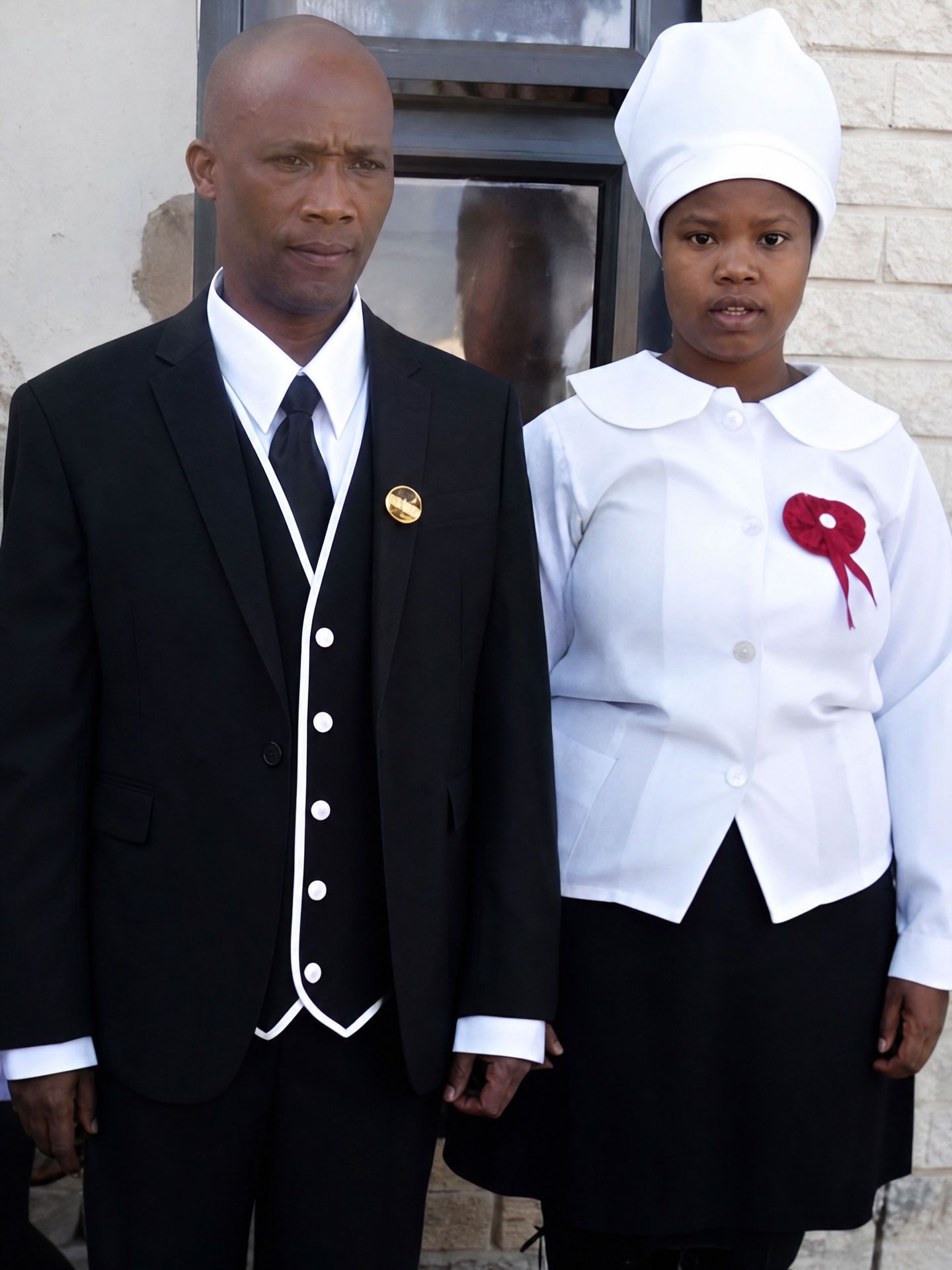
This demonstration, feeling, and knowing of love, which was normal to me, I soon realised was too foreign? Too absurd? Like bell hooks (2003), a distant imagination for many Black daughters. For hooks (2003), this was the deep inner misery for men – a misery which was induced by the terrible terror that gnaws at the soul when one cannot love. In these words, she chastises feminism for not teaching about the inner turmoil Black men face when they cannot return home to themself on the pathway offered by loving another, and in hooks’ (2003) experience, their daughter.
However, for me, my discomfort with feminism remains in its inability to imagine and help usher into existence a world in which Black men do not rage violently because they are longing for love.
The feminist spaces I was part of, whether the classroom, imbizo or caucus, safety spaces, taught and reminded me, Black + man = patriarchy, violent, criminal, to be feared, in crisis, “trash”. I believed it, I internalised it…
Can they [Black men] really love? Why does it hurt when they love?
“Love is intentional, and usually comes with the responsibility to protect others. You can not love a person and endanger them”.
Vuyi Qotoyi
Granted, several Black women writing on violent masculinities in Black and African feminist spaces produce these works and theories from encounters, registers and vantage points of the manifestations of patriarchy through Femicide, Sexual & Gender-based violence (SGBV), Infanticide and Incest[1] (Gqola, 2007; Nkealah, 2018; Moolman, 2011; Molope, 2012) . However, their imprintment onto the curriculum was as though these voices became the “Voice of god [de-gendered]”. Religiously, these feminist scriptures taught the holy mantra, BLACK MEN ARE IN CRISIS, are violent, are patriarchal… it goes on and on.
So unlike hooks (2003), instead of searching for my father’s love, I sought after and waited in anticipation of the monstrosity of an animal that a Black man could be. In embodying the feminist consciousness, I raged in solidarity and in fear, in fear of how destructive patriarchal cultures are to the black and female being. 2019 came with the terror of an atmosphere of solidarity fatigue, yet also an obligation to continue… because Black females were not safe, not safe at schools, at bus stops, at homes and in the postal office. A young female had died yet again in the hands of a black man.
Our African feminist caucus and safety space, from which we were taught tenderness towards the feminine being and its allies, was charged with a looming atmosphere of hostility. #MenAreTrash, #AMINEXT? Like Luyanda Botha, #ALLMENARE… Was my dad this, too? In a conversation, we heard in between sobs, “he might be a safe space and person to you, but you do not know how he is outside the home”. It was from that line it crept… Black Male-phobia, I ought to fear black men. Even the one at home? At this point, I avoided going home entirely, black men are everywhere – the taxi rank, the Uber, the township street, and at home.
“He might be a safe space and person to you, but you do not know how he is outside the home”
Professor at UCT.
These words were like a double-edged sword piercing through me most painfully, and yet a sharpening of my growing suspicion – why has my dad not put on his regalia of being a monster yet?
Let me bask in my nakedness a bit…
I did not want to meet the monster of a Black man that dad supposedly had the inherent potential to be; his little daughter would not have been able to bear it – but maybe had I met it, I would not have had any problem with rationalising my hatred and fear for Black men. I remember one day praying, “God, please take my dad”. This was a prayer I made because if he died, then I would not have to live to see him shatter my faith in him, right?
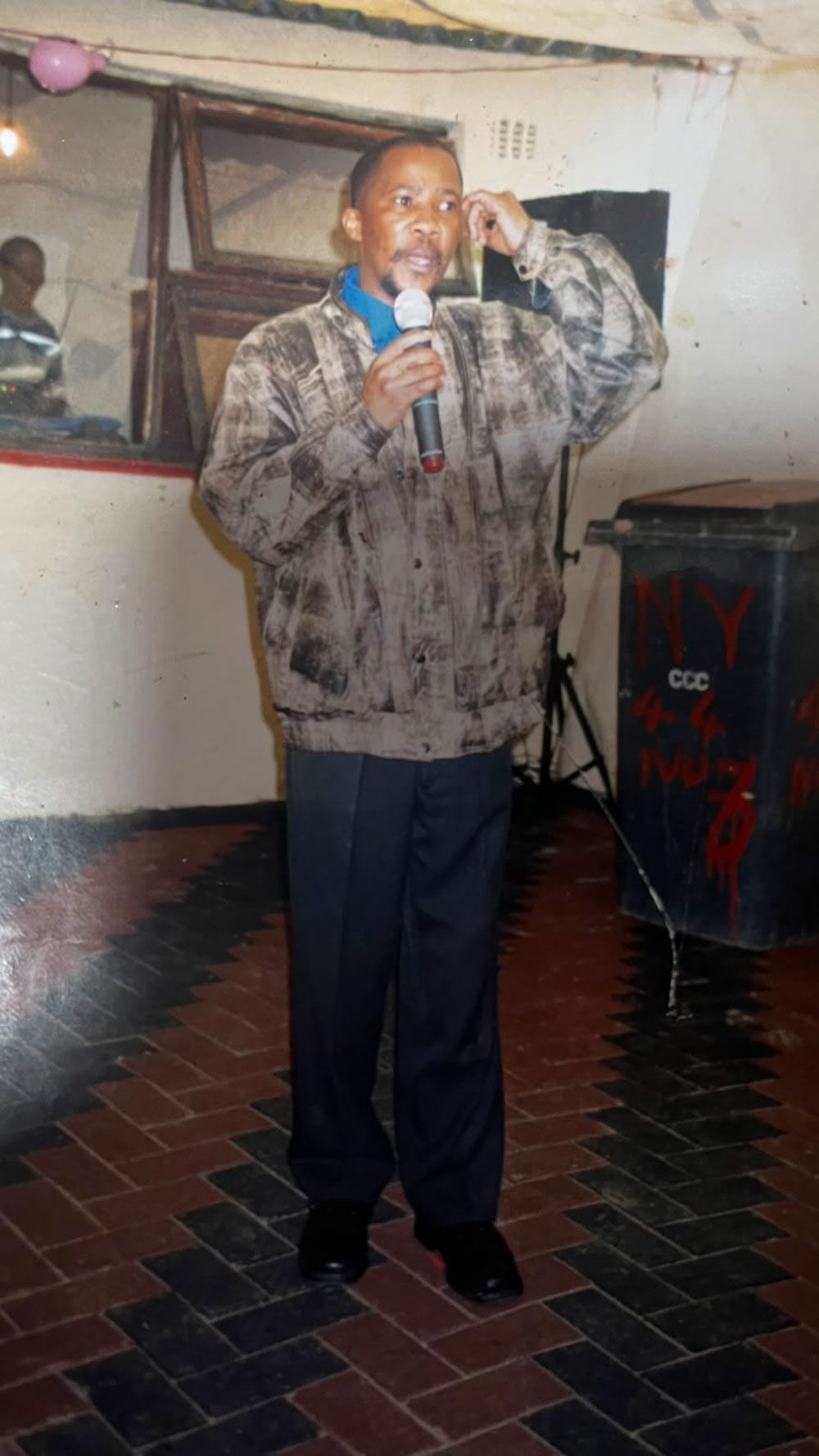
Someone once said, God has a sense of humour. Because tell me why my dad almost died due to strokes twice. The first time, I was jerked into a whirlwind of fear [this time, a fear of losing my dad]. It sent me into a trance of unlearning and relinquishing my pledge to the Anti-black male & black male phobic cults. I could never not love my dad in this state; he was vulnerable. He was no longer the strong and also busy fixing something, man, I knew. It was at this vulnerability that my heart swelled. Perhaps there was still love in me for Black men. I saw it in the way I would prepare his food, count his tablets, read the scripture for him, and wail in prayer beside his bed. I saw it in the way my other sisters cross-checked work and school calendars to ensure someone was at home to take care of dad and that he was taken to all his doctor’s appointments.
We nursed our dad to health only because he loved us first, and ours was a return of the same praxis of love he taught us.
“Our display of love as his daughters was forced into patience, not to be proud. To not dishonour nor be self-seeking. My love for my dad keeps no record of wrongs. It is a Love that does not delight in evil but rejoices with the truth. It always protects, always trusts, always hopes, always perseveres. And I hope that our Love never fails”.
1 Corinthians 13: 4-8
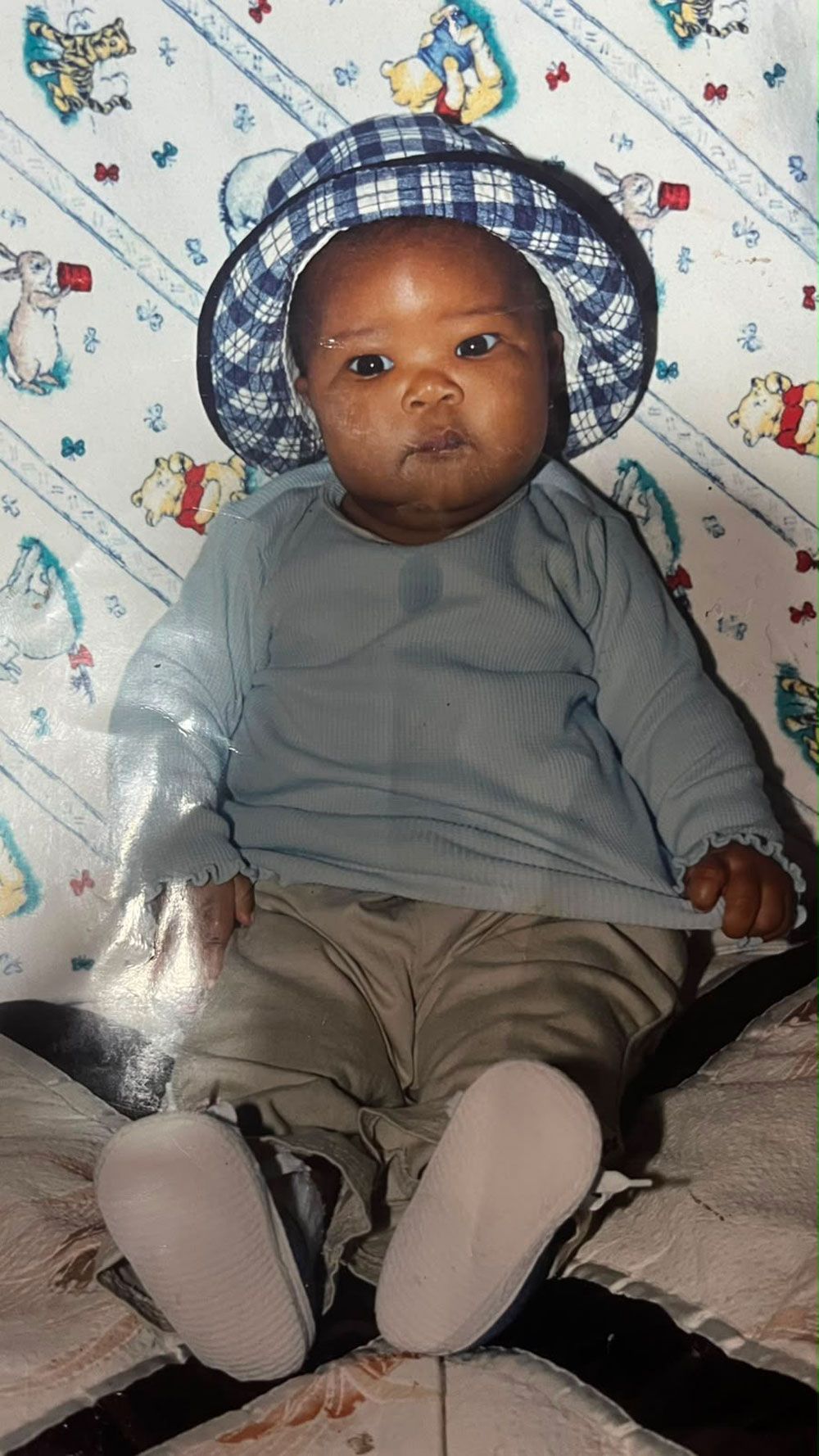
The apologetic-love letter
“I came to theory because I was hurting-the pain within me was so intense that I could not go on living”
bell hooks
Returning to hooks (1989), as an act of rebellion, my apologetic-love letter is embedded in the politics of “talking back”, a defiance to the feminist authoritative voices and their mantra to banish black maleness, manhood and fathers to a realm of non-beingness. My disagreement, of course, does not disregard the experience from which Black fathers were monsters; my differing opinion is rather postured against the totalising registers that are used to debilitate black men from any attempt to be and being human. My letter insists on the love relationships between Black men and daughters to become a site from which the dialogic is encountered as a necessary vice for the revolutionary and radical feminist struggle. Now I no longer pray for death, I pray for healing and health.

| 1. | ↑ | (Gqola, 2007; Nkealah, 2018; Moolman, 2011; Molope, 2012) |