NICOLA DEANE
Spectres of Decay: The archive breathing at its horizon by Jurie Senekal & Nicola Deane
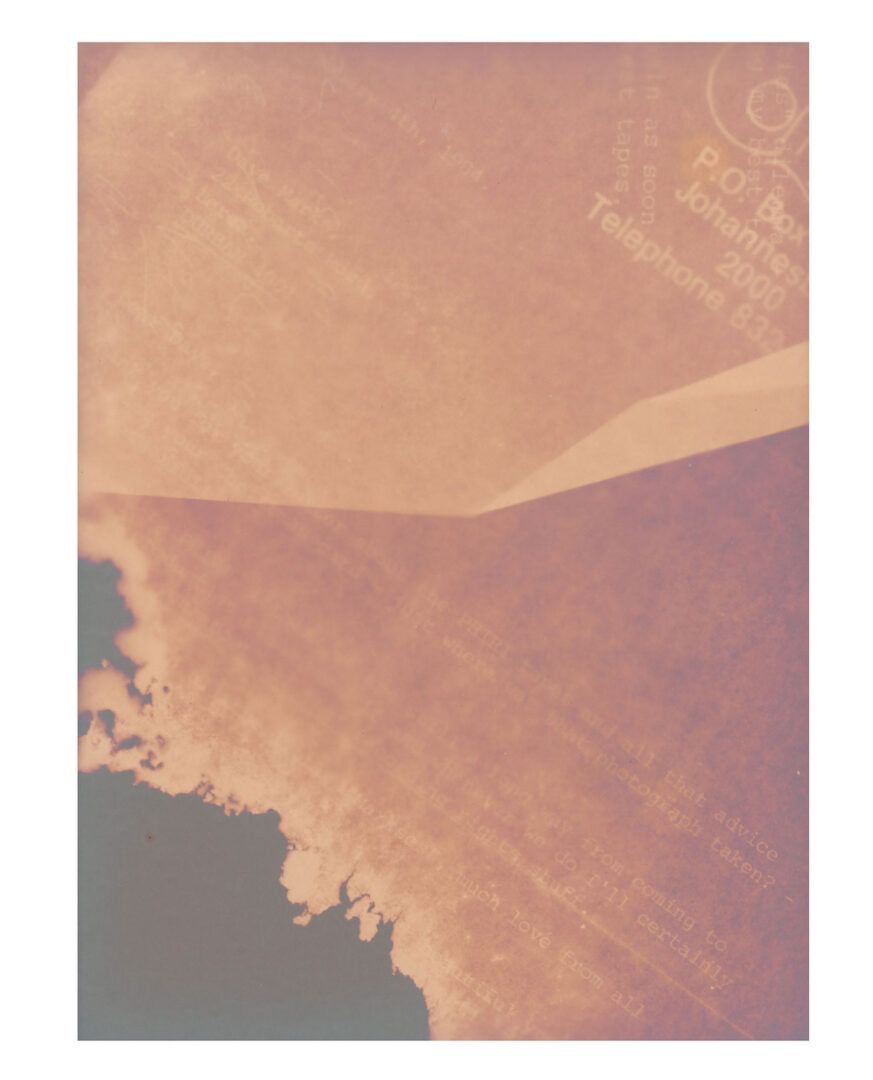
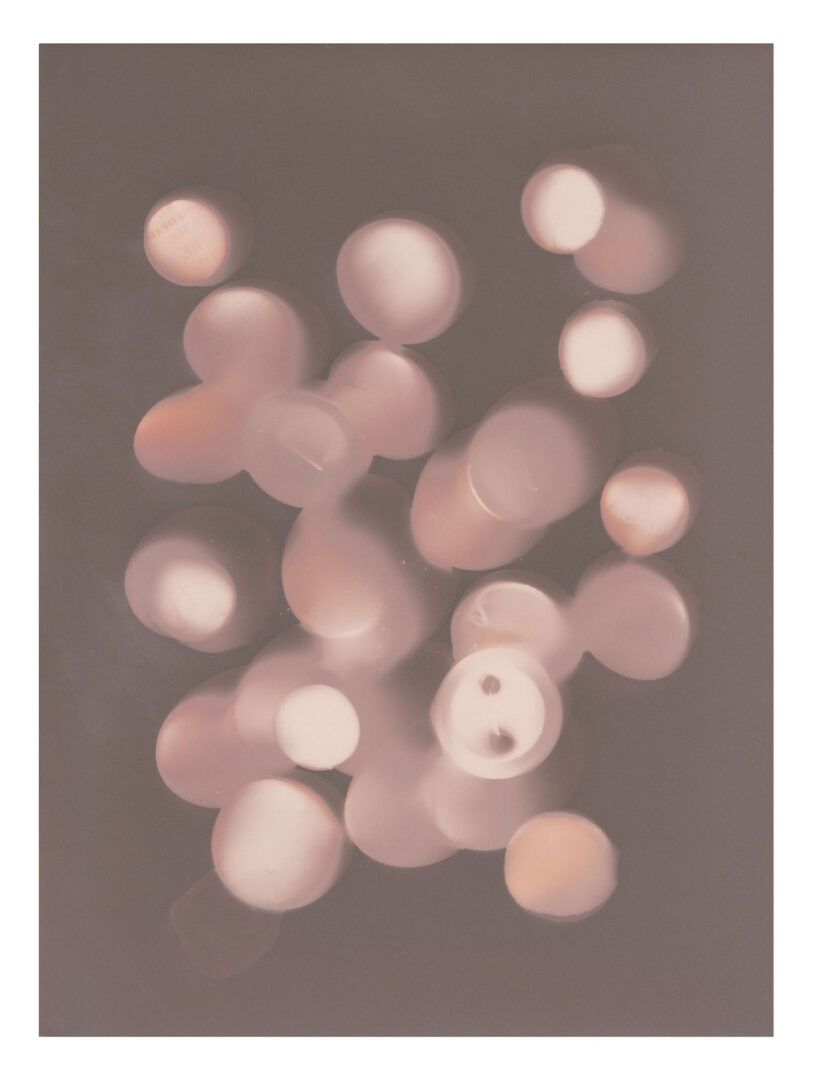
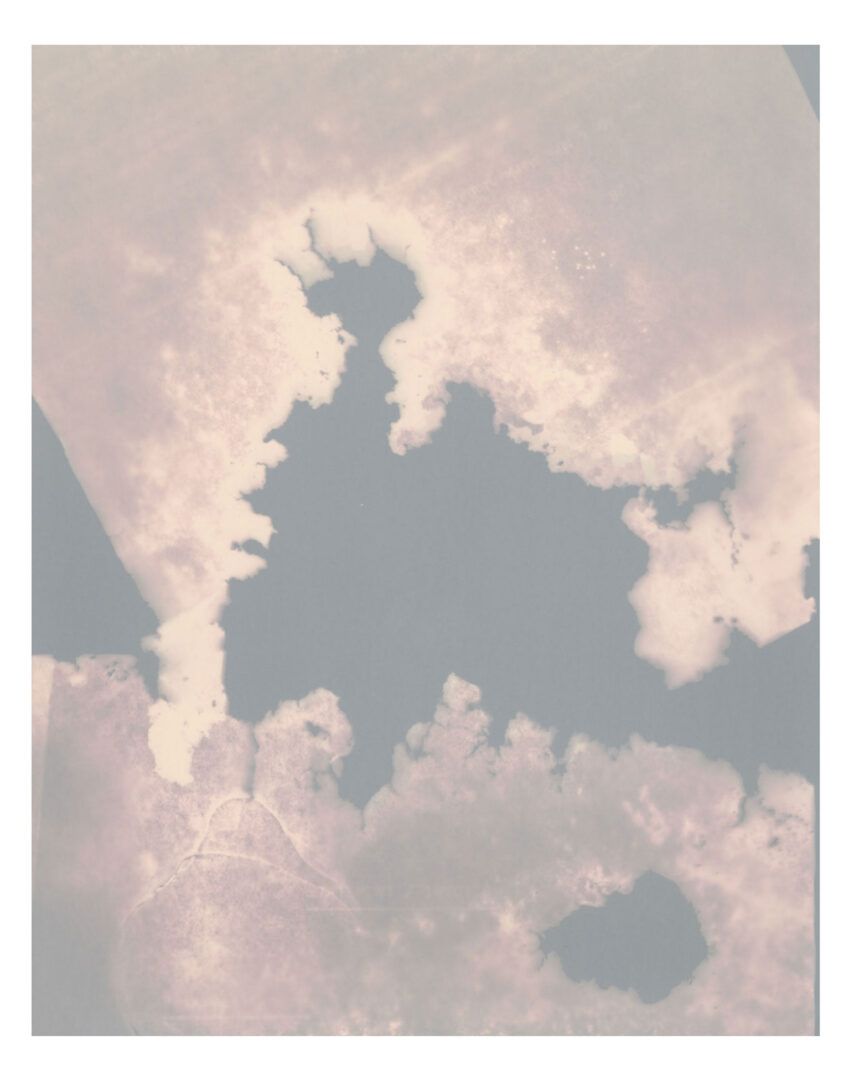
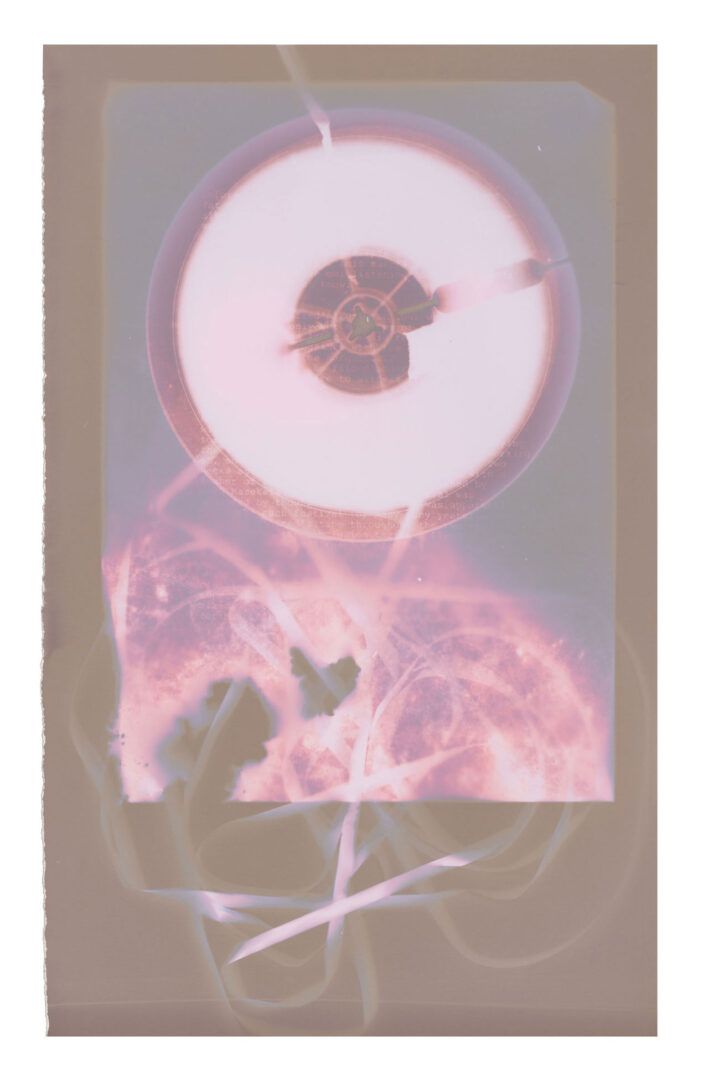
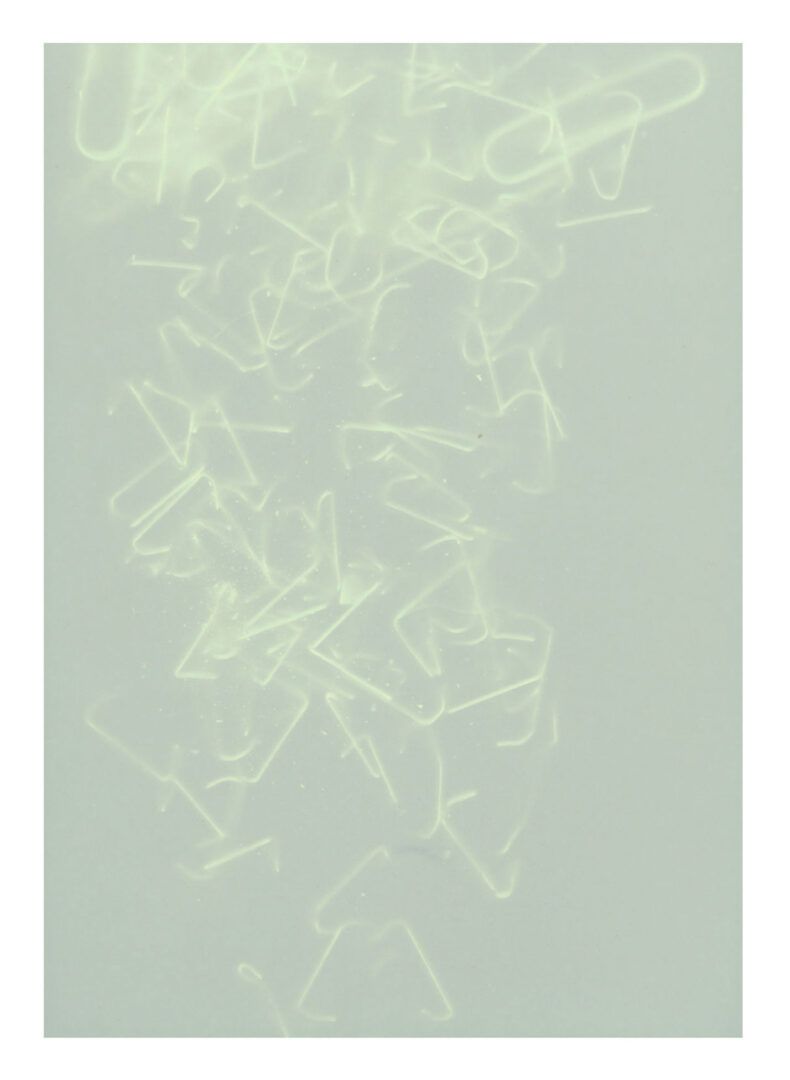
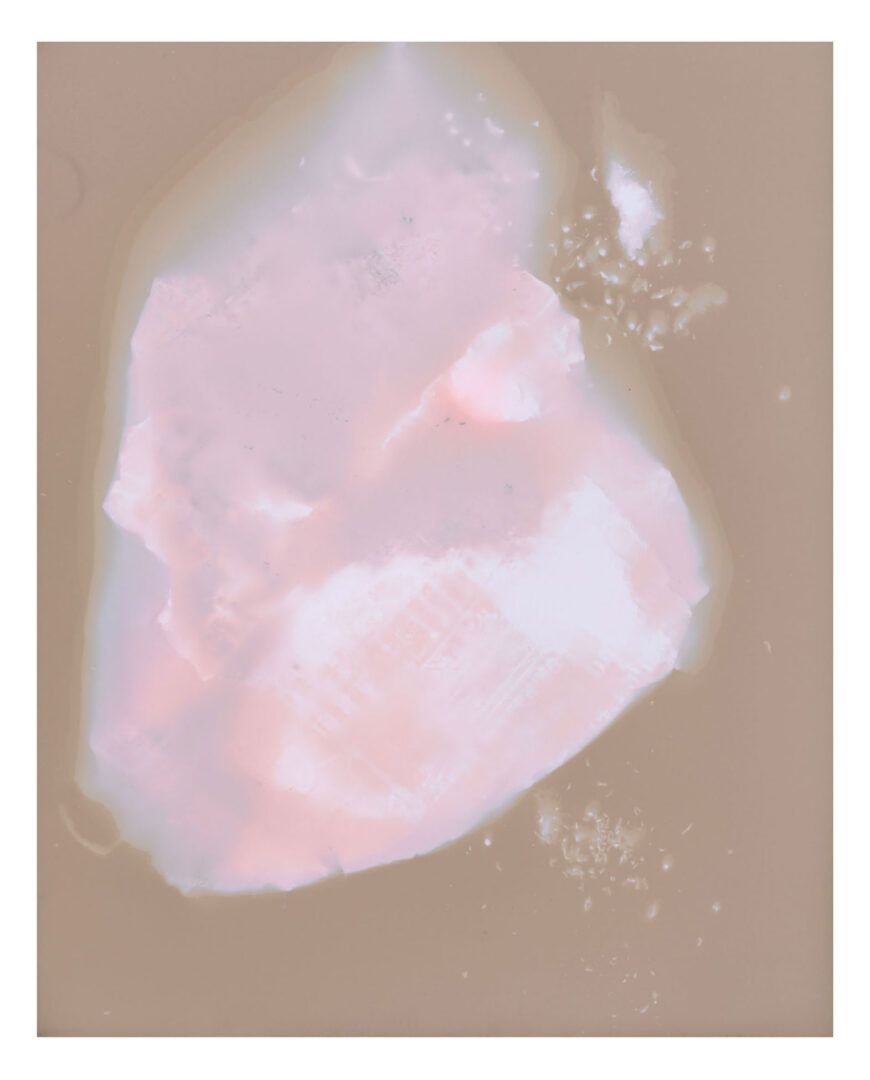
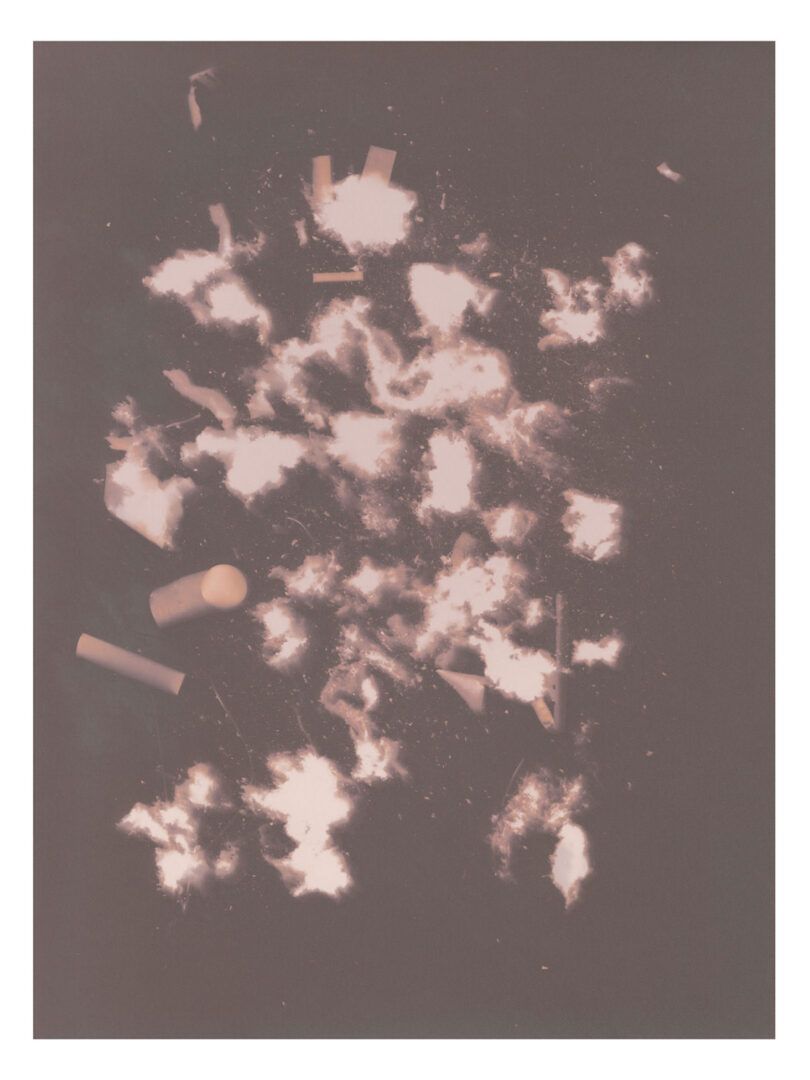
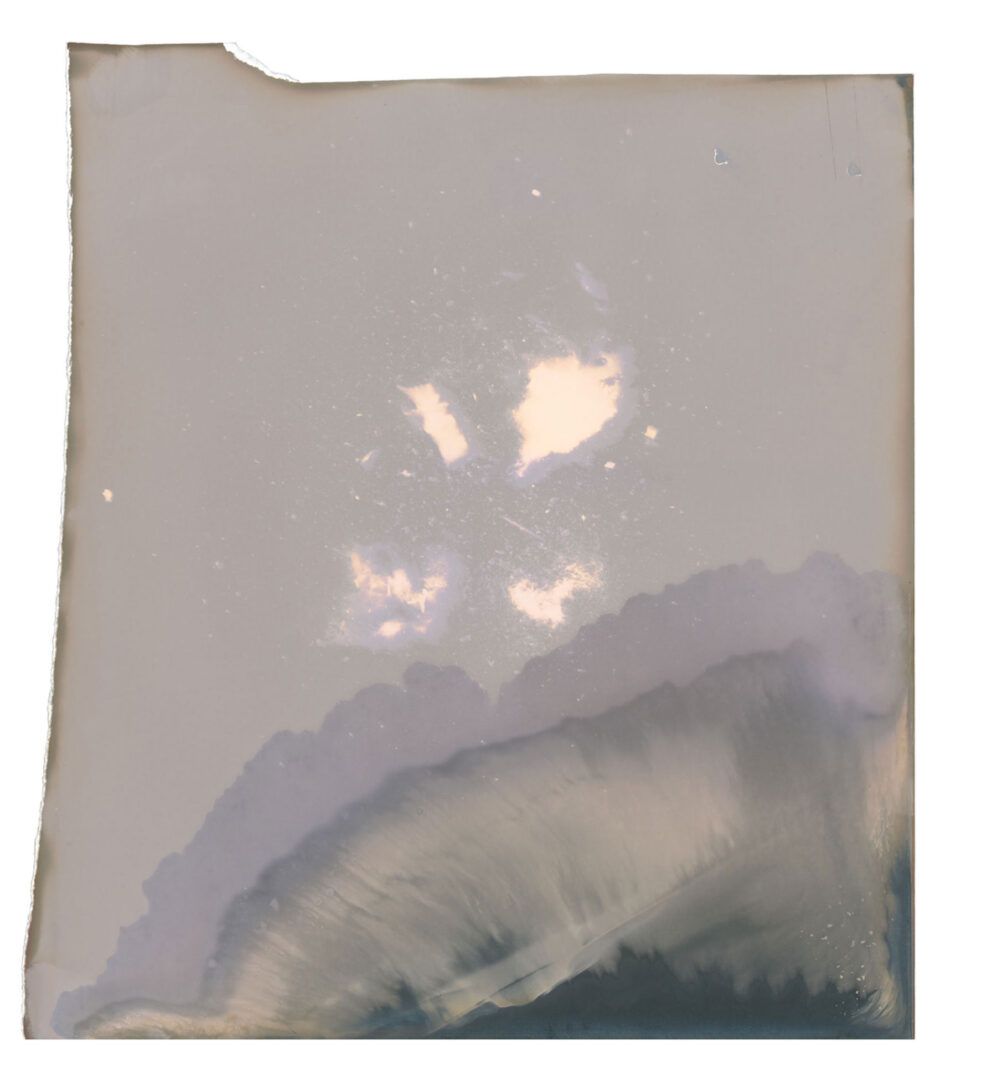
This series of Giclée prints by Nicola Deane and Jurie Senekal presents a range of lumen print experiments with decaying materials from the Hidden Years Music Archive in the Documentation Centre for Music (DOMUS) at Stellenbosch University. The work encapsulates part one of my postdoctoral research for the project Decay without Mourning: future-thinking heritage practices, that considers decay not as a condition of loss to be resisted, but as a generative force through which new forms of heritage, value, and knowledge emerge. Conceived as a code that links past, present, and future, decay may offer an alternative framework with which to engage in heritage practices – one that embraces transformation, contingency, and becoming rather than permanence and control.[1]For an overview of the project please refer to our article ‘Decay without mourning: future-thinking heritage practices’ (Lambrechts et al., 2024): doi.org Caitlin DeSilvey distils what entropy reveals for us,
any given system…has the potential to unfold along multiple trajectories; what may appear as erasure on one register may be generative of new information on another. An attentive relation to material systems and their histories involves following trajectories of change and transformation rather than arresting them” (2017:13).
From within this project context, my artistic research explores the generative potential of deteriorating archival materials from the archive, investigating how the visual and sonic traces of damage, erosion, and material instability might be approached not as failures of preservation, but as anarchival forces that reveal alternative histories, temporalities, and modes of remembrance. This perceptual shift regards the archive more suitably as an ecology of materials in processes of becoming, as Tim Ingold argues, “the properties of materials, regarded as constituents of an environment, cannot be identified as fixed, essential attributes of things, but are processual and relational” (2011:30).
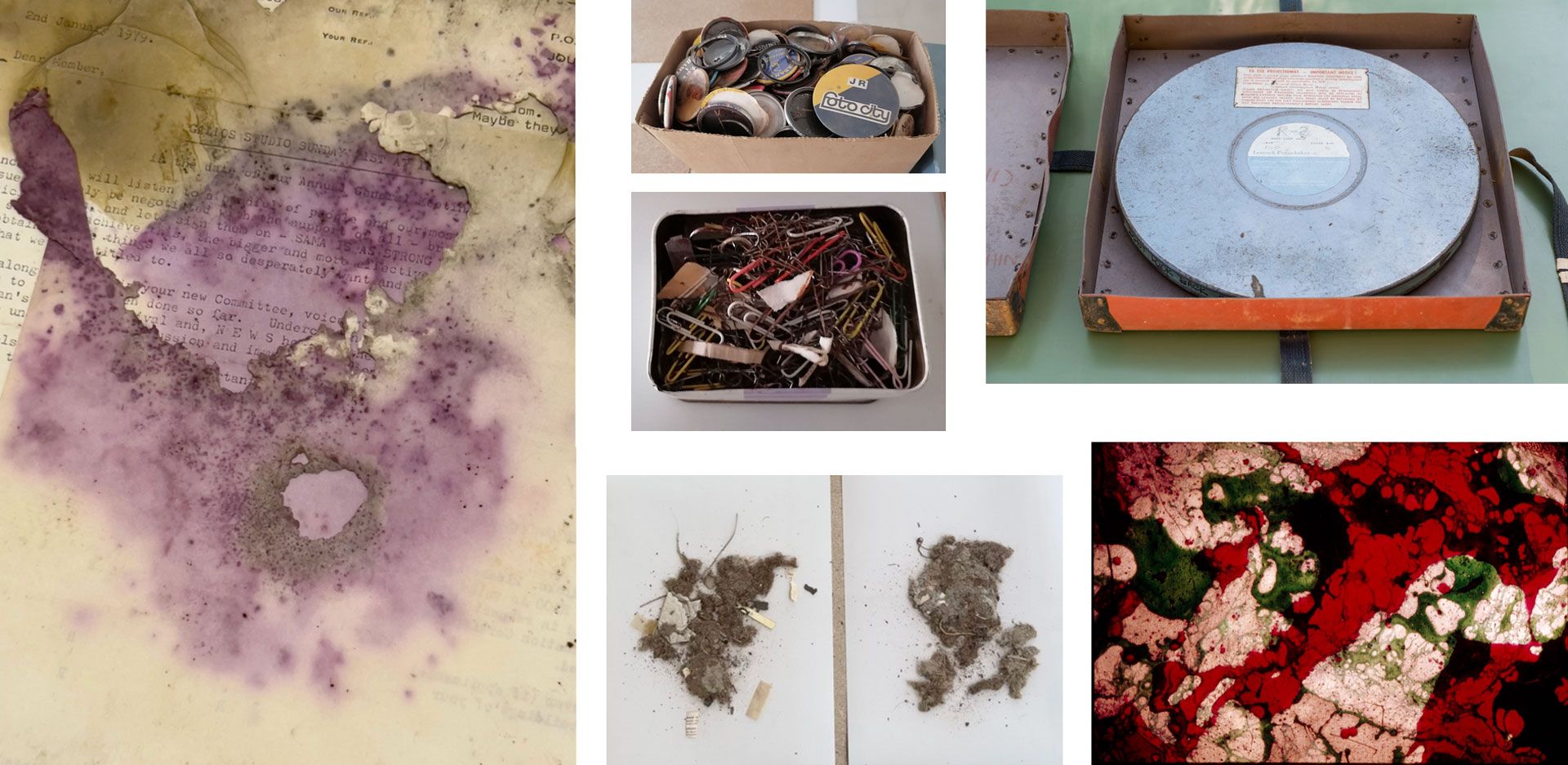
In 2023 I was introduced to what archivist and project leader Lizabé Lambrechts referred to as, “the decay archive” comprising the collected debris of an accessioned archive. This container of salvaged remains of an archival process provided the testing ground for our creative and conceptual analysis of decay without compromising the cultural heritage site from which it came, namely the Hidden Years Music Archive,[2]This vast collection captures an alternative view of the South African music landscape between the 1960s and late 1990s reflecting certain countercultural impulses against apartheid. To explore archive website: hymap that was donated by David Marks in 2013 to the Documentation Centre for Music (DOMUS) at Stellenbosch University. Before being donated this collection was subjected to the detrimental factors of its informal storage conditions such as high humidity, temperature fluctuations, and infiltrations of creatures, fungi and mould, causing significant damage and deformation of its materials. Hence the need for the decay archive, to contain the compromised or contaminated items which included: degraded photographic negatives, slides and audio reels; corroded button badges; rusty staples and paperclips; hole-ridden and mouldy paper documents; bottles of dust; and a film reel suffering vinegar syndrome.
I had no attachment to these superfluous items, unlike the archivist responsible for the transfer of one man’s entire archive to the institute over a ten-year period. Lambrechts worked very closely with Marks to process, annotate, and secure his collection that had been stored at his own home in KwaZulu-Natal, and which had therefore absorbed his personal history. Her sense of custodial responsibility had no bounds, so her care and attention naturally extended to the elements destined for disposal. Although these items were essentially marginal to the main collection, due to various levels of contamination, degradation or unreadability, they were nonetheless imbued with alternative values, care of Lambrechts’ refusal to discard or disregard them.
I was thereby inspired, for the first phase of my research, to develop an alternative mode of capturing these items that had fallen outside the main frame of significance, beyond the category of preserve-worthy and digitisable records. I arranged this “apparatus of capture” with photographer Jurie Senekal upon the substrates of his personal collection of expired photographic paper – the oldest being a 1955 box of Agfa Brovira Crystal paper.
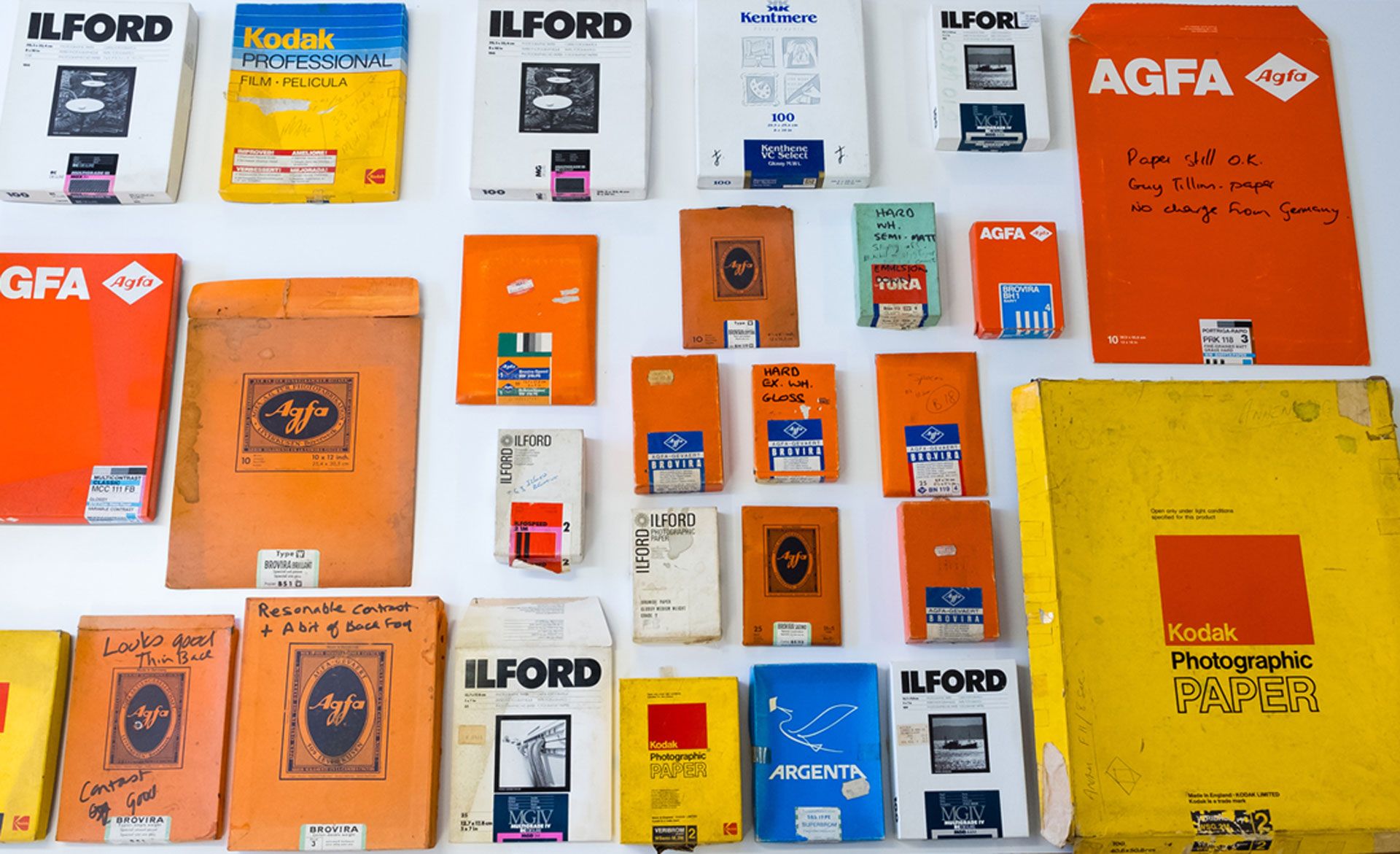
Senekal and I developed a series of lumen prints as spectral impressions of archival detritus by chance operations (our compositional methodology), effectively capturing an archive upon another archive, the superfluous upon the outdated.[3] The medium of outdated paper provides significance as another form of decay – when light sensitive silver gelatin paper expires, it may continue to produce a good tonal range in a print but otherwise it will appear grey and flat, this is generally referred to as “age fog” – what would be considered unusable by industry standards that apply expiry dates to products, is repurposed, reevaluated for another kind of capturing practice (outside of the dark room), relying on natural phenomena inter(e)acting in time. This anarchival practice generated minimalist meditations on time, loss and revivification
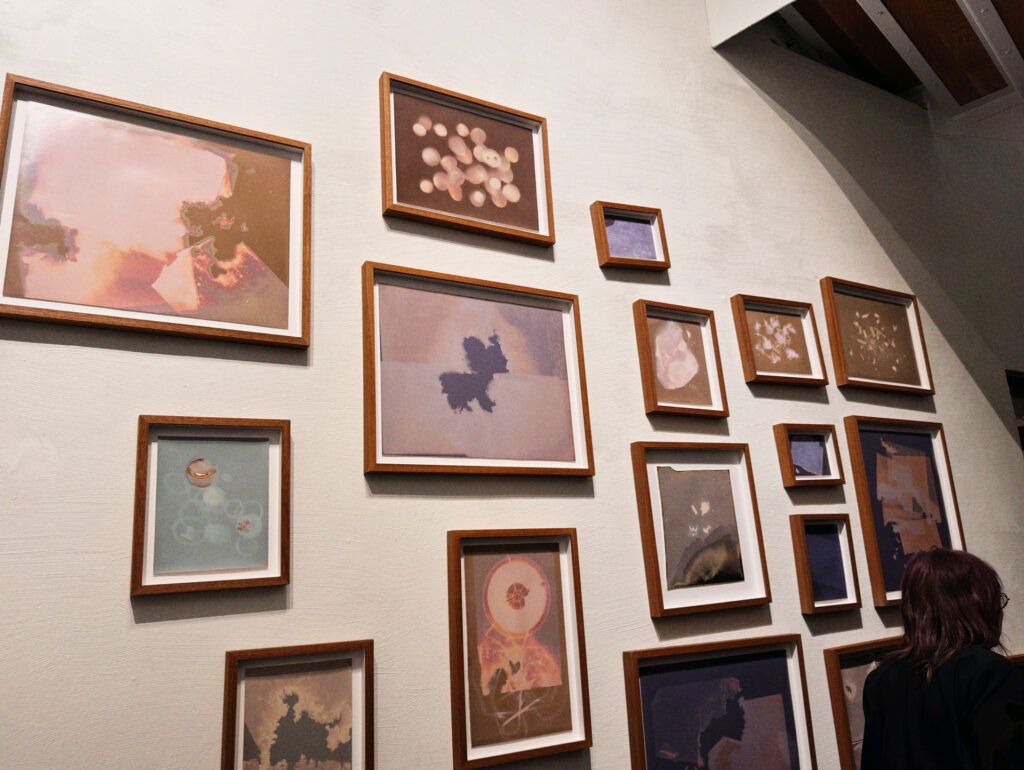
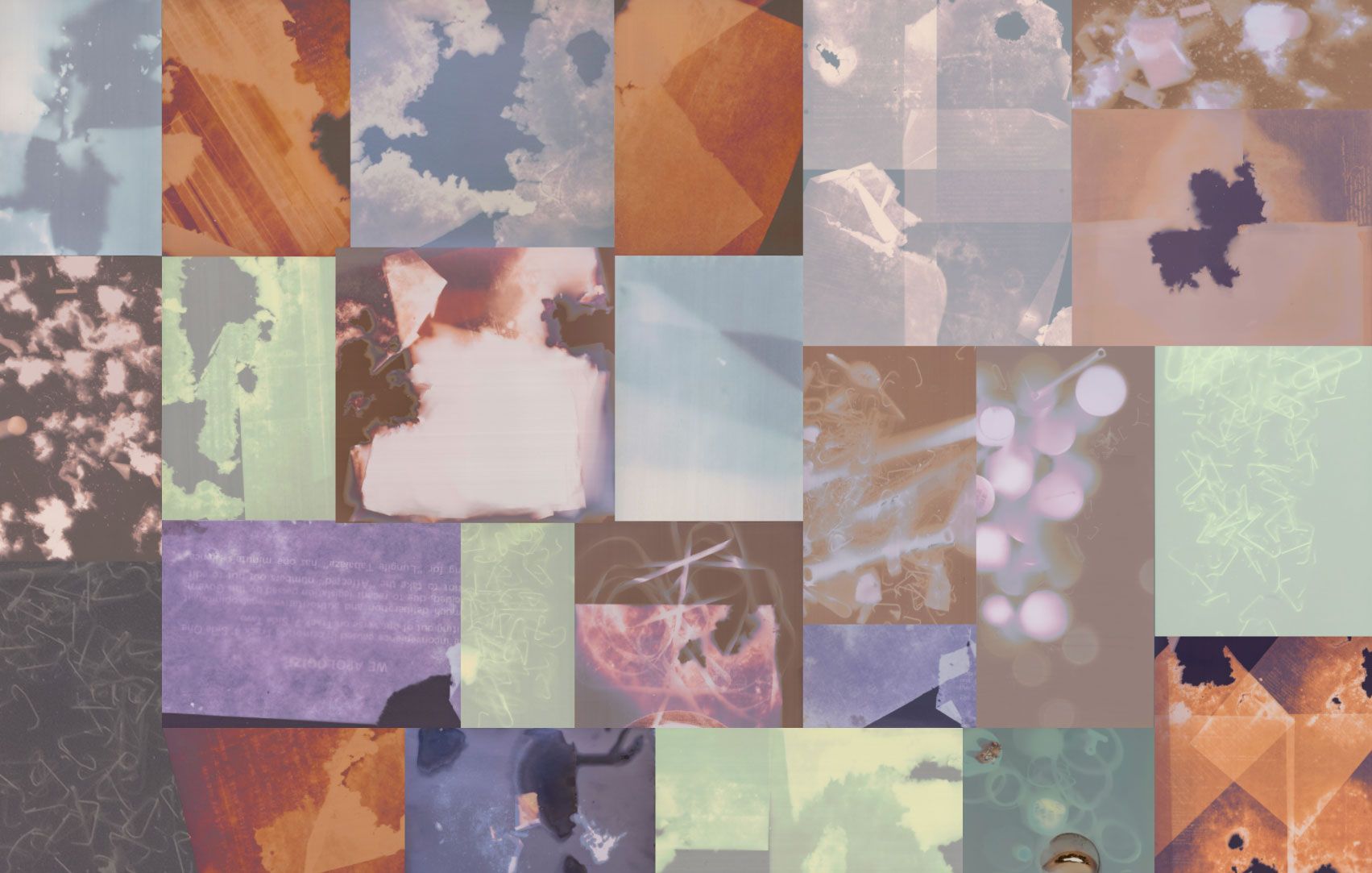 Lumen print series on vintage photographic paper (dimensions varied).
The Spectres of Decay series surveys the visual codes of decay upon discarded artefacts to catalogue the range of ruinous effects via the cameraless technique of lumen printing, capturing impressions transferred by the sun onto vintage photographic paper to produce unusual visual effects of an essentially unpredictable alchemical process. The productive element of chance lies in the interaction between light (UV index), form (of the decay-object and its transparency), chemical coating (of expired paper), and time (of exposure), to cast a radiant impression of vibrant (anarchival) matter. The exposed parts of the paper darken while the unexposed parts remain light, producing an inversion whereby the shadows of objects become the highlights of the image – absence translates to illumination.
Another uncontrollable aspect of the process lies in the instability of the print images since the silver gelatin paper ultimately fades and darkens unless it is chemically preserved by fixative, but this may effectively bleach out the extraordinary array of colours that are generated by the unique conditions of the printmaking process.[4]The sunlight exposure brings out the latent colour of the black-and-white photo paper, which varies according to the chemical coating of the paper types and when they were produced. We therefore chose not to fix the lumen prints and to rather embrace the ephemerality of this image-making process, which masks to abstraction the actual material status of the surplus-detritus of the archive in order to unmask other forms and traces.
This process provides a way for reinscribing archival matter to uncover alternative levels of heritage value, just as one decodes a palimpsest carrying different layers of information, different layers of time. It engages what I call a masking methodology of abstracting the actual, of visualising the material (artefacts), of decoding, modifying and recoding information. In this case, a literal flattening of the items into two dimensional representations via the medium of light, presenting a new form of materiality bearing different traces of information – as it translates across media, into fabricated palimpsests. I discuss this body of work in more depth in my article ‘Spectres of Decay: Anarchival approaches to decoding the palimpsest’ (2025): doi.org/
A selection of these prints were exhibited as an installation titled, Spectres of decay: The archive breathing at its horizon (2026), which featured eight framed giclée prints of digitised lumens (featured on this page) alongside a salon-style selection of original lumen prints, as part of the Deaccessioned exhibition at Oude Leeskamer, Stellenbosch, South Africa.
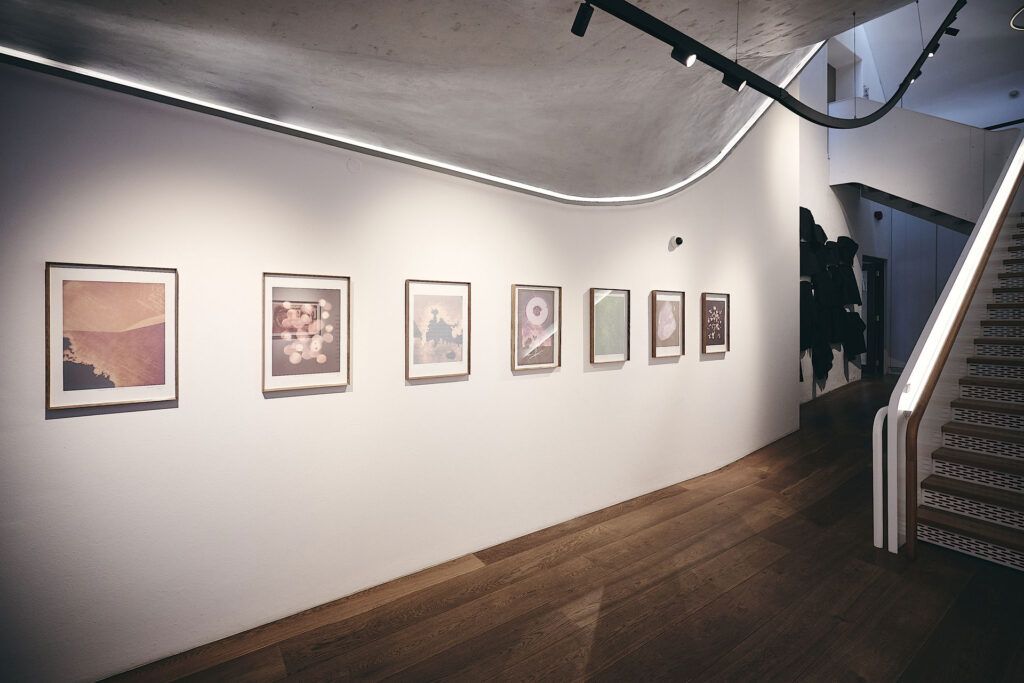
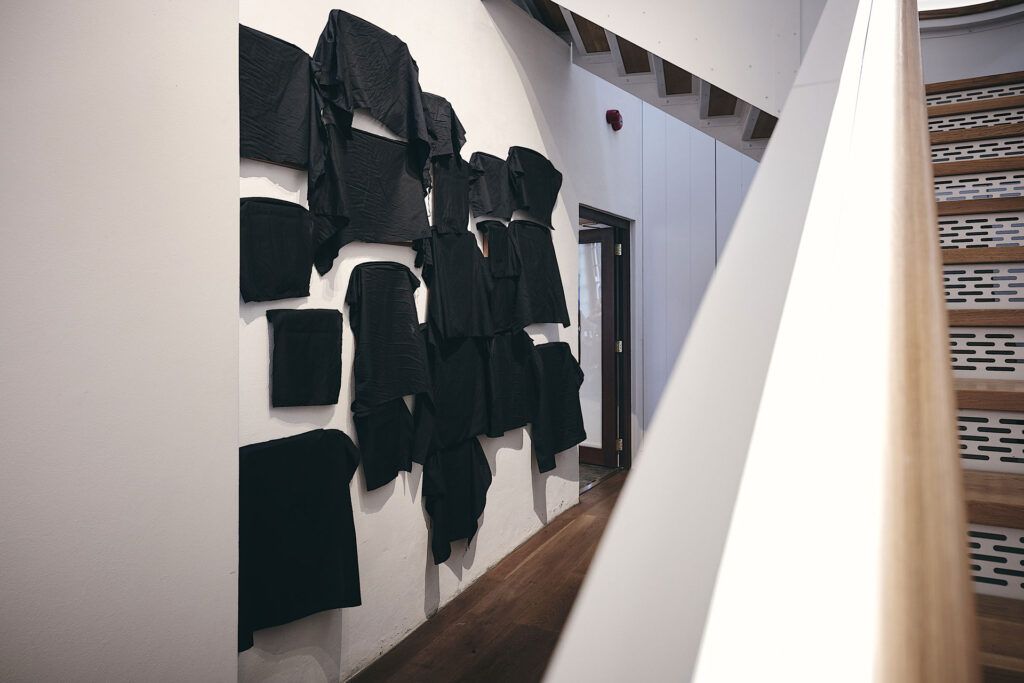
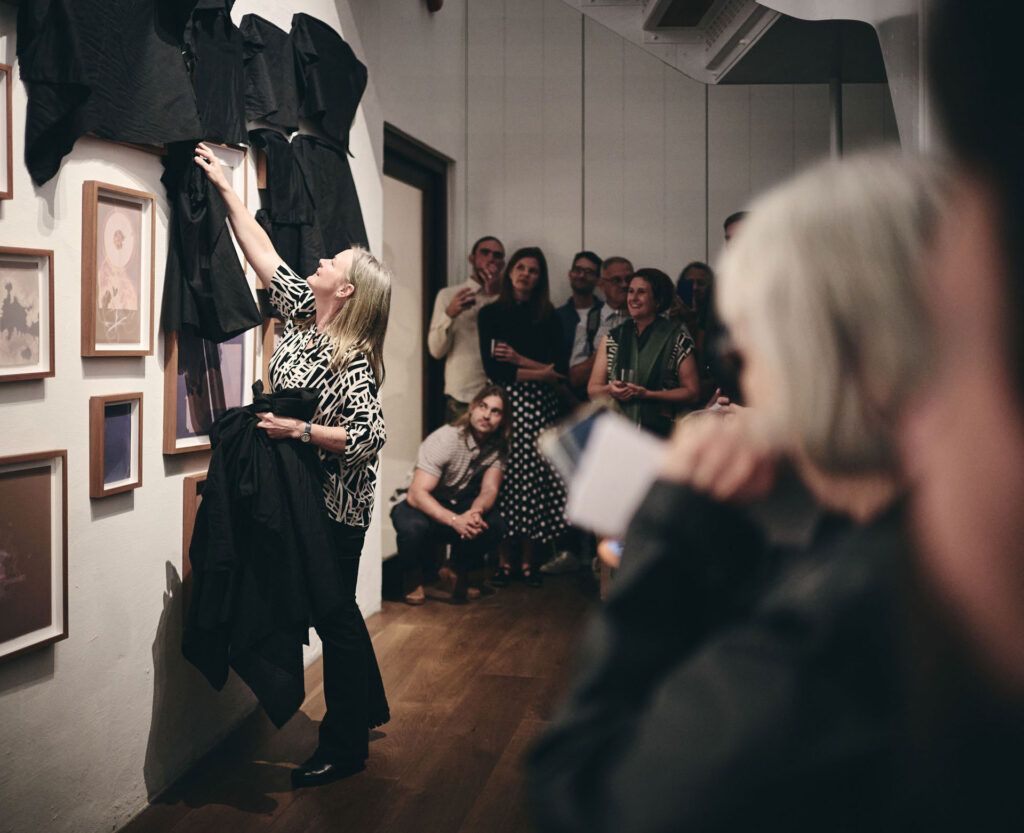
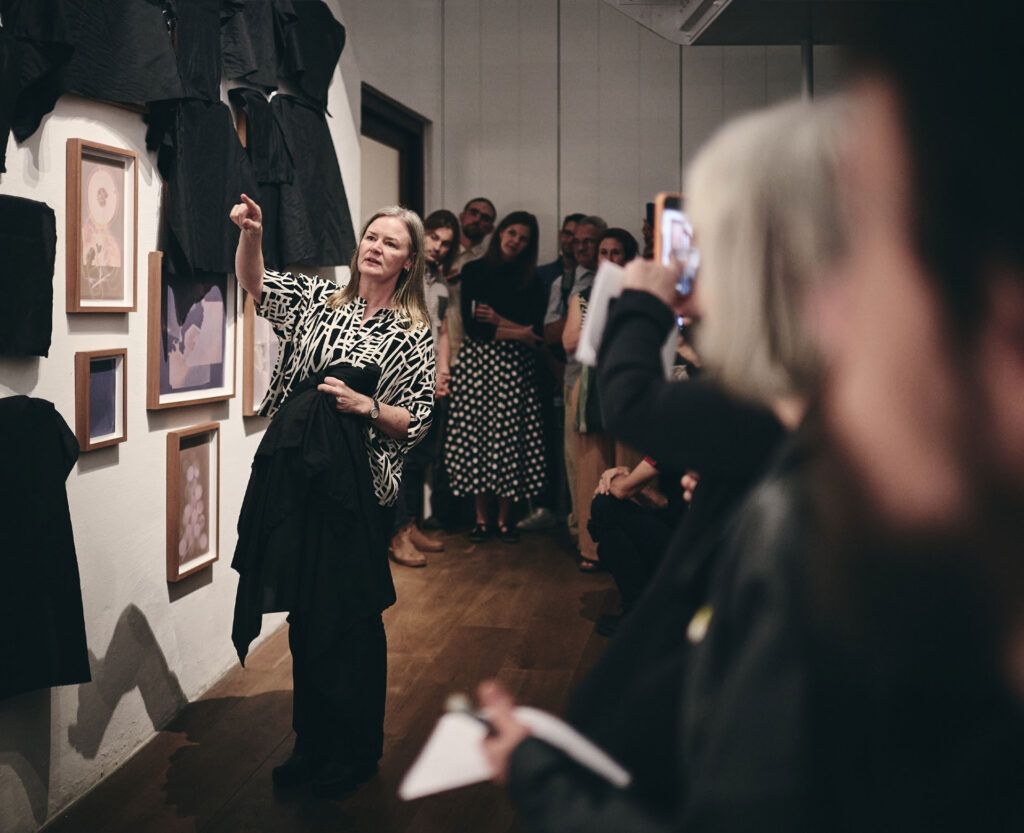
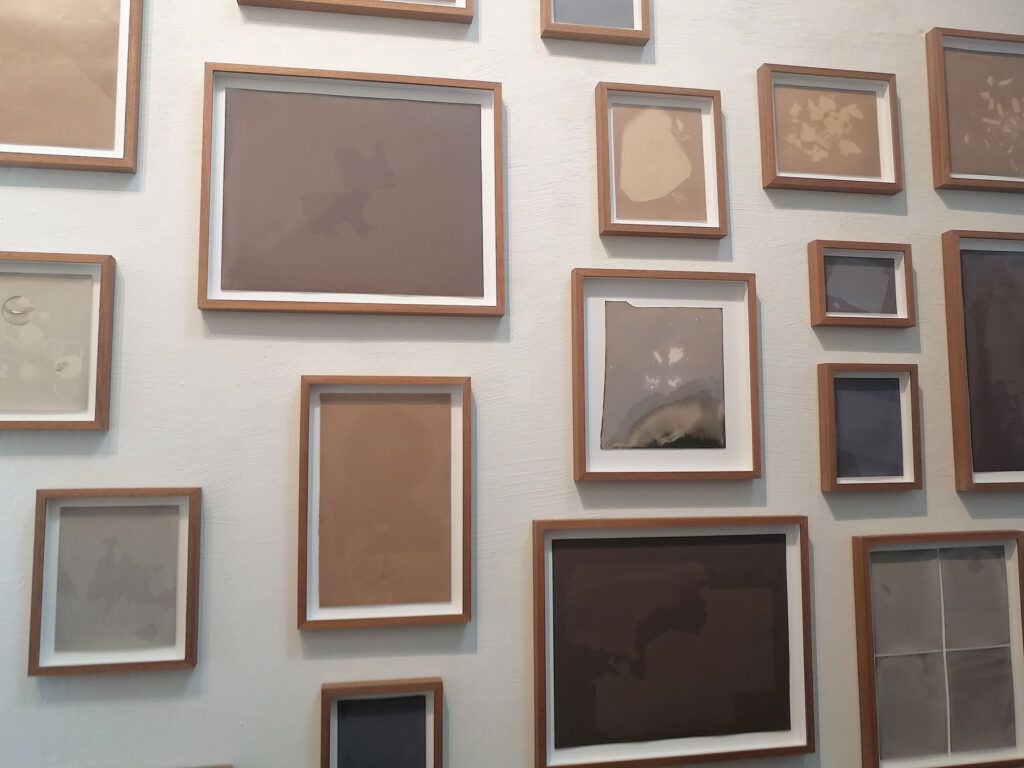
Since the lumen prints were not fixed, the very images (of disintegrating materials) were themselves released of their capture, to follow their own decay path of transformation – which was accelerated by their exposure to sunlight for the duration of the exhibit, after I unveiled them at the opening event. In her review[5]litnet of the show, Alexandra Dodd describes this moment where
the ghostly magic of the photographic process was brought to life in a Houdini-esque performative spectacle…For an instant, we were catapulted back to the vaudevillian days of early photography, when photographers would shroud themselves in dark cloths in the act of recording the moment (Dodd, 2026).
All that remains of the original archival impressions are very faint traces and radically reduced colour shades – their “spectrality” augmented – apart from the single fixed print that served as an anchor point, the digitised (giclée print) version of which is titled Wabi-sabi.[6]A Japanese aesthetic-philosophy that evades precise translation or definition, that Leonard Koren nonetheless sought to elucidate in a book dedicated to the term: “Wabi-sabi is a beauty of things imperfect, impermanent and incomplete” (2008:7), he goes on to reveal its metaphysical basis: “in its purest, most idealized form, is precisely about the delicate traces, the faint evidence, at the borders of nothingness” (2008:42). By this installation, the prints stage a form of anarchival practice in which decay is not mourned as loss but encountered as a generative condition through which the archive continues to breathe at its horizon.
The next phase of this artistic research involved further engagement with the ruined remnants of the archive in collaboration with sculptor Dominique Edwards.
Please continue reading here.
ACKNOWLEDGEMENTS | This work was supported by the Riksbankens Jubileumsfond [GI21-0001].
Bennett, J. (2010). Vibrant Matter: A political ecology of things. Durham: Duke University Press.
Deane, N. (2025). Spectres of Decay: Anarchival approaches to decoding the palimpsest. Image & Text (39) p.1-20. doi.org
DeSilvey, C. (2017). Curated Decay: Heritage Beyond Saving. Minneapolis: University of Minnesota Press.
Dodd, A. (2026). Deaccessioned: a review. LitNet, 8 June. Available: https://www.litnet.co.za/deaccessioned-a-review/ (Accessed 22 July 2026).
Ingold, T. (2011). Materials against materiality. In Being alive: Essays on movement, knowledge and description (pp. 19–32). London: Routledge.
Koren, L.(2008). Wabi-sabi for Artists, Designers, Poets & Philosophers. California: Imperfect Publishing.
Lambrechts, L., Lindström, K., Hansen van der Watt, L. M., Pitta, F., Deane, N., Moreschi, B., & Peterson (2025). Decay without mourning: future-thinking heritage practices. In International Journal of Heritage Studies, 31(3), pp. 340–357. doi.org
| 1. | ↑ | For an overview of the project please refer to our article ‘Decay without mourning: future-thinking heritage practices’ (Lambrechts et al., 2024): doi.org |
| 2. | ↑ | This vast collection captures an alternative view of the South African music landscape between the 1960s and late 1990s reflecting certain countercultural impulses against apartheid. To explore archive website: hymap |
| 3. | ↑ | The medium of outdated paper provides significance as another form of decay – when light sensitive silver gelatin paper expires, it may continue to produce a good tonal range in a print but otherwise it will appear grey and flat, this is generally referred to as “age fog” – what would be considered unusable by industry standards that apply expiry dates to products, is repurposed, reevaluated for another kind of capturing practice (outside of the dark room), relying on natural phenomena inter(e)acting in time. |
| 4. | ↑ | The sunlight exposure brings out the latent colour of the black-and-white photo paper, which varies according to the chemical coating of the paper types and when they were produced. |
| 5. | ↑ | litnet |
| 6. | ↑ | A Japanese aesthetic-philosophy that evades precise translation or definition, that Leonard Koren nonetheless sought to elucidate in a book dedicated to the term: “Wabi-sabi is a beauty of things imperfect, impermanent and incomplete” (2008:7), he goes on to reveal its metaphysical basis: “in its purest, most idealized form, is precisely about the delicate traces, the faint evidence, at the borders of nothingness” (2008:42). |