ALÉSHA BREDELL
A Close Reading of Dust as a Rhizomatic Phenomenon
This chapter discusses the notion of time, and how it relates to the archive, collections and dust. The focus will fall predominantly on Ben Segal and his relation to the dust. Rhizomatic theory, on non-hierarchical structures, is applied as an entry point into the archive, and dust is explored further through the notions of visibility and blindness. Through exploring the imaginary and the subjective influences that shape archival collections, it will be argued that dust should hold a valued position as part of the unfolding story of Ben Segal and subsequently also of his collection.
Objects and Time in Dust
Objects exist and if we pay them more attention than we do people it is because they exist more than those people. Dead objects live on. Living people are often dead already.(Godard, 2004: 50).
In archives the notion of time is a prevalent and major factor. Memory, the past and the present, the time available for tasks to be completed as well as the effect of time (past, present and future) on the objects in the archive all fall under this vast notion of time. In a practical sense the direction of time, from past to present, is a visible experience and the passage of time is one of the most obvious reasons for collecting. As Derrida argues, we collect with a distant notion of an anticipated future as “the archive has always been a pledge, and like a pledge … a token of the future” (1996: 18). In the present and future, the past exists through such tokens.
While collecting is a tangible form of investigation “into an aspect of human experience” (Pearce, 1995: 4), archiving is the attempt to keep such experiences safe for that imagined future. Archiving may be considered as an attempt to preserve ‘time’ through objects for a possible future. The passage of time, being one of the reasons for an archive existing in the first place, also works against itself. With this passage and attempts at preservation come the deterioration of objects – an occurrence that acts as a constant reminder that we cannot really preserve objects against the passage of time. It is also a reminder of death: “you are also here in it, as a figure of the future; as is your future death, which has been archived a priori” (Lippit, 2005: 6).
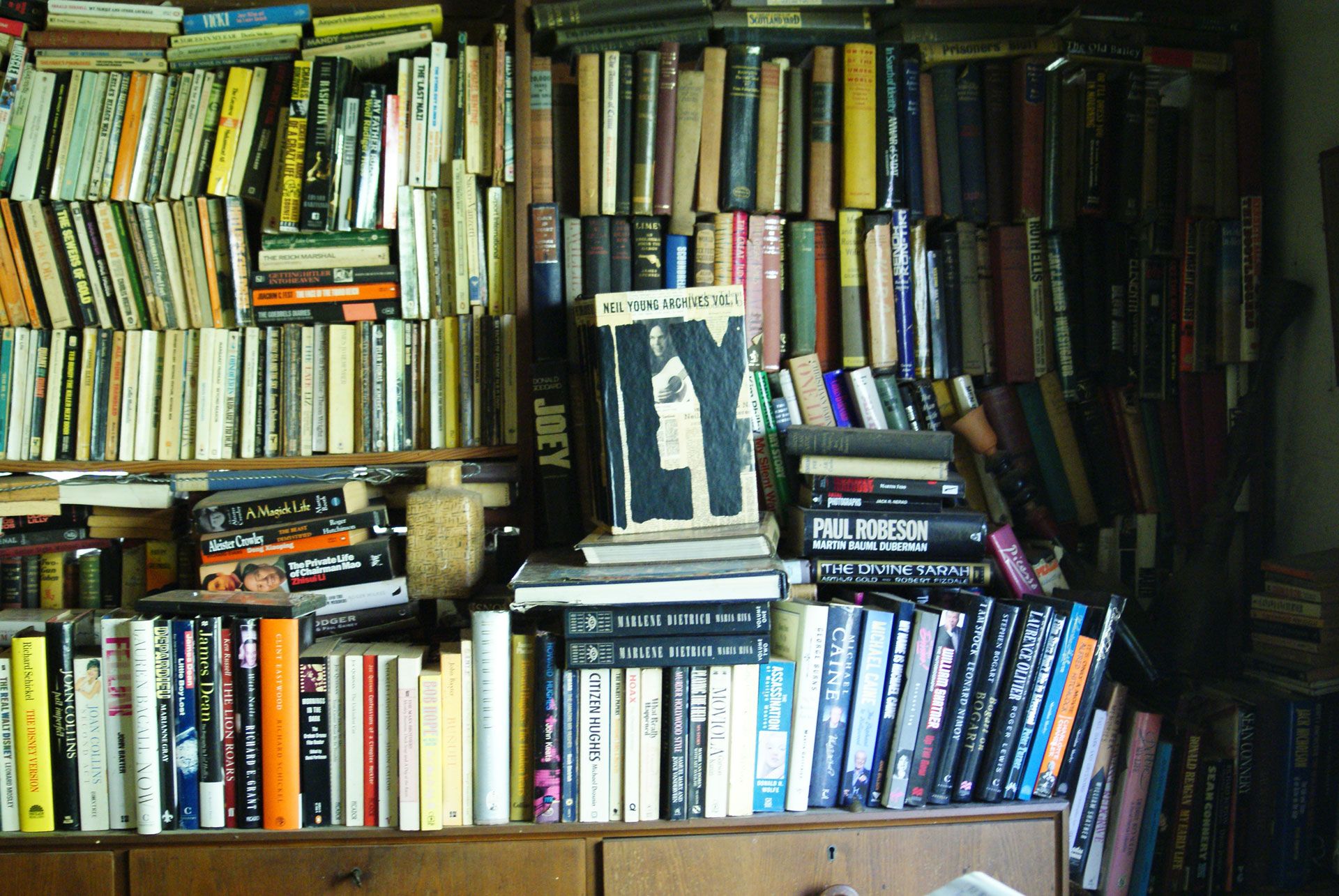
In time, all objects cease to exist, yet often objects outlast people. In the present these objects serve multiple purposes; as reminders, tokens or as information. In the context of my own study, Ben Segal as a living human entity no longer exists, yet his presence and his mind are visible when looking at and interacting with the objects he collected. Lippit reminds us of our smallness after death by stating that “in the vast archive of an infinitely divisible space and time, you are an atom: singular and indivisible: a ‘hypothetical body, so infinitely small as to be incapable of further division’ (Oxford English Dictionary)” (Lippit, 2005: 6). Lippit adds that:
Because of the indivisibility of atoms, atomism relies … on images. Your death imagines you as a hypothesis. Atomic space emerges from a universe divided infinitely to the point of a hypothetical irreducibility. The logic of the atom, the atomology, sustains a paradox: infinite divisibility that ends, despite the endless nature of atomic division, in a hypothetical figure, small and indivisible, and also perhaps invisible. Gilles Deleuze calls this effect of ‘pure becoming’ the paradox of infinite identity (2005: 6).
The remnants of Segal’s dust, those small particles that he left behind in his collection, have potentially taken on a new ‘life’. Such a new ‘life’ is influenced by the archivists’ and unexpected visitors’ presence and movement; the wind of a door opening or even the transportation of boxes from one location to the next. The transferal of dust from location to location maps the multiple interactions, connecting time and space with human interaction. The connections are made possible through the interactions of objects with other objects, as well as objects with subjects in an infinite transaction, with the dust as the remains of such interactions. Ben Segal is thus also connected to the present day on a purely physical (albeit microscopic) level, as that which he has left behind (the flakes of his skin, for example) floats and settles in the archive.
There are few spaces where the connection between objects and time is as pertinent as in an archive. In the book Objects of Time: How Things Shape Temporality, Kevin Birth writes about the capability of objects that tell time, such as clocks and calendars, but he adds that we have also “become dependent upon objects for thinking about time” (Birth, 2012: 1). In relation to the passage of time, “we delude ourselves into thinking that these objects’ cycles transparently represent the rotation of the Earth and its revolution around the Sun” and as archivists we do the same in the archive (Birth, 2012: 2). We categorise certain objects chronologically and historically in their ‘correct’ time slots. As researchers we spend a lot of time clarifying and making certain of the times and dates of events, hoping that our conversations with others match up with documents in the archive to corroborate our stories, in an attempt to give them absolute validation. However, as Birth reminds us, “time is a domain that spans disciplinary boundaries – a subject without limits on which limits have been imposed” (Birth, 2012: 33). In the archive we gravitate towards the perpetuation of such limits, the limit and impossibility of framing time:
The anachronism is an event that repeats, or is out of sequence. As that which refuses the uniqueness of every event within a temporal sequence, the anachronism is the disruption of chronology. In also refusing the ‘directionality of past and future history’ the idea that historical time moves in a single direction on the time-line (the most clear spatialisation of time), it also refuses what the time-line guarantees: historical progress. The anachronism and the figure of the time traveller have the potential to collapse the sequence past-present-future that defines our concept of history as chronological and linear, hence disrupting the city’s contemporary image of itself, more often than not a projection into the future that represses the potential to really experience the past in the present (Malcomess & Kreutzfeldt, 2013: n.pag.).
By treating time in the archive as an anachronism, accepting the disruption of, while refusing the predictable direction of historical time, we gain the possibility of a less repressed view of a collection, a life or an object. How can the objects, the recordings and so forth found in Ben Segal’s collection, from a past that sought to abolish/restrict it from memory, be relevant to the present, and how are we, as archivists and scholars, perhaps perpetuating a similar violence?
As Susan Pearce also argues, “objects have a brutally physical existence, each occupying its own place in time and space” (1995: 14). She continues by saying that objects intrinsically retain a link with their ‘original’ context (Pearce, 1995: 14), which then postulates and perpetuates a genealogy.[1]This view of objects is continued within the archive, where limits of a precise lineage following the historical time-line are perpetuated, leaving little space for alternative connections to be made. Some objects or pieces of evidence, if you will, in the archive can possibly contradict others, or the findings of the interviews. This leaves archivists or scholars with a dilemma with time-line inconsistencies. Similarly, to recognize and accept the subjective role of the archivist or scholar, possible anachronisms ought to be embraced just the same. Archives and their content thus exist or manifest on multiple levels, from the brutally physical to the barely discernible, the seemingly insignificant to the important, the minute to the gigantic, and the barely visible to that which might seem blatantly obvious.
Objects, in their own processes of becoming, are not perpetually ‘haunted’ by their past when they exist in an archival space, but are rather the manifestation of infinite possible connections. Pearce also states that objects are socially significant as their meanings are created by ordering them, placing “them in sets, both mentally and physically” (Pearce, 1995: 14). This is possible as a word, as is the case with objects, “only has meaning in relation to other words amongst which it will be embedded through socially meaningful organisation” (Pearce, 1995: 14). This is the task that the archivisation of objects requires: placing objects into their physical positions whilst also placing them into certain contexts and social understandings.
Such ideas around archival infinity are echoed in Akira Lippit’s (2005: 6) proposal for an imaginary archive as a space where:
Every word written and unwritten, yet and never to be written, [is] endlessly divided: [it is] a record of every event that has occurred, will occur, and will never occur. Future histories and histories of the future, minutely detailed and timeless, an archive of timeless time and history, of the untimely nature of both. Each moment divided into endless variations, infinitely. You are also here, in it, as a figure of the future; as is your future, your future death, which has arrived a priori. (You are in the universe, but you are also a figure of the universe itself).
This proposal for an infinite, open-ended archive can be linked to the occurrence of archival dust, especially if we start imagining the connections between the dust and the journeys it has undergone to get to where it now resides. Similarly, we cannot define or limit the number of possibilities encapsulated in the Ben Segal collection, especially when thinking about the immeasurable particles of dust it contains. The number of possibilities encapsulated in this archive are endless and open. However, these connections and multiple layers of possible journeys already taken (or that which will still take place) cannot be limited to chronological time-lines, but can be read as multiple lines on a map, so to speak. Through the connections made possible in and from the dust, dust can be used as a tool through which to embrace anachronistic time.
Segal Dust
For Caroline McCkracken-Flesher, “to archive is to be anxious” and she notes:
building the archive beseeches completeness, but is predicated on fragmentation; fragments indicate the impossibility of completion, but reveal the excess in irreconcilable objects; disparate objects invite constraint, but that provokes the randomness and uncontainability of a fractured multiple reality (2015: 71).
A collection is never complete, and one could read a form of anxiety in collecting in the face of a fragmented existence. Similar anxieties mark the archivist’s task when a collection is archived through sorting, appraisal and cataloguing. Here, however, the prerogative is informed by an anxiety to keep safe and preserve, to prevent deterioration, to discard harmful objects like staples, insects and dust.
This sense of incompleteness and anxiety expressed by collecting could possibly speak of what various theorists have identified as desire. One of the earliest thinkers on this topic, namely Plato, was the “first to articulate the concept of desire in a systematic way” and distinguished between two directions of desire, that of positive desire or negative desire (Kahn cited in Silverman, 2000: 186). Ultimately, Plato’s formulation of desire is centred on lack, since “desire enters the picture as a sign only, a mark of ‘man’s ‘essential’ or ‘ontic’ incompleteness” (Silverman, 2000: 186). Deleuze and Guattari rework this trajectory of desire, as desire for them “is transformed into an activity, a process of production which, by assembling singularities, ‘manufactures effects’” (Silverman, 2000: 186).
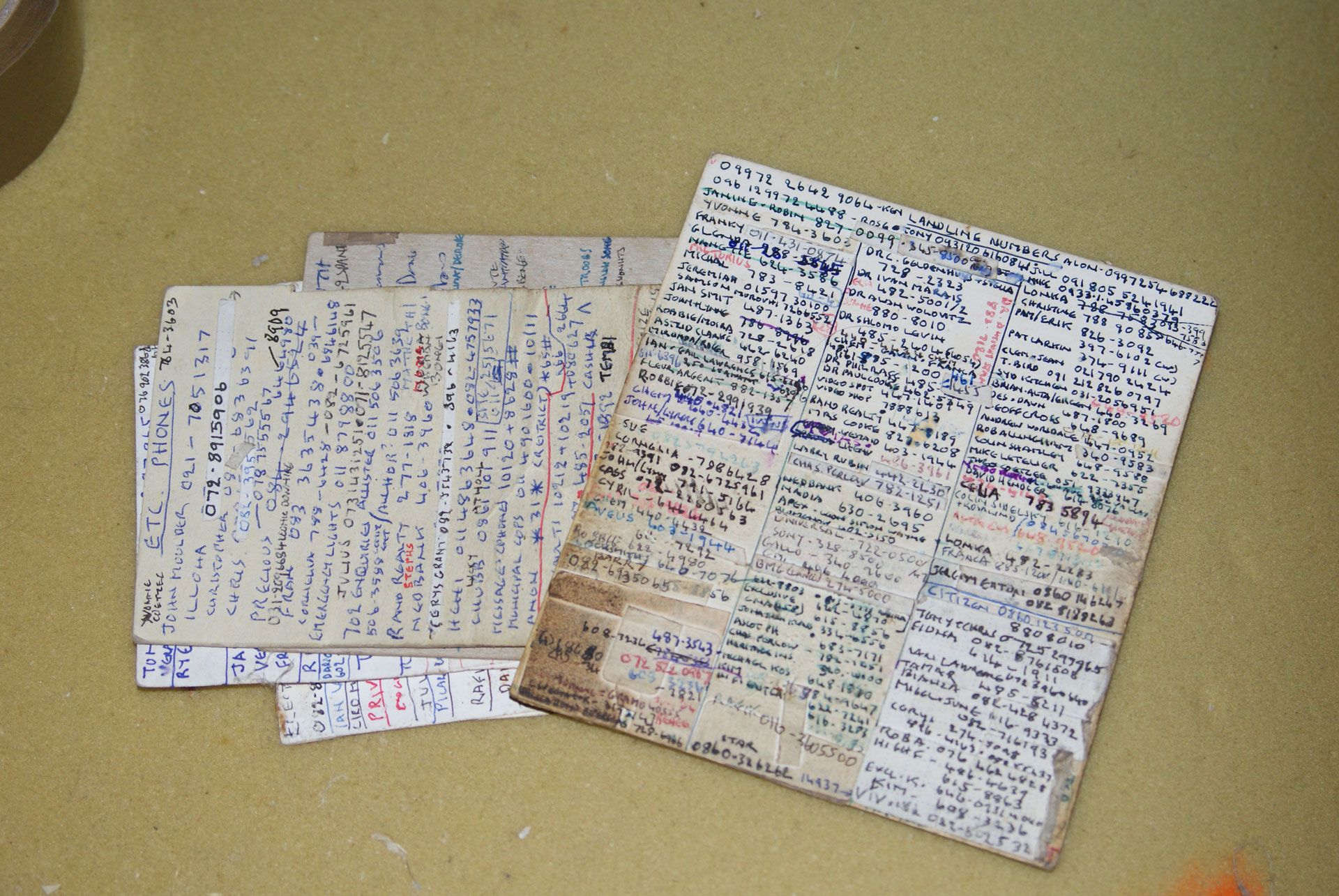
Ben Segal was driven by a desire to obtain information and then to share that knowledge or those objects, to listen to the music collected and to ultimately enjoy these items, without necessarily thinking about what this might all mean for a future generation. The early recordings Segal made for 3rd Ear Music were perhaps made with the explicit intent to preserve, but not the house and all Segal’s possessions, which are now also part of the collection being sorted.
With dust there is a similar desire, only in the case of dust this desire is not to keep or gain, but to frantically discard. McCkracken-Flesher writes that:
this archive betokens neither completion nor even containment. Its heaps of random stuff, ideas and arguments reified into documents and artefacts, erupting in fragments and out of order, actively contribute to the chaos only figuratively constrained by the process of collection (2015: 82).
From the fragmented and random material of the archive we make sense of the past in the present. If one is to consider the emergence of various marginalised voices in recent historiography, then one will notice the impact that seemingly insignificant objects have had on the unfolding of these histories. As Joan Thirsk writes, “starch, needles, pins, cooking pots, kettles, frying pans, lace, soap, vinegar, stockings do not appear on their [the male historians’] shopping lists, but they regularly appear on mine. They may ignore them, but could they and their families do without them?” (1979: 22). By looking at these lists or other seemingly insignificant objects, historians are granted access to aspects of worlds that might not have been considered before.
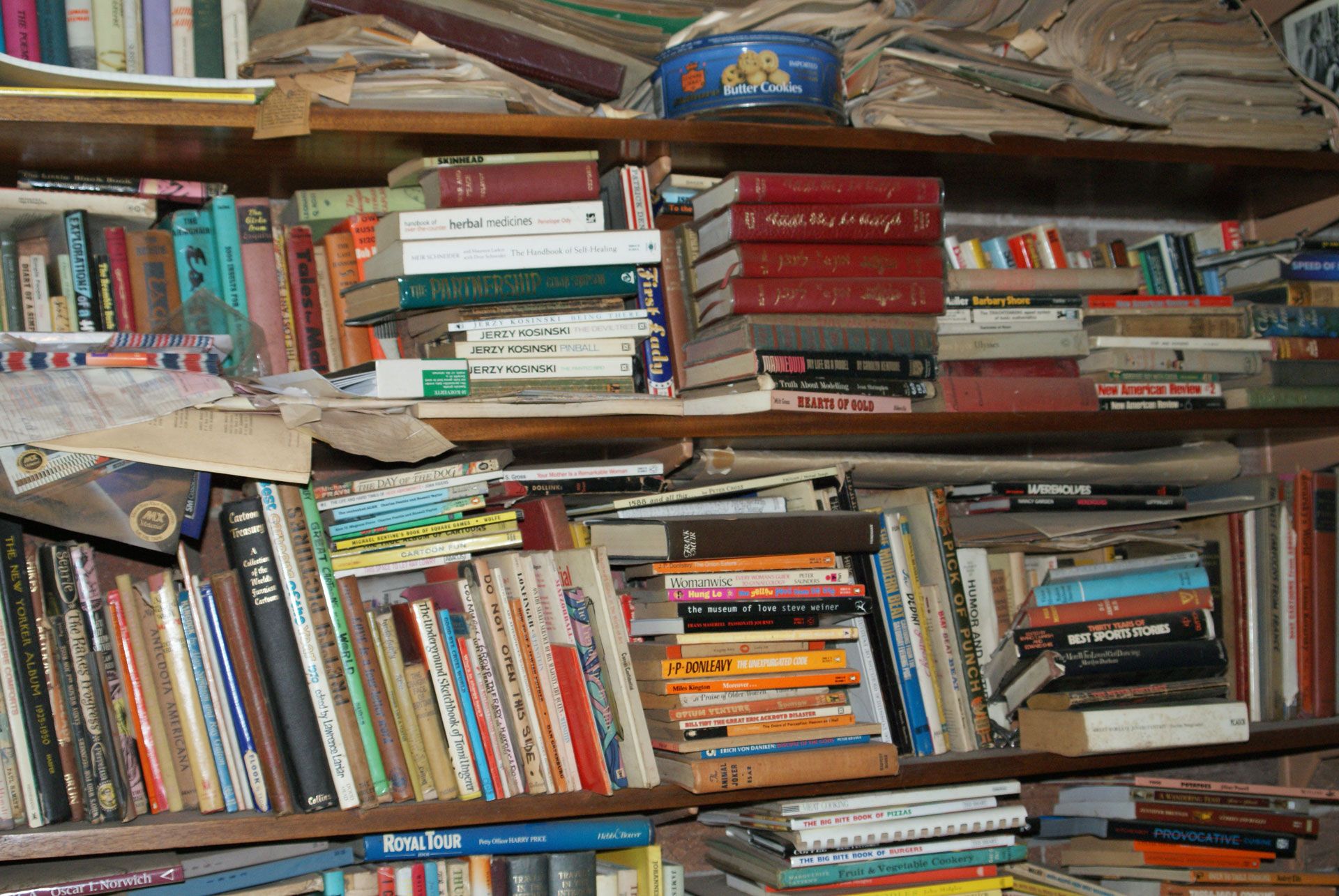
There is thus credence in the investigation of the miniature, the detail of the seemingly insignificant. Every sample, every object or newspaper clipping and even dust speck could form part of a miniature understanding, which might unlock larger questions in the archive and lead to new ways of reading the archive:
The miniature hints that the world of things can open itself to reveal a secret life – indeed, to reveal a set of actions and hence a narrativity and history outside the given field of perception (McCracken-Flesher, 2015: 89).
The secret lives that are possibly recollected in archival dust are a reminder of the archive as “a place where collection betokens lack”, as we might never truly access or fully grasp the secret lives the way the collector did (McCracken-Flesher, 2015: 89). In an interview with Kenneth Segal, he recalls a visit to his father when he was in the hospital:
He asked me what I was doing and I said I was lecturing about the French Revolution at the time, and he couldn’t speak, so he was whispering and he said to me: ‘Go home, walk inside, in the study or just before the study, there’s a shelf with a row of twenty books and behind the 5th row from the bottom second third or fourth book from the end take out the book behind that of Simon Shemmer called The Citizen and that is a very good book, you can use it for your lectures’. So he knew every single book. He knew all the content and I’m sure that if he didn’t read all the books to the end, he knew exactly what was there and he knew the gist of what was going on there. My impression was he read everything (Personal interview, 2 July 2015).
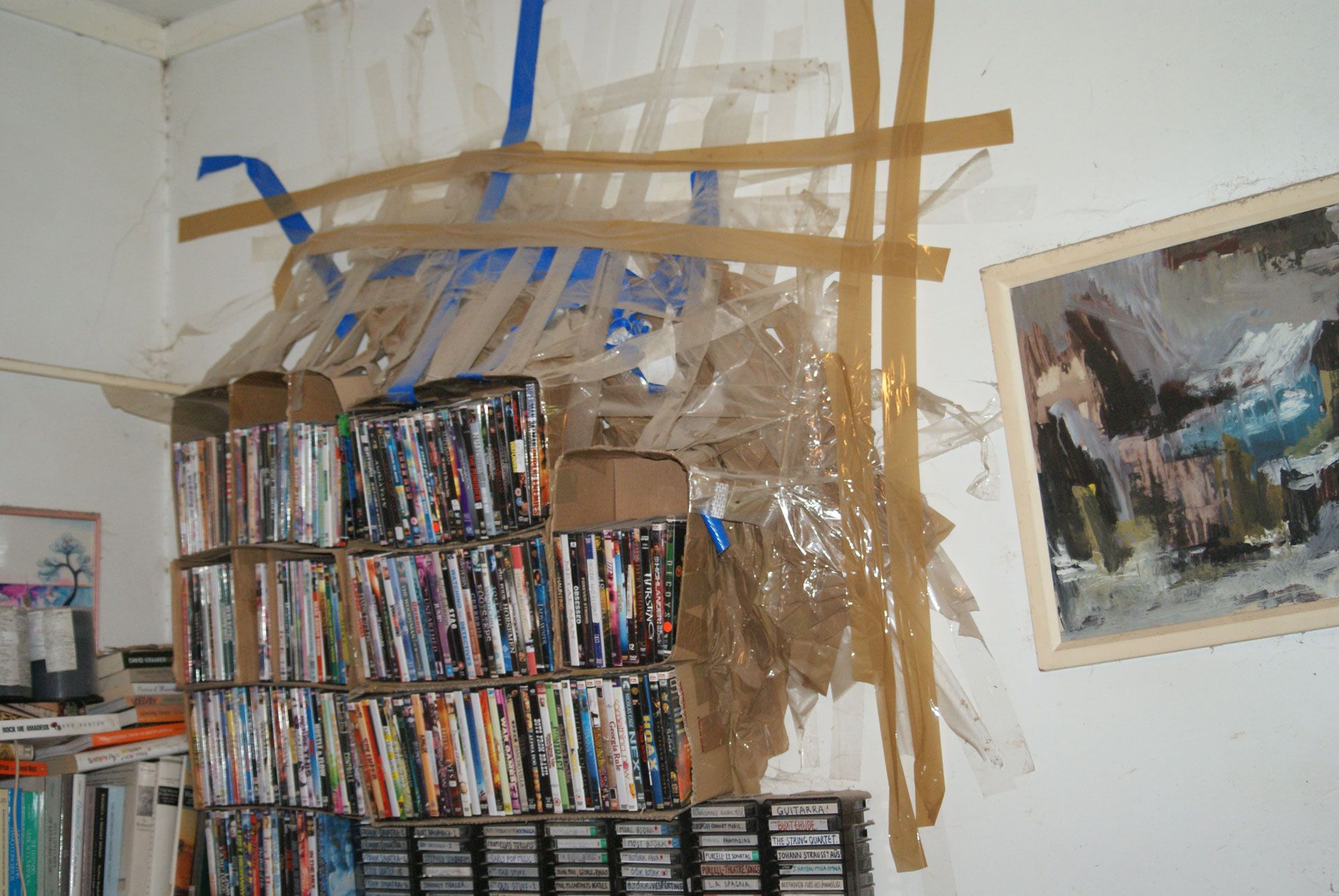
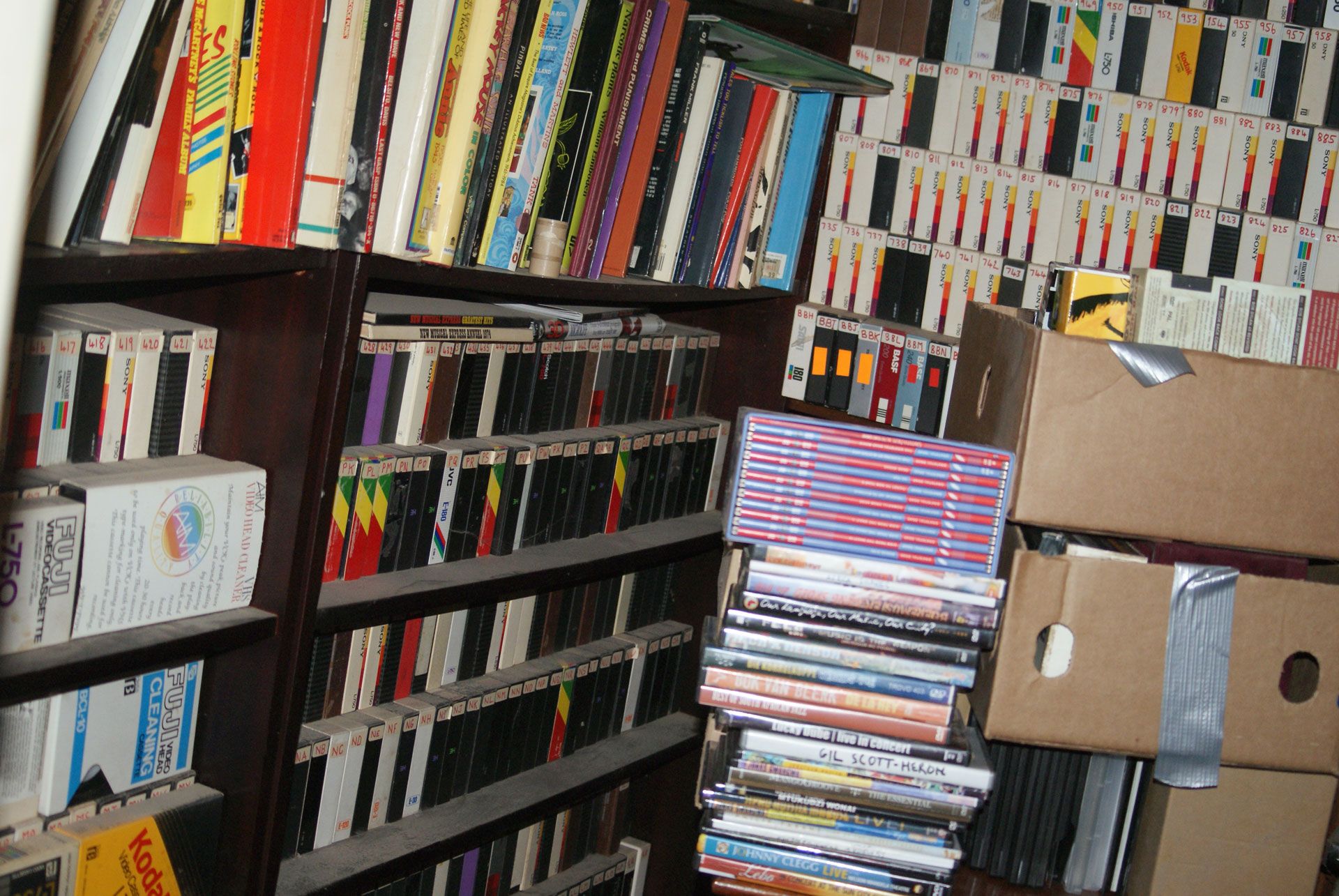
As stated previously, the Ben Segal collection is an extensive collection, still in the process of being sorted and catalogued. In its excess, it also speaks to the mind of the collector.
McCracken-Flesher writes in this regard that “it is the nature of the archive to be incomplete and thereby excessive. On the edge of fragmentation and dispersal into unknown archives” (2015: 89). This can be seen in the case of the Ben Segal collection, which was created when his belongings were sorted and packed up after his death. During this time his three sons discarded a lot of items they thought of as worthless, or took items from the collection for personal reasons. There are thus certain absences in this collection of items that were once present but are no longer there. McCracken-Flesher writes that “absence in the archive represents not nothing, but rather the space left by what is gone” (McCracken-Flesher, 2015: 89). The absences in the archive are therefore not ‘nothing’, but gaps left open to the imagination and for further questioning.
One might also argue that, when something is invisible or even not present, we can use other methods as a means of enquiry into such invisibilities/absences:
Vision was and is a martinet and an aggressor, encroaching on the realms of the other senses. Record events in chronological order on parchment or paper and you have a time machine. You can observe beginnings simultaneously. You can alter time’s direction, and you can halt time so as to examine individual events. If you are an accountant, you can proceed backward to find a mistake; you can construct a balance sheet like a still photograph of the whistling storm of transactions (Crosby, 1997: 227).
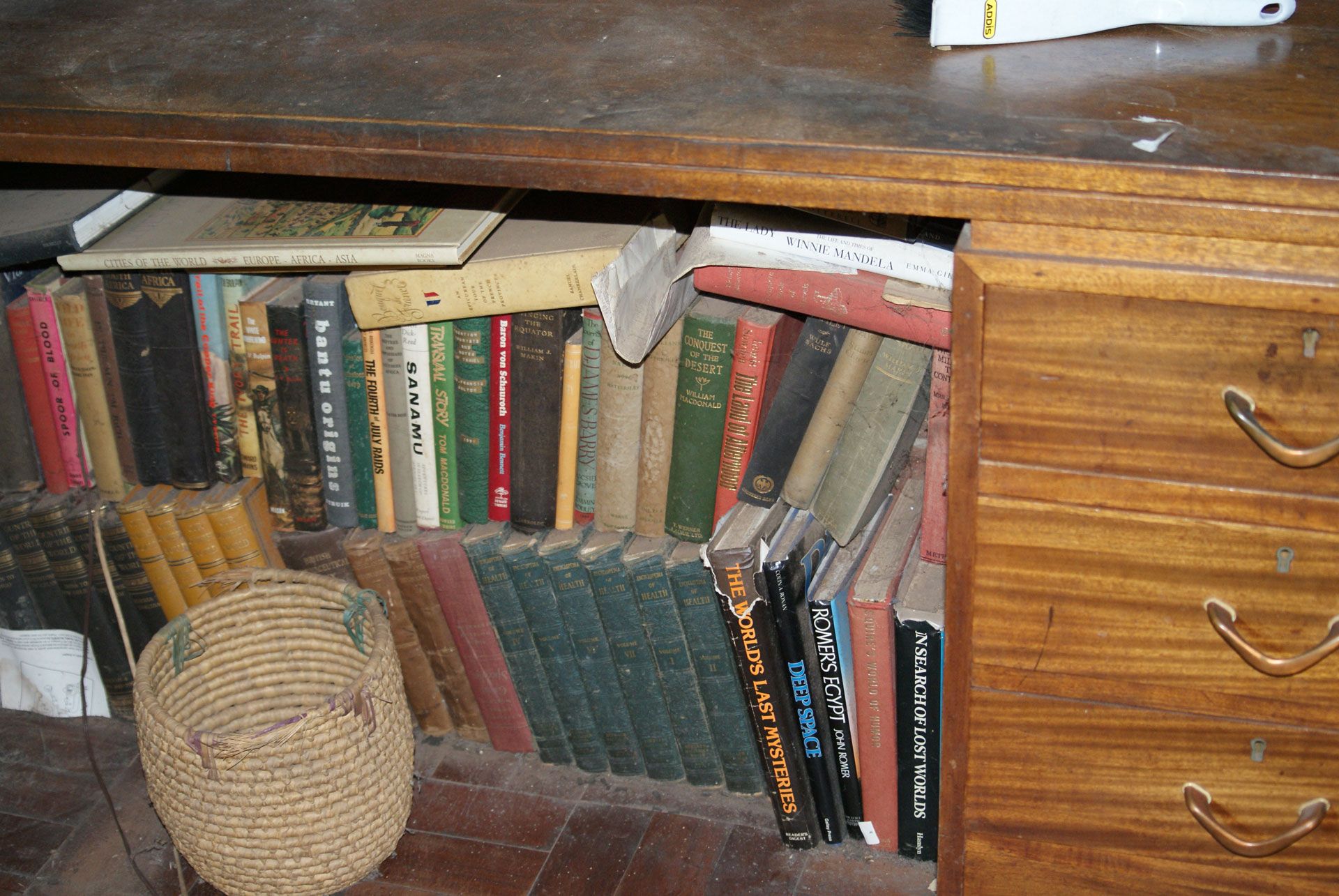
As a collector one leaves clues to the past which can lead to new findings and new directions for the future. Ben Segal had a philosophy that if you leave dust undisturbed for three years, it does not accumulate or become less, but stays exactly the same (Kenneth Segal, personal interview, 2 July 2015).[2]This comment originally appeared in Quentin Crisp’s The Naked Civil Servant: “There is no need to do any housework at all. After the first four years the dirt doesn’t get any worse” (1968). This notion of dust is then borrowed, interestingly, from another context. Intellectual dust, so to speak. In the movie An Englishman in New York (2009), the sequel to Naked Civil Servant, Quintin Crisp, played by John Hurt, remarks: “Don’t bother, house work is a mistake […] it will only raise two decades’ worth of dust […] He who so famously said that after the first four years the dust doesn’t get any worse, he was wrong, the dust took its awful revenge” (59:36 – 59: 59) Dust thus became a large part of the collection and reflects something of the philosophy of the collector. The overwhelming presence and visibility/accumulation of the seemingly insignificant dust forming part of the Ben Segal collection provided the impetus to consider this collection in a new and different way.
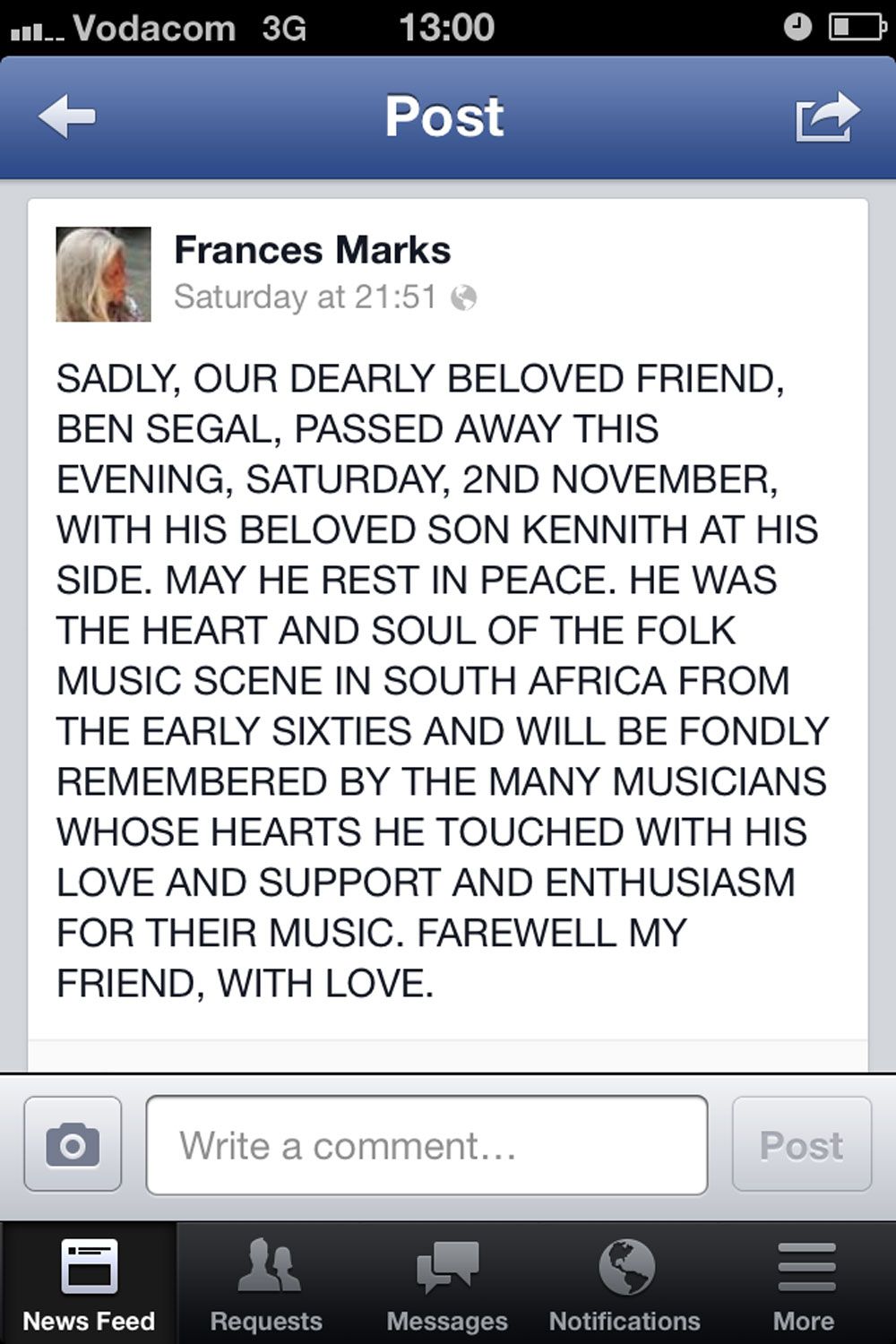
Frances Marks told me a different story about the reason for the dust, claiming that after Ben Segal’s divorce from Irma, he did not allow certain areas of the house to be touched or cleaned. The dust had to be left undisturbed. The decision to keep the dust intact thus functioned as an archive or repository of the past.
Inhaling the dust through our nostrils, we are inhaling bits of the past, of Ben Segal and of memory into our lungs. As Tim Hallet reminds us:
objects degenerate, but nothing ‘degrades’ more than human beings. We shed hair, dandruff and skin. Our outer layer of skin – the stratum corneum – is shed every three days. That is seven billion scales of skin per person. Some estimate that dead skin constitutes 90 percent of household dust … Unintentionally we swallow these bits of skin, cannibals by necessity, though not by choice. Through the course of living and breathing, we are the world (2002: 4-5).
Notions of Dust
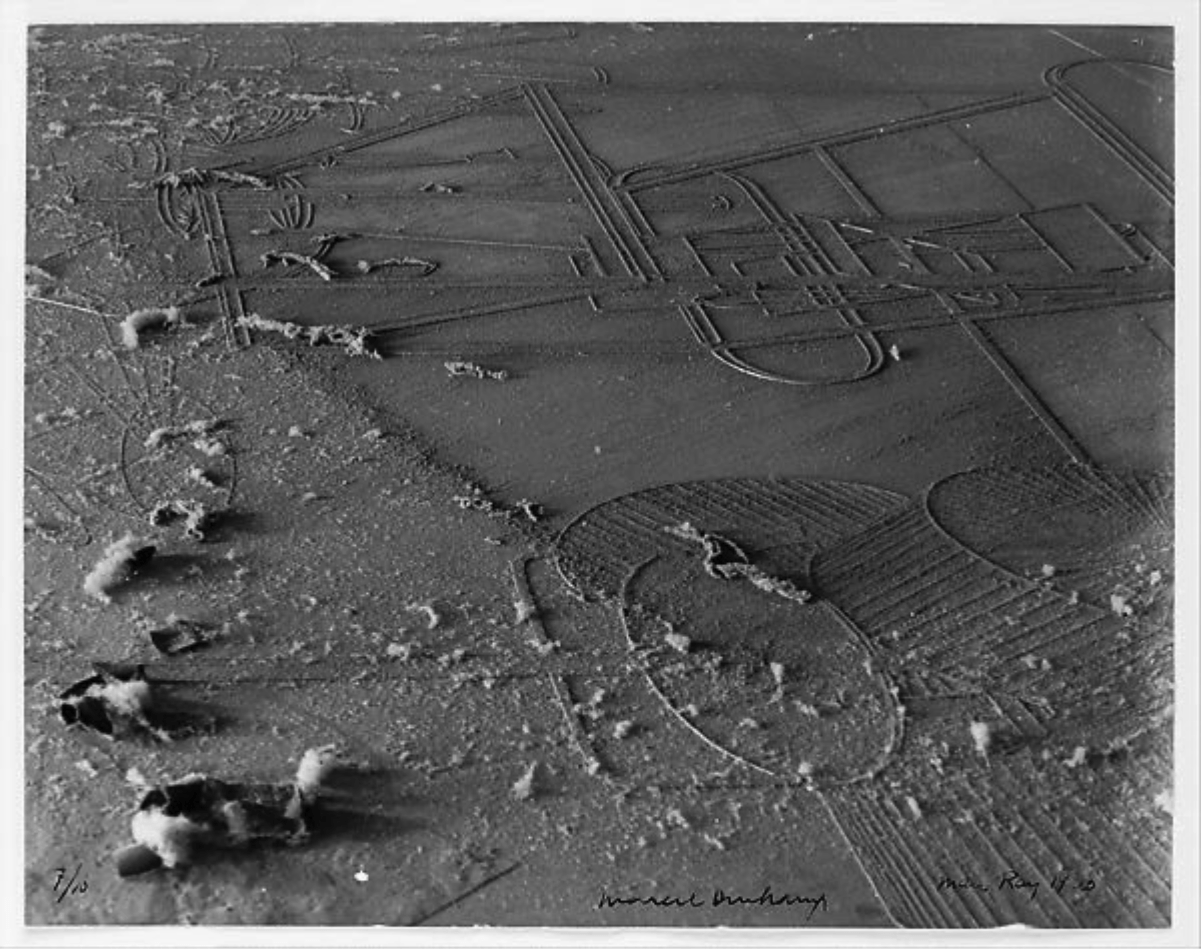
Colby Chamberlain (2009) writes that “it was Marcel Duchamp who brought dust into the museum”, referring to his work The Bride Stripped Bare by Her Bachelors, Even or Large Glass (1920) at his New York studio where Duchamp hung a sign stating “Dust breeding. To be respected” (Chamberlain, 2009: 1). Later the artist and photographer Man Ray photographed the glass where “a thick film of dust had settled on the surface” (Chamberlain, 2009: 1). Chamberlain further notes that Duchamp created work by doing nothing, “dust, typically the trace of neglect, was instead the product of purposeful inactivity” (2009: 1).
When we hear the word ‘dust’, we are already predisposed to have an idea of what it means. Many find it dull and uninteresting. Dust is what we exhaustively try to get rid of as well as an unavoidable consequence of domestic life. We rarely think about dust and simply ascribe it to the category of waste and dirt. In his book Dust: A History of the Small and Invisible, Joseph Amato explores the history of dust and takes a very close look at how notions of dust have evolved throughout the centuries.
A concept synonymous with that of ‘dust’ is ‘smallness’, as “dust has been the first and most common measure of smallness” (Amato, 2000: 3). Amato goes further to state that dust can be considered the “divisibility of matter” and that “even the hardest materials erode and become dust” (2000: 3). Each object deteriorates or erodes at a different tempo, but nonetheless every object does so eventually:
The ivory of a piano key and the coins of the realm become smooth and worn over time, adding themselves, bit by bit, to dust. Softer materials abundantly supply the microscopic stuff that flows around the islands of perceptible and palpable objects. An average puff of a cigarette has been estimated to contain 4 billion particles of dust. The vapour that condenses on a dry plate – water dust, so to speak – is 500,000 times thinner than a sheet of writing paper. A grain of musk perfumes a room for years, and a single grain of indigo colours a ton of water (Amato, 2000: 3).
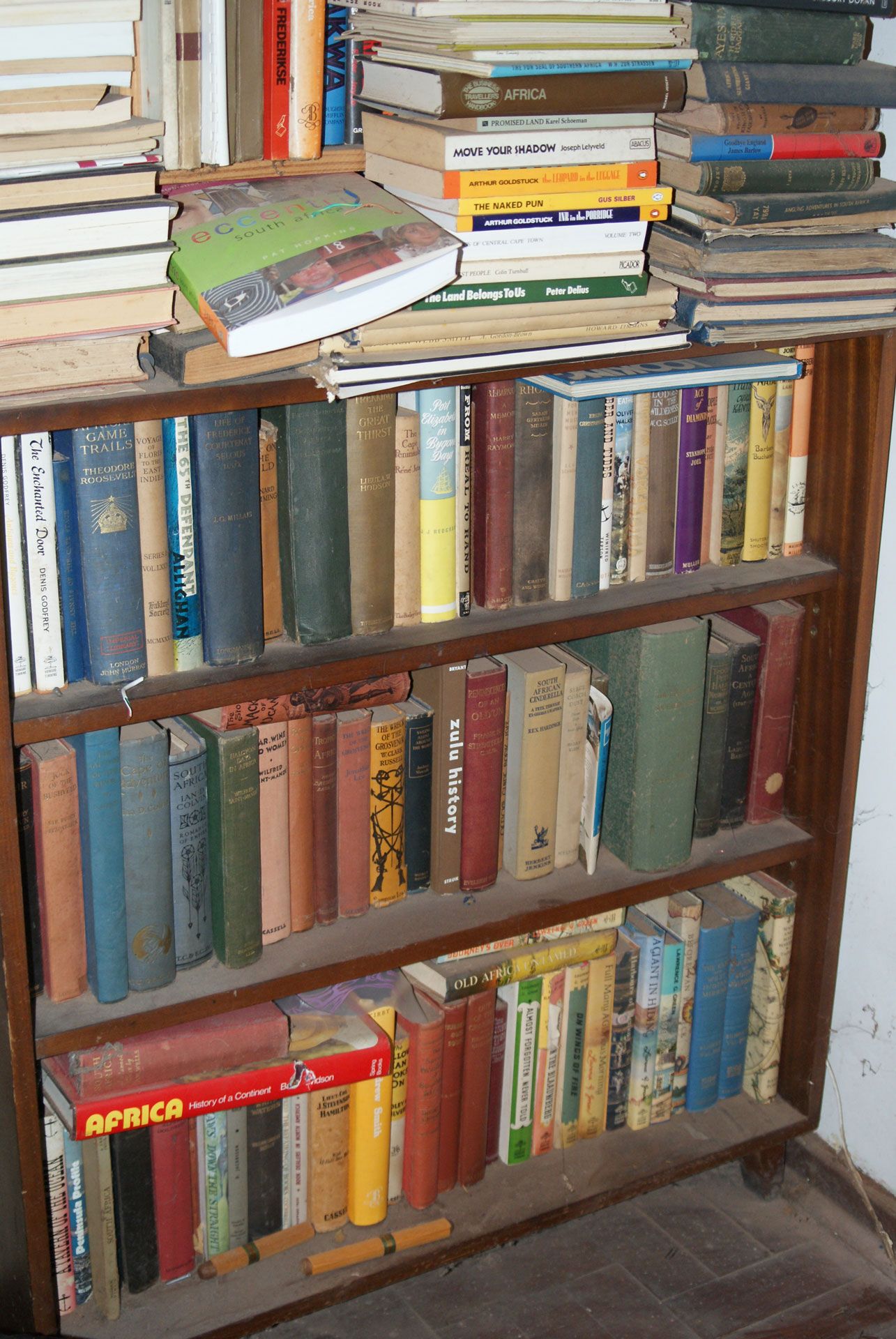
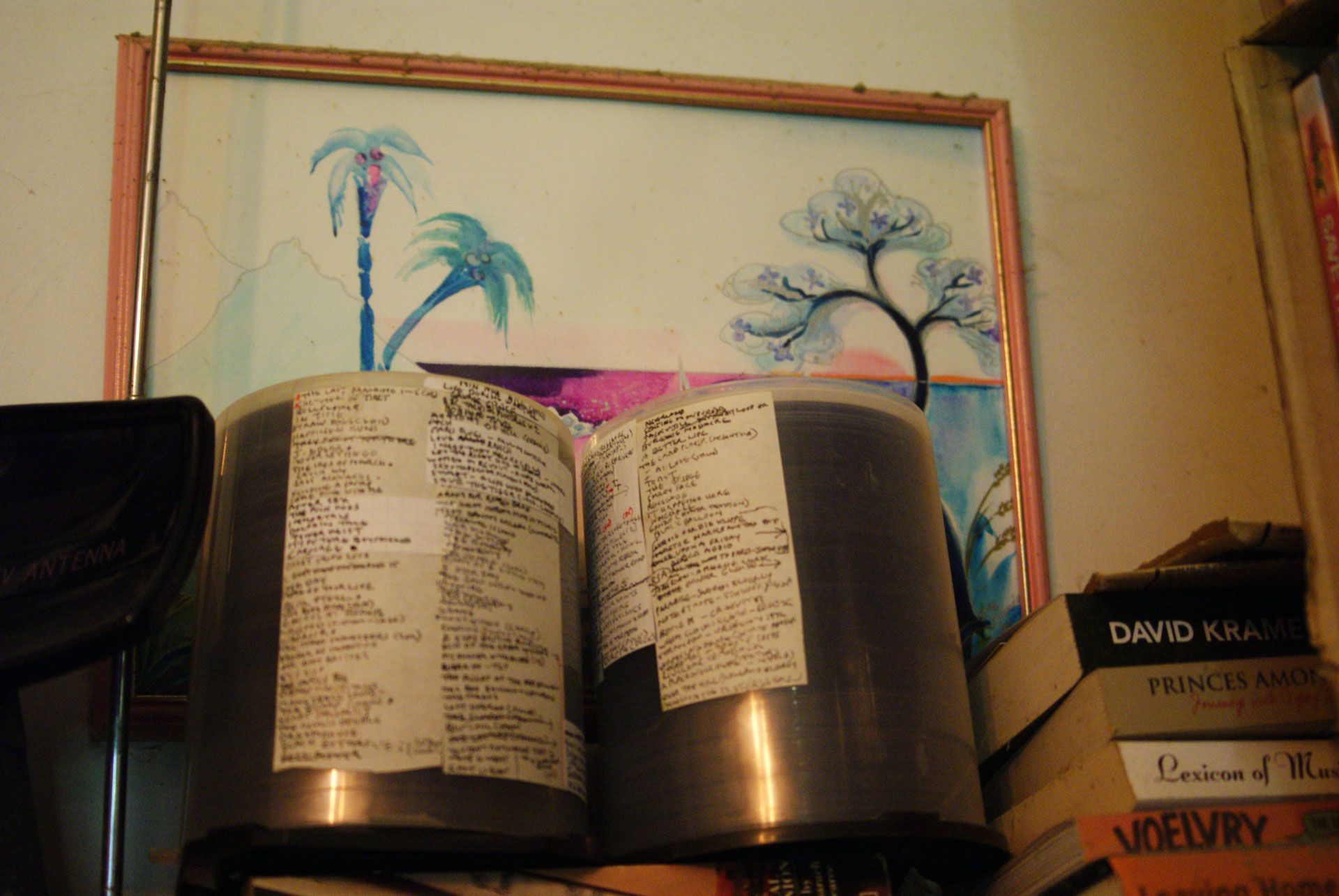
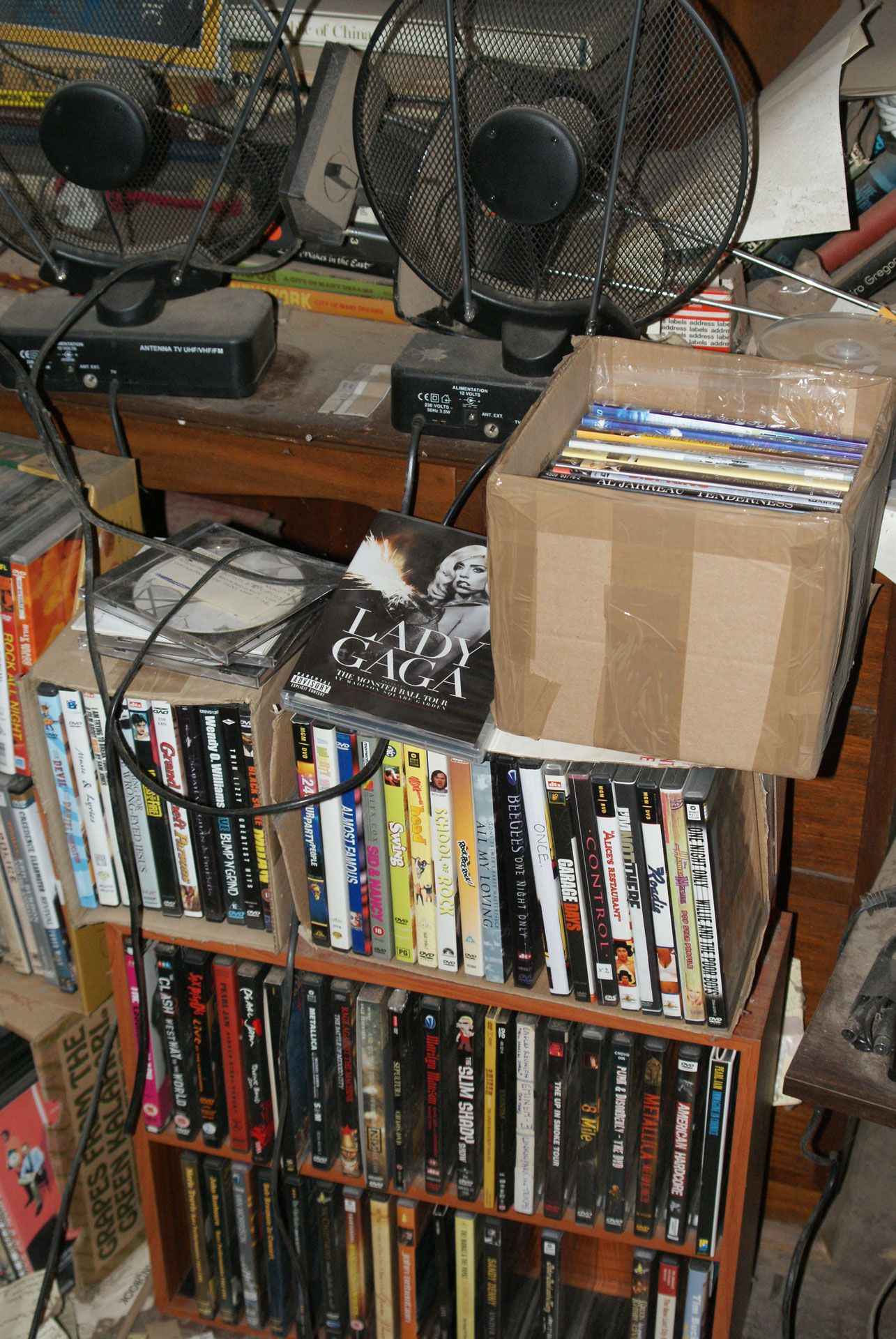
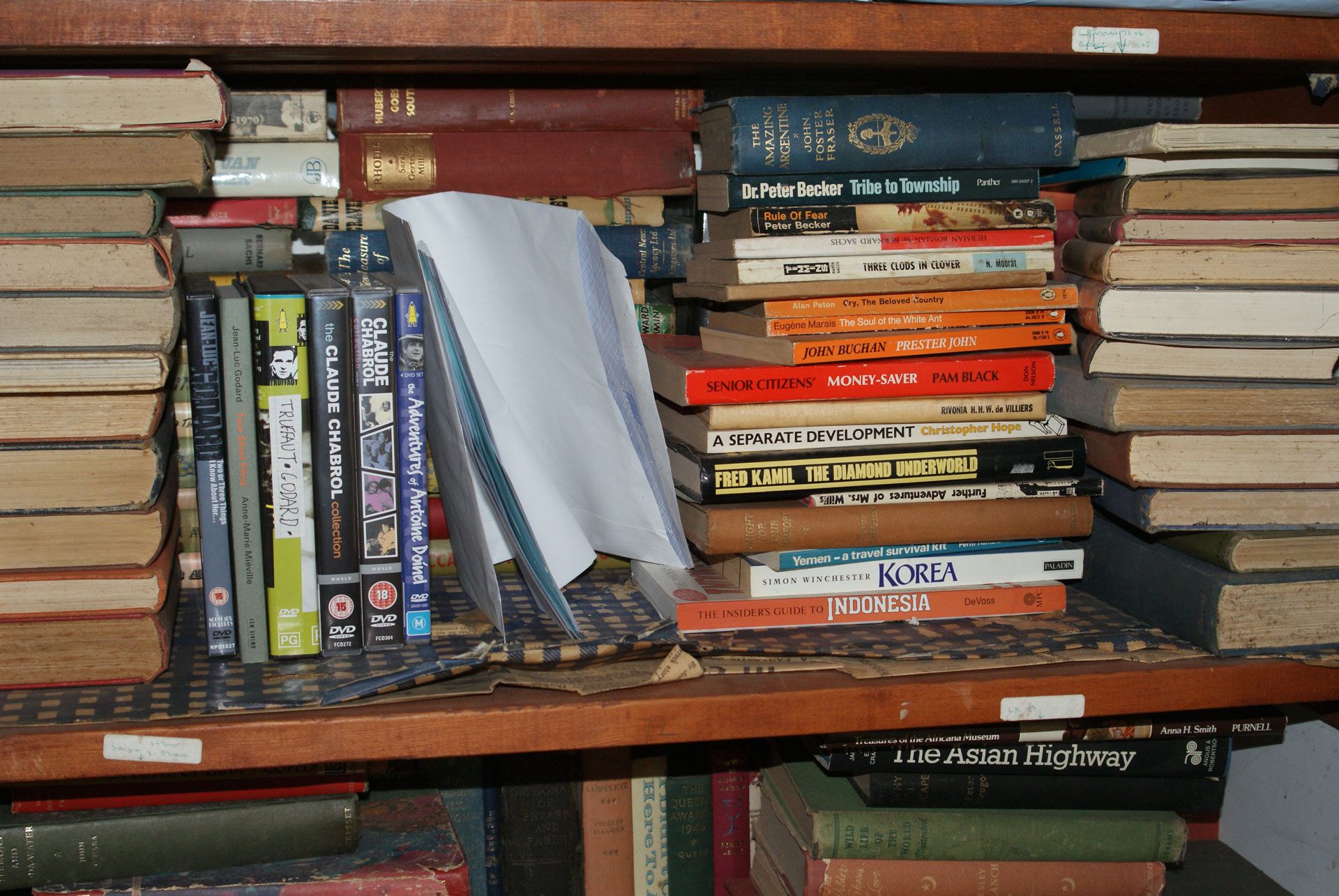
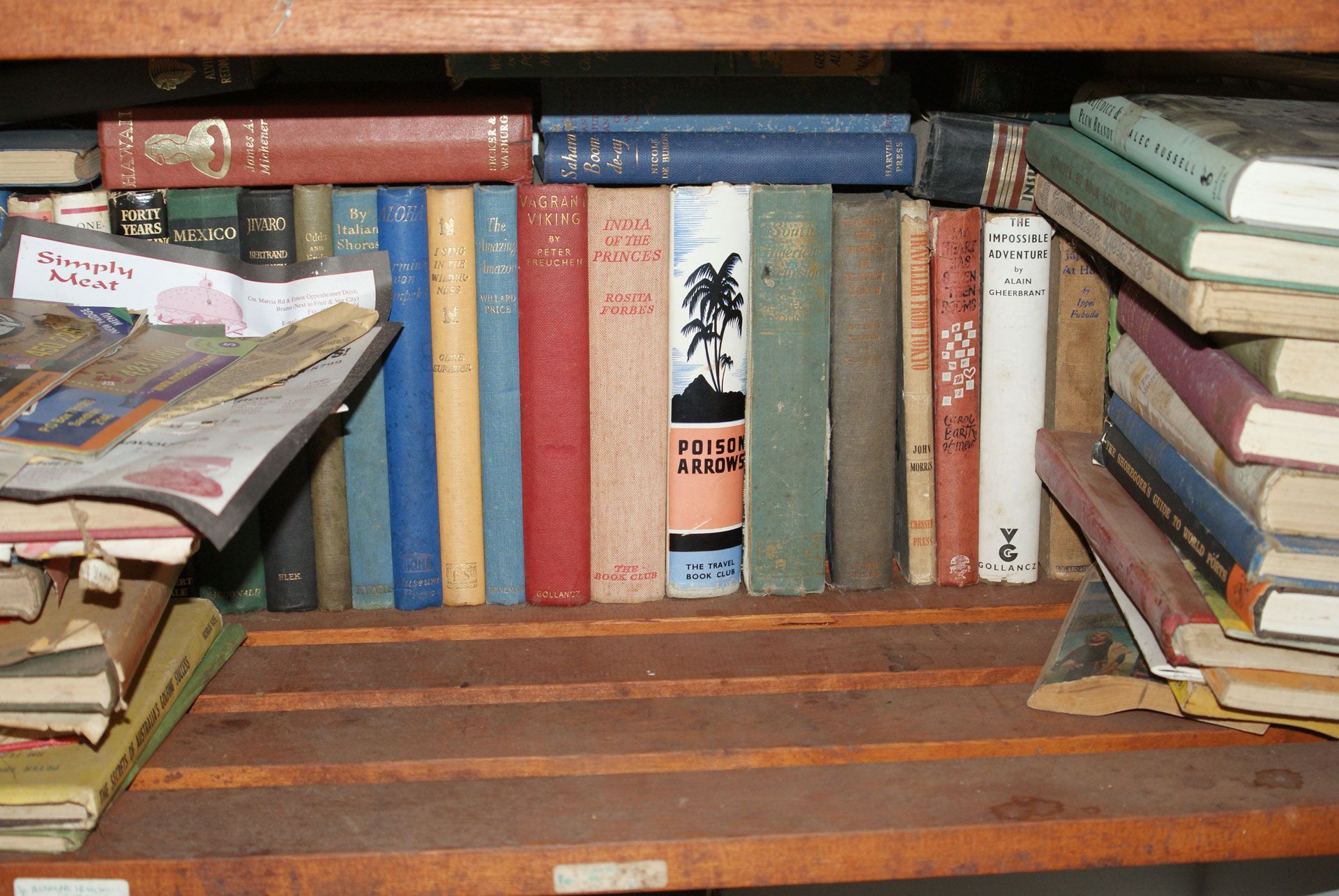
In archives soft materials such as paper are often found with a lot of dust surrounding them, and this is very much the case in the Ben Segal collection. Whilst unpacking boxes in the Ben Segal collection, the boxes with books always have visible balls of dust left in the bottom of the box, not to mention the dust webs on the top of the books. In the book Fragile Objects, Soft Matter, Hard Science, and the Thrill of Discovery, Jacques Badoz and Pierre-Gilles de Gennes (1996: 89) write that:
A little Arabic gum stabilizes Chinese ink for a full year. A few drops of shampoo generate a cloud of lather. Traces of oxygen in the air transform heva sap into rubber. A tiny battery is enough to update the display of a watch. Every one of these cases epitomizes the essence of soft matter. Soft matter is exactly like the clay of the sculptor, which, through an extremely weak action, can be changed, shaped, and organized.
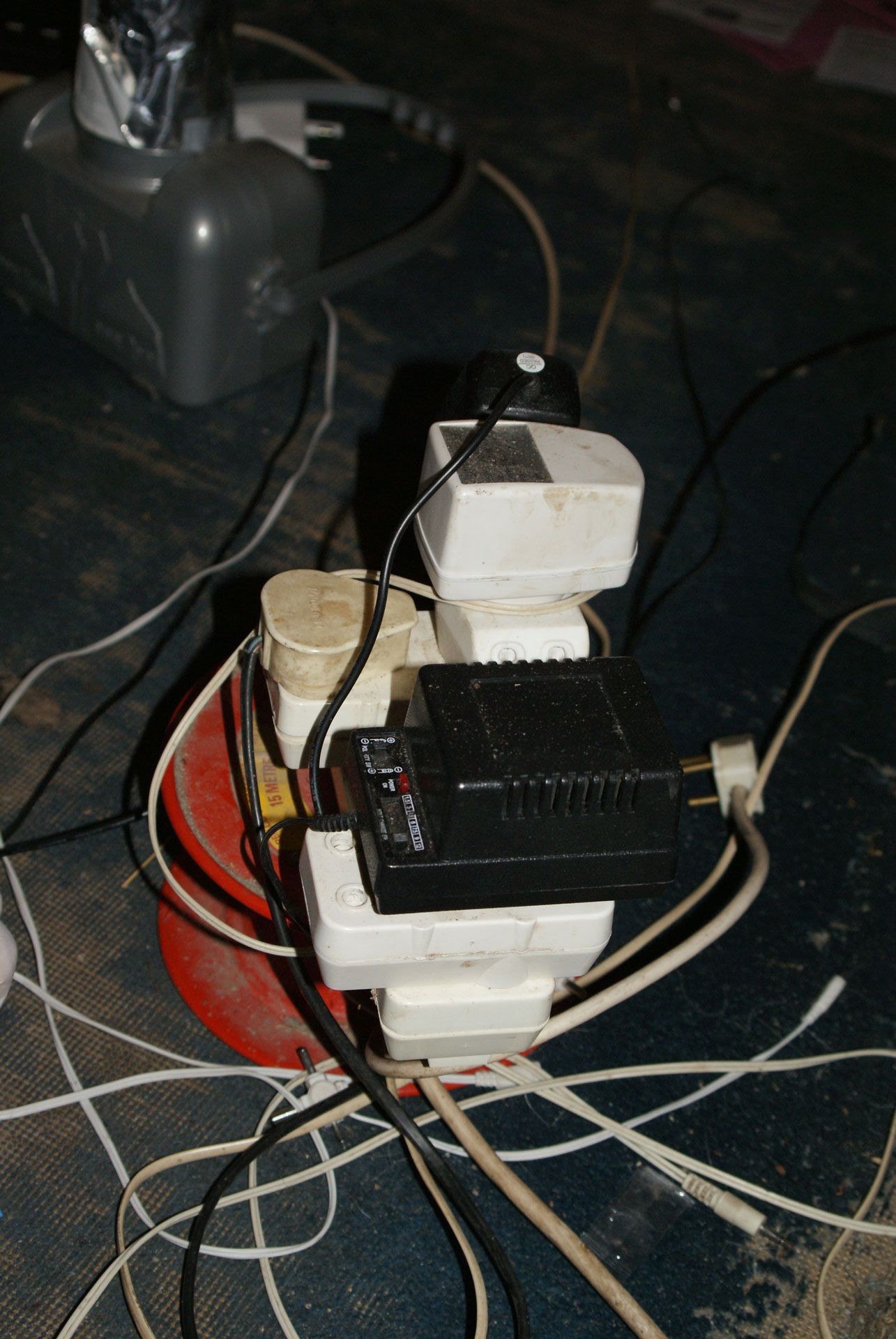
Soft matter and tiny particles can thus have a great and significant impact and even sustain life, since “there can be no life without soft matter” as “every biological structure (the molecules containing the genetic code, proteins, membranes) is founded on that very concept” (Badoz & Gennes, 1996: 90). Dust found in the archive is also not dead matter, as it is not only the broken off pieces from the larger wholes, but rather living organisms in a larger colony of dust. In the vast kingdom(s) of dust we can “observe and understand large social systems through the examination of the smallest conditions of life” (Fine & Hallett, 2002: 4). From the dust new life is formed – in dust, insects can breed and chemicals can react to one another. Dust, as a small and fragile object, is an essential foundation of life (Badoz & Gennes, 1996: 91). Barbara Adam (2004) also argues in this regard that nothing can be produced from nothing, and that the process of becoming is “nothing but different mixtures of the same, infinitely small, indestructible ‘germs’ which are the absolute, unchangeable essence of the universe” (Adam, 2004: 25). Adam concurs that there is no change, “only movement, relocation, and recombination of the unit parts into different forms” (Adam, 2004: 25). Dust is part of this history of flux and change, as the invisible to the visible together form part of the unravelling notion we call time, unequivocally moving through the ages.
Dust is amorphous and “found within all things, solid, liquid, or vaporous” (Amato, 2000: 3). When we imagine dust, or even the ‘life’ of a single dust speck, we can imagine how it “flies over the highest mountains and crosses the widest seas” and how it “fills the still air of home and the busy air of streets” (Amato, 2000: 3). As it moves it also “comes to rest everywhere in nature and on the human body”; it can even “enter the pores of human skin” or “come to rest in the ocean’s depths” (Amato, 2000: 3). If we can follow such a journey of a given dust speck, morphing in and out of various forms, being part of objects at times and floating freely in air or water at others, we see a complex picture of our environs and the larger world. When we talk about dust, we are thus referring to an omnipresent entity, as dust is not one thing or in one space:
Dust is everywhere because its source is everything. Its more remote origins in time and space are in the Big Bang, collapsing stars, and the dark line across the centre of the Milky Way, which, according to astronomer Donald Brownlee, ‘is a line of dirt perhaps 65,200 light years across, and 3,832×1017 miles long.’ Here on earth, dust comes from everywhere under the sun: minerals, seeds, pollen, insects, moulds, lichens, and even bacteria. Its sources also include bone, hair, hide, feather, skin, blood and excrement. And things of human fabrications, too numerous to mention, also cover the earth and fill the atmosphere with dust (Amato, 2000: 4).
Dust might even be considered one of the smallest things the human eye can see, or that humans are observant of. In the microscopic world of science and medicine we see that the small can act as an indicator of the large (Fine & Hallett, 2002). Tim Hallett writes that the word ‘dust’ as a verb has “diametrically opposite meanings” (Fine & Hallett, 2002: 6). As a noun, Hallett (2002: 7) explains that “bits of earth represent the archetypal form of dust. What is most significant is that dust is not simply a thing (or set of things, since it is a collective noun), but it is invested with social meaning”.
In the Collins English Dictionary (2006: 261) the word ‘dust’ is explained as “small dry particles of earth, sand, or dirt”, and as “fine dry pulverized particles of matter” in Webster’s New Collegiate Dictionary (Fine & Hallett, 2002: 7). This is the standard definition used in various dictionaries. The Online Etymology Dictionary (2001) gives a slightly more varied explanation where the dust, from the Proto-Germanic dunstaz draws on the Old High German tunst, meaning ‘storm’ or ‘breath’. In these etymological traces of the word ‘dust’ we can recognise the notion of movement, change and connections. Dust, as in ‘smoke’ or ‘vapour’, also draws on the Sanskrit dhu, meaning ‘shake’. The Online Etymological Dictionary (2001) also states that the word ‘dust’ means “that to which living matter decays”. Other associations with dust include the “trivial, meagre, petty, scanty, and picayune” (Amato, 2000: 4). Dust is therefore associated with the insignificant or that which does not deserve more attention than the effort to banish or minimise its visibility. This attitude towards dust is, one could argue, superficial, as its effect on human life can be drastic. While dust in and of itself cannot do much, it is in its connection with other elements that its abilities become heightened:
Dust as an element cannot claim the glory of light, the subtlety of air, the solidity of earth, or the vitality of water, even though it envelops galaxies, circles planets, and hides in the bedrooms of kings and queens. (Amato, 2000: 5).
Dust fulfils, for example, an important and significant function in the larger atmosphere and universe, as “its refracting power helps account for why and how humans see light itself” and it explains the colours we see in the sky (Amato, 2000: 5). It also explains “why so little light – visible radiation – reaches the earth in its long trek from the sun” (Amato, 2000: 5). We need dust in order to survive; the tiny particles containing the world “are part of the earth’s making and unmaking” (Amato, 2000: 5). It is that from which everything came, and to which everything dissolves and resolves back into – a constant process of becoming.
Hallett also writes that dust is “socially situated and culturally meaningful” and can be seen as a cultural marker which is used to construct social order (Fine & Hallett, 2002: 12). It might be unusual to think of dust as a marker for social order, but upon further inspection one can think of the effect dust has on human life and attitudes. For example, a wife is often judged on the impression and cleanliness of her house and, as Hallett writes:
A moral evaluation of the woman’s character in her office as housewife is easily ascertained simply by running a finger over a shelf, feeling and observing whether dust was collected. This assessment may be shared by the woman herself – with cleanliness becoming a compulsion – as the moral of cleanliness has been inscribed in her very soul. That this is a matter of impression management is evident in the fact that the public spaces of homes are typically more dust-free than the private spaces. Yet, concern with the control of dust is a luxury, not emphasized in earlier centuries (prior to the mid-nineteenth century) or in pre-industrial communities (2002: 3).
Dust thus becomes a loaded term with both visible and less visible social repercussions. Hallett remarks that dust is not only something that happens, but rather something that an individual as well as groups must deal with; “as groups deal with dust, they reproduce the larger cultures in which they are embedded, they demonstrate processes of contention and control, and they negotiate meanings through similar processes that occur in larger units” (Fine & Hallett, 2002: 12).
The archive has specific ways and measures it uses to control, limit or detect dust. Materials that do not appear to be of great value (items with multiple copies, wrapping paper that keep fragile items in safe storage, for example) are all readily discarded. It is unrealistic to keep everything in the archive; one cannot have too many copies or items that can easily be found elsewhere as the limitation of space is also a pressing concern.
Archival dust can just as easily become part of the assigned category of things that ought to be immediately discarded, especially since it is regarded as a corrosive element harmful to archival materials and attractive to insects. However, dust is a cumulative part of those very same materials, a collection of objects that could reveal the DNA of collectors or visitors or the journeys of objects to the archive.
On discussing the dust that was created during the events of 11 September 2001, Hallett writes that:
The dust is a metaphor of destruction and simultaneously of resoluteness and inspiration. Those massive towers became nothing more than piles of dust and debris, yet it was meaningful dust and debris. We looked at the limits of the visual to find the strength of our social order (Fine & Hallett, 2002: 29).
Similarly, the dust from the Ben Segal collection is meaningful and socially significant as it was accumulated in this specific archive. Archives bestow value upon the objects that they preserve and even seemingly insignificant objects gain meaning because of their archival context. Dust is both created through archival processes of preservation and accumulated in the archive. These ideas regarding archival dust are also bolstered when looking from a rhizomatic perspective, which is the focus of the next section.
Rhizomes in the dust
Rhizomatic theory, on non-hierarchical structures, can be readily applied to the dust as an entry point into the archive. This notion will be explored by looking at the six principles in the formation of rhizomes, namely: connection and heterogeneity, multiplicity, a signifying rupture, cartography and decalcomania.
The first principle for the formation of a rhizome is that of connection and heterogeneity, where “any point of a rhizome can be connected to anything other, and must be. This is very different from the tree or root, which plots a point, fixes an order (Deleuze & Guattari, 1987: 7).
This principle requires that connections be made through experimentation, as opposed to being based solely on hierarchies (Adkins, 2015). Rhizomes multiply connections as they create something new, and these new connections are referred to by Deleuze and Guattari as “lines of flight”[3]According to Deleuze and Guattari, lines of flight “change in nature and connect with other multiplicities” (1987: 9-10). Lines of flight also “marks: the reality of a finite number of dimensions that the multiplicity effectively fills,” in other words, defining the possibilities for escape and marking the threshold of change from which these lines, or in French fuite as noted by Brian Massumi (1987), flee, flow or leak. Massumi notes that flight or fuite does not relate to flying (1987). or “the tendency towards change” (Adkins, 2015: 24). The principle of connection can then be defined as promiscuous and non-hierarchical (Adkins, 2015). Deleuze and Guattari explain that the rhizome:
ceaselessly establishes connections between semiotic chains, organizations of power, and circumstances relative to the arts, sciences, and social struggles. A semiotic chain is like a tuber agglomerating very diverse acts, not only linguistic, but also perceptive, mimetic, gestural, and cognitive: there is no language in itself, nor are there any linguistic universals, only a throng of dialectics, patios, slangs, and specialized languages. There is no ideal speaker-listener, any more than there is a homogeneous linguistic community (Deleuze & Guattari, 1987: 7).
There is, however, another principle accompanying the principle of connection, namely the principle of heterogeneity, which requires connections to be made “among widely diverse things” (Adkins, 2015: 24). This interconnection of diverse things is then also known as an assemblage (Adkins, 2015). Dust is an assemblage of wildly diverse things, connected under the guise of discarded remants.
Moreover, the collecting of the dust, the gathering of multiple heterogeneous particles in this specific archive, can be argued to be a line of flight between the archive and the dust. The archive, consisting of multiple collections, slowly deteriorates and erodes into multiple tiny pieces, which are then made into an entirely new collection. The seemingly insignificant dust accompanies and encloses all the items in the Ben Segal collection.
Heterogeneity already alludes to the notion of multiplicity. For Deleuze and Guattari, a multiplicity “has neither subject nor object, only determinations, magnitudes, and dimensions that cannot increase in number without the multiplicity changing in nature” (Deleuze & Guattari, 1987: 9). Multiplicities are rhizomatic and their purpose or function is to “expose arborescent pseudo-multiplicities for what they are. There is no unity to serve as a pivot in the object, or to divide in the subject. There is not even the unity to abort in the object or ‘return’ in the subject” (Deleuze & Guattari, 1987: 8-9). Any such divisions would then reveal the tree- like structure as a pseudo-multiplicity.
A true multiplicity is always rhizomatic.
In the context of Deleuze and Guattari, the principle of multiplicity highlights the notion of the creation of the new. If the multiple is simply a reflection of the one, then the creation of the new is not possible (Adkins, 2015). This happens when “the many are just parts of a greater whole, which is of course organized arborescently” (Adkins, 2015: 25). In the context of my own study, the word ‘dust’ is an attempt, to some degree, at singularising a multiplicity. Even when we use the word ‘dust’, or view a collection of dust, it is never just one thing. Dust is and will always will be a complex, omnipresent and socially loaded concept. For this reason, the dust in the archive and in its collected form is a good example of a rhizomatic multiplicity; “a multiplicity … is not a discrete, static unity, but something constantly entering into and breaking off combinations from other multiplicities” (Adkins, 2015: 26).
The content of numerous archives also constitutes various multiplicities, which then hold the possibility for the new to be created at any moment, even from seemingly static and rigid hierarchical collections. By facilitating the development of the rhizomatic in the tree-like structure of the archive, the very idea of multiplicity (instead of autonomy) is invoked. As Deleuze and Guattari maintain, one must therefore look for possible lines of flight within a singular multiplicity. While these authors do not venture into much detail as to what a signifying rupture is, they rather choose to explain how it ought to function and the purpose it serves. They explain that a rhizome may be broken or shattered at some point, “but it will start up again on one of its old lines, or on new lines” (Deleuze & Guatarri, 1987: 10). The reason for this is that:
every rhizome contains lines of segmentarity according to which it is stratified, territorialized, organized, signified, attributed etc., as well as lines of deterritorialization down to which it constantly flees. There is a rupture in the rhizome whenever segmentary lines explode into a line of flight, but the line of flight is part of the rhizome (Deleuze & Guattari, 1987: 10).
In order to explain how this plays out in a rhizomatic process, Deleuze and Guattari use the natural occurrence of the orchid and the wasp:
The orchid deterritorialization by forming an image, a tracing of wasp; but the wasp reterritorializes on that image. The wasp is nevertheless deterritorialized, becoming a piece in the orchid’s reproductive apparatus. But it reterritorializes the orchid by transferring its pollen. Wasp and orchid, as heterogeneous elements, form a rhizome (Deleuze & Guattari, 1987: 11).
Similarly, archives and the dust that they carry form a heterogeneous rhizome with endless multiplicities. In the same way, the archival content (which forms part of a scholar’s research), the archive and whoever enters it form a rhizome of sorts. The reason for this is that “there is always an outside where they form a rhizome with something else – with the wind, an animal, human beings” (Deleuze & Guattari, 1987: 11). While working with the dust-covered objects in the archive, dust particles filled the air and made their way onto my clothing and my hands and into my eyes, nostrils, hair and lungs. I carried the dust with me when I left the archival holdings and the dust was, in this process, redistributed to other spaces and onto other objects. These instances of contact with the dust are, I argue, an example of lines of flight, of setting new processes into motion.[4]Viewing dust under a microscope might be considered another line of flight.
The next principle, namely ‘a signifying rupture’,[5]In order to explain the principle of a signifying rupture, Deleuze and Guattari use the example of ants as a form of animal rhizome, a formation that rebounds in spite of being destroyed (1987: 10). They explain that a rhizome “might be broken” but that it will start again, on either old or new lines: “there is a rupture in a rhizome whenever segmentary lines explode into a line of flight, but the line of flight is part of the rhizome. These lines always tie back to one another” (1987: 10). also opposes the arborescent view required for an assemblage, namely collection and division:
Collection is the principle by which ‘scattered particulars’ are brought under one idea. Division is the principle of ‘dividing things again by classes, where the natural joints are, and not trying to break any part of the manner of a bad carver’. While we might see the previous principle of multiplicity as aimed at the principle of collection, the principle of a signifying rupture is aimed at the principle of division (Adkins, 2015: 27).
Deleuze and Guattari’s issue is not so much with collection and division as it is with what gets collected and divided (Adkins, 2015). The notions of collection and division stem from Socrates’s Phaedrus where “one collects scattered particulars under a single idea in order to gain clarity and consistency, and by the same token one divides in order to understand naturally … constituent parts” (Adkins, 2015: 27). Natural divisions, as archival categories have us believe, do not exist, rather categories and hierarchies determine divisions.
Deleuze and Guattari reject such divisions, the reason being that “the drive to divide nature neatly at the joints obscures a rhizomatic account of the same process” (Adkins, 2015: 27). They explain how systems that are seemingly separate operate in a co-dependent manner, with each needing the other in order to exist. In the same way, no archival dust can exist without the archive. The reverse also holds true, as there can be no archive or collection without the threat of destruction and decomposition. Erosion and dust then become a sort of necessary drive leading to the need for preservation of rare and fragile objects.
Rhizomes thus “do not function according to representation. Nothing in a rhizome represents something else. There are only connections. Sometimes these connections are transformative, that is, create a line of flight” (Adkins, 2015: 28). The dust in its minute particles is an inescapable by-product that represents a line of flight from which new and meaningful possibilities might emerge. There is thus a transformative connection between the dust and the archive.
Adkins (2015) explains how the wasp and orchid example portrays a transformative connection which evolved over years. As Adkins states, “the orchid’s line of flight is becoming- wasp, and the wasp’s line of flight is becoming-orchid” (2015: 29). In the same way it can be argued that the archive is in a process of becoming dust and the dust in a process of becoming part of the archive. Deleuze and Guattari (1987: 11) write that “wasp and orchid, as heterogeneous elements, form a rhizome”, and in a similar way, I argue, archives and dust, which are made up of heterogeneous elements, form a rhizome.[6]Also see Deleuze and Guattari’s explanation of ruptured lines, as exemplified by the rupturing of ant formations, which are always redrawn. The redrawing of these lines, as lines on a map, for example, does not inconvertibly restore the line as it was prior to the rupture, but does in fact redefine or reinvent the space.
The goal of rhizomatic thinking is to look for the lines of flight by seeing things in processes of transformation, rather than as stable and complete entities (Adkins, 2015). Everything in the archive, from the documents to the finest particle of dust, is in a process of becoming. What it is becoming, or growing into, is not always clear and visible. Each item is in a process of decomposition, some items more rapidly than others. Given the complexity of such divergent forces, rhizomatic thinking is very seldom consciously incorporated into our lives and work, as one perhaps think it to be too difficult, too chaotic and unpredictable. One cannot control a rhizome in much the same way as one cannot control dust – we can limit it or block it in certain areas, but we cannot stop dust from inevitably forming/appearing. The rhizomatic process – as well as the dust rhizome, I argue – is a “model that is perpetually in construction or collapsing, and of a process that is perpetually prolonging itself, breaking off and starting up again” (Deleuze & Guattari, 1987: 22).
As the particles break off from an object, eroding into smaller pieces, away from its supposed stable form, they are starting to be part of the new dimension, of the invisible and dust. As it is with the dust, “a rhizome has no beginning or end; it is always in the middle, between things, interbeing, intermezzo” (Deleuze & Guattari, 1987: 27). We cannot point to a moment in time or to a point within a process and claim to know where the rhizome begins. All of the processes prior to the line of flight form part of the rhizomatic process, as questions such as: “Where are you going? Where are you coming from? What are you heading for?” are “all totally useless questions” (Deleuze & Guatarri, 1987: 27).
It is not possible to say where and when the dust in this archive originated, or if it can ever be contained or stopped. The dust and the archive are both caught in an endless rhizomatic process of becoming.
Dust Clouds – Imagination and Blindness
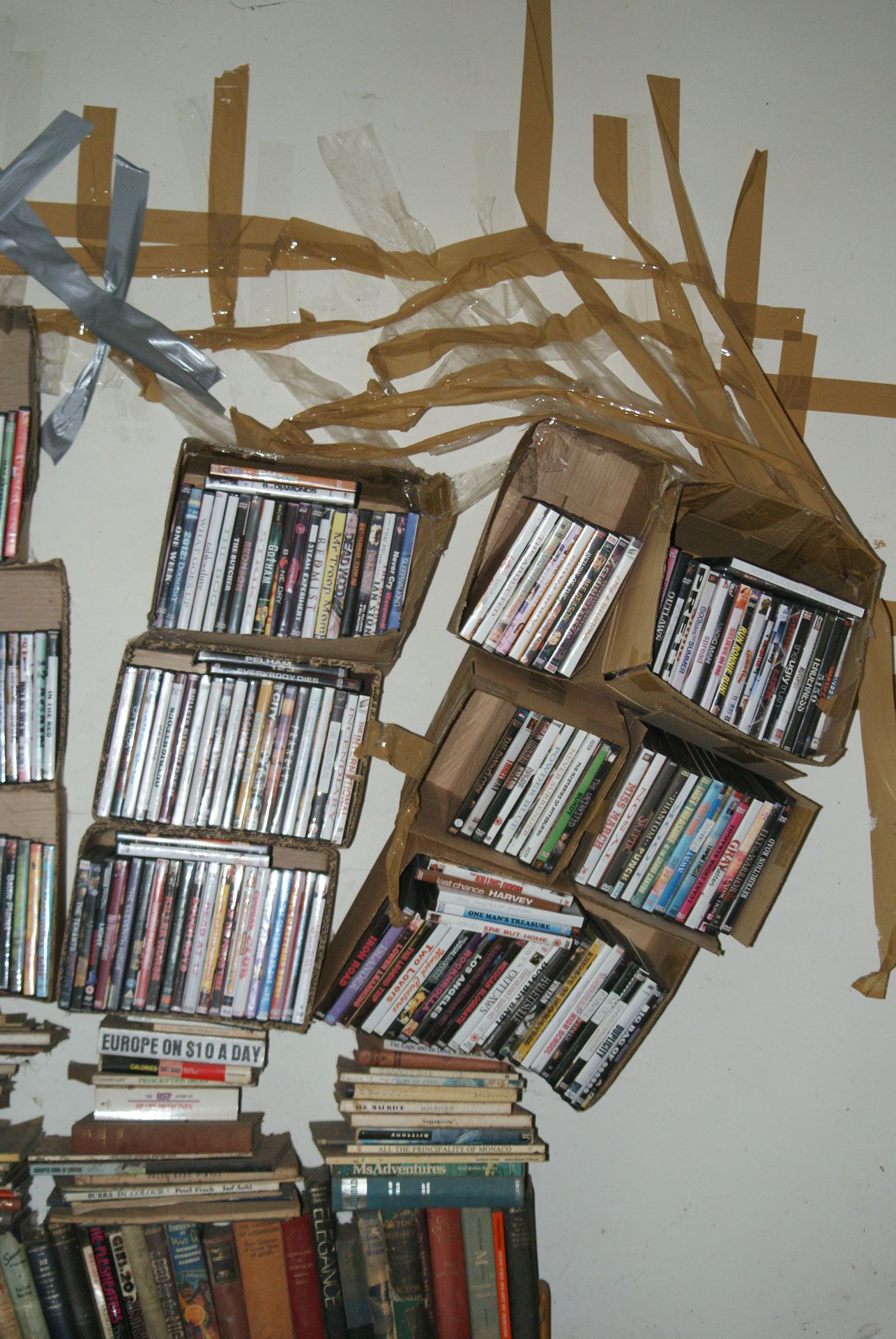
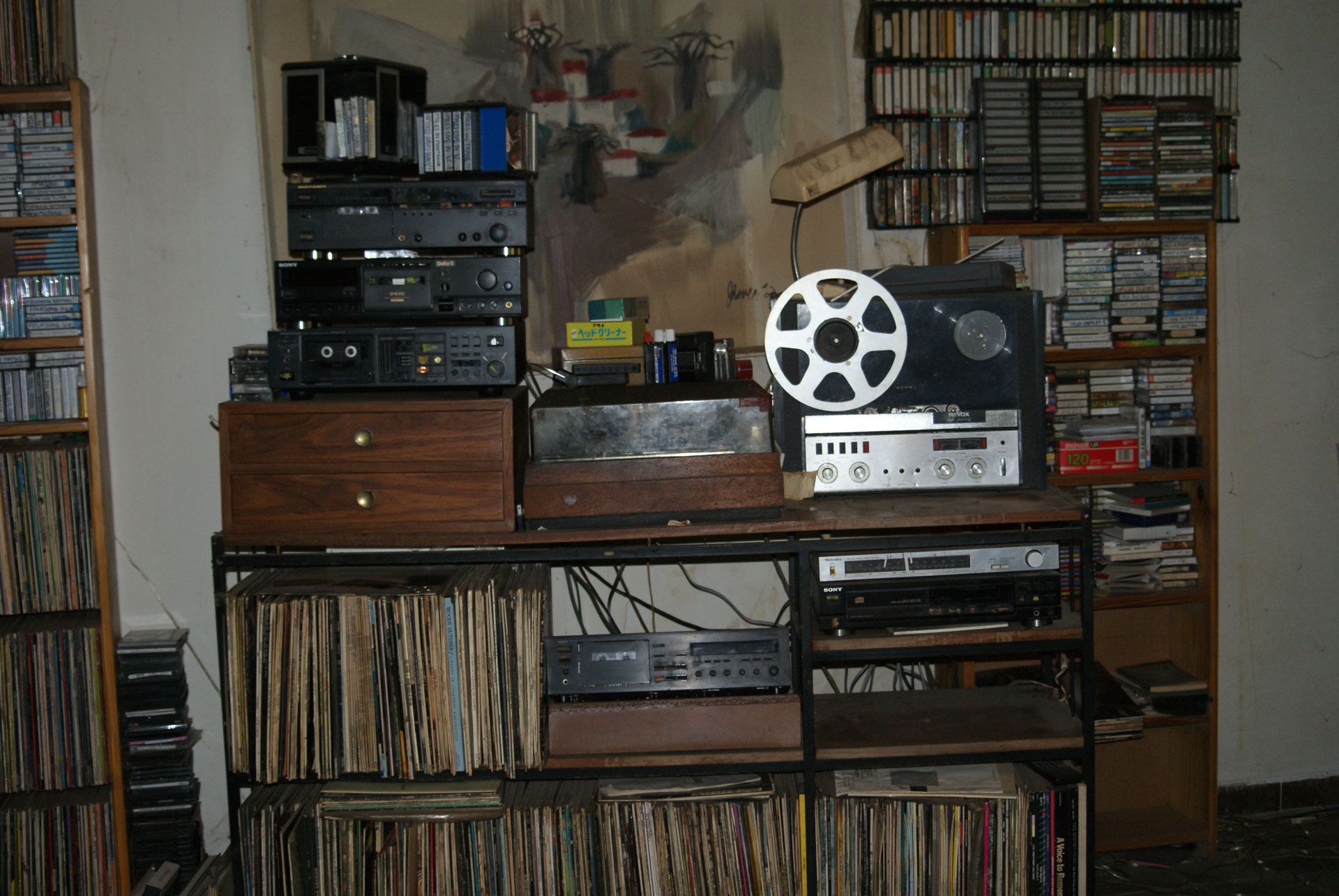
From the very start of working as a volunteer in the HYMAP archive and being exposed to the content bit by bit through unpacking boxes, listing books and DVDs, and photographing cassette and VHS tapes, I have formed an idea in my mind of what exactly this archive is to me. These imaginary notions of the archive are shaped by what is visible or invisible to me as a volunteer and scholar. As a result of my subjectivity, there is a limit to that which is apparent to me – a notion that has become more and more clear during my weekly visits to the archive. For this reason, the historically subjective role of the archivist has increasingly been highlighted in my contact with the archive.[7]For similar work that focuses on the subjective role of the archivist see Harris (1998).
Antoinette Burton argues in this regard that debates embracing “the challenges of ‘telling the truth about history’ have had very real political and material consequences,” such as the Truth and Reconciliation Commission questioning archival ‘evidence’ with specific “relation to factual or forensic truth” (2005: 1-2). Burton further writes that:
Our emphasis on the need for archive stories – narratives about how archives are created, drawn upon, and experienced by those who use them to write history – follows in the first instance from a move in the Western academy (and also beyond it) to recognize that all archives are ‘figured.’ That is, they all have dynamic relationships, not just to the past and the present, but to the fate of regimes, the physical environment, the serendipity of bureaucrats, and the care and neglect of archivists as well (2005:6).
The role of those who use or form archives as well as the processes archives undergo is thus relentlessly subjective and open to an array of possible influences. Knowledge produced and histories written are thus always susceptible to reinterpretations.
‘Knowing’ and ‘seeing’, and the human understanding of these terms/capacities, form an inescapable relationship when attempting to explain or interpret something (Bradford, 2008). The archive as a construct relies heavily on knowing and seeing in order to explain and interpret events of the past. To see is thus an important part in order to claim what one knows, assuming that we can trust our sight. David Bradford (2008: 1) also argues that the “apparently self-evident opposition between seen and not-seen, lit and unlit” is an illusion, and what he calls a “necessary fantasy.” The relationship between knowing and seeing “is a connection that permeates religion, preoccupies philosophy, and pervades everyday speech” (Bradford, 2008: 1). Martin Jay also echoes this sentiment by maintaining that:
the human eye has a blind spot where the optic nerve connects to the retina. Normally ignored because vision of the other eye compensates for it, the blind spot’s existence nonetheless suggests a metaphoric ‘hole’ in vision […] Finally, we are often fooled by visual experience that turns out to be illusory, an inclination generated perhaps by our overwhelming, habitual belief in its apparent reliability (1994: 8).

The idea of blindness accompanying sight is a notable aspect of human scopic regimes, which are heavily reliant on empiricism. We are thus, as Jay notes, to some extent fooled by visual experiences, as much of what we see can be manipulated and read or interpreted in multiple ways. What we see and what we know are thus not mutually exclusive. As Bradford (2008: 3) writes:
There is at the heart of seeing incompleteness and separation. The image or representation contains a lost as well as a recalled part of the gaze. Artistic depiction exceeds the memory of the gaze, and its excess is precisely invisible. Even the photograph occludes certain details, outside and beyond the frame.
In the archive there is plenty that we cannot see and it is perhaps even more so in the case of dust. In my mind I have an idea or image of what the dust might be, of what I hope to find and what I imagine it to be – such mental images are, quite different to the images created when looking at dust through a microscope. Even when we employ multiple ways of seeing (in the context of this study that would imply different tools for ‘reading’ dust), Bradford (2008: 3) reminds us that “representation is built upon invisibility” – upon that which we deliberately or accidently do not see.
Esther Pereen argues in this regard that the lack of visibility (of a given object/thing) can be translated into an “extreme form of vulnerability”, as such invisibility speaks of “disempowerment, of being considered insignificant and expandable, and therefore overlooked” (2014: 33). The blindness[8]Derrida also notes that blindness constitutes that which is hidden or inaccessible to the eye or hand, as it “is not necessarily encrypted in the derivative senses of the word – ciphered, coded, to be interpreted – in contrast to being hidden in the shadows” (Derrida, 1992: 89). It is thus clear that blindness does not simply refer to not seeing. and invisibility I refer to in relation to the archive and the archivist or scholar are described by Derrida (1992: 89):
One can always reveal to the gaze something that still remains secret because its secret is accessible only to senses other than sight. For example, there might be some writing that I can’t decipher (a letter in Chinese or Hebrew, or simply some undecipherable handwriting) but that remains perfectly visible in spite of its being sealed to most readers. It isn’t hidden but it is encoded or encrypted.
In the context of my own study, such an idea applies in the following way: The Ben Segal collection is still in its formative stages with some materials still being unpacked from the boxes they arrived in when transported from his house. The objects and content of the boxes that are not yet unpacked or opened are, as yet, invisible to me as scholar. The knowledge of the archive, of Ben Segal and all the items within it, is therefore still very limited. Although large parts of the archive are still not visible, over time more parts of the archive will be revealed, former invisibilities will perhaps be brought to the surface and into the realm of the visible.
In this regard, Derrida’s ideas on two orders of invisibility are noteworthy. The first order of the invisible is described by Derrida as the “visible in-visible”:
There is a visible in-visible, an invisible of the order of the visible that I can keep in secret by keeping it out of sight. This invisibility can be artificially kept from sight while remaining with what one can call exteriority … whatever one conceals in this way becomes invisible but remains within the order of visibility; it remains constitutively visible (1992: 90).
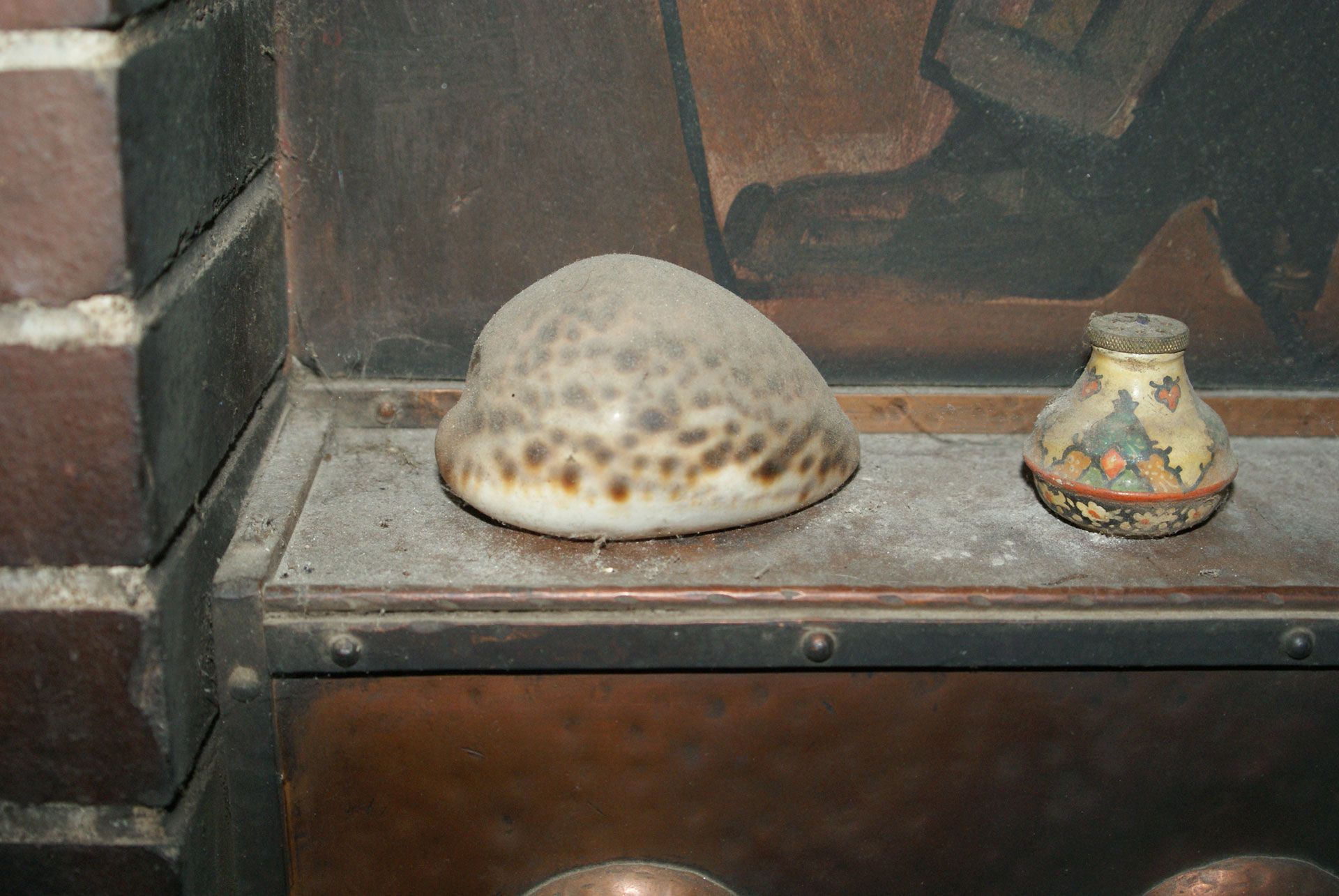
The dark brown clumps of dust, layers on items or that which is left at the bottom of the box, can be regard as the visible in-visible. The dust we ‘see’ is a grey-brown mass of heavier materials in their accumulated form, making it visible to the eye. This can then also include the objects in the objects yet to be uncovered. We can also see airborne dust floating in the air with the help of light, or with alternative methods for seeing (such as microscopic tools). There is, however, a second order which Derrida defines as “absolute invisibility”:
The absolutely non-visible that refers to whatever falls outside of the register of sight, namely the sonorous, the musical, the vocal or phonic (and hence the phonological or discursive in the strict sense), but also the tactile and odoriferous. And desire, like curiosity, like the experience of modesty … and the unveiling of secrecy … or the fact of ‘seeing in secret,’ all those movements that take secrecy beyond the secret, necessarily come into play (Derrida, 1992: 90).
When we cannot see, if we are denied the pleasure of seeing, or if we know we are not seeing then there is often an instinctive desire to see. This curiosity has been one of the main driving factors in my research into and involvement with the archive. Curiosity is also the instigator of my interest in the dust and Ben Segal. Barbara Benedict (2001) is of the opinion that:
curiosity at the start of the seventeenth century was considered an impulse that was thrillingly if threateningly out of control. Unlicensed, undirected, and spontaneous, it seemed to many writers and social thinkers to resemble the madness of the Furies or the hubris of Eve. They often portrayed curiosity as feminine because it was illegitimate, a force that operated outside the world of law and order (Benedict, 2001: 25).
These characteristics of the curious are also a reminder of the way in which rhizomes function and the ways in which they move. Curiosity in the archive is a great asset and motivator to push new frontiers and discovery. The impulsive nature of curiosity might not have been valued throughout history, but it has always been a great incentive:
Whether praised or damned, the curious personality is characterized by a drive for knowledge that entails scientific objectification … cataloguing, the ‘discovery’ of new truths, impious peeping, collection and witnessing of objects and subjects that destabilize art and nature, and an investigation beyond temporal and material borders that is either heroic or deluded (Benedict, 2001: 71).
Benedict also argues that curiosity influenced early collectors and that it offered them a form of resistance to “the cultural march toward systematization, classification” as collections became increasingly “specialized along class lines” (2001: 202). Poorer individuals accumulated natural objects, and wealthier people collected art and antiques (Benedict, 2001). Natural as well as cultural collections sought to collect “the past in objects or texts [that] verifies the collector’s or reader’s identity as owner of that past” (Benedict, 2001: 202). The notion of owning the past might be a limited prospect, though one can agree that the collector shapes and influences current and future perspectives of a given past by means of the objects they chose to preserve. These perspectives that are shaped about the past create what Tess Takashika calls ‘imaginary archives.’ In her book The Imaginary Archive: Current Practice, Takahashi (2007: 180) explains that:
These imaginary archives often envision unrecorded pasts, produce other means of legitimizing information, make old systems signify differently, and imagine as yet undetermined futures through the evocation of everyday people’s personal experiences of suffering, displacement, and loss.
Current or widespread notions of the past can thus be challenged through reimagining them. Alternative archives and archives from private collectors are thus of great significance and importance. Carolyn Steedman writes in Romance in the Archive that the “artistic and intellectual deconstruction of the archive operates as a prescription and a manifesto – an alternative form of medicine for a sick and feverish culture plagued by forgetting” (Steedman: 2008: 6).
The past is remembered differently by different groups and individuals. There is no single right way of remembering the past.
For this reason, archives, with their disparate and even contradictory stories and information, may shed light on intimate experiences and lives during a turbulent time in South Africa’s history.
Steedman further writes that “finding things: the idea of finding things: loss, the search for what has been lost, the dream of finding it, and of plenitude … is connected to nostalgia” (Steedman: 2008: 6). Therefore, even the dust in the archive is of significance as it connotes both the ‘lost’ as well as that which constitutes plenitude. Steedman (2008: 7) notes that:
“whatever it is you find, it is not Nothing. If you are a historian or just plain old historically inclined, what you take away from the archive is the nothing made into something.”
A close reading of the dust can then be considered to be the act of making the seemingly ‘nothing’, the insignificant, into something worthy to be contemplated and recognised as a valuable part of the process of becoming archive. The analysis and close reading of the dust particles, in connection to the archive and archival content and structure, are thus possibly a conglomeration of how truth and fiction co-exist. There is also a boundary to fiction. More than any boundary there is the boundary of the self, of the archivist and scholar:
A shadow made possible only by the imaginary and hypothetical space always left vacant by the archive. A surplus space of images that can never be filled. You are there, you are the limit and the surplus of the archive – an irreducible, atomic shadow of the archive (Lippit, 2005: 7).
As a volunteer working in the archive, I try to make sense of the archive, of Ben Segal, yet my presence limits what I can uncover about the archive as well as the life of Segal. Lippit further explains that another form of life emerges from one’s own shadow, which is excluded from the archive “that includes everything” (Lippit, 2005: 7). Similarly, my own interaction with the archive is limited as I am ultimately my own ‘shadow(s).’ The shadow establishes an invisible realm we are incapable of seeing. This is the impossibility of the subjective that no-one can transcend.
My own attempt at reading the archive, and in so doing the past, encapsulates the various concepts touched on in this chapter. In my own collecting of the dust, emphasis is placed on the value and significance of the dust as part of the unfolding story of the Ben Segal collection.
Dust as rhizomatic entity and structure within an archival structure opens up possibilities and challenges hierarchies. Looking at the dust, as a collection in its own right and as part of the larger collection, as well as looking at the dust I have collected through a microscopic lens, requires an undermining of established archival hierarchies. Yet the dust, as well as the cultural significance it might hold, is worth exploring. Ultimately this subjective endeavour as well as my physical presence are added to the dust, and in so doing my subjective influence has an impact on the Ben Segal collection and how it will be read by future participants.
Adam, B. 2004. Time. Cambridge: Polity Press. 25-26.
Adkins, B. 2015. Deleuze and Guattari’s a Thousand Plateaus: A critical introduction and guide. Edinburgh: Edinburgh University Press Ltd. 22-28
Amato, J, A. 2000. Dust: A history of the small & the invisible. Los Angeles: University of California Press. ix- 129.
An Englishman in New York. 2009. [Film] Dir. R. Laxton. UK, Richmond: Leopard Drama.
Badoz, J. & de Gennes, PG. 1996. Fragile objects: soft Matter, Hard Science, and the Thrill of Discovery. New York: Springer Verlag. 89-91.
Bardzell, J. 2009. Discourse Analysis vs. Close Reading. Interaction Culture: A blog by Jeffrey Bardzell. [Online]. Available: interactionculture [2015, March 5].
Barrett, E. 2011. Interpreting Key Thinkers for the Arts: Kristeva Reframed. London: I.B. Tauris & Co.
Bedau, M. & Cleland, C. 2010. The Nature of Life: Classical and Contemporary Perspectives from Philosophy And Science. Cambridge: Cambridge University Press.
Benedict, B. M. 2001. Curiosity: A Cultural History of Early Modern Inquiry. Chicago: University of Chicago Press.
Berger, J.1973. Ways of Seeing. London: Penguin Books.
Birth, K. K. 2012. Objects of time how things shape temporality. New York: Palgrave Macmillan. [Online]. Available: public.eblib[2015, December 10]
Boukla, E. 2012. Drawing on the condition of not seeing. The Centre for Drawing UAL. [Online]. Available: process.arts [2015, February 12].
Bradford, D. 2008: Littoral Blindness: Writing Across Sight Lines. [Online]. Available dbfreelance [2016, February 14].
Brenner, J., Burroughs, E., & Nel, K. 2011. Life of Bone: Art Meets Science. Johannesburg: Witwatersrand University Press.
Brown, B. 2001. Thing Theory. Critical Inquiry, 28, 1-22. [Online]. Available jstor [2016, May 19].
Burton, A. M. 2005. Archive Stories: Facts, Fictions, and the Writing of History. Durham, N.C.: Duke University Press.
Caine, B. 2010. Biography and History. Basingstoke: Palgrave Macmillan.
Central Analytical Facilities (CAF). 2016. Analytical services. The University of Stellenbosch. [Online]. Available: academic [2015, February 20].
Chamberlain, C. 2009. Cabinet: Something in the Air. [Online]. Available: cabinetmagazine [2016, January 16].
Chambers, S. A. 2006. Cultural Politics and the Practice of Fugitive Theory. Contemporary Political Theory. 5, 9-32. 22, 30.
Chandler, D. 2013. Semiotics for Beginners. [Online]. Available: aber.ac [2014, April 15].
Chemgroups.northwestern.edu 2016, Video Lab Manual. [Online]. Available: chemgroups [2016, August 4].
Cobb, K. & Miller, S. 2010. Art Museum Dust Collection: Wearing Away Museum Grounds – Dust Bunnies, White Lies and New Measures. [Online]. Available: academia.edu[2015, February 12].
Cook, T. 2001. Archival Science and Postmodernism: New Formulations for Old Concepts. Archival science, 1(1): 3-24.
Criticalink. 2004. Lacan: The Mirror Stage. [Online]. Available: english [2014, April 15].
Crosby, A. W. 1997. The Measure of Reality: Quantification and Western Society, 1250-1600. Cambridge: Cambridge University Press.
Daston, L. & Lunbeck, E. 2011. Histories of Scientific Observation. Chicago: University of Chicago Press.
Deadato, J. n.d. Becoming Responsible Mediators: The Application of Postmodern Perspectives to Archival Arrangement & Description. [Online]. Available: progressivelibrariansguild. [2015, September 25].
Deleuze, G. & Guattari, F. 1987. A Thousand Plateaus: Capitalism and Schizophrenia. Minneapolis: University of Minnesota Press.
DePew, J. N. 1991. A library, media and archival presentation handbook. California: ABC- CLIO, Inc.
Derrida, J. 1993. Memoirs of the blind: the self-portrait and other ruins. Chicago: The University of Chicago Press.
- a. Archive Fever: A Freudian Impression. Chicago: The university of Chicago Press.
- b. The Gift of Death. Chicago: University of Chicago Press.
- Archive Fever: A Freudian impression. Chicago: University of Chicago Press.
Di Franco, M. L. & Rasola, M. T. L., & Hackens, T. 1985. The conservation of Library and the Archive Property. Italy: European University Centre for Cultural Heritage.
Drewett, M. 2005. ‘Stop this filth’: The Censorship of Roger Lucey’s Music in Apartheid South Africa. SAMUS: South African Journal of Musicology, 25(4): 53-70.
Drzewiecka, J. A. & Steyn, M. 2009. Discourses of Exoneration in Intercultural Translation: Polish Immigrants in South Africa. Communication Theory, 19(2): 188-218.
Duchein, M. 1992. The History of European Archives and the Development of the Archival Profession in Europe. The American Archivist, 55 (1). 14-25
Due, R. 2008. Key Contemporary Thinkers: Deleuze. Cambridge: Polity Press. 129. Eco, U. 2009. The infinity of lists. New York: Rizzoli.
Enwezor, O. 2008. Archive Fever: Uses of the Document in Contemporary Art. New York: International Centre of Photography.
Fayed, M. E. & Otten, L. 1984. Handbook of Powder Science and Technology. New York: Van Nostrand Reinhold Co.
Field, P. (1982). Dust explosions. Amsterdam: Elsevier. 1
Fine, G. A. & Hallett, T. 2003. DUST: A Study in Sociological Miniaturism. The Sociological Quarterly, 44(2): 1-15.
France, P. & St. Clair, W. 2002. Mapping Lives: The Uses of Biography. Oxford: Oxford University Press for the British Academy.
Ford, J. W. (1990). Archival principles and practice: a guide for archives management. USA, North Carolina: McFarland & Company Inc. 42.
Foucault, M. (1972). The Archaeology of Knowledge. London: Tavistock Publications. 127-130.
Gevisser, M. 2014. Lost and Found in Johannesburg. South Africa, Johannesburg: Jonathan Ball Publishers.
Godard, J. 2004. Key Scenes and Dialogue (Deux ou Trois Choses que je Sais D’Elle/Two or Three Things I Know About Her). London: Lorrimer Publishing.
Habonim. 2016. Habonim Dror South Africa. [Online]. Available: habo.org [2015, May 19].
Hamilton, C., Harris, V., Taylor, J., Pickover, M., Reid, G., & Saleh, R. (eds.). 2002. Refiguring the archive. Cape Town: David Philip Publishers.
Hamilton, C., Harris, V., & Reid, G. 2002. Introduction, in Hamilton, C., Harris, V., Taylor, J., Pickover, M., Reid, G., Saleh R. (eds.). Refiguring the Archive. Cape Town: David Philip Publishers. 7-18
Hardiman, R. 2009. En mal d’archive: Postmodernist Theory and Recordkeeping. Journal of the Society of Archivists, 30(1):27-44.
Harris, V. 1998. Postmodernism and Archival Appraisal: Seven Theses. S.A. Archives Journal, 40:48-50
Harris, V. 2000. Exploring Archives: An introduction to Archival Ideas and Practices in South Africa. Pretoria: National Archives of South Africa.
Hendershot, D. 2008. Dust Explosions. Journal of Chemical Health & Safety, 15(3): 32-33 Hedstrom, M. 2002. Archives, Memory, and Interfaces with the Past. Archival Science, 2:21-43. Hodson, J. H. 1972. The administration of archives. Oxford: Pergamon Press. 101.
Holly, M. A. & Smith, M. 2008. What is Research in the Visual Arts?: Obsession, Archive, Encounter. Williamstown, Mass: Sterling and Francine Clark Art Institute.
Jay, M. 1993. Downcast eyes: the denigration of vision in twentieth-century French thought. Berkeley: University of California Press.
Jenkinson, H. 1937. A Manual of Archive Administration. London: Percy Lund, Humphries & Co Ltd.
Jones, S., Abbott, D., & Ross, S. 2009. Redefining the performing arts archive. Archival Science, 9:165 -171.
Kahn, C. H. (1987). Plato’s Theory of Desire. The Review of Metaphysics. 41, 77-103.
Keller, C. 2008. Brought to light: photography and the invisible, 1840-1900. San Francisco: San Francisco Museum of Modern Art.
Kenworthy, M. A. 1985. Preserving Field Records: Archival Techniques for Archeologists and Anthropologists. Philadelphia: The University Museum.
Kevin K. B. 2012. Objects of Time. [Online] Available at: palgraveconnect [2016, February 10].
Kreamer, C. M., Haney, E., Monsted, K., Nel, K., & Bird, R. 2012. African cosmos: stellar arts.
Washington, D.C.: National Museum of African Art, Smithsonian Institution.
Kristeva, J. 1982. Powers of Horror: An Essay on Abjection. New York: Columbia University Press.
– 1984. Revolution in Poetic Language. New York, Columbia University Press.
LaMarre, H. L. & Landreville, K. D. 2009. When is Fiction as Good as Fact? Comparing the Influence of Documentary and Historical Reenactment Films on Engagement, Affect, Issue Interest, and Learning. Mass Communication and Society, 12(4): 537-555. [Online]. Available: academic [2015, August, 20].
Lambrechts L. 2015. The house where history ended up: Packing up the Ben Segal collection. Fontes Artis Musicae, Special Issue on Archives as Evidence, 62(3): 166-182.
– 2012. Ethnography and the archive: Power and Politics in Five South African Music Archives.
Unpublished PhD dissertation. Stellenbosch: The University of Stellenbosch.
Lechte, J. & Zournazi, M. 2003. The Kristeva Critical Reader. Edinburgh: Edinburgh University Press Ltd.
Lechte, J. 1990. Julia Kristeva. London: Routledge.
Lippit, A. M. 2005. Atomic light (shadow optics). Minneapolis: University of Minnesota Press. Lotka, A. J. 1925. Elements of physical biology. Baltimore: Williams & Wilkins Company.
MacNeil, H. 2005. Picking Our Text: Archival Description, Authenticity, and the Archivist as Editor. The American Archivist, 68(2):264-278.
Malcomess, B. & Kreutzfeldt, D. 2013. Not No Place: Johannesburg. Fragments of Spaces and Times. South Africa, Auckland Park: Fanele – Jacana Media.
Marks, D. 2014. Colin Shamley: Notes by David Marks for the HYMA Project. [Online]. Available: 3rdearmusic [2015, November 3].
Martin, D. L. 2011. Curious Visions of Modernity: Enchantment, Magic, and the Sacred. Cambridge: Mass, MIT Press.
May, T. 2005. Gilles Deleuze: an introduction. Cambridge: Cambridge University Press. McAfee, N. 2004. Routledge Critical Thinkers: Julia Kristeva. New York: Routledge.
McCracken-Flesher, C. 2015. Anxiety in the Archive: From the Antiquary to the Absent Author. Scottish Literary Review, 7(2): 75-94
McGowan, J. 2010. Posthegemony: Hegemony, Posthegemony, and Related Matters: Blind. [Online]. Available: posthegemony [2015, October 23].
Merewether, C. 2006. Introduction, in Merewether, C. (ed.). The Archive. London: The MIT Press. 10-11.
Miller, K. 2008. Thing and Object. Acta Analytica: International Periodical for Philosophy in the Analytical Tradition, 23(1): 69-89.
Mills, J. S. & White, R. 1987. The organic chemistry of museum objects. London: Butterworths.
Mora, R. 2013. ‘Dicks are for chicks’: Latino boys, masculinity, and the abjection of homosexuality. Gender and Education, 25(3): 340-356.
Myers, W. 2015. Bio art: altered realities. London: Thames & Hudson.
National Archives, The (UK). Behind the scenes: Gathering dust Monday 30 June 2014 Amy Sampson [Online]. Available: nationalarchives [2015, February 5].
Norris, C. 1991. Spinoza & The Origins of Modern Critical Theory. Massachusetts: Basil Blackwell Ltd.
O’Sullivan, S. 2006. Art Encounters: Deleuze and Guattari: thought beyond representation. New York: Palgrave Macmillan.
Obrist, H. O. 2014. Ways of Curating. New York: Faber & Faber, Inc.
Oliver, K. 1993. Reading Kristeva: Unravelling the double-bind. Indianapolis, Bloomington: Indiana University Press.
Oxford Dictionaries. 2014. Jettisoning. [Online]. Available: oxforddictionaries [2014, April 15].
Payne, M. 1993. Reading Theory: An Introduction to Lacan, Derrida, and Kristeva. Massachusetts: Blackwell Publishers.
Pearce, S. M. 1995. On collecting: an investigation into collecting in the European tradition. London: Routledge.
Pereen, E. 2014. The Spectral Metaphor: Living Ghosts and the Agency of Invisibility. New York Palgrave Macmillan.
Perkins, M. 2012. Locating Life Stories: Beyond East-West Binaries in (Auto)biographical Studies. Honolulu Hawaii: University of Hawaii Press.
Pickler, K. 2010. Dust. Klaus Pickler official page. [Online]. Available: kpic.at [2015, January 18].
Plotz, J. 2006. Can the Sofa Speak? A Look at Thing Theory. Criticism, 47(1): 109-118.
Quorumtech.com. 2016. Sputter and Carbon Coaters/ Quorum Technologies. [Online] Available at: quorumtech [2016, August 24].
Rensberger, B. 1996. Life Itself: Exploring the Realm of the Living Cell. New York: Oxford University Press.
Ricoeur, P. 2006. Archives, Documents, Traces, in Merewether, C. (ed.). The Archive. London: The MIT Press. 66-69.
Roochnik, D. 2004. Retrieving the Ancients: An introduction to Greek Philosophy. USA, Blackwell Publishing Ltd.
Schellenberg, T. R. 1965. The Management of Archives. New York: Columbia University Press. 61- 80.
Schur, D. 1998. An Introduction to Close Reading. Harvard University: Second Version. [Online]. Available: harvard. [2015, March 9].
Schwartz, J. M. & Cook, T. 2002. Archives, Records, and Power: The Making of Modern Memory. Archival Science, 2(1-2): 1-19.
Silverman, H. J. 2000. Philosophy and desire. New York, Routledge.
Sontag, S. 1990. Against interpretation, and other essays. New York: Anchor Books, Doubleday. Spieker, S. 2008. The Big Archive: Art from Bureaucracy. Cambridge: Mass, MIT Press.
Stanford Encyclopaedia of Philosophy. 2013. Plato’s Timaeus. [Online]. Available: plato.stanford [2014, April, 15].
Steedman, C. 2008. Romance in the Archive. The Ontology of the Archive Symposium, Manchester. University of Warwick [Online]. Available restore.ac [2015, September 3]
Sutton, D. & Martin-Jones, D. 2008. Deleuze Reframed. London: I.B. Tauris & Co. Ltd.
Takahashi, T. L. 2007. The Imaginary Archive: Current Practice. Camera Obscura, 22(3): 179- 184
Stoppani, T. (2007). Dust Revolutions. Dust, Informe, Architecture (Notes for A Reading of Dust in Bataille). Journal of Architecture, 12 (4): 437-447.
Thirsk, J. 1978. Economic policy and projects: the development of a consumer society in early modern England. Oxford: Clarendon Press. United States of Leland, The [Film]. 2003. Dir. M.R Hoge. USA: Paramount Classics.
Walby, S. 2003. Complexity Theory, Globalisation and Diversity. British Sociological Association (conference). [Online]. Available: leeds.ac.uk [2016, June 8].
Wallace, A. R. 1898. The Wonderful Century: Its Successes and Failures. London, Swan Sonnenschein & Co.
Weiner, M. 1987. Books in peril: proceedings of the Symposium on the Preservation of Library and Archival Materials in Southern Africa, held at the South African Library, Cape Town, 19-21 November 1986. Cape Town: South African Library.
Weeks, T. R. (2004). From “Russian” to “Polish”: Vilna-Wilno, 1900-1925. Washington, D.C., National Council for Eurasian and East European Research. [Online]. Available: ucis [2015, December 2].
Wood, M. 2013. Valency and Abjection in the Lynching Postcard: A Test Case in the Reclamation of Black Visual Culture. Slavery & Abolition, 34: 202-221.
Zeiss 2016, Scanning Electron Microscopes (SEM). [Online]. Available: zeiss [2016, August 24].
| 1. | ↑ | This view of objects is continued within the archive, where limits of a precise lineage following the historical time-line are perpetuated, leaving little space for alternative connections to be made. Some objects or pieces of evidence, if you will, in the archive can possibly contradict others, or the findings of the interviews. This leaves archivists or scholars with a dilemma with time-line inconsistencies. Similarly, to recognize and accept the subjective role of the archivist or scholar, possible anachronisms ought to be embraced just the same. |
| 2. | ↑ | This comment originally appeared in Quentin Crisp’s The Naked Civil Servant: “There is no need to do any housework at all. After the first four years the dirt doesn’t get any worse” (1968). This notion of dust is then borrowed, interestingly, from another context. Intellectual dust, so to speak. In the movie An Englishman in New York (2009), the sequel to Naked Civil Servant, Quintin Crisp, played by John Hurt, remarks: “Don’t bother, house work is a mistake […] it will only raise two decades’ worth of dust […] He who so famously said that after the first four years the dust doesn’t get any worse, he was wrong, the dust took its awful revenge” (59:36 – 59: 59) |
| 3. | ↑ | According to Deleuze and Guattari, lines of flight “change in nature and connect with other multiplicities” (1987: 9-10). Lines of flight also “marks: the reality of a finite number of dimensions that the multiplicity effectively fills,” in other words, defining the possibilities for escape and marking the threshold of change from which these lines, or in French fuite as noted by Brian Massumi (1987), flee, flow or leak. Massumi notes that flight or fuite does not relate to flying (1987). |
| 4. | ↑ | Viewing dust under a microscope might be considered another line of flight. |
| 5. | ↑ | In order to explain the principle of a signifying rupture, Deleuze and Guattari use the example of ants as a form of animal rhizome, a formation that rebounds in spite of being destroyed (1987: 10). They explain that a rhizome “might be broken” but that it will start again, on either old or new lines: “there is a rupture in a rhizome whenever segmentary lines explode into a line of flight, but the line of flight is part of the rhizome. These lines always tie back to one another” (1987: 10). |
| 6. | ↑ | Also see Deleuze and Guattari’s explanation of ruptured lines, as exemplified by the rupturing of ant formations, which are always redrawn. The redrawing of these lines, as lines on a map, for example, does not inconvertibly restore the line as it was prior to the rupture, but does in fact redefine or reinvent the space. |
| 7. | ↑ | For similar work that focuses on the subjective role of the archivist see Harris (1998). |
| 8. | ↑ | Derrida also notes that blindness constitutes that which is hidden or inaccessible to the eye or hand, as it “is not necessarily encrypted in the derivative senses of the word – ciphered, coded, to be interpreted – in contrast to being hidden in the shadows” (Derrida, 1992: 89). It is thus clear that blindness does not simply refer to not seeing. |