SIMON NKULULEKO SPOOR
Thinking about Violence and GBV in South Africa
Every society generates the forms of violence that correspond to its material conditions. In South Africa, a country built on extreme inequality, dispossession, and the relentless reproduction of poverty, violence is not an aberration. It is a logical outcome of the existing social order.
To single out one expression of this violence, as fashionable discourse now does with the category of gender-based violence, is to obscure the real forces at work and to replace scientific analysis with ideology.
Violence against women is a serious and intolerable reality. But it does not exist outside the general conditions that give rise to all violence in South Africa. The daily toll of murder, assault, and interpersonal brutality in working-class communities reveals a society shaped by economic exploitation, unemployment, and the collapse of social institutions. These are not separate problems. They are different manifestations of the same underlying relations of production and the same structural abandonment of the majority.
The ruling ideas of any age are the ideas of its ruling class. When the state, NGOs, and media insist that the central explanation for violence lies in cultural attitudes, male psychology, or abstract notions of patriarchy, they are performing a familiar ideological function. They are diverting attention away from the material conditions that produce violence and shielding the economic system itself from scrutiny. Under this ideology, the structures of exploitation remain untouched while the blame is assigned to individuals and the supposed defects of their consciousness.
The evidence is clear. Violence rises with unemployment, inequality, and the erosion of community stability. It rises where the state withdraws and where social services are stripped to the bone. It rises under the weight of alcohol saturation, childhood deprivation, and the daily stresses imposed on households by economic insecurity. These conditions are not natural. They are engineered by a political economy that sacrifices human life to profit accumulation and fiscal austerity.
Gender-specific explanations do not contradict this. They are simply incomplete when presented as the central cause. Women suffer violence because the entire working class is subjected to violent conditions. Men experience the highest homicide rates for the same reason. Both are trapped in a society whose foundations are built on inequality and maintained by a state that has adopted the neoliberal logic of GEAR, a logic that prioritises markets over people and budget targets over human life.
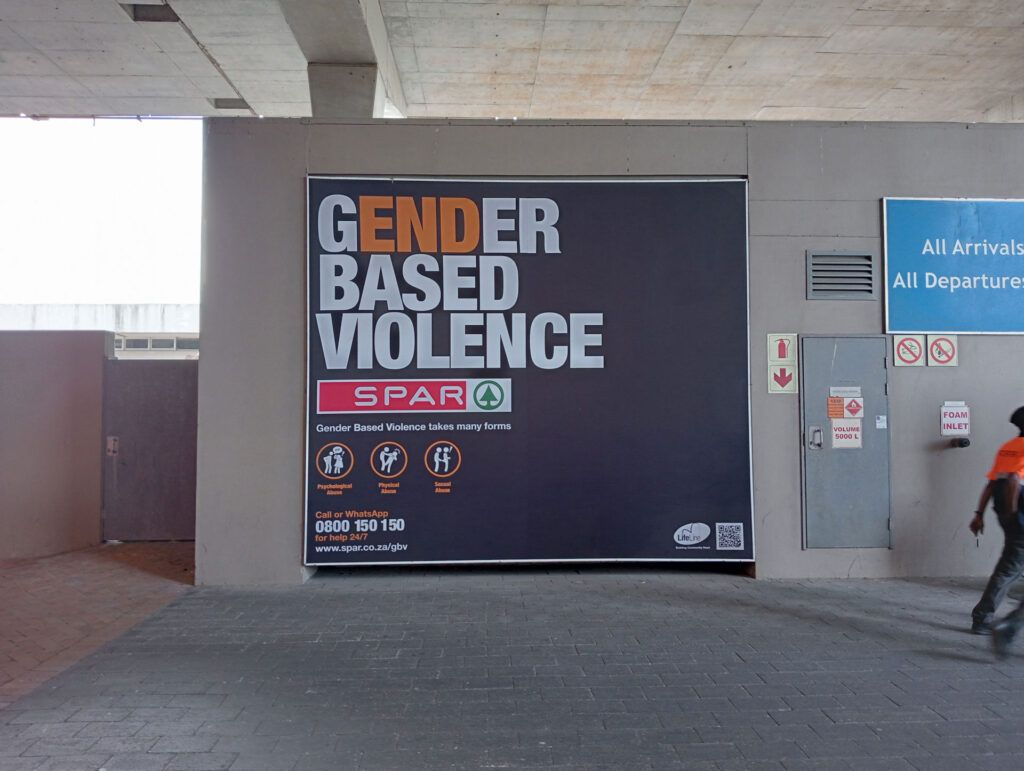
It is no surprise that the dominant responses to violence rely on awareness campaigns, workshops, and symbolic gestures. These cost little, threaten no powerful interests, and require no transformation of the economic base. They are the ideological equivalents of treating a structural disease with moral sermons. After decades of such interventions, rates of intimate partner violence and general interpersonal violence remain unchanged. This is the predictable result of replacing material analysis with bourgeois sentimentality.
There is only one path to reducing violence in any society. It requires employment, social security, strong public institutions, community stability, early childhood support, and the reconstruction of collective life. It requires the redistribution of power and resources away from the small elite and toward the working class whose lives are most affected by violence.
South Africa does not suffer from a uniquely gendered crisis. It suffers from a crisis inherent to its social and economic structure. Intimate partner violence is one expression of a broader violence produced by inequality, alienation, and the degradation of social life. No amount of messaging or ideological distraction will change this. Only the transformation of the material foundations of society can.