WAMUWI MBAO
A Circumstantial Account of The State of Decay
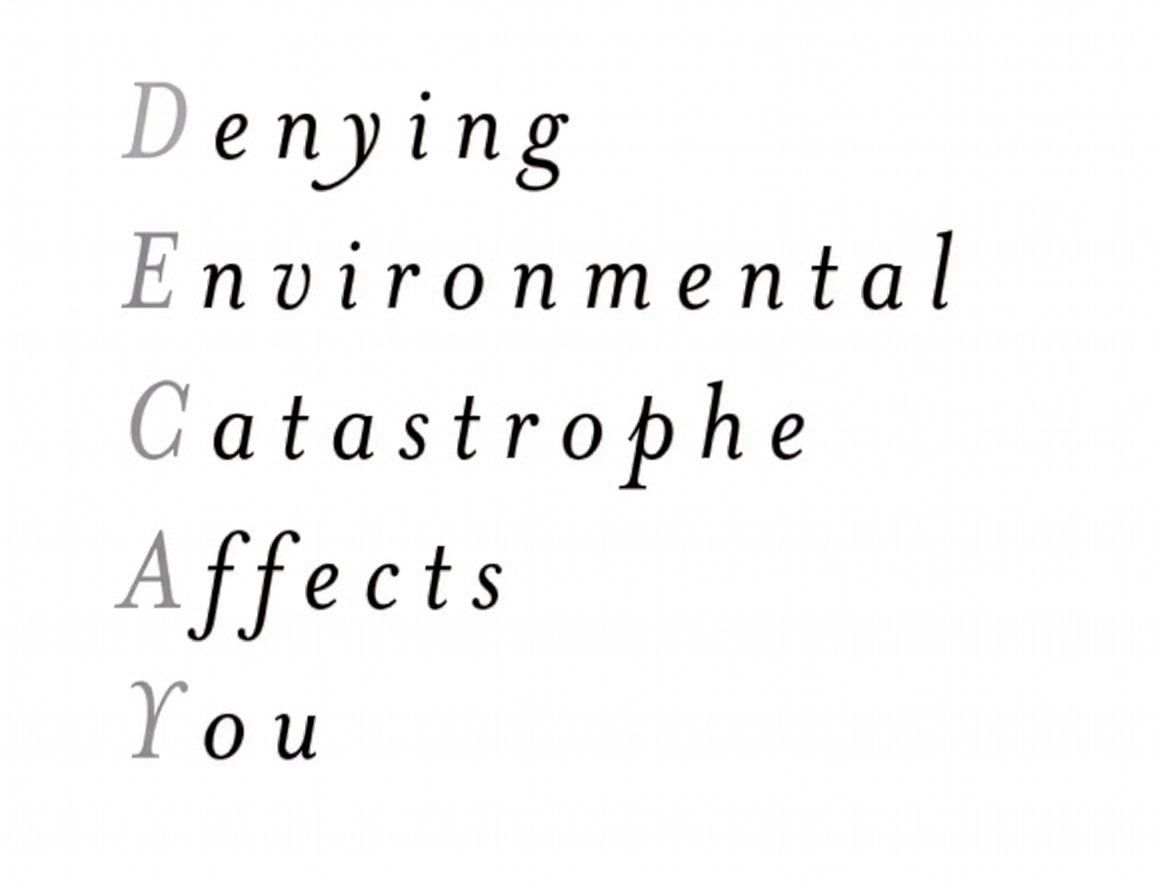
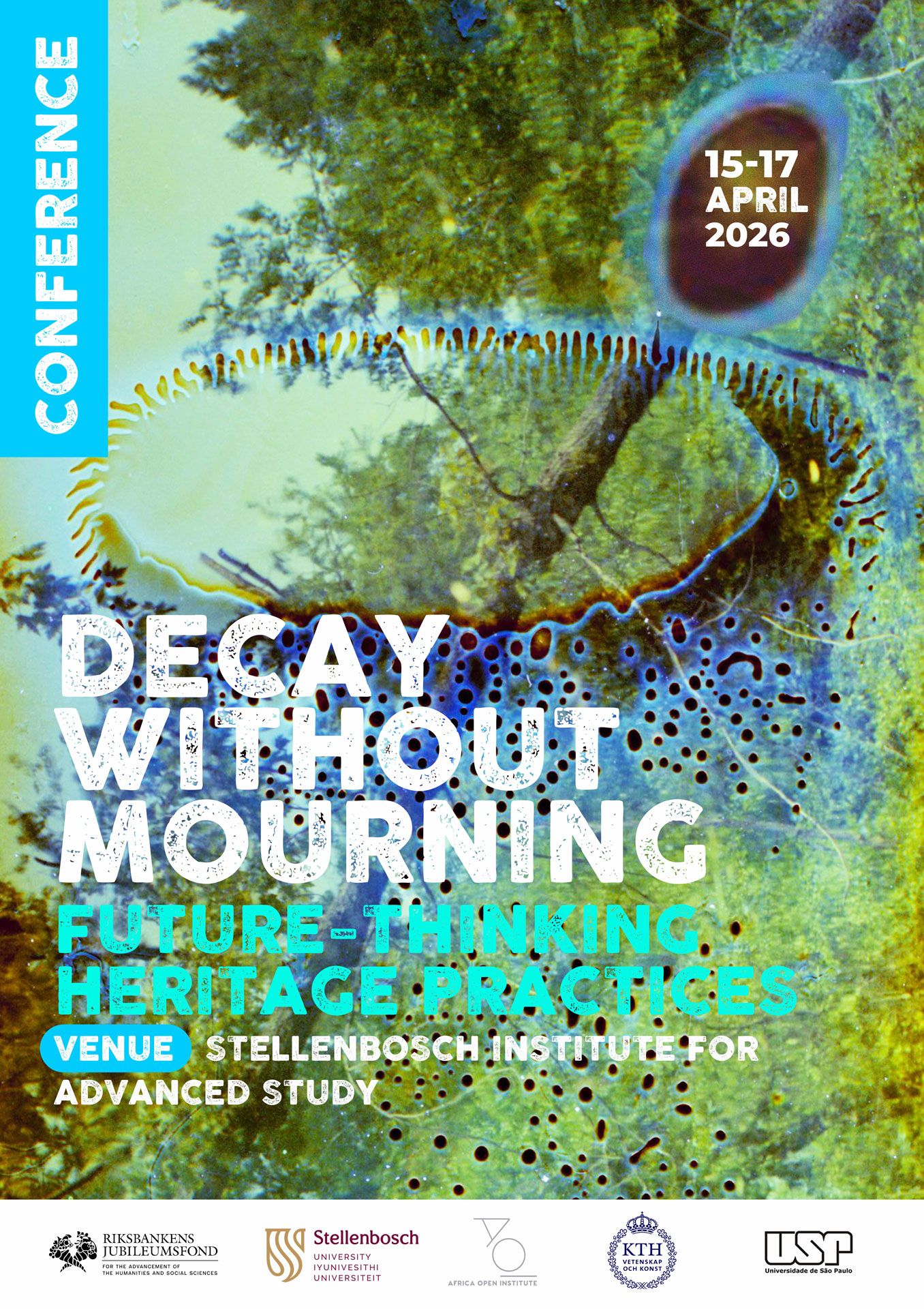
The Decay Without Mourning conference took place from 15 to 17 April, mild autumn days all, at the Stellenbosch Institute of Advanced Studies. Bringing together a rich program populated by a remarkable range of scholars, heritage practitioners and artworkers, the conference was the high mark of a five-year international research project between teams based at Stellenbosch University, KTH Royal University (Sweden) and the University of São Paulo.
When collaborative work is carried out across alliances whose members have differing levels of access, resources etc., there are always questions to be asked about how the resulting collaboration will be structured: what challenges of mobility and voice might surface? At Decay Without Mourning, the organizers were clearly attendant to the dynamics of the convergence: no doubt due to the funding provided by the Riksbankens Jubileumsfond, the conference makeup reflected a concerted effort to bring all partners together. While conferences tend to speak the language of equalness and access, the knowledge-exchange economy often disempowers those from less privileged centres. In on the fly conversations between sessions, I gathered a sense from the participants that everyone was thinking very reflexively about these concerns.
Running to 26 papers (not counting the keynotes), abutted by a galleried rotation of complex and inventive displays and exhibits, screenings and walkabouts, each day proceeds in triptych, inviting movement. The pristine STIAS building, with its overt architectural minimalism, makes for an intriguing setting. Some papers are in direct translation, requiring us to scan QR codes printed on the standard-issue conference lanyards in order to access the automated interpretation project. It opens up a fruitful dialectic about languaging and access when it comes to collaborative projects of this nature.
Conferences are anxious affairs because they are a vast social organism composed of many moving parts. You scan the program, wondering which talk to attend, ruing your inability to be in two places at once. There is the matter of where to sit: too close to the front, and you risk an awkward exit should you need to slip away. Too near the back and your immersion is constantly interrupted by latecomers, conference-drifters, and (at this particular event) a healthy cohort of babies.
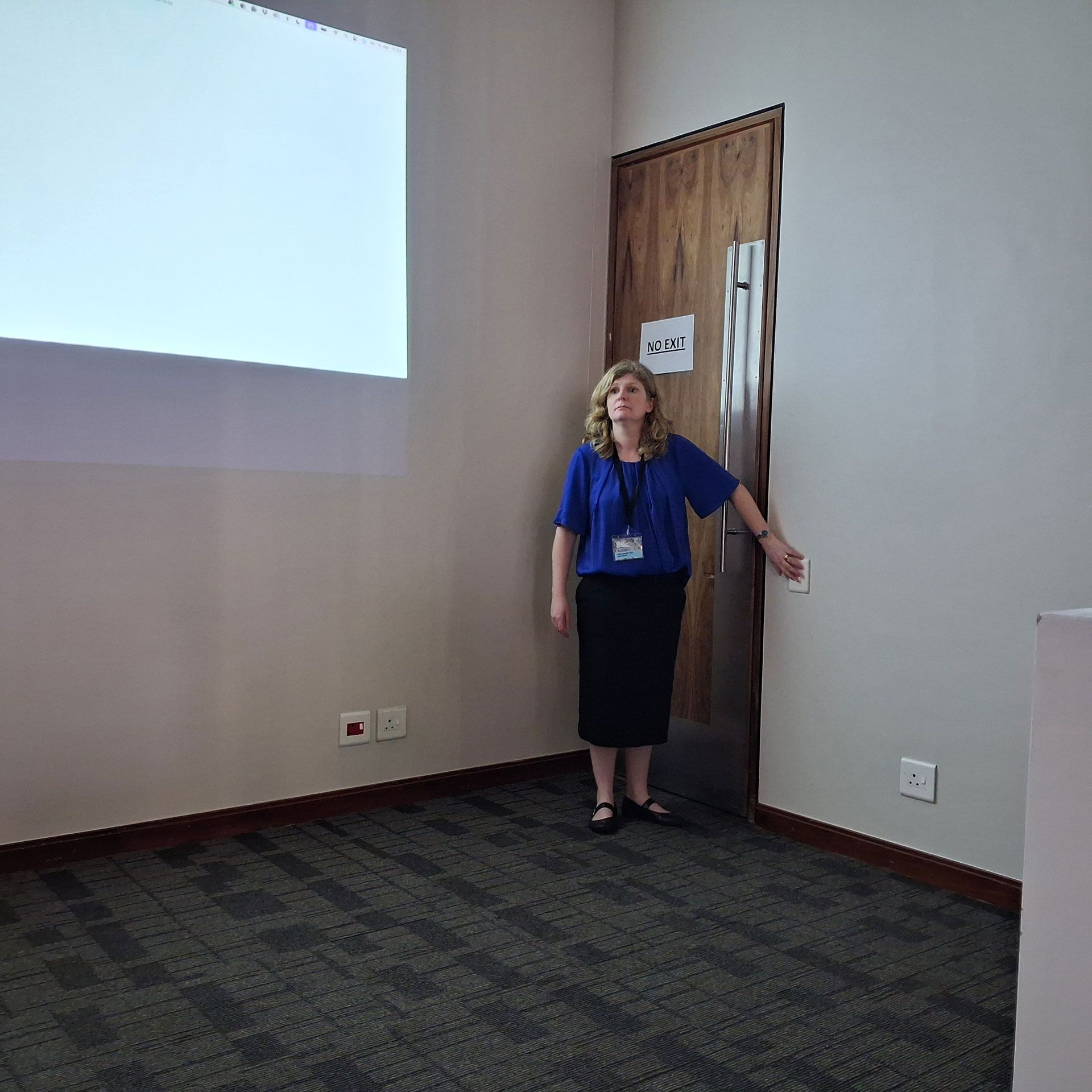
On day one, Prof Vasti Roodt, Dean of Arts & Social Sciences at Stellenbosch University, opened the conference by welcoming the Decay Without Mourning project as a much-needed initiative. She parsed SU’s history of dispossession, citing the construction of the Arts & Social Sciences building upon the rubble of homes that had been bulldozed under Apartheid’s racialized spatial planning. “What I take this conference to be doing,” Roodt said, “is refusing the false choice between preservation and repair – not by offering a tidier third option, but by sitting seriously with the tension between holding on and letting go.” She invited the attendees to rethink decay “not as a problem to be solved, but as a methodology”.
Extending the theme, Stephanus Muller, director of Africa Open Institute for Music, Research and Innovation, spoke of decay, loss and finitude as conditions for new forms of engagement:
The focus on archival decay as a source for new creation, and the necessary understanding of archives as always already occupying a place in the greater scheme of nature, in which all culture is subject to the inexorable process of becoming nature again, with only a timeframe separating what we think of as fleeting or enduring.
Quoting GGM’s The Handsomest Man on Earth, Muller dwelt on how ambitious research projects like Decay Without Mourning alter the measure of what is possible, making visible the narrowness of prior frames and [demanding] that what follows must be more accommodating, with “wider conceptual doorways, deeper archival wells, and a renewed sensitivity to the ways in which what we call ‘endings’ are themselves generative conditions.
Following these two institutional openers, we heard from Lize-Marie Van der Watt, one of the convenors of the conference and a principal investigator of the larger DWM project proposed that:
In heritage studies, decay has often been treated as a problem. We suggested a different approach: treat decay as a potentially creative process that can help us to understand heritage.
Arguing that in many cases, arresting decay is neither possible nor desirable, Van der Watt added “our goal was to develop richer and more productive ways of thinking about decay.” She thanked the team for their moments of “rebellious reflection” and hailed the efforts of the myriad hands behind the scenes.
Whose Posterity?
Day 1’s keynote addresses by Njabulo Chipangura from the National University of Ireland, Maynooth and Christina Fredengren of Stockholm University, contextualized contemporary heritage practice, aptly laying the [ground] for what followed after.
The question raised by Njabulo Chipangura in the first keynote was a trenchant one:
Whose posterity are we guaranteeing with our work?
The question foregrounds the political nature of culture work, especially as it relates to the treatment of objects transported from the colonized world to the centres of empire. Chipangura’s background in anthropology studies informed his discussion on curation, titled Relational care in reimaging meanings of African Heritage Objects at Manchester Museum. His work with 15 000 African cultural history objects housed in the Manchester museum revolves around collaborative provenance research in relation to objects from Southern Africa, Malawi, Tanzania, Ghana, and other countries.
Chipangura observed that “the idea of caring [in a museum context] is benchmarked on the notion of caring for material objects to ensure that they live forever without decaying, for posterity.”
Chipangura spoke about the complexities of opening up access to the cultural objects: “I see objects as not just frozen, lifeless things, but as cultural objects relating to living people and their cultures.” How then, he continued, might we think about reinserting communities back into the story of their objects? I write this question out, the better to visualize the nuanced problem it poses.
A lively and engaging presenter, Chipangura’s keynote, with its foregrounding of the politics that underpin collecting practices, couldn’t help but conjure the famous scene from Black Panther:
Chipangura went on to outline the importance of provenancing as a dynamic mode of preservation. By all accounts, the labour has an air of detective work about it: He spoke of enlisting members of the African diasporic community in Manchester, in the hope that their lived experience will help them to identify the 1500 objects in storage that are simply marked “Africa”. His talk raises further questions around the meaning of curatorial work: how does it work to resist erasure, and what can it visibilise, if done in the spirit Chipangura advocates?
Christina Fredengren’s talk, meanwhile, was titled Deep Time Metabolism and Creative Decay. Beginning with an elucidation of radiocarbon dating practices, she framed an insightful poetics of carbon dating in which she argues for thinking of the technique as a method of unlocking slowly-fading messages from the past. Fredengren demonstrated how we are marked by our past experiences, such that future excavators would be able to determine the paths and trajectories of our lives during the pandemic.
A trenchant set of questions from Simphiwe Mlambo, an architect, calls our attention to the museum as a structural institution of meaning production that requires challenging, if not outright refusing:
Is the museum project inherently problematic? Why does that infrastructure have to remain in place?
The grit of this stand-out question resists dislodging, with Mlambo arguing that archaeology and heritage are appellations signifying a form of cultural information brokerage that erases the living in the way they accord greater weight to objects over the people from whom they derive. Both keynote speakers gesture in their answers to the necessity of troubling the infrastructures where they work, but there isn’t really sufficient time remaining to give this injunction the weight it deserves.
On Day Two, the keynotes dwelt on the question of change. The session began with a paper in absentia, delivered online by Taku Iida from Osaka’s National Museum of Ethnology. Iida, prevented from travelling due to the precarious state of air travel occasioned by Trump’s war against Iran, presented a sagacious discussion of the Al Haouz earthquake that devasted Morocco in 2023. Part travelogue, part lyric, Iida situated the earthquake’s unfolding within broader historical processes and conditions. His paper forcefully reminds us of the importance of rethinking disaster. Iida persuasively argues that natural disasters often simply accelerate or exacerbate processes already extant or underway – decay, adaptation, transformation, as Iida names them – brought on by culture.
Iida’s paper was all the more intriguing for the way it promotes a reinterpretive turn, extending our understanding of the ontologies and epistemologies that structure disaster, particularly in terms of how post-disaster responses, those praxes of rebuilding, restructuring and restoration carried out in the aftermath of a calamity, might take onboard ‘informal’ heritage techniques, such as local masonry.
The second address, by the University of Utrecht’s Sven Dupré, reframed a question which was the animating impulse of the conference:
How do we acknowledge the inevitability of decay?
Dupré’s paper took as its point of departure Salvador Muñoz-Viñas’s much-discussed 2025 paper The End of Conservation, in which he cited six overlapping trends that collectively signal a shift towards a negative overall perception of conservation work.
The End of Conservation, but only as we know it?
The idea of conservation as antagonistic to change, said Dupré, still exists in an antagonistic relationship to change. He briefly sketched the parallel histories of cultural heritage preservation and restoration ecology, showing how the cross-fertilization of these lines of practice could point towards new ways of seeing that allow for change and decay. He argued that the idea of conservation as being tied to stability, or indeed a return to an original state, with change and transformation seen as undesirable qualities, is a relatively recent phenomenon, connected to the emergence of an emphasis on material authenticity, as well as the rise of science as the most authoritative form of knowledge-building in relation to conservation.
Dupre’s illumination of how early ecological conservation efforts were often driven by an essentialist tendency to define and preserve nature by removing human influence, brought to mind the fraught history of the nature reserve in 20th century South Africa, where the ideal of the Apartheid state was a sine hominibus landscape.
Leora Farber’s perceptive paper, Ruination and Regeneration in the artwork, Leftovers at the table (or, what we are left with), was the third of the day’s keynote addresses. Farber saw her paper as interfacing with what she termed the key question of the conference, namely:
What if, instead of being adverse to the notion of decay, we engaged with it as a critical and creative methodology, a process, aesthetic and gesture that can reshape how value, memory, and care are understood?
Our attention was directed towards the subject of the paper, Farber’s exhibit Leftovers at the Table (or what we are left with), a living artwork in which moss encroaches on and covers over the shards and fragments of settler-colonial domesticity: Delftware, bone china, silverware and glassware are concealed by the moss, becoming what Farber terms “storied matter”. The artwork’s engagement with ‘imperial debris’ (an ongoing preoccupation in Farber’s work) speaks to the hauntology of South Africa’s imperial past: Farber asks us to think with this debris as that which remains, while gesturing to the vibrant unscripted destabilization that the mossing signifies. She names her role as a collaborator in an ever-unfolding choreography of what, following Donna Haraway, she terms natureculture, “a form of worlding that involves a radical dismantling of the boundaries between human and non-human agencies.”
Each of the keynotes presented us with a gathering point around which we might rethink and revalue our human relation to decay, asking us to remodel ways of co-living with decay. They modeled a speculative counter-knowledge, remixing our understanding toward something other, but also something more.
Notes From the Last Row
After the keynotes, participants hived off into the smaller panel discussions. The papers were distinctly varied in their approaches, although they all roam around the twinned topics of heritage and conservation. What is readily apparent is how they reflect distinctly interdisciplinary ways of tilting at the same topos. Some of the panels were performance-forward, while others were mortared by theoretical analysis. Some were distinctly place-based, while others spoke to phenomena attaching to no specific locale. Some of the exhibits referenced films or site-specific art installations, student work and community engagements. It was a pity that the sessions were not plenary, as the parallel format made covering every individual presentation impossible. Nevertheless, it was generative to move between the sessions and hear how the different papers entangled with each other in their various ways of orienting to the theme.
In Conservation after Permanence: Decay, Critical Ethics, and the Future of Heritage Hannah B Holling from the HKN Bern University of the Arts, builds a fascinating discussion around the increasingly untenable nature of conservation in the West. As she argues,
What does conservation mean at a time when the very conditions of continuity are dissolving? What does conservation mean when permanence is inflicted on some objects of heritage and not others?
Holling’s project focuses on decay as a phenomenon that renders the separation between nature and culture as futile, and destabilizes Western conservation practice’s investment in permanence as a stabilizing logic. Invoking the work of pioneering 20th century artist Nam June Paik – specifically, the decaying performance work Liberation Sonata for Fish, Holling names decay as a material condition, an epistemic tool.
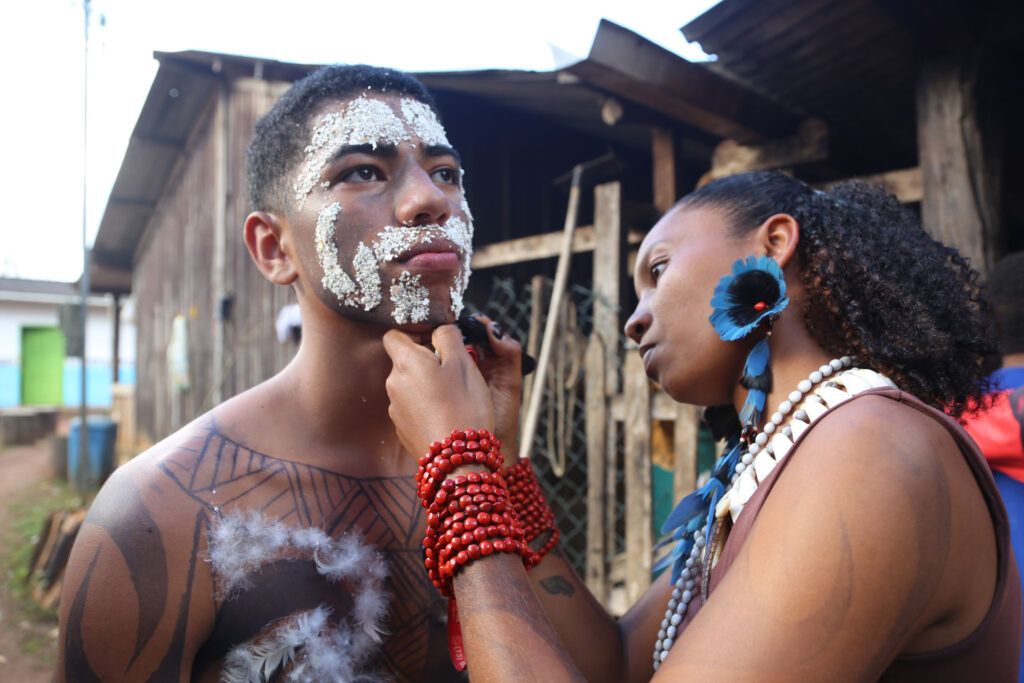
Across the way, Lesly Garcia and Carla Jaimes Betancourt (both from the University of Bonn) presented their collaborative paper, entitled When all Return to the Earth: Decay and the Cyclical Life of Heritage in the Bolivian Amazon. Their paper centred on indigenous cosmologies of the Tacana, Tsimane’, and Mosetén peoples, asserting persuasively that what Western heritage discourse is wont to see in terms of deterioration and loss is, in these contexts, more profitably understood in relations of renewal and transformation.
During the break, attendees were encouraged to engage with the artistic installations. Numbering among the static installations are ceramic works by Tsholofelo Moche (UKZN), Simphiwe Mlambo’s fascinating architectural work Umhlabati/Umhlabuti, and Michael C Coldwell’s disquieting work of digital hauntographic hallucination, /imagine Ronsack:
Elsewhere, Kati Lindström (KTH Royal Institute of Technology) conducted a musopoetic walkabout that invited us to think about Antarctica as “the continent of the future”. Her work framed decay against the seemingly blank ongoingness of Antarctica, showing how human visions of the icy continent as a terra nullius allow us to forecast the eroding global future.
After lunch, Babere Kerata Chacha (Laikipia University) spoke on the recent secret architectural renovation of Kenya’s State House. Citing the rapid evaporation of William Ruto’s early pan-African fervour, Chacha’s paper speculated on the quizzical changes to the presidential residence:
Is it an attempt to cleanse the seat of power? Or, like many other African Presidents, is he preparing to become a life President by making State House a permanent place for him to stay?
Chacha’s talk offered a contrastive analysis, examining “the state’s aggressive reversal of the building’s material decay (crumbling facades, weathered wood, and patinated surfaces)” as something that, while being framed for the public as a modernization project, “erased layered histories of struggle, resilience, and political memory.”
On the same panel, Kati Lindström also explored decay in the context of the built environment. Titled Decay as code in Japanese heritage and art practices, Lindstrom’s paper took as its subject the UNESCO-tagged sites of Japan’s Meiji Industrial Revolution. Lindström proposed that decay functions within a visual and cultural language that ties Japanese aesthetic traditions of impermanence (think karesansui or that heavily meme-ified practice, kintsukuroi) to current conservation practices. Her discussion, accompanied by haunting images of Hashima Island, site of an abandoned coal-mining town, modeled the problematics of incomplete remembering.
Lindström’s paper dovetailed well with Simphiwe Mlambo’s ekphrastic The Black Register/Umhlabuthi: the registers of sonic temporalities of Deferred Decay. An impassioned Mlambo spoke of how to address the practices of black life and liveliness found in the nooks and crannies of our built world. Emphasizing that
The archive was never meant to house Blackness,
Mlambo delivered a stirring critique of how cavitated/non-use spaces (quarries, building yards) are sites of erasure. I was struck by the simple but instructive j’accuse that frames Mlambo’s confrontative engagement with the unsaid that resides within architectural episteme:
Where do you get your limestone from?
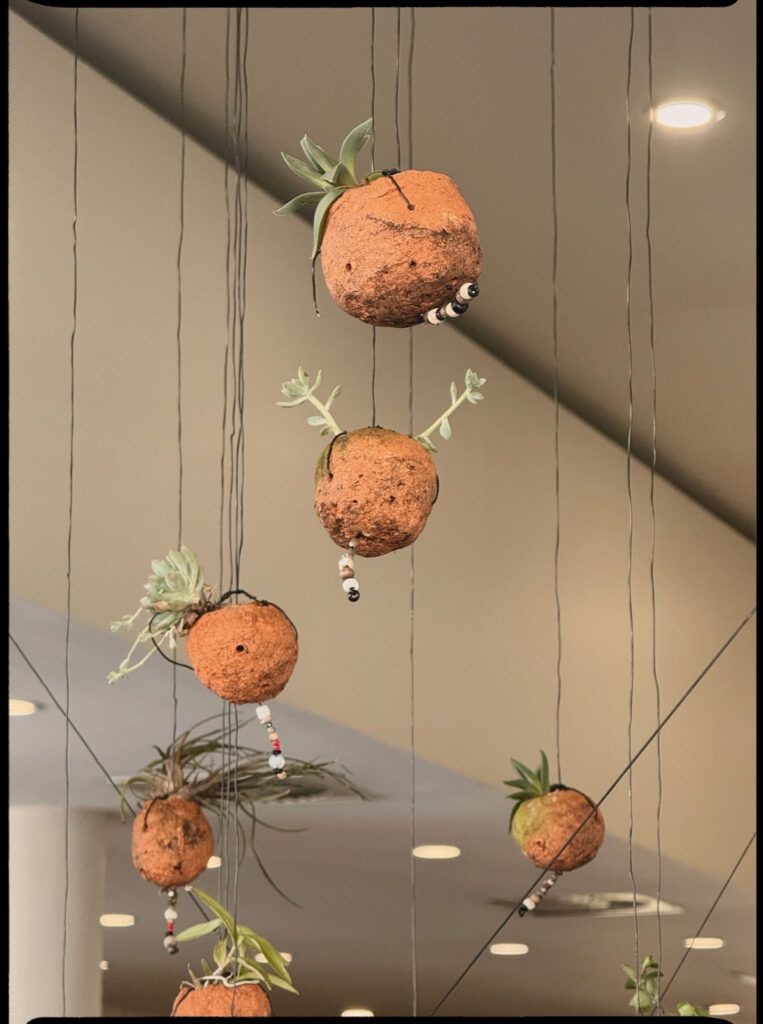
Neith Moore’s paper, Molecular Fabulations: From Ashes to Algorithms, spun us from built decay towards the grave. Her paper combined with a daunting art installation involving a live Ficus tree at the base of whose roots lie ceramic pods containing fungal spawn and human remains. Moore argued that
To think death molecularly is to shift from monument to process; The molecular re-narrates death as both loss and transformation.
A speculative science piece that involved translating the bioelectric fluctuations given off by plants into sound signals, Moore’s paper brought home to us that decay and its attendant grief processes might be suitably integrated into an ecology of care, where
Death marks not disappearance but reconstitution within the biome that constituted it.
Staying with death, Linda Kopitz (Vrije Universiteit Amsterdam) gave a paper titled Who’s Buried Here? in which she explained the unsettling social media phenomenon #Gravetok, whose adherents make short videos focused on the cleaning and revealing of seemingly abandoned graves. Kopitz proposed a reading of cemeteries as public infrastructure for the living as well as the dead. With that in mind, the efforts of those involved in #Gravetok raise questions about ongoingness: should gravesites carry the residue of time. In this regard, she argued,
#Gravetok can be seen as an archival effort that points to the tension between the temporality of the cemetery and the temporality of social media.
For Kopitz, the story of ‘gravefluencers’ is complicated by the performativity of social media. She argued that the monetization of care complicates the ethics of what memory work is happening during the cleaning.
Marisa Maré’s talk about Echoes of Time examines where the artificial meets the natural. A visual archive of sculptures moulded from bioplastic and wood ash that resembles a fossil display, Maré’s work weaves a theory of complex matter. The exhibit braided theories from Haraway (a touchstone for many at this conference), Jane Bennett (Vibrant Matter), Bayo Akomolafe, and Heather Davis (Plastic Matter), into a compelling narrative for understanding plastic as something that demands a reflexively relational approach.
Each day’s presentations had a connective thread running through them. Many of the conference participants talked about ways of theorizing resistance, not as an appositional concept in relation to decay work but as a learning praxis. From Orlando Francisco’s Flags of Other Worlds, which approaches decay as a condition that visibilises social and ecological struggles and Sally Santiago’s dialogic work on the artistic project Cartografias Solares (2023) that invites us to redraw personal and collective heritage through “slow disintegration” (both Francisco and Santiago are at the University of Porto); to UCT scholar Eve Wong’s insistence on decay’s potential as a decolonial method.
For other presenters, technology was read for the way its resonances surface, ghostlike, in the social body. Florencia Levy (Universidad Nacional de San Martín) presented Tercer atómico spectral, a video-tied discussion of the imprint created by “technologies whose existence requires the fracturing of the earth.” Her presentation posits a traceable arc of meaning from the stellar origins of minerals to the earth-bound network of politics and economics that bring those minerals into use. Here, technology is freighted with the politics of materiality in frightening ways. Meanwhile, Hyunggyu Kim’s Afterimages of Decay, which embanks countless digital images of the Bergen Ruïnekerk, is more optimistic in the way it uses technology to materialize civic engagement. Thinking with “the concept of Jansang (잔상) – a Korean term meaning afterimage with phenomenological implications” – Kim’s work thinks through the making-visible of a collective consciousness mediated through the practices of tagging and sharing pictures of the ruin, producing a ghostly looking phyllo-picture.
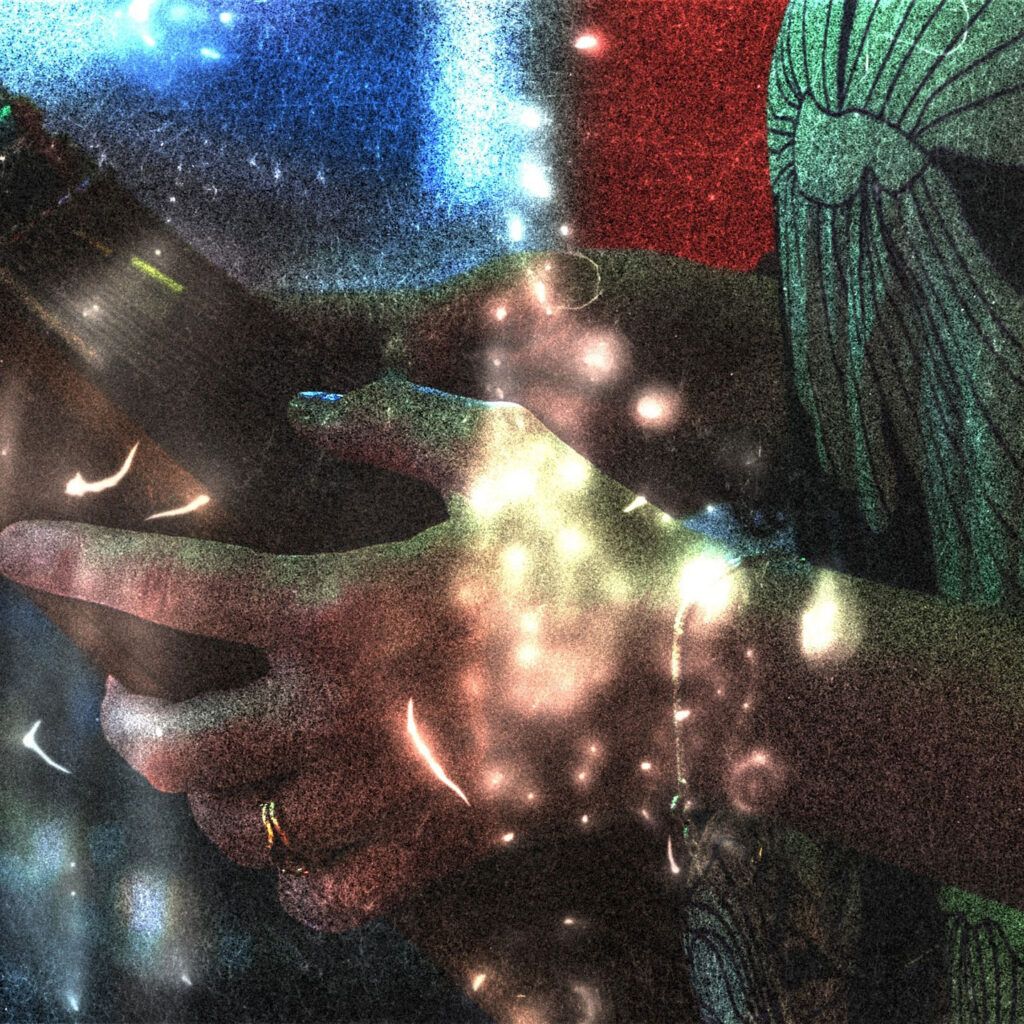
Tilting the attention more toward the latent spectral in lens-based media, Michael Schofield’s Aura, Decay and the Simulation of Ghosts paired up with the exhibit /imagine Ronsack (the two Michaels? Les deux ne font qu’un) to speculate on the potentiality of what lurks in broken digital material, particularly when it has been subject to decay and degradation. What I like about Schofield’s paper is the tension it creates between traditional ideas of media recovery and the excess of the unusable: what afterlife (or alterlife) is possible, and what traces of the past will carry along or be obscured beyond seeing? There is something affective about what is conjured in this foggy structure of feeling, something (motile) in (what reads as) the static, to steal a line from Phoebe Bridgers.
The last panel discussion of the conference brings things to a close with a thematically braided discussion by Carla Jaime Betancourt and Fernanda Pitta speaking to community-forward efforts to regenerate histories via dialogic engagement with the colonial archives. The panelists remind us that heritage is a practice of care, speaking particularly to the ways in which Indigenous histories might be rescripted and co-produced using the archive. Pitta’s paper, with its close reflection on working with Tupinambá community leaders to regenerate knowledge from artefacts held in European archives, is especially resonant.
Traces and Enactings
The energetics of a conference have much to do with the conceptual events that fill in the interstices between sessions/days. Accordingly, at Decay Without Mourning, the academic programme was accompanied by a curated series of artistic works that formed part of the conference’s thematic arc. On the first evening, De Oude Leeskamer hosted the opening of Deaccessioned, curated by Lizabé Lambrechts and Nicola Deane. The event presented a stimulating and richly proliferating exhibit in which a party of writers – including Aidan Erasmus, the late Diana Ferrus, Paula Fourie, Stacy Hardy, Ronelda Kamfer, Mbe Mbhele, Charles-Pierre Naudé, Vuyokazi Ngemntu, Pieter Madibuseng Odendaal, Jolyn Philips, Nathan Trantraal, and Ivan Vladislavić – were assembled to respond to a trove of decayed sight-and-sound objects from the Hidden Years Music Archive.
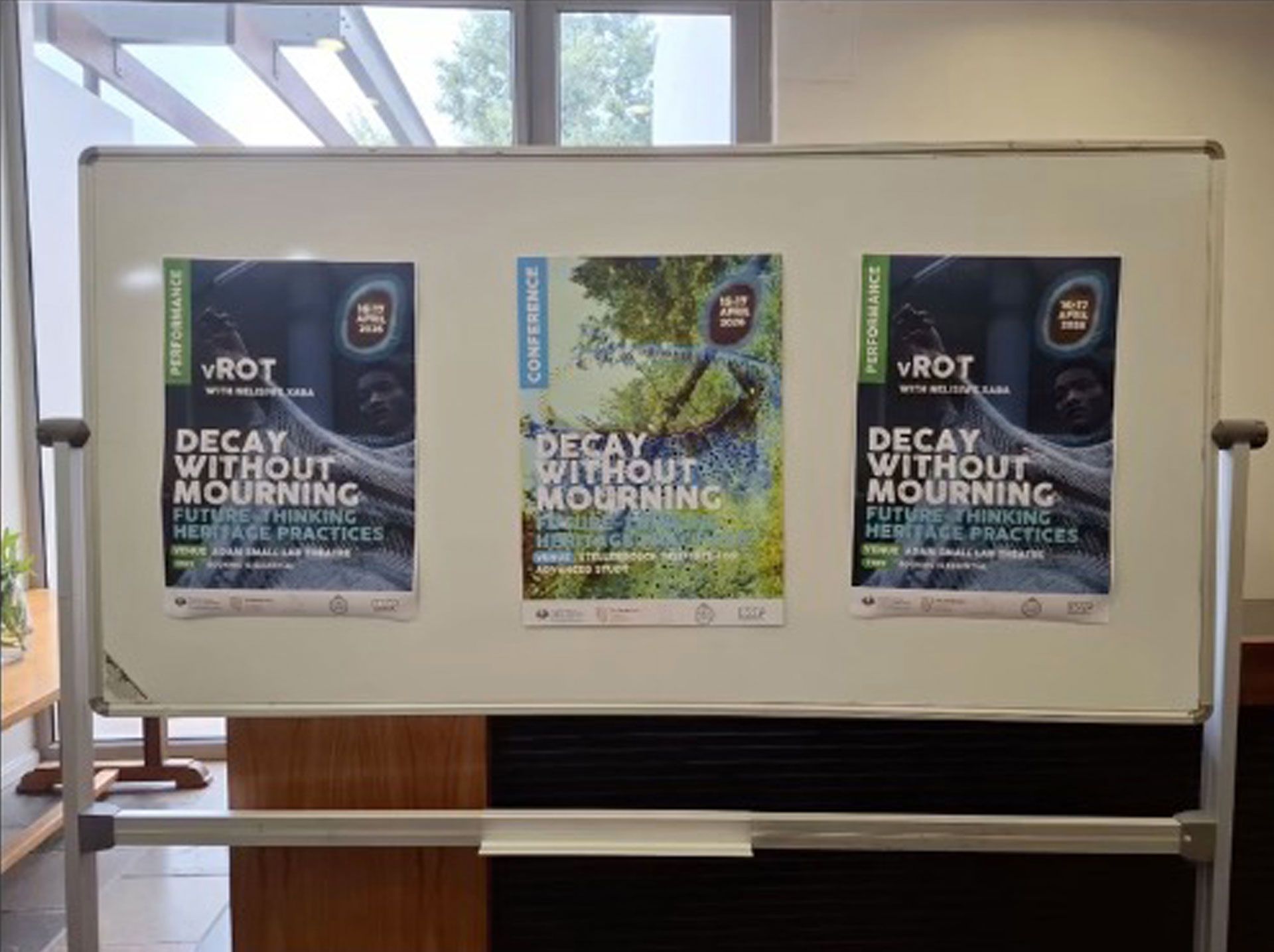
On the second evening, the attendees are gathered in Stellenbosch University’s Adam Small theatre to watch conceptual artist Nelisiwe Xaba’s wry performance piece Vrot. Xaba is one of South Africa’s most acclaimed choreographers, and her work is roiling, volatile and brilliant.
Vrot is an intimate performance involving a butcher-curtain, a crocheted mycelium web, and a lot of food. The piece compares the encroachment of mould to social entropy, and it was interesting for its enlistment of the sonic grotesque, the unsettling and the uncanny. It’s a show that viscerally enacts the improvisational nature of mould. Xaba is not an academic – she says bluntly in the discussion the next day that
my roots are dance, and dance is the body
– but her performance gesturally pulls at the themes and arguments that have been surfacing throughout the conference.
Sonic theoryscapes
The conference has its own inherent soundscape. Amplifier hiss. Microphone static breaking through speech. Submerged chatter. Layerings of conversations in other rooms. The Capitec bros who are sharing our venue express loud non-understanding of what we are doing. Babies cry. Someone knocks over Neith Moore’s Nestled installation.
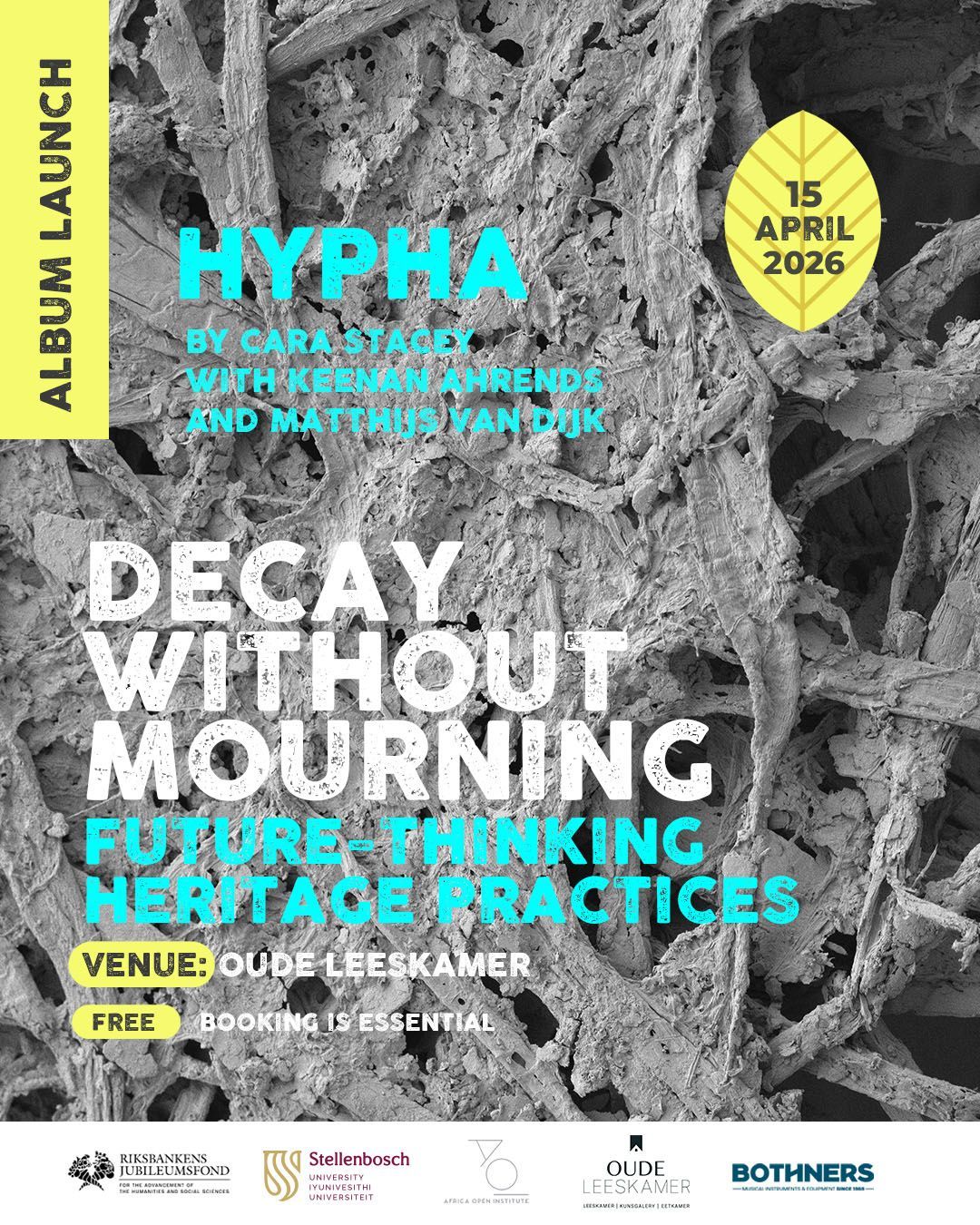
The Johannesburg-based composer and musicologist Cara Stacey’s Hypha is the sonic backdrop of the conference. Created as a playing-with that enlists the decayed and crumbling audio and visual material stored in the Hidden Years Music Archive, the audio work takes garbled, deranged and grained-over things and weaves them into what Stacey calls “a living diorama of strange and unrepeatable moments in musical history”. Supported by guitarist Keenan Ahrends and violinist Matthijs van Dijk, the work provides a psychic representation of decay.
For her own conference paper, Where’s Wanda? Stacey speaks about acoustic resonance as a form of resistance to decay. Her paper elucidates the noise made by broken harpsichords (the remaindered, once-meaningful instruments formerly belonging to Polish harpsichordist Wanda Landowska), directing us to think about duration, fallibility and what sound endures, transformed perhaps, in the defunct. Her paper suggests that there is potential in half-broken things that might be harnessed to a new kind of sound-making.
On the same panel, Nicola Deane’s Endling Wakes: Decay, Care, and the Sonic Archive as Eco-Ritual, discussed the making of a mobile sonic sculpture. Said sculpture, a looming flock-shrouded haunted crate from which uncanny sounds emerge when movement is detected, was placed in the STIAS foyer, and attracted many curious onlookers. Accompanied by a film screening that describes the process of Endling coming to being, Deane read a beautiful essayistic statement of concept, describing her and co-artist Dominique Edwards’ orientation towards damaged, inutile sounds. The piece and the essay in concert have an artistic wholeness whose clarity is laudable. Afterwards, Endling calls attention to itself at strange intervals, spilling into other papers as workers pass by, drawing our attention as we assemble for tea or move to other spaces.
Screens
There were two major film screenings, notwithstanding the proliferation of media-accompanied presentations. The first of these was the film hypha by Aryan Kaganof, a creative repurposing of old footage from the Hidden Years Archive into a non-narrative telling. Paired with Cara Stacey’s haunting soundtrack (the album was launched at the first evening’s Oude Leeskamer happening), Kaganof’s film takes deceptively bucolic scenes – holidays, leisure, domesticity – from the white nostalgia repository, images disturbed by scratches, stains, jumps and other degradations. There is no controlling narrative, no balancing voice to direct our gaze. It carries on for a long time. It frays at the audience’s attention. Thinking afterwards, I surmise that the film’s affect draws from its atmosphere of contrasts, where what reads one way is rendered complicated by what is not framed by the camera. In a sense, the leakage brought on by decay allows in multiple meanings.
The other film, Leif Petersen’s Son of the Soil is a more conventional effort, but no less intriguing. A story-led documentary about loss and change, it asks what the long picture of ecological conservation looks like for those who are fenced out. Framed around the question of the Rastafarian herbalists, whose enduring and adaptive practices of medical sociality have run into conflict with privatized understandings of property ownership, Petersen’s film asks both small and large decolonial questions, without foreclosing the possible responses.
Afters
It seems paradoxical to speak of ending in reference to a conference that brimmed over with so many discussions about unmooring us from the concept of an ending as anything final. The breadth of this event testified to the conceptual bigness of decay: the conference was not only the staging of a communal thinking-in-kind, but also an apt way of modelling a publics of care. Each of the papers, after all, was an engagement with what it means to care without assurance for both what is already lost, and what teeters on precarity’s edge. By turns playful and profound, the conference was a potently definitional event that was the fitting high point of a broad-spanning research journey.