• Issue #01
  • Issue #02
  • Issue #03
  • Issue #04
  • Issue #05
  • Issue #06
  • Issue #07
  • Issue #08
  • Issue #09
  • Issue #10
  • Issue #11
  • Issue #12
  • Issue #13
13
Contents
editorial
SIYAMTHANDA-MUHLE MUYANGA
Ngiyasaba makusa, ngoba kumele ngivuke (I fear the morning, because I must wake up)
MNQOBI NGUBANE, TSOGO KUPA & EUGENE SKEEF
Mathonga Elizwe (Spirits of the Land)
ITUMELENG MAHABANE
Towards an ontology of [decolonised] being.
LAVITUDE RAMPHOMANE
The Elephant in the Room
SIMON NKULULEKO SPOOR
Thinking about Violence and GBV in South Africa
DHIRU SONI
The Silent Crisis of South African Libraries
Theme Decay Without Mourning
WAMUWI MBAO
A Circumstantial Account of The State of Decay
LIZABÉ LAMBRECHTS
To Decay - on custodianship, care, and the ethics of returning.
KATI LINDSTRÖM
Antarctica: Continent of the Future
LIZE-MARIÉ HANSEN VAN DER WATT
Imperialism, South Africa’s Antarctic Heritage and Decay, 1910-1961
NICOLA DEANE
Endling by Dominique Edwards & Nicola Deane
LEIF PETERSEN
Decay: transcript of a documentary film about bossiedokters
EVE WONG
Missing People, Present Decay: Fabulous Matter, or the Decomposition of Colonial Ontology
PAKAMA S. NCUME
Digitisation and Decay: An Archivist’s Ethics of Care for Reel-to-Reel Tape Preservation
SIMPHIWE MLAMBO
Flowers on Your Grave - Postcards to the occupants of the subsurface, below the monument line
NELISIWE XABA & BRENTON MAART
In Conversation about vRot: The politics and poetry of decay
NJABULO CHIPANGURA
Relational care in reimaging meanings of African Heritage Objects at Manchester Museum
HANNA B. HÖLLING
What of Conservation? After Permanence: On Decay as a Critical Ethics
SIGRID ADORF & ANDREA SICK
Restaging, De-closing, Versioning: Unfolding Temporalities of “the Archive” (Lecture Script)
TSHOLOFELO MOCHE
Home Truths II: What Is in A Name
MICHAEL SCHOFIELD
Decay, Creativity and Care in Stellenbosch
FLORENCIA LEVY
Audiencia de espectros
NEITH MOORE
Molecular Fabulations: From Ashes to Algorithms
MARISA MARÉ
Beyond Solutionism: Decay as Relational Practice in Bioplastic Art
MAIJA HIRVANEN
Mycoscores / Choreospores
HYUNGGYU KIM
Afterimages of Decay: Rebuilding the Democratic Process of Designing through Digital Ruins
ORLANDO VIEIRA FRANCISCO
Flags of Other Winds: Decay, Resistance, and Infrastructural Entanglements
ALEXANDRA DODD
hypha: A response to the first screening of Aryan Kaganof’s found footage film during the Decay Without Mourning conference
CARA STACEY
Hypha
GLICÉRIA TUPINAMBÁ
Bordunas
IRINEU NJE’A TERENA
Ancestral Ceramic Technology
galleri
LIZABÉ LAMBRECHTS & NICOLA DEANE
Deaccessioned
IO MAKANDAL
Watermelon
CECILIA VICUÑA
'Your Rage is Your Gold'
THOKOZANI MTHIYANE
Fragments (Memory of others)
JOAN OTIENO
Art as the Social Impact of Repurposing Waste Materials
DAVID EDWARDS
Urban Decay in Johannesburg and the Reef: The world as Evidence
BERKVELDT
Necrosonic Landscapes – Exploring the Transitional Realm Between Life and Death
DICK HIGGINS
Symphony No.357 from The Thousand Symphonies 1968
FEDERICO FEDERICI
Reactivating the Score: Unmastered Bones
STEVEN J. FOWLER & FEDERICO FEDERICI
Some notes on bones as writing tools and the Unmastering technique of Federico Federici
ANDREA ROLFES
my mother’s eyes
NICOLA DEANE
Spectres of Decay: The archive breathing at its horizon by Jurie Senekal & Nicola Deane
ADLI YACUBI
The Price of Silence: Gaza, Venice, and the Fear Inside Cultural Institutions
TANIA HABERLAND
the torrid zone
NEILL SOLOMON
33rpm
MEGHAN HO-TONG, MATTY ROODT & LUCIENNE BESTALL
Chorus
FRANCOIS ROBERT
Stop the Violence
TAKAHIRO SAWAMURA
Liberating Letters and Words from Lines and Stanzas
DICK VERDULT
CUANDO BUENA PATADA ES MAS QUE BIENVENIDA
JAMES USILL
Disruption
LOUISE POTGIETER
remarking life
DAVID CRITCHLEY
Trialogue
LUIS HERNANDEZ
Three Figures and Two Landscapes
borborygmus
ANDILE KHUMALO
The Invisible Life of Sound: Nachklang, Decay and Ancestral Temporality
DIMITRI VOUDOURIS
“Sound an ecological engagement”
CARA STACEY, ADAM MIRZA & AKIVA ZAMCHECK
“Where’s Wanda?”
LARS GOTRICH
Divinity From Dust: The Healing Power Of 'The Disintegration Loops'
THE CARETAKER
Decay, Everywhere At The End of Time
PETR FERENC, KRISTUPAS GIKAS & MARTIN JANIČEK
Broken Music Feedback Concert
THOMAS MICHIE
Claudia Molitor's Decay: An evolving and reflective meditation on life's work-in-progress
CY CANTEREL
Living with Ghost Machines - Generative AI as hauntological determinism
MICHAEL SCHOFIELD
Aura, Decay and the Simulation of Ghosts
STEVEN CRAIG HICKMAN
What is Posthuman Porn?
PIOTR BOCKOWSKI
Artaud’s media of corporeal decomposition
ARYAN KAGANOF
Endling: decaymentation as poetics
frictions
SONGEZIWE MAHLANGU
Echoes of Blackness and other Underground Bound Poems for God’s Children on A Cold Night Tenant’s Meeting before the Revolution (Fire Story dub)
LESEGO RAMPOLOKENG
= DECAY
PIETER MADIBUSENG ODENDAAL
a beautiful amnesia
DONALD RICHIE
The Zen Library - A Sermon
JURGEN MEEKEL
Lost in Dictation
RINA GARCIA CHUA
Ataulfo
THOMAS BERNHARD
Fäulnis
ABIGAIL GEORGE
Two Decay Poems
TAKAHIRO SAWAMURA
Asemic Diaries
VONANI BILA
Masonto (an excerpt from the epic LAMENT FOR MZALA)
TUANA
Hiç Anlaşilamamis
SERAME ICEBOUND MAKHELE
"Icebound Keeps Poetry Alive"
MPHUTHUMI NTABENI
The Unmaking of the Colonial Archive and the Aesthetics of Evasion: Mudimbe, Coetzee, and the Problem of Writing Africa from the European Archive
SARAH MANGUSO
The Two Kinds of Decay (excerpts)
claque
DINI SANDISO BAZANA
Receiving Lesego Rampolokeng's When the Fires Go Down, the Reading Begins: Not a review. A reception. A sitting with a book that became dirty because it stayed with me.
MPHUTHUMI NTABENI
The Empire’s Cabinet of Curiosities - A review of Fifteen Colonial Thefts: A Guide to Looted African Heritage in Museums, Edited by Sela K. Adjei and Yann LeGall
STEVEN CRAIG HICKMAN
Chthonic Thresholds: Andrew C. Wenaus and the Decay of Electronic Literature
ARYAN KAGANOF
The Entropic Real: Louis Armand's Entropology through the lens of decay studies
MPHUTLANE WA BOFELO
Neo Lekgotla Langa Ramoupi’s Robben Island: Songs of Struggle – Izingoma Zomzamalazo
SITHEMBELE ISAAC XHEGWANA
Disgrace and the Politics of Shame: Sexual Violence, Colonial Legacies, and Post-Apartheid Identity in J.M. Coetzee’s Disgrace
SIPHOKAZI JONAS
Stacy Hardy’s An Archaeology of Holes
MBE MBHELE
Notes on the Return to the Rural
SEAN O’TOOLE
Gnossienne
MURIEL TINEL-TEMPLE
Jonas Mekas, Shiver of Memory, by Peter Delpeut.
NIDA YOUNIS
A Review of Antemanha's poem Berlin Fragmente
LETHOKUHLE MSIMANG
Fatherland - Theatre Production
FAT CITY VINYL & MUSIC BLOG
Keith Hudson - Flesh Of My Skin (VP, 2021)
MKHULU MBAZO
Under good influence: a warning on the dangers of idolatry and the worship of money.
ekaya
ZANDILE JOY DYWATI
“Black daughters and father(s): love as a praxis embedded in daughters' relationality with Black father(s)”
SOPHIA OLIVIA SANAN
De-centring White Histori(city)
KOPANO RATELE
How You Define African Psychology Determines What You Focus On: A Short Comparison of Five Definitions of African Psychology by African Psychologists
MTHUTHUZELI ZIMBA
The Mourning Project
ANDRÉ CLEMENTS
Urban Decay: A Post-Nihilist Aesthetic
JURGEN MEEKEL
Palinopsia
MARTIJN PANTLIN
The Decay Machine
MARKO PHIRI
Zimbabwe’s artistic truth decay
off the record
Dr SAZI DLAMINI
In memory of Abbey Duze Mahlobo and The Malopoets
LIZABÉ LAMBRECHTS
The Woodstock Sound System and South African sound reinforcement
LAURENCE HAMBURGER
The Lost Films of Abdullah Ibrahim
BLACK PLASTIC POSSE (BPP)
The Black Plastic Project (bpp)
FANIE JASON
Decayed Vinyl and the Real Value of Things
RANDALL ROBERTS
Meet the guardians of the world’s earliest musical recordings
WARRICK SWINNEY
Cow, Bears and Surfers: A few personal intersections with Chris Cutler.
HYBRYDS MUSIC
Erasure: a virulent form of decay
BRENDAN FRANZ & THE OTHER VINYL RECORD COLLECTORS CLUB
Our Grading System Sucks! Agree?
TEAGUE SCHNEITER
Ethical Presentation of Indigenous Media in the Age of Open Video: Cultivating Collaboration, Sovereignty and Sustainability
SAM MATHE
Remembering Michael Tshehla Phahlane
ARYAN KAGANOF
The Last Time I saw Bra Fiks
SOPHIE GRIMES
Beautiful Decay: The Poetry of Lucia Perillo
feedback
ALLAN BOESAK
6 September 2025
TSEPO YA RONA WA MAMATU
1 June 2022
CHRISTIAAN BOONZAAIER
An Interview in Die Burger 13 December 2021
OMOSEYE BOLAJI
My Apologies 6 December 2021
DIMAKATSO SEDITE
1 December 2021
PETER DELPEUT
The Forgotten Evil herri version 1 analysis and proposals 6 December 2020
FACEBOOK FEEDBACK
Facebook
the selektah
TED RIEDERER
Transfigurations
DUNKELHEIT PRODUKTIONEN
Index of Mechanical Signal Decay
PhD
ALÉSHA BREDELL
Visual Enquiries and Idiosyncratic Selections: A Close Reading of Dust
ALÉSHA BREDELL
A Close Reading of Dust as a Rhizomatic Phenomenon
ALÉSHA BREDELL
Dust as Abject
SEZGIN BOYNIK
Dust and the Archive
IGSHAAN ADAMS
When Dust Settles: The Body's Archive
STEVEN CRAIG HICKMAN
The Truth of Dust
DAVID MAISEL
Library of Dust
GLITCHMAN
SIGHTING THE DUST
hotlynx
hotlynx
hot hot
shopping
SHOPPING
Order Online | Pay Online |
contributors
CONTRIBUTORS
From A to Z
the back page
REZA NEGARESTANI
Undercover Softness: An Introduction to the Architecture and Politics of Decay
WALTER MIGNOLO
HERITAGE, QATAR, ACСESS: Enacting the Archives, Decentring the Muses (on the decolonization of Western museums)
WOLFGANG ERNST
The Archive as Metaphor: From Archival Space to Archival Time
JULIE RESHE & ALENKA ZUPANCIČ
Human Animal, Positive Psychology, and Trauma: A Conversation
STEPHEN SCRIVENER
The art object does not embody a form of knowledge
SIMON TAYLOR
Cinema Signifies a Change in the Fundamental Structure of Reality
JEFFREY BABCOCK
The Alexandria of Absence
ASUBHA
Some Imaginary Conversations About Decay Without Mourning Between the Dead, the Living and the Living Dead
MICHAEL E. ZELLER
New Studies of Rare K+ Decays
© 2026
Archive About Contact
    • Issue #01
    • Issue #02
    • Issue #03
    • Issue #04
    • Issue #05
    • Issue #06
    • Issue #07
    • Issue #08
    • Issue #09
    • Issue #10
    • Issue #11
    • Issue #12
    • Issue #13
    #13
  • claque
  • English
  • German

NIDA YOUNIS

A Review of Antemanha's poem Berlin Fragmente

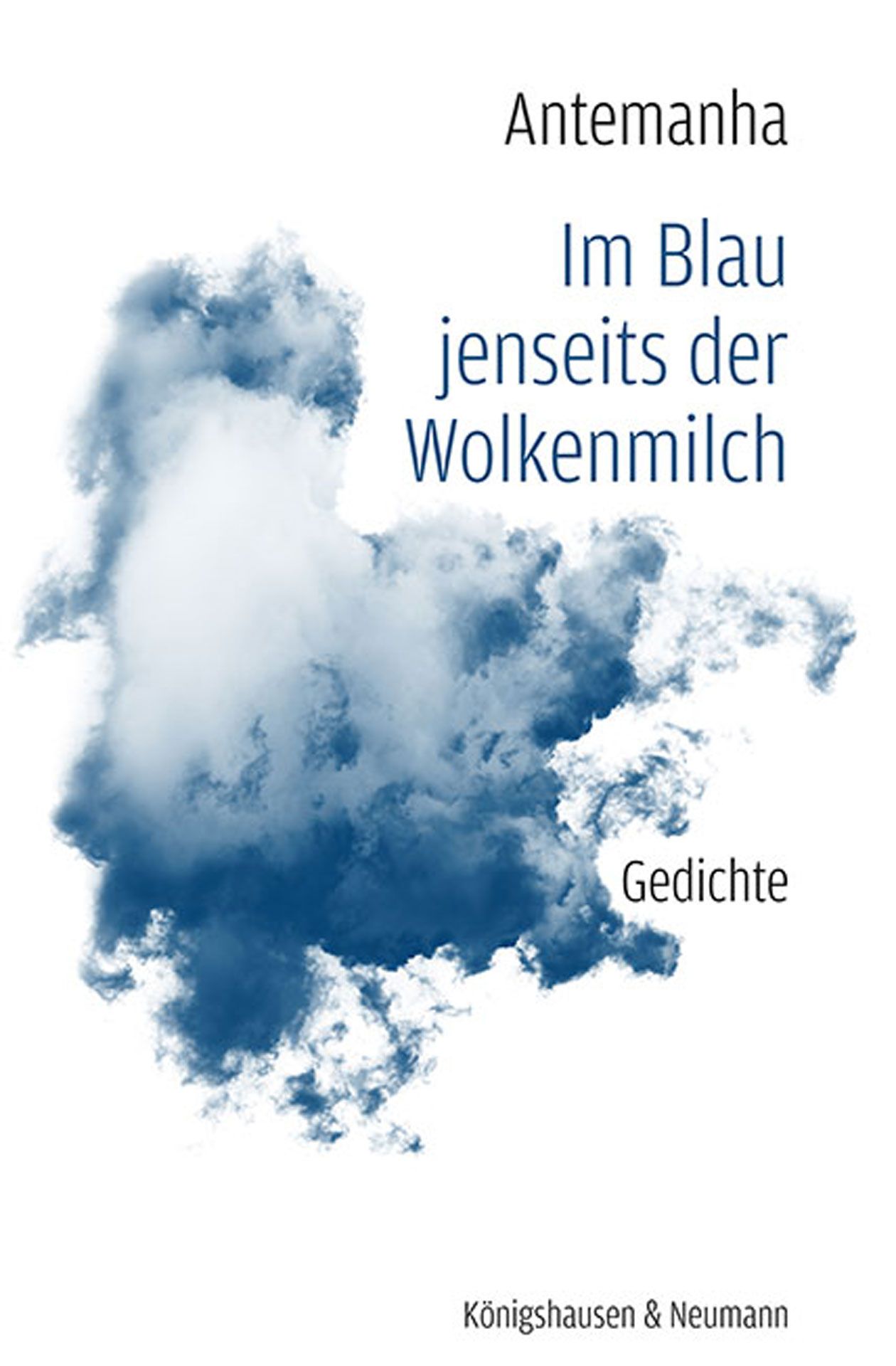
[1]in: Antemanha, Im Blau jenseits der Wolkenmilch, Würzburg, Königshausen & Neumann 2023, pp 31-35

Berlin – Fragments is a poem that thinks with the body as much as with history. Antemanha does not approach Berlin as a city to be described, but as a wound to be felt – under the feet, in the diaphragm, in memory itself. The epigraph from Joseph Beuys, “Show your wound,” is not ornamental; it is the poem’s ethical and aesthetic command.

Berlin – Fragmente ist ein Gedicht, das gleichermaßen mit dem Körper wie mit der Geschichte denkt. Antemanha nähert sich Berlin nicht als einer Stadt, die es zu beschreiben, sondern als einer Wunde, die es zu spüren gilt – unter den Füßen, im Zwerchfell, in der Erinnerung selbst. Das Zitat von Joseph Beuys „Zeige deine Wunde“ ist nicht schmückendes Beiwerk, sondern das ethische und ästhetische Postulat des Gedichts.

From the opening lines, earth becomes a counter-image to asphalt and concrete. Berlin is one of the few cities where soil can still be “seen and felt,” where fallen leaves may still return to earth. This insistence on الأرض / land/ la terre is not nostalgic; it is political and somatic. Beneath the modern city lies another Berlin – buried, compressed, but not erased. The poem repeatedly returns to what is under: underground tunnels, buried walls, hidden foundations, suppressed histories.

Von den ersten Zeilen an wird Erde zu einem Gegenbild zu Asphalt und Beton. Berlin ist eine der wenigen Städte, in denen der Boden noch „gesehen und gefühlt“ werden kann, in denen abgefallene Blätter wieder zu Erde werden können. Dieses Beharren auf الأرض / Land / la terre ist nicht nostalgisch, sondern politisch und körperlich. Unter der modernen Stadt liegt ein anderes Berlin – begraben, komprimiert, aber nicht ausgelöscht. Das Gedicht kehrt immer wieder zu dem zurück, was darunterliegt: unterirdische Tunnel, begrabene Mauern, verborgene Fundamente, verschwiegene Geschichten.

The central metaphor of the scar is one of the poem’s most powerful achievements. The Cold War is not framed as a past event but as a tactile presence. The speaker feels precisely when she walks over it. The scar activates the body: goosebumps, vibrations in the diaphragm, and involuntary sobbing. History here is not archived; it is neurological. The diaphragm becomes a trampoline where the “memory of mad laws” still jumps – an extraordinary image that links law, violence, and breath. Reason itself is wounded, bleeding human blood.

Die zentrale Metapher der Narbe ist eine der stärksten Leistungen des Gedichts. Der Kalte Krieg wird nicht als vergangenes Ereignis dargestellt, sondern als spürbare Präsenz. Die Sprecherin fühlt genau, wann sie die Narbe überquert, denn diese aktiviert den Körper: Gänsehaut, Zwerchfellschwingungen und unwillkürliches Schluchzen. Geschichte wird hier nicht archiviert, sie ist neuronaler Natur. Das Zwerchfell wird zu einem Trampolin, auf dem die „Erinnerung an wahnsinnige Gesetze” noch immer springt – ein außergewöhnliches Bild, das Recht, Gewalt und Atem miteinander verbindet. Die Vernunft selbst ist verwundet, aus ihr fließt Menschenblut.
What distinguishes this poem is its refusal of heroic confrontation. The speaker does not insist on crossing the scar; she avoids it, protects it from strain and light, as one would protect healing flesh. This gesture introduces an ethics of care into political memory: not all wounds are to be exposed violently; some require distance, tenderness, patience.

Was dieses Gedicht auszeichnet, ist seine Ablehnung heroischer Konfrontation. Die Sprecherin besteht nicht darauf, die Narbe zu überqueren; sie meidet sie, schützt sie vor Belastung und Licht, so wie man heilendes Gewebe schützt. Diese Geste führt eine Ethik der Fürsorge in die politische Erinnerung ein: Nicht alle Wunden dürfen gewaltsam offenbart werden; manche erfordern Distanz, Zärtlichkeit, Geduld.

The female figure in section 6 deepens this tension. She wants to move forward, to defend the unjustly imprisoned, to remove stones from the hands of executioners, to build bridges with her gaze. Yet her body betrays her – arm numb, thoughts snapping when she steps on the scar. Political desire collides with embodied limitations. The poem thus critiques not only oppression but also the romantic fantasy of limitless resistance. Even vision – the gaze meant to heal – must be woven carefully, thread by thread, across the abyss.

Die weibliche Figur in Absatz 6 vertieft diese Spannung. Sie möchte vorwärtsgehen, um die zu Unrecht Inhaftierten zu verteidigen, um Steine aus den Händen der Steiniger zu entfernen, um mit ihrem Blick Brücken zu bauen. Doch ihr Körper lässt sie im Stich – ihr Arm wird taub, ihre Gedanken reißen ab, als sie auf die Narbe tritt. Politisches Verlangen kollidiert mit körperlichen Grenzen. Das Gedicht kritisiert somit nicht nur Unterdrückung, sondern auch die romantische Fantasie von unbegrenztem Widerstand. Selbst die Vision – der Blick, der heilen möchte – muss behutsam, Faden für Faden, über den Abgrund gesponnen werden.

The Wall itself undergoes a radical transformation. Once impermeable, it becomes porous, cuttable with a bread knife. It turns into a score – a musical and visual composition made of graffiti, words, notes, images. This is one of the poem’s most original conceptual moves: history becomes something to be performed collectively. Art does not erase trauma; it organizes it into shared sound. Friends gather, improvise, sing, argue about coherence. Life intrudes – rock soprano, ping-pong bass, Renaissance echoes. Even silence becomes necessary: some memories must remain in sound, not language, or they would destroy everything.

Die Mauer selbst erfährt eine radikale Verwandlung. Einst undurchlässig, wird sie porös, mit einem Brotmesser schneidbar. Sie verwandelt sich in eine Partitur – eine musikalische und visuelle Komposition aus Graffiti, Worten, Noten, Bildern. Dies ist einer der originellsten konzeptuellen Schritte des Gedichts: Geschichte wird zu etwas, das gemeinsam aufgeführt wird. Kunst löscht Traumata nicht aus, sondern organisiert sie zu einem gemeinsamen Klang. Freunde versammeln sich, improvisieren, singen, streiten über Kohärenz. Das Leben hält Einzug – Rocksopran, Pingpong-Bass, Renaissance-Echos. Selbst Stille wird notwendig: Manche Erinnerungen müssen im Klang bleiben, nicht in der Sprache, sonst würden sie alles zerstören.

The final section widens the lens. Togetherness in Berlin does not mean the end of fissures; it means their displacement. While one scar fades, others open elsewhere. The poem refuses closure. Tectonics continue. Continents shift. Wounds migrate. This is not pessimism but lucidity: history is structural, not episodic.

Der letzte Absatz erweitert den Blickwinkel. Zusammengehörigkeit in Berlin bedeutet nicht das Ende der Klüfte, sondern ihre Verschiebung. Während eine Narbe verblasst, erscheinen andere an anderen Stellen. Das Gedicht lehnt einen Abschluss ab. Die Tektonik geht weiter. Kontinente verschieben sich. Wunden wandern. Das ist kein Pessimismus, sondern Klarheit: Geschichte ist strukturell, nicht episodisch.

In Berlin – Fragments, Antemanha offers a poetics of scars – where city, body, memory, and music intersect. The poem is deeply European in its historical consciousness, yet universal in its understanding of how violence settles into flesh and space. It does not shout. It vibrates. And in doing so, it honors Beuys’s injunction not by displaying the wound as spectacle, but by listening to how it still breathes.

In Berlin – Fragmente entwirft Antemanha eine Poetik der Narben an der Schnittstelle von Stadt, Körper, Erinnerung und Musik. Das Gedicht ist in seinem historischen Selbstverständnis zutiefst europäisch, doch in seinem Wissen darüber, wie Gewalt sich in Fleisch und Raum festsetzt, universell. Es schreit nicht. Es schwingt. Und damit folgt es Beuys’ Gebot, nicht indem es die Wunde als Spektakel zur Schau stellt, sondern indem es lauscht, wie sie weiterhin atmet.
Notes
1. ↑ in: Antemanha, Im Blau jenseits der Wolkenmilch, Würzburg, Königshausen & Neumann 2023, pp 31-35
Share
Print PDF
MURIEL TINEL-TEMPLE
LETHOKUHLE MSIMANG
© 2026
Archive About Contact