ADLI YACUBI
The Price of Silence: Gaza, Venice, and the Fear Inside Cultural Institutions
I belong to the National Writers Association of South Africa. Like many others within the arts community, I watched with unease earlier this year as the proposed Venice Biennale work of South African artist Gabrielle Goliath was withdrawn amid claims that it was “polarising.”
The language itself lingered with me.
Polarising.
It is one of those careful institutional words that appears neutral while concealing a deeper anxiety beneath it. An administrative word. A diplomatic word. A word often used when institutions wish to retreat from the moral consequences of witness.
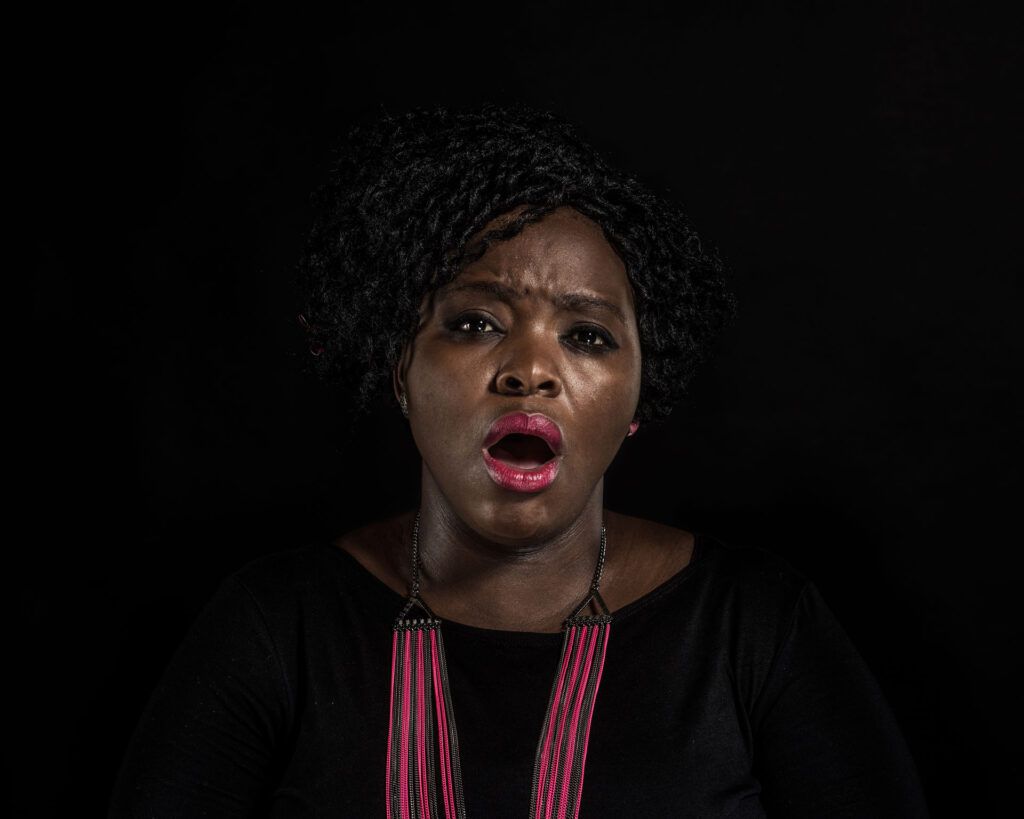
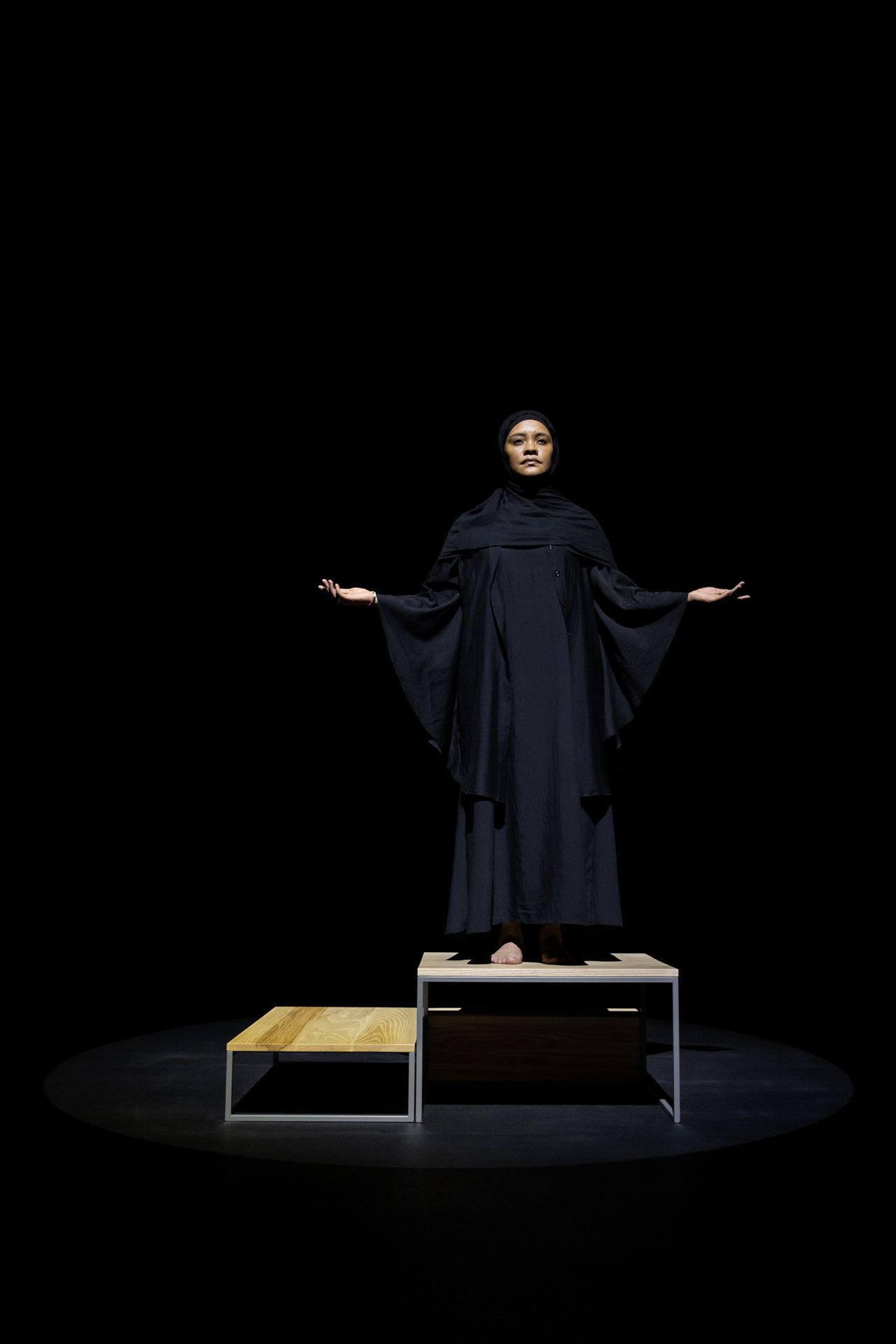
Yet Goliath’s work was not a celebration of violence. Quite the opposite. Her Elegy series mourned violence — in Gaza, in South Africa, in Namibia — tracing the fragile thread connecting femicide, colonial brutality, erasure, and disposability across different geographies of suffering.
The question, then, was never whether the work was political. The real question was: what kind of politics institutions are prepared to tolerate.
The National Writers Association of South Africa condemned what it described as “arts censorship and micro-management,” warning against the return of apartheid-style suppression within democratic South Africa. The statement situated the withdrawal within a broader global climate in which artists and writers speaking on Palestine increasingly encounter institutional resistance, political pressure, and accusations of extremism merely for naming human suffering.
The Beautiful Mask
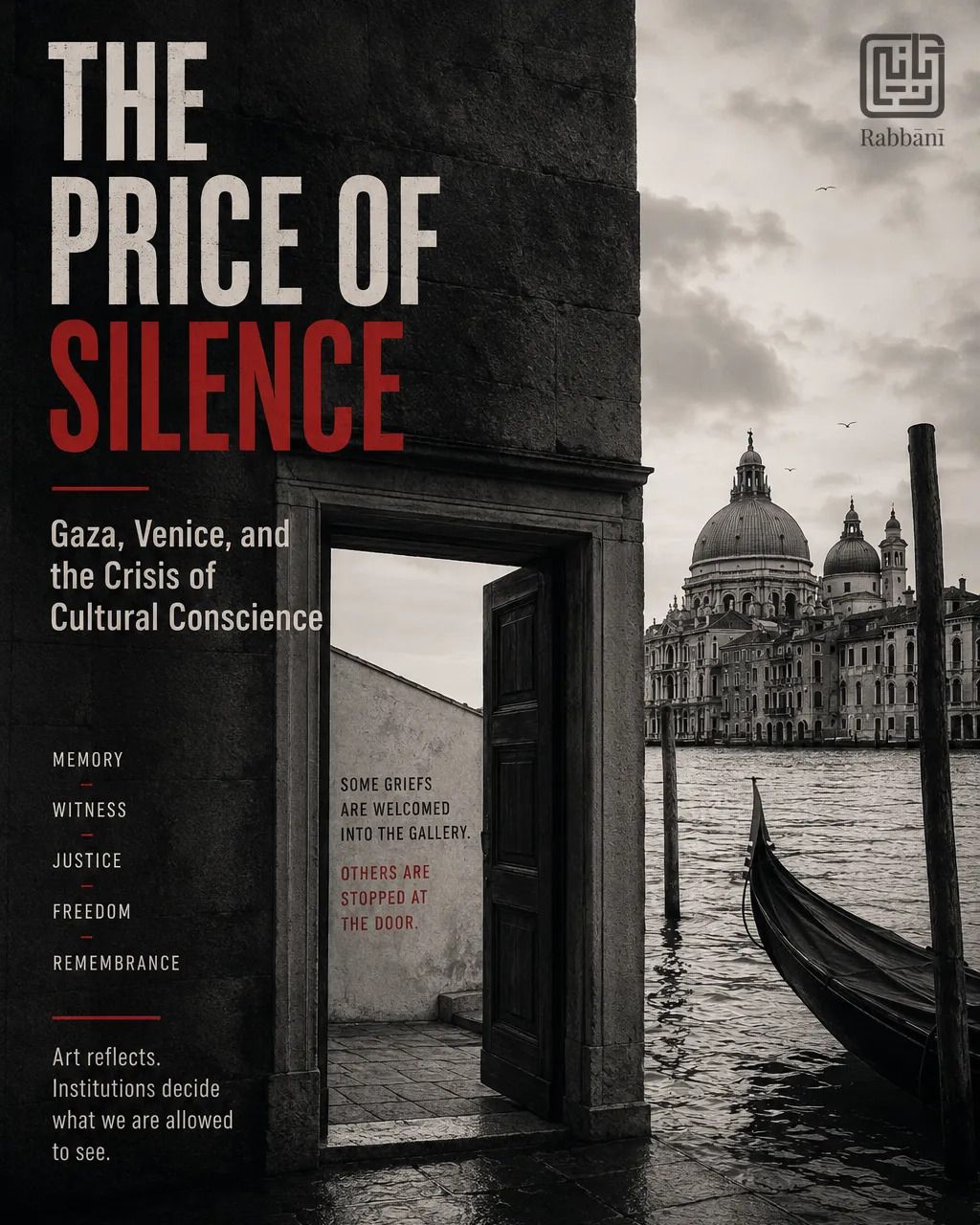
Venice has always understood spectacle; water, stone, mirrors, palaces, empire. A city suspended between beauty and decay.
The Biennale presents itself as a gathering of global culture — a place of dialogue, experimentation, conscience, and artistic freedom. Nations arrive bearing installations instead of flags. Curators speak of memory, decoloniality, healing, ecology, justice, and the future of humanity.
Yet beneath this language sits another architecture: states, patrons, auction houses, collectors, sponsorships, diplomacy, prestige, soft power. The canals themselves begin to feel symbolic. Beautiful surfaces carrying hidden cargo.
Recently, cultural strategist Ornella Ostapenko reflected publicly on the changing economics of the Biennale. She noted shrinking public funding, the growing dependence on private wealth, and the increasing visibility of major market institutions such as Christie’s and Sotheby’s within Venice itself.
For decades, the Biennale maintained the illusion of distance from commerce. No visible price tags. No overt sales language. The institution spoke instead in the elevated vocabulary of cultural discourse.
But perhaps the market never disappeared. Perhaps it merely learned to whisper. The wall label may carry no price, but the room itself has already been purchased.
This does not mean every collector is cynical, nor every institution corrupt. Reality is more layered than slogans allow. Many artists, curators, donors, and cultural workers remain deeply sincere in their commitments.
But systems shape atmospheres. And increasingly, global cultural institutions survive within networks of elite funding, diplomatic caution, symbolic branding, and reputational management. Under such conditions, some truths become difficult to host. Especially truths that refuse distance.
Palestine and the Limits of Empathy
Palestine has become a strange kind of moral X-ray. It exposes fractures hidden beneath the polished language of liberal institutions. Many cultural spaces speak passionately about historical injustice, colonial violence, racial hierarchy, feminist repair, queer dignity, and the ethics of memory. These commitments are often sincere. Yet Gaza has revealed how fragile institutional courage can become once moral language collides with geopolitical pressure, donor anxiety, or public controversy.
Suddenly the vocabulary shifts. From justice to “balance.” From witness to “sensitivity.” From truth to “polarization.”
The discomfort is revealing because Palestine does not merely ask whether we oppose violence in principle. It asks whether some griefs are permitted full humanity while others must remain diplomatically manageable.
South Africans should recognise this terrain. Under apartheid, there were also calls for moderation, patience, neutrality, civility, order. There were also institutions that preferred symbolic gestures to uncomfortable truths. There were also moments when naming violence too clearly was considered dangerous, divisive, or politically inconvenient.
History often celebrates resistance after the risk has passed. Once the prison opens. Once the archive settles. Once the slogans become safe enough for museums. But living suffering is different. Living suffering demands a cost. And that cost is precisely what institutions fear.
Art Against Forgetfulness
True art has never existed merely to decorate power. It interrupts forgetfulness. From William Blake warning of the machinery of industrial modernity, to Edward Said unveiling the cultural architecture of empire, artists and thinkers have often served as witnesses to what societies desperately try not to see.
Neither propagandists, nor saints: Witnesses.
That is why works like Gabrielle Goliath’s matter. Not because they offer easy answers, but because they refuse the disappearance of the human being beneath statistics, policy statements, headlines, and diplomatic language.
Her work insists on asking: Whose lives are considered worthy of grief? Whose deaths become ordinary? Whose pain must remain invisible so that institutions may continue functioning comfortably?
These are not “extremist” questions. They are profoundly human ones. And perhaps that is why they unsettle the room. Because genuine witness destabilises carefully maintained neutrality.
As Gabrielle herself observed in a recent interview, “Violence exceeds the physical, operating structurally and pervasively, to the point that it is naturalised as the very air we breathe.”
Perhaps that is precisely what unsettles institutions most: not merely the image of suffering, but the suggestion that violence has become atmospheric — embedded within systems, language, diplomacy, economics, and cultural silence itself. It reminds us that silence is not always peace. Sometimes silence is merely the aesthetic form of avoidance.
The Crisis Beneath the Crisis
The deeper issue may not be whether the Biennale is becoming commercial again. As some historians note, the institution itself emerged partly through the logic of exhibition, prestige, and sales. In some ways, Venice may simply be returning to older foundations long disguised beneath cultural refinement.
The real crisis lies elsewhere. Can institutions still speak credibly of humanity while shrinking from human grief?
Can cultural spaces continue invoking justice, remembrance, and repair while treating certain forms of suffering as administratively inconvenient? And perhaps most troubling of all: What happens when conscience itself becomes negotiable?
These are not questions for Venice alone. They belong to universities, museums, media houses, governments, galleries, publishing houses, and perhaps to all of us moving through this exhausted modern world — a world increasingly fluent in the language of empathy while struggling to bear the weight of its consequences.
Some griefs are welcomed into the gallery. Others are stopped at the door.
This article was first published here: adliyacubi on May 14, 2026 and is re-published in herri with kind permission of the author.