MAIJA HIRVANEN
Mycoscores / Choreospores
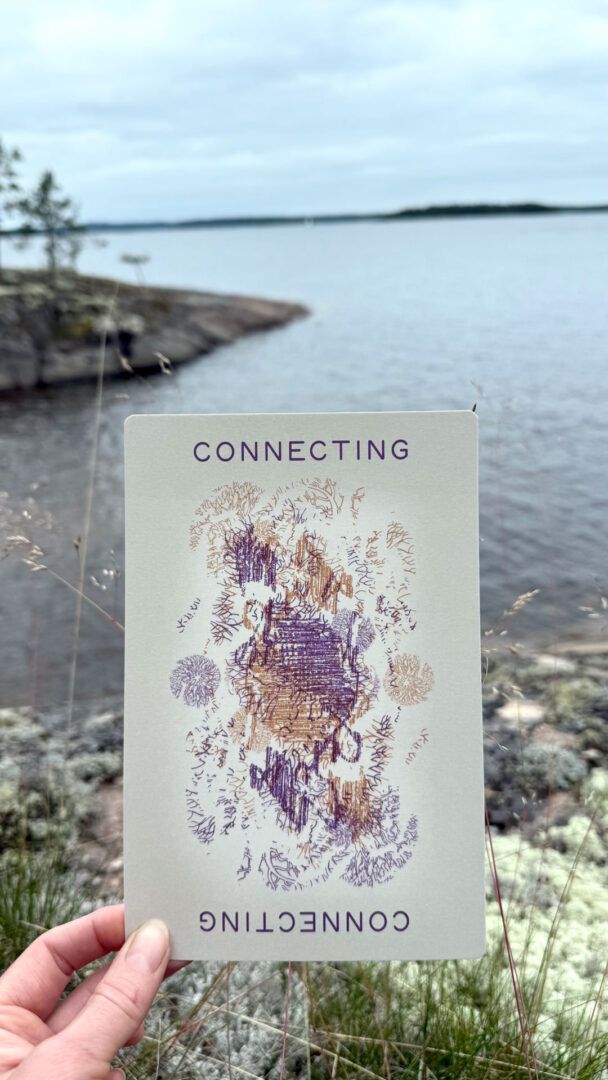
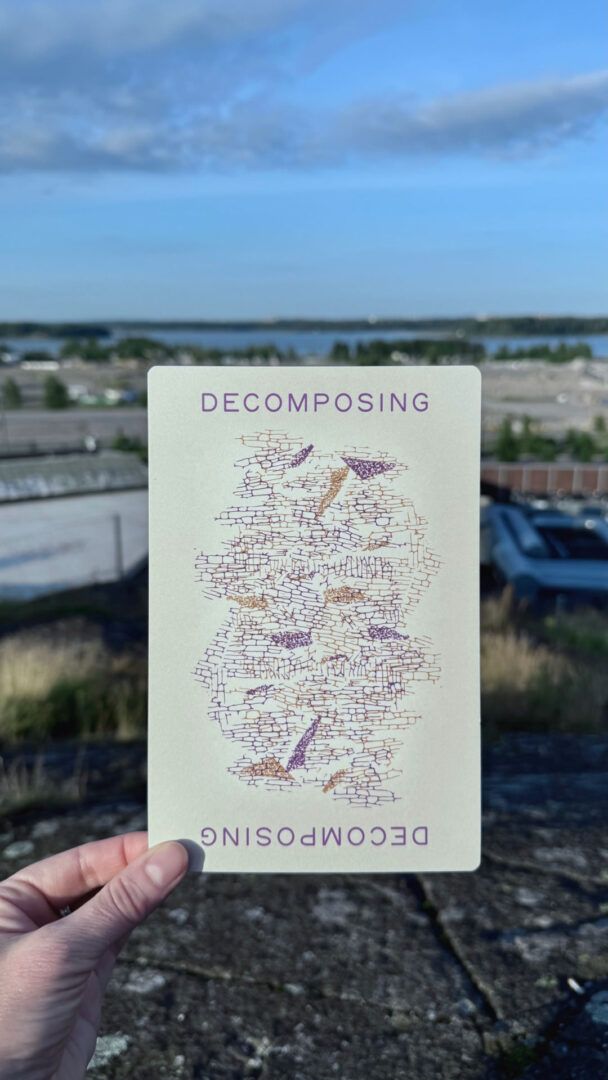
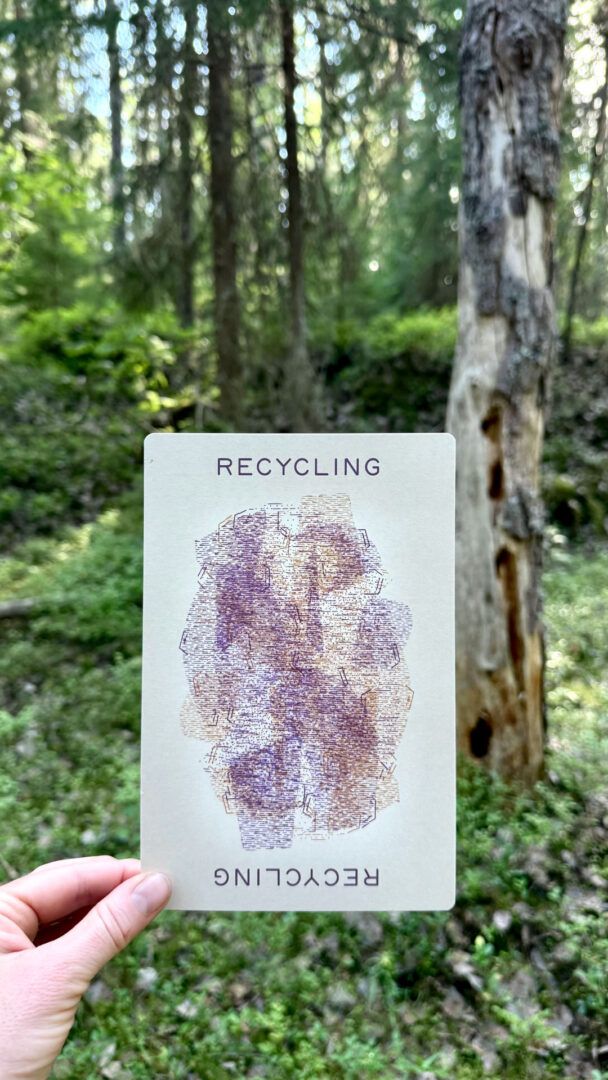
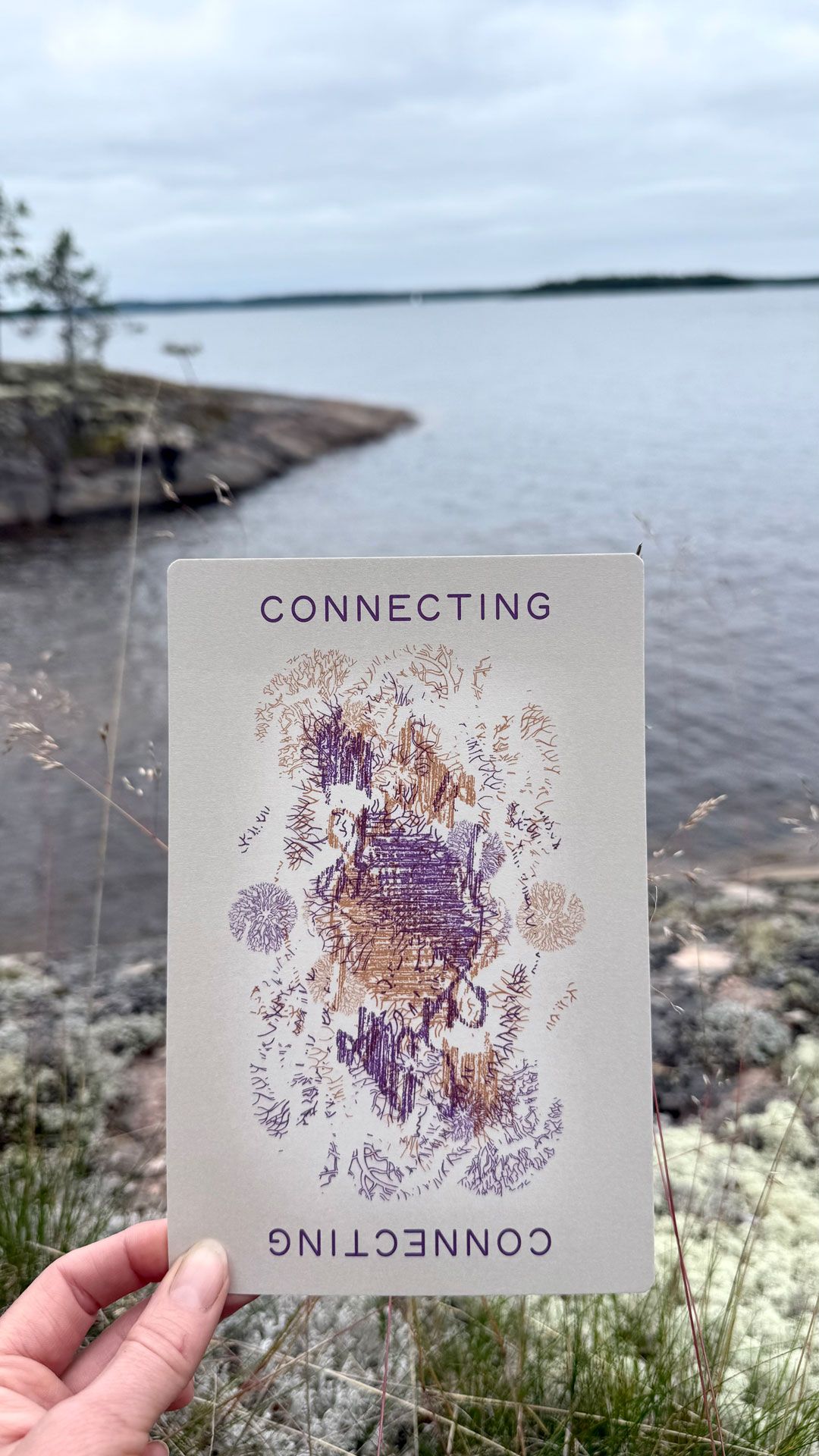
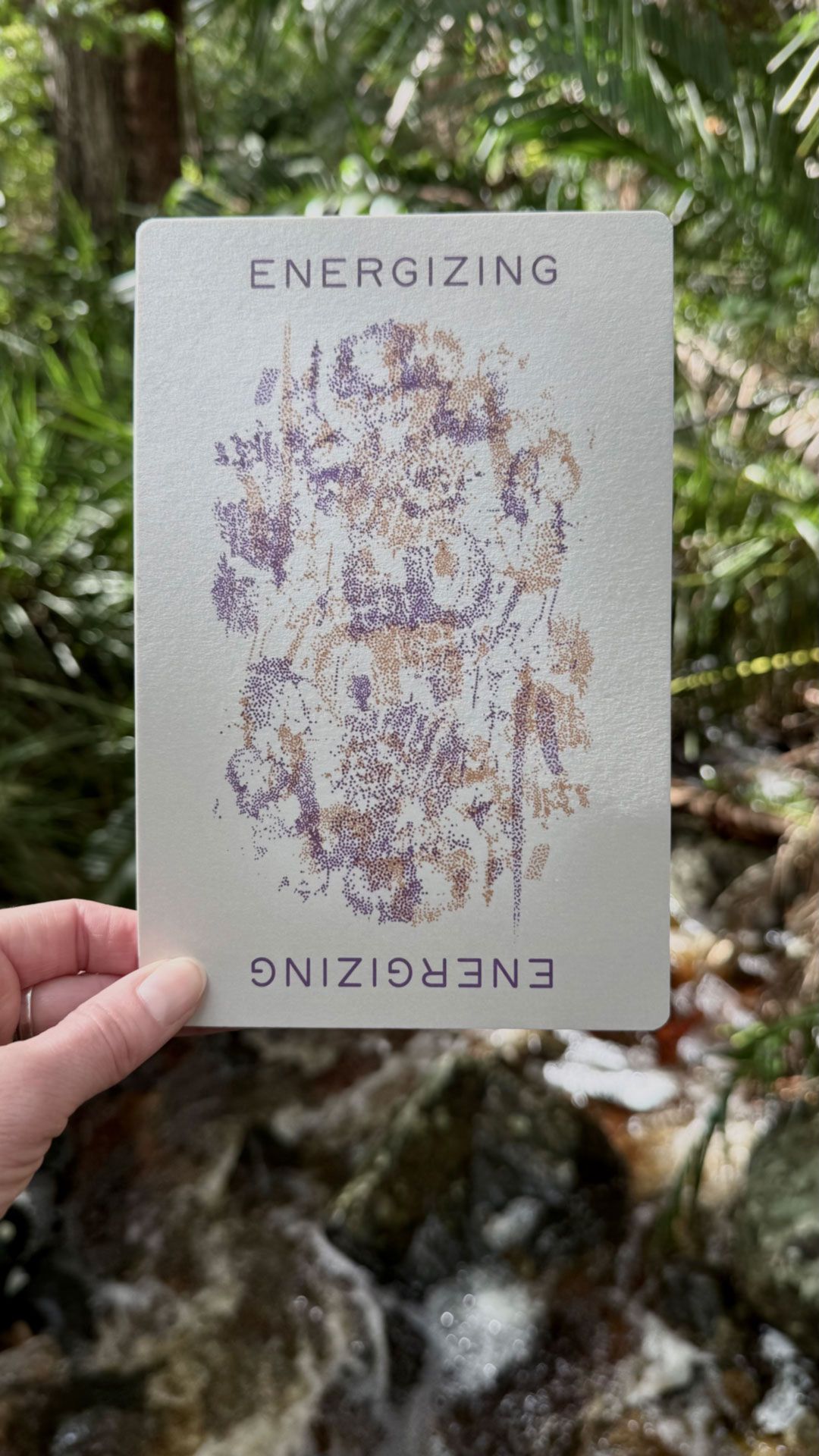
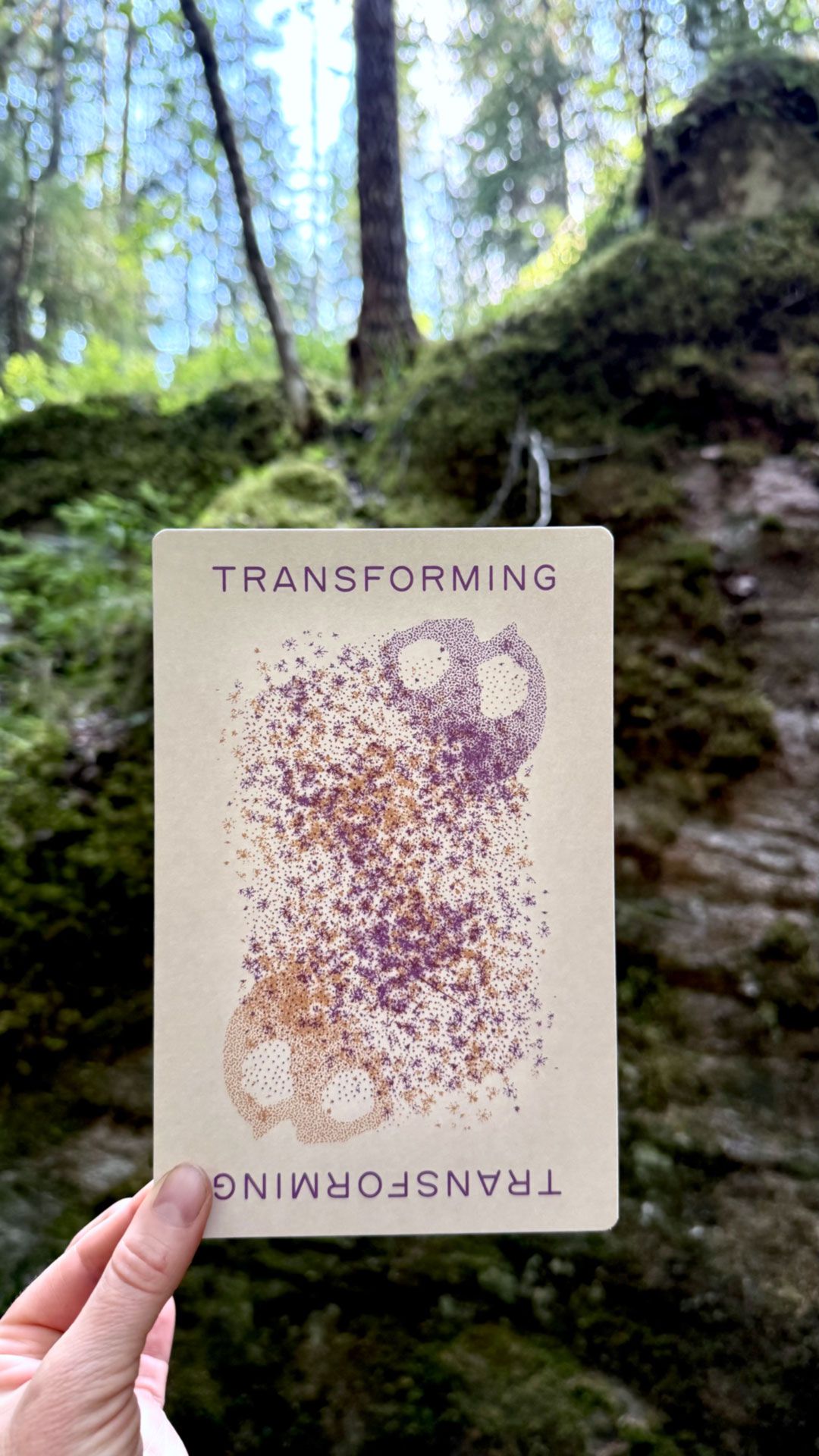
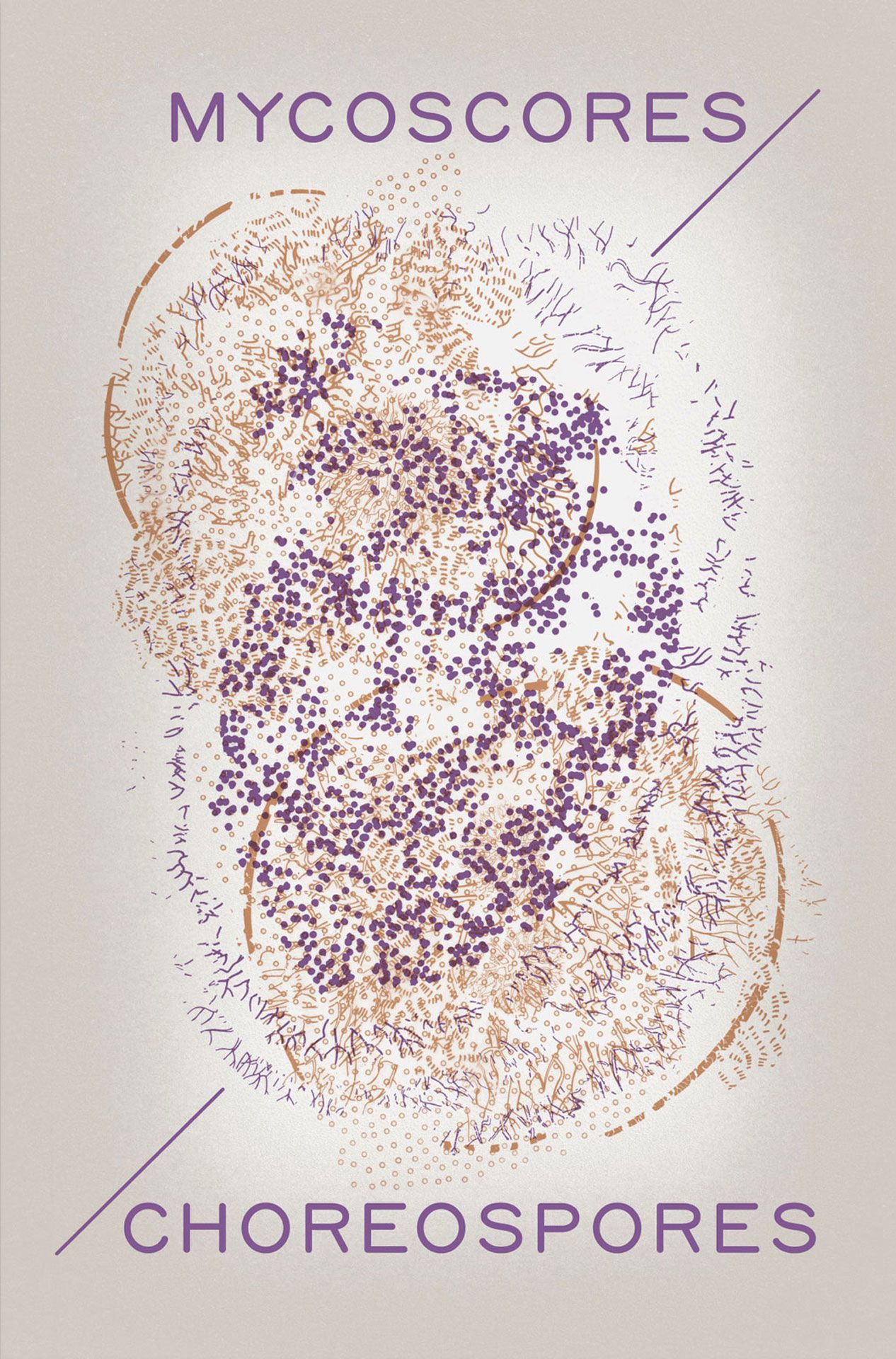
Mycoscores / Choreospores is a choreographic method I have developed over the years through my long-term artistic work and my practice with fungi. Originating during my 2021-2024 THIRD Research Fellowship at DAS/University of the Arts Amsterdam, it is now one of the components of my artistic PhD research on Fungal Choreography and Performance at the University of the Arts Helsinki. One of the central tools through which I explore the method is an artistic publication consisting of a set of 31 cards and an accompanying booklet, first released in 2023. Each of these cards presents a score that is based on the method’s framework and offers a different starting point for dancing, composing, weaving social connections, and exploring performativity. The title of each score is a verb that could be playfully considered both fungal and human, and their primary text suggests means to develop more-than-human attunement while working with the human body as an interconnected, sensitive entity.
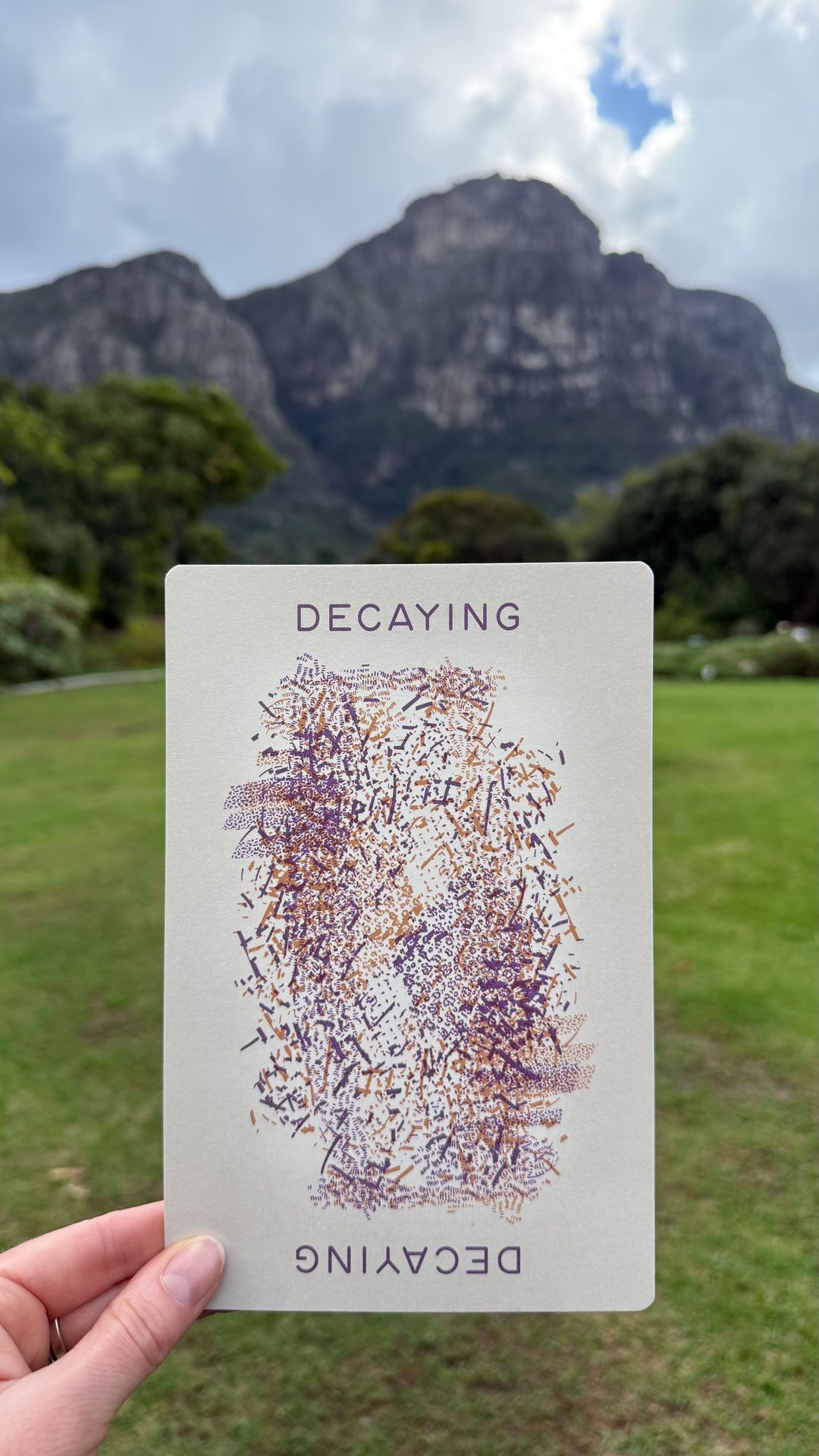
One of the scores titled Decaying was the starting point for a sequence of new scores entitled Scores for Decay and Transformation, which was launched at the Decay Without Mourning: Future Thinking Heritage Practices conference. The presentation was an artistic research presentation that approached decay as fungal choreography, and was joined by mycologist Peter McCoy as a guest and a collaborator. Together, we initiated a setting where perspectives and practices of choreography, performance, artistic research and mycology work in concert to reframe relations between bodies, their milieus, and decay.
Decay as a transformative process was explored through a series of movements initiated by the participants’ hands and guided by fungal-choreographic scores. The practices were drawn from two questions:
What renews in the entanglement of biological and artistic decay and how?
What consequences does this decay have; what is born out of decay?
The session consisted of a 20-minute performative introduction text and an exploration of the new scores together with participants of the conference.
A short description of the presentation Scores of Decay and Transformation during the Decay Without Mourning Conference. Location: a conference room at STIAS (Stellenbosch Institute For Advanced Study), Stellenbosch, Thursday 17 April 2026.
A 20-minute performative introduction note is being read by Maija and Peter, sitting behind a desk, with a microphone placed between them on a pile of Mycoscores / Choreospores publications. On a projection screen behind them, photographs of fungal tissue (mycelium) are displayed in a slow slideshow. A low-volume and variable soundscape is amplified across the room via the space’s stereo system.
The text discusses conscious acts of corporeal and cultural renewal, the decaying of one’s understanding of human hands, fungal mycelium and artistic decay, and the connections between human and fungal bodies. The text also introduces the artistic publication Mycoscores / Choreospores, and particularly a score entitled Decaying that acts as a starting point for the rest of the presentation.
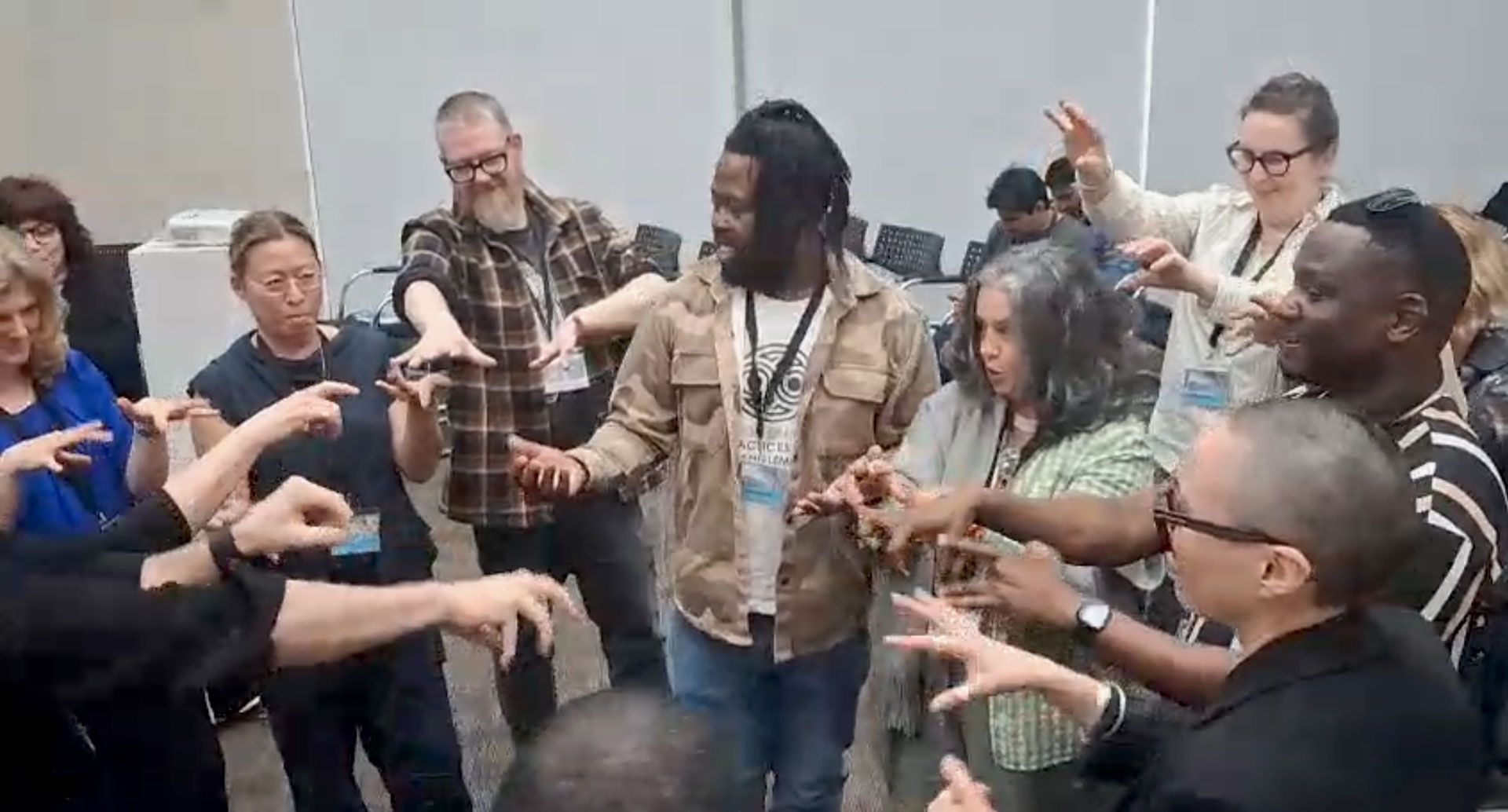
Then, Maija and Peter instruct the conference attendees with three new scores to explore physically. The scores are interconnected and build upon each other. They activate hand movements as a medium of artistic decay, and provide a starting point for a social choreography in the space. The people present in the space playfully decay their own hands through auto-touch and motion, create joint microchoreography of decay with the other people close to them, set movement as dance of decay into the space through the hand movements, and imagine their hands as decayers, analogous to fungal mycelium and the fascia networks in human bodies.
Molecular and social dance takes place in between people, as they extend themselves into the space. Expressions of laughter, spontaneous sounds, and adult playfulness emerge.
Aspects of Decay
What renews in the entanglement of biological and artistic decay and how?
As a choreographer, I’m interested in decay as a constant process of movement. Something around and within us all the time, but always particular, situated. The decay of this kind is experiential as well as physical.
To me, working with analogies, parallelisms and simultaneity is important. The Mycoscores are not metaphors but work with several concrete aspects of our corporealities and environments. The artistic and biological decay are already entangled in this starting point. In general, scores are a form of making structures for artistic work that can be shared. They can be written down as instructions, drawn or whispered. The Mycoscores are written, but originate from physical practices that are translated as texts. They act as prompts and instructions for practice for the people who activate them. In the practice that set the human hands as initiators of a dance of decay, the hand movements become a medium for working simultaneously with our bodies and the more-than-human bodies that co-habit our surroundings. As we’re working with the scores that ask us to tune in with decay, to sense the environment and embody mycelium, we’re still at the same time human-animal-corporealities, with our particular histories and experiences.
Scores for Decaying work with corporeal figuration – somatic, figurative attunement – as a pathway to acknowledging and reforming relationships in between multispecies bodily form, experience, and the principles embedded in decay. In working with the relations of human and fungal movement, we create curiosity toward the intraconnections in between these life forms. This approach also alters social relations by awakening our collective capacity for corporeal imagination.
The process of decay in rotting wood has five stages from softening to total falling apart of matter. Simultaneously, a countless number of species emerge and flourish. Decay is a regenerative process. A similar kind of process of multiplicity takes place in artistic decay, understood as a process of transformation. We set up a score to decompose some of the parameters of a social space by movement, in this case within the context of the conference room, and other kinds of social relations and awareness of multispecies life connected to our movements emerge.
With the presentation at STIAS, we asked how to activate and recognize hands again, as they are a part of the body we engage with in so many of our actions. From the presentation introduction:
The hands, a body part with vast amounts of cultural meanings, too many to make an inventory of them. Hands that move, press, lift, gesture, touch. Hands that squeeze, mobilize, agitate, carry, violate.
What would it mean to set in motion, via the hands, a process of artistic decay that reconsiders learned, embodied habits? A process that reconsiders the obviousness of hands? What if we let the hands rot and re-emerge through a play of rotting?
What could result in such a conscious act of artistic decay?
Perhaps we could understand decay as an ontological ground for artistic practice.
On our hands: reminiscences, fungi, dust. Ghosts and memories of many hands before you and precognitions of many to come after. Artistic decay is about constant recognition of the passing of time.
To me, artistic decay suggests not only the aging of a creator or the natural degradation of their work, but also the risk of erasure that an artist’s intent faces as years progress. Creations don’t just lose their vibrance and novelty in time. The meaning of a piece may also fade alongside its social value as cultures shift and are themselves lost. While some works endure like an oak and others retain their form for eons as fossils, most live like a mushroom and fall away just as quickly as they once rose to splendour. And yet, though a person and their pieces might drift from view, their invested energy persists as ripples across the ecology of the humanities and in the evolution of the arts.
The life-through-death cycle of biological decay reflects this inspiration-creation-diminuation spiral and provides a helpful reminder that what takes great effort must pass and dissolve to seed that which comes next. It is an immutable lesson from nature that offers the artist a model by which to accept the likely fading of their work and to thus make what they most desire – for the end is more than likely the same regardless of the creative means. Awareness of these similar patterns can renew the vigour of authenticity that motivates the artistic urge, much like accepting life’s brevity can lead to fuller days and deeper relations. Embracing the decay that follows one’s making, before one begins, liberates the creative act from social strictures that will likely fade away in their own due course. It is a freedom formed by living in the unknowableness of tomorrow and which answers back at the question of an artwork’s value with “on what timescale?”
In which ways does the notion of decay extend, bend or re-orientate time, space and bodies?
All of our lives, we extend decay by maintenance of the body, environment, structures, matter. These extensions of decay have different meanings in different scales of time; of deep time, of the past millenia, of the moment you’re reading this now. For me, choreographic practices act as the soil for situated and particular relations, movements, experiences, knowledge and ideas to emerge. Rot can remind us of the limit and of the cycles of our bodies in time. Our cells renew until they don’t, our bodies extend in time as we become substances, minerals, other bodies, something else. This cyclic view of time and bodies is one of the undercurrents of Scores for Decay. The word decay comes from the latin word decadere, to fall away, to fall off. I think of the constant process of falling as decay’s movement in multiple planes of time and matter, including our bodies.
All of our lives, we extend decay by maintenance of the body, environment, structures, matter. These extensions of decay have different meanings in different scales of time; of deep time, of the past millenia, of the moment you’re reading this now. For me, choreographic practices act as the soil for situated and particular relations, movements, experiences, knowledge and ideas to emerge. Rot can remind us of the limit and of the cycles of our bodies in time. Our cells renew until they don’t, our bodies extend in time as we become substances, minerals, other bodies, something else. This cyclic view of time and bodies is one of the undercurrents of Scores for Decay. The word decay comes from the latin word decadere, to fall away, to fall off. I think of the constant process of falling as decay’s movement in multiple planes of time and matter, including our bodies.
How can choreography be understood as a process of decay?
Choreography is an activity of structuring and organising patterns of corporeal thinking, being, and movement. I understand choreography as a practice of researching, cultivating and enabling movements of many kinds. But choreography is always partial. It must leak and decay, already as it’s actualizing as an event, so that movement can alter.
In my fungal-choreographic practice I unpack and re-arrange concepts related to composition. By reassessing aims and histories of different compositional models one can expand them. Fungal choreography contributes to new compositional models by working with different bodies’ connections to their milieus, relational situations, transdisciplinary and fluid movements. Decay manifests within these choreographic practices as a constant cycle of decomposition and renewal of bodies and ideas.
Choreographed movement exchanges one state of being in time for another. The body’s position, weight, tone, and dimensions are built with intent and energy only to be lost in the subsequent wave of reconstructing the self. Movements fade away, lost to an unrecoverable past. Limbs fall down. This moment-to-moment cycle of growing, forming, and letting go evolves the ecology of the environment, its participants, and those on the periphery as each brief movement’s energy dissipates to nourish those nearby.
How does decay invite us to rethink agency and collaboration between humans and beyond humans?
If agency is not a phenomena related to the personal capacities of an individual, but as Karen Barad suggests, is formed through and in relations, decay moves within these relationalities. If the capacity of agencies appear out of multiple entangled entities and bodies, decay also emerges from the fabric of these particular relations. Matter and meaning, inseparable, in motion. All of our human understanding moves through and within the body.
So how to understand bodies in their agency? Environments and all living organisms have their particular dynamic agencies, like Donna Haraway says. The situated knowledge approach Haraway talks about takes into consideration one’s (ethical) positioning within the dynamics of agencies. Agency, for me, is a word influenced by these aspects. To merely equate the volition of humans and fungi, or to name the process as collaboration when doing a decaying dance or cultivating mycelium, might be too big of a simplification. But there’s something happening in that relation for sure, a process in which it is impossible to trace individual agencies as they were already merged in the first place.
As humans we share similar anatomies and languages for the potential of communication and collaboration. But perhaps the only-human-to-human collaborations don’t actually exist.
The concept of individuality is, from the perspective of constant movement and relationalities, a kind of an illusion. The scores working with decay remind us of this, corporeally and conceptually. To feel and imagine one’s own hand decaying, and the hand of the person next to me decaying, the particles floating in the surrounding air decaying, the fungal communities inside us decaying, is to remember the blurriness of the boundaries of life. And then, out of this conception, to set this awareness in motion, into a molecular-cosmic-relational dance…
About collaboration. A potential to walk the talk: if I feel, think, and perform myself mycelially, I will also collaborate mycelially. Or else?
Despite humanity’s many inventions designed to combat weathering and loss – masonry, smelting, fermentation, plastics – the force of entropy and its non-human instruments of decay stand over what we create and decide the timespan of all that is physical. Decay is the arbiter of duration; it is impermanence in action. As resistance to its inevitability, great deeds and great risks arise – efforts to claim a legacy that persists beyond that which fades.
In this way, decay is like the principal in the school of nature and we are the students who cannot control its directives, though we might wish to rebel. The non-human agents that follow its cues, then, are the teachers we learn from as they apply these directives in ways that we can understand and, one hopes, come to appreciate. The non-human world gives us tools that enable working within and benefitting from the boundaries of decay. It is a hierarchy we might not prefer, but one we must learn to accept if we wish to thrive.
What kinds of knowledge become possible when movement is allowed to rot, mutate, or disappear?
When movement decays, simultaneously other movements emerge.
When a movement alters, feel what else changes.
Movement cannot disappear, as everything is in constant motion. It only transforms.
The loss of any range of motion is one of the shortest routes toward a deepened love for one’s body. Our means to express, hasten, and grasp are so innumerable and frequent that, out of necessity, our mind largely forgets that these abilities occur with a notable degree of energy and effort. Even when reminded of these abilities through the challenges that people with limited mobility often face, any stirred appreciation for one’s motility tends to be momentary if there is no personal experience of restricted travel to connect with. We take our freedom to move for granted up until the moment we lose any portion of it ourselves.
To appreciate something only after it is gone is not an experience isolated to bodily movement. However, its form differs greatly from the sensations felt when, say, a friend or forest is lost in the degree to which it cannot be shared in full with others. Thus, corporeal restriction awakens forms of awareness and knowing that no other type of loss can quite equate. Depending on the person, the ways by which the body’s range was altered, and the duration of that change, these insights can vary widely. Heightened presence of mind, overlooked needs elsewhere in the body, unfamiliar depths of grief, newfound awareness of one’s ability to adapt and persevere, or the spurring of innovative life changes are just a few of the practical and personal outcomes that can come with such loss.