NEILL SOLOMON
33rpm
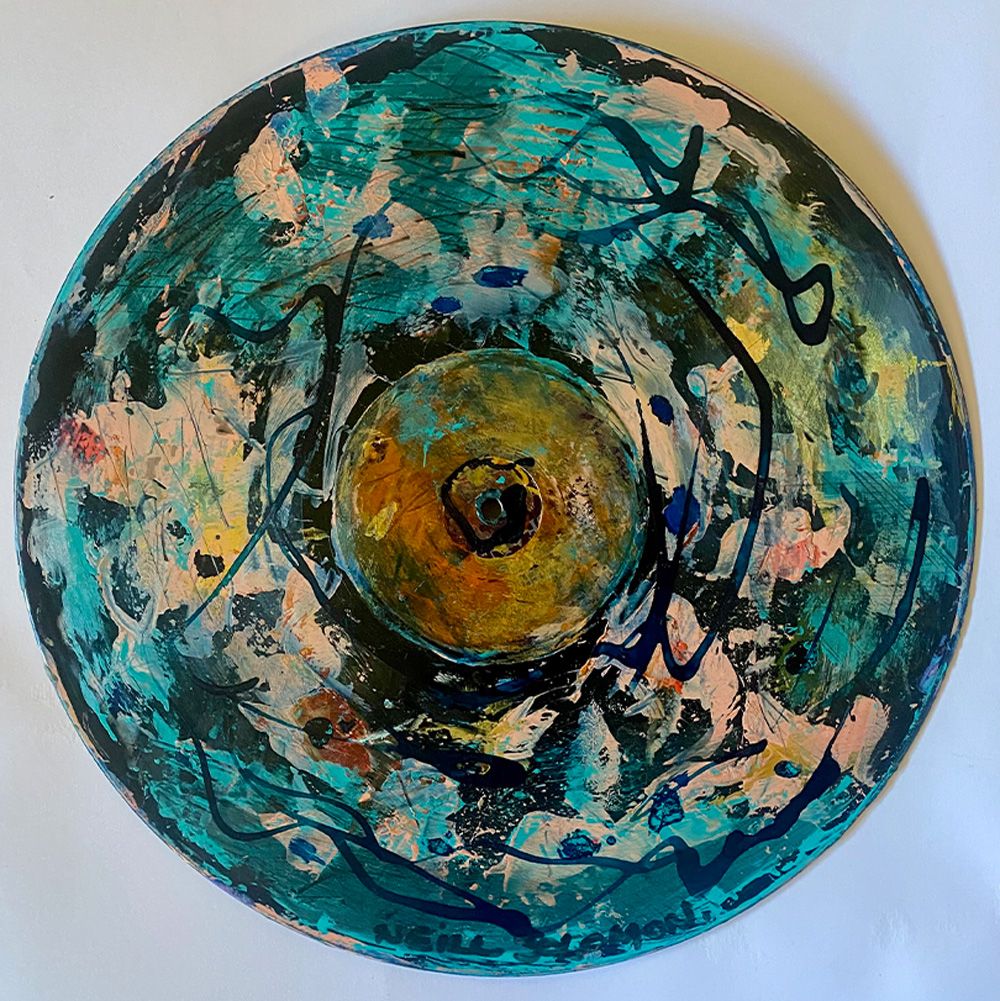
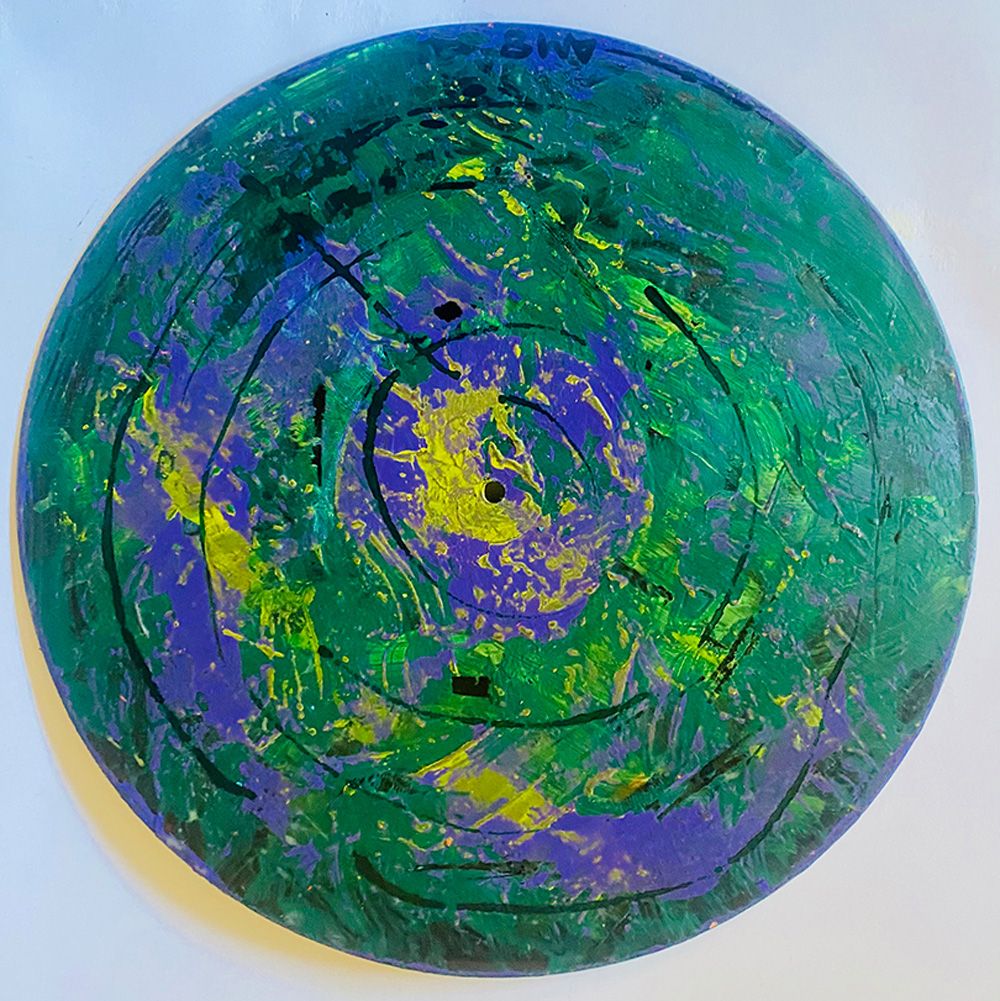
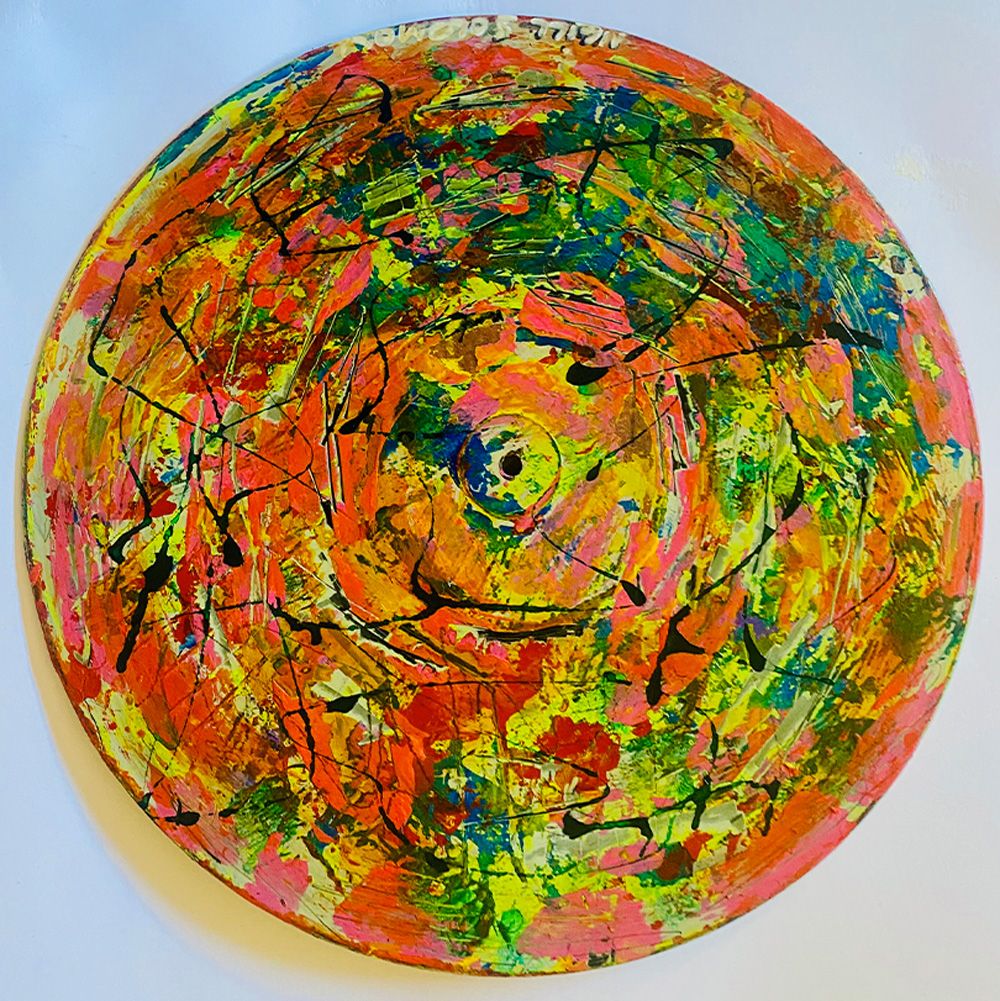
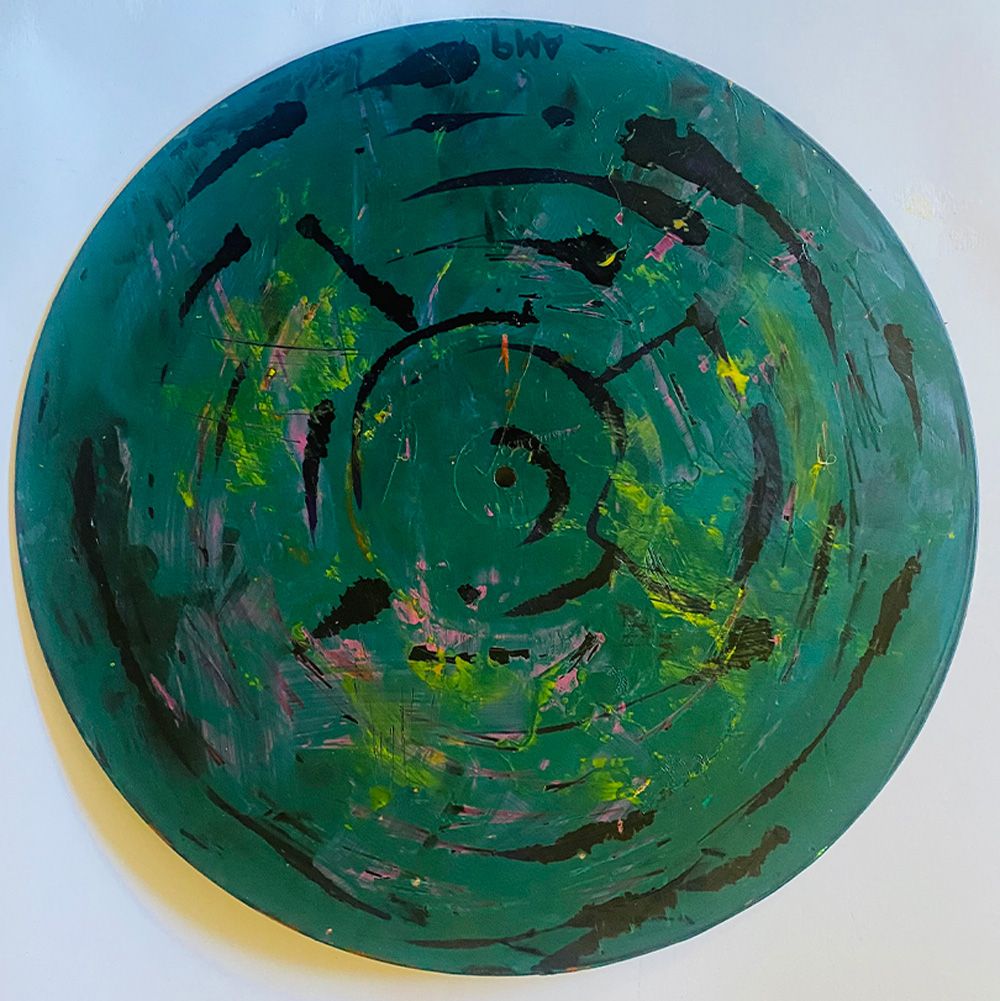
Music is prophecy. Its styles and economic organisation are ahead of the rest of society because it explores, much faster than material reality can, the entire range of possibilities in a given code.
Jacques Attali, Noise, The Political Economy of Music
The Death of the Groove
The vinyl record is one of the twentieth century’s most paradoxical objects. Simultaneously commodity and companion, industrial product and intimate possession, it exists at the intersection of technology, memory and desire. Unlike a painting, whose uniqueness constitutes its primary condition of existence, the long-playing record emerged from the capitalist logic of repetition. It was designed to circulate. Its value lay precisely in its capacity to be multiplied indefinitely, carrying identical sonic inscriptions into millions of homes, bedrooms, dance halls and ‘dancings’[1]The very quaint name for a discotheque or club that was still prevalent in the Netherlands when I arrived there as a war resister in 1983.. Every copy was materially interchangeable, every pressing another iteration of the same encoded performance.
Yet anyone who has ever lived seriously with vinyl records knows that this industrial logic was always incomplete. No two discs were ever truly identical.
Every LP accumulated its own biography. Sleeves yellowed, corners frayed, grooves acquired microscopic abrasions. Whisky stains, fingerprints, inherited collections, obsessive cataloguing, lovers’ inscriptions and the bane of accidental scratches gradually, inevitably, transformed anonymous commodities into singular repositories of our lived experience. Music entered domestic life in the form of a ‘black plastic’[2]The name of Laurence Hamburger’s ambitious vinyl project celebrating South African popular music’s album covers of the 1970s. object handled repeatedly, lowered carefully onto turntables, turned over midway through listening, returned to its sleeve with ritual attentiveness. Listening was inseparable from gesture. The hand and the ear collaborated with the Hi-Fi apparatus of capture and dissemination to deliver us our fix.
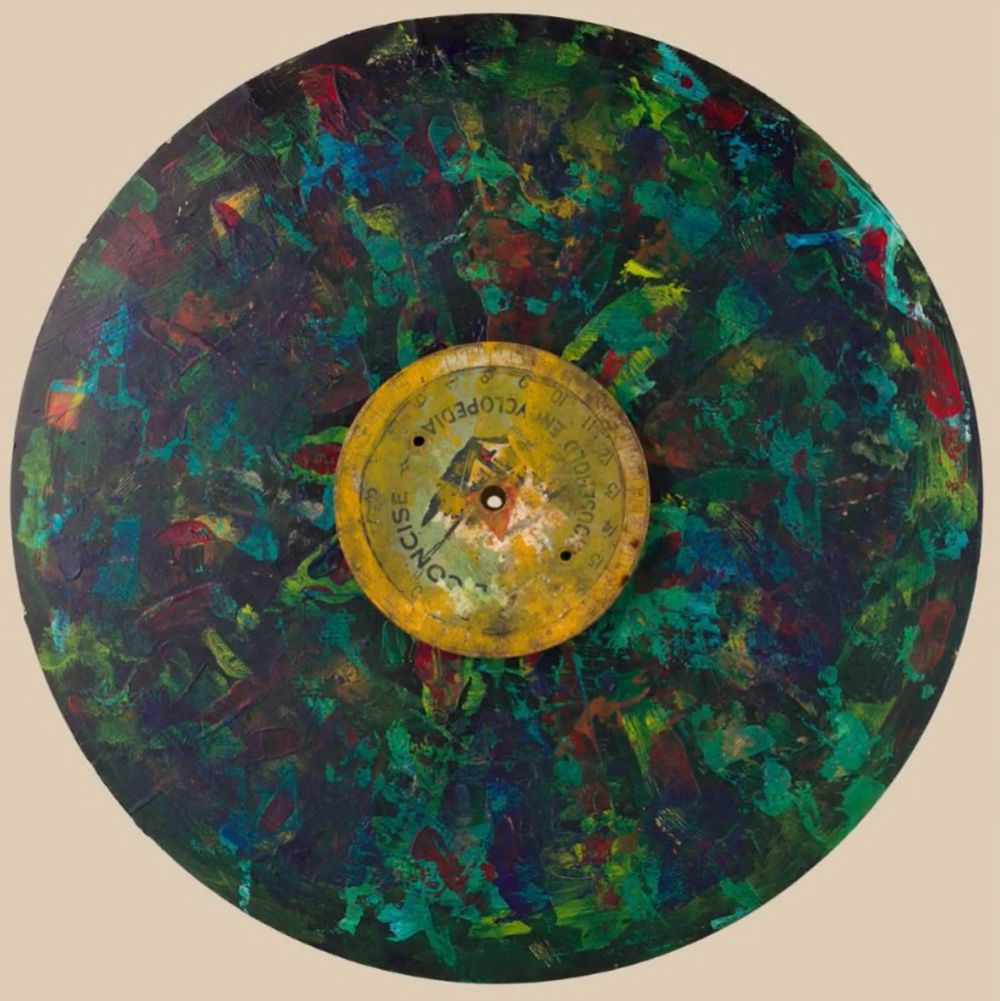
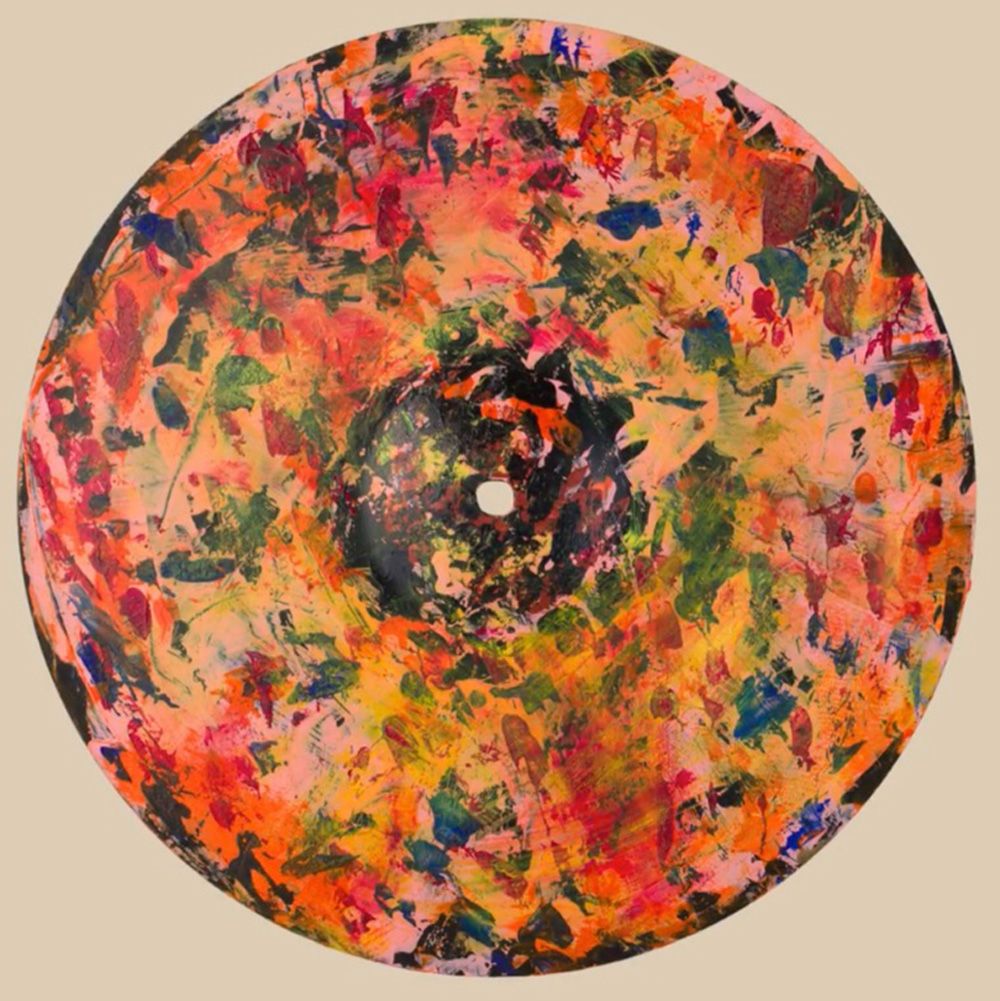
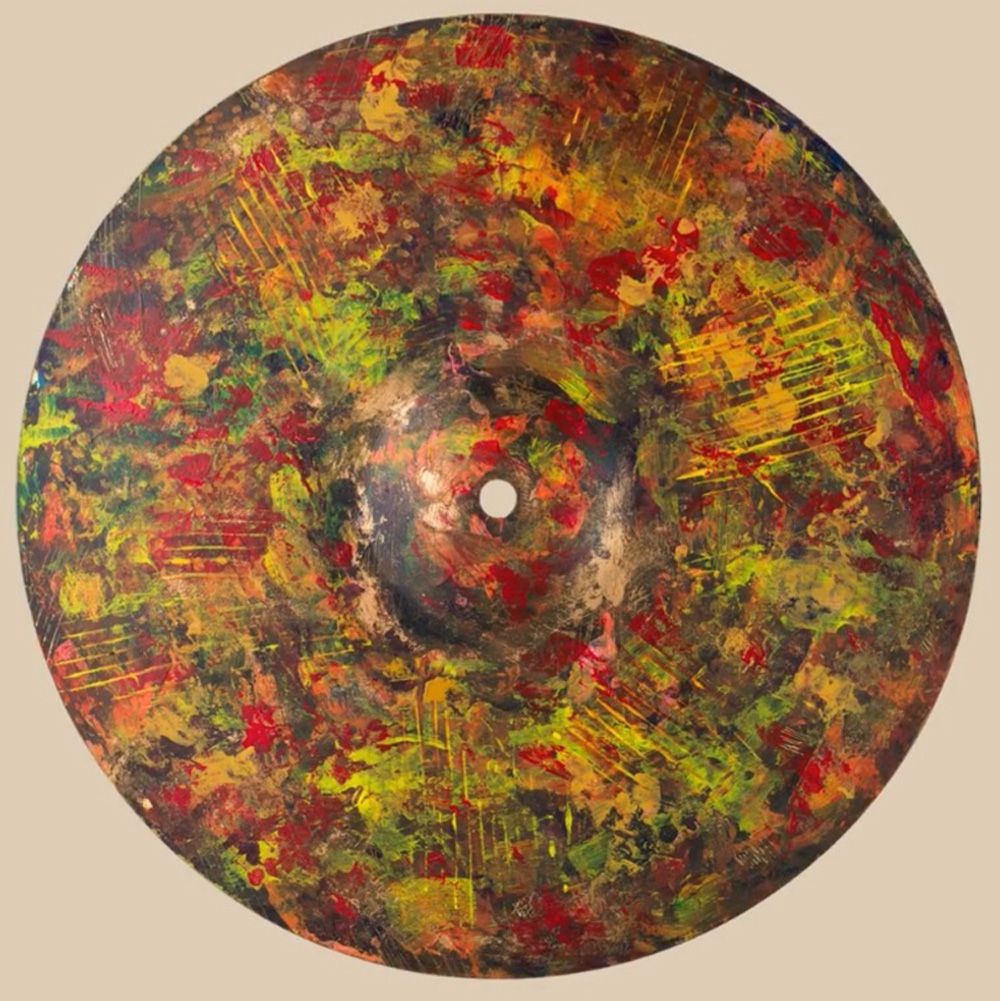
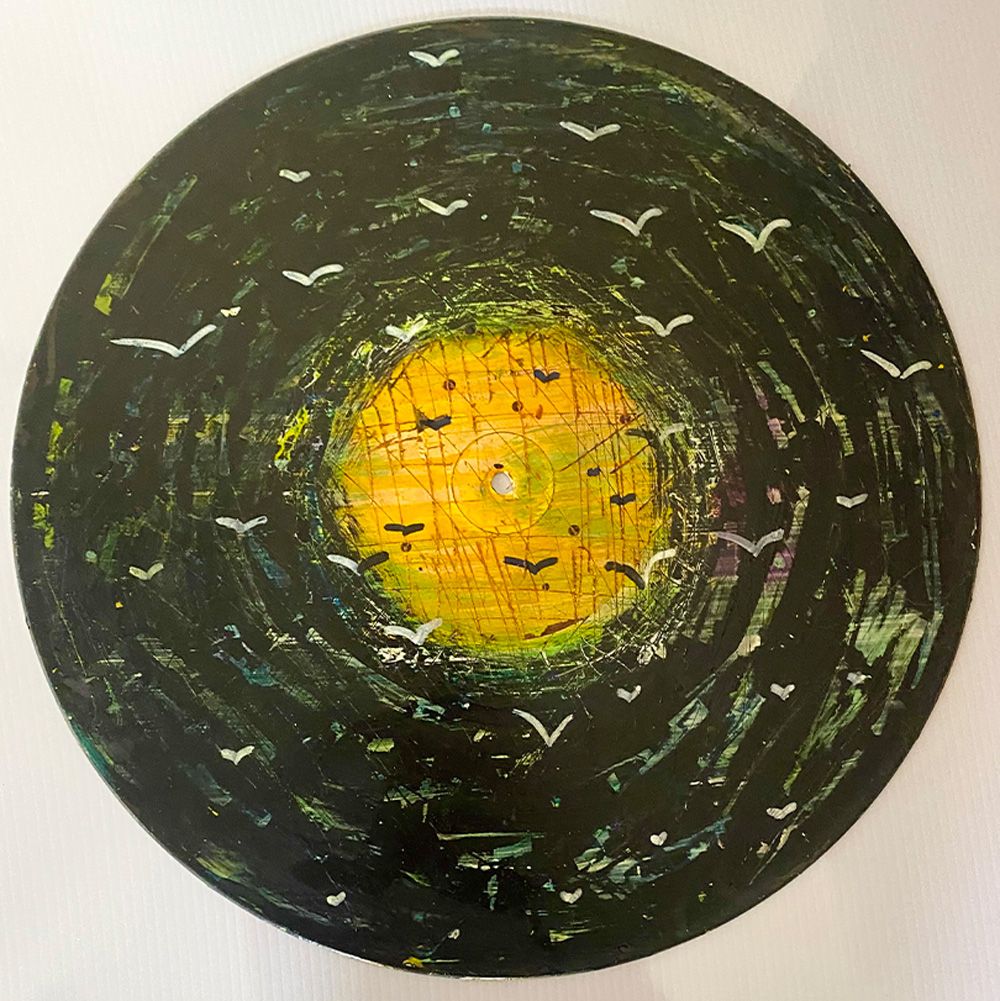
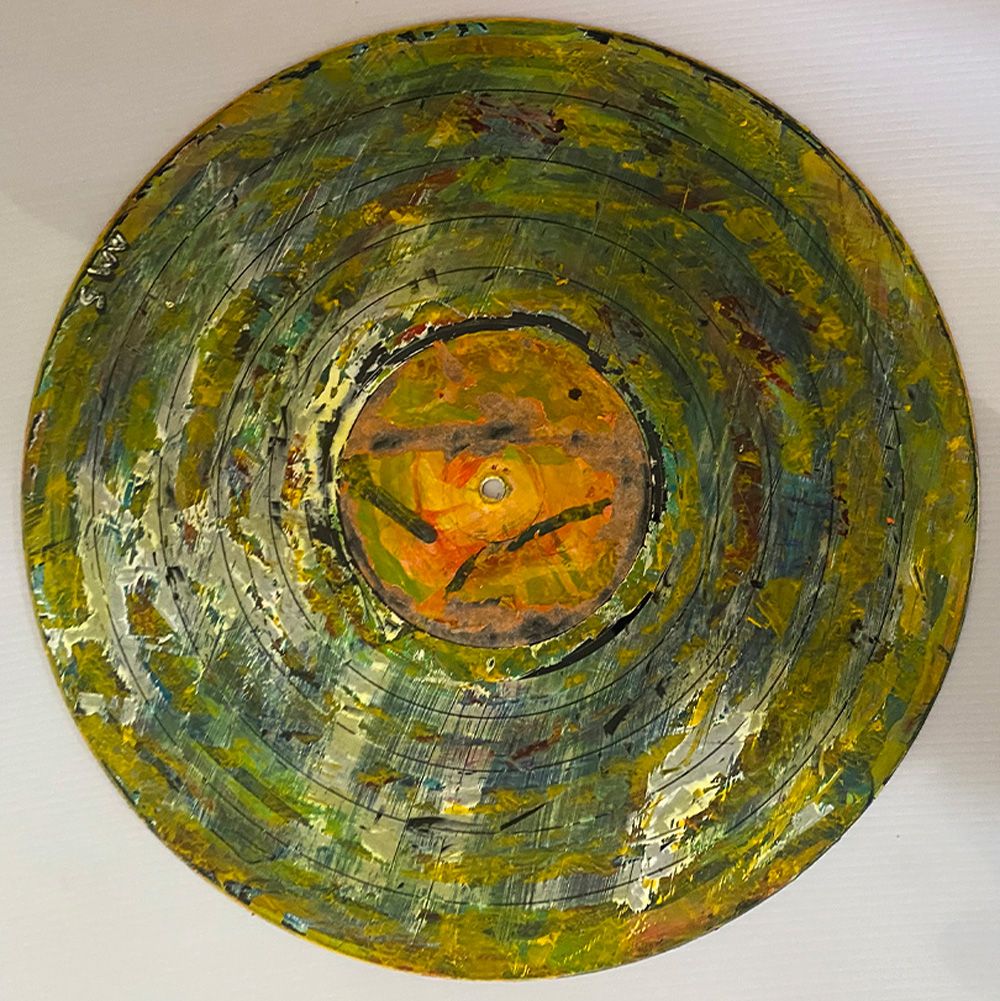
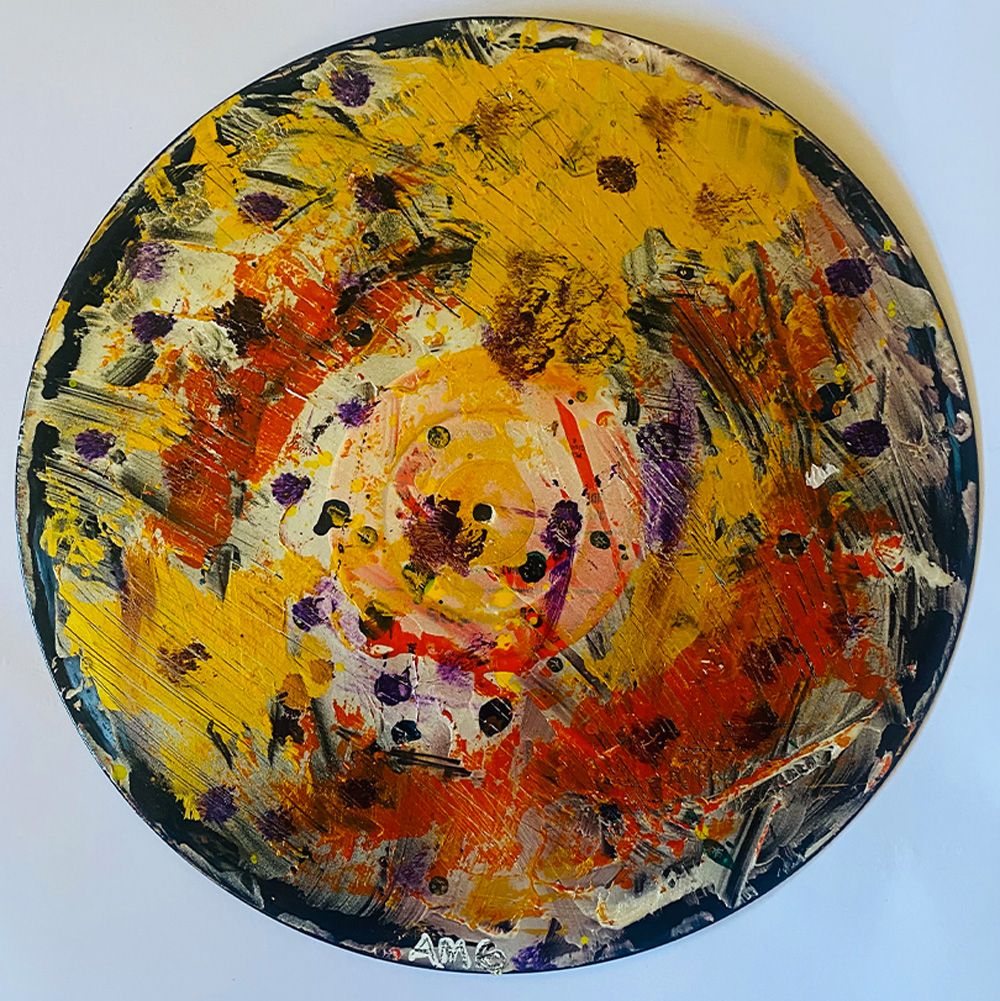
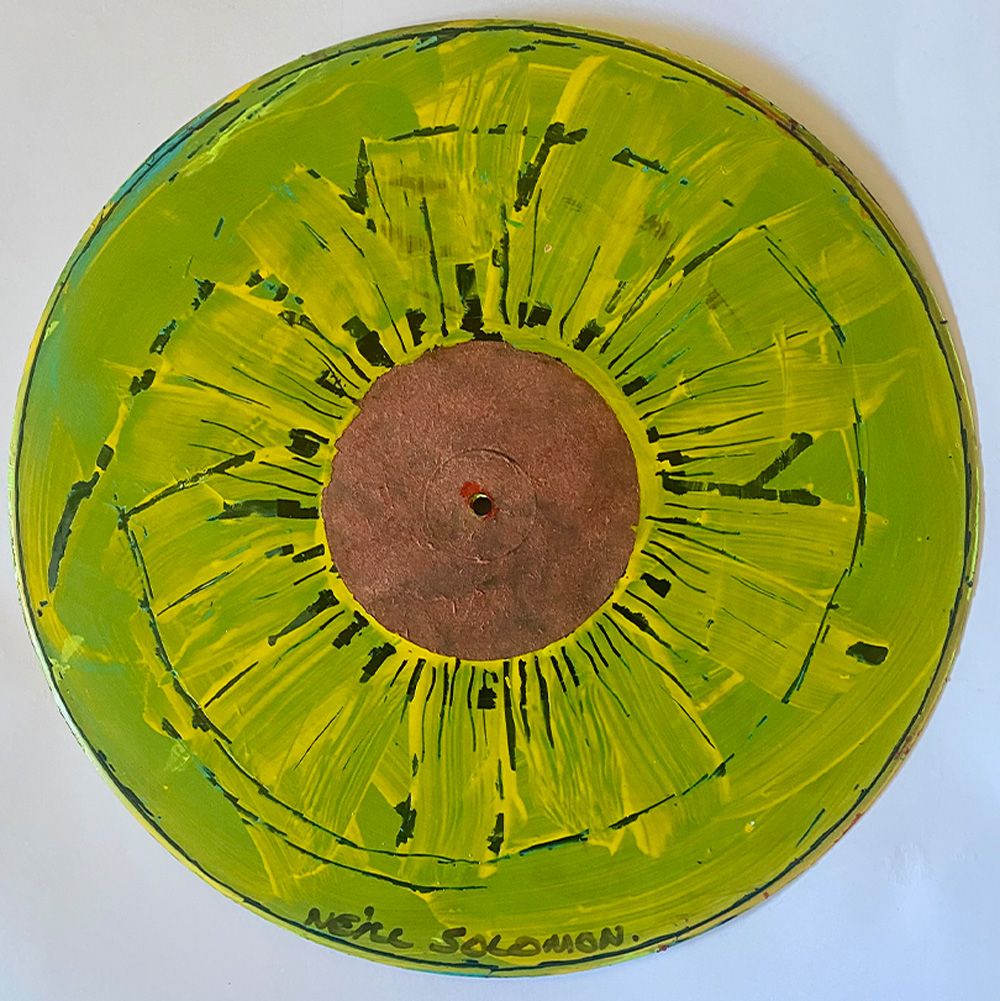
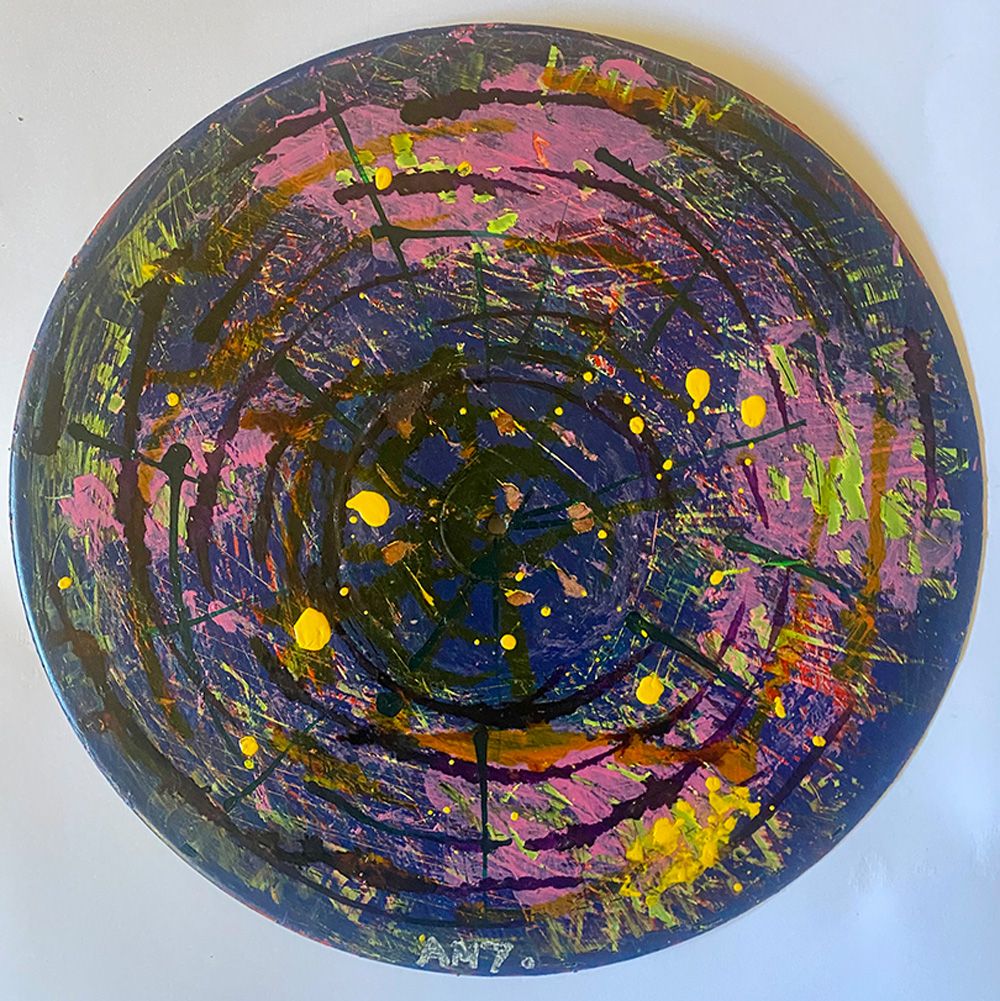
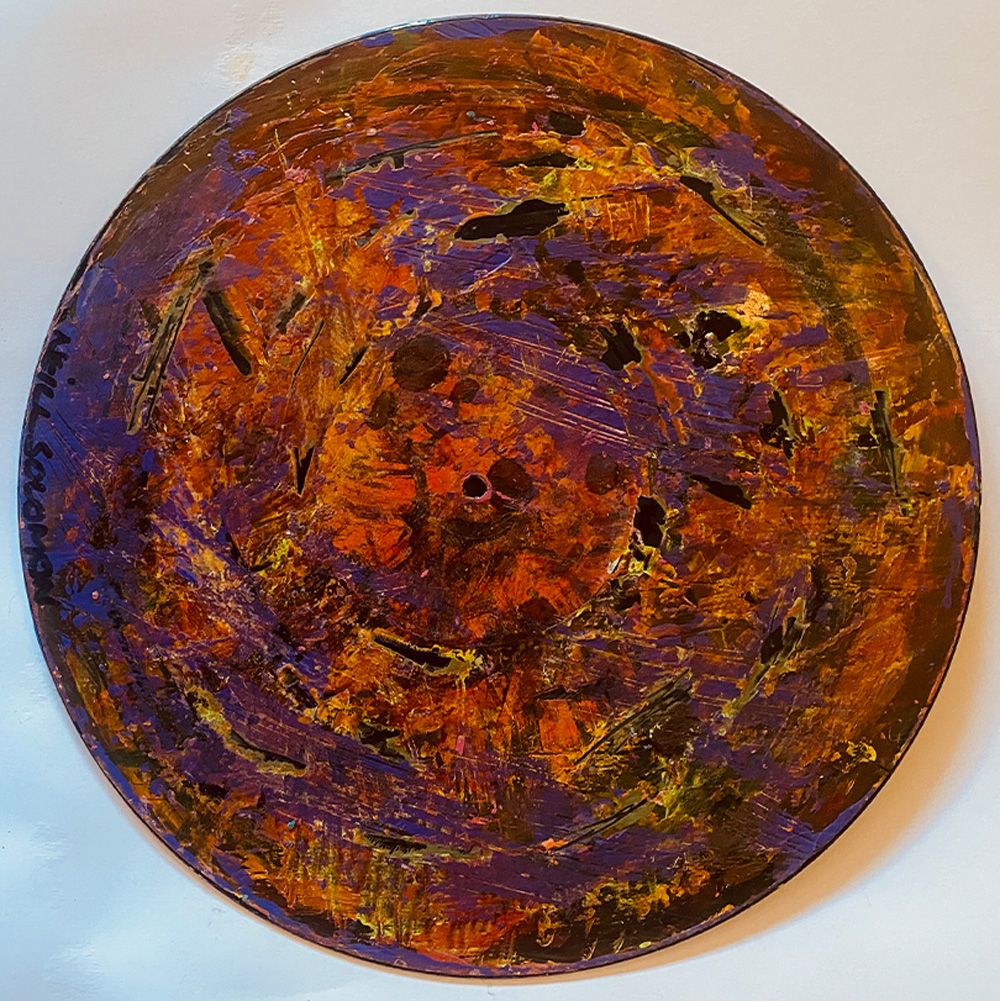
Neill Solomon’s 33rpm begins precisely at the moment this ritual has entered history. His paintings do not mourn vinyl as an obsolete technology, nor do they participate in the current nostalgia industry that fetishises analogue media as the final refuge of authenticity within digital culture. Nostalgia has become one of late capitalism’s most profitable affective economies. Vinyl’s contemporary revival often belongs less to listening than to collecting, less to sound than to lifestyle. The LP returns as boutique object, another premium commodity circulating within economies of distinction, an Insta feed attraction.
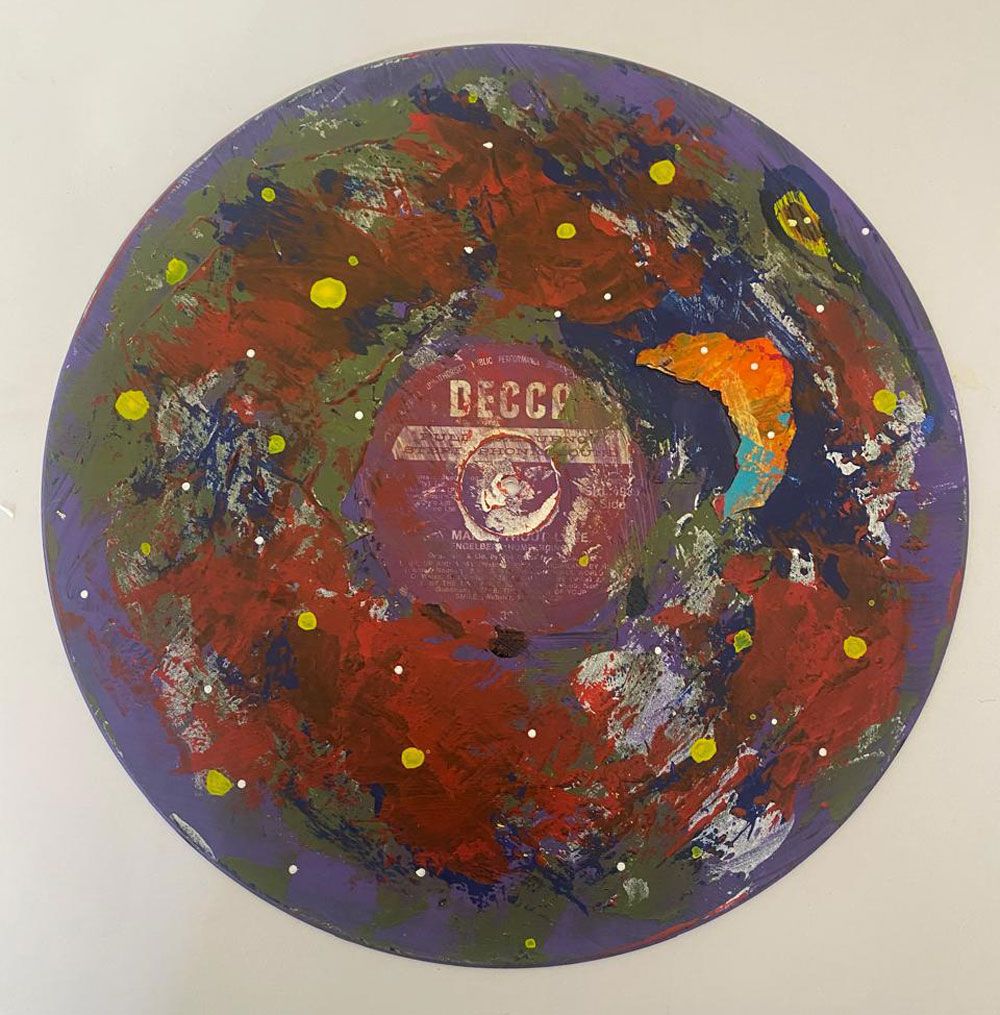
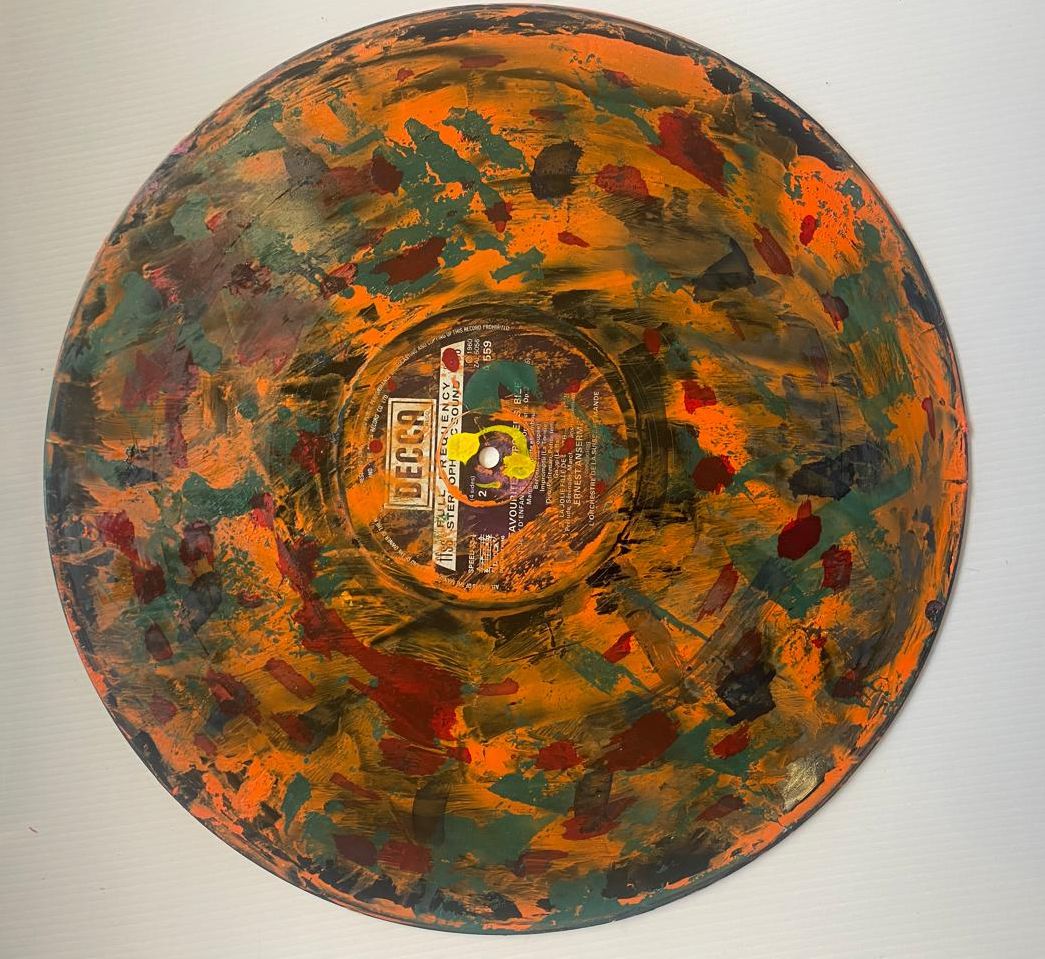
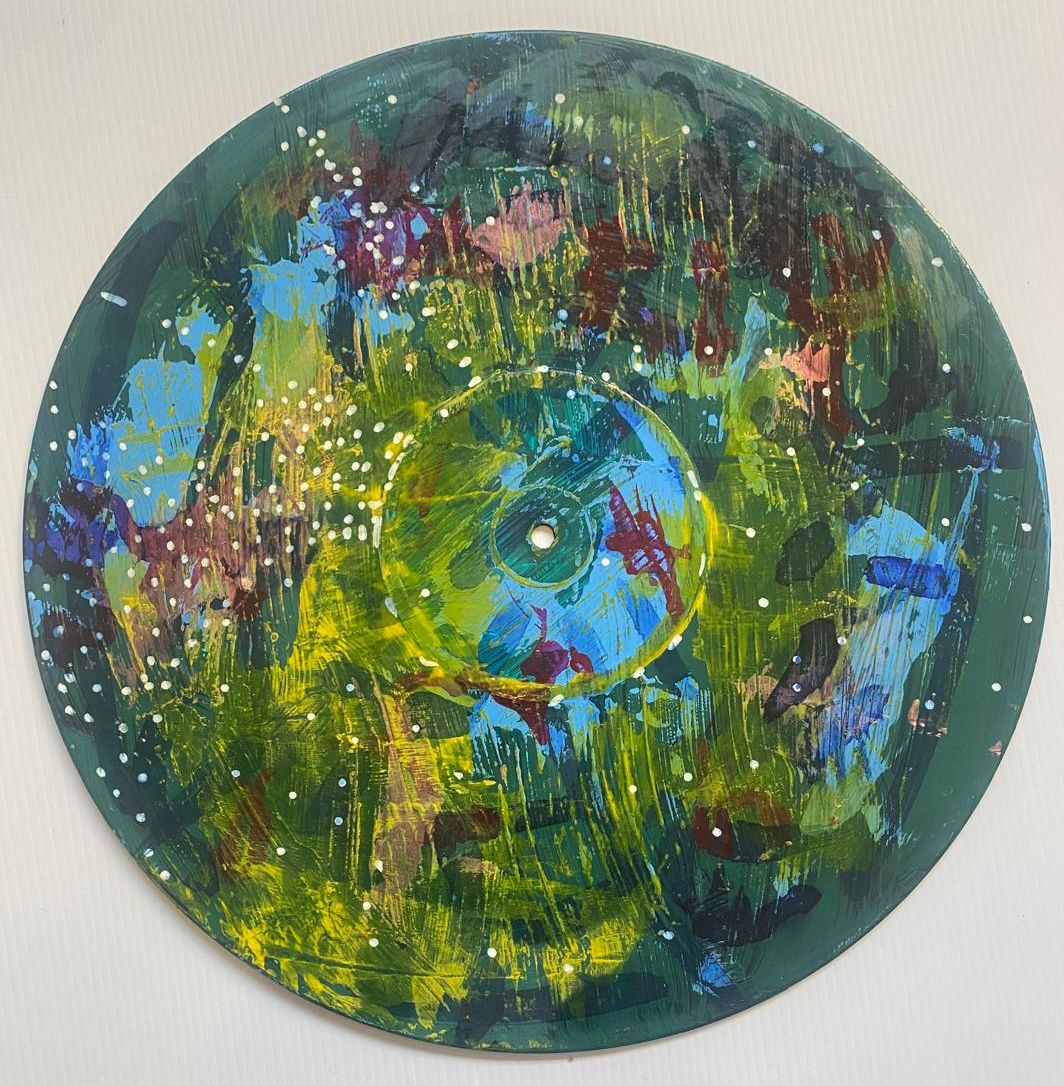
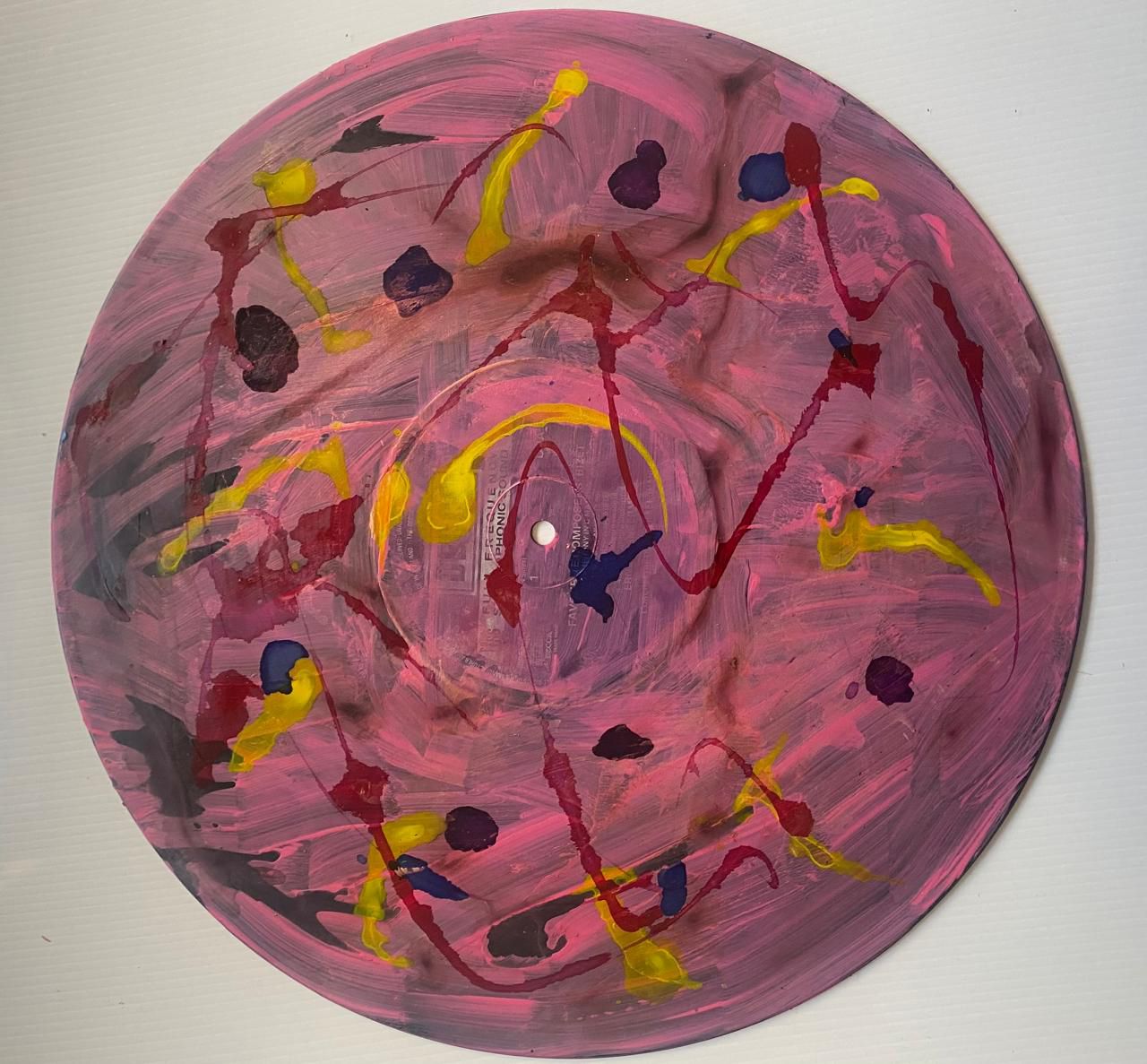
Solomon’s intervention is altogether more unsettling. He paints directly onto the record surface. The grooves disappear beneath thick splashes of acrylic paint and ink. Colour obliterates inscription. The object survives while its original function is irreversibly suspended. It can no longer fulfil the task for which it was manufactured. Sound remains physically present, embedded beneath layers of pigment, yet it has become permanently inaccessible.
At first glance the gesture appears almost violent. The record has been vandalised, its technological utility destroyed, its capacity to reproduce music extinguished. The paintings seem almost iconoclastic, an act of vandalism performed upon one of the twentieth century’s most beloved cultural artefacts. Yet this reading misses the profound generosity of Solomon’s intervention, for these are acts of sacrifice rather than destruction.
Anthropologists have long understood sacrifice as transformation through loss. The sacrificial object enters another order of existence precisely because it relinquishes its previous identity. Something must cease in order for something else to appear. Solomon’s painted LPs obey precisely this ancient logic. The record dies as recording technology in order to be reborn as painting cum sculptural object, a singular aesthetic presence. Its previous ontology must be surrendered before another can emerge.
The distinction between sacrifice and destruction is significant because the works occupy an historical moment in which the sacrifice has, in fact, already occurred elsewhere. Capital has already abolished the record. Streaming platforms merely completed a process initiated decades earlier: the progressive dematerialisation of music. The commodity no longer requires an object. Sound has become data. Music now circulates with the same frictionless abstraction as financial transactions, endlessly available, infinitely reproducible, detached from the material supports that once anchored our everyday listening practices.
Solomon’s painted records therefore perform a second-order sacrifice. They mourn an object whose economic death has already taken place. The paintings become funerary monuments for a medium abandoned by the very system that created it.
Jacques Attali’s Noise: The Political Economy of Music remains one of the most prescient analyses of this transformation. Writing in 1977, Attali proposed that music anticipates political economy; that changes in musical production forecast changes in social organisation before they become visible elsewhere. Music, for Attali, is not merely expressive but prophetic.
Every mutation in sonic culture prefigures a corresponding mutation in labour, value and power.
From this perspective Solomon’s paintings cease to be retrospective, they become archaeological artefacts from the future. They register the moment at which music ceased to exist primarily as an object and became instead a continuously available service. The painted LPs in his 33rpm series record the disappearance of recording itself.
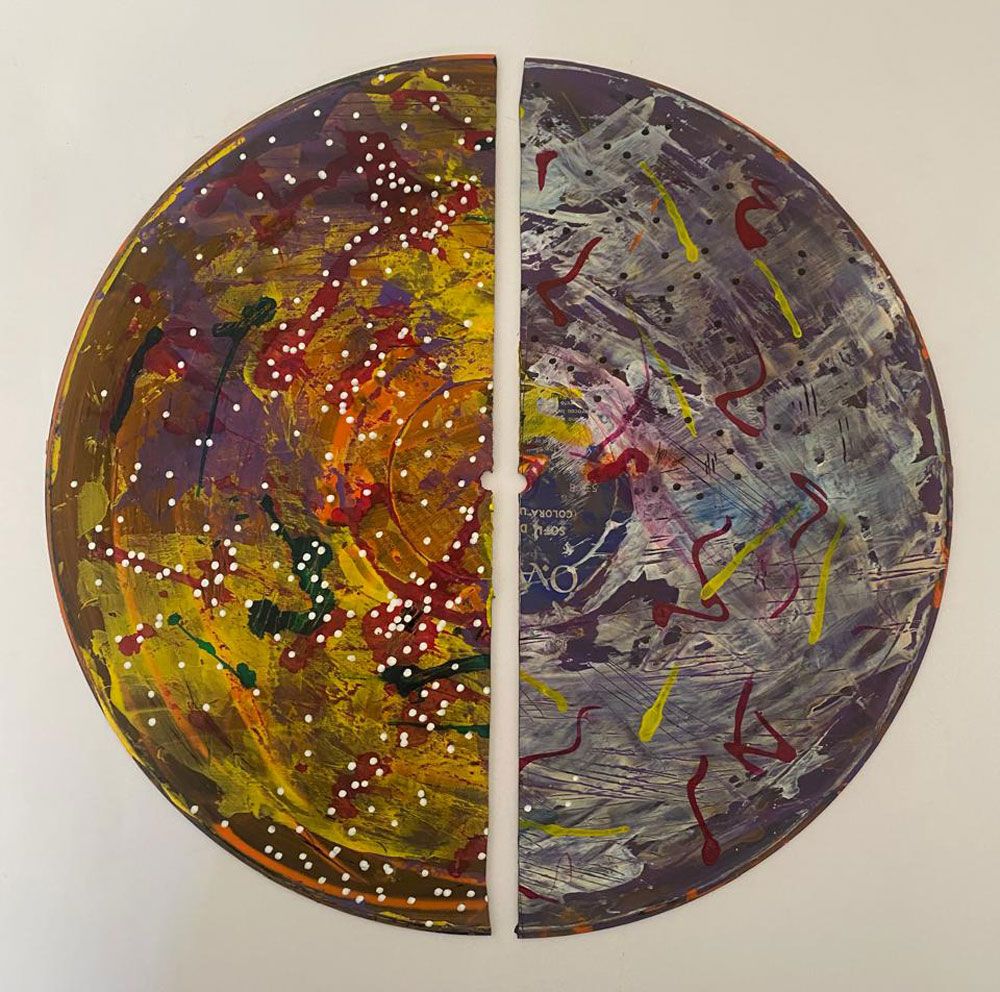
Each painted disc irreversibly abandons its industrial reproducibility and enters the economy of uniqueness. It cannot be duplicated. It cannot even perform the function for which it was manufactured. Its value no longer resides in the music it contains but in the material event it has become. The record has ceased to transmit sound. It has become an image. This conversion is simultaneously economic, aesthetic and philosophical.
The promise of universal access offered by streaming platforms conceals an extraordinary asymmetry of value. Never before has so much music been available to so many listeners while returning so little to those who produce it. Musical abundance coincides with economic precarity. The democratisation of distribution has not produced a corresponding democratisation of remuneration. Instead it has intensified concentration, directing value upward through platform infrastructures whose algorithms determine visibility, recommendation and circulation.
The old distinction between artwork and commodity has begun to dissolve. Music increasingly behaves like utilities. Like electricity. Like running water. Theodor Adorno’s critique of the culture industry acquires renewed urgency here, although contemporary digital culture exceeds even his bleakest diagnoses. Adorno feared standardisation: songs manufactured according to interchangeable formulas, reducing listening to passive consumption. But Spotify, Apple Music and algorithmic recommendation systems no longer standardise music alone, they standardise listening.
Recommendation engines increasingly determine not merely what we hear but how hearing itself is organised. Music becomes environmental rather than intentional, background condition rather than individual encounter. Infinite playlists eliminate silence while simultaneously evacuating attention, making it impossible to actually focus on anything. Listening drifts toward what Jonathan Sterne[3]Jonathan Sterne (1970–2025) was a leading media theorist and sound studies scholar. Key books where he develops ideas about infrastructural conditions of media:
MP3: The Meaning of a Format (Duke University Press, 2012) — Sterne analyzes the MP3 format as an infrastructural technology. It is:
Invisible (backgrounded, “black boxed” in everyday use).
Continuous (perceptual coding that works across time and distribution networks).
Automated (relies on psychoacoustic models and algorithms that automate perception and compression).
He shows how such formats create the conditions for modern digital audio culture — streaming, file sharing, mobile listening — while remaining largely imperceptible to users.
The Audible Past (2003) and later works like Diminished Faculties (2021) — Sterne explores how technologies of sound reproduction and processing turn listening into a distributed, technical, often automated process rather than a purely human sensory act.
Sterne frequently emphasizes that media infrastructures (formats, standards, protocols) operate in the background as ongoing, automated conditions that shape what we can perceive, communicate, and experience — while staying invisible in normal operation.
This Note was generated by the AI Claude on Saturday 11 July 2026 in response to my prompt: “Please contextualize Jonathan Sterne for the non-specialist reader.” has called an infrastructural condition: invisible, continuous, automated.
The consequence is subtle but decisive: music risks becoming less memorable precisely because it has become more abundant. Scarcity once organised memory, albums required to be purchased, songs demanded repetition (play it again Sam), records occupied physical space, we lived with them, shared digs with our cherished collections. Music was a literal part of who we were. Today every recording appears equally available, equally retrievable, equally disposable.
Against this condition Neill Solomon introduces obstruction. The painted record refuses to be played back. One cannot stream it. Nor can one hear it. Instead the work compels a different form of listening altogether where memory replaces acoustics.
The viewer is confronted by a silence saturated with latent sound. Every painted groove suggests music that is trapped, that can no longer emerge. One begins involuntarily reconstructing songs internally, discovering that the work has shifted the site of musical performance from the turntable to consciousness itself. The paintings therefore produce a remarkable inversion, they silence the object in order to amplify remembrance.
This semiotic reversal is extraordinarily sophisticated. The work no longer presents music directly. It presents the impossibility of hearing music while simultaneously intensifying our awareness of it. Silence becomes audible.
This inversion returns us inevitably to Walter Benjamin. His celebrated essay on mechanical reproduction is often invoked whenever questions of originality arise, yet Benjamin’s understanding of aura is more subtle than the opposition between unique artwork and reproducible commodity. Aura is fundamentally temporal. It describes a particular relation between presence, distance and historical experience.
Mechanical reproduction threatens aura not simply because copies proliferate but because repetition collapses the singular encounter.
Solomon responds through irreversible singularisation. Every painted record becomes unique precisely because it can no longer function reproductively. The industrial multiple becomes an auratic singularity. Painting manufactures uniqueness through negation of the sonic.
Yet Benjamin alone cannot account for the peculiar material intelligence of these works. For unlike canvas, the vinyl LP record is never an empty support awaiting inscription. It already contains another language, its surface is a spiral text, a microscopic topography encoding duration itself. The groove is not merely a physical mark, it is frozen time.
Every revolution of the record unfolds chronology. Every concentric circle is a compressed history awaiting mechanical release. Canvas possesses space whereas the vinyl record possesses time. Solomon therefore paints upon temporality itself; the groove disappears beneath acrylic pigment, but its invisible architecture continues to haunt the work. The record is therefore many things simultaneously. Commodity, archive, score, memory machine, technological prosthesis, industrial artefact—and corpse.
It is this extraordinary ontological density that gives 33rpm its philosophical force. Solomon does not merely decorate obsolete media. He exposes the instability that always already resided within them. Every record contained the possibility of becoming something other than itself. Every technology harbours dormant futures. By painting across the groove Solomon activates one such future, allowing another medium to emerge from within the carcass of the first. The groove dies, but in its death another image of music begins to appear.
Painting on Time
If the first operation of 33rpm is sacrificial, the second is ontological. Solomon does not simply repaint a support; he reconfigures the conditions under which media signify. The record ceases to function as a transparent conduit for sound and instead insists upon its own materiality. What had previously disappeared beneath the act of listening suddenly confronts us as object, surface and thing.
Marshall McLuhan’s oft-repeated dictum that “the medium is the message” is frequently reduced to a slogan. Yet Solomon’s paintings remind us of its deeper implication. Media ordinarily conceal themselves. We do not hear records; we hear music. We do not notice paper; we read words. We do not attend to screens; we watch images.
Successful media disappear beneath their own operation.
Solomon’s paintings reverse this disappearance. The medium returns. The substrate asserts itself. The technology that once effaced its own presence becomes impossible to ignore. In this respect 33rpm belongs to a longer twentieth-century genealogy of artists who have redirected attention away from representation and toward mediation itself. Marcel Duchamp transformed ordinary manufactured objects into philosophical propositions. Robert Rauschenberg collapsed distinctions between painting and assemblage. Robert Morris and Donald Judd insisted upon what they called “specific objecthood” rather than the illusion of painting’s frame.
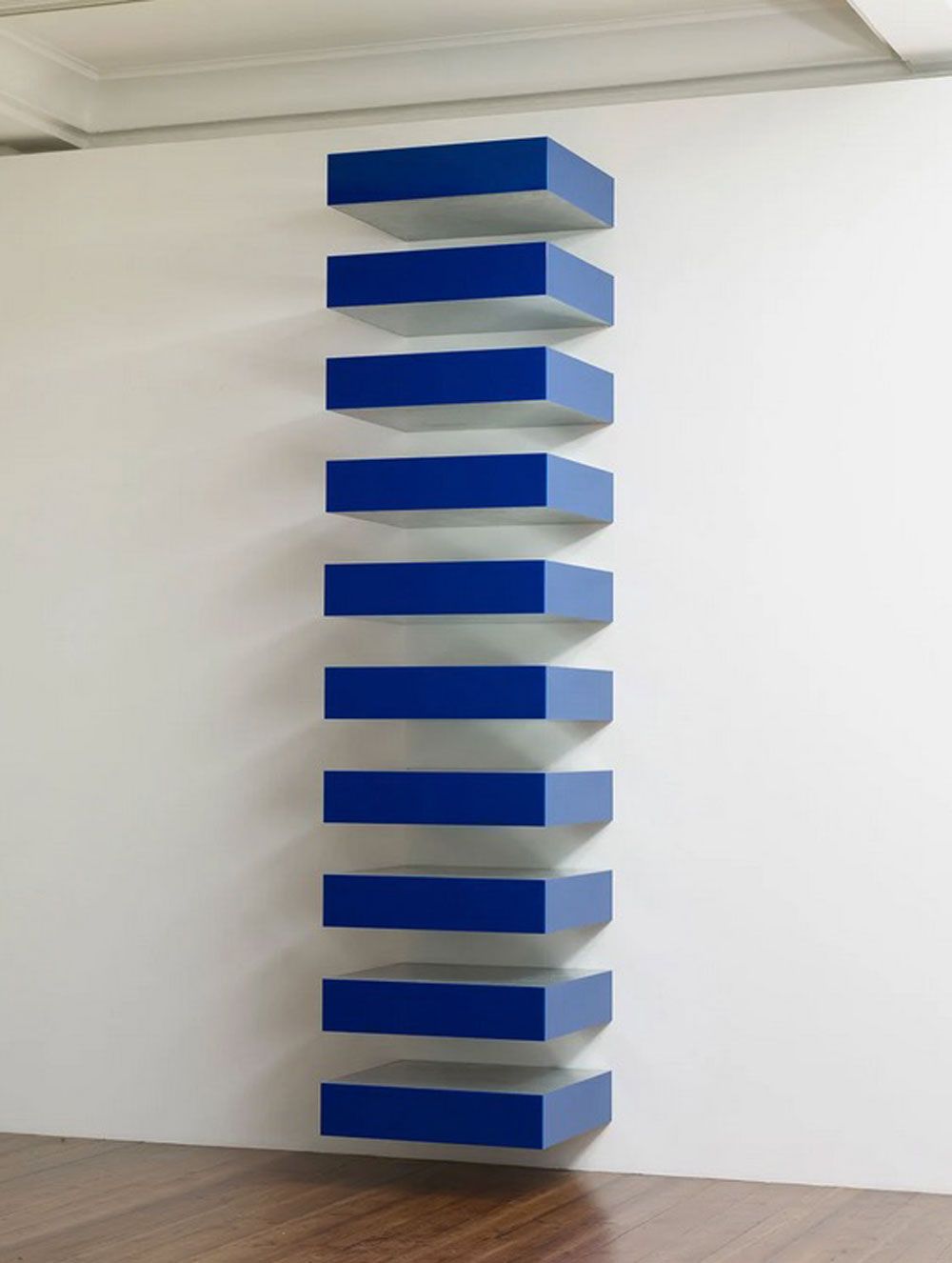 Donald Judd, Untitled (Bernstein 80-4), 1980.
Rosalind Krauss famously described this condition as sculpture’s “expanded field,” a moment when inherited artistic categories could no longer adequately describe contemporary practice. Sculpture escaped the pedestal. Painting abandoned the rectangular frame. Photography entered installation. New Media forms contaminated one another.
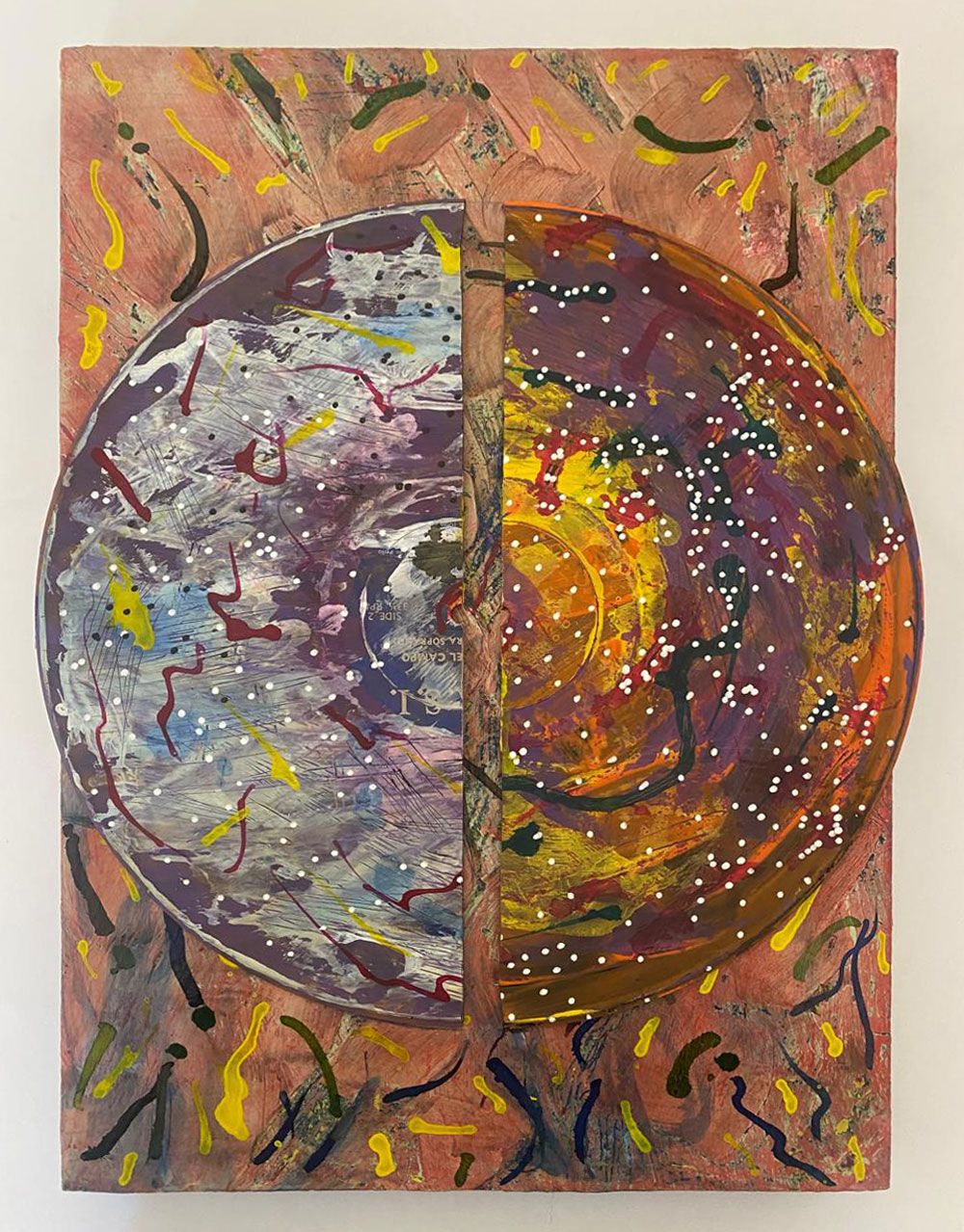
Solomon’s records occupy precisely such an expanded field.
They are paintings.
They are also sculptures.
They are archival objects.
They are readymades.
They are failed technologies.
They are musical scores rendered permanently mute.
They are relics.
And perhaps, above all, they are propositions.
The instability of their identity constitutes their conceptual force. To ask whether they are “paintings” already misunderstands them. They are acts of translation.
This is why comparisons with Bob Dylan’s paintings ultimately prove less illuminating than they initially appear. Dylan paints after music, but his paintings remain paintings in the conventional sense. Their support is canvas; their relationship to music biographical rather than material.
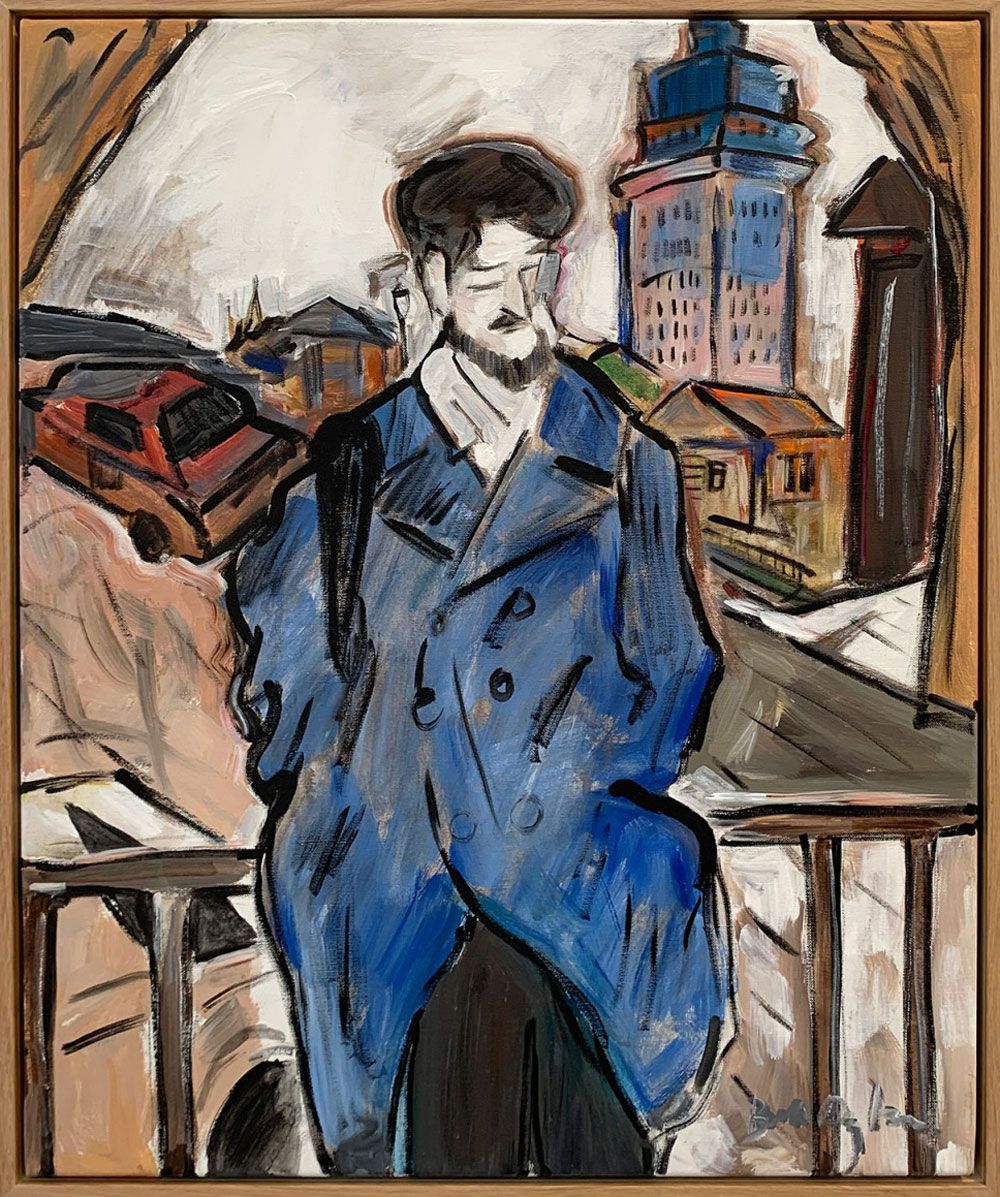 Bob Dylan, Man on a Bridge, 2009.
Solomon’s work performs something considerably stranger. Here music is not merely the artist’s previous profession. It survives within the physical substrate of the work itself. Every painting retains the ghost of another medium beneath its surface. The support remembers what it once was. Neill Solomon’s paintings are therefore materially haunted and not just metaphorically. Every brushstroke covers grooves that continue to exist beneath the pigment. Sound has not disappeared; it has been rendered inaccessible. The work stages a peculiar condition of suspended presence. Music remains physically encoded while becoming phenomenologically unavailable.
Jacques Derrida’s notion of the trace becomes unexpectedly useful here. Every sign bears within itself the residue of what it excludes, every presence haunted by absence. Solomon’s paintings are traces in precisely this sense. They neither erase nor preserve music. They defer it. They produce an object whose silence is saturated with unheard acoustics, the inaudible (and largely invisible) groove becomes the painting’s unconscious.
This unconscious acquires additional significance when viewed through Friedrich Kittler’s theory of media archaeology. Kittler argued that media are not passive channels through which culture expresses itself. Rather, media determine the very conditions under which perception, memory and subjectivity become possible.
Technologies do not simply record history; they produce historical consciousness.
To paint over the record’s surface is therefore not simply to alter an object, it is to intervene in the infrastructure of memory itself. For the record has always been a machine for storing time. Unlike photography, which arrests an instant, recorded sound preserves duration.
The LP is a spiral archive through which time continually re-turns.
Every playback reanimates an absent performance. Dead voices speak again. Lost orchestras perform once more. Forgotten afternoons become present through vibration. The turntable functions as a temporal engine, converting inscription into recurrence.
Solomon interrupts this cycle. Time no longer revolves. It settles. The spinning disc is frozen into a still image. Chronology condenses into surface. One might even suggest that Solomon paints what Henri Bergson would have recognised as duration itself, not chronological succession but lived temporality, memory thickened into matter, a kind of sedimentation, as though accumulated listening had itself become visible.
William S. Burroughs understood something similar during the final decades of his life. His shotgun paintings were not diversions from literature but extensions of the cut-up method into another material register.
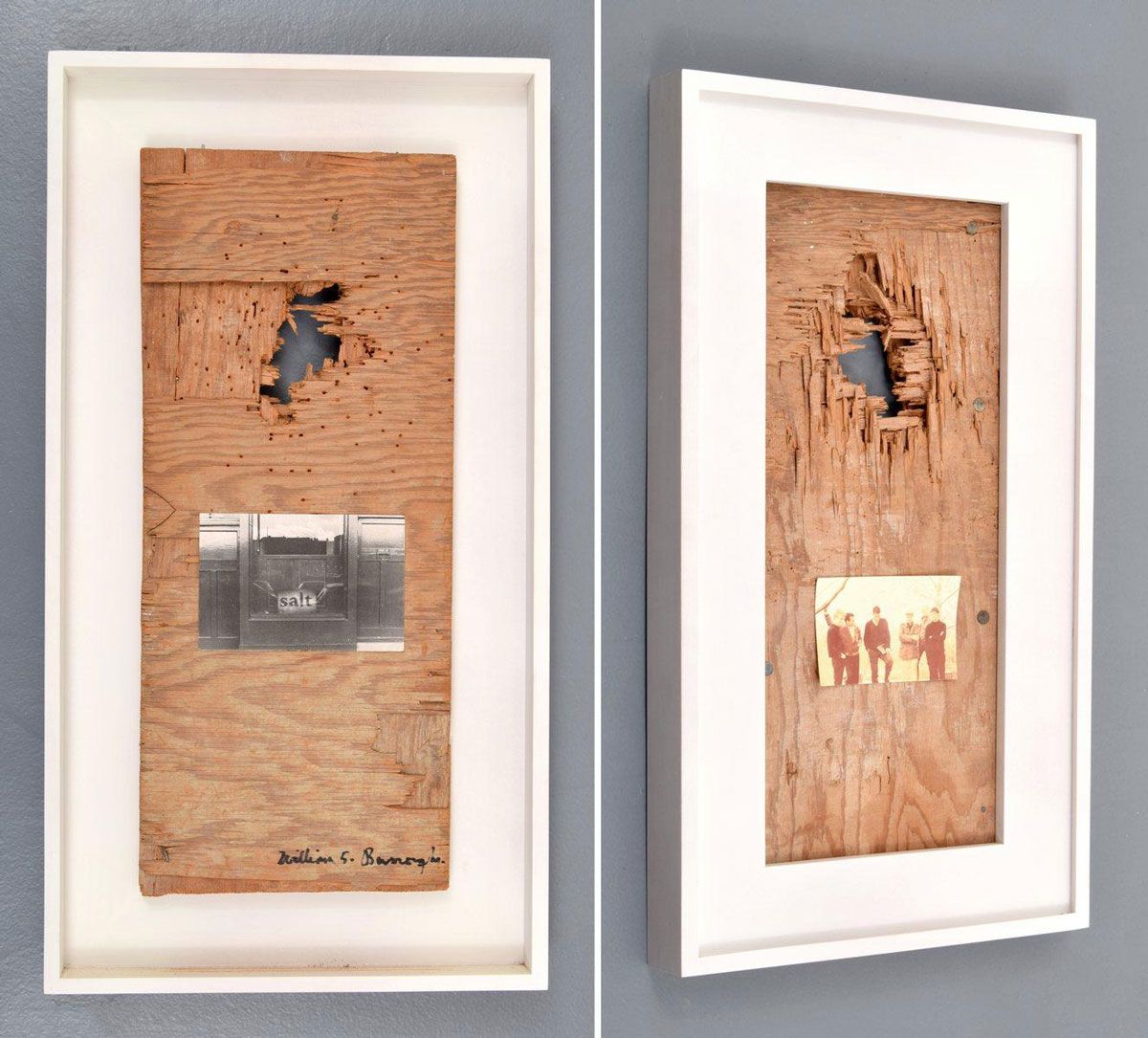 William Seward Burroughs, Work is titled “Are you in Salt?” and is double-sided, with one photo on each side. Burroughs is among the subjects in the group photo. Provenance: Diego Cortez, Ltd., New York, New York, acquired 1990. Medium: American; plywood with shotgun holes, photograph. Condition Report: very good, distressing inherent to the work.
Here language became ballistics, an aleatoric mark-making bursting through our illusions of safety. Likewise Captain Beefheart’s remarkable paintings did not represent an abandonment of music but its continuation by other means. The same fractured imagination that produced Trout Mask Replica migrated into pigment and canvas without relinquishing any of its underlying illogic.
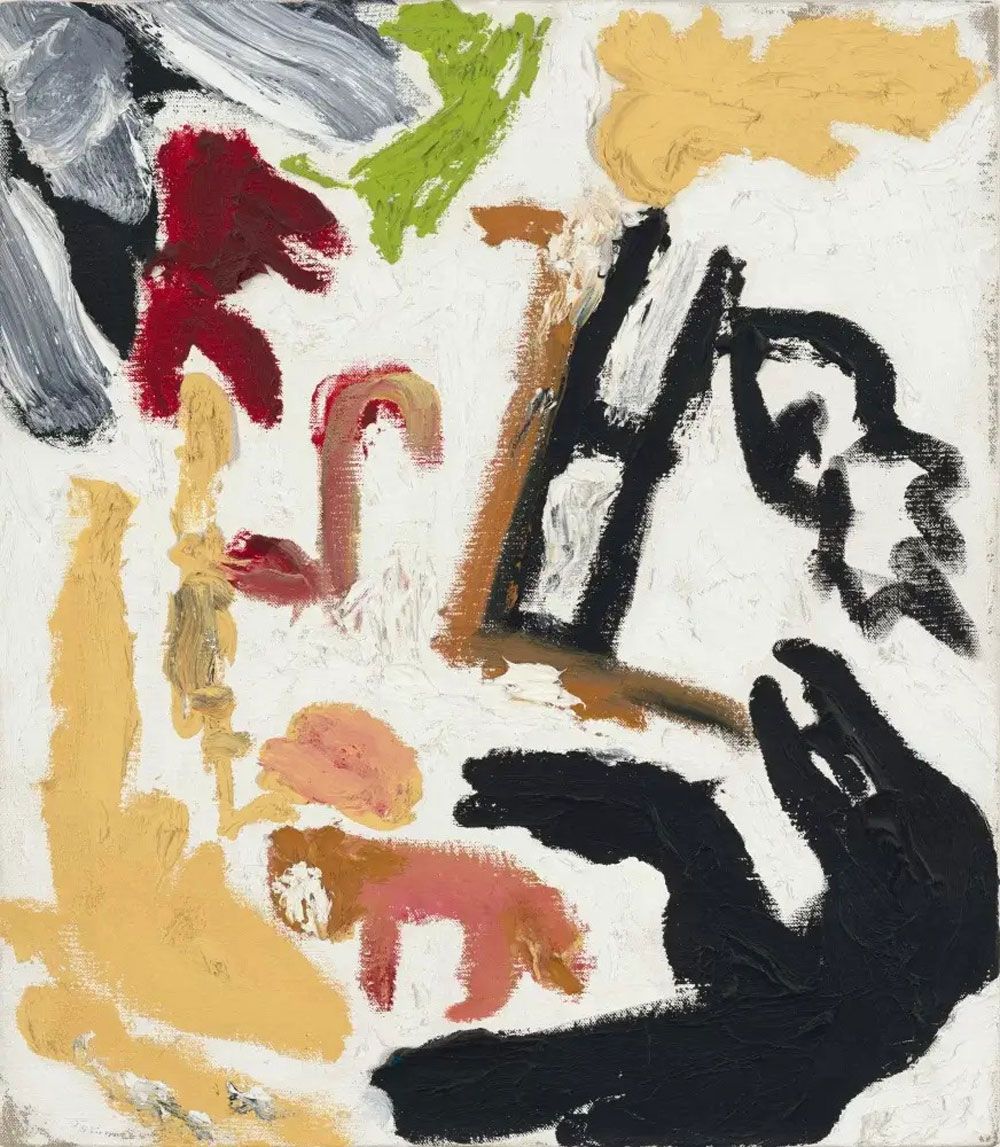 Don Van Vliet (Captain Beefheart), Crow Dance A Panther, 1988.
Neill Solomon belongs to this lineage of artists for whom crossing media is a creative necessity. When one language reaches its historical limits another must be invented.
There is, however, another precedent whose relevance has become increasingly apparent: Christian Marclay. Throughout the 1980s Marclay subjected vinyl records to acts of cutting, scratching, collage and recombination, transforming obsolete technologies into instruments of performance. His interventions exposed the latent plasticity of recorded sound, demonstrating that the supposedly fixed recording could itself become performative material.
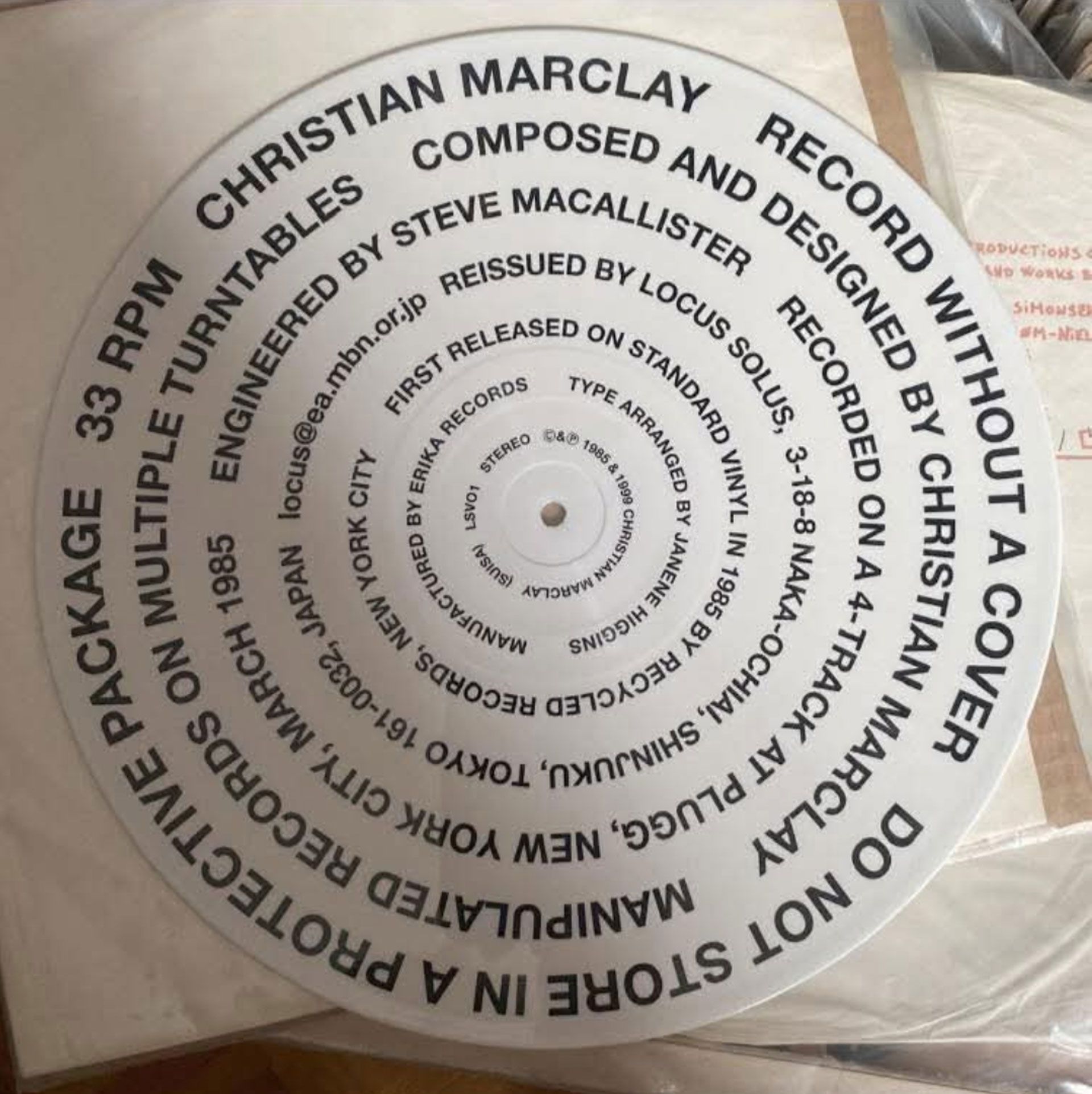
Solomon inherits this impulse while redirecting it. Marclay reactivated the record whereas Solomon stills it. Marclay generated unexpected sounds while Solomon generates an impossible silence. But the silence here should never be confused with absence. John Cage permanently complicated such assumptions. Silence is always inhabited. Every mute surface vibrates with unrealised acoustics.
Acutely aware of the charged silence created by Cage’s 4’33”, Solomon’s paintings participate in this expanded conception of listening by asking us to attend to what can no longer be heard.
The result resembles an apotropaic object, one of those ritual artefacts that anthropologists describe as protecting communities against unseen dangers. Traditionally such objects warded off evil spirits, misfortune or forgetting. Solomon’s painted records appear to perform an analogous cultural labour. They protect us not from supernatural forces but against algorithmic amnesia.
This may be the most significant dimension of the work.
Much contemporary discussion of artificial intelligence focuses on authorship: can machines compose, paint or write? Such debates, while important, remain curiously superficial. The deeper question concerns memory. What kinds of cultural remembrance become possible when aesthetic production increasingly emerges from predictive computation rather than embodied experience? The issue is not whether artificial intelligence will eventually produce convincing music. It almost certainly will.
The question is different.
Will statistically generated abundance alter the relationship between music and memory itself? Historically songs have functioned as mnemonic anchors. They organise biographies. They become inseparable from grief, desire, political struggle, adolescence, friendship and mourning. They accompany finite lives because they emerge from finite lives. Baby it’s you. Ever been kissed before?
Algorithmic production introduces another temporality altogether. Music risks becoming infinitely renewable rather than historically situated, interchangeable rather than singular, simmering in the background rather than the main event.
Kodwo Eshun once argued that music always arrives from the future, that it invents temporalities not yet fully inhabited by the present. Solomon’s paintings propose a subtle inversion. They recover the future hidden within obsolete media. The discarded record becomes unexpectedly contemporary precisely because it refuses acceleration.
The coagulation of acrylic across these vinyl paintings is impossible for the algorithm to reproduce precisely. The microscopic deviations of gesture cannot be predicted by a dataset. Every smear of paint records an encounter between body and matter irreducible to code. For this reason the paintings ultimately exceed elegy. They are not only about the death of vinyl, nor even (only) about the crisis of musicianship under platform capitalism. They concern something older and more enduring: the human desire to convert experience into forms capable of surviving us.
Every civilisation invents its memory machines.
Clay tablets.
Parchment.
Books.
Photographs.
Records.
Hard drives.
Cloud servers.
Each appears permanent until another technology renders it provisional. Solomon reminds us that media perish, but memory migrates. Painting here becomes one such migration. The groove disappears beneath colour, yet music persists as possibility, as recollection, as phantom vibration, as the invisible architecture underscoring every visible mark. What we have before us is not simply an artwork but an object thinking about its own historical condition. It asks what becomes of art when its supporting technologies expire, and it answers with delightful economy: nothing disappears. It merely changes medium. The record dies. The painting begins.
Neill Solomon’s acrylic-on-vinyl 33rpm LP paintings register with remarkable Joburg moxie the cultural transition from mechanical reproduction to algorithmic generation but they don’t waste time mourning the demise of the analogue era. Instead they ask what forms of human attention remain possible when both music and images increasingly circulate as weightless streams of information.
Aryan Kaganof,
19 July 2026.
| 1. | ↑ | The very quaint name for a discotheque or club that was still prevalent in the Netherlands when I arrived there as a war resister in 1983. |
| 2. | ↑ | The name of Laurence Hamburger’s ambitious vinyl project celebrating South African popular music’s album covers of the 1970s. |
| 3. | ↑ | Jonathan Sterne (1970–2025) was a leading media theorist and sound studies scholar. Key books where he develops ideas about infrastructural conditions of media: MP3: The Meaning of a Format (Duke University Press, 2012) — Sterne analyzes the MP3 format as an infrastructural technology. It is: Invisible (backgrounded, “black boxed” in everyday use). Continuous (perceptual coding that works across time and distribution networks). Automated (relies on psychoacoustic models and algorithms that automate perception and compression). He shows how such formats create the conditions for modern digital audio culture — streaming, file sharing, mobile listening — while remaining largely imperceptible to users. The Audible Past (2003) and later works like Diminished Faculties (2021) — Sterne explores how technologies of sound reproduction and processing turn listening into a distributed, technical, often automated process rather than a purely human sensory act. Sterne frequently emphasizes that media infrastructures (formats, standards, protocols) operate in the background as ongoing, automated conditions that shape what we can perceive, communicate, and experience — while staying invisible in normal operation. This Note was generated by the AI Claude on Saturday 11 July 2026 in response to my prompt: “Please contextualize Jonathan Sterne for the non-specialist reader.” |