MPHUTLANE WA BOFELO
Neo Lekgotla Langa Ramoupi’s Robben Island: Songs of Struggle – Izingoma Zomzamalazo
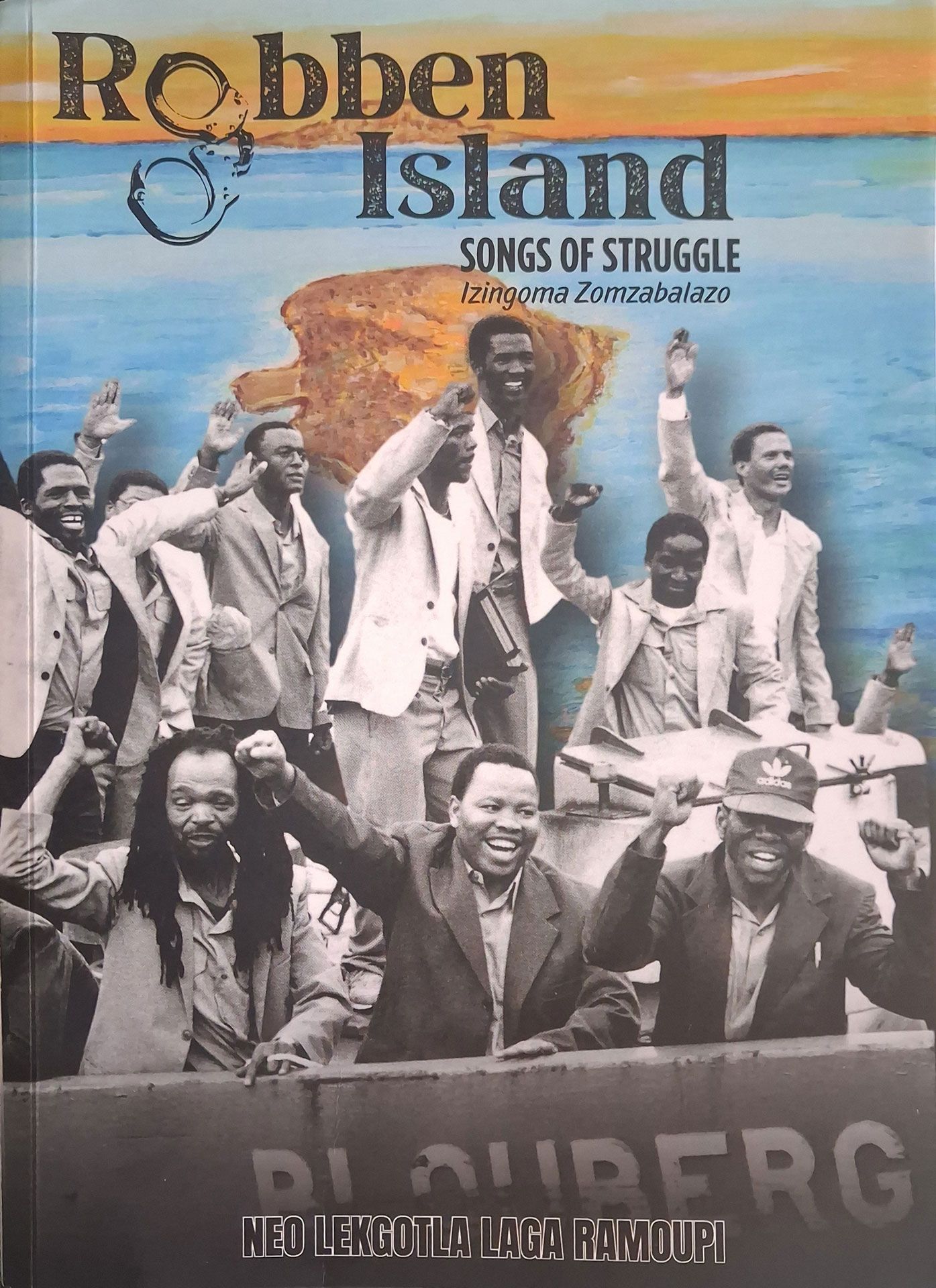
The thread that runs throughout Robben Island: Songs of Struggle – Izingoma Zomzamalazo is history as an oral relay: the transgenerational transmission of personal, family, community, and collective experiences through stories, memories, songs, legends, and traditions.
The narrative demonstrates the intrinsic relationship between individual lives and broader historical experiences, illustrating how personal memory and collective history continually shape and reinforce one another.
Throughout the book, the author shows how the home, the street, the community, the school, the church, the sports field, the canvas, and the theatre simultaneously functioned as sites for the transmission of history, knowledge, culture, and political consciousness. These spaces became informal classrooms where lived experience was transformed into collective learning and where ordinary people preserved historical memory in the absence of official archives or written records.
Ramoupi witnesses how this informs his pedagogy: “I teach my history courses by using songs, music, films as historical sources and I have found that my students become more attentive by bringing songs, music, and films into the classroom as part of learning and teaching tools”.
The notions of fear, imprisonment, and state repression entered the author’s imagination long before he encountered them directly. They were conveyed through the whispered utterance of the names of Nelson Rolihlahla Mandela and Robert Mangaliso Sobukwe, the caution and anxiety etched on the faces and in the voices of family and community members, and the haunting image of Robben Island as an isolated prison surrounded by the sea. These memories reveal how apartheid exercised not only physical domination but also psychological control over Black communities.
The imagery of imprisonment, resistance, and liberation recurs throughout the author’s artistic and political awakening. Theatre became a space where difficult questions were posed about the limits of human endurance: for how long can a people endure oppression and subjugation? Popular protest answered these questions with the defiant cry, “Asinamali!”(“We have no money!”), a powerful rejection of oppressive taxation, rent increases, and economic exploitation.
Music likewise emerged as a powerful vehicle for political education, historical remembrance, and collective mobilisation. The O’Jays’ Ship Ahoy evoked Marcus Garvey’s vision of the transatlantic journey and the spiritual return to Africa; Marvin Gaye’s What’s Going On? gave voice to injustice, war, and social conscience, while The Blue Notes challenged listeners to awaken politically and culturally.
Soul music itself became an expression of Black Consciousness, articulating the lived experiences, aspirations, dignity, and resilience of Black people while nurturing a collective identity rooted in resistance, self-affirmation, and liberation. Through this fusion of indigenous cultural traditions with contemporary popular music, oppressed communities rediscovered and expressed a sociopolitical identity that was at once African, modern, and revolutionary.
Drawing extensively on reggae, particularly the oeuvre of Bob Marley, as an important reference point in tracing the genealogy of freedom songs, Neo Ramoupi locates the origin of South Africa’s freedom songs in the battle songs of anti-colonial resistance. He demonstrates how the stylistic features, symbolism, and thematic undertones of these songs embodied the philosophical foundations of the liberation struggle: Pan-Africanism, African Nationalism, and Black Consciousness. Showing how ideological and philosophic frameworks and political moments influenced linguistic expression of social reality, Ramoupi remarks:
Two of the cultural differences between the older generation and the Black Consciousness political prisoners were the ‘terminology’ and ‘vocabulary’. For example, when they arrived on the Island in the seventies, they found that the word ‘authorities’ was used by the generation of Sobukwe and Mandela – a generation that came to prison in the 1960s; and the Black Consciousness generation did not like that word, ‘authorities.’ …they preferred to speak of ‘the system’.
Equally significant is the way the book shows that prisoners and freedom fighters on Robben Island drew inspiration from successive generations of anti-colonial resistance figures, including Autshumao (a.k.a herri), Krotoa, Makana, Nxele, and Langalibalele Dube.
While each ideological current within the liberation movement cultivated its own repertoire of signature songs, the book convincingly illustrates how successive historical moments—the Defiance Campaign of the 1950s, the post-Sharpeville period, and the aftermath of the 1976 Soweto Uprising—reshaped both the rhythm and political content of freedom songs. Nevertheless, the treatment of the 1980s is relatively brief, despite that decade representing the high point of mass democratic mobilisation, civic resistance, labour militancy, cultural activism, and the strategy of rendering apartheid South Africa ungovernable.
Robben Island: Songs of Struggle – Izingoma Zomzamalazo is far more than a history of freedom songs or a memoir of political awakening. It is a profound meditation on memory, culture, and resistance, demonstrating that songs were not merely artistic expressions but living archives through which oppressed people preserved their history, affirmed their humanity, forged political consciousness, and imagined freedom. In recovering these musical traditions, Neo Lekgotla Langa Ramoupi restores to the historical record the voices, emotions, and aspirations that conventional political histories often overlook.
Ramoupi emphasizes the function of language in conceptualising, documenting, interpreting and memorialising real life experiences:
Language is a means of organising and conceptualising reality, but it is also a bank for the memory generated by human interaction with the natural social environment. Each language, no matter how small, carries the memory of the world. Suppressing and diminishing the languages of the colonised also meant marginalising the memory they carried and elevating to a desirable universality the memory carried by the language of the conquerer.
The book’s greatest achievement lies in revealing that the struggle against apartheid was fought not only in underground cells, on picket lines, in courtrooms, and on battlefields, but also in classrooms, churches, family homes, theatres, sporting grounds, prison courtyards, and wherever people gathered to sing. It reminds readers that liberation was sustained as much by culture as by politics, and that songs were as indispensable to the struggle as manifestos, speeches, and organisational structures.
Although a more comprehensive treatment of the rich musical and political culture of the 1980s would have strengthened the historical narrative, this omission does little to diminish the book’s overall contribution. Richly researched, elegantly narrated, and deeply evocative, Robben Island: Songs of Struggle – Izingoma Zomzamalazo stands as an important contribution to South African liberation historiography, oral history, musicology, and cultural Studies. It deserves to be read not only as a record of the past but also as a reminder that the struggle for justice is carried as much in memory, culture, and song as it is in political institutions. In preserving these voices, Ramoupi ensures that future generations will hear not only the echoes of Robben Island, but also the enduring soundtrack of a people’s long walk to freedom.
Publisher: Skotaville Academic Publishing