LETHOKUHLE MSIMANG
Fatherland - Theatre Production
In the wake of this year’s Naledi Theatre Awards, The Fatherland returns quietly to the national conversation. Though the production closed its run in 2025, it was nominated across multiple categories, with Terrence Ngwila nominated as best male lead for his portrayal of Dr. T. T. Cholo. These nominations followed the conferral of the Isithwalandwe Award (the African National Congress’s highest honour) on Cholo himself on the occasion of his 100th birthday. The convergence of these acknowledgements draw the production into a wider conversation on national memory, a kind of collective reflection on the figures and sentiments that continue to shape the present. When I saw the musical on its closing night at the State Theatre, there was already a palpable sense in the audience that something uncommon was unfolding—a production of unusual scale and discipline, anchored by a performance that seemed, even then, to signal the arrival of a serious talent.
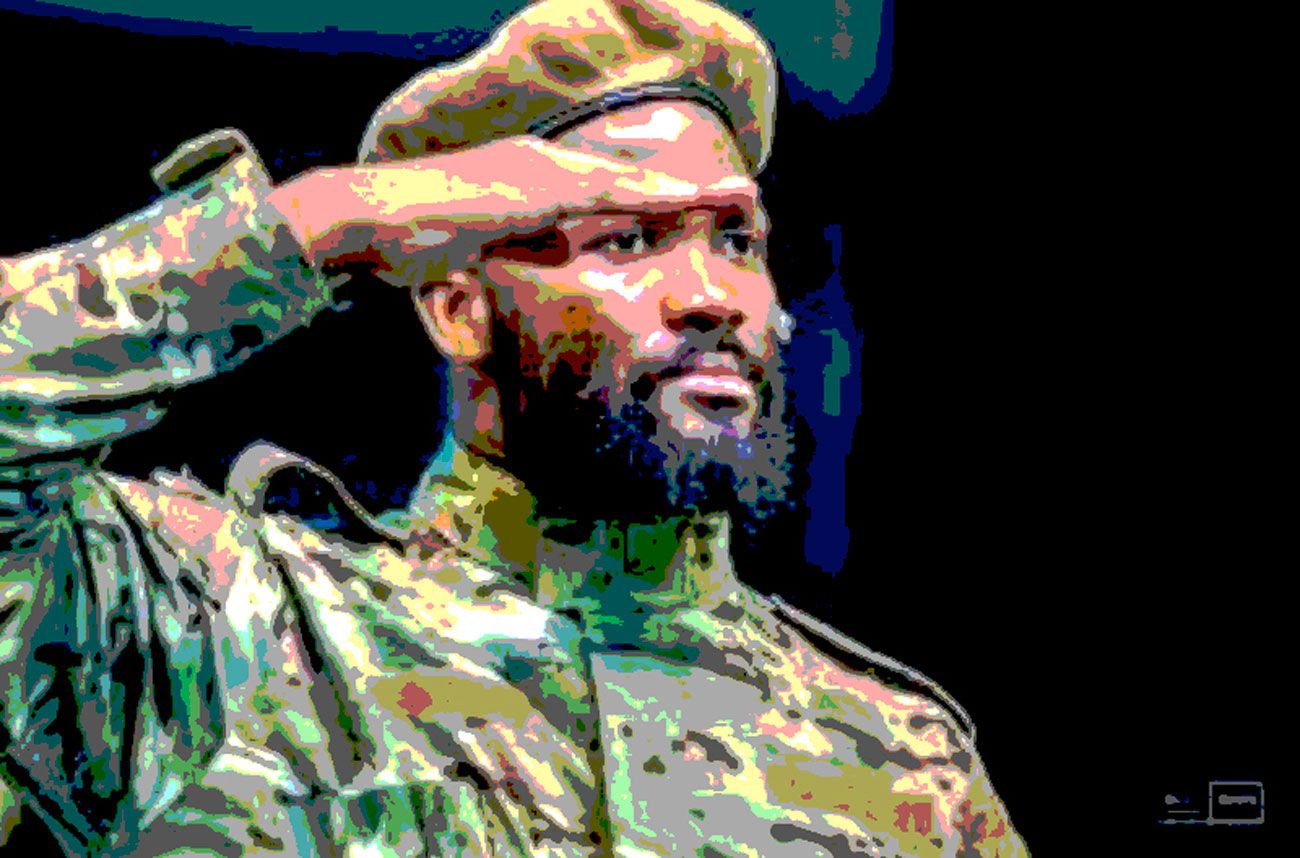
The Fatherland tells the life of Dr Tlou Theophilus Cholo, a Pedi freedom fighter whose story rarely appears at the centre of South African political memory. Played with a careful calibration of strength and gentility by Terrence Ngwila, Cholo’s life unfolds not only as a record of exile, torture, training and comradeship, but as a meditation on what it means to belong to a country more than to yourself. Yet what lingers beneath the politics is something subtler. In our conversation, Ngwila returns again and again to the idea of absence. “Often” he says “it is the most loving thing a parent knows how to do: to disappear so that the child might eat.” He speaks of it plainly: absence became normalised. And that sentence lands like a diagnosis – a way of life in which longing becomes ordinary. Perhaps out of that ordinariness grows a culture in which we begin to categorise our grief.
There is the grief we feel and the grief we perform. Performed grief is recognisable, acceptable, and there is in it the possibility of being consoled. The musical demonstrates this in a soldier’s desperate quest to return home to his wife; a mother pleading for grandchildren; a woman whose life collapses under the loss of work, the death of a child, the incarceration and torture of her husband. A grief that accumulates until it bursts into song – a full-throated, legitimised sorrow. But there is another grief – the grief that must be borne quietly. A grief so ordinary it becomes invisible. The kind that is perhaps truer in its mundaneness, and harder to name: the slow, self-effacing tolerance of absence…collective, pervasive, intergenerational. It is a relic of our struggle that lives without spectacle.
In retelling the life of Dr Cholo, The Fatherland gives substance to this quieter loss. It allows our shared and unacknowledged experience of absence in South Africa to finally take shape onstage. Written and directed by Aubrey W. Sekhabi, The Fatherland opens with a young Dr T. T. Cholo arriving in Johannesburg by steam train. The image immediately establishes the world we are entering: an early 20th century South Africa where industrialisation both enabled Black labour to move across vast distances and confined it through relentless surveillance and policing.
Cholo arrives in the city in search of work, and is briefly celebrated by fellow job-seekers for having completed Standard Six, a detail that already marks him as unusual among black men of a similar background. The production laces documentary footage between scenes in which Cholo recounts his childhood in Ga-Matlala, Limpopo, a rural landscape already buckling under the apartheid policy of separate development. He speaks of livestock dying and the land itself deteriorating. The environmental devastation becomes the first quiet call toward exile.
What becomes immediately apparent is Cholo’s instinct to question the terms of his survival. Soon after securing factory work, he begins to interrogate the inequities of the labour system, drawing fellow workers into conversation about exploitation and alienation. In keeping with Cholo’s historical record, the play depicts his role in unionising factory workers. This gesture seems to foreshadow the Marxist education he will later receive in exile. But the pulse of this transformation lies in Terrence Ngwila’s performance. His Cholo moves with a certain physical intelligence: the body shifts almost imperceptibly from deference to awareness.
As Ngwila explains, he began with the body. Early in the play, Cholo moves with the apologetic stoop of a man still asking permission to exist; later, the chest lifts, the gaze steadies, and authority settles into the spine. Only in the presence of his wife does he soften again into the tentative boy we first meet stepping off the train.
“From the moment I exited the train,” Ngwila explains, “ I felt myself become him.” And from that embodiment, a fuller picture of Cholo begins to take shape: a young man who leaves behind a mother in Ga-Matlala, a woman whose longing is not political at all, but domestic: that her son might marry, that the home might fill with grandchildren. As Ngwila observes, that desire is shaped by absence. Cholo’s mother belongs to a generation of women who were themselves forced to leave home in order to sustain it. Having lost the chance to mother her own child in the way she wished, she hopes to pour that withheld love into the next generation.
What complicates this wish is Cholo’s answer, delivered both as a declaration and as a song: “I don’t want an ordinary woman.” The line lingers. What is an ordinary woman? What kind of in-ordinariness does he require? At first, the play seems to offer a clear answer. In the following scene, Cholo encounters a willfull, educated woman in town, played by actress Siyakha Kitha. Her powerful vocals and formal schooling distinguish her immediately, and the audience is invited to assume that education is the marker of exceptionality. But Ngwila reads the line differently. For him, “not ordinary” has less to do with class or learning than with perseverance.
Cholo already senses that his life will not be lived at home. The struggle will invariably take him away from it. As Ngwila puts it, when Cholo says he does not want an ordinary woman, “it’s not about education or beauty… ‘ordinary’ refers more to the kind of life a woman might expect or want from a marriage.” He knows he will have to leave his wife, his children, his home, and so the kind of woman he’s talking about is someone who can live with that… Someone who can embody what he cannot embody in his absence.”
It is precisely this suspended condition that The Fatherland returns to again and again. In the musical, that condition finds its most poignant expression in the figure of Lilian Cholo.
Lilian Cholo, the wife who remains, joins the long ancestral line of women who wait. In her waiting, she will experience persecution for being married to a “terrorist,” endure a decade without contact from Cholo, and carry the loss of her son while her husband remained in exile. Which leads one to pause on the title: The Fatherland.
Why father-land, in a country whose freedom was so often sustained in the hands of waiting women?
The word itself carries troubling echoes: like Nazi rhetoric, militarised nationalism, and it sits oddly within a culture that has historically feminised the land. South Africa, in the world of the play, is not populated by conquering patriarchs, but by a host of waiting Penelopes, whose waiting is not without precarity. The title also recalls an earlier, explicitly Afrikaner-nationalist production called The Fatherland, which makes its reuse here feel even more jarring. The dissonance intensifies in the second half of the musical, when Cholo’s exile stretches across Angola, China, and the USSR, where he receives naval training. One of the most striking scenes stages South African freedom fighters training in Russia alongside comrades Small and Tall Sasha, a moment that electrified the audience, revealing how alive Soviet-era sentiment still is within our political imagination. Yet in the accompanying song, the Russians refer to their homeland as Mother Russia, positioning themselves against the German fascist regime, named pointedly as the Fatherland. It is therefore unsettling, perhaps unintentionally so, when South Africa is folded into this same song and given the same name. The contradiction feels too sharp to ignore.
Similarly, a visually arresting scene in The Fatherland stages a group of exiled South African soldiers undergoing military training in China. The sequence is among the production’s most decorative, but it also gestures toward a lesser-known chapter of the struggle: that some cadres received training in places not always foregrounded in our historical recounts. In the play, the episode reinforces Cholo’s tendency toward an unconventional path, a life that seems always to veer slightly away from the expected route. At moments the scene even feels as though it foreshadows the present — South Africa’s contemporary alignment with its BRICS partners suggesting historical continuity between the two nations. Yet the episode is introduced so abruptly that its placement feels almost arbitrary, leaving the audience uncertain whether the production intends a subtle counter narrative to the dominant critique of this alliance or merely invokes it as spectacle.
One of the most affecting sequences in The Fatherland centres on the Aventura, the ship of activists stranded at sea, trapped in a kind of political paralysis. The scene is unusually long, almost frustratingly so. The men pace the deck, rehearse ideology, argue, wait. Nothing moves forward. Yet that frustration is precisely the point. As the minutes stretch, the audience begins to feel something of the same suspended time experienced by the characters themselves. The scene transforms waiting into an atmosphere.
Yet, the women are not the only ones who wait. Exile is a long wait too. The play reminds us that Umkhonto we Sizwe never fully realised the military ambitions it once held.
Again and again, Cholo attempts to re-enter South Africa, and repeatedly he is denied. The country has become a fortress. Borders tighten; comrades disperse into camps and training bases; the movement begins to resemble a suspended life rather than a forward march. And then comes betrayal. Twice, Cholo is handed over. Twice, the struggle collapses into personal danger. He is arrested, tortured, and eventually imprisoned for sixteen years on Robben Island.
These scenes pull the greatest demand from Ngwila as a performer, and he admits that here, too, he felt a momentary convergence between himself and the man he was portraying. His performance does not attempt to reproduce Cholo’s torture literally –who was hung upsidedown and waterboarded. But the resilience is unmistakably felt. One audience member later remarked that “his sacrifice felt almost Christ-like.”
It was fascinating to watch young South Africans witness this scale of solidarity and resistance. The moment evoked the unspoken pain of those who came before us, and the true cost of a freedom we now inhabit so lightly, often without reverence.
The production also gestures toward another difficult truth: the ANC of that era was deeply infiltrated. Informants move through the story surreptitiously, unsettling loyalties, collapsing trust from within. Capitalist aspirations creep quietly into the movement too, already hinting at the ideological fractures that would later trouble the party that led the nation to liberation. The play stands as a mirror to our current republic. It asks, how far are we from what we were, can the spirit we once had be resurrected?