PIOTR BOCKOWSKI
Artaud’s media of corporeal decomposition
Abstract:
Artaud’s performative methods investigate the corporeal origins of thoughts just before the first abstract concepts are probed by fragmented language expression. In his paradoxical struggle with his own cognition, Artaud uses language against language in order to describe many conflicted intensities within his body. These intensities were mobilised to fight each other long ago, preceding Artaud’s birth and without ever giving him a chance to establish his own identity. Artaud destroys words with his embodied poetry in a desperate gesture to give an account of awkward physiological processes that aborted the primal meanings. Spirits, minds and intellects are exposed as monstrous bastard children of some metaphysical defecation of unhuman bodily entities. The human body is an unintelligible chimerical multiplicity, identified by nothing short of unconditional cruelty against itself.
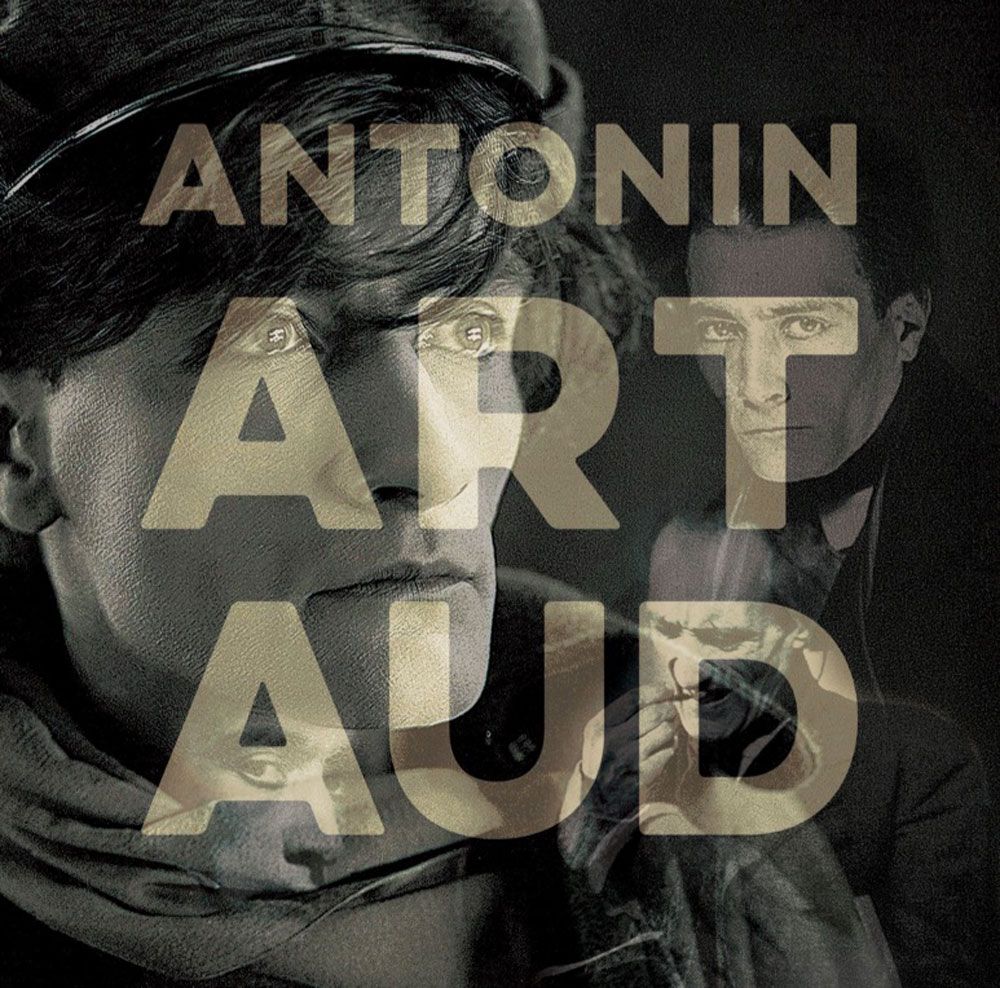
Antonin Artaud’s idea of writing can be described as the spreading of the fungal body. ‘The body’s spore-like trace is spread across the written page’, observes Stephen Barber in his book The Anatomy of Cruelty (2013: 7), which summarises his quarter century of research on Artaud and at the same time presents the most extensive research on Artaud in the English language. As Barber suggests, writing for Artaud ‘is a physical secreting, both savage and interrogative in its impact; it glances sharply off the body’ (Barber 2013: 7). This bodily perspective towards Artaud’s writing deals with concepts and ideas as essentially a bodily activity – a gestural compulsion involving a feverish performance of limbic incantations.
At the end of his life, before writing anything, Artaud would perform a routine of incantations with a sharp blade thrust into the paper pages of his notebooks, accompanied by pencil incisions and cigarette holes.
Writing here becomes a performance of respiration, insertion and ejection, piercing through and abjection of the membrane of the human body – which the written page is for Artaud. Moreover, ideas and thoughts in Artaud’s understanding emerge from the human body in a form of slimy discharge, as sweaty mucus. In this fluid figuration, he obsessively emphasises the primacy of the body before the word – as well as before the world. ‘For him, ideas are the voids of the body’ (Barber 2013: 25) just as various mediations of the world are. In his understanding, both the concepts and mediation techniques of language feed on the intense bodily performance, being born from transgressive acts of challenging the integrity of the human. ‘Strike to the death, beat the face to fuck, that’s the last language, the last music I know’, urges Artaud (quoted in Barber 2013: 201), proclaiming the violent gesture as a force of repetition that reinforces the obsessive act of formulating ideas. His method revolves around the urge to interrogate the raw material of the human body.
During his almost decade-long incarceration in mental asylums, Artaud was often seen hissing while taking notes and accentuating the reading of his notes with savage screams.
Demon-fighting, violent gesturing, humming and spitting – in this over-expression there is a certain sense of the self-annihilation of the medium of language in order to create an outlet for a raw bodily act. ‘I would like to shit blood through my navel to arrive at what I want’, states Artaud (quoted in Barber 2013: 134), while proclaiming ‘the new excremental language’, which is necessarily underpinned by anatomical suffering. Through this process, as Barber says, ‘this substance of physical debris and fragmentation could become a universally transmissible language’ (Barber 2013: 113).
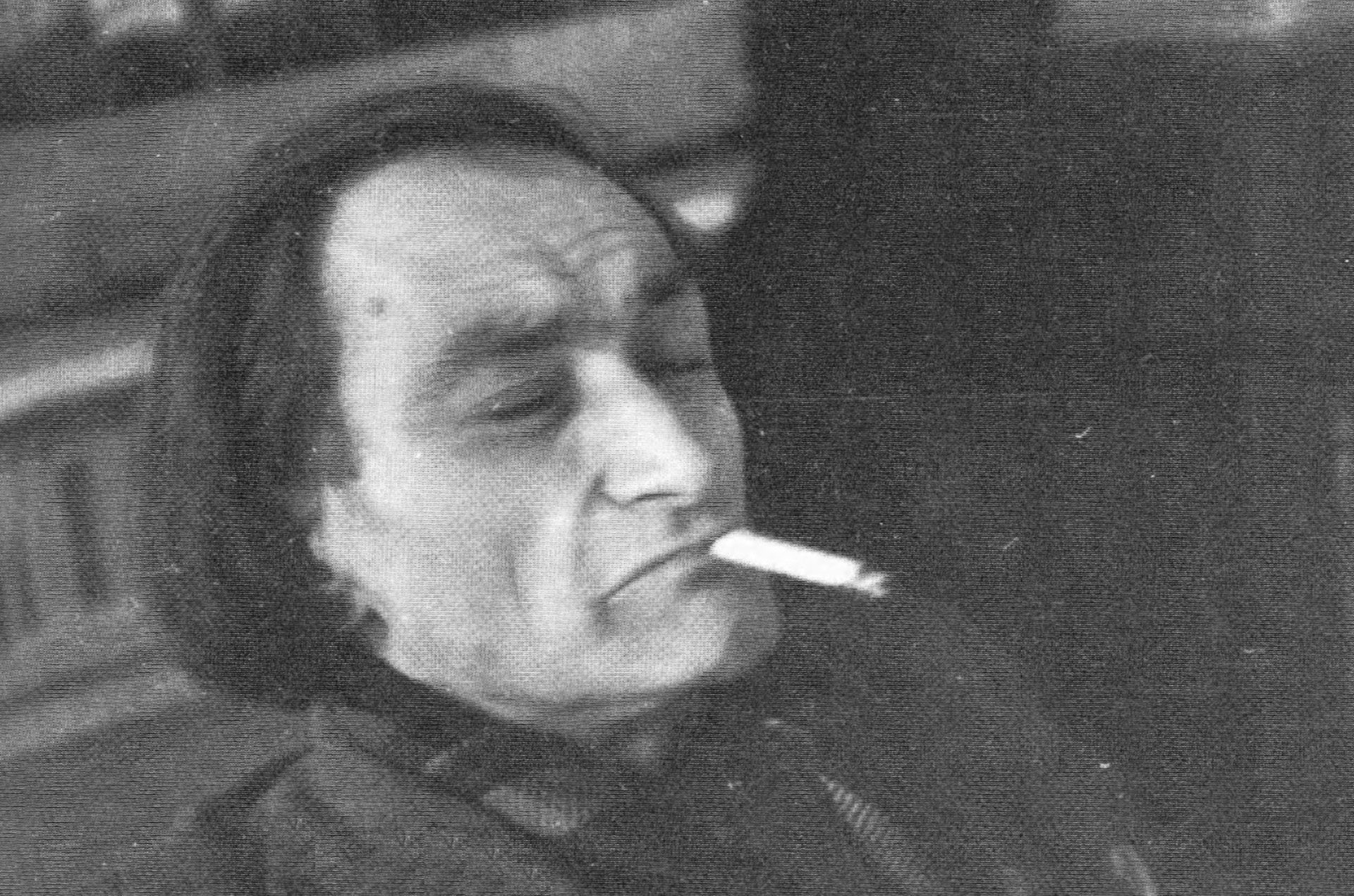
In his last and longest poem ‘Momo’ (Artaud 1995), written only a couple of months before overdosing on sedatives, Artaud offers a poetry of ‘psycho-lubricious thrust’ (Artaud 1995: 93), consisting of mucus, saliva, third-rate meat, ‘latrines of sublimity’ (Artaud 1995: 135), shit-death, syphilitic glands or resins, void of totemic orifice, penetration of toady belly, skeleton of impossible crossbreed, repulsive ancestors, cold gums, bone curvature, ‘seizure of the high pressure-trap’ (Artaud 1995: 103), slime membrane, toothless spittle, swallowing and chewing larvae and such. All of those bodily acts, states and performances manifest Artaud’s point that it is the vulgar body that makes things and ideas, rather than any kind of spirit or mind.
Philosophy is literally presupposed by the crap and crust of the stuffed feed of the body.
This excremental ancestry of thought is formulated as follows: ‘execration of the Father-Mother: intelligence came after stupidity / which had always sodomized it closely’ (Artaud 1995: 123). The very act of the sodomy of any thought by the body pulls any attempt at clean-cut sublimations back to their origin in the filthy mash-up of corporeal performance. Artaud’s manifesto ‘Shit to Spirit’ (Artaud 1965) screams that thoughts are parasites of the body. The medium of the body is being recognised in very close proximity to the body’s secreting glands. The mind’s information, ideas or ‘data might never have existed if the body, which at least sweated them out, had not been there’ (Artaud 1965: 99).
Drawing inspiration from Artaud, I suggest that, to understand media, we need to examine the intimate acts of leakage or discharge from the body, as well as forceful dirty penetrations between the body and its media, ‘for without the principle of sodomy there [is] nothing left for the spirit but to vacate’ (Artaud 1965: 100). The messiness of this cult of flesh and its anguish convey, on Artaud’s part, a thorough suspicion of, and disregard towards, writers. For him, writers are too smooth with words, managing to classify things all too clearly and trusting their own terms too much.
Artaud explains that through his method of constant painful expositions he becomes ‘the man who’s best felt the astounding disorder of his language in its relation to his thought’ (Artaud 1965: 37). There is no satisfactory representation possible in this model. There is no taking back of the errors of mediation. There is no purity of language either, at least none that can be valued as an expression, a position which is summarised by his description of the nature of the action of writing in the following terms:
‘All writing is Pigshit!’
He adds: ‘my hands and my feet, my guts, my heart, my stomach whose knots fasten me to the rot of life’ (Artaud 1965: 44). Artaud’s morbid obsession with excremental matter is symbolic of the primordial states of human and nonhuman existence. The creation of worlds and the formulation of words are both equivalent for him to the visceral acts of expulsion by the human body of all the entities that always betray the body. The human body also seems a mask for nonhuman body entities.
This obsession also introduces the question of microbial organisms that live inside the human body and that create the human from within into Artaud’s conceptual framework.
It could be said that Artaud’s writing directly touched electronic media when his written words transformed into screams during the censored radio transmission To Have Done with the Judgement of God (Artaud 1995: 281) at the very end of his life.
His offensive shriek was a self-proclaimed bestial and aborted caricature of language, attacking the preciousness of language as a meaning-making entity. Artaud wished for his screaming language to turn into a plague, infecting others like a virus through the electrical wires and electromagnetic waves of radio transmission. This feverish replication, fragmentation and dispersion into new media would be the strategy of making the world grounded in his body and not separated from it. He writes about the world as something not yet created but rather as an ongoing process of bodily transformations. Artaud’s world is described as a wound or an orifice that aborts humans or even defecates them (Artaud 1995: 256). It is also described as the bestial mouth or gland that spurts the human body as alien spittle.
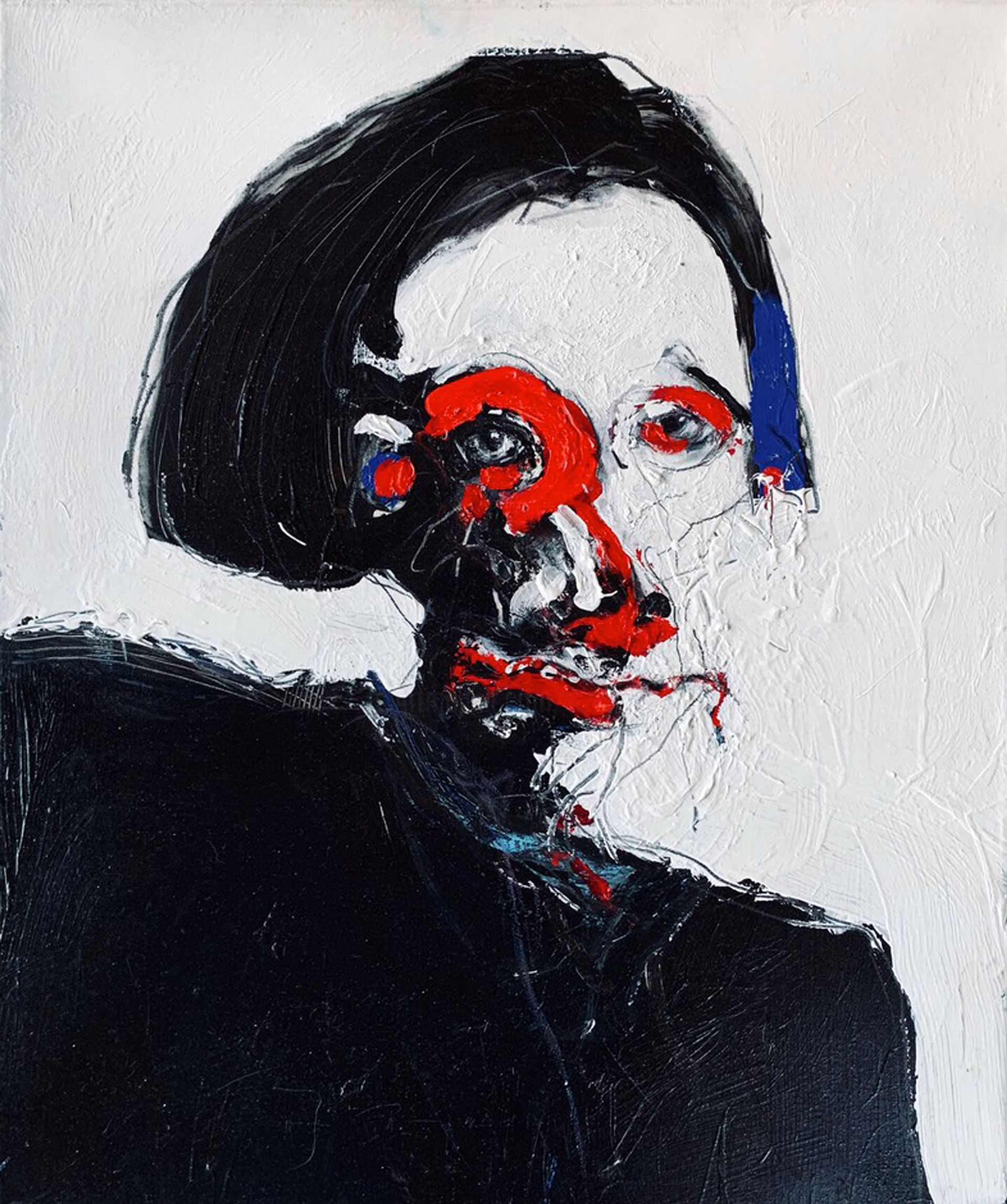
For Artaud, the integrity of human bodies is bound to be ultimately transgressed into multiple selves in motion, which are fragmented and morphing, assuming in the process the shape of an entity of phantom limbs which fight among themselves. The mass media loop figuration, which the radio transmission was supposed to embody for Artaud, was conceived by him as a technological incarnation of his incomprehensible true language, going beyond the meaning of the written word and towards the electrically accelerated violent gesture, to the point of exhaustion. As ‘language starts with the body and hits back against the body […] the body’s action must bypass the mental processes’ (Barber 2013: 168) with the aid of media acceleration. This acceleration was sometimes envisioned by Artaud in terms of an ‘artificial death’ (Barber 2013: 165), as manifested in ‘his belief that when he died, his body would explode into flames and into fragments of multiple new bodies’ (Barber 2013: 159). This fragmentation could arguably represent his intended media presence, such as the radio broadcast that he perceived ‘literally to be a physical transmission’ (Barber 2013: 164), with the ‘scream made new, vivid flesh’ (Barber 2013: 164) multiplying through the electronic medium of the radio. Additionally, elements such as noise effects from the transmission pushed for an even greater meshing of language with the body. The immediate and physical transmission serves to intensify Artaud’s screaming body, when he proclaims that ideas in themselves are nothing, only corporeal pain counts as something, as it ‘wants to get out’ (Artaud 1995: 290).
This ecstatic urge against language becomes a manifesto of an impossible dance during Artaud’s radio transmission, a dance that negates any definite formulation of language.
Standing against language in To Have Done with the Judgement of God, Artaud poses the question of god in order to render it into a question of the raw substance of dark materiality. He muses: ‘Is god a being? / If he is it is made of shit’ (Artaud 1995: 294). For Artaud this excremental deity is not a super-identity pertaining to religion but rather a monstrous entity of rot that animates life beyond and even before human comprehension. This intuition must have something to do with Artaud’s frequent complaint about alien creatures devouring his anus (!). Being for him is not an intelligent conception or a designed creation but rather microbial goo squeezed out and milked: suffocating, smelling, obscene. To acknowledge this is to understand the essential meaning of his Theatre of Cruelty project, where ‘cruelty’ means ‘the bestial risk of unconscious human animality’ (Artaud 1995: 305), which decomposes the integrity of humans and opens microbial voids within their bodies:
for, laugh as much as you wish, what have been called microbes is in fact god.
(Artaud 1995: 305).
That ambiguous entity of microbial bodies within humans is also what seemingly accelerates in the mediation process of Artaud’s body screaming into the radio transmitter.
By developing a parallel between Artaud’s concept of the body and the new media context in which it can be productively located, Stephen Barber’s chapter ‘The digitised body of Antonin Artaud’ points out how the mediated body ‘remains distinctively extant only in the form of its most obstinate and anomalous residues’ (Barber 2013: 231). Barber proposes that Artaud’s quest for the immediacy of corporeality finds its unexpected realisation in the mediation of the human body on the Internet and in other new, electronic media. Here and now Artaud’s urge is thus actualised in ‘a corporeality enmeshed and disintegrating within digital environments, in perpetual flux, and possessing elements of persistent irreducibility in its most elusive or deviant manifestations’ (Barber 2013: 232).
The multitude of deviation was urged by Artaud as a form of a new raw presence of the body, which can be interpreted through Jay Bolter’s and Richard Grusin’s theory of remediation (Bolter and Grusin 2000). Their concept describes the twin logic of new media with the complementary categories of immediacy and hypermediacy. Hypermediacy is the process within mediation that involves a proliferation of the feverish multiplicities of mediated bodies, when at the same time the process of immediacy seeks new forms of the direct presence of the body via mediation techniques. Both processes are intertwined and are remaking each other – a process called remediation by Bolter and Grusin. Remediation for them involves an attempt by the human body ‘both to multiply its media and to erase all traces of mediation: ideally, it wants to erase its media in the very act of multiplying them’ (Bolter and Grusin 2000: 5).
Online, the human body can burst into fragments and find its new anatomy of a thousand forms, at the same time assuming a new intensity of technological presence. This bursting mutation and the new anatomical dynamism are famously called by Artaud the ‘body without organs’, which is further described in his radio transmission as ‘dancing inside out as in the delirium’ (Artaud 1995: 307). This delirium seems nevertheless infected with microbial bacillus, which animates it into ‘a rhythm which transcends the Dance but seems graphic of Disease’ (Artaud 1965: 77).
The paralytic shiver, or ecstatic delirium, can be described as the vision of Artaud’s electric media that transcends the human body defined by its organs.
In many ways this vision has its cruel and dramatic grounding in his experience of having received 52 electroshocks in mental asylums. There, the electroshocks served for him as an unwitting performance of the body’s decomposition into an electric medium, resulting in the aforementioned artificial death. He describes the experience in his painful testimonies:
Thus wrung out and twisted, fiber on fiber, I felt myself to be the hideous corridor of an impossible revulsion. And I know not what suspension of the void invaded me with its groping blind spots, but I was that void, and in suspension, […] I was nothing more than a spasm among several chokings (Artaud 1965: 182).
The violence of such crude technology applied to Artaud’s body ended up enacting a grotesque form of a new human corporeality that became his ultimate obsession. The bundle of spasms and choking suspended within a void tragically revealed the rawness of the intense bodily experience that he went on to recount numerous times in his writings. Searching for new impossible anatomies, negating both language and image, Artaud would express in his notebooks a desire for radical nonhuman sexual mutations (Barber 2013: 183) – mutations that could perhaps be seen as technological and/or fungal – as fungi arguably embody the monstrosity of microbial acceleration. Artaud challenged himself by saying ‘it is I who […] tore my body from myself and battle against what is left of it’ (Artaud 1965: 187). What seemed left of it, I suggest, was the media proliferation of his body into the residue of processes, which I would call ‘fungoid performance’.