ORLANDO VIEIRA FRANCISCO
Flags of Other Winds: Decay, Resistance, and Infrastructural Entanglements
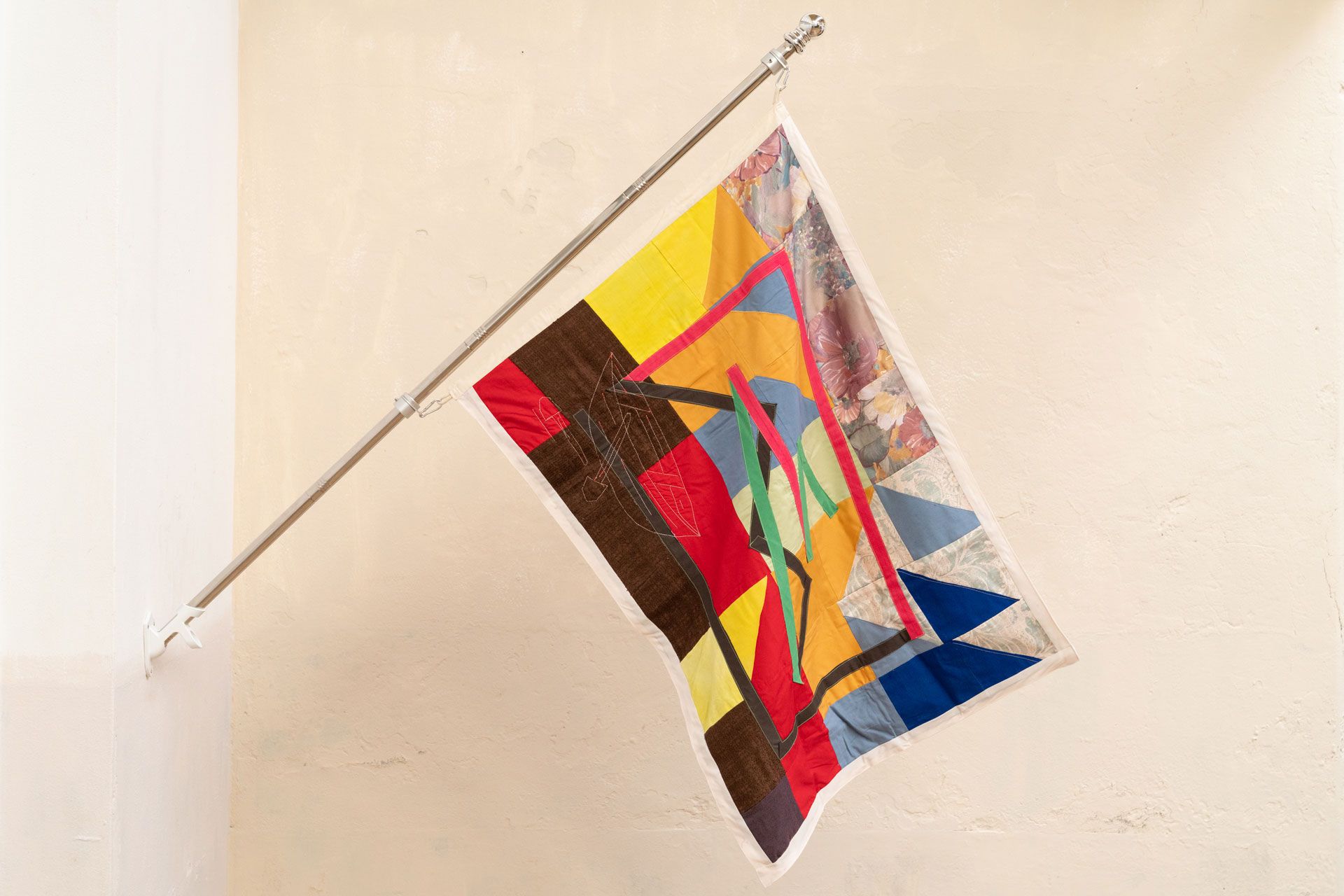
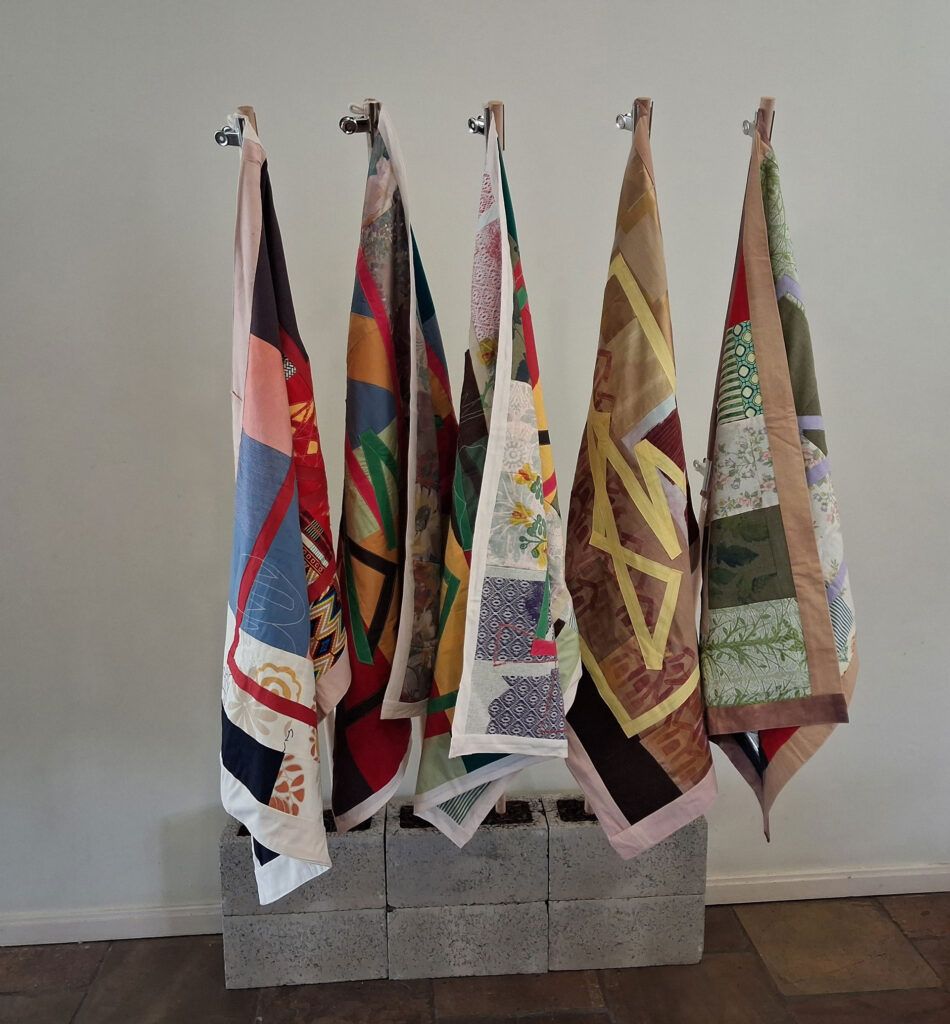
Flags of Other Winds emerges from the artistic research project From the Top of the Mountains We Can See Invisible Monuments, developed at the Faculty of Fine Arts of the University of Porto (i2ADS – Research Institute in Art, Design and Society). The work unfolds as a series of five textile flags produced in collaboration with the Bandim Cooperative of Immigrant Women, based in Sintra, Portugal.
The project began with a simple material condition: leftover fabrics from the cooperative’s daily sewing production. Fragments, remnants, discarded textiles. These fabrics carried traces of migration, labour, geography, and everyday life. Their textures and colours became part of a broader reflection on territory, infrastructure, and the social production of space.
The flag, as an object, occupies a contradictory symbolic field. Historically associated with territorial identification, state power, military expansion, and occupation, it also functions as a device of communication, movement, and collective recognition. The work departs from this unstable condition of the flag: an object suspended between belonging and domination, between visibility and violence.
In Portuguese, the word bandeira means “flag,” but it also evokes the historical figure of the bandeirantes: colonial expeditions responsible for territorial incursions across Brazil between the sixteenth and nineteenth centuries. These expeditions advanced through indigenous territories, expanding colonial occupation and the extraction of resources. This historical dimension became particularly relevant within the broader research process surrounding the occupation of the Atlantic Forest in Brazil and the infrastructural transformations imposed upon its landscapes and populations.
Over the past years, the research project has examined the environmental and social consequences of large-scale infrastructures, particularly in South America and Europe. Dams, mining operations, ports, industrial corridors, roads, pipelines, and developmental policies appear not merely as technical systems, but as spatial instruments capable of reorganizing territories, ecologies, and forms of life.
Within this context, Flags of Other Winds proposes a visual and material response to these transformations. The first appearance of the flag element within the research occurred in 2018, during a walk-performance in Porto. The action referenced the history of a Danish oil tanker that exploded off the northern coast of Portugal in 1975 while carrying approximately eighty tons of oil. The event became an early symbolic entry point into questions surrounding infrastructure, environmental catastrophe, circulation, and territorial memory.
Years later, the collaboration with the Bandim Cooperative allowed these concerns to expand into a collective textile practice. Before the production of the flags, short statements, reference images, and colour palettes were shared with the participants. These materials functioned as open structures capable of generating interpretation and dialogue. The making process unfolded through negotiation, conversation, improvisation, and individual decision-making. Each seam, overlap, and fragment became part of a broader compositional language.
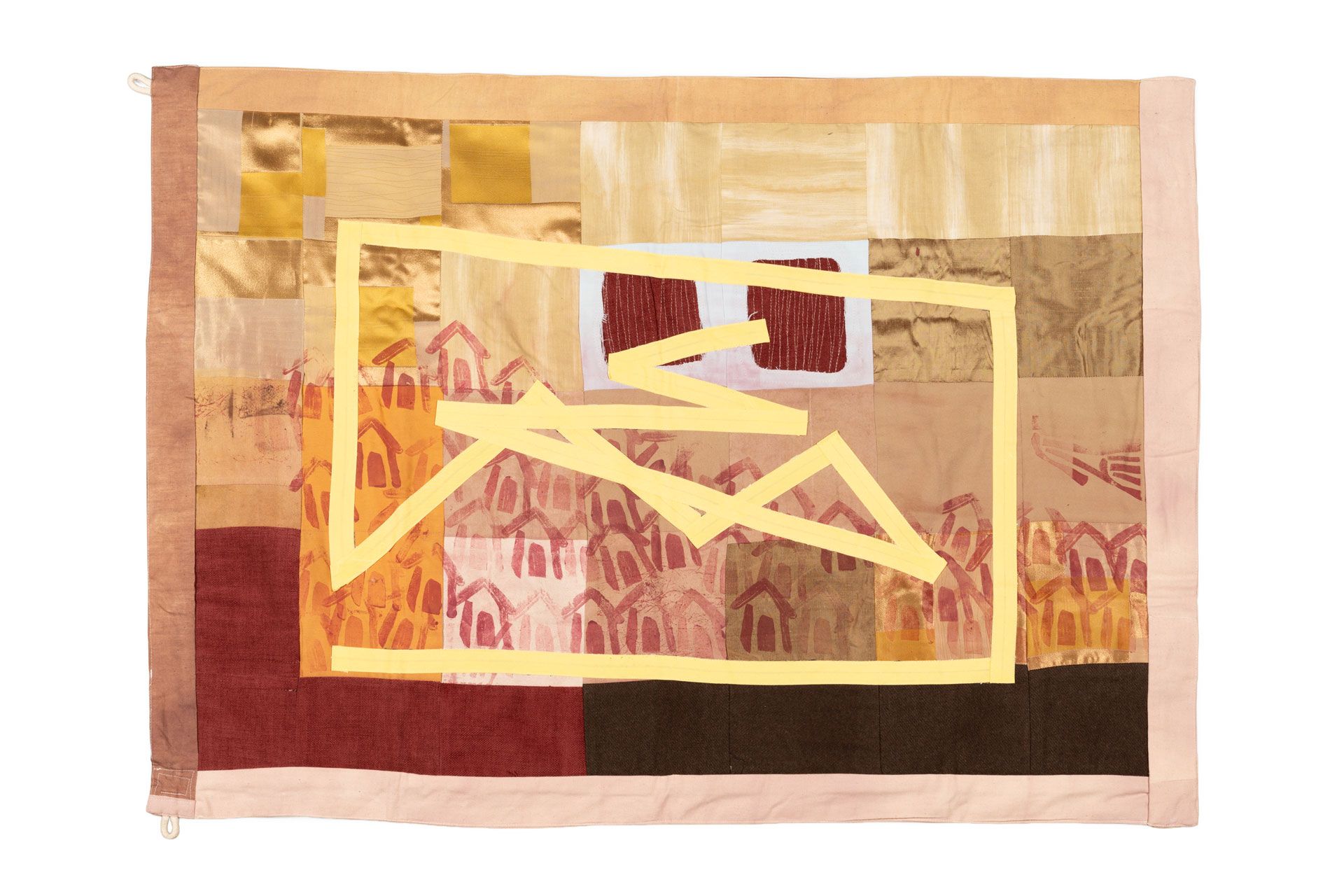
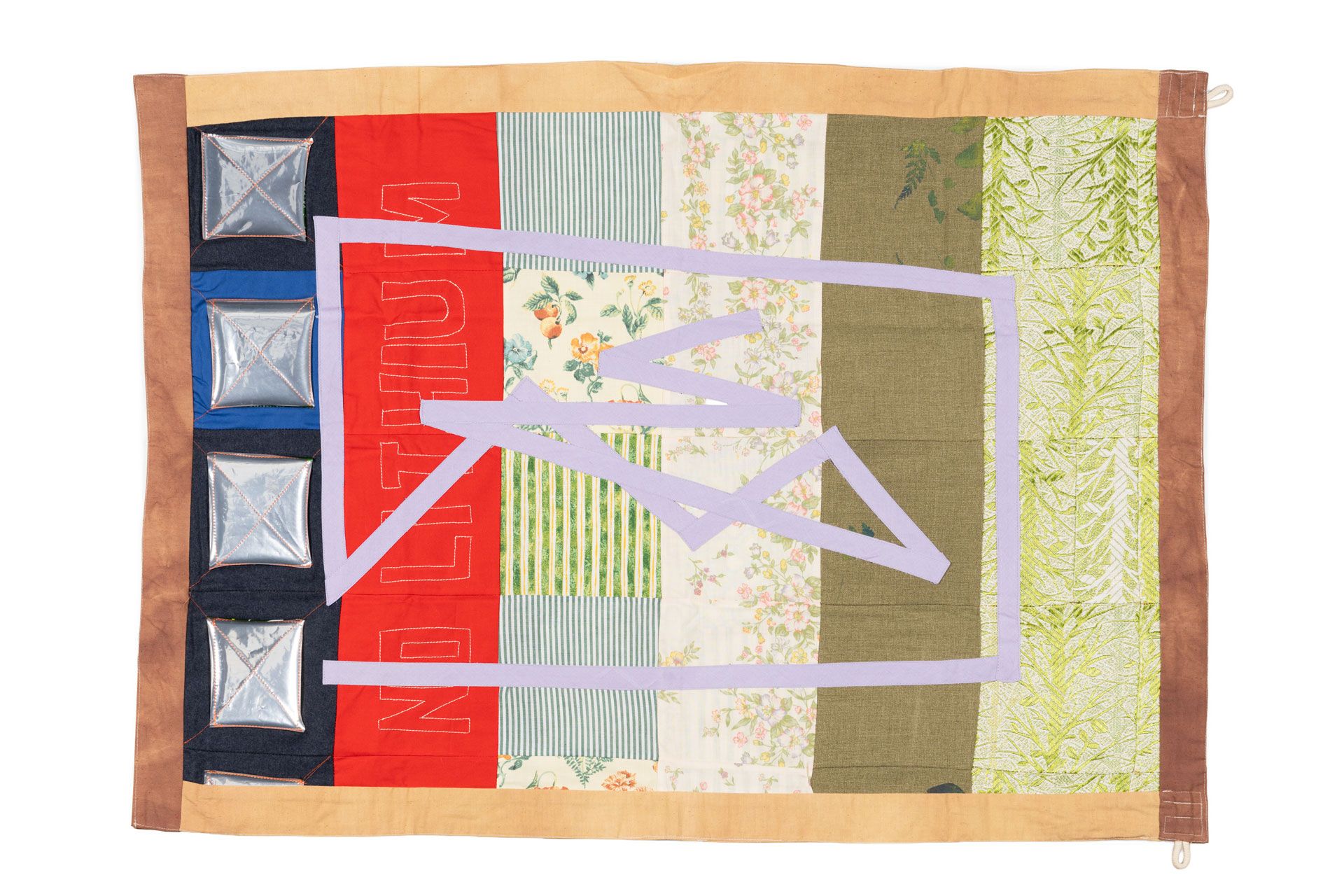
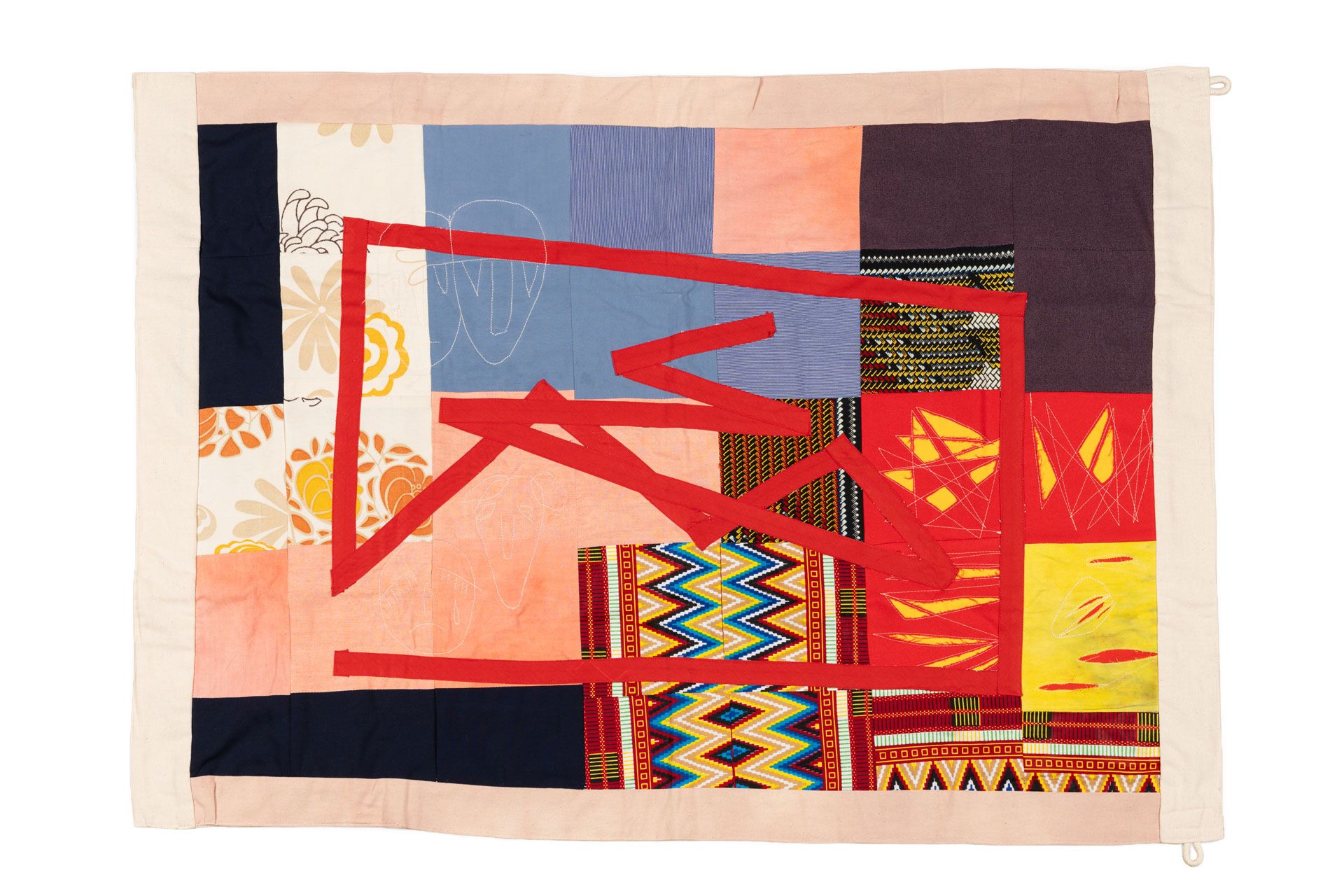
The five flags address different but interconnected contexts. Flag 1 engages with personal and family archives, proposing a more intimate relationship between memory and infrastructure. In this case, the research also implicates the author’s own family history. Rather than occupying an external analytical position, the work acknowledges the impossibility of neutrality within histories of occupation and environmental transformation. Flag 2 reflects on institutional archives and the role they play in constructing official narratives surrounding territorial, environmental, and social justice.
Flag 3 flag addresses recurring environmental crimes in Brazil, particularly the collapse of the Mariana dam in Minas Gerais in 2015, which devastated the Doce River ecosystem over hundreds of kilometers. One of the central visual references for this piece was the image of a house destroyed by toxic mud while still preserving family photographs on its walls — a suspended fragment of domestic life surviving within catastrophe.
Flag 4 engages with contemporary forms of extractivism and infrastructural violence: lithium extraction, rare earth mining, illegal mining operations, and oil exploration projects that continue advancing despite resistance from local populations, Indigenous communities, environmental organizations, and scientific warnings.
Flag 5 focuses on resistance movements and collective organization. During the development process, this theme became inseparable from the presence of Milene Pereira, one of the collaborators from the Bandim Cooperative, who had previously participated in Brazilian social movements before migrating to Portugal. Her participation shifted the collaborative process beyond textile production alone, introducing lived political experience into the work itself.
In this sense, the project emerges through encounters between different experiences of migration, labor, territorial displacement, and political engagement. The flags become less symbolic representations and more relational surfaces through which these trajectories intersect.
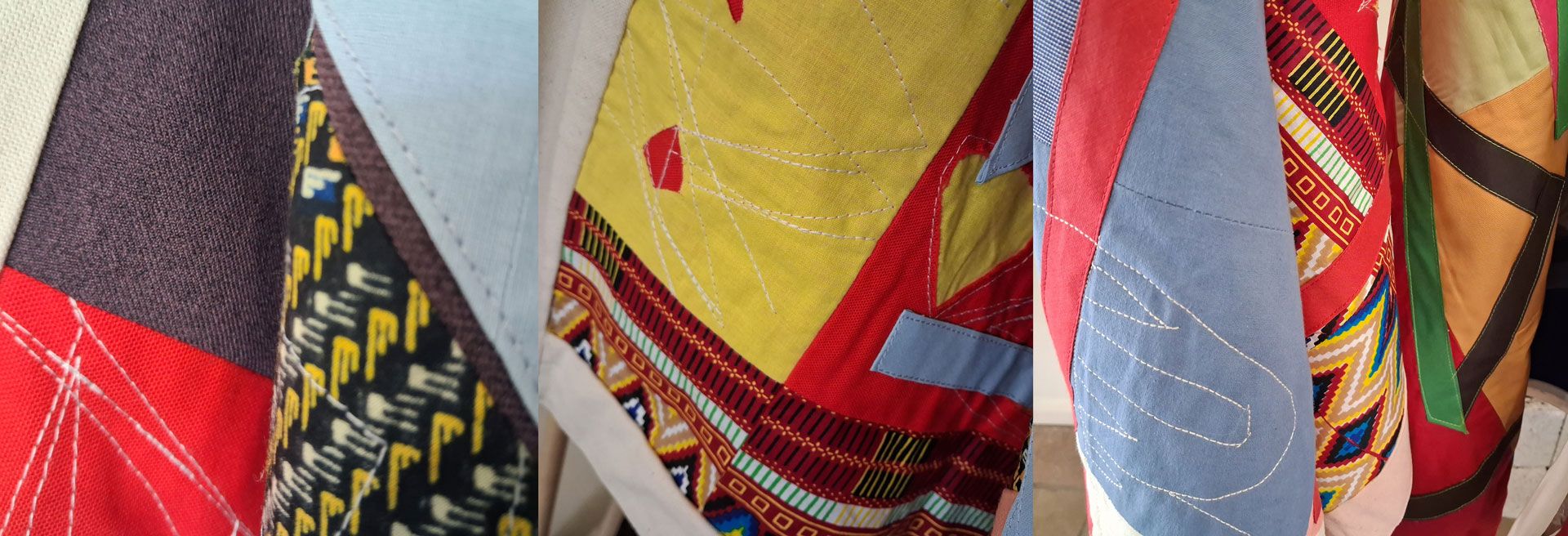
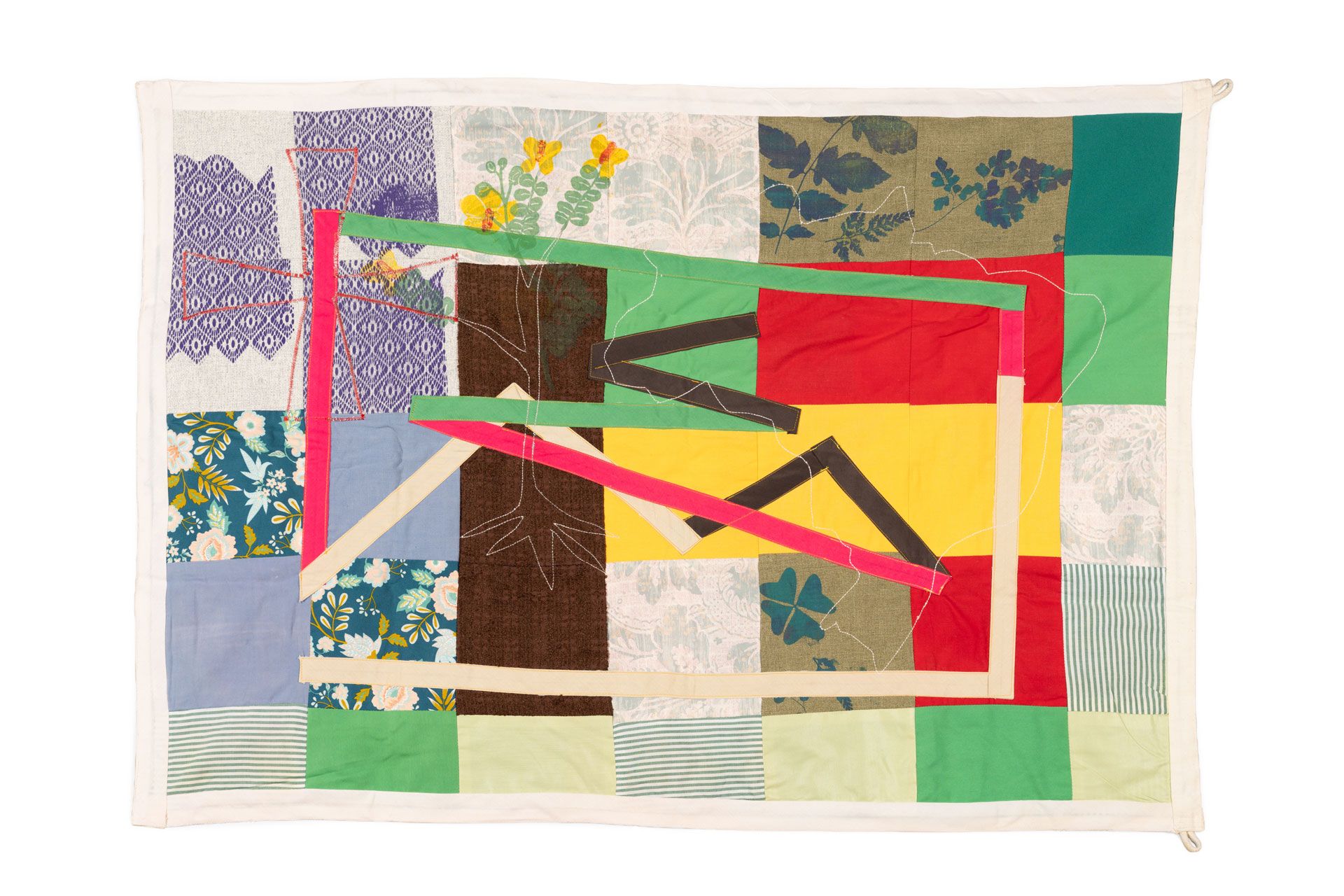
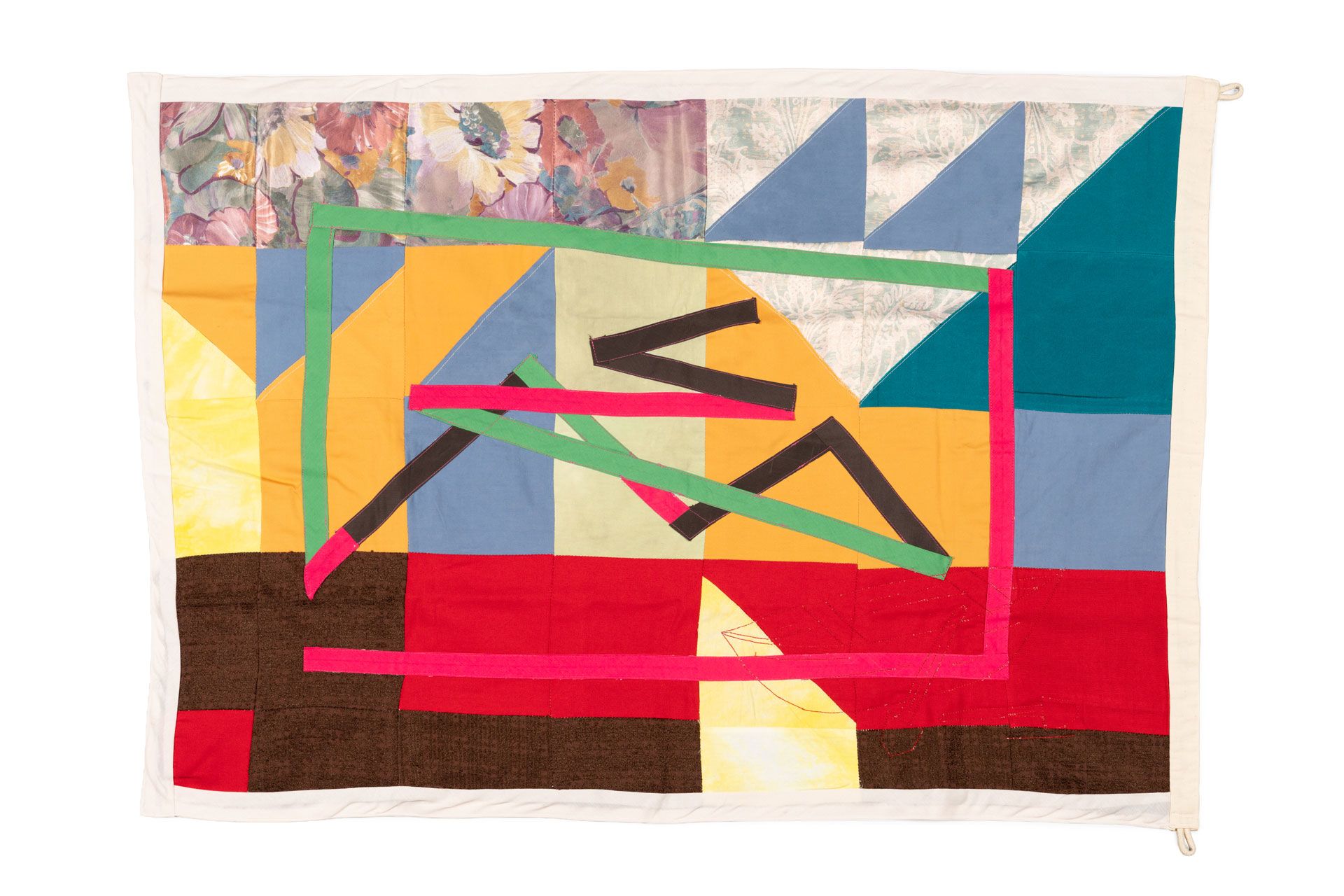
Materially, the works retain visible seams, overlapping fabrics, stamp marks, and screen printing. Rather than concealing fragmentation, the project foregrounds it. The flags refuse visual unity as a fixed condition. Up close, they reveal isolated textures and discontinuities. From a distance, however, collective structures begin to emerge.
This tension between fragment and composition became central to the work. The textile surface operates almost like a social landscape: plural, layered, and constantly negotiated.
Flags of Other Winds does not propose flags as symbols of nation-states or fixed identities. Instead, the project imagines flags as signals of other winds: fragile carriers of memory, displacement, resistance, and collective imagination.
The works attempt to inhabit a space where infrastructure, territory, migration, and ecology can be read not as isolated conditions, but as entangled realities continuously shaping one another.
And perhaps this is where the project remains suspended: somewhere between ruin and continuity, between fragmentation and collective form, between the violence of imposed territories and the possibility of imagining other future landscapes.