THOKOZANI MTHIYANE
Fragments (Memory of others)
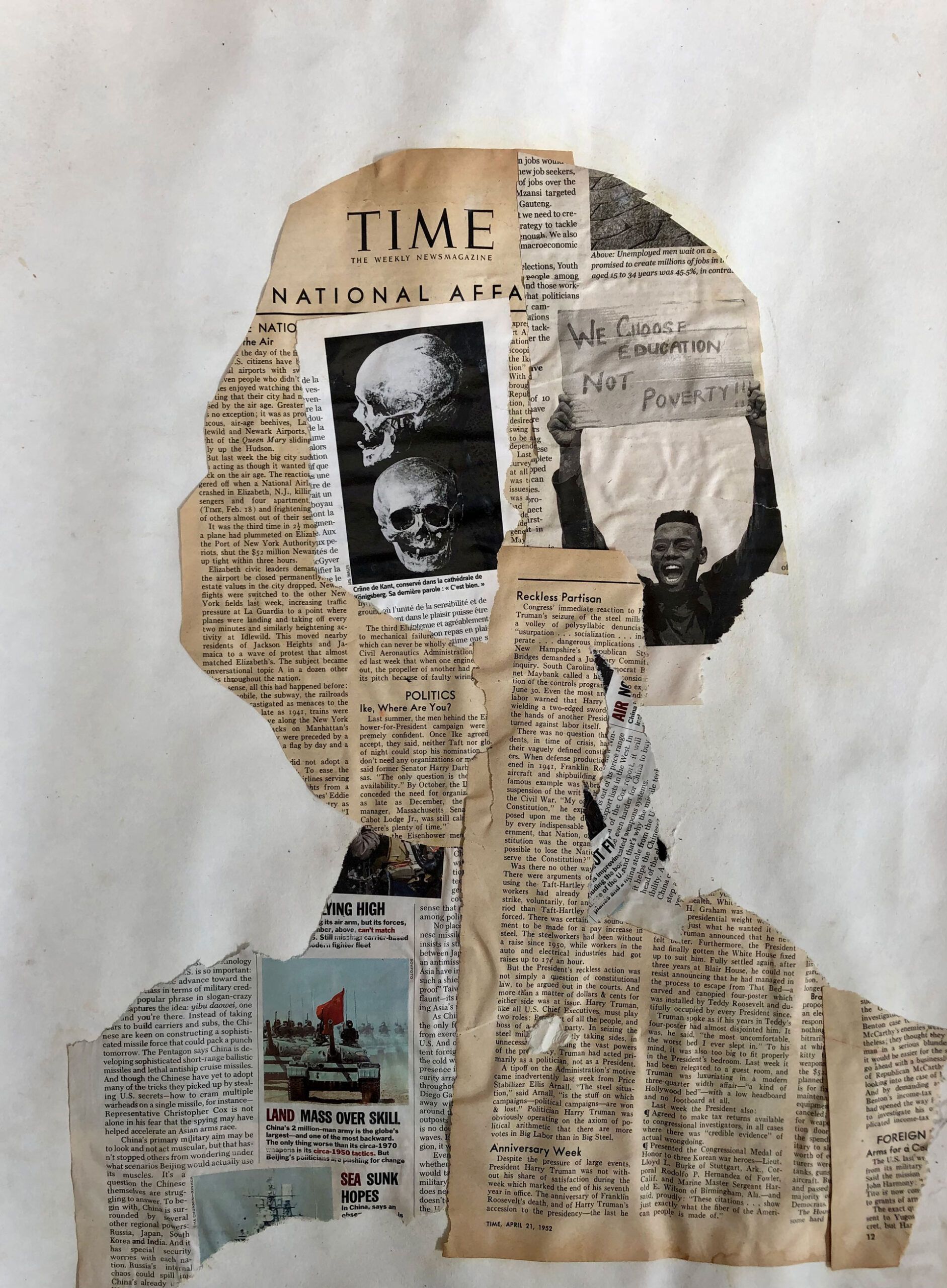
The earth is sinking.
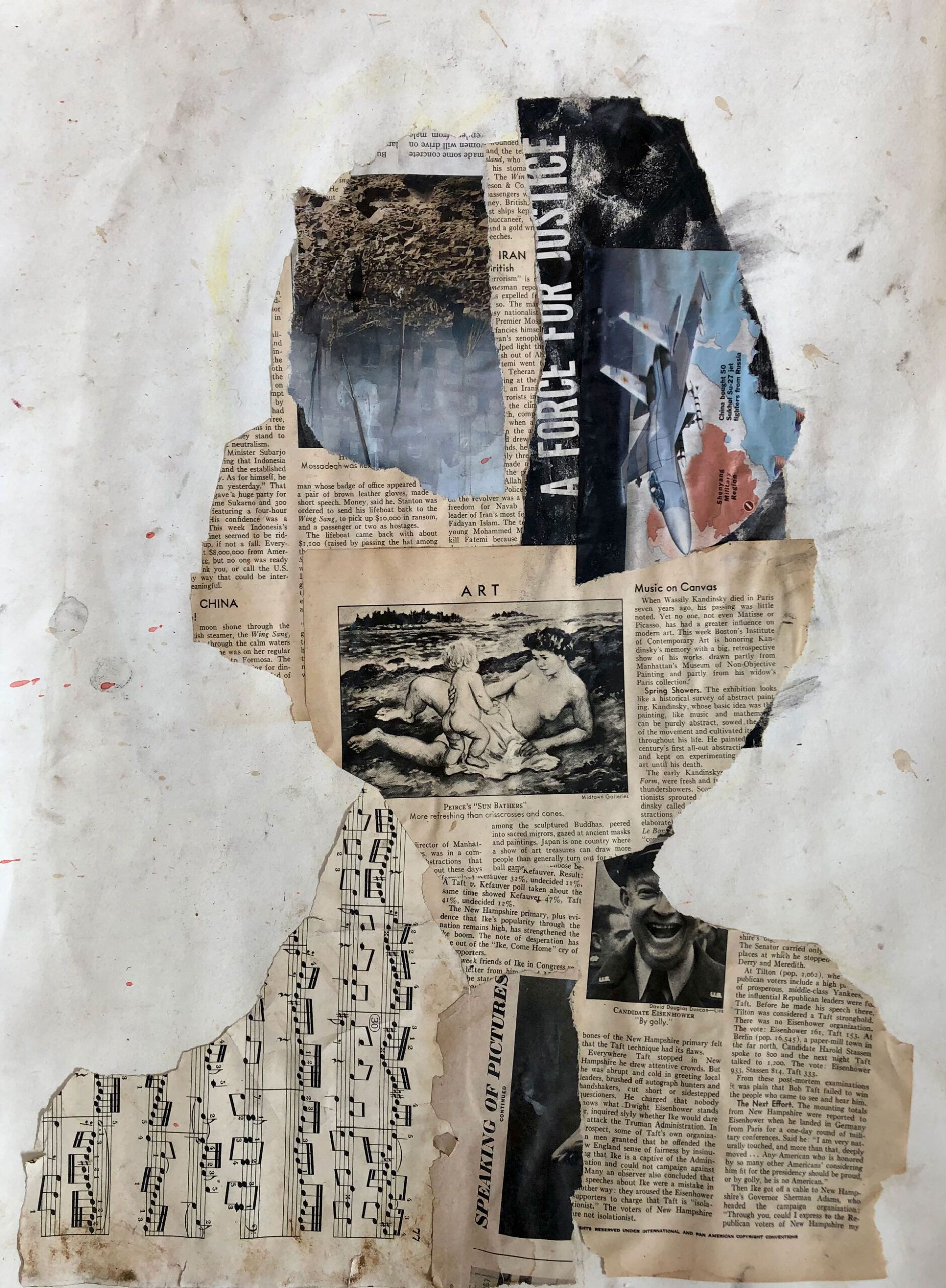
The voices of the wise and sane
Are drowning beneath the weight
Of steel skies and burning seasons.
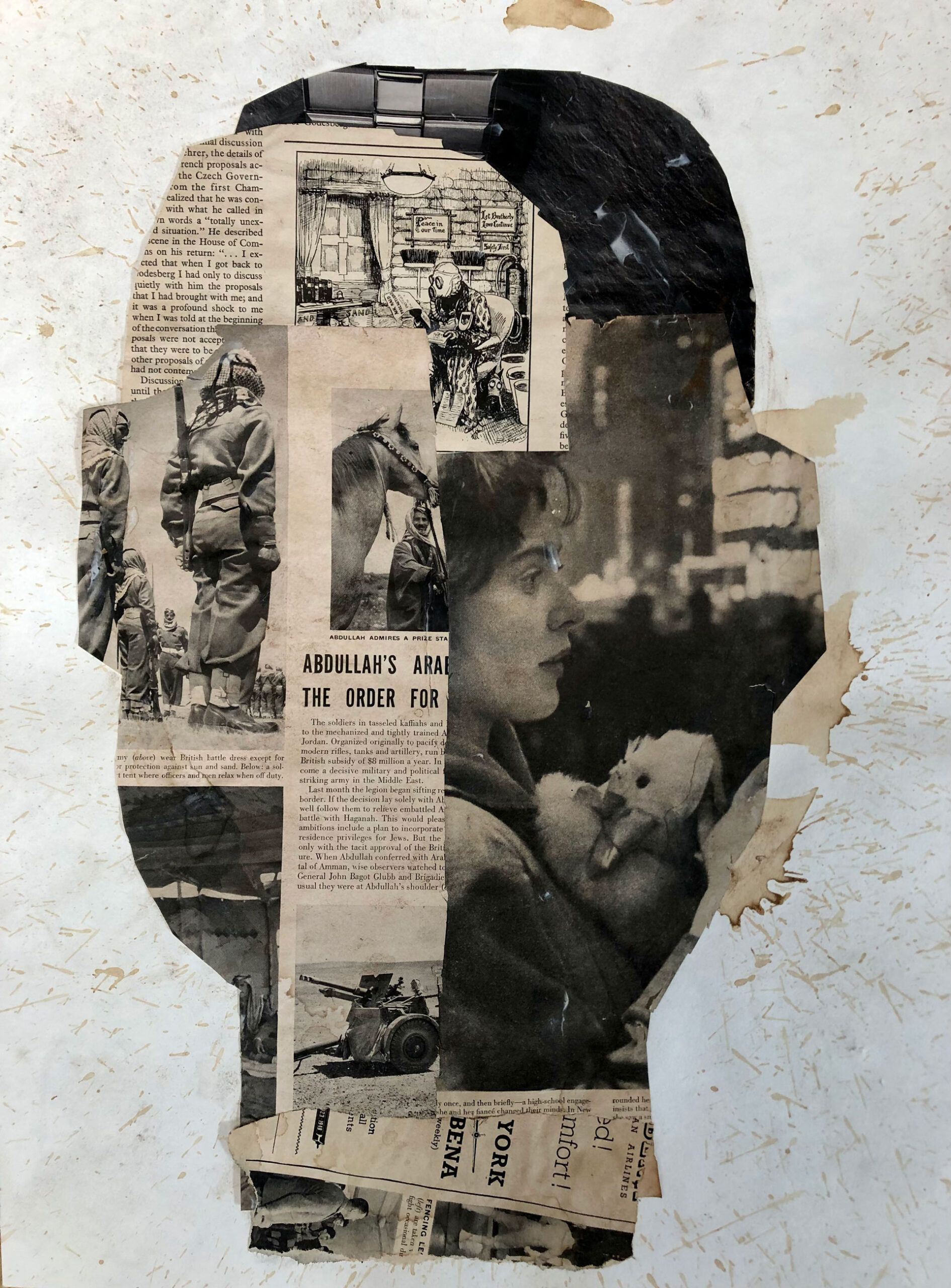
While the devil’s choir
Sings hymns through broken speakers,
The streets kneel under smoke,
And children draw ghosts in the dust
Of abandoned buildings.
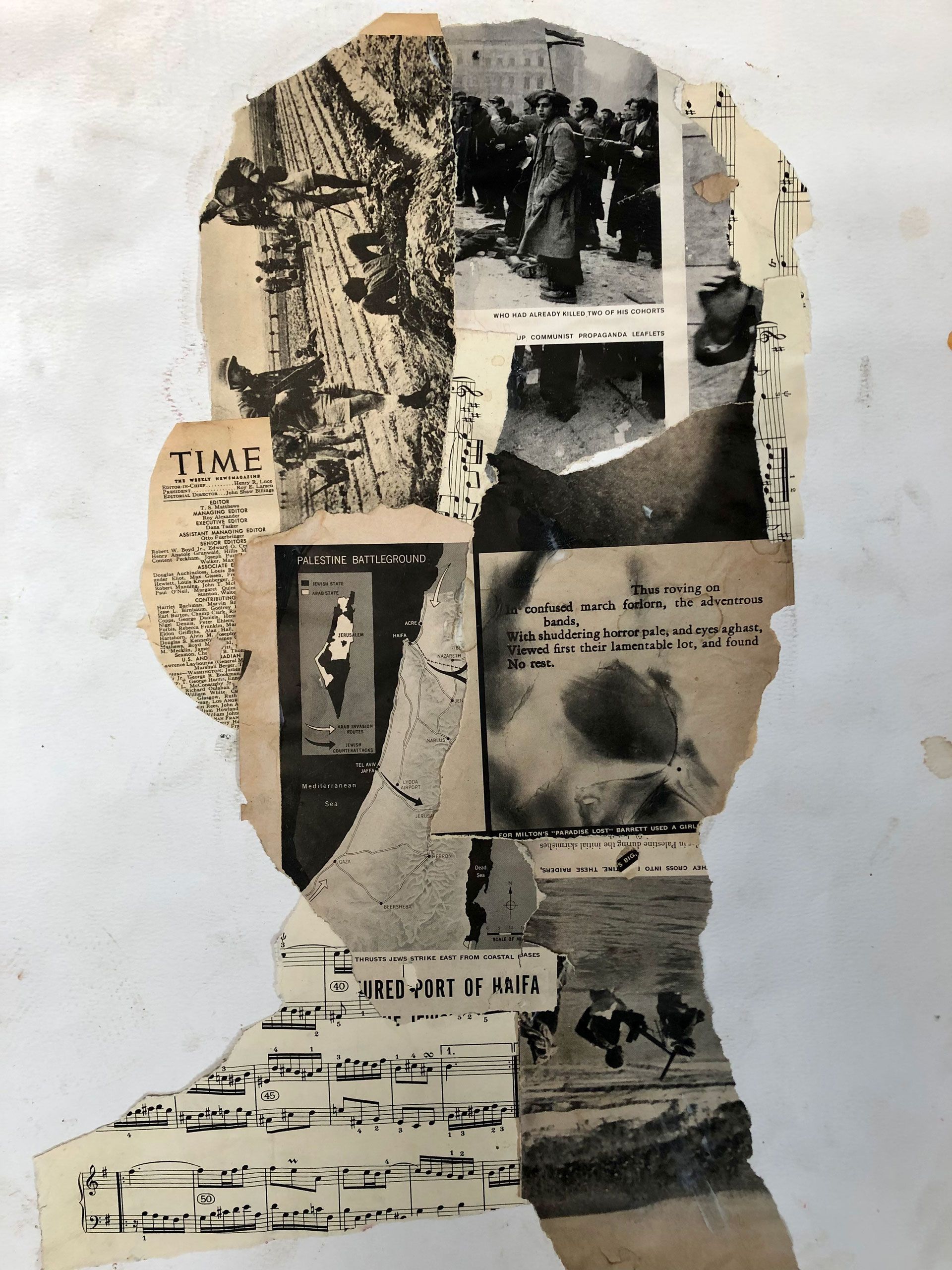
The skies open
With clouds of flame and ash,
And Cézanne’s skulls melt slowly
Under the rubble of forgotten dreams.
The statues crack.
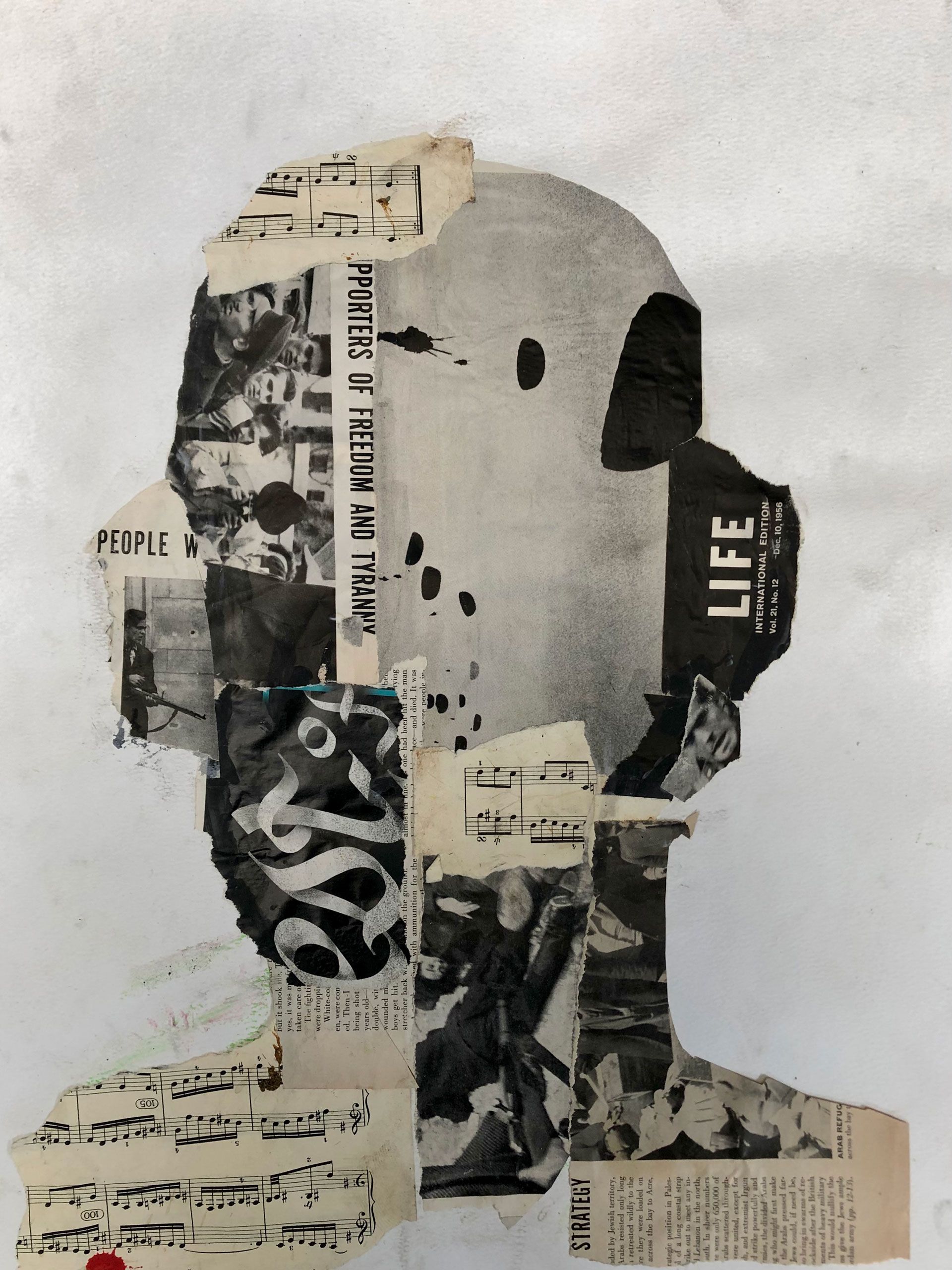
The prophets cough blood into the wind.
Even the birds have forgotten
The direction of home.
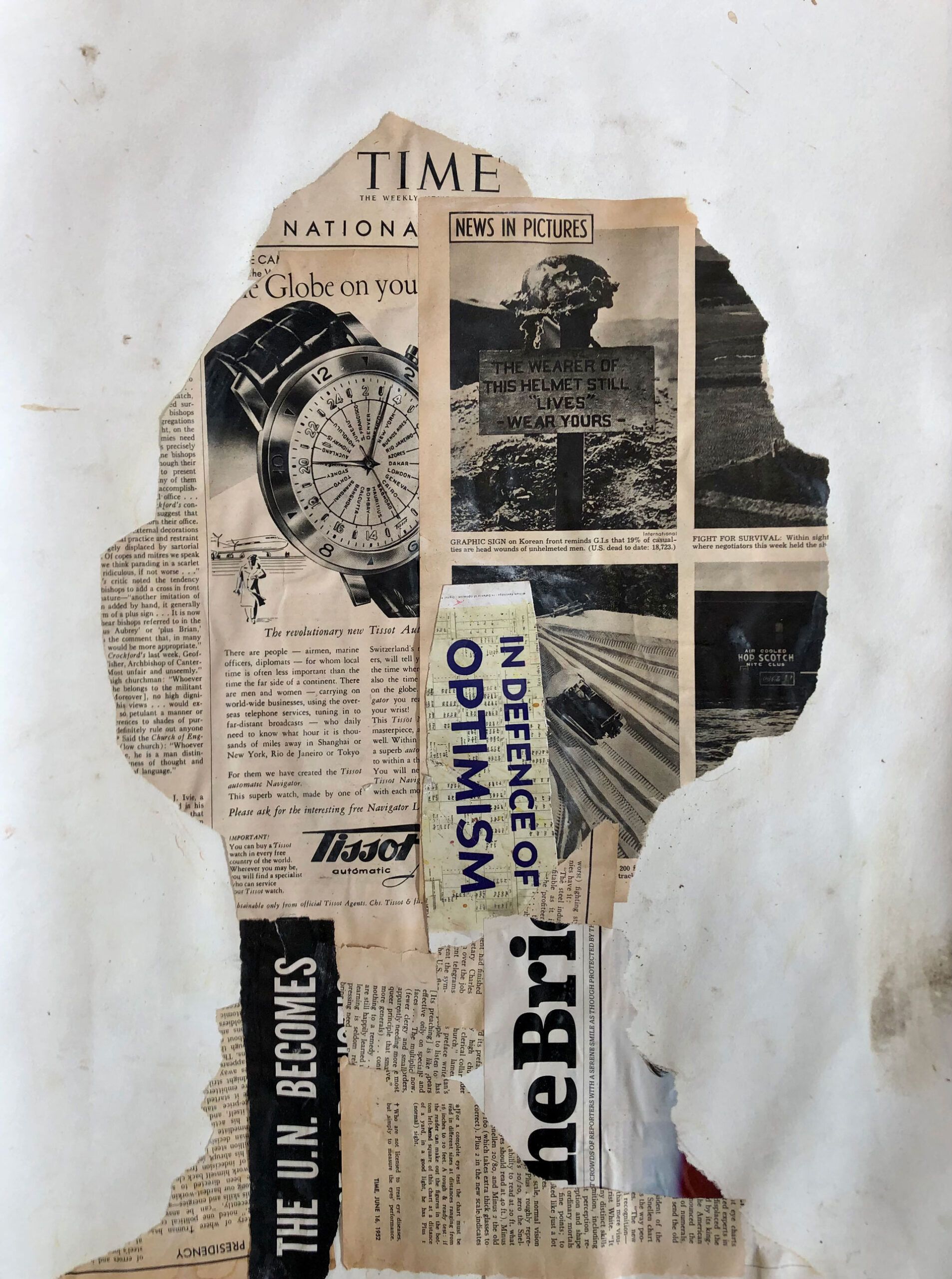
The apocalypse is here, they shout.
Can’t you hear it?
In the sirens at midnight,
In the trembling of bridges,
In the silence between neighbours
Who no longer recognise each other’s pain.
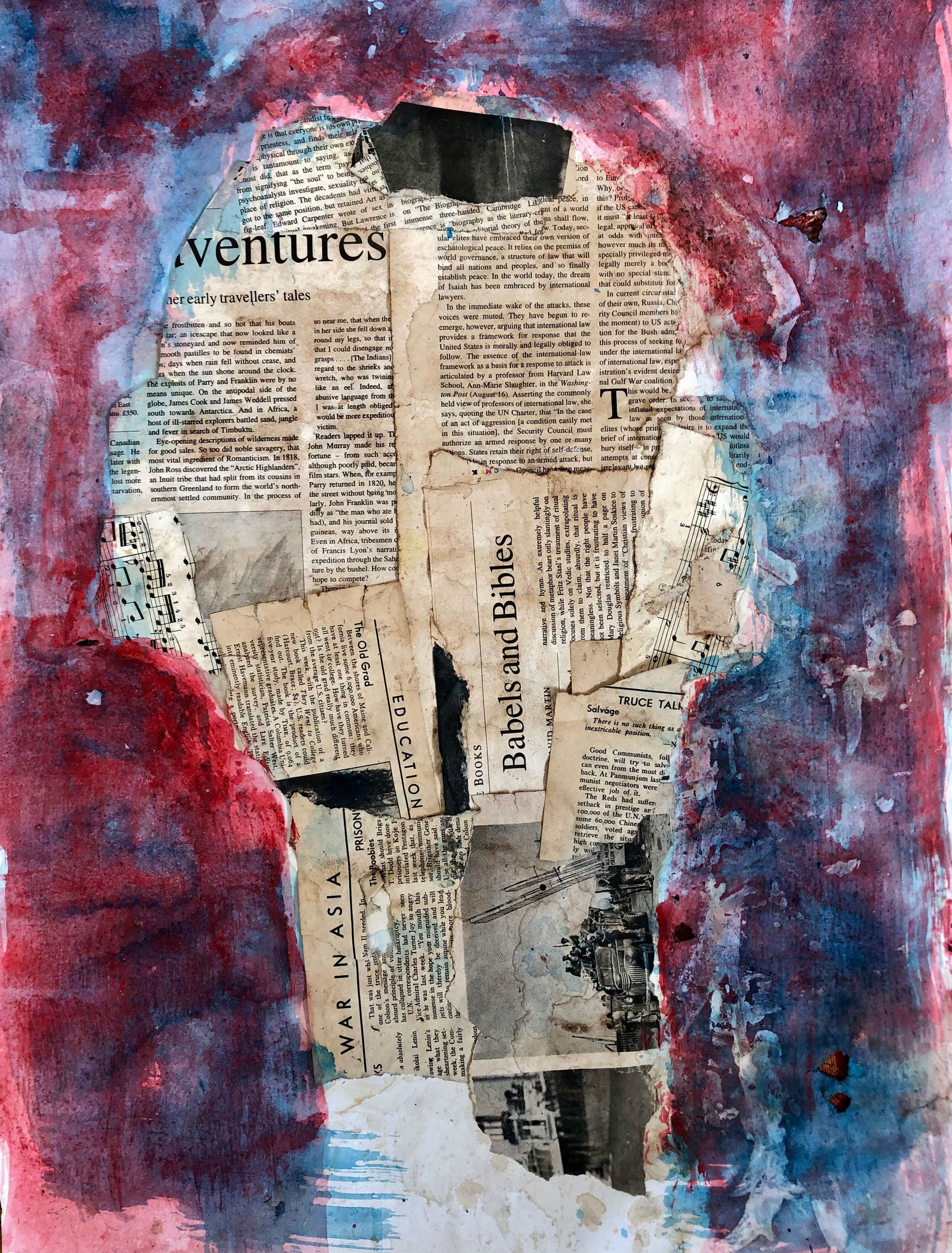
The oceans rise like ancient warnings.
Forests burn like funeral pyres.
And somewhere beneath the wreckage
A small light flickers stubbornly,
Breathing against extinction.
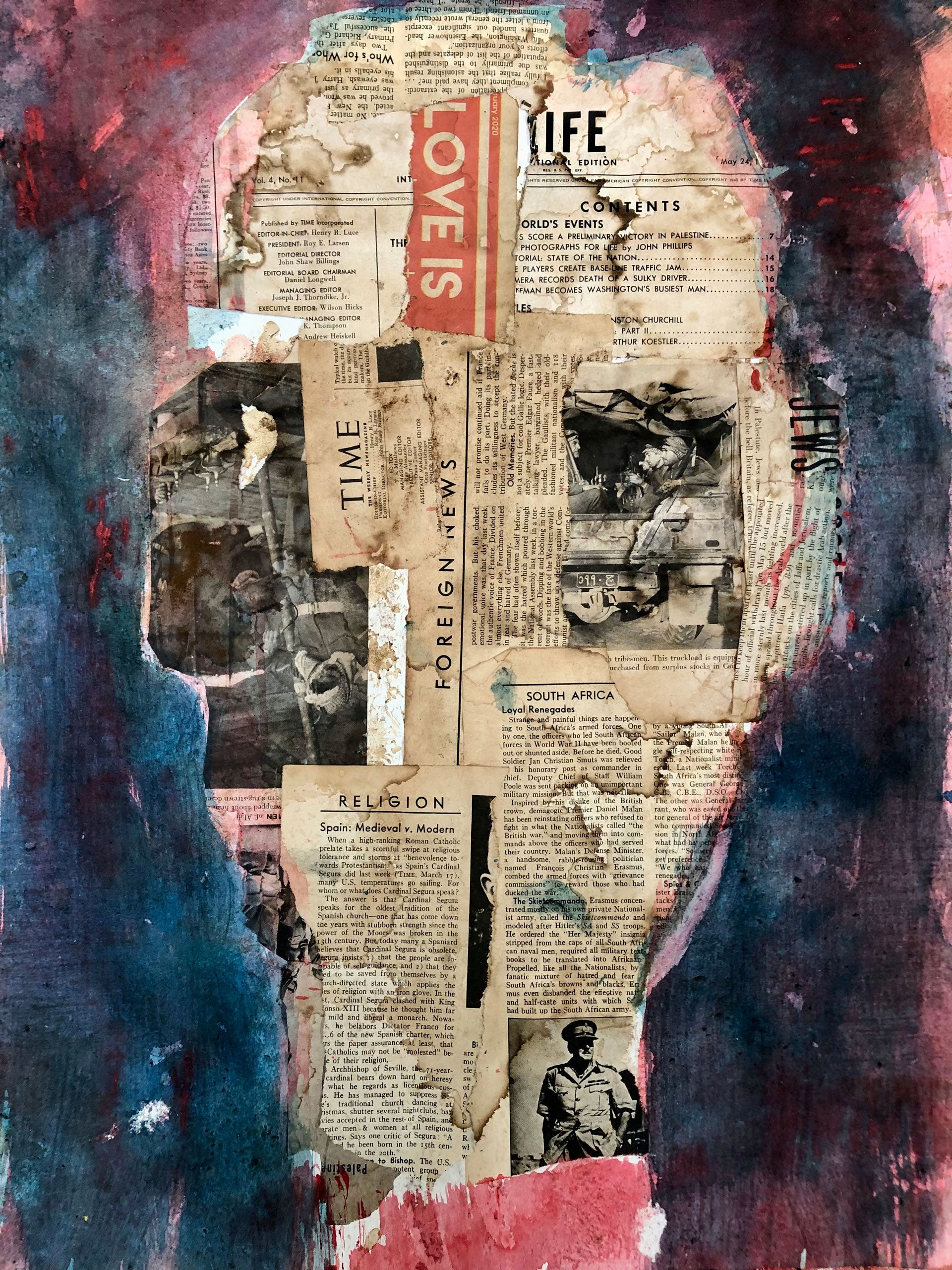
Perhaps that is what remains of us:
A fragile ember hidden in the ruins,
Still reaching for tenderness
While the world collapses around it.
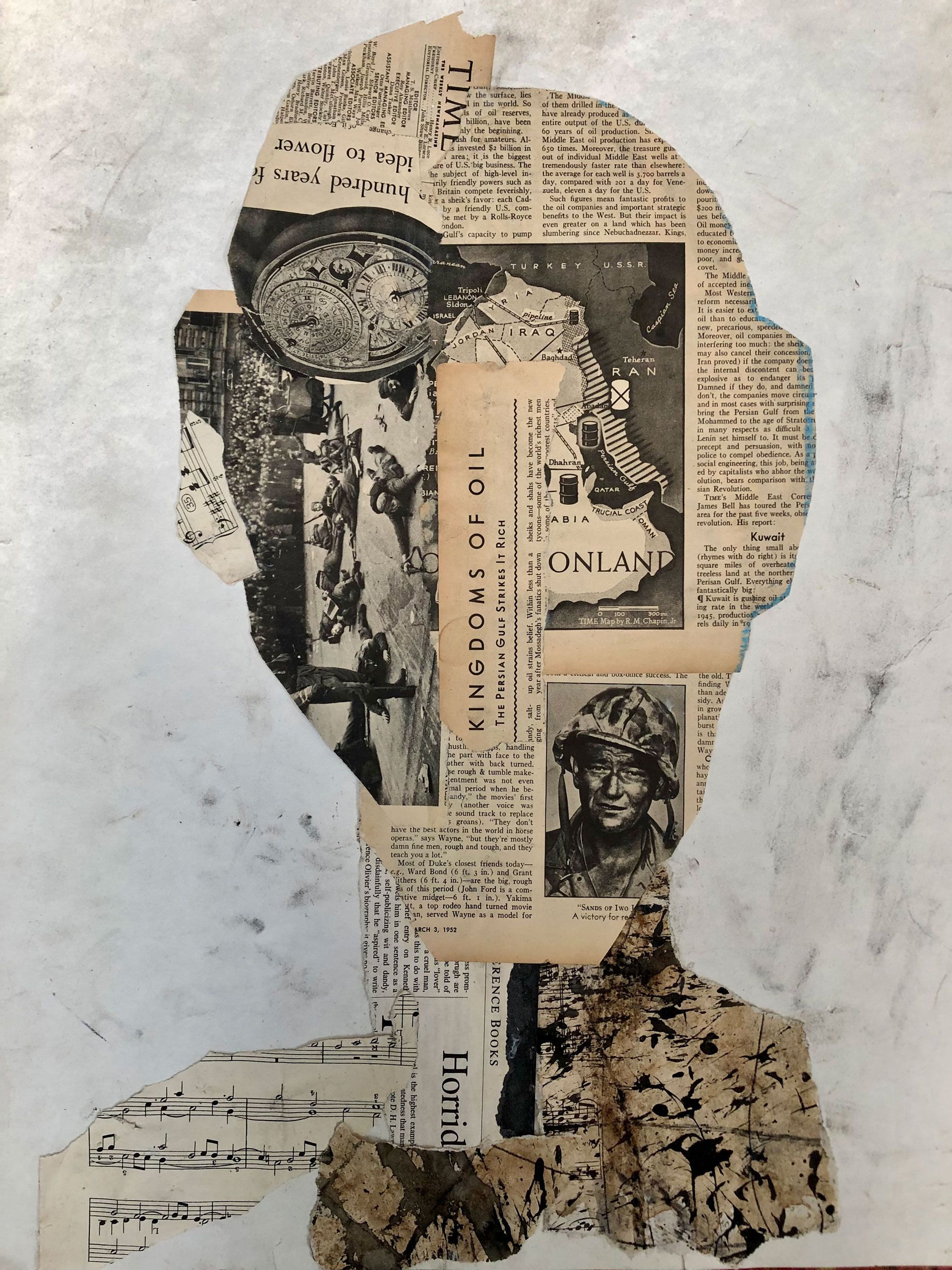
(A poem fragment from the artist’s journal)
“the more i dig into the well of knowledge the more difficult it is to embrace this reality with enthusiasm – the desecration of books in the form of closing them forever and opening particular pages forever, (thus turning them into art objects) is a personal ritual whereby, i’m saying: for me to know the truth and be set free by it i have to release the books from their predictable condition thus transforming them into another curiosity which still inspires thought.’”
—Thokozani Mthiyane
This interview was conducted over e-mail, three questions at a time.
AK: Has Sekoto’s work in any way played a role in your artistic development?
TK: i’m convinced that there’s a shadow of sekoto on most of us, the artists who’ve read and heard about him and the socio-political scape of this so-called sa country would make one who is intellectually curious envy or aspire to get out… i would say his influence is not visible but felt.
AK: Is your work securely grounded in the context of a “fine arts” discourse? How do “literature” and “fine art” overlap, or fuse, in your work?
TK: no no i’m on the depth of the edge, ma art is a mere activity to save maself from falling into the abyss. i sigh sometimes when i realise the meaninglessness of existence, save that one can create and write to keep on the dance floor we call life – art for me has nothing to do with being fine, but a means to meaning.
AK: I perceive you as a man, an artist, who has a great love for the written word – and for the book as an artifact of culture, a storehouse, a venerable tome of wisdom. Yet the work attacks this object, defaces it, renders it silent. To what extent is your art NOT censorship? NOT a kind of knee-jerk book burning of the most vicious sort?
TK: as much as books are a container of knowledge and perhaps the very essence of human evolution and civilisation – they are also proportionately very poisonous – the life they create in a man’s mind is practically a very difficult one for in the world i live in there is very little space for the intelligence and inspiration that i have acquired from books the language becomes some kind of wagnerian sound for at times i feel i’m on the brink of insanity save that i can write and that enables me to have a dialogue with ma otherself- so for me it’s not being destructive, it’s merely a gesture of letting go of that which has guided me to this evolved state i’m in and when i write on them in ma mother tongue, i’m speaking back to them – contemplating the gifts the beauty and the dust and ashes that once was my innocent ignorance – i’m still on the passage way a very darksome one too, so ma art is ma light that keeps me from contemplating ma shadow. when i began to write i really wanted to get published and i had never had illusions that it will take a long time and there was a lot to be learned – on realising the amount of information circulating in the world, a question came over me, a question that is still haunting me – what do you have to say to the world that hasn’t been said, for a while this kept me under a heavy weather, but what has remained clear on my mind all ma days is that when i’m forty i will be on the tower of knowledge that will enable me to utter words worth the ear of the world.
AK: You seem to work a lot with objects that have a debris-like quality. This choice of found materials upon which to work gives the pieces and extraordinary sense of “datedeness” in that they already – new as they are – have the feel of an ancient object from an abandoned culture. To what extent is this parallel level of meaning operating in the work consciously, as a thought-out device, or merely the result of pecuniary demands; a by-product, as it were, of your lack of funds?
TK: i guess there iz a morbid nostalgia that i’m sunk in, the loss of innocence, a sense of betrayal of black aesthetics and identity for the more contrived modern and refined vulgarity in which ma generation (maself included) are paying homage to – language instead of evolving becoming an expression of the degenerate – remotely as i stand from the contemporary mainstream hobbies that are referred to as culture – i can’t help being affected it’s so noizi one can’t breath the air of informed thoughtz without being radical even at the expense of happiness…
AK: Thank you for your 3 replies. I just re-read all our questions and answers thus far. It struck me that we are both of us in our own worlds and communicating very little across them. It struck me that you are writing in a second language that you are highly ambivalent about at best. I am writing in a first language, a mother tongue, that I have loved and savoured since before I knew what I was saying meant. It struck me that you are writing in an internet cafe for R30 an hour and therefore rushed and uncomfortable while I am sitting at home in the comfort of my study with my own computer and all the time in the world to formulate my questions. Perhaps it isn’t relevant. But I feel it is relevant to make our concrete situations apparent to the eventual reader. Not to do so would be to allow our apparent non-communications to become a parody – when in fact it’s an indictment.
I feel disillusioned with asking you questions. Instead, to end this interview, I am going to quote you a piece of prose from Alain’s book The Gods, and ask you to respond to it. (especially in terms of a “liberated” South Africa where indigenous language and knowledge still plays second fiddle everywhere to the colonial speech impediment). Thank you in advance.
PRAYER
Asking is the means. Knowing how to ask is the first knowledge. And language, to be exact, is the most ancient method of action. It begins with the cry, which is at first the only power the child has, a power which moves from afar and without contact. The school of the will is persuasion. To recognize, to smile, to name, are often the conditions for obtaining something which otherwise would only be held out and then refused. We must do what it takes. Politeness is a tool and a means long before the bow and arrow. And the power of names remains mixed in with our physical powers. We speak to things. But even if we consider language from every side, we will not arrive at a real understanding of how it is our first attempt to know or to change the world around us. And the unavoidable condition of naming before knowing should explain all the detours of knowledge. We talk, we tell stories, to ourselves and others. Our thinking life is first a speech, which carries over even into sleep. But what is to be noted above all is the advance that speech has over thought; which would hardly be believable did we not know that a child naturally speaks before he knows what he is saying. Analyze the dialogue between a mother and her child, and you will see that the child returns her words as if he were playing with a ball, and is surprised that he can hear his own voice as well as hers; this kind of echo is the first meaning of language and it always will be. It is a human resonance which later develops into music; but in another way, the music of words develops into magic, through the necessity of praying continually to the familiar spirits, the masters of toys, the masters of food, the sovereign lords of the doors, windows, and stairs. This method of obtaining, which is at first the only one, and for a long time the principal one, accounts for a function of words that is almost always forgotten in deference to the idea that we form our knowledge first and then express it. For, if the notion of an object always results from the efforts by which it is reached, and grasped, and mastered, then it is clear, if only because of the weakness of the child, that language is the first means of conquest, and therefore the first form of knowledge. Incantation, which, by means of exactness, repetition, and insistence, conjures up what it names, is the first physics. The movement of poetry, and even of the simplest story, is on the verge of giving body to what it names, almost gives body to it, and the attitude of the listener, even better is he is also the storyteller, is an attentiveness like the attentiveness of early childhood.
TK:
hey kaganof
insanity is the essence of western civilization -hence
its virus seems so eternally contagious to black
people meaning the insane group for us who have
poisoned our minds with volumes from the west there’s no other reality except that which epitomises the vision of hobbes, kant, and perhaps bush as long as it
guarantees the illusion of safety and clean decadence
of which the supposedly liberated blacks aspire to- if
it’s not yielding materially it’s void – utopia is the
promise yet inferno is the realisation
when language is degenarated beyond the comprehension
of the the speaker and the hearer – when consciousness
does not prevail beyond the five senses- when memory
has nothing to do with history it is time to realise
that a people are in serious trouble – the
engineering of the post apartheid south africa leaves
no space for contemplation let alone on the memory of
pain, loss and despair the campaigns for hope are void
of meaning and i happened to be on the receiving end
of your violent civilization—
The complete version of this abridged interview was first published on unlikely stories here: unlikelystories