FAT CITY VINYL & MUSIC BLOG
Keith Hudson - Flesh Of My Skin (VP, 2021)
It’s full name The Black Breast Has Produced Her Best, Flesh Of My Skin Blood Of My Blood – not necessarily even a title in the traditional sense really, but more of a mantra or a statement of purpose that just happens to be emblazoned on the cover – the album known in abbreviated form as Flesh Of My Skin appeared circa 1974 with little fanfare, going on to become an influential underground hit in the UK (though not released in Jamaica until the following year), its reputation as a classic continuing to grow in ensuing decades.
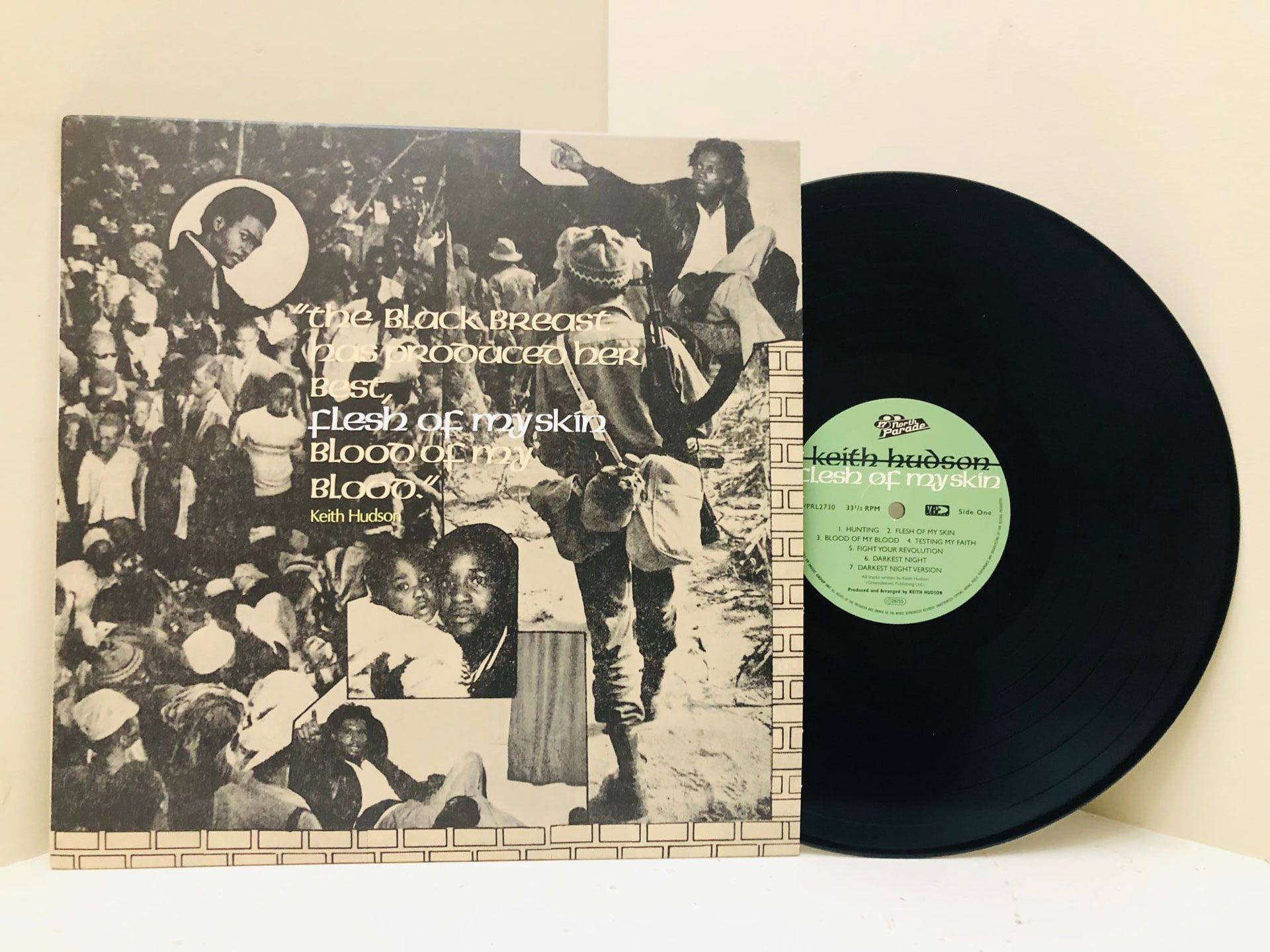
That title – and those of songs such as Darkest Night (On A Wet Looking Road) were as gnarled, twisted and unlovely – yet curiously evocative and compelling – as the voice which emanated from the grooves. Keith Hudson had been a dentist before turning to music in the 1960’s, scoring immediate success with early hits like Ken Boothe’s Old Fashioned Way and its successive DJ versions by U Roy and Dennis Alcapone.
But for Keith as with many other aspiring young music producers, the business was a hand to mouth affair with little financial reward and in his case, perils associated with threatening political and criminal elements. Hudson also had something else he needed to express more directly than just working through others, a very personal musical idiom that he alone could fully translate to wax. Despite a limited vocal range (sometimes coming across as a strained croak) Hudson’s music was curiously intriguing with idiosyncratic, darkly brooding lyrics (with occasionally tongue twisting titles) and stark rhythms to match.
Flesh of My Skin was perhaps the first fully cohesive manifestation of that vision. Recorded between Jamaica (with the Soul Syndicate band) and the UK, the album marked the next progression of Hudson’s artistic ethos, his dark, nearly gothic brand of reggae sounding like nothing else before or since. Across the LP’s twelve tracks he explored topics relating to history, culture and the African diaspora around the world, especially the Caribbean; “how can I tell you about my time in the West Indies” he muses on Testing My Faith, agonizing over “why can’t I be just like any other man”.
Set apart by the colour of his skin and his legacy as a descendant of slaves, he is speaking as a man both part of the fabric of time, but also detached, observing from outside.
The dark, hallucinogenic opening instrumental Hunting featured the drumming of Count Ossie, setting a scene of some nightmarish jungle by night; even the original liner notes, once laughable to me with their tortured, fractured grammar and syntax (“He is like Brandish By his Breed/All way talk of Brevity of time” etc) now seem yet another layer of communication, of making sense out of apparent nonsense.
It’s not all darkness and brooding however as Hudson adds brighter harmonic textures with the vocals of Candy McKenzie (whose brother Bunny also plays guitar, overdubbed in Britain), heard to good effect on the more reflective title track, the full name referring to Africa as the mother from which the black race’s lineage is derived from.
The album also had deeply personal and painful themes, Talk Some Sense and No Friend Of Mine obviously coming from Hudson the man, commenting on situations in his own life while Fight Your Revolution – the central possessive word key – brought together and juxtaposed his ideas of the singular and the universal.
In 2020 I said that the album “refracts the concept of what reggae is into something new and individual” by drawing on textures of blues and rock (intentionally as it turns out, as Hudson was keen to use lesser known players who had a unique sound others had not yet picked up on). Considered an early masterpiece, Flesh…shows the producer fully embracing his outsider aesthetic, crafting a palette of songs subtly weaving influences of blues and other genres within a framework of songs both cultural, and deeply personal in nature (as in Talk Some Sense, perhaps alluding to Hudson’s marital discord at the time, or Fight Your Revolution, merging the two concepts – the central word is crucial, not just any revolution but your own) with dark, gothic instrumentals like Hunting (featuring Count Ossie’s Mystic Revelation drummers) as well as lighter, more sentimental songs like Treasures Of The World (with bright female harmonic counterpoints by Candy McKenzie). With members of the Soul Syndicate and Augustus Pablo – cast on harmonica instead of his usual melodica – Hudson shuffles the core elements and refracts the concept of what reggae is into something completely unique and individual..
That comment was based off my first copy of the album, the Basic Replay edition from the early 2000’s which itself was drawn from a 1988 Atra reissue.
VP Records however have gone back to the original 1974 pressing on Atra to restore this precious masterpiece to its full glory and with the original cover restored. The mix here seems warmer, more immediate and with a fuller soundstage than the earlier Basic Replay version, with elements of the vocals, the guitars and percussion seeming clearer and more present than that sometimes murky or sibilant pressing.
To top things off, VP have appended a couple of version sides to the LP (and apparently an uncredited instrumental on the CD) making this the definitive statement of this essential classic. The final word signing off those original liner notes, “Struggle”, gives an indication of how Hudson felt about the feelings and ideas he was trying to communicate with this LP; had he not passed away so young – in 1984 of lung cancer – this most unique reggae iconoclast would perhaps be more well known but as it is we have this eternal testament from the Black Morphologist, the Dark Prince of Reggae, Keith Hudson…
Re-published in herri with kind permission of Fat City Vinyl. Check out their magnificent reggae and dub blog here.