FANIE JASON
Decayed Vinyl and the Real Value of Things
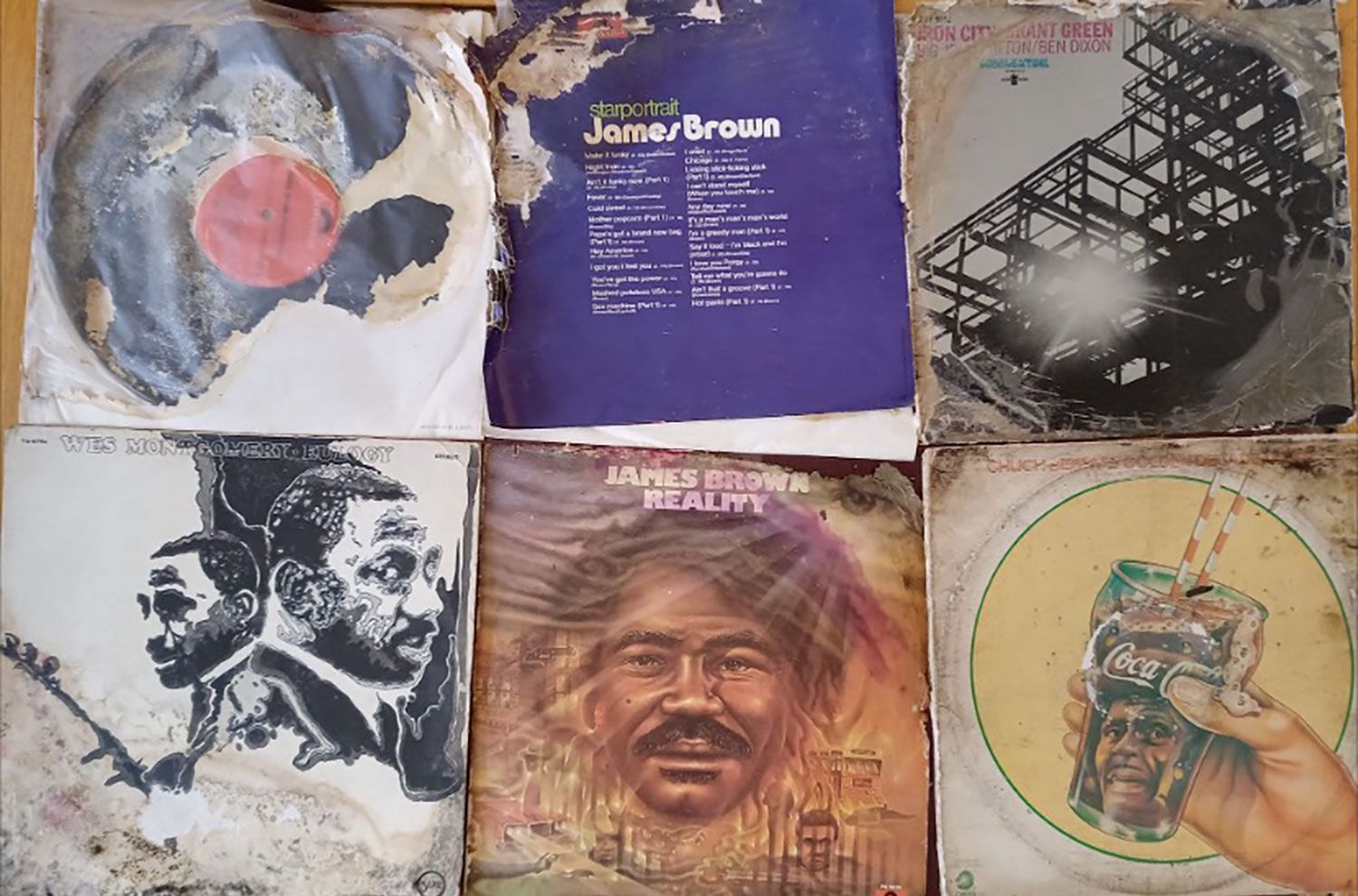
I found a treasure trove of vinyls in such a bad state, six years after the owner passed on, who was very passionate about his vinyls. You can see the owner was a serious collector. But as soon as the owner passed on they removed his vinyl into a shack at the back of the house. So that they could utilize the space for the rest of the family to sleep, because our houses are small and most of us have big families.
But that is not the first time somebody called me to have a look at his father’s vinyl collection, I knew his late father very well, one of the most serious vinyl collectors in the township. He had vinyls from Coltrane Love Supreme first pressing to Yakhal’nkomo 1968 copy, Alice Coltrane plus many rarer vinyls. When I went there his children had stored his vinyls in an old car that was standing outside in the hot summer sun, most of those vinyls were destroyed and badly bended, because of the condition they were stored in. The covers were destroyed by the rain, dust and the balance were chewed by rats, some of the vinyls were split.
I remember asking jazz vocalist Don Tshomela, who had a serious collection of vinyls at his home, which was stored in immaculate condition. When I asked him for his vinyls he told me he will pass them over to his son. I remember when I once returned to his house two years after his death, I found his son’s friends walking all over them on the wet floor without covers. Don’s albums were completely destroyed.
But it’s not only with vinyls but right through the arts field, even older photographers and their archives, the family don’t think twice to destroy the deceased’s negatives. My uncle who started taking photographs in 1940 in Kuruman in the Northern Cape but continued taking photographs when he migrated to Cape Town in 1945, but a year after his death his children burned all his negatives. He was one of the few black photographers that built his own pin-hole camera.
When I visit my aunt in Venterstad near Aliwal North, you find white people collecting antique furniture for cash or for new furniture, they specially do it in the rural areas.
I remember when a friend and a well-known artist who lived in the township, his family never took his artwork seriously nor valued him as an artist, until when he died and the Sunday Times wrote one page on his obituary. It’s only then that the family started asking around about his artwork, while the rest of the art community has been collecting his art quietly in their personal collection. By the time his family was looking for the balance of his artwork it was too late, the family never knew the value of art. Because of the frustrations and being isolated by the rest of his family he was selling his art cheap in the streets of Cape town and Observatory just to make ends meet. Like all other people I would buy his art to support him, or he would call me in times of need, but my then ex-wife would sit on my neck to stop buying his art. But when we went through a divorce she wanted some of his artwork which I had bought over the years.
Apartheid did not only destroy us physically but mentally; we don’t know the real value of things.