LARS GOTRICH
Divinity From Dust: The Healing Power Of 'The Disintegration Loops'
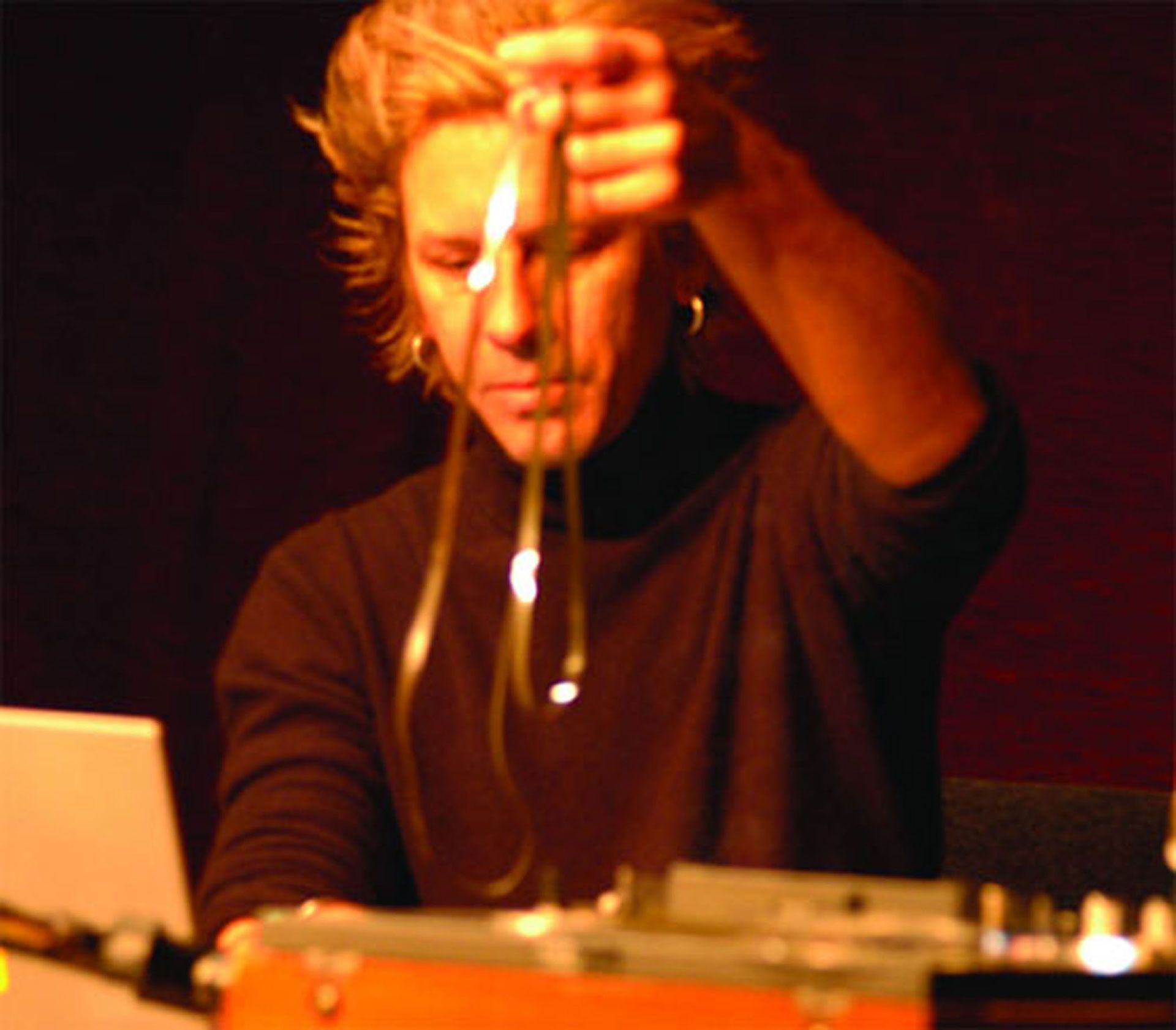
William Basinski has lived on both American coasts, but I know a Southern gentleman when I hear one. The ambient music composer, who grew up in Texas, is on vacation visiting the Celeste ranch of his partner James Elaine’s family when I call him — “I just fed the horses apples,” he mentions — and is just as sweet as I’d heard from colleagues. He pauses long between words, measuring each one because the weight of each word is just as important as its meaning. In many ways, he speaks like he composes — teasing phrases with silence, not filling the air with unnecessary fuss and fizzle.
For over 30 years, Basinski has worked with tape loops — capturing, slicing and warping the world around us on reel-to-reels. He makes field recordings from nature and shortwave radio signals, then literally cuts them up into short loops. His almost obsessively analog-focused work is often melancholic and strained, but always beautiful. But it is The Disintegration Loops, a project he finished the morning of September 11 while living in New York, for which he’s best known. The previous summer, Basinski had found an old pile of old recordings to salvage. As he digitized them, he discovered that the tapes themselves were literally falling apart; realizing the beauty in the decay, he keep the loops running. In the recording that resulted, short, melodic loops turn over in your ears as they slowly deteriorate like wood planks on abandoned houses, letting wind and silence slip through the cracks. Listen long enough, and rhythms appear and disappear.
Basinski spent a lifetime to create those loops, not knowing the affect they would have not only on his life, but also for those in mourning. This is vital music for the human condition, divinity culled from dust. Temporary Residence released a 9-LP/5-CD box set in 2013 that collects the original four-volume work with unreleased material plus two live orchestrations by Antony and the Johnsons string arranger Maxim Moston. Performed in London, Venice and New York City over the last few years (the latter two of which can he heard here), these arrangements of “dlp 1.1,” which take a work composed solely for tape and translate the spaces between the repetitions with strings, are worth serious inspection.
Lars Gotrich: In the liner notes to The Disintegration Loops box set, there’s a lovely story from Antony about hearing this music for the first time. What was your first reaction when you heard these tapes?
William Basinski: “You know, when I first went into the studio that day — it was a beautiful summer day in New York — I was panicking because I didn’t have any work and was about to be evicted. I picked up this little book off my shelf, The Way of Zen,and was sitting there in the sun reading it. And I just had to laugh, like, ‘You’ve got this time, use it. Show up for work, get back in the studio. Get to work.’ So I got in there and I just picked up the first next loop that was on the line to be transferred to digital. I had recently discovered this big case of all this old work back in the storage room in our loft in New York, which we called the Land of Time Forgot because everything just got put back there and piled up. I knew what could happen to tape and I didn’t want my old work to be destroyed, so I was trying to digitize it.
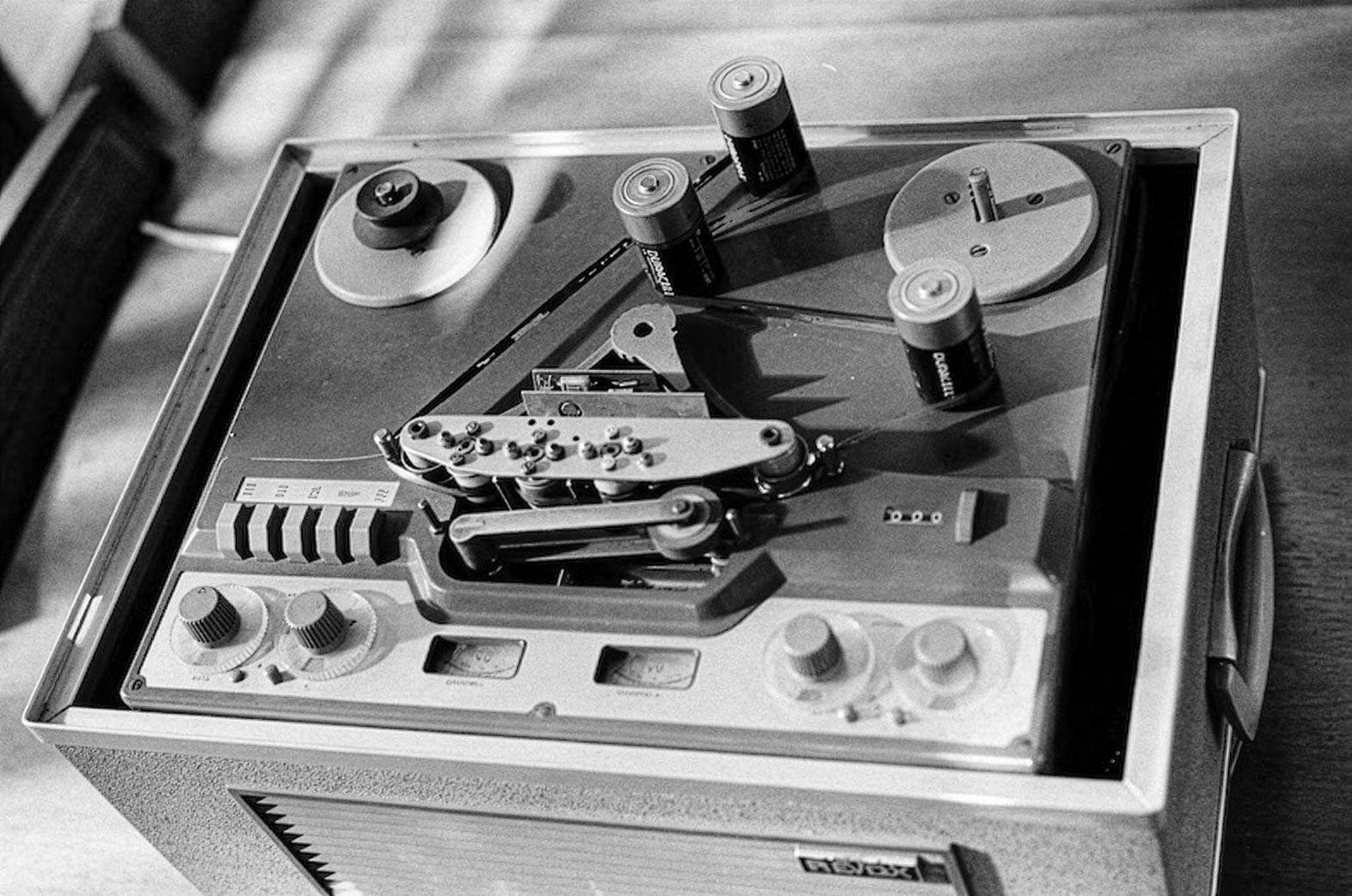
“So I put this loop on, put it on the Revox and turned it on and it was just so grave and so beautiful and stately. I just thought, ‘Oh, this is what I need right now. I want to make it. This is going to be my new piece — fantastic.’ So I went and turned on my Voyager synthesizer, tweaked it and came up with this random arpeggiating French horn sound countermelody, turned on the recorder, set the levels and started recording. I went to make a cup of coffee in the kitchen, came back and was listening, and I started noticing something was changing. All of a sudden, I looked and I could see dust in the tape path. I thought, ‘Oh my God, it’s happening. What’s going to happen?’ [I] looked at the CD recorder to make sure it was on — it was — so I just sat there, listening as this gorgeous melody decayed over a period of an hour in such a beautiful way. I was just stunned, like, “Oh my God!” Put the next one on, same thing. That one started doing the same thing in its own time in its own way and I started to realize, ‘Wow, something different is happening here. I don’t need counter melodies. This is its own thing. I need to just pay attention and make sure I’m recording and let’s see what happens here.’
“So it took a couple days in the studio with the rest of the loops and then all of a sudden, I had this five-hour work that was just blowing my mind. I was on the phone, burning up the wires, calling all my friends: ‘Antony, get over here, you won’t believe what’s happened.’ [Sound and visual artist] Steve Roden was in town, I called him and said, ‘Get over here!’ My friend Howard Schwartzberg is an artist in New York — great guy. He studied art, deconstruction and all that stuff I knew nothing about. He came over — he grew up in Coney Island — and after it was over, he said, ‘Billy, this is it! You’ve done it!’ And, boy, was he right. Because when it finally got released the next year, the critics had so much to dive into that it just took off and it saved my life.’
Lars Gotrich: When folks talk about The Disintegration Loops, the one word I always hear is “decay” — you just used it yourself. It’s absolutely right to use that word with this music. But recently, I’ve been thinking about how silence works in these pieces. The last 10 minutes of “Disintegration Loop 3,” in particular, absolutely destroy me. The sound flickers and fails and there will just be these guts of silence.
William Basinski: “After September 11th, we were all just devastated and in such a panic and everything. At that time, I was living with a recording engineer. My friend Doug had built a studio in the back of the loft where Jamie [my partner] used to be. Jamie had taken a job in Los Angeles, he was out there. One time, Doug came running in. ‘Disintegration Loop 3’ was playing and it was in the middle of its flame out. I had it on the big system in the loft and Doug came in, in a panic, thinking that the amps were burning up. And I was like, ‘Oh, no, it’s just the music.'”
Lars Gotrich: Well, what is the role of silence in your music?
Wiliiam Basinski: “Oh, it’s very important. It’s the contrast. It’s so hard to hear silence now. I don’t really listen to music at home. I sit out in the backyard and listen to a John Cage silence. It’s not silence. I can hear children screaming their heads off in the school four or five blocks away. Every afternoon, it sounds like Godzilla has arrived and they’re just having fun at recess. And the birds and there’s an airplane going over every three minutes. You can hear the drone four or five blocks away. I just love listening to that.
“Now I’m out here in Texas. I was up last night after everyone went to bed just making a little field recording of the sounds here. You can hear owls and occasionally the horses snorting, crickets, the wind, right now the screen door is kind of banging, the birds. It’s really, really beautiful.
“This summer, Antony invited me to participate in London’s Meltdown Festival, which he curated this year. It’s an annual festival they do on the South Bank — absolutely incredible festival, so well managed and what a great opportunity. Royal Festival Hall, Queen Elizabeth Hall, 12 days, it was during the Olympics and Antony curated it this year so well. Lots of New Yorkers, lots of people I knew from New York and friends of mine, old friends from the Johnsons who have their own bands. I closed the festival at Queen Elizabeth Hall, and we had the opportunity to have the London Contemporary Orchestra — this wonderful young, talented group of musicians — perform, for the first time in Europe, Maxim Moston’s arrangement of ‘Disintegration Loop 1.1’ and Max’s new arrangement, which he did this summer, of ‘Disintegration Loop 2’ with a 40-piece orchestra. Sold out Queen Elizabeth Hall. We started with ‘Disintegration Loop 2’ — absolutely wonderful treatment Max did — and then we ended with ‘Disintegration Loop 1.1.’ And like in New York at the Metropolitan Museum — I don’t know if these people heard about what happened in New York or what — but it was as if we had decided to put an orchestral version of John Cage‘s famous 4’33” at the end of ‘Disintegration Loop 1.1’ for a finale in honor of John Cage’s 100th birthday. They sat there for almost five minutes — 1,500 people in silence. We were just stunned. It was just amazing. So it’s great to be silent, you know, have a moment of silence.”
Lars Gotrich: I wanted to ask you about those performances because two of them are included on the set. I distinctly remember the five minutes after the Temple of Dendur performance because I was listening to it on NPR. What happens in that silence?
William Basinski: “You know what? It was unbelievable. It was as if we were all turned to stone. There was stone silence. There were children in the audience and old people, and there wasn’t a sound — 800 people in this huge reverberant room. And then, after about three minutes, this motorcycle or plane went by picking up the F pedal tone of the last note. Up and then down. It went away. And I was just — my hair was standing on end. I was like, ‘Oh my God, what’s going to happen now?’ And then that broke the spell and everyone went nuts. It was incredible. I was just over the moon.”
Lars Gotrich: What happens for you specifically in that moment?
William Basinski: “In London, it was a very heavy silence you really had to listen to. It was really probably what John Cage would’ve wanted the audience to feel, listening to nothing but a little shuffle here, a throat clearing, someone adjusting in their chair or something like that.”
Lars Gotrich: Another thing that I’ve been thinking about in listening back to these records is that context is a difficult thing for me to grapple with personally. I’d like to believe that music can be enjoyed for it’s own sake, but sometimes significant ties to events are unavoidable. Disintegration Loops will be forever tied to the events of September 11. But it’s been this healing music. How do you reconcile art and context? Can they be separated? Do they have to be?
William Basinski: “You know, they can. Like you said, after the events of 9/11, everything changed. The whole world changed. The context of Disintegration Loops changed. And I felt, with my experience being in New York at that time, and what I went through and what I saw my friends go through, I wanted to create an elegy. Yes, there’s that tie to 9/11. But the thing that moved me so profoundly in my studio right after this music happened was the redemptive quality. The music isn’t just decaying — it does, it dies — but the entire life and death of each of these unique melodies was recorded to another medium for eternity. So that blew my mind, as someone who grew up Catholic, to see that that is a possibility.
“Several people, friends of mine, people I didn’t even know, after the concert on September 11, 2011 at the Temple of Dendur, came up to me — you know, no one wanted to go out that day, nobody wanted to remember an anniversary. You don’t celebrate this kind of thing, but it was a day of remembrance and several people told me how profoundly moved they were and how they felt that the whole energy had changed and somehow the resonance had lifted. Maybe, somehow, there had been a moment of healing in that silence.”
Lars Gotrich: How did you get into tape music? Did your classical musical training inform any of that?
William Basinski: “I studied music since the 7th grade, playing the clarinet. When we lived in Florida, my dad was working on the Lunar Module. In high school, after that, he got a job in Dallas, we moved there. My parents put us in the best neighbourhood for music in Richton, Texas. All of the Texas music programs were of the highest quality back then and this particular school was one of the top ones — amazing teachers. So I learned to play the clarinet quite well. Then I eventually got a saxophone and started playing that and went to North Texas State University where I was going to study jazz. But I found as soon as I got there, the level of musicianship with professional musicians coming off the road blew an 18-year-old kid who could sort of play the blues out of the water. I blew my auditions and changed my major to composition and started studying experimental music.
“Eventually, after being in school for a couple of years, I ended up leaving and moving to San Francisco with my partner of now 30-plus years, James Elaine. At that time, the focus of the classic music department at North Texas State University was still serial music and 12-tone music and that kind of stuff, which I enjoyed playing in high school because of the difficulty of it, but it wasn’t something that really resonated with me as a composer. However, at that time, I had friends that were record buyers — particularly James who was a major collector and music aficionado and was able to get turned onto all kinds of new stuff coming out.
“At school, the most important class I had — for me — was my contemporary music class where we learned, in particular, about John Cage. I was fascinated with Cage because of his chance — the way he used chance in his music and his techniques in particular. Not so much the way it sounded, but just the fact that you could do that. This teacher really taught us how to listen and how to stretch your ears and that really helped me. Eventually I heard Steve Reich‘s tape loop and feedback loop pieces — Drumming had come out, then when Music for 18 Musicians came out, I thought, ‘Wow, that’s really something. This is really resonating with me.’ And then a bit later when I heard Brian Eno‘s Music for Airports with that deep melancholy, I was hooked. So I had something — big horizons opened up for me as far as what was allowed.
“Having moved to California to be with Jamie and listening to all these records he had and looking at the album covers — I think there’s an illustration on the back of Discreet Music where they show the tape loop set up for Frippertronics.
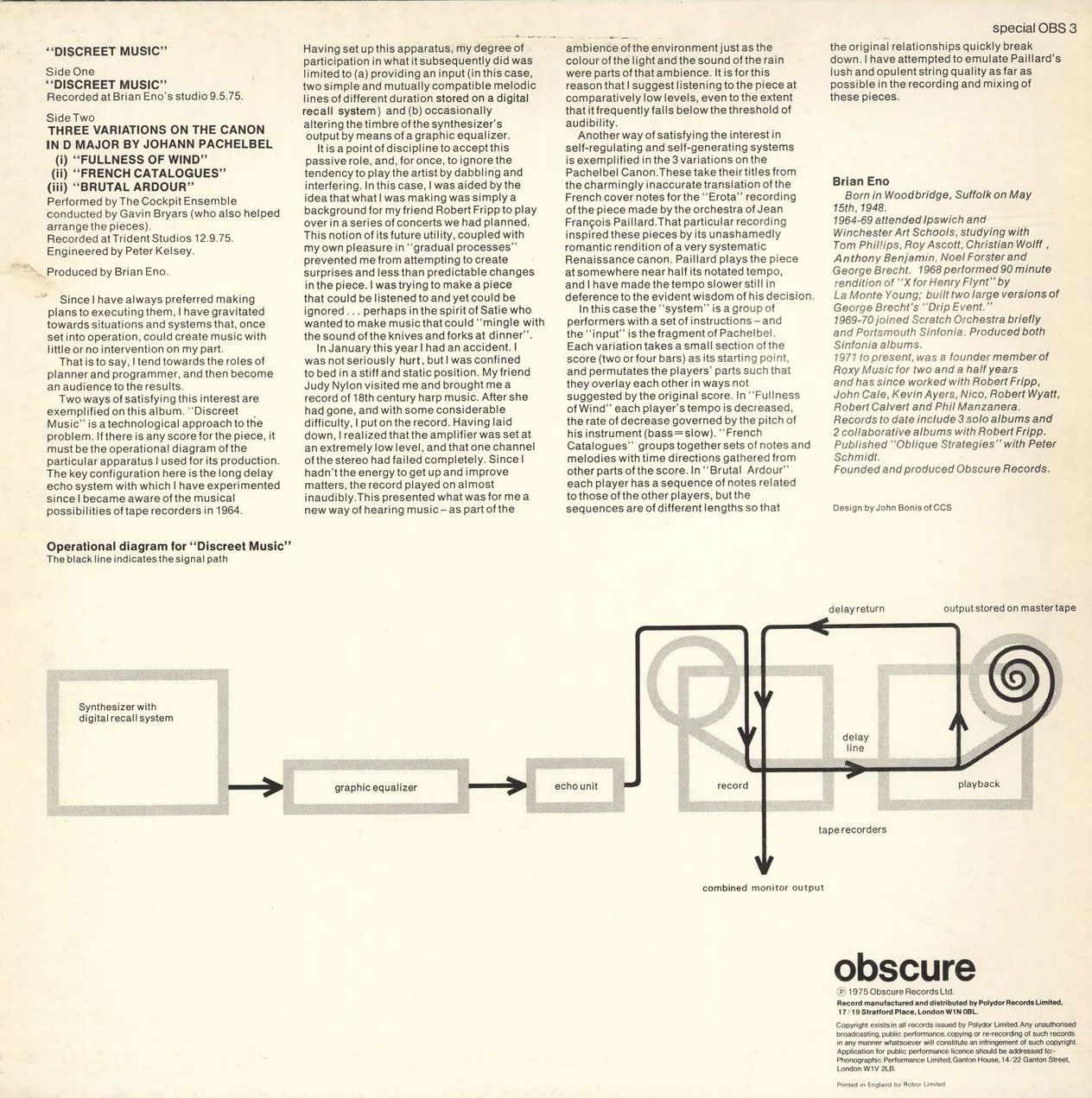
And at that time in the late ’70s in San Francisco, there were junk stores full of tape decks you could buy for five dollars with a box of tape. So I got a bunch of tape decks and tape, some scotch tape and scissors and started fooling around and recording everything and mixing and playing around. I was just fascinated and I was able to begin creating sounds. I thought, ‘Well this is interesting.’ And I just kept going. Eventually, I somehow managed to develop my own style.
“We moved to New York in 1980 and I started working with what was available there. I got a shortwave radio and started listening to these sounds coming from the universe and between stations, fascinated by trying to pull things out of the airwaves and create something from nothing. So I’d just get home from work and go into the studio. My partners in the lofts were painting in the other studios and I was creating a soundtrack in my studio.”
Lars Gotrich: This kind of music is near and dear to me, so it’s been interesting that tape music has come back into the conversation in recent years. There’s been the John Cage centennial, The Disintegration Loopsbox set, Pauline Oliveros’s 80th birthday concerts. And then there are the younger tape musicians putting out just amazing music, like Jason Lescalleet. Where do you think tape music fits in the current spectrum of sound?
William Basinski: “I think because of the analog nature of tape — I guess we’ve had maybe 20 years now of digital music — there’s something about analog that has a wumph to it that digital doesn’t have. It sounds different. And a lot of young people that are my fans have grown up — along with my tape loops and everything — haven’t really been exposed to so much of that sound. But it’s obvious when you hear it; there’s something different about it. You know what I mean?”
Lars Gotrich: Yeah. The common adjective is “warmth” — the kind you don’t really get with digital. I hear a lot of younger artists who try to replicate that warmth in their digital music, but I feel like there’s always something a little bit missing. There’s a lot of soul to analog.
William Basinski: “Yeah, you know what’s missing is that digital music is sampled. It’s 41,000 samples a second, so there are gaps. You’re not really hearing it all. It’s like the difference between digital video and film. You know, film is light and shadow and digital is pixels. And your brain processes the information in a different way. Your eyes look at it a different way. It happens with the ears too, I guess.”
This interview was first published by NPR here:npr.org
WILLIAM BASINSKI continued
The Story Behind William Basinski’s Seminal Ambient Album
As a new box set of The Disintegration Loops drops, the ambient artist reflects on its extraordinary realisation against the backdrop of 9/11, and its status as a transcendent masterpiece
February 27, 2026
Daniel Dylan Wray
William Basinski is not your typical ambient artist. For a genre of music that is often deemed cerebral and serious, he is a rare character. Growing up in Texas, he realised he was gay from a young age, once describing himself as a “flamboyant little hot mess of a kid” who wanted to be David Bowie. At nearly 70, he sits across from me on Zoom sipping a beer at noon, chain smoking cigarettes, with his shirt unbuttoned wide, his long shoulder-length hair now flecked with silver, and his arms and fingers wrapped in turquoise amazonite jewellery. Fabulous is not a word that comes to mind very often when speaking about experimental music but Basinski merits it.
When people talk about the quintessential music of early 2000s New York, it’s often scuzzy new rock bands like The Strokes and Yeah Yeah Yeahs, the burgeoning dance-punk scene led by LCD Soundsystem, or the city’s ever-booming hip hop movement. But there’s arguably one album that in its own quietly revolutionary way, may just be the most significant work of that city’s fertile period: Basinski’s The Disintegration Loops.
In 2001, the musician was living in a vast industrial loft space in pre-gentrified Williamsburg that was home to music and art studios, parties and DIY shows. It was something of a creative den that had been elegantly kitted out and nicknamed Arcadia. “It was like granny’s house and everyone would come over,” Basinski says today from his home in LA, reeling off the names of painters, artists and musicians who would swing by, including his old friend and collaborator Anohni.
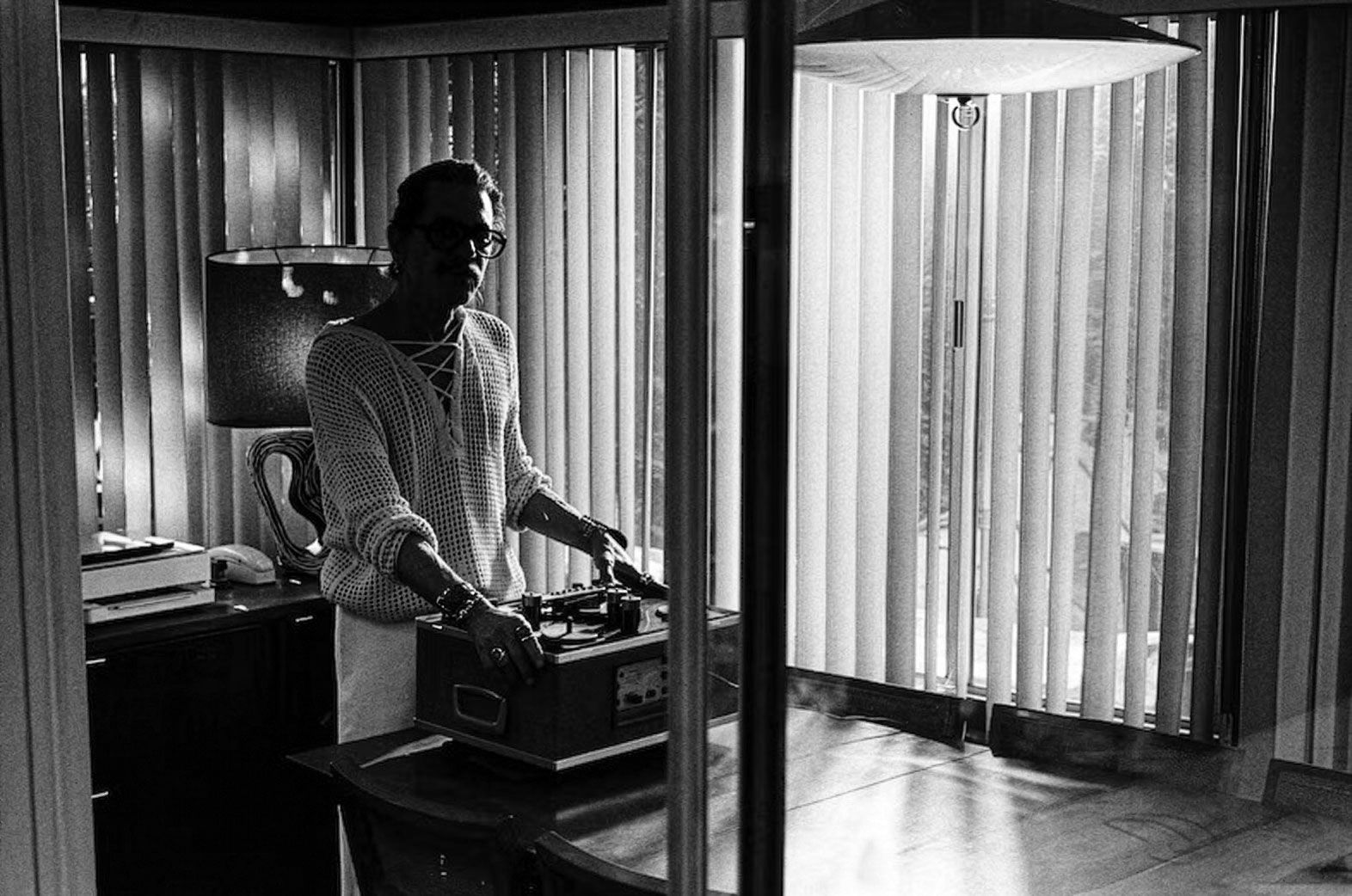
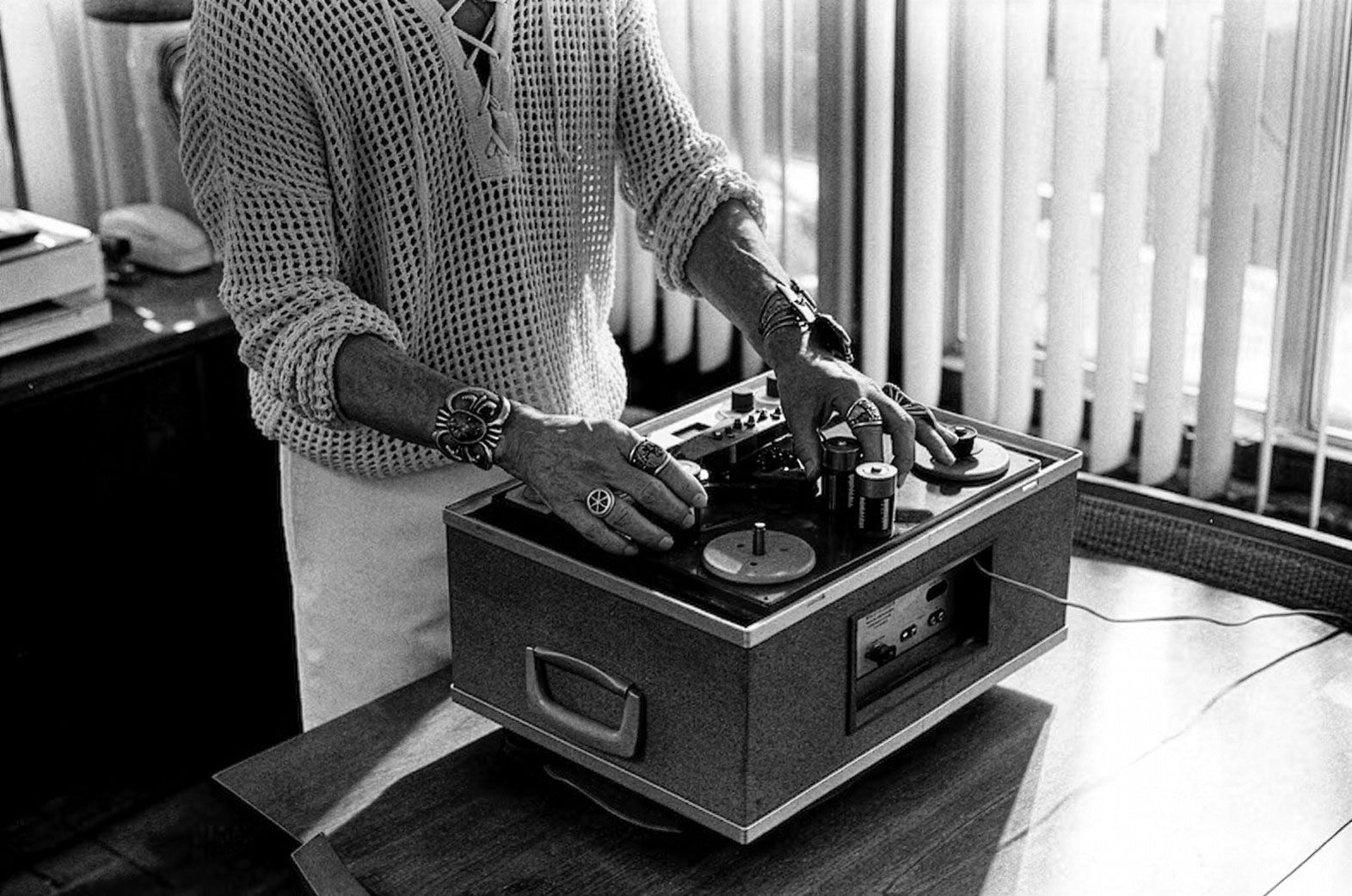
But it was a tough time for him. At 43, Basinski considered himself a failed musician, he was poor, facing eviction, and the vintage clothes shop he ran had just closed down. Rather than give up, he decided to throw himself into the studio, digging out some old tape loop recordings he’d made back in the 1980s of found sounds and muzak plucked from easy listening stations on shortwave radio. He began to transfer them digitally from tape but as he did so, realised the old tape was crumbling and decaying. It was literally eroding in real time, adding a woozy, crackling, fragile and haunting quality to music that was literally being lost and born anew at the same time.
“I knew something was happening,” he says. “Magic happened. It was just remarkable. It was such a profoundly extraordinary experience during those two-day sessions with the loops. I phoned everybody and said, ‘Get over here, you won’t believe what’s happened’. We were sitting flopped around the house, smoking a joint, listening to it for hours, and my friend Howard Schwartzberg was like, ‘Bill, this is it’.”
The music alone would have been astonishing – an immersive document of music, memory, time and loss that is both celestially beautiful and sorrowful – but Basinski was finishing them on the morning of the 9/11 terrorist attacks. He watched the towers fall from his loft and the recordings he’d been making suddenly took on a new feeling and purpose. He later reflected in 2011: “I’m recording the life and death of a melody … [and] it just made me think of human beings, and how we die.”
Basinski put a tripod on the roof and filmed as the sun set that day, the sky still thick with ash, as Manhattan smouldered away in eerie silence. The photos and footage would make up the artwork for the releases and soon music and images became inseparable, with the music functioning as both eulogy for the city and a place of solace from the fear that hovered over it. “There was just all this babbling of people on TV not knowing anything,” he recalls of that day. “We had to turn that shit off. So we listened to The Disintegration Loops and sat in lawn chairs on the roof just looking at it all.”
The result is a record – whether you associate it with the events of 9/11 or not – of intense poignancy, melancholy and tenderness. The collected loops total five hours and are transportive and immersive, a truly landmark bit of work. It is now getting a lavish box-set release, with remastered versions from the original Arcadia recordings, complete with liner notes from Laurie Anderson, who reflects “this music has created another world, a world to be carried away in.”
The Disintegration Loops were originally released separately, over four records, in 2002 and 2003. “I knew what it was [that I had made] but I was also broke and way in debt,” Basinski recalls. “Nobody knew who I was, so I couldn’t do a box set and it would have been too expensive. So I decided to do them one at a time.” Fans began to obsess over them. “People that are into my work can’t get enough,” he says. “It’s like I’m a heroin dealer or something.”
The Disintegration Loops is a record that continues to live on in near immortal fashion. What were once albums rooted in the 80s and completed in the 00s – existing as a life and death transition between decades and a reflection of changing sounds and environments between them – now exists for many as a document of a forgotten period. “Those days are long over,” Basinski reflects, of his affordable loft years in New York. “Arcadia, we left in 2008. The fucking landlords, man, they kicked everybody out and the rent skyrocketed. But it sat abandoned for 15 or so years and they destroyed all the work we did to restore this beautiful building. Think of what happened to the East Wing of the White House, that’s pretty much what they did to our gorgeous loft we lovingly restored.”
The passing of time also means a changing of meaning for the album. Once a eulogy for New York and a mournful soundtrack to a harrowing period – it’s so ingrained into the city that it was performed with an orchestra at the Metropolitan Museum of Art to mark the 10th anniversary of 9/11, as well as being inducted into the National September 11 Memorial & Museum – it’s now transformed and evolved. “I get texts and emails from people all the time talking about how moving it is to them for various personal reasons,” he says. “It’s mind-boggling, really. But it’s a transcendent work. It’s a 21st-century … let’s face it … masterpiece. I can’t ever top it.”
The Disintegration Loops (Arcadia Archive Edition) by William Basinski is out now via Temporary Residence.
This article was first published here.