ARYAN KAGANOF
Endling: decaymentation as poetics
you have allowed the organisms to put out their tongues
the organisms’ tongues should have been
cut off
at the exit of the body’s tunnels
Antonin Artaud
The Theatre of Cruelty
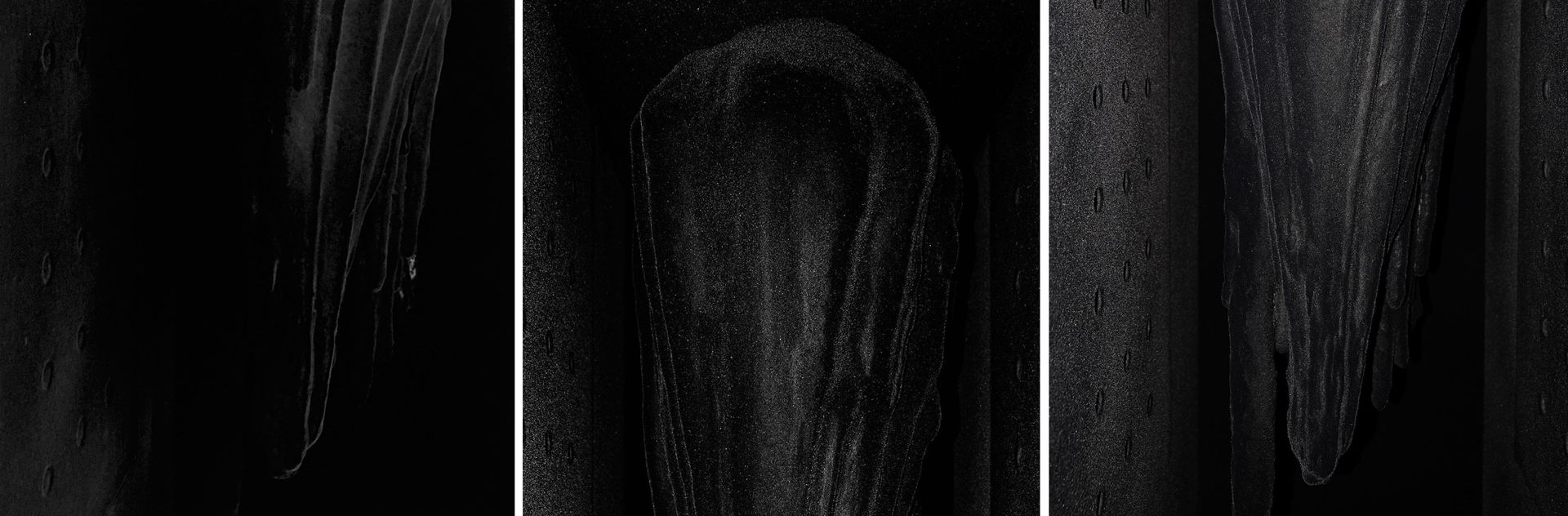
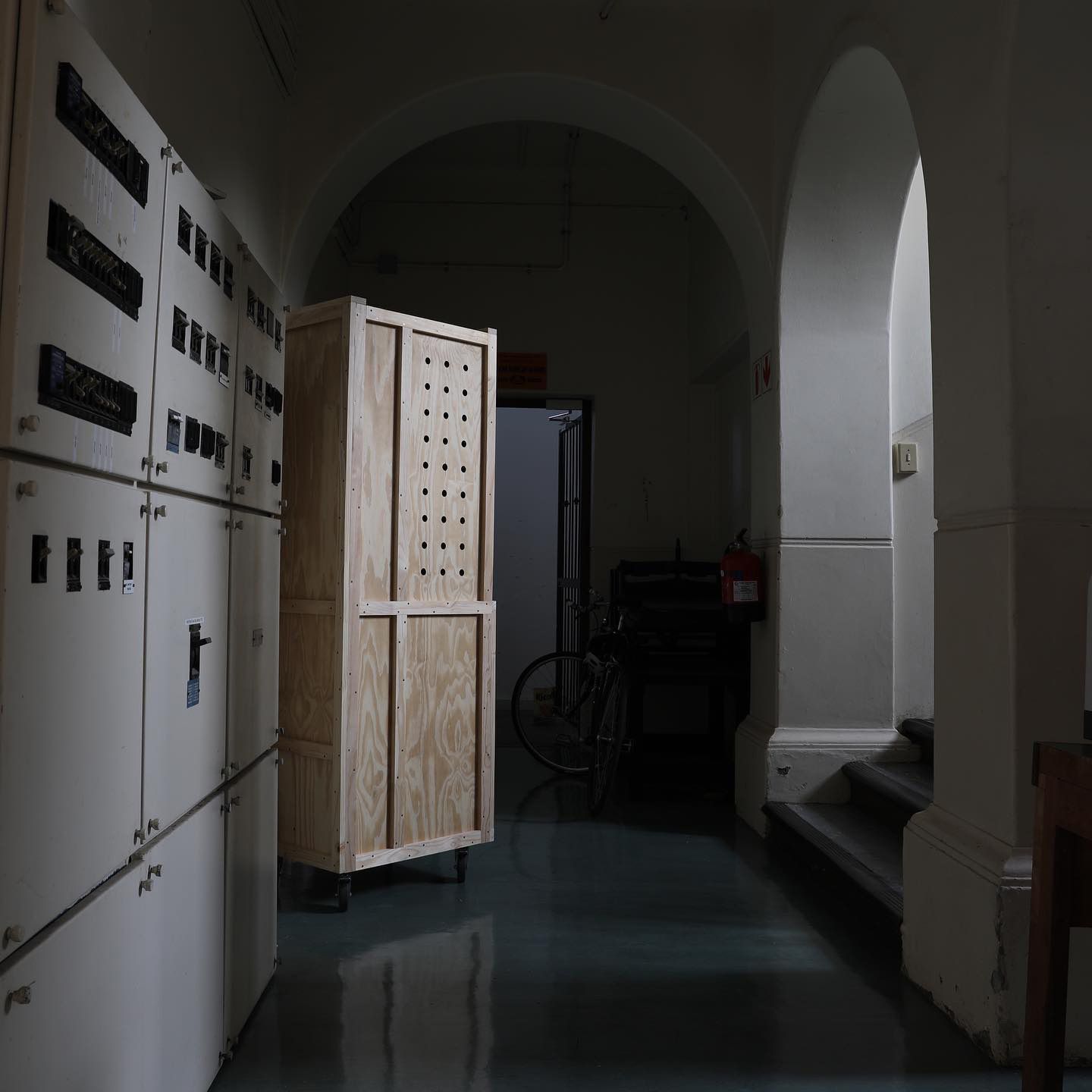
Cape Town artists Dominique Edwards and Nicola Deane’s sculptural work Endling functions as a mobile, transportable system of necrotic metamorphosis. The genderless form inside an upright coffin on wheels, the interior of which is encased in lush velvety black flock, reads like the molecular code of an almost dead species, alien, yet eerily familiar. A fitting metaphor for engagement with decay, mutation and archival preservation of language.
Opening the doors of the upright coffin reveals a vaginal or tongue-like form whose skin has been overwritten with flock filaments. These are very short fibres used to form a velvety, protective covering on paper mȃché in patterns mimicking data-pathways or bioinformatic glyphs. But the awful sonic signal that Endling emits as soon as it is approached by the audience —Endling’s “speech”— is irreducible to intelligible units.
Endling, this black flocked tongue-in-the-box extended in a scream, thus embodies a semiotic wound. Speech here is decomposed into a collapse of alien language implicated as semiosonic decay. The audience encounters the sound of language rotting under the weight of its own visibility. The tongue’s sound is no longer language transmission but pure decay-rhythm; a metabolic grammar of putrefaction and feedback. This is the core of Endling’s poetics: to speak where language no longer functions, to sculpt meaning where signifiers dissolve.
Understood in terms of Artaud’s cryptic language: Endling’s tongue has been cut off at the exit of the body’s tunnel. If we think about the dictionary definition of an Endling: “the last of its species”, we become aware of the futility of the tongue, of the languaging organ. Who could this Endling be speaking to? For Endling speaking in tongues becomes a purely solipsistic act.
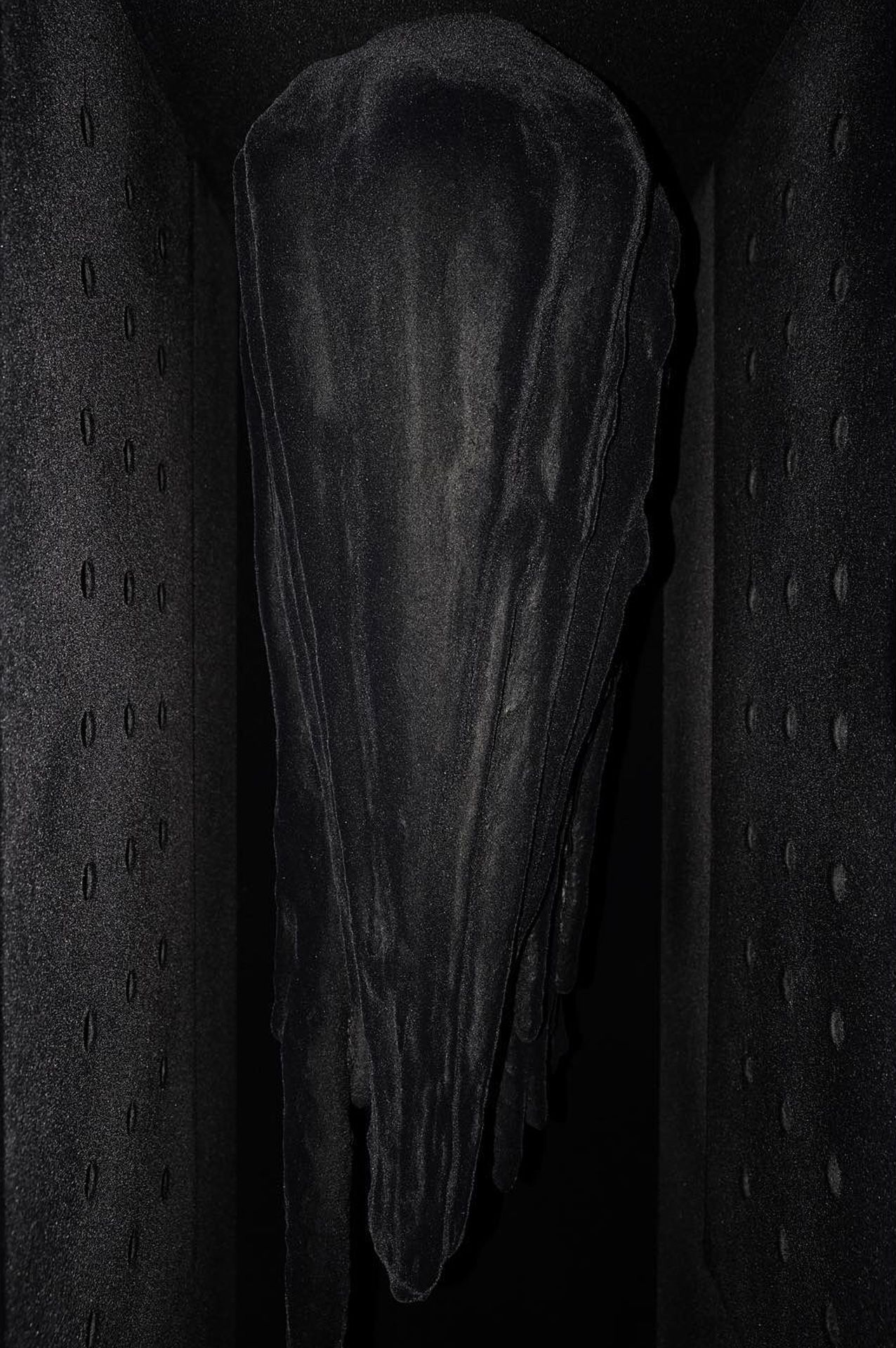
Antonin Artaud’s injunction to—“ cut off / the organisms’ tongues … / at the exit of the body’s tunnels”—reads less as a moral prohibition than a diagnosis of failure to exert requisite cruelty. The tongue, for Artaud, is the site where life exceeds itself, where organism becomes expression, contagion, theatre. To allow the tongue to extend unchecked is to permit a false continuity between inside and outside, between body and meaning. What must be severed is the fantasy that speech communicates transparently, that language exits the body intact.
In Endling the tongue is not simply allowed to protrude; it emerges already damaged, already contaminated by the very passage Artaud names: the exit of the body’s tunnels. The upright coffin functions as a brutal pedagogical device, a theatre of enforced verticality in which the organism cannot recline into comfort or narrative resolution. When the doors open, what confronts the viewer is a tongue-like form overwritten, flocked, smothered by its own surface technologies. We are spared the obscene visibility Artaud warned against; what we see is something closer to his demand that the theatre make language pay for its arrogance. The tongue has been flocked—mutilated—into functionlessness.
In systems biology, entropy implies the loss of informational coherence. This entropy becomes productive in Endling, a necro-cybernetic ecosystem where sound, flocked skin, and upright coffin invaginate into one another. In the biomechanical hallucination of Endling, the speaking tongue is re-imagined and assembled: dissected and fed upon by flock filaments and sonic eruption. This is Endling’s corpus: a Kristevan abjection that births alien, virulent syntax through the spasming sonic topology of necrosis.
Artaud’s cruelty was never about spectacle alone, but about forcing language to encounter its own limits. In this sense, Endling does not “let the organism speak”; it stages the consequences of having spoken too much. The sound that erupts when the audience approaches is an endlessly re-iterated sonic secretion that testifies to the exhaustion of semiotic labour, hardly a “voice” at all.
Endling’s spluttering decomposes in a loop that never closes, a system stuck in pathological autopoiesis. This is the necrotic tissue of sonic sculpture becoming fertile again. Endling’s erotic contortion is not sexual in the human sense, but reproductive in a microbial register, a shrill mating call invoking eerie new morphologies.
Endling compulsively emits this symbol-laden spasm, a semiovocal distortion of neural misfire and semantic collapse. Rejecting legibility and vocal clarity, this repetitive squawk of sound enacts an antiphonic decomposition. Endling’s stuttering sonic loop is both sign and scar: a wound where language once operated, a sound unstructured by phoneme, a reversioning acceleration to nothing.
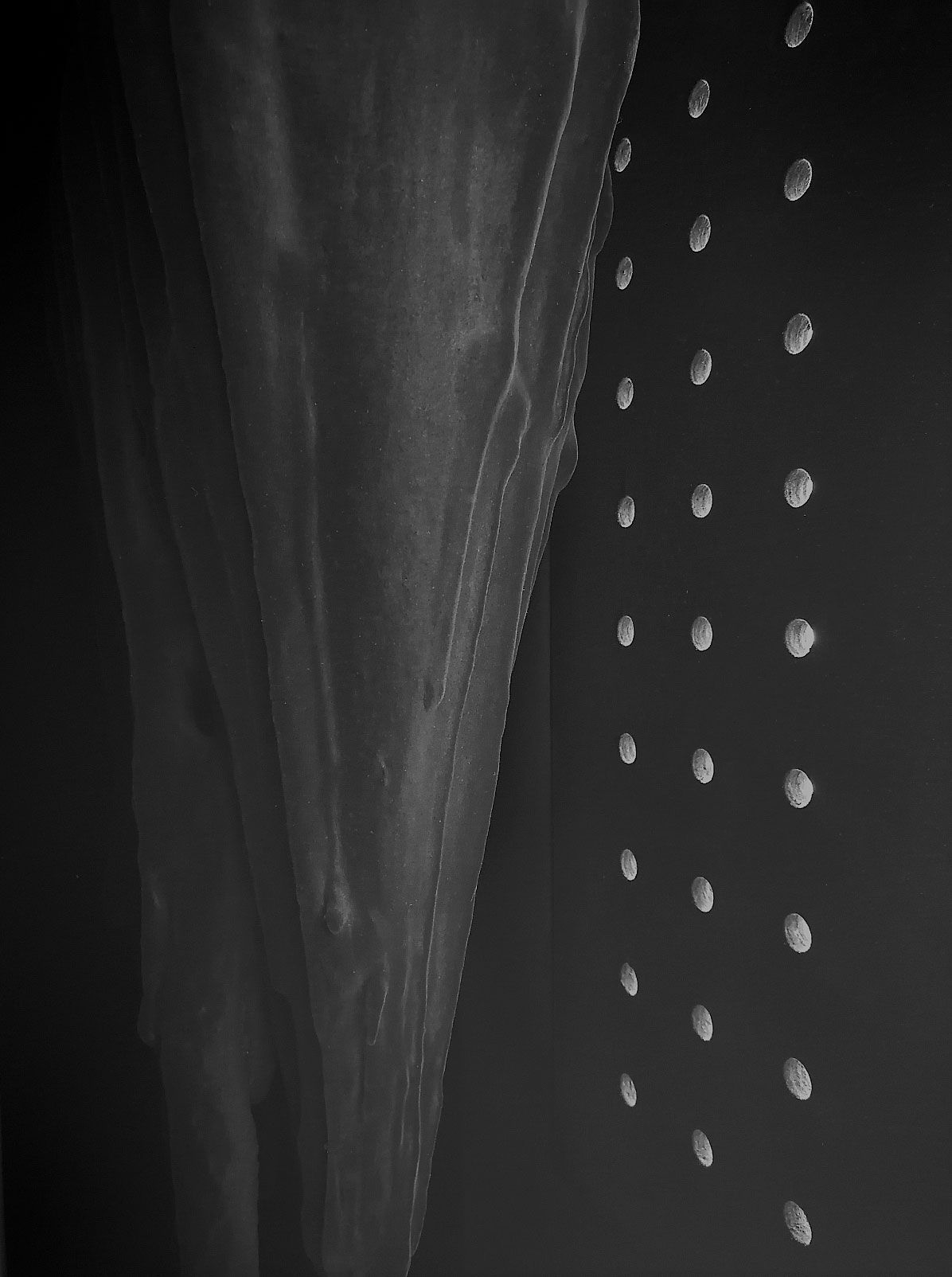
Artaud’s “body’s tunnels” reappear in Endling as apertures, holes, perforations that refuse stable interiority. These openings do not guarantee passage; they threaten leakage. Sound seeps, spores circulate, syntax decomposes. This is transmission without destination. In this way, Endling radicalizes Artaud’s theatre: cruelty is no longer imposed from without but generated endogenously, as a system locked into pathological repetition. The tongue cannot be cut off because it has become inseparable from the wound that produces it.
Furthermore the physical form of Endling is porous. The exoskeleton of Endling is perforated for transmission. Each hole functions like a glossophage—a structure for ingesting or emitting spores. In Endling’s autopoietic system, every hole is a semantic aperture akin to Reza Negarestani’s holey spaces where the boundary between inside and outside is not fixed.
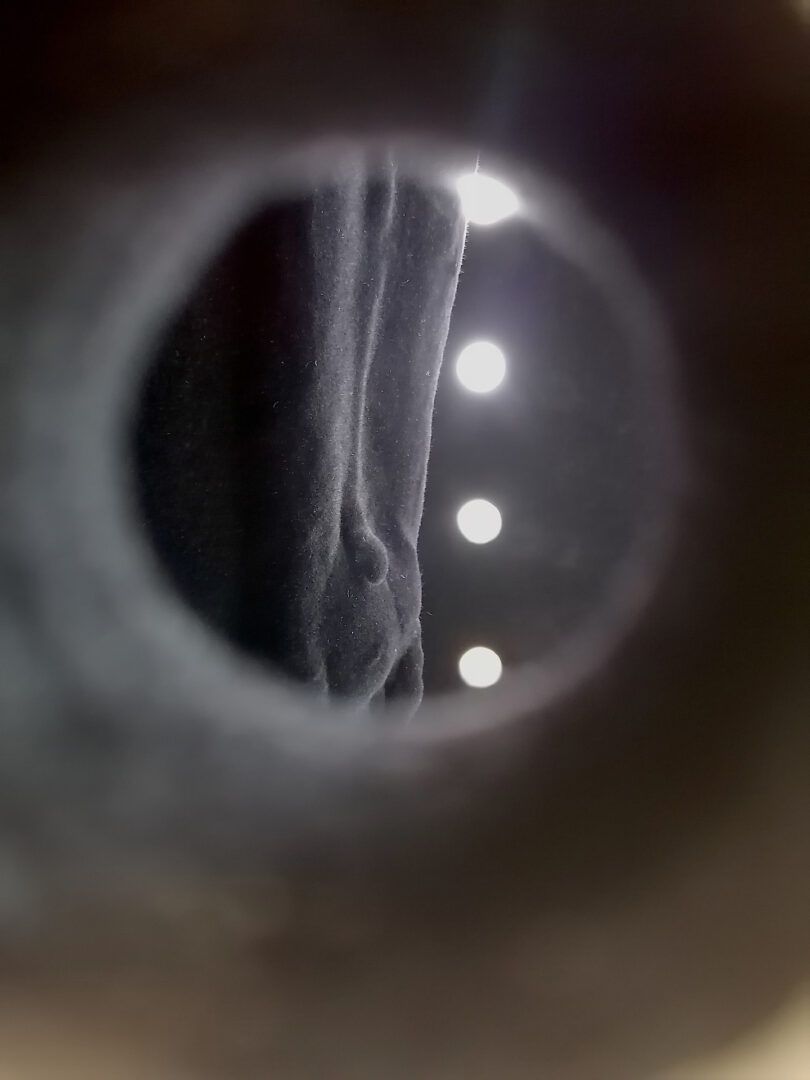
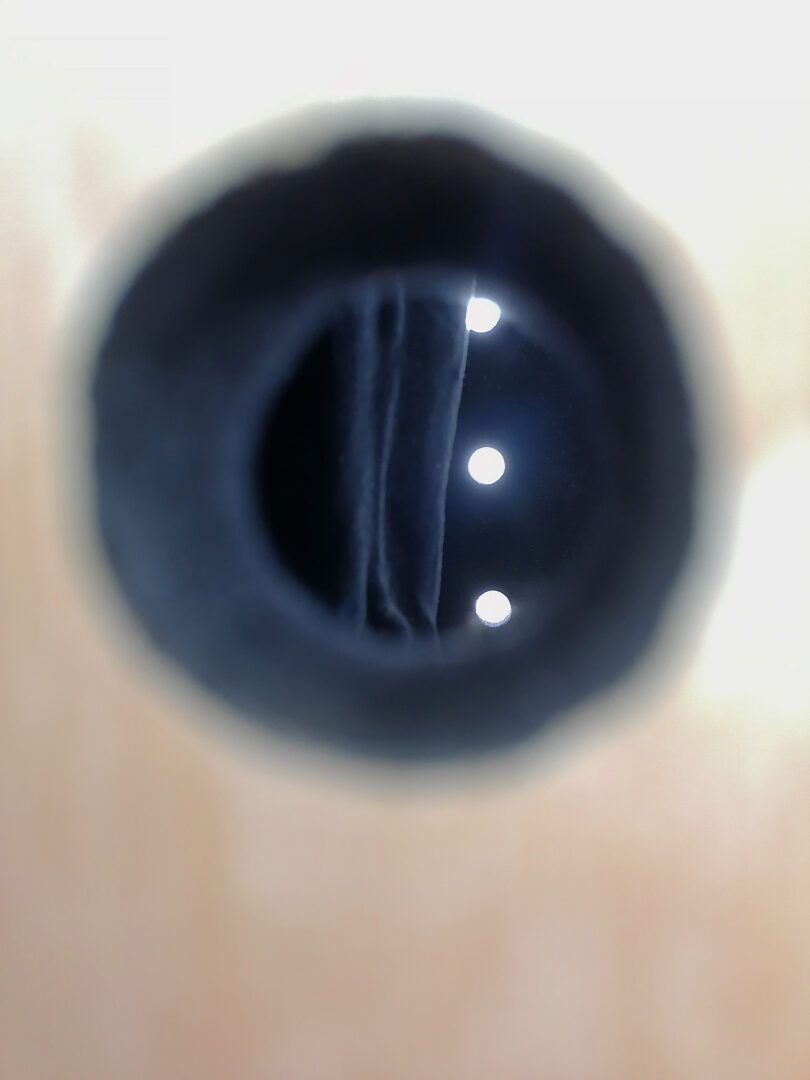
Life is not the absence of decay, but its recursive integration, always bordering on its own putrefaction. Endling is alien because it resists anthropocentric domestication. In its refusal to cohere, to be intelligible, Endling is not classically therapeutic. It does not console. It purges. Endling offers no catharsis. It is not horror, it is decaymentation.
In Endling, this decaymentation is radicalized: coffin, holes, tongue, and the ghost of a language made all the more present by its absence, all become vectors of infection. The tongue mutates. The syntax dehisces. The infected sound byte is no longer a “carrier” of emotion but a lesion in the tissue of sense and/or senselessness. Endling refuses the stability of representation, beyond metaphor, it is decay materialized as poetics. Artaud would have loved it.
But to say that Artaud would have loved it is perhaps bullshit. Endling does not illustrate Artaud; it implicates him. It asks what happens when the tongue is neither censored nor liberated, but biologically repurposed—when speech becomes necrotic infrastructure rather than human privilege. The sculpture does not console us with the fantasy of silence after the cut. Instead, it offers something far more disturbing: a theatre in which the tongue continues to sound precisely because its language has been rendered meaningless.
If Artaud feared the tongue because it pretended to mastery, Endling presents a tongue that no longer commands itself. Its utterance is involuntary, spasmodic, closer to mere reflex than any purported message. The cut has already happened, but instead of silence, it produces a stunted, angry feedback that serves to sharpen Artaud’s violence. A tongue that has no other to address can only communicate within itself, auto-epistemically. Here Artaud’s fantasy of cutting becomes a structural condition: the communicative organ outlives its communicative function. Endling does not ask what language means, but implies what language does when meaning has lost its meaning beyond the ecological niche of the the human. The result is not nihilism but a new metabolism of sense: decaymentation as poetics.
Endling (2024) Dominique Edwards & Nicola Deane
Paper, cold glue, paint, flocking, pine shutter ply, pine slats, screws, bolts, hinges, wheels, interactive sound system: 2m x 650mm x 420mm.
A response to the Hidden Years Music Archive at Stellenbosch University for the International project ‘Decay Without Mourning: Future-thinking Heritage Practices’ (2022-2026).
Photos courtesy of the artists. Exhibited at The Michaelis Gallery, Cape Town during the group exhibition Vital Signs, with a thematic focus on ecologies, climate crisis and sustainability. humanities.uct.
The artwork was commissioned as part of the Decay Without Mourning Project initiated by Lizabé Lambrechts decay.proj