PAKAMA S. NCUME
Digitisation and Decay: An Archivist’s Ethics of Care for Reel-to-Reel Tape Preservation
Abstract
This article offers a reflection on the complexities of preserving decaying reel-to-reel tapes in the Hidden Years Music archive. It interrogates the material, ethical and conceptual challenges that arise in the digitisation process. Through a personal narrative of encountering and working with deteriorating audio materials, the piece explores how decay is not merely a technical obstacle but a catalyst for rethinking archival practice. Drawing on the ethics of care, the author argues that archival work involves ongoing negotiation with loss and vulnerability, rather than a straightforward pursuit of preservation or rescue. The article demonstrates how decisions about what to digitise, how to intervene and when to accept decay are shaped by material realities, institutional capacities and broader questions about memory and heritage. Ultimately, it suggests that embracing the uncertainties and limits of preservation can open new possibilities for archival theory and practice.
Keywords: reel-to-reel tapes, material decay, sound preservation, digitisation, Hidden Years Music archive, archival ethics.
1. Introduction
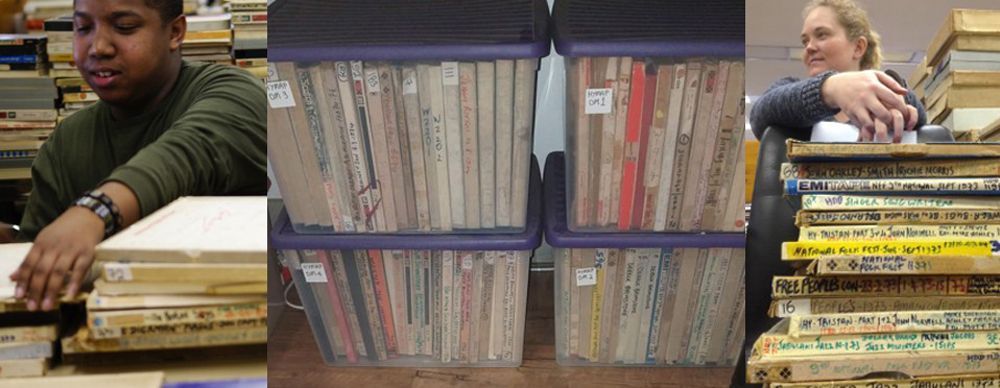
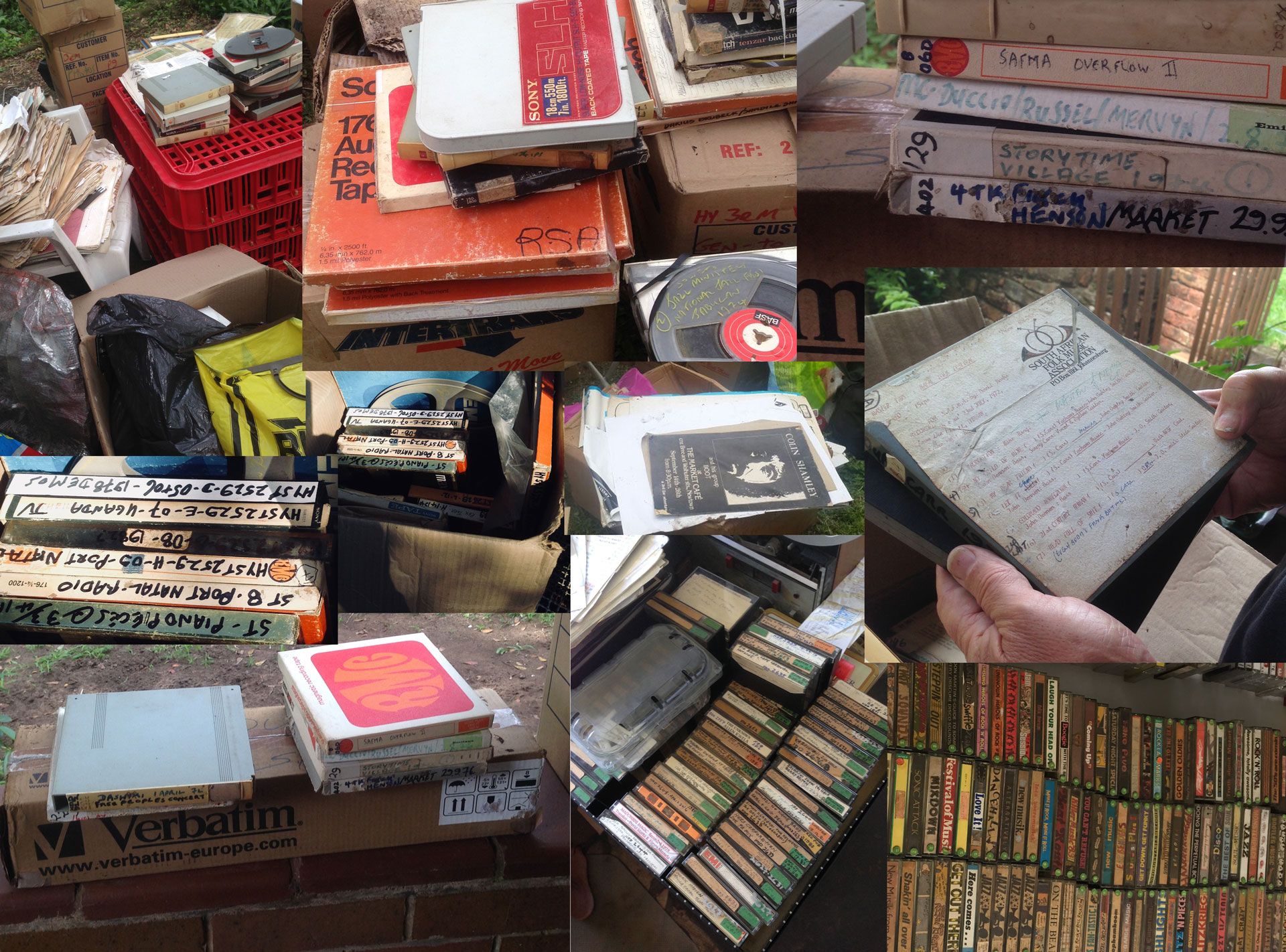
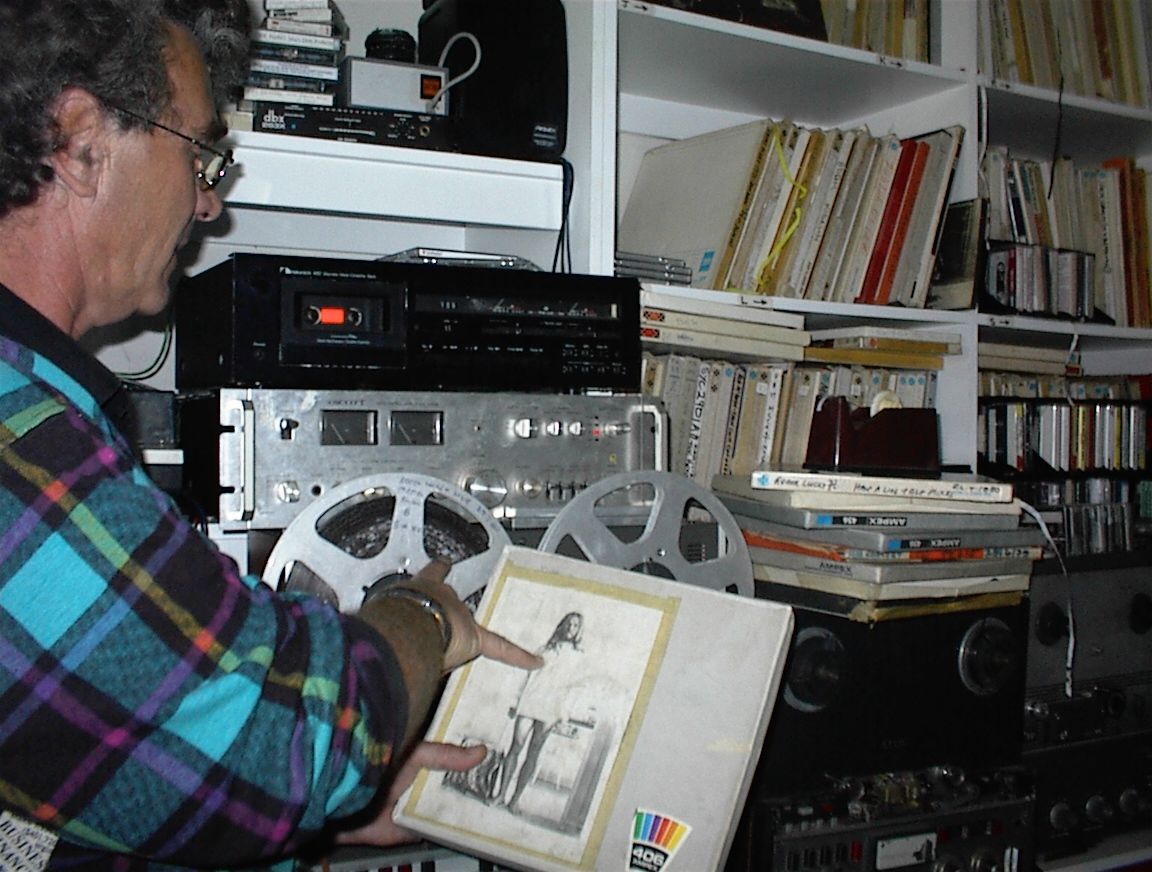
In March 2017, I began working as a Sound Archivist at the Africa Open Institute for Music, Research and Innovation[1]The Africa Open Institute for Music, Research and Innovation is an autonomous, interdisciplinary institute within the Faculty of Arts and Social Sciences at Stellenbosch University. at Stellenbosch University, where I was responsible for digitising sound recordings from the Hidden Years Music archive.[2]The Hidden Years Music archive was collected and preserved by South African-born songwriter, singer and producer David Marks. The archive documents alternative South African and Southern African music and musicians from the late 1960s to the early 2000s. See: hiddenyearsmusicarchive and 3rdearmusic for more on the archive and Marks’ works. The archive was donated to the Documentation Centre for Music (DOMUS)[3]The Documentation Centre for Music (DOMUS) forms part of the Stellenbosch University Music Library’s Special Collections. It is dedicated to preserving and facilitating research access to rare materials related to South African music. See: https://libguides.sun.ac.za/domus. in November 2013 as part of a joint project with the institute. It comprises a wide range of materials including newspaper articles, photographs, audio-visual recordings, posters, documents, press cuttings, notebooks, diaries, event programmes and other materials that document musicians and music performances across South Africa.
Following the donation, a digitisation project was started at the Africa Open Institute to preserve and make this collection accessible to scholars.[4]The digitisation project was funded by the Volkswagen Foundation (awarded to Lizabé Lambrechts, 2015–2022) and the Andrew W. Mellon Foundation (awarded to Stephanus Muller, 2017–2021) and was hosted at the Africa Open Institute. For more information, visit aoinstitute and hiddenyears The analogue sound carriers in the archive include vinyl records (LPs and singles) and magnetic tape formats such as compact cassettes, reel-to-reel tapes, Digital Audio Tapes (DAT) and others. These carriers arrived in Stellenbosch after decades of storage along the humid south coast of KwaZulu-Natal.[5]See: Lizabé, Lambrechts. “Letting the Tape Run: The Creation and Preservation of the Hidden Years Music Archive.” South African Journal of Cultural History 32, no. 2 (2018): 3. The urgent need was to stabilise, digitise and provide access to materials at risk of irreversible loss.
When I began work, some recordings already showed traces of decay. This article focuses on reel-to-reel tapes, which were prioritised for digitisation due to their fragility.
2. Encountering Decay: Material Realities in Sound Archives
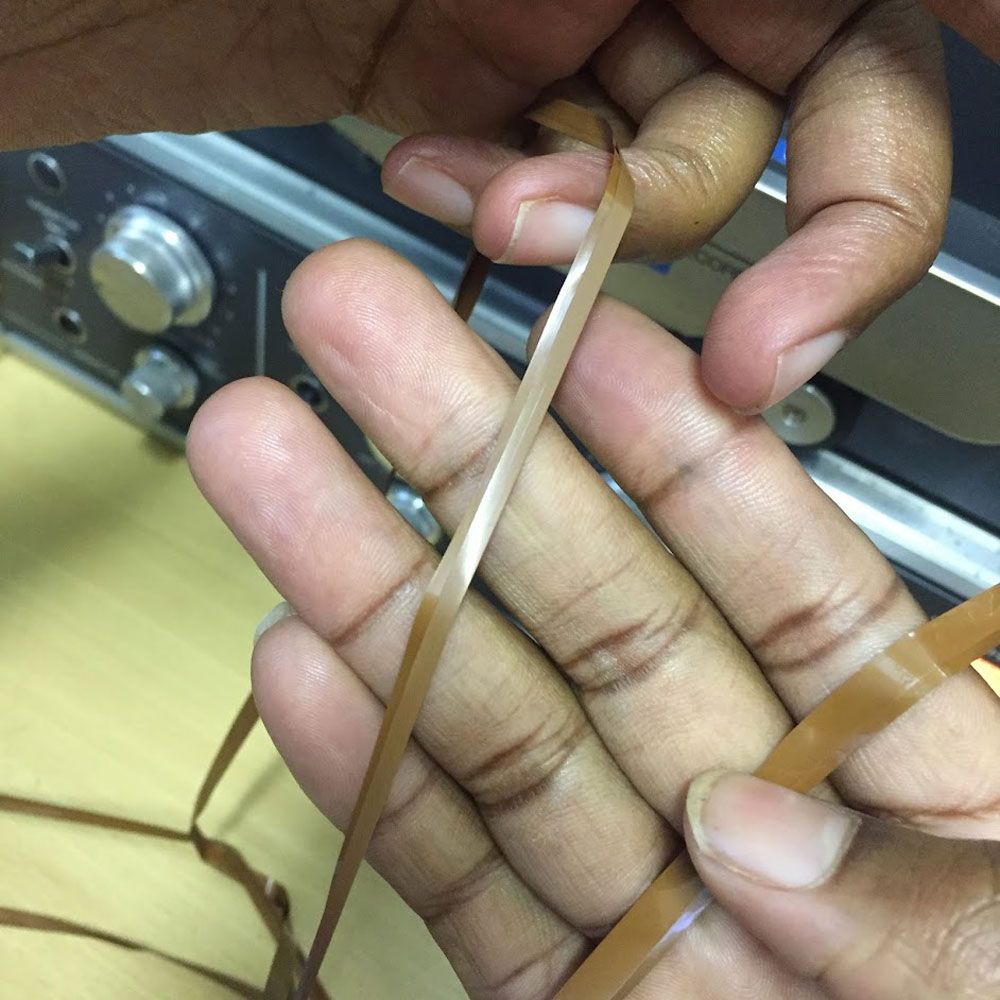
I vividly remember the smell of each old reel-to-reel tape box as I opened it. It was a mix of dust, cardboard and some form of acid. The smell was a trace of time. Each box told a different story. Tape condition ranged from remarkably well-preserved to clearly deteriorated. Some tapes had mould, faded labels, brittle edges, warped reels and other minor defects. As Lizabé Lambrechts notes, the collection endured high humidity, fluctuating temperatures, silverfish, fungi, mould, mechanical damage and non-professional handling.[6]Lizabé Lambrechts, Kati Lindström, Lize-Marié Hansen van der Watt, Fernanda Pitta, Nicola Deane, Bruno Moreschi, and Leif Petersen. “Decay Without Mourning: Future-thinking Heritage Practices.” International Journal of Heritage Studies 31, no. 3 (2025): 343. All these left lasting marks on the materials.
This sensory encounter led to a broader understanding of decay in sound archives. It clearly showed the susceptibility of reel-to-reel tapes to deterioration. From the 1950s to the 1980s, reel-to-reel magnetic tapes were widely used but inherently fragile due to their material composition, which made them vulnerable to long-term decay.[7]clir.org Deterioration results from environmental, chemical, mechanical and handling factors. Fluctuations in temperature and humidity, poor storage, water exposure and fungal growth cause warping, mould or chemical breakdown, while handling and playback may cause scratching, stretching or breakage.[8]Samuel Brylawski, Maya Lerman, Robin Pike, and Kathlin Smith, eds. ARSC Guide to Audio Preservation. Association for Recorded Sound Collections (2015): 54 – 56.
Dietrich Schüller and James Bigourdan argue that audio media instability stems from their chemical composition, which is often worsened by poor storage, handling and manufacturing flaws.[9]See: Dietrich Schüller, “The Ethics of Preserving Audio and Video Documents.” Report 2005 (2004): 78-80 and James M. Bigourdan, Reilly, Karen Santoro and Gene Salesin. “The Preservation of Magnetic Tape Collections: A Perspective.” NEH Grants PA-50123-03, Image Permanence Institute, Rochester Institute of Technology, Rochester, NY, USA 29 (2006): 1- 70. Reel-to-reel tape illustrates this: a plastic base with iron oxide particles bound by chemicals, making it prone to chemical and mechanical degradation. Over time, binders absorb moisture, while physical stress causes warping, edge damage and brittleness. Federica Bressan, Richard L. Hess, Paolo Sgarbossa and Roberta Bertani describe magnetic tape as a layered structure, typically comprising a base film, a magnetic coating and sometimes, a conductive back layer. Each layer degrades differently and at varying rates, complicating analysis and preservation.[10]Federica Bressan, Richard L. Hess, Paolo Sgarbossa, and Roberta Bertani. “Chemistry for Audio Heritage Preservation: A Review of Analytical Techniques for Audio Magnetic Tapes.” Heritage 2, no. 2 (2019): 1551-1587.
The history of tape manufacture further complicates this picture. Tapes from the 1940s and 1950s were typically made with cellulose acetate backings. While their binders were often relatively stable, the acetate base itself is chemically unstable and prone to “vinegar syndrome,” a process in which the tape shrinks, becomes brittle and emits a vinegar-like smell.[11]For more details on vinegar syndrome, see: Scott, Dorsey. “Some Observations on Vinegar Syndrome.” In Audio Engineering Society Convention 139. Audio Engineering Society, 2015 and micrographics.. As a result, these tapes often fail physically – they warp, crack or break even when the recorded signal is still present. From the late 1950s onwards, polyester replaced acetate as the main backing material. Although polyester is more stable and resistant to physical damage, this shift did not eliminate decay; it merely displaced it. Many polyester tapes, particularly from the 1970s and 1980s, suffer from binder hydrolysis or “sticky-shed syndrome,” a form of archival decay in which the chemical breakdown of the binder makes the magnetic particles sticky and the tapes difficult to play.[12]Michael Heller and S. Hobaica provide detailed account of sticky shed syndrome. Refer to: Michael C. Heller, “Orpheus Unglued: Sticky Shed Syndrome and Tape’s Archival Anxieties.” Sound Studies 3, no. 1 (2017): 64-70 and S. Hobaica, “Analysis of Audio Magnetic Tapes with Sticky Shed Syndrome by ATR‐FTIR.” Journal of Applied Polymer Science 128, no. 3 (2013): 1962-1973. In such cases, the tape may appear physically intact yet the sound it carries becomes inaccessible. Heat, humidity and poor ventilation accelerate both forms of decay and encourage mould growth.
These material transformations also reshape sound. Nicola Deane’s analysis suggests that decay is not simply destruction but a process that alters both the material object and the knowledge it carries[13]Deane, Nicola. “Spectres of Decay: Anarchival Approaches to Decoding the Palimpsest.” Image & Text 39 (2025): 9. Analogue decay unfolds gradually and remains visible. Even damaged recordings retain fragments of sound with voices emerging through noise and music persisting beneath distortion. This partial survival creates a brief window for intervention, letting archivists capture what remains before further loss. Audible signs such as dropouts, distortion, noise and pitch instability reveal the tape’s history.
For archivists, these instabilities introduce ethical dilemmas. Playback risks further damage. Inaction may result in permanent loss. Digitisation operates within this tension. While often framed as a solution to analogue decay, it requires condition-specific approaches. Fragile acetate tapes demand urgent transfer while degraded polyester tapes may require treatment before playback. Digitisation does not halt decay; it enables access to content before it is lost. At the same time, digitisation introduces a different sense of time. Analogue decay is gradual and gives a warning. Digital failure, by contrast, can be sudden and complete. Preservation therefore is not a one-time technical act. It is an ongoing, ethical process shaped by each tape’s condition and the limits of technology.
3. Assessing Tape Condition and Preparing for Digitisation
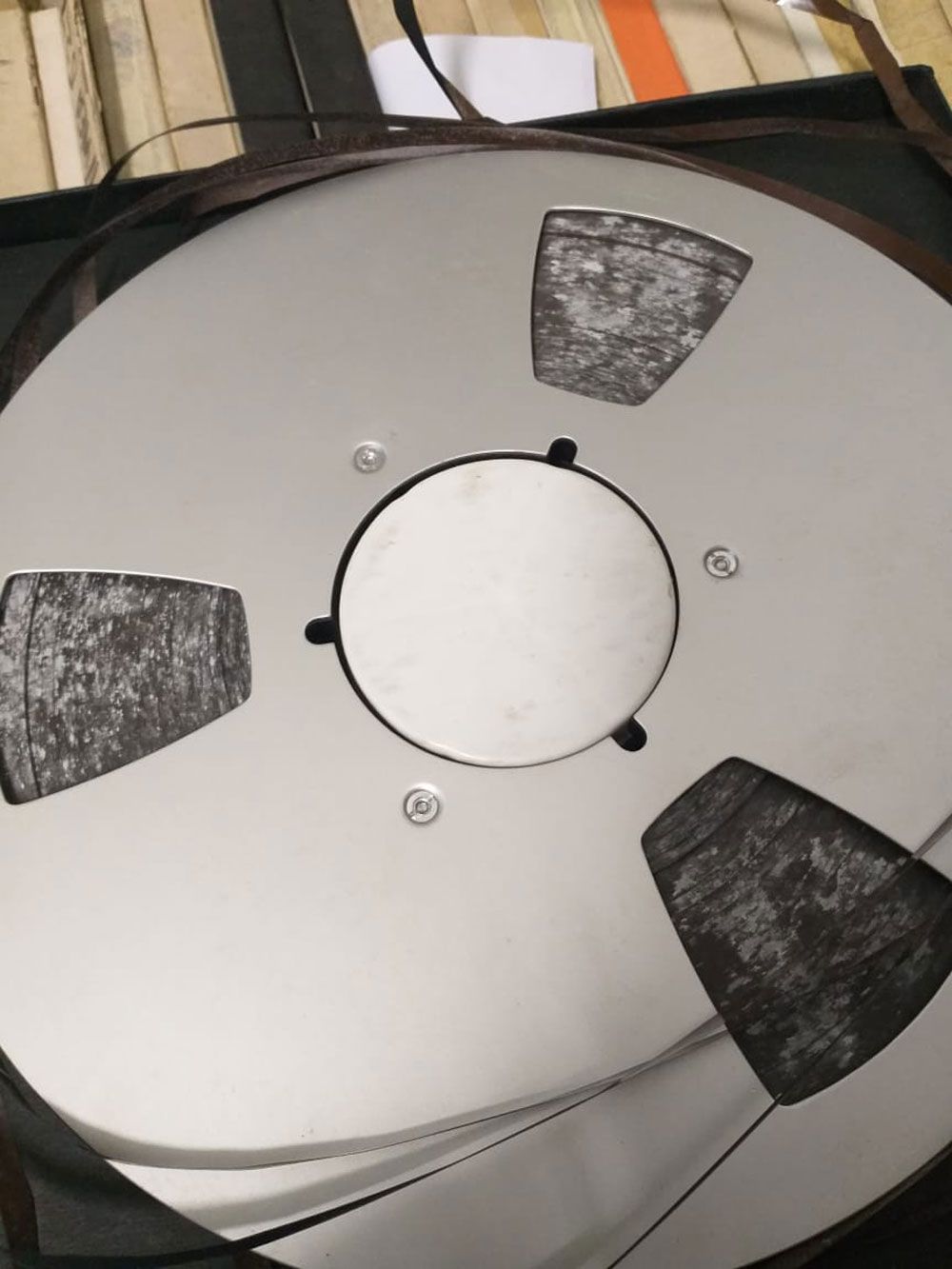
James M. Bigourdan notes that no diagnostic tools exist to assess tape conditions. This forces inspections to rely mainly on visual checks and expert judgment.[14]James M. Bigourdan, Reilly, Karen Santoro and Gene Salesin, “The Preservation of Magnetic Tape Collections: A Perspective.” NEH Grants PA-50123-03, Image Permanence Institute, Rochester Institute of Technology, Rochester, NY, USA 29 (2006): 14. Evaluating a tape requires attention to its storage history, handling and physical makeup. Tapes wound tails-out, stored upright and kept in stable conditions were more likely to be playable. Tapes exposed to heat, humidity and poor ventilation often deteriorated faster. See Figure 1 below as an example of a moulded tape from the Hidden Years Music archive.
Playback history mattered. Well-maintained machines with proper alignment, correct tension and roller guides placed less stress on tapes.[15]I am grateful to David Marks for teaching me the technical skills required to operate and maintain reel-to-reel tape machines safely and effectively. In ideal conditions, a reel endured several plays before degradation. These are approximations. Analogue tapes do not degrade predictably. Each tape’s life depends on a complex interplay of environment, material and use. Some tapes stayed stable for decades; others failed without warning. Each tape required individual assessment. There are no universal rules, but rather informed judgment shaped by experience and attention.
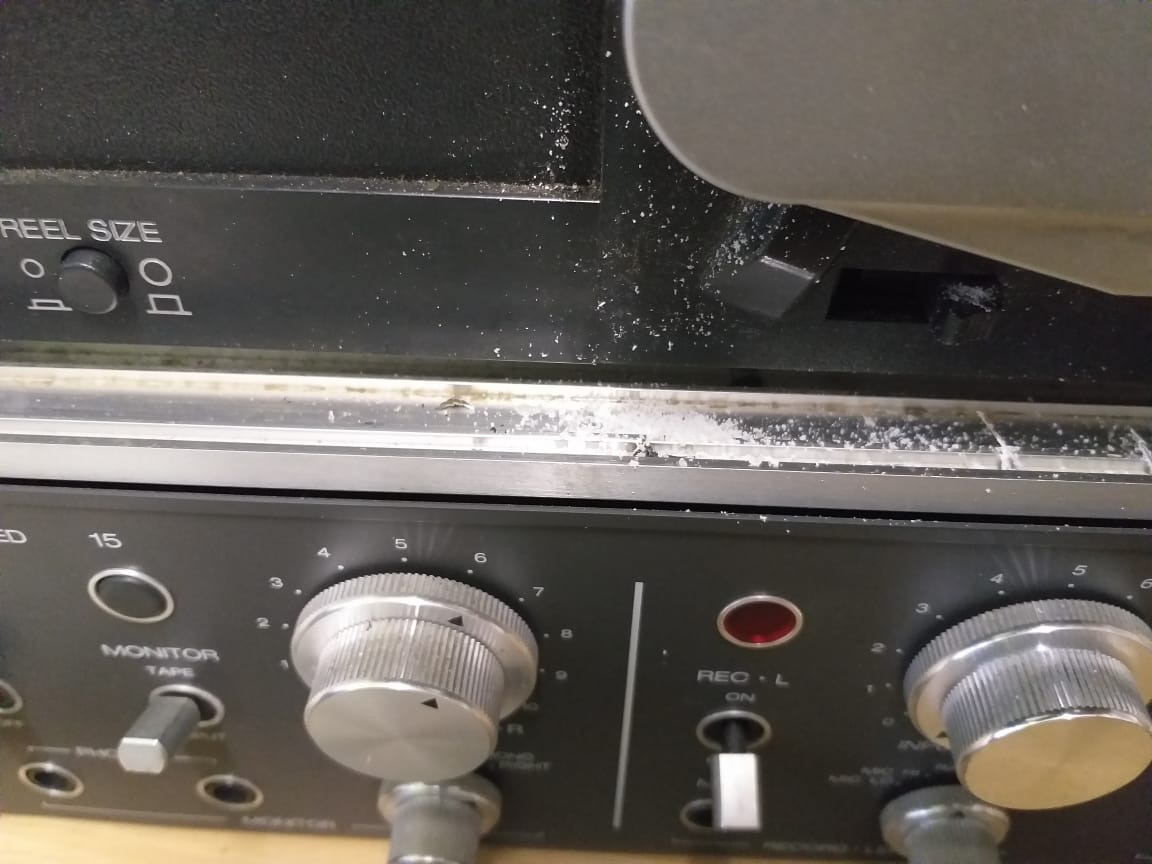
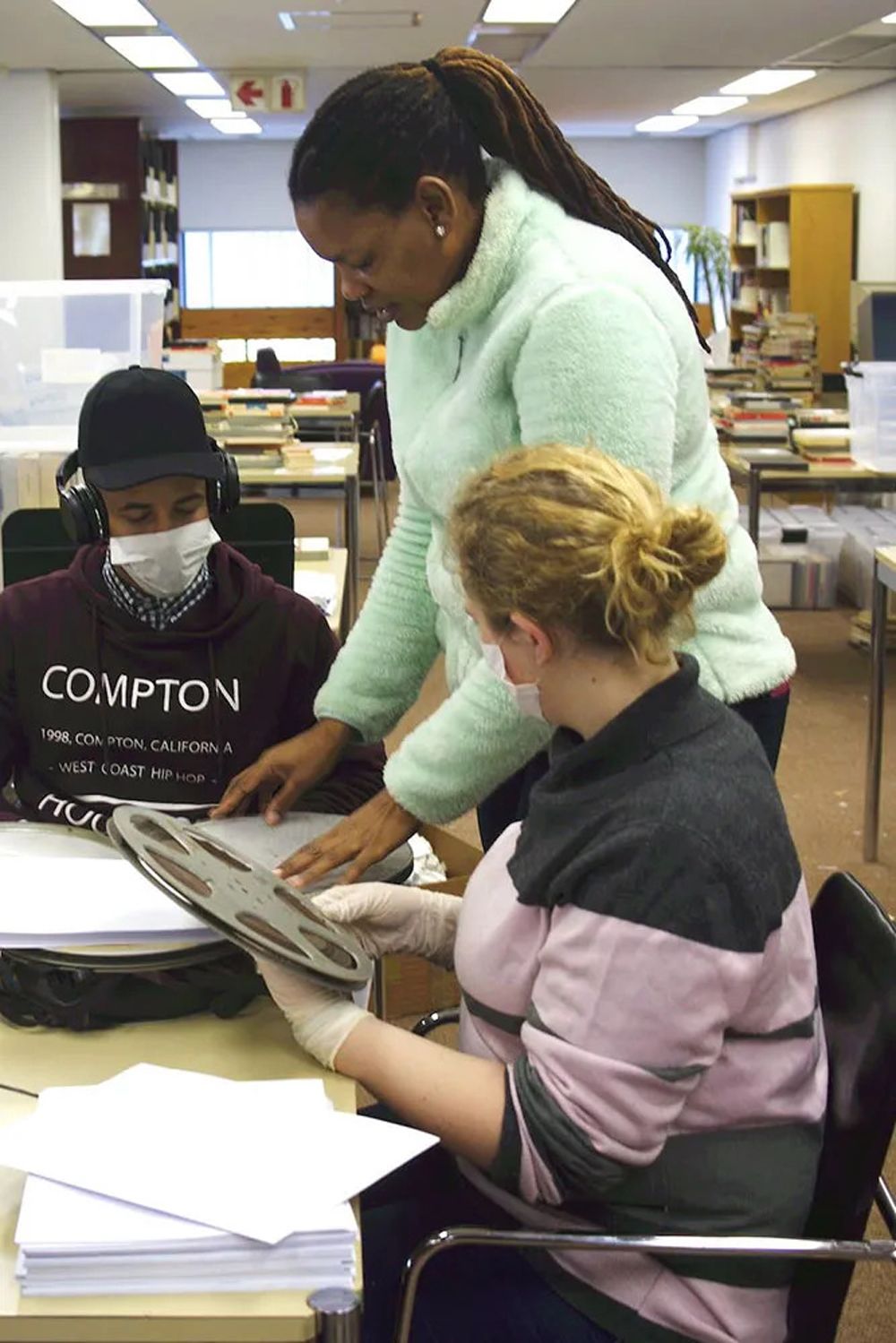
Preparing tapes for digitisation was as critical as the transfer itself. The archivist had to undertake careful manual cleaning; removing lint, dust, and loose debris with soft, non-invasive materials. Literature on methods for addressing mould on magnetic media remains limited.[16]Somayeh Soleymani and Lisa Russ present a detailed analysis of mould in magnetic media. See: Somayeh Soleymani and Lisa Russ, “Mould on Magnetic Media: What Are the Current Preservation Practices by Audiovisual Conservation Practitioners?” Studies in Conservation 68, no. 7 (2023): 704–719. Where mould was present, it introduced additional risks and required protective equipment and careful, controlled handling. Inactive spores were treated with caution and controlled playback was used to help clear spores (see Figure 2. below). All interventions were undertaken to avoid further damage to the tapes.
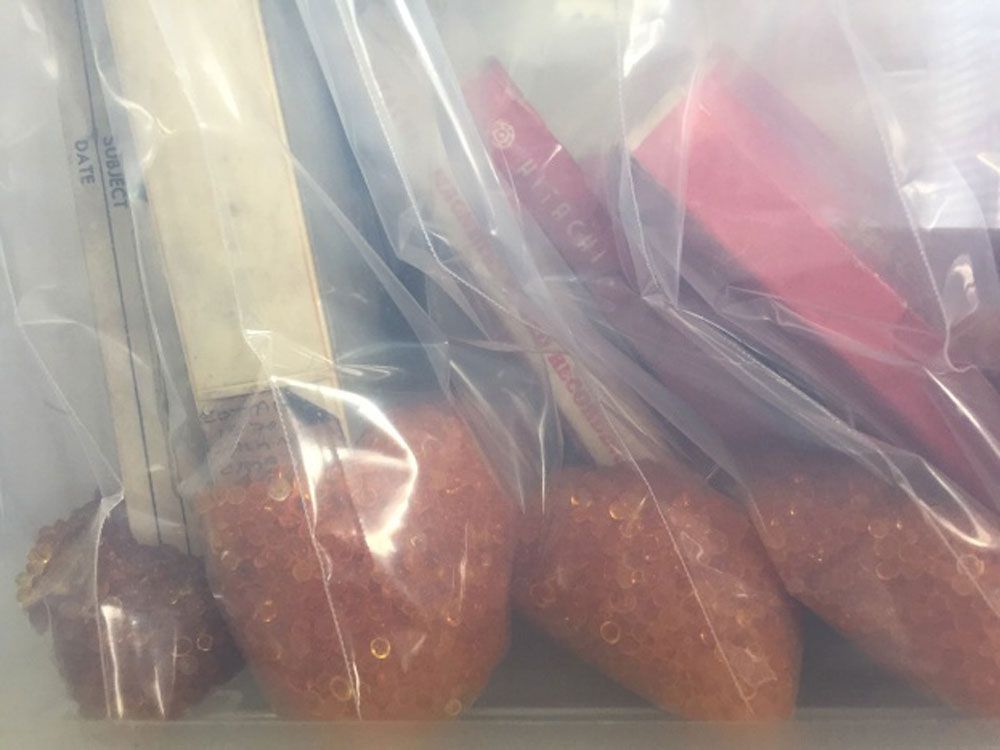
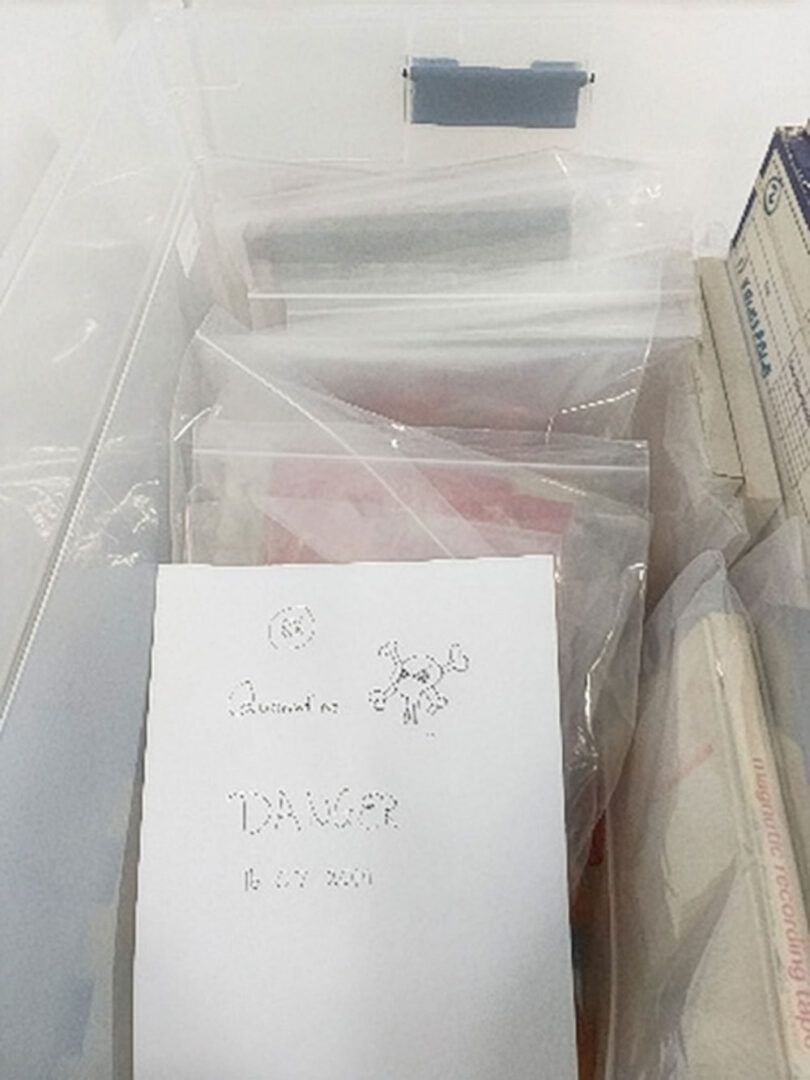
Charles A. Richardson suggests physically removing degraded back-coating and sticky residues through a controlled cleaning process, allowing the remaining tape to stabilise and restoring long-term playability[17]Charles A. Richardson. “The New” Non-Baking” Cure for Sticky Shed Tapes: How Forensic Chemistry Saved the Annapolis Sounds Masters.” ARSC Journal 44, no. 2 (2013): 228. rather than relying on thermal treatment like tape baking[18]Federica Bressan, Sergio Canazza and Roberta Bertani explain thermal treatment in depth: Bressan, Federica, Sergio Canazza, and Roberta Bertani. “Honey, I Burnt the Tapes! A Study on Thermal Treatment for the Recovery of Magnetic Tapes Affected by Soft Binder Syndrome-Sticky Shed Syndrome.” IASA journal 44 (2015): 53-64. or other methods that only temporarily stabilise the binder. In our case, with limited resources, we used sealed plastic bags with silica gel to reduce moisture—an imperfect but necessary alternative.
Playback machines also demanded equal attention. Heads and guides had to be cleaned regularly to prevent oxide build-up, which could damage both tape and equipment. Calibration was essential: incorrect speed or alignment could distort the recording or exacerbate wear. These processes were slow and deliberate. They required patience but also urgency. Decisions had to be made quickly, often without certainty of outcome.
4. Navigating Risk and Responsibility
Aleksandra Mažnarić Karafin suggests that the only reliable way to preserve a sound recording stored on a carrier, despite optimal storage and protective measures, is to transfer it onto new media, effectively converting it into a different format.[19]Aleksandra Mažnarić Karafin, “Digitization of Sound Recordings as an Example for Preservation of Oral and Music Folklore Heritage.” In Proceedings of the 1st International Conference on The Future of Information Sciences (INFuture’07): Digital Information and Heritage, 2007:142. Yet this work was shaped by a central tension: to play a tape is to risk damaging it, while not playing it risks losing it entirely. Each decision carried ethical weight. Should a fragile tape be stabilised and played, knowing that the process might accelerate its deterioration? Or should it be left untouched, preserving its material state at the cost of its content?
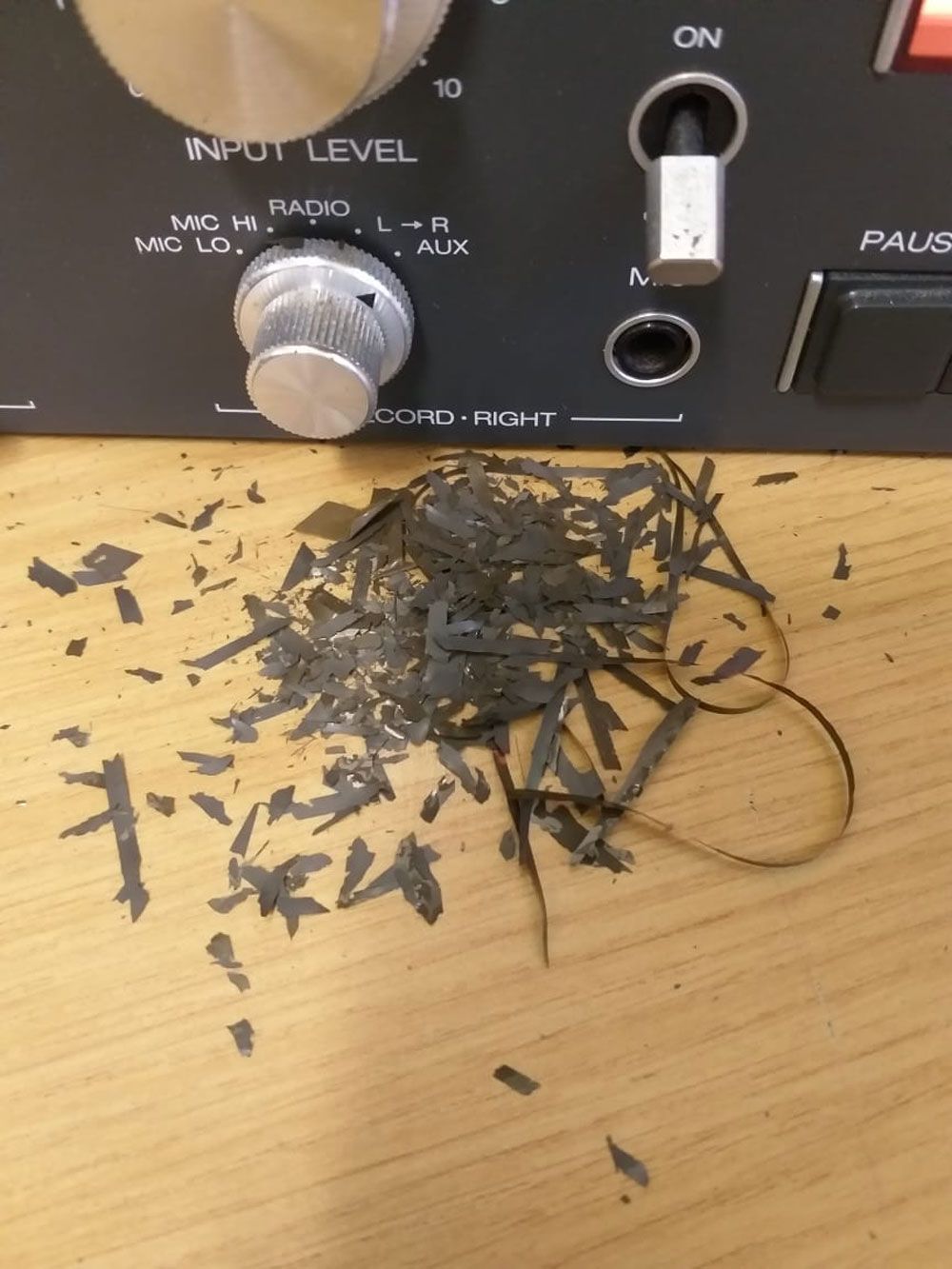
There were no easy answers. Some tapes broke during the process. Others yielded only fragments of audio (Figure 5 below shows a tape breaking during digitation).
Despite my initial instinct to listen, archival practice requires restraint – a continual balance between acting to preserve and withholding intervention to prevent harm. Magnetic tapes are fragile and playback without prior assessment can cause irreversible damage. The work therefore begins not with listening but with careful inspection.
Over time, I learned to “read” tapes in much the same way one reads fragile archival documents. I could differentiate between tapes with sticky shed syndrome and vinegar syndrome. I could identify tapes that may resist unwinding or produce a squealing sound during playback. With the more visible forms of deterioration such as mould growth or the brittleness associated with acetate-based tapes, care was needed as they posed significant risks during handling.
In these moments, I was no longer simply preserving recordings. I was mediating between material decay and the possibility of future access.[20]For further discussion on the importance of digitising analogue sound carriers, see Jonathan Sterne’s “The Preservation Paradox in Digital Audio.” Sound Souvenirs: Audio Technologies, Memory and Cultural Practices 2 (2009): 55-65; Weber Hartmut and Marianne Dorr, “Digitisation as a Method of Preservation?” Páginas A&B: Arquivos e Bibliotecas (1998): 7-34. Some cases called for documentation. Recording what could not be recovered was as important as preserving what could.
Listening itself became an act of care. It required attentiveness not only to sound but to the silences and the long stretches that might indicate gaps, edits or simply pauses in the recording. I learned to listen through uncertainty, resisting the urge to intervene prematurely.
Since all audiovisual carriers are susceptible to decay and all playback systems face obsolescence, preservation efforts must focus on the content itself, which can only be safeguarded by migrating it from one system to another. As each analogue copy further degrades the signal, this migration is most reliably achieved in the digital domain, enabling unlimited high-quality reproductions. Therefore, analogue materials must be digitised as the first step in preservation.[21]Schüller, Dietrich. “Audio and Video Carriers.” In Recording Principles, Storage and Handling, Maintenance of Equipment Format and Equipment Obsolescence (2008):17.
5. Decay as Knowledge
Encountering theoretical work on decay reframed my experience. What I had initially understood as technical failure came to be recognised as a form of knowledge.
Decay records time. It carries traces of storage conditions, handling practices and institutional histories. As Nicola Deane attests, archival records carry multiple layers of time, made visible and audible through natural aesthetic phenomena such as the chemical changes in deteriorating film or the crackle and hiss of vinyl, shaping how the past is experienced in the present.[22]Deane, Nicola. “Spectres of Decay: Anarchival Approaches to Decoding the Palimpsest.” Image & Text 39 (2025): 3. In the Hidden Years archive, deterioration also reflects broader conditions, including political constraint, limited resources and informal preservation practices.
Digitising these tapes is not simply about preserving sound. It is to translate materially complex objects into digital forms, potentially erasing the very traces that make their histories visible. The noise, distortion and fragility are not incidental; they are part of the archive.
This raises difficult questions. What is lost when we prioritise clarity over material history? What does it mean to preserve sound while transforming its conditions of existence?
6. Conclusion
Deterioration was always present in my work. It was audible in the recordings and visible on the tapes themselves. It shaped every step of the work, from initial inspection to final digitisation. I learned that digitisation is not just about transferring sound, but about making careful choices when faced with uncertainty. Preservation and loss are always intertwined.
Working with deteriorating reel-to-reel tapes revealed that preservation is not a neutral or purely technical act. Archival work with fragile tapes is shaped by decisions: what to prioritise, what to risk and what to let go. Each tape offered only a limited chance to save its contents. Digitisation does not halt decay. It shifts it from the physical object to the digital copy and the systems that sustain it. Although sound may be preserved, the material conditions that produced it are not.
The real lesson is that caring for archives means accepting and working with decay and not merely trying to erase it. Preservation is not only about saving the past, but also about finding new ways to think about the future of archiving and of archives and the futures they make possible.
Bigourdan, J., James M. Reilly, Karen Santoro, and Gene Salesin. “The Preservation of Magnetic Tape Collections: A Perspective.” NEH Grants PA-50123-03, Image Permanence Institute, Rochester Institute of Technology, Rochester, NY, USA 29 (2006):1- 70.
Bressan, Federica, Richard L. Hess, Paolo Sgarbossa, and Roberta Bertani. “Chemistry for Audio Heritage Preservation: A Review of Analytical Techniques for Audio Magnetic Tapes.” Heritage 2, no. 2 (2019): 1551-1587.
Bressan, Federica, Sergio Canazza, and Roberta Bertani. “Honey, I Burnt the Tapes! A Study on Thermal Treatment for the Recovery of Magnetic Tapes Affected by Soft Binder Syndrome-Sticky Shed Syndrome.” IASA journal 44 (2015): 53-64.
Brylawski, Samuel, Maya Lerman, Robin Pike, and Kathlin Smith, eds. ARSC Guide to Audio Preservation. Association for Recorded Sound Collections (2015).
Cuddihy, Edward. “Ageing of Magnetic Recording Tape.” IEEE Transactions on Magnetics 16, no. 4 (2003): 558-568.
Cuddihy, Edward F. “Storage, Preservation, and Recovery of Magnetic Recording Tape.” (1994).
Deane, Nicola. “Spectres of Decay: Anarchival Approaches to Decoding the Palimpsest.” Image & Text 39 (2025): 1-20.
Dorsey, Scott. “Some Observations on Vinegar Syndrome.” In Audio Engineering Society Convention 139. Audio Engineering Society, 2015.
Heller, Michael C. “Orpheus Unglued: Sticky Shed Syndrome and Tape’s Aarchival Aanxieties.” Sound Studies 3, no. 1 (2017): 64-70.
Hobaica, S. “Analysis of Audio Magnetic Tapes with Sticky Shed Syndrome by ATR‐FTIR.” Journal of Applied Polymer Science 128, no. 3 (2013): 1962-1973.
Karafin, Aleksandra Mažnarić. “Digitisation of Sound Recordings as an Example for Preservation of Oral and Music Folklore Heritage.” In Proceedings of the 1st International Conference on The Future of Information Sciences (INFuture’07): ‘Digital Information and Heritage, (2007): 139-152.
Kaltseis, Stefan, and Anton Hubauer. “Tape Dehydration as Part of the ‘Journale’ Project: On Dealing with Sticky-Shed Syndrome.” IASA Journal 38 (2012): 40-45.
Lambrechts, Lizabé. “Letting the Tape Run: The Creation and Preservation of the Hidden Years Music Archive.” South African Journal of Cultural History 32, no. 2 (2018): 3.
Lambrechts, Lizabé, Kati Lindström, Lize-Marié Hansen van der Watt, Fernanda Pitta, Nicola Deane, Bruno Moreschi und Leif Petersen. “Decay without mourning: future-thinking heritage practices.” International Journal of Heritage Studies 31, no. 3 (2025): 340-357.
Perry, Robert H. “Magnetic Tape.” Elastic 96, no. 106 (1981): 37-47.
Richardson, Charles A. “The New” Non-Baking” Cure for Sticky Shed Tapes: How Forensic Chemistry Saved the Annapolis Sounds Masters.” ARSC Journal 44, no. 2 (2013): 217-248.
Schüller, Dietrich. “Audio and Video Carriers.” In Recording Principles, Storage and Handling, Maintenance of Equipment Format and Equipment Obsolescence (2008).
Schüller, Dietrich. “The Ethics of Preserving Audio and Video Documents.” Report 2005 (2004): 78-80.
Schüller, Dietrich. “Sound Recordings: Problems of Preservation,” in Managing Preservation for Libraries and Archives, John Feather (Routledge, 2018).
Soleymani, Somayeh, and Lisa Russ. “Mould on Magnetic Media: What Are the Current Preservation Practices by Audiovisual Conservation Practitioners?” Studies in Conservation 68, no. 7 (2023): 704-719.
Sterne, Jonathan. “The Preservation Paradox in Digital Audio.” Sound souvenirs: Audio technologies, memory and cultural practices 2 (2009): 55-65.
Weber, Hartmut, and Marianne Dorr. “Digitisation as a Method of Preservation?” Páginas A&B: Arquivos e Bibliotecas (1998): 7-34.
| 1. | ↑ | The Africa Open Institute for Music, Research and Innovation is an autonomous, interdisciplinary institute within the Faculty of Arts and Social Sciences at Stellenbosch University. |
| 2. | ↑ | The Hidden Years Music archive was collected and preserved by South African-born songwriter, singer and producer David Marks. The archive documents alternative South African and Southern African music and musicians from the late 1960s to the early 2000s. See: hiddenyearsmusicarchive and 3rdearmusic for more on the archive and Marks’ works. |
| 3. | ↑ | The Documentation Centre for Music (DOMUS) forms part of the Stellenbosch University Music Library’s Special Collections. It is dedicated to preserving and facilitating research access to rare materials related to South African music. See: https://libguides.sun.ac.za/domus. |
| 4. | ↑ | The digitisation project was funded by the Volkswagen Foundation (awarded to Lizabé Lambrechts, 2015–2022) and the Andrew W. Mellon Foundation (awarded to Stephanus Muller, 2017–2021) and was hosted at the Africa Open Institute. For more information, visit aoinstitute and hiddenyears |
| 5. | ↑ | See: Lizabé, Lambrechts. “Letting the Tape Run: The Creation and Preservation of the Hidden Years Music Archive.” South African Journal of Cultural History 32, no. 2 (2018): 3. |
| 6. | ↑ | Lizabé Lambrechts, Kati Lindström, Lize-Marié Hansen van der Watt, Fernanda Pitta, Nicola Deane, Bruno Moreschi, and Leif Petersen. “Decay Without Mourning: Future-thinking Heritage Practices.” International Journal of Heritage Studies 31, no. 3 (2025): 343. |
| 7. | ↑ | clir.org |
| 8. | ↑ | Samuel Brylawski, Maya Lerman, Robin Pike, and Kathlin Smith, eds. ARSC Guide to Audio Preservation. Association for Recorded Sound Collections (2015): 54 – 56. |
| 9. | ↑ | See: Dietrich Schüller, “The Ethics of Preserving Audio and Video Documents.” Report 2005 (2004): 78-80 and James M. Bigourdan, Reilly, Karen Santoro and Gene Salesin. “The Preservation of Magnetic Tape Collections: A Perspective.” NEH Grants PA-50123-03, Image Permanence Institute, Rochester Institute of Technology, Rochester, NY, USA 29 (2006): 1- 70. |
| 10. | ↑ | Federica Bressan, Richard L. Hess, Paolo Sgarbossa, and Roberta Bertani. “Chemistry for Audio Heritage Preservation: A Review of Analytical Techniques for Audio Magnetic Tapes.” Heritage 2, no. 2 (2019): 1551-1587. |
| 11. | ↑ | For more details on vinegar syndrome, see: Scott, Dorsey. “Some Observations on Vinegar Syndrome.” In Audio Engineering Society Convention 139. Audio Engineering Society, 2015 and micrographics.. |
| 12. | ↑ | Michael Heller and S. Hobaica provide detailed account of sticky shed syndrome. Refer to: Michael C. Heller, “Orpheus Unglued: Sticky Shed Syndrome and Tape’s Archival Anxieties.” Sound Studies 3, no. 1 (2017): 64-70 and S. Hobaica, “Analysis of Audio Magnetic Tapes with Sticky Shed Syndrome by ATR‐FTIR.” Journal of Applied Polymer Science 128, no. 3 (2013): 1962-1973. |
| 13. | ↑ | Deane, Nicola. “Spectres of Decay: Anarchival Approaches to Decoding the Palimpsest.” Image & Text 39 (2025): 9. |
| 14. | ↑ | James M. Bigourdan, Reilly, Karen Santoro and Gene Salesin, “The Preservation of Magnetic Tape Collections: A Perspective.” NEH Grants PA-50123-03, Image Permanence Institute, Rochester Institute of Technology, Rochester, NY, USA 29 (2006): 14. |
| 15. | ↑ | I am grateful to David Marks for teaching me the technical skills required to operate and maintain reel-to-reel tape machines safely and effectively. |
| 16. | ↑ | Somayeh Soleymani and Lisa Russ present a detailed analysis of mould in magnetic media. See: Somayeh Soleymani and Lisa Russ, “Mould on Magnetic Media: What Are the Current Preservation Practices by Audiovisual Conservation Practitioners?” Studies in Conservation 68, no. 7 (2023): 704–719. |
| 17. | ↑ | Charles A. Richardson. “The New” Non-Baking” Cure for Sticky Shed Tapes: How Forensic Chemistry Saved the Annapolis Sounds Masters.” ARSC Journal 44, no. 2 (2013): 228. |
| 18. | ↑ | Federica Bressan, Sergio Canazza and Roberta Bertani explain thermal treatment in depth: Bressan, Federica, Sergio Canazza, and Roberta Bertani. “Honey, I Burnt the Tapes! A Study on Thermal Treatment for the Recovery of Magnetic Tapes Affected by Soft Binder Syndrome-Sticky Shed Syndrome.” IASA journal 44 (2015): 53-64. |
| 19. | ↑ | Aleksandra Mažnarić Karafin, “Digitization of Sound Recordings as an Example for Preservation of Oral and Music Folklore Heritage.” In Proceedings of the 1st International Conference on The Future of Information Sciences (INFuture’07): Digital Information and Heritage, 2007:142. |
| 20. | ↑ | For further discussion on the importance of digitising analogue sound carriers, see Jonathan Sterne’s “The Preservation Paradox in Digital Audio.” Sound Souvenirs: Audio Technologies, Memory and Cultural Practices 2 (2009): 55-65; Weber Hartmut and Marianne Dorr, “Digitisation as a Method of Preservation?” Páginas A&B: Arquivos e Bibliotecas (1998): 7-34. |
| 21. | ↑ | Schüller, Dietrich. “Audio and Video Carriers.” In Recording Principles, Storage and Handling, Maintenance of Equipment Format and Equipment Obsolescence (2008):17. |
| 22. | ↑ | Deane, Nicola. “Spectres of Decay: Anarchival Approaches to Decoding the Palimpsest.” Image & Text 39 (2025): 3. |