LIZABÉ LAMBRECHTS
To Decay - on custodianship, care, and the ethics of returning.
The quilt
I watch my grandmother mend the quilt. Her hands seem to know the blanket. They fold and twist the fabric almost without looking until the loose threads reveal themselves. Tiny stitches disappear back into the weave as though they had always been there.
“I wore every one of these dresses,” she says, running her hand across one faded triangle.
“Your mother was born in this one. And this was the dress I wore to her wedding.”
Every autumn I unfold the blanket from its protective wrapping, searching for places that need mending. By now there are almost as many repairs as original fabric. My grandmother’s careful, invisible stitches sit beside my mother’s neat mending. My own repairs have changed over the years. As a young adult I stitched hurriedly and functionally, simply trying to stop the tears from spreading. Later my stitches became more intentional, more visible, sometimes even colourful. The blanket has become a record not only of my grandmother’s dresses but of everyone who has cared for them since. It is a conversation between four generations of women: my grandmother, my mother, myself, and now, my daughters.
My eldest doesn’t yet understand any of this. She throws the blanket over her head, disappears beneath it and jumps out laughing. “Boo!” But perhaps, through play, she already understands something I have spent years learning. The blanket is not only an historical object to preserve, but something to hold, and to live with.
To touch
The first lesson archivists are taught is not how to remember. It is how not to touch.
We learn to hold objects by their edges. We wear gloves to protect them from oils, moisture, and fingerprints. The less we interfere, the longer the object might survive. Preservation, we are taught, depends on careful restraint and distance.
Yet almost everything that matters to me bears the marks of touch. A quilt softened by generations of hands, folded and unfolded every winter. A music archive whose papers and photographs have become brittle and stained from being used, read, and loved.
Decay reveals the minute details of these encounters, an archive of gestures, etched onto the substrates of the material.

The archive
The Hidden Years Music Archive had already lived many lives before I arrived. Collected over four decades by David Marks, sound engineer and director of the 3rd Ear Music Company, it documents South African and southern African music from the mid-1960s to the early 2000s. From urban folk, township jazz, to country rock, maskanda and choir works, most of it is music that mainstream record companies and the state broadcaster considered too political or too uncommercial to record and play. It is one of the largest popular music archives in the country, and much of it exists nowhere else. A part of the sound recordings, photographs, negatives and paper records already showed signs of decay when I first encountered the archive in 2011, with some of it in severe stages of deterioration. It was used daily by Marks to remember stories, show visitors around, build little home exhibitions, and compile obituaries. Housed for decades along the coast of KwaZulu-Natal, a sub-tropical region in South Africa, without any temperature or humidity control, decay was inevitable.
At first, I thought my task was obvious. I would sort and catalogue the collection, stabilise the objects and digitise as much as possible.[1]Lizabé Lambrechts, 2018. Letting the Tape Run: The creation and preservation of the Hidden Years Music Archive. South African Journal of Cultural History 32(2), 1-23. hdl.handle.net If I worked quickly and carefully enough, I would be able to slow the archive’s deterioration long enough to uncover its stories and give David the recognition he deserved.
But the longer I spent with this archive, the slower and more entangled I became.
Every box carried traces of David’s care and the custodianship of many others. Half-made catalogues, numbering systems that appeared and disappeared, organisational logics that no longer made sense. Lacking the resources to redo it all, I became drawn in to the archive’s overflow and abundance, its detritus and details.
Archivists rarely get involved with the collections they manage. It is a job after all. But for me, working on the Hidden Years dissolved the boundary between work and life. I became part of the Marks family and the broader network of musicians, producers and friends – going to weddings and birthday parties, joining benefit concerts and collecting funds for musicians in need of medical treatment or care. I did not just become the keeper of the archive, but the vessel for all the stories and tales of what these musicians experienced. I validated their musical existence, just as they validated mine. The archive had begun shaping me. It had given me my academic identity and career, and, my life’s purpose.
When I finally felt ready to leave, exhausted after years of carrying the responsibility of managing, fundraising, preserving, stabilising, digitising, and institutional manoeuvering, Pakama Ncume gently reminded me, “you cannot leave your kin. You cannot abandon your family.”
Looking back, I see now that I misjudged the task from the start. I had imagined myself as the archive’s rescuer, but care, as Puig de la Bellacasa (2017) reminds us, is rarely so heroic.[2]Maria Puig de la Bellacasa, 2017. Matters of Care: Speculative Ethics in More Than Human Worlds. University of Minnesota Press. It is not a single act of salvation but an accumulation of unglamorous, repeated tasks, that are never quite resolved or finished. I was not imposing order on inert matter so much as answering what the objects themselves required on a schedule that was never mine to set. Bellacasa writes that care is not something a subject does to an object from outside, but a relation that reconstitutes both parties. She draws on Haraway’s idea of “becoming with” to argue that caring entangles carer and cared-for in such a way that neither remains stable.[3]Donna J. Haraway, 2016. Staying with the Trouble: Making Kin in the Chthulucene. Duke University Press. Such an ethics of care extends kinship obligations beyond the human/object divide. The archive is not separate from that kinship network but constitutive of it. Bellacasa warns us that care is ambivalent, sometimes coercive, always costly, it can sustain and it can exhaust, and regardless of whether you chose it or not, it can bind you.
To return
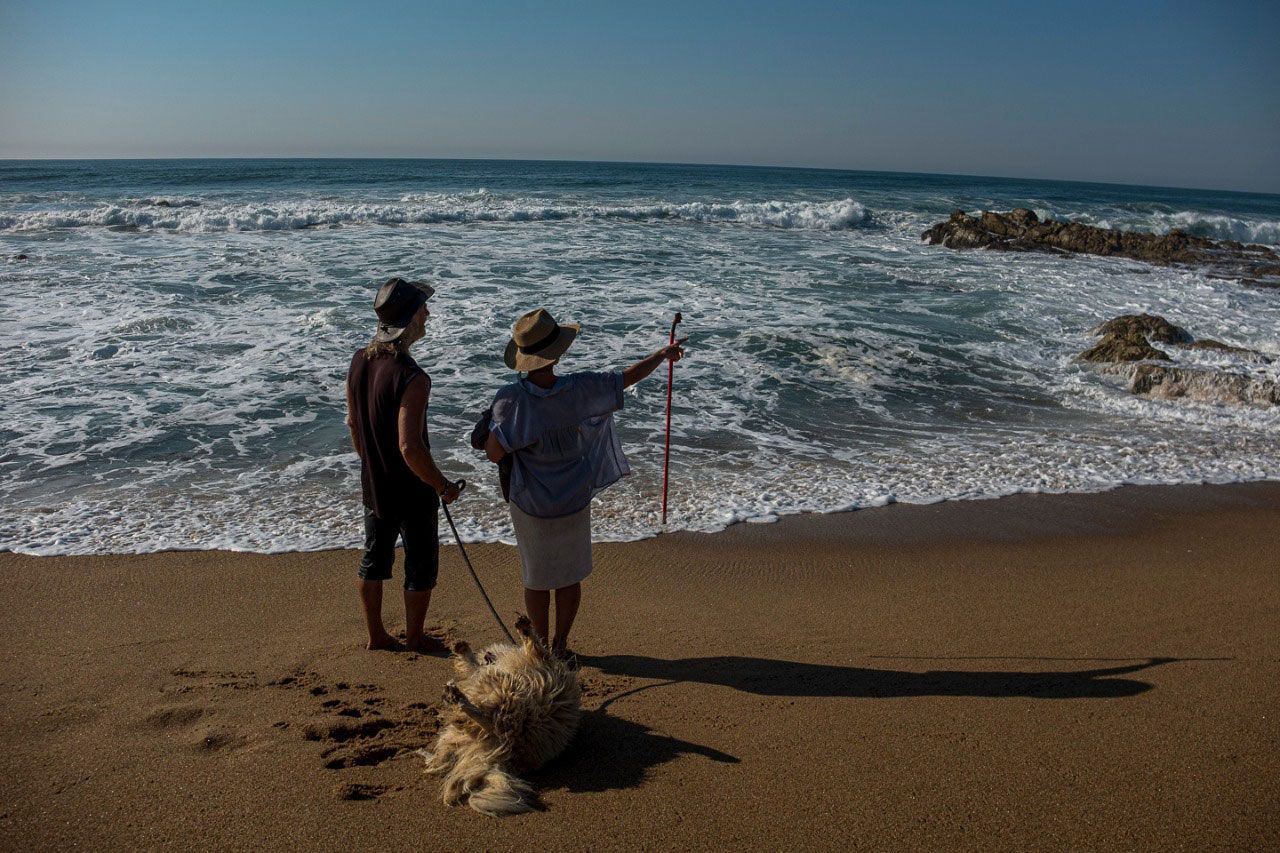
I will keep on returning to the Hidden Years. Relationships are built on returning, on repair and on rediscovery. I might not be the archivist anymore, but I am still its keeper. Perhaps this is what custodianship really is: to enter into a relationship that began long before us and will continue long after us. Care is not an individual achievement, it is inherited, shared, reciprocal and remains unfished. We do not possess the things we care for, we temporarily join the networks of people, materials and histories through which they continue to circulate.
Anthropologist Tim Ingold (2011) offers a way of thinking about this kind of relationship. Ingold writes that humans exist along paths rather than at fixed points, and that life is better understood as a continuous journey, a practice he calls “wayfaring”.[4] Tim Ingold, 2011. Being Alive: Essays on Movement, Knowledge and Description. Routledge. Wayfaring is a way of knowing the world through immersive, ongoing movement, in which the path and the traveller are inseparable, knowledge is forged along the way, not delivered at the destination. In Lines: A Brief History (2016), Ingold distinguishes two kinds of lines that movement leaves behind.[5] Tim Ingold, 2016. Lines: A brief history. Routledge Traces, that are made by dragging or pressing through a medium, a footprint in soft earth; and threads, free-flowing, entangled lines of movement that loop and knot together such as paths, conversations, and stories. Where threads cross and knot, they form a meshwork, not a network of fixed points connected by lines, but a tangle of interwoven, ongoing movements.
On a microscopic level, the hyphae visible on the decaying paper and tapes in the archive, reference this same meshwork. Hyphae do not consume in a straight line but branch, cross and knot through the material they are transforming. Decay, seen this way, is another meshwork laid over the archive’s own, a tangle of biological threads growing through the tangle of human ones, each remaking the material it moves through.
The archivist moves like this too. Not as a fixed custodian standing guard over a finished collection, but as a wayfarer who keeps on returning to a path already in motion, never arriving at a place where the work is complete. Each return does not repeat the last but adds another loop to the knot, another line to the meshwork the archive already is. To return, then, is not to go back to something unchanged, nor to close a loop that was left open. It is to re-enter a relation that has kept moving without you, and to be changed, again, by you rejoining it. Care, understood in this way, is a path walked again and again, each return knotting the walker a little more tightly into the mesh of people, materials, and histories that the archive has always been.
The exhibition
It was me who suggested that the items should be deaccessioned. Papers too damaged to catalogue, too far gone with mould and damp and insects to serve as record. They should never have been part of the archive in the first place. I did not want to simply discard them, so I decided to commission an artwork instead. Ten years of insisting on preservation, and here I was, initiating its unmaking.
The room is quiet except for the sound of paper tearing. It is unsettling. Everything is telling me that this should not be happening. Yet here we are, tearing the archive apart: letters, concert programmes, receipts, financial statements, handwritten notes, boxes of paper that have lived too long with mould, damp and insects.
I move from station to station, trying to catch a glimpse of the documents before it is torn.
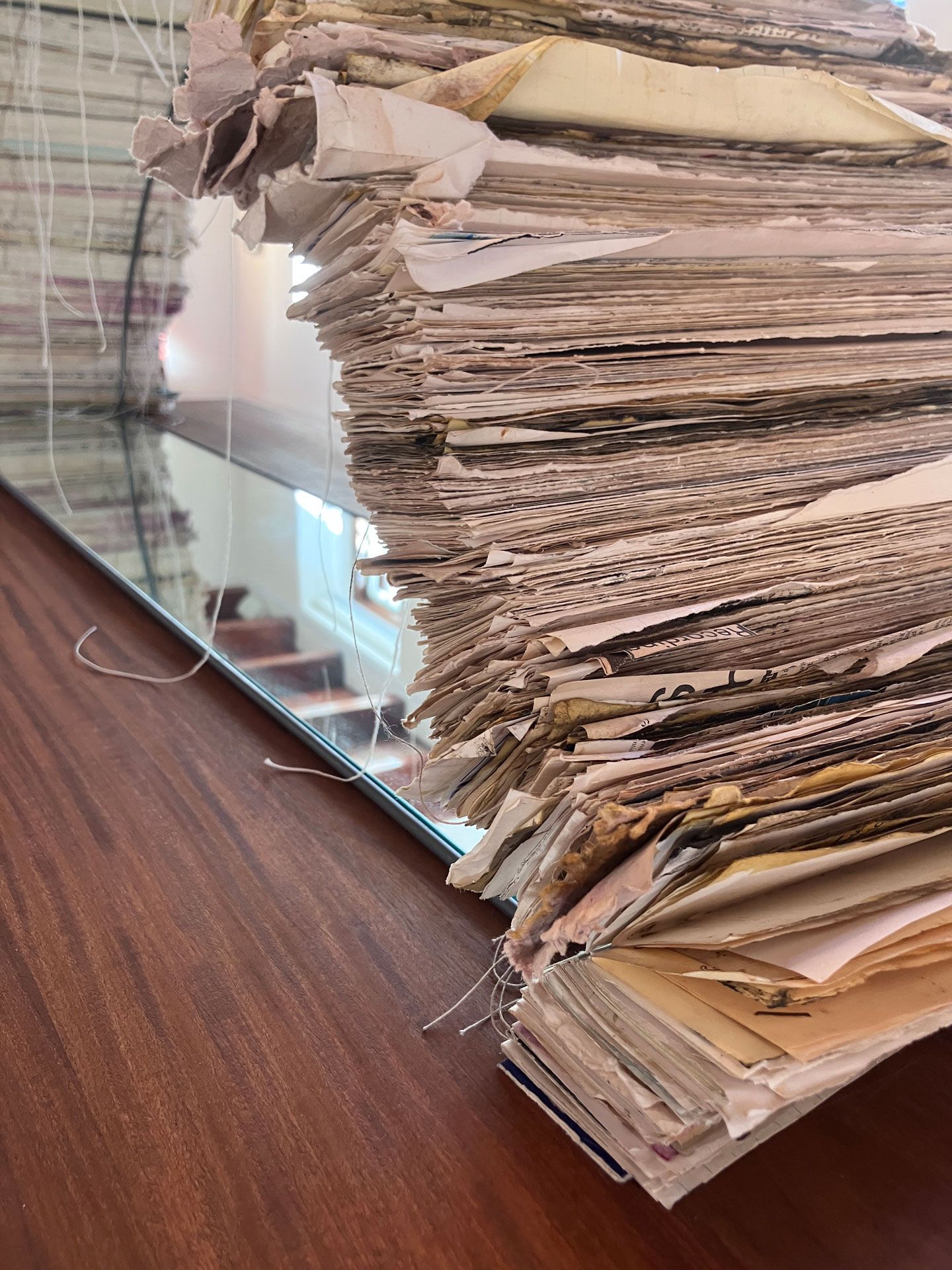
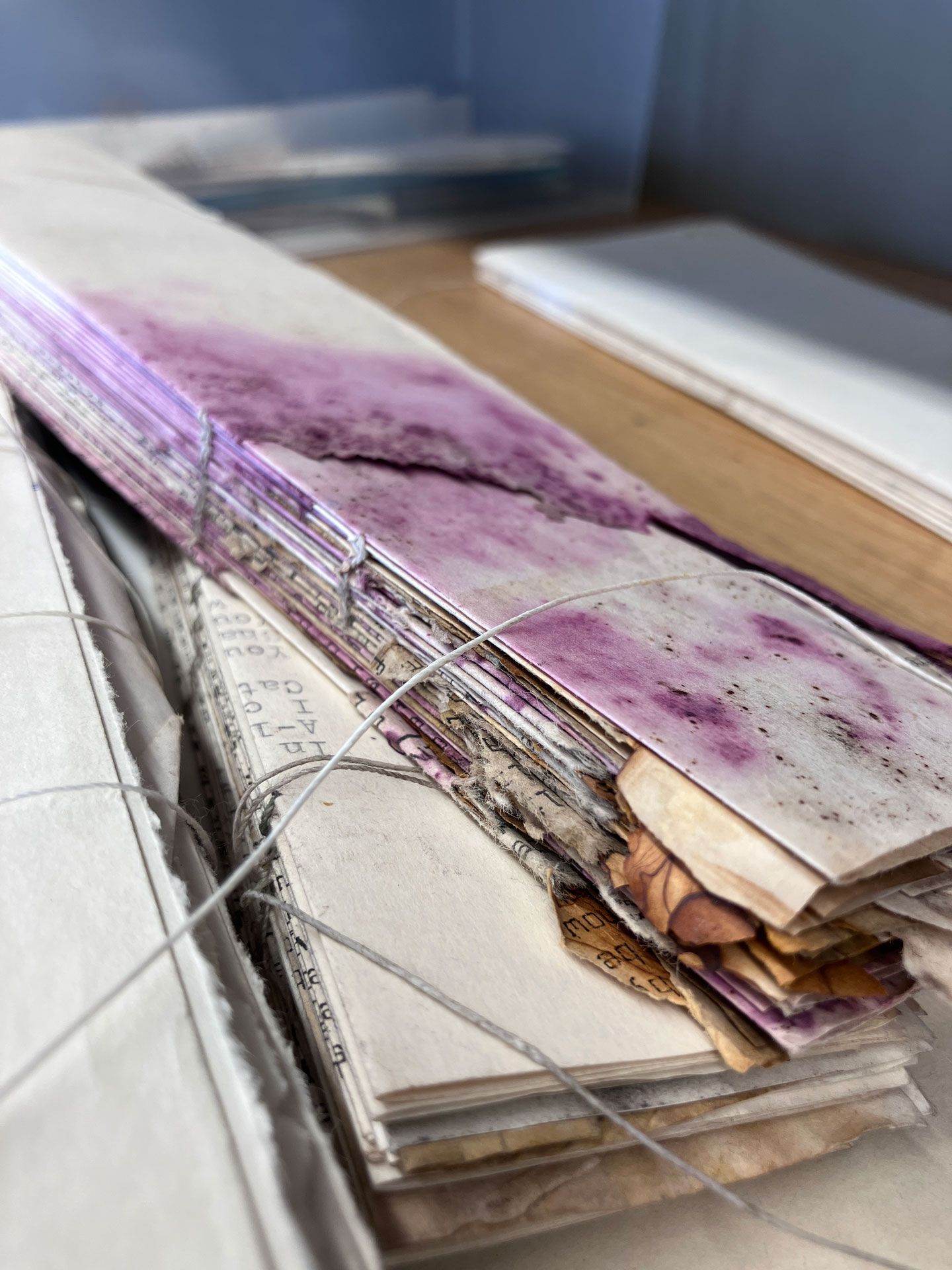
Through the fragments the archive starts revealing a part of itself that I have never noticed before. Papers that would have been thrown away given their damage, are now sitting in people’s hands being talked about. We begin sewing the torn fragments into a book nearly two meters long. Not restored, not reconstructed, simply gathered over the course of six workshops attended by mostly women.
For ten years I worked as the archive’s researcher, curator and archivist. But during these few days I had more meaningful conversations about the collection than ever before. The archive became social, connected and alive.
Decay, and what it made possible for us to see in the archive, changed our questions. We no longer simply asked what information it held, but how we care for it, and what community comes together through that caring.
This, I think, is the meshwork made literal. Where the hyphae had threaded themselves invisibly through decaying paper, here the thread was ours, drawn by hand through torn fragments, knotting them into something new. Where Bellacasa (2017) writes that care is rarely visible, that it hides in storage rooms and conservation reports, this was the rare moment it surfaced as conversation, stitching, listening, storytelling and shared labour. Not the archivist alone deciding what to preserve, but many hands deciding together what to keep holding. The book we made is not a record of the archive. It is a knot in it: one more gathering of lines, passing through, for others to find.
To care
Every act of archiving is at once a preserving and a destroying. Even as we stitched, the fabric continued to soften, to fade, to wear. Care is not the refusal of change. It is a way of remaining with things as they change, an ethics grounded not in mastery or permanence, but in accompaniment.
Care, at its most basic, is never innocent or neutral. It is an active, material doing that binds carer and cared-for together and changes them both. It can smother as easily as it can sustain, and it is always entangled with power. Still, it remains inescapably relational.
This is what the archivists glove tries to deny, and what the quilt, the archive, and the torn fragments in the exhibition kept insisting on regardless: that care and contact cannot be separated, and that kinship with an archive, like kinship with a family, is made through the accumulated, ordinary labour of mending and returning. Decay does not stand in opposition to care. It is often the very condition that calls care into being, threading us back into relationships that refuse the closure of endings.
Perhaps that is why I wanted to write about my grandmother’s quilt, and what Pakama meant when she named the archive kin. Not that things should be kept as they were, or that the archive’s responsibility will always be mine. But that some things, once touched, do not let you go – and that the touching was never really about the object at all.
Microscopic photograph of Hidden Years Music Archive decaying paper by Saskia van der Want, 2024.
| 1. | ↑ | Lizabé Lambrechts, 2018. Letting the Tape Run: The creation and preservation of the Hidden Years Music Archive. South African Journal of Cultural History 32(2), 1-23. hdl.handle.net |
| 2. | ↑ | Maria Puig de la Bellacasa, 2017. Matters of Care: Speculative Ethics in More Than Human Worlds. University of Minnesota Press. |
| 3. | ↑ | Donna J. Haraway, 2016. Staying with the Trouble: Making Kin in the Chthulucene. Duke University Press. |
| 4. | ↑ | Tim Ingold, 2011. Being Alive: Essays on Movement, Knowledge and Description. Routledge. |
| 5. | ↑ | Tim Ingold, 2016. Lines: A brief history. Routledge |