JULIE RESHE & ALENKA ZUPANCIČ
Human Animal, Positive Psychology, and Trauma: A Conversation
JULIE RESHE: I want to ask you about the human animal. You rely on Nietzsche, who claims that humans are sick crippled animals. In the psychoanalytic view and in your own view, what is the difference between humans and the rest of nature, other animals?
ALENKA ZUPANCIČ: This is obviously a very complicated and complex question which has already been tackled in many different ways. I’m trying to find my way of articulating this. Even if you ask the question this way, “what is the difference between human animals and another kind of animals”, you already operate with some notion of the animal and this is precisely what I’m trying to disentangle. So what do we say when we say “animal”, or when we say that some humans behave like animals? Here we can clearly see, and this point has already been made by others, that what we refer to as this kind of animal, bestial behaviour of human beings is precisely not something that we ever really see in animals. Animals usually don’t behave in this way, it’s a particularly human way to behave “like a beast”, in most cruel and twisted ways. There is thus a kind of ambiguity at work already at that level. And then, of course, you have a whole philosophical tradition that conceives the human animal as that in humans which corresponds to the organic, physical, biological part of them—like what links them to nature. Again, the whole notion of nature remains not really touched in this. And then something extra is added to this, the spiritual part that is specifically human, and which then supposedly makes all the difference and qualifies the human animal as animal that is something more than that just its animal part. Which again, as I said, is a difficult notion to sustain because, obviously, you can ask where does this “more” come from? Does it come from heaven, from God? This is certainly one way in which this question was traditionally answered. But then if you follow some more materialistic tradition, this becomes a serious question: where does this more-than-nature come from, if it is not from nature? And does this imply something like a spiritual germ in nature? Or some other notion of nature? I was struck by this idea of Nietzsche that you mentioned, which for me resonated very strongly with some other ideas I had. I’m not even saying that Nietzsche meant it in this way, but it resonated for me with some things that I take from Lacan and Freud.
Nietzsche says that actually the problem with human animals is that they are not even fully animals.
It is not that they are more than animals; rather, and if we take this image of an animal as something more or less complete and consistent with itself, then the problem with humans is that there is something that lacks already on that level. Humans lack something to be fully animals, even their animal part is not wholly there, so to say. Nietzsche uses the terms “Etwas Halbes”, “something half (made)”, to describe the human creature.
I read this in the following way: whatever is the spiritual “superstructure” that is specifically human, this superstructure gets constituted and developed precisely at the point of this lack, at the point of this half that is missing. It is generated out of some negativity (a minus) of the nature itself. Not as a way of filling it in, but precisely as a way of building with this nothing, building with this negativity, as repeating of this negativity, as circling around it, as making something with, and out of this negativity itself. And then this could be a way of defining human beings: that they are essentially defined by this surplus made of nothing, a weaving of nothing made of this something that they allegedly lack in respect to an animal. Following Lacan, I understand human language as essentially anchored in this negativity: it is a hole in its center that distinguishes signifier from sign, and accounts for what is called a “signifying chain”, and the referential movement across which a meaning is produced, and can be changed.
“Signifier is what represents a subject for another signifier”—this famous Lacanian definition gives you a clear picture of subjectivity as a negativity intrinsic to the signifying order, circulating within it, but also manifesting the points of its contradiction and impasse. If subject is different from the animal, it is not in the sense of a moral or spiritual superiority, it is in the sense of the difference made by this apparatus predicated upon negativity. For it has consequences, considerable material consequences.
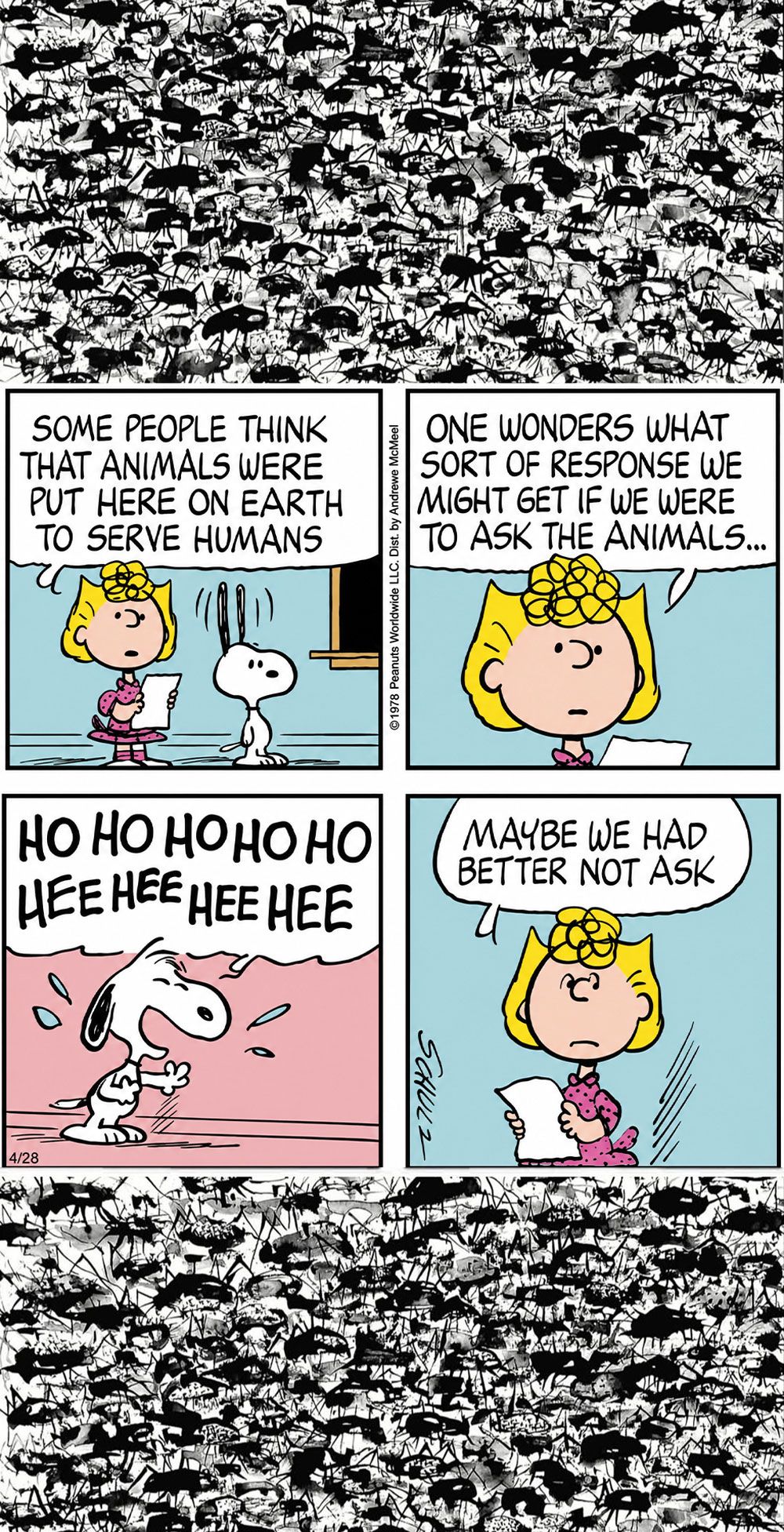
JULIE RESHE: In Lacan and in Nietzsche we can find the interpretation of humans as lacking something as not being fully animals, as maladapted animals, but at the same time, this suggests that there is this whole nature harmonious nature behind it. You undermine this idea and this reading of Lacan, claiming that there is no complete nature that humans are different from.
ALENKA ZUPANCIČ: First, I want to emphasise just one additional point, which I like to make again and again, because people often associate and criticize the Freudian-Lacanian theory for its insistence on negativity and lack. What I want to emphasise is that from the perspective of Lacanian theory, lack and surplus are part of the same topology. Surplus (positivity) is generated at the topological place of the lack, and it is this lack or negativity that gives the surplus its thrust, makes it surplus something, rather than just something. The fundamental minus, the ontological lack-of being is nowhere to be encountered directly. We are alerted to it by the surplus, by excessive positivity (say the symptoms made of surplus enjoyment). Or, to take another example, like the way in which the Marxian notion of surplus-value alerts us to the existence of a gap or negativity in the mode of production, a gap needed for this surplus to emerge or get produced. In other words, it’s important to stress that the only thing you don’t have is some kind of pure neutrality, or some kind of zero level that would constitute the stability of the system, because this alleged “zero level” and stability already demand and presupposes a lot, there is nothing necessary benign or neutral about it. To return to the question of the lack: you have a minus and you have a surplus and they work together. For me, this is what is implied in the essential topological figure of the drive in psychoanalysis. Drive is always both, the negativity and the surplus that can only emerge at the place of this negativity and keeps emerging at the place of this minus. This was just to emphasize how from the Lacanian perspective the story of negativity is strictly speaking inseparable from the question of the surplus. Now, to return to your question: what I tried to argue on the basis of this idea of Nietzsche and Lacan is that human animals are precisely the proof that Animal with capital A does not exist, and that “nature” is in itself something inconsistent and incoherent, that it never really works as a kind of foolproof or contingency-proof apparatus, infallibly following its “laws” and functioning more or less harmoniously, if left to itself. That is to say unless it gets disrupted as if from the outside by humanity, known for its excessiveness and hubris. The idea that I’m pursuing is precisely that Nature understood in this sense does not exist, and that Animal, in this sense, does not exist either. Humans are a singular torsion of nature, made possible precisely because Nature in the sense described above does not exist. Human animal is a point when the inconsistency in nature obtains an existence of its own, called “subject”. It is, to use the Hegelian vocabulary, the inconsistency of nature as existing not only in itself, but also for itself. Humans are not something that interrupts nature, that throws it off its rails, rather, it is the nature throwing itself off its rails.
Human beings are the point where nature speaks about its own inconsistency.
JULIE RESHE: Technically, it’s a nature that doesn’t exist.
ALENKA ZUPANCIČ: Yes, and I’m not saying that there is no physical real or something like this, but the real is precisely not what this idea of Nature suggests. More often than not “Nature” is a phantasmatic projection, it is attributed with some kind of intention, perfect organization, where in the end everything turns out to be running well, or tends toward some kind of equilibrium, and so on. There are so many versions of, and projections into this idea of nature from which we were expelled, which to some extent all echo the story of the exile from Eden. It is a story about the loss of innocence, and the loss of some automatically right way of functioning which still exists in nature, but not for us. I think the same kind of narrative is being repeated again and again, even if it’s not in religious terms, suggesting that humans are thrown from some homeostatic or organic totality and then we suffer because of this. I tried to undermine this perspective. There is nothing pastoral about nature in the first place, we could say that nature is full of bugs. And this inconsistency of nature is precisely why something like humanity can happen to it, in it.
In this sense humanity is not a point of exception vis-à-vis nature, but the proof that Nature doesn’t exist.
JULIE RESHE: This is quite pessimistic reading, right? Because there is no hope for harmony that we can re-establish or harmony that we can constitute and that will entail the absence of suffering.
ALENKA ZUPANCIČ: It’s certainly not a very optimistic picture, but I don’t think that one could jump so quickly from this notion of Nature that does not exist to the notion that this means that no harmony is possible or there is no possible stabilisation and becoming-more-viable of, say social ties or ecosystems. I think these are two very different questions. Historically speaking the idea of a lost harmony to be reestablished caused more disharmony and horror than anything else. If you look at human history, you can see immediately how the worst things that happened were often conducted precisely in the name of harmony, of re-establishing some kind of lost harmony. Starting with scapegoating for this loss of Eden, designating culprits, evil or “foreign” elements responsible for the loss of the supposed organic social totality.… Still to this day, women for example are denied certain rights in the name of “nature”, homosexuals are still persecuted in some places in the name of nature.… For me, the undermining of this idea of lost natural harmony is precisely a way to avoid falling into the cycle of violence attached to this notion. The non-existence of some pre-given and lost harmony does not directly mean war, chaos and aggression, these are very much secondary formations, socially mediated and constructed in so many ways that have nothing to do with the issue of whether or not there exists some kind of innate principle of harmonic consistency in nature. I think once you get rid of this idea, the path opens for searching ways in which—“harmony” is perhaps not the best word for it, but something like it or something in the way of communal life that would be sustainable and also to some extent at least joyful or interesting or worth living could be thought. In other words, organization, organizing different forms of social life only becomes possible, rather than impossible if we give up this idea that harmony rhymes with immediacy. I would thus not say that this ontological notion that Nature does not exist simply and directly leads to a pessimistic kind of view according to which all human or natural ties are necessarily driven by chaos and destruction. I don’t think this is a direct implication.
JULIE RESHE: Paradoxically, when humans are trying to re-establish some kind of goodness, this is how they normally practice evil, by imposing some idea of good.
ALENKA ZUPANCIČ: One of the examples that I just mentioned is sexual discrimination. Traditionally, women have been oppressed precisely in the name of some supposedly harmonic and complementary “good” functioning of the couple, like the ideas of yin yang, or passivity and activity. There was this idea of wholeness, of a harmonic natural functioning and, of course, as if by chance, it have always, or almost always, been women who were expected to bear the impossible weight of this ideal, to mend this harmonious whole that never really existed as such. They were expected to behave in this or in that way. It is important to see that at stake here was not only the infamous “naturalization” of women, women being identified with nature, and immediacy, as opposed to men who were identified with culture.
Things were a bit more twisted, as “women” were charged with the task of representing nature within culture: an infinite task, never quite coinciding with what was originally lost.
So a lot of bad, violent things have been done and put forward precisely in the name of the supposed harmonic relationship. Which itself has a very strong and important ideological role of screening off, obfuscating some real antagonisms with the help of this forceful image, and enforcing people to comply with it, rather than struggling with real antagonisms and contradictions, trying to tackle with them socially, to redress them in some other, more viable way.
JULIE RESHE: You provide one of the best criticisms of what is called toxic positivity, this ideal of the psychology of a healthy, happy human that is imposed. When I was studying with you, I thought that such criticism is weird because what is wrong with idealising happy humans? Then, after some thinking, not only I came to agree with you, it became the most important part of my research. What do you now think is wrong with positive psychology or psychology itself, how are they damaging and are they getting more damaging than before?
ALENKA ZUPANCIČ: What I find interesting and also to some extent funny, even comical, about this move to positive, feel good psychology, is that is also involves this materialist notion: it’s enough to pretend to be happy, to act as if you were happy, to go through the motions of happiness and to think of yourself as happy, for the happiness to actually take place. There is in this a kind of Pascalean thesis, as taken up by Althusser, about the material efficiency of ideology. Pascal’s famous advice to those who were not religious and couldn’t find fate was: kneel down, say the prayers, go through all the rituals, again and again, and with time the faith will come. So belief is not something that comes from the inside, but from the outside, it comes from the symbolic and other rituals that we engage into; the most intimate faith can actually be the result of external actions, of following some patterns that we don’t necessarily relate to. But then at some point, they really become our most intimate, authentic faith. I detect something similar in this idea or advice that you just need to think positively. There are also techniques of how you get out of the negative thinking and wrap yourself into positive thinking, and then from the miracle of this external intervention, you soon grow kind of happy in yourself. This idea has a certain comical dimension, and by comical, I don’t simply mean laughable in the sense of ridiculous. It discloses the truth about how certain process and emotions or affective states, which are considered as originating deep in our souls, can be simply mechanically induced.
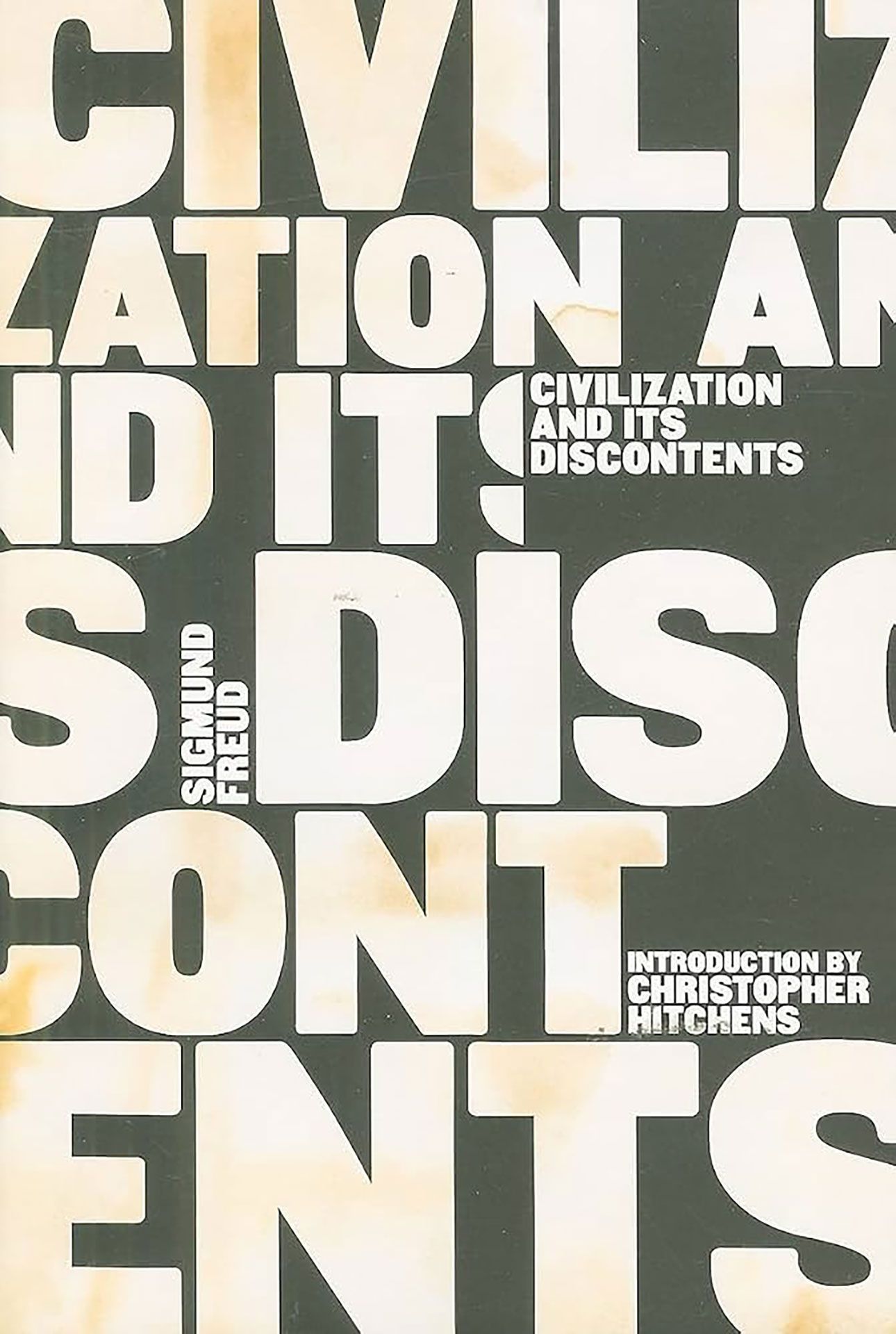
There is, of course, another problem with this, and this is I think what you refer to by your question, the problem with the very notion of happiness. Because what is happiness? Do you know that the title that Freud intended for Das Unbehagen in der Kultur, (Civilization and its Discontents), was first Das Unglück der Kultur, “unhappiness in civilization”? The German term reminds us of the dimension of happiness as luck, good luck. It happens, but it’s a kind of Glück. It’s an accident, a fortuna, a coincidence. It does not refer to any kind of state. It is about something that surprisingly, coincidentally happens and makes us happy, fills us with joy. This is quite different from the idea of happiness as a kind of more or less enduring and harmonic state, or else as permanent excessive joy, of experiencing some kind of enduring (over-)excitement. This is what constitutes the social imperative of being happy. And it is this imperative itself, as imperative, that can make us most unhappy, miserable even, for we can never really live up to it.
Moreover, the very idea that we spontaneously just want to be happy and seek pleasure is very questionable. This is what one of the most fundamental psychoanalytic discoveries was about: it is simply not true that all we want is to be happy. People are often driven to undermine their happiness, you could perhaps say that they feel happier when they are unhappy; there are things in us that tend to get satisfied regardless of how we feel about it, there is the whole set of phenomena that Freud situated “beyond the pleasure principle”…
But also, and as I suggested earlier, when happiness becomes a social imperative, this introduces a different dimension and dialectic into it: how are we to live up to this imperative, are we really as happy as we are supposed to be, how can we prove that we are happy? There seems to be this ideological equation that unhappy people are somehow flawed, that there is something pathological about them, that they are somehow bad, human failures. There is a strong additional guilt that comes with this ideology of positive feelings. And it kind of enslaves us, make us work harder and harder to prove our “happiness”.
This twisted logic comes with, to use the psychoanalytic term, the superego imperative to be happy, which usually consumes the one who tries to obey it. Even if and when you feel very happy, the superego tells you that this is perhaps not enough. You should feel happier, you have achieved this, but it is never enough. The harder you try, the more you are bound to fail. This constitutes a vicious circle of utter unhappiness and misery in the name of happiness. So there are a lot of dark facets to the idea of happiness and its social functioning. Freud suggests, for instance, that happiness can be perhaps understood as the program of what he called “the pleasure principle”. But he also soon discovered that this program seems to be programmed to fail. This does not mean that we are just unhappy and miserable most of the time, but that there is no pre-established formula that we could rely on. And that for happiness we also need luck, that is contingency.
To resume, the idea of happiness can be used in a very problematic way. I think back then I termed this imperative of happiness “biomorality”, because of the short circuit it established between feeling of happiness or unhappiness, and what you are in the moral sense; the idea that if you are not happy, something in morally wrong with you, or morally wrong with your very being.
JULIE RESHE: My favourite concept is the concept of a death drive. You provide some very nice interpretations of what is death drive. Precisely, you claim that humans are already beyond the pleasure principle because it’s the superego that wants pleasure, but there is something more primordial than the superego, which is the death drive and drive as such in Lacanian interpretation. So maybe it’s the pure negativity that just repeats itself. How would you define the death drive, what is your favourite interpretation?
ALENKA ZUPANCIČ: I’ve been working on this a lot, as you say, and trying to follow the Lacanian move, which goes further than Freud. Freud, in most cases, although he oscillates a lot, more or less subscribes to the dualism of the drives, of death drives and alive drives, or Eros and Thanatos. He stages a kind of eternal struggle between them, between destruction and aggressivity, and caring for others and desire to be united with them.
And when one talks about Freudian “pessimism” it is on account of the fact that he does not conceive of this struggle between the two kinds of drives as something that can disappear, and is also skeptical of social and scientific progress as univocally leading towards less aggressivity and destruction.
Now, philosophically I’m trained to be suspicious about any kind of dualistic solutions to complex and intricated conceptual problems, because dualism mostly just retranslates the problem in other terms and, more often than not, masks a difficulty rather than really articulates it. In other words, dualist solutions are in themselves symptomatic: when you cannot actually fully conceptualise some contradiction in what would be, say, a more intrinsically dialectical way, you just cut it in half and stage it as two eternal elements struggling between themselves. I believe that this kind of conceptualization is not the best Freud, he did much more interesting things in relation to all kinds of questions. Even to come up with this notion of the death drive was something extremely important and audacious, I think it’s one of the most radical notions that he introduced. And Freud also wrote some incredibly interesting and important pages precisely on the question of the death drive. So I’m obviously not arguing against this notion, on the contrary. But I think there is something in this notion which is more radical than this duality of the principles, and this is what I tried to stay true to and develop further.
Instead of the duality of drives I maintain, with Lacan, that there is only one drive, namely the death drive.
But this death drive is not reducible to or equivalent to something like a will to die, or a will to aggressiveness and destruction. This, I think, are already secondary phenomena. The thesis about the death drive is an ontological proposition, a speculative articulation of how a fundamental negativity coexists with the surplus that is produced at its place. I already talked about that. Death drive is not something that aims at putting us to sleep, on the contrary, it is something that wakes us up, and it is at odds, from the very start, with any notion of our supposedly homeostatic functioning. The idea is that death drive is not simply the surplus, nor is it simply the negativity, but is precisely the way how by circling around this negativity, repeating it in different configurations, the positive order of being exists, and remains dependent on this negativity.
So what does it mean to say that death drive is, let’s say, something like a hole, not even yet a minus or negativity in the common meaning of the terms? There is a certain hole which cannot be simply filled out and, if we now talk in social terms, no amount of social regulation can simply mend or do away with it. It is something like primal antagonism, to paraphrase the Freudian notion of primal repression, repression that precedes all actual repressions. What I think could be, also politically, an interesting way of looking at this would entail, first, to recognize that what we call the social (the Freudian “Kultur”) always comes with a problem. This constitutes the bottom line of what Freud says in Das Unbehagen in der Kultur. The social comes with the problem; it is not simply a response to a problem, the social properly speaking is simply an articulation, a structuring of this problem. It is something that only gets constituted as social in responding to its inherent negativity.
To paint a very simple picture: say there is a hole in the ground on your path, You can respond by bridging it or circumventing it or descending into it and climbing up again on the other side. You can respond by filling it in with some stuffing or inventing tools to jump across it, and so on. So obviously, the problem of the hole does not simply disappear with these solutions, but persists precisely through them, though what these solutions themselves impose on us and demand from us, what they make possible and what they exclude as impossible, as well as how they make us relate to one another, structure our individual and common life. So you could say that the social is ultimately always a way of reinventing and structuring its own inconsistency and negativity. It is a way of reinventing it in a new way. This, for me, would be a kind of positive political and social perspective on this negativity. It is not simply the same as to say, “Okay, whatever we do, some problem always persists, so nothing is really worth the trouble, it is impossible to eliminate this inconsistency.” No, the point is that we have to socially reinvent the problem, the negativity, in a better way, so to speak. And not simply “find solutions” for it. That is to say the social needs to reinvent itself as a different problem.
JULIE RESHE: I also wanted to ask how can we define trauma? Trauma is something that we can’t feel, it is rather inaccessible to the psyche, but at the same time, it allows us to feel traumatised. While anxiety, according to the psychoanalytic reading, is the protection from even greater suffering, or what is it?
ALENKA ZUPANCIČ: The whole question of the trauma is, I think, interesting precisely because of what you now very nicely formulated. The thing with trauma is that, in a way and to some extent, it always falls out of the field of experience. It is not something that we experience, but is kind of built-in in our very possibility to experience something as traumatic. Of course, there are events that are hurtful and that we experience as something that happened to us, but there is also a certain outside, a certain externality of trauma that is always there, and remains outside the immediate experience. What is being repeated as traumatic is precisely this outside that is never part of immediately lived experience, and this is what makes trauma traumatic, rather than just extremely hurtful. Although the term comes from Greek for “wound”, traumatic means more than just painful of wounded. It involves, for example, what psychoanalysis recognized as a compulsion to repeat some very painful experiences. Traumatism incites certain kinds of behavior, it also mobilizes psychology, without for that reason being a psychological phenomenon. As Ray Brassier formulated it, based on his reading of Freud, trauma is actually outside the experience, and this is what gets repeated with compulsion to repeat some very painful experiences.
Anxiety is another very important concept in psychoanalysis where, conceptually speaking, it has a slightly different texture than in the common parlance, or in some other psychological theories and therapies. For Lacan, anxiety is, above all, a signal of the Real. It is the moment of terrible, all-consuming certainty. Anxiety is not the same as fear, and it’s not about uncertainty, it is a moment of unbearable certainty. This is also why Lacan said that in the analytical treatment the anxiety could be useful to work with, and not simply to be made disappear as soon as possible, for instance with medication. But in order to work with it, it needs to be administered in the right dosages. It could be very productive in the sense of helping us relate to this Real in some way, rather than just being over-whelmed and frozen by it.
Anxiety is something that actually does allow us to get in touch with a certain Real.
I think this constitutes a very important difference between psychoanalysis, both Freudian and Lacanian, and some other therapeutical practices where, very often, all these supposedly negative affects are just seen as something that one should get rid of, or replace with something else. But this replacement with something else then often comes with the price of cutting the thread with the Real that causes all the suffering. And of course we can say, well, why not cut it, if it eliminates the suffering? It’s not that I advocate suffering as a necessary cathartic moment on the path to feeling better. I’m not saying that we need to suffer. We do suffer, it is not simply in our imagination, and there are causes for this, even if they are not direct causes. Suffering, and anxiety in particular, is not just suffering, but a connection to a cause, a handle which can also be used as a way of shaking up this cause.
This is also why psychoanalysis is so important in respect to the question of how to bring about a true, consequential change in things. Needless to say, things very often change independently of our will or efforts, and it seems that all we can do when this happens is to try to hang on and survive, adapt to the new circumstances. In short, it is not that we can influence all that much of what goes on. But there are ways, even though they are not immediately accessible, to access things that cause our suffering, or our social struggles. There are certain handles, grips that we need first to find or to detect. In the analytical situation this is done by listening to what is being said, to the words that are being actually spoken, or not, rather than by imposing certain pre-established notions coming from our therapeutic tool-box. And, among these words, to find a word that works, a handle that can help the analysand move something in this structure she inhabits, and which inhabits her. And I guess these kinds of handles very much disappear if you just ride like a tank over all the bad emotions, or treat people mostly with pharmaceutics. The unconscious truly closes off and becomes inaccessible in this way, it is foreclosed.
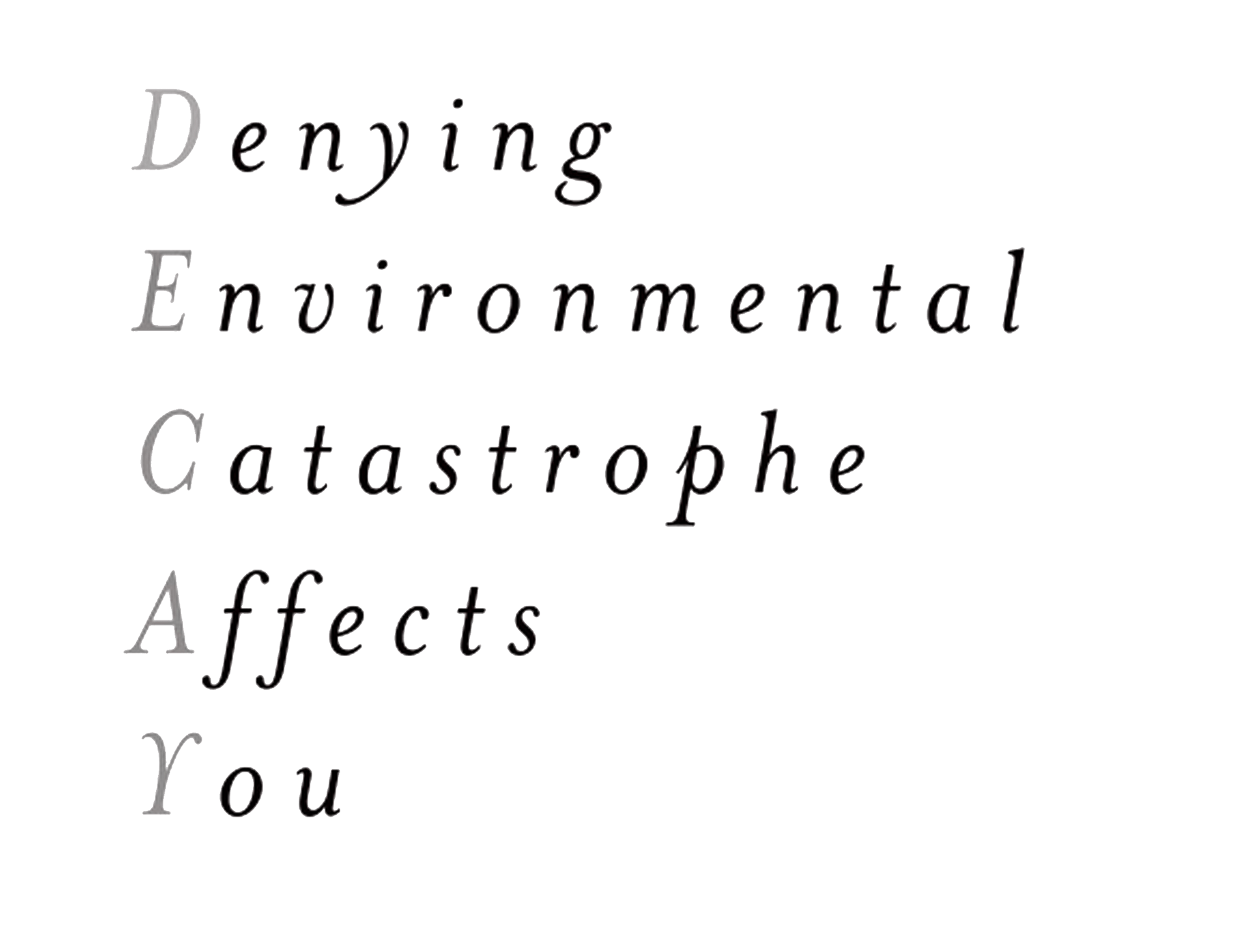
And then we seem to be very surprised when it returns with a vengeance as this terrible outside Real that persecutes us. And it also returns in all kinds of socially exploding phenomena. And we wonder, “Oh, where does all this aggressivity and destruction come from?” Perhaps, among other things of course, they come from the fact that we were asked to be happy and think positive when all kinds of worrisome personal and social injustices and exploitations went on, for somebody else’s profit, usually. In all kinds of domains—and I don’t think that they are directly translatable into one another, but still—the idea prevailed of a productive use of pretty much everything; and the waste pilling up as the other side of this productive use was simply dismissed, or cut off, not taken as a serious warning, a sign. And now it often seems that walls of our super-defense are collapsing onto us from all sides. To some extent the climate crisis is also precisely this, it is a crisis of the surplus waste that can no longer be put to productive use. It is not simply that we are burning down all the resources which we need to sustain our functioning. If we would just burn them down, without any surplus remains, we would have a shortage of energy and so on, but we would not have the climate change. Climate change actually came to be because of the surplus, of something additional that was produced while we were burning down all these resources. There was this huge thing accumulating that was just cut off, pushed away, and is now returning with a vengeance in the form of climate change. But it is also on the scale of human interaction and social functioning that one can see a similar kind of mechanism operating.
Header image on the top of this page is by Konstantin Batynkov. Mikrokosmos, ink on paper, 30x40cm.