LEIF PETERSEN
Decay: transcript of a documentary film about bossiedokters
[1]information about the film is here.
Decay is too slow for the eye to see or the mind to process. The circumstances that precede decay are often invisible to our senses. We just don’t see it coming. We don’t see it happening. Or maybe we choose to ignore the signs.
This story starts back in 2010. I was on a field trip with my team in the township of Seawinds in Cape Town. While going about our work, Neville van Schalkwyk approached us with curiosity about what we’d been doing in his neighborhood. His self-assured nature and his wisdom set him apart from all the other people that we’d met that day.
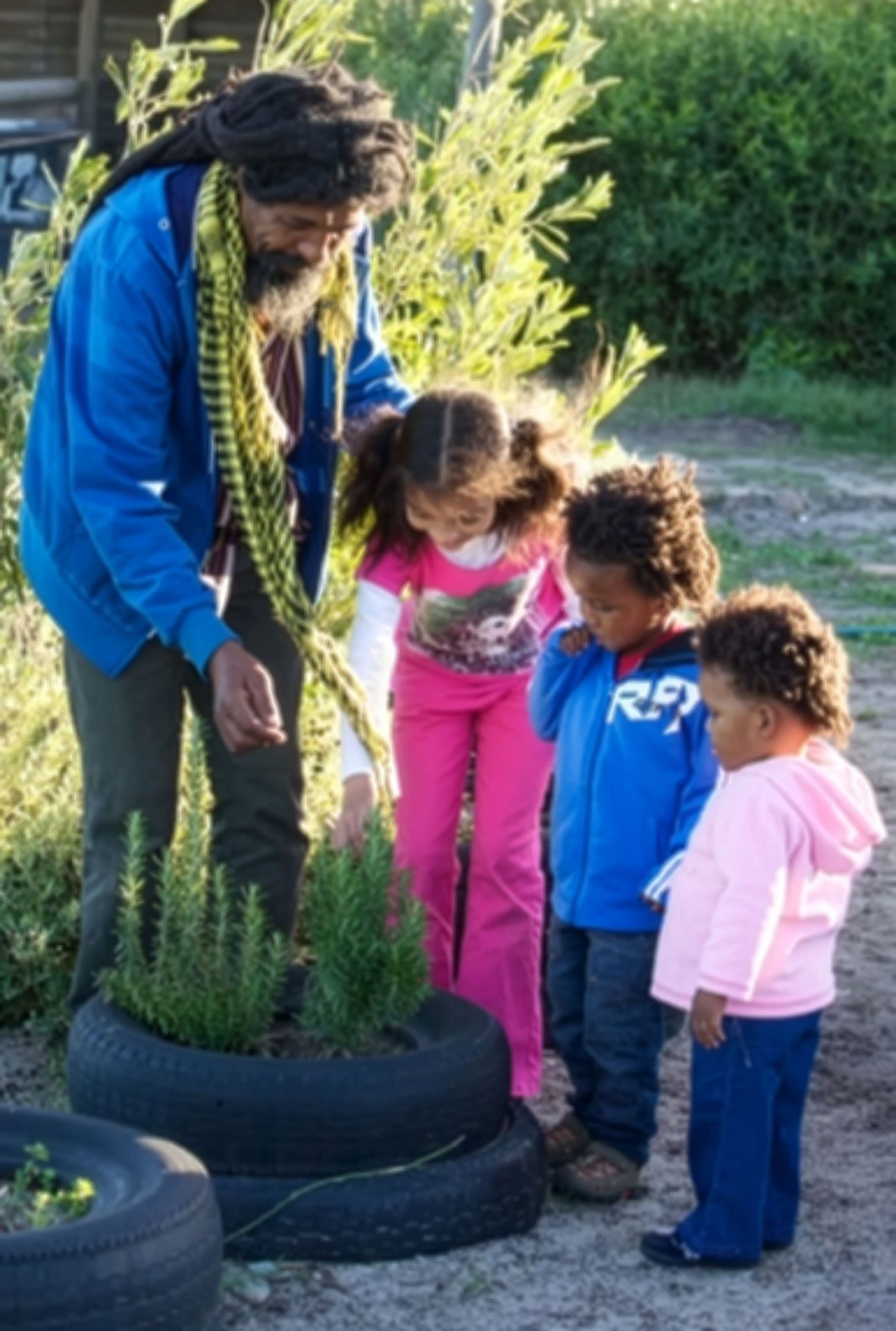
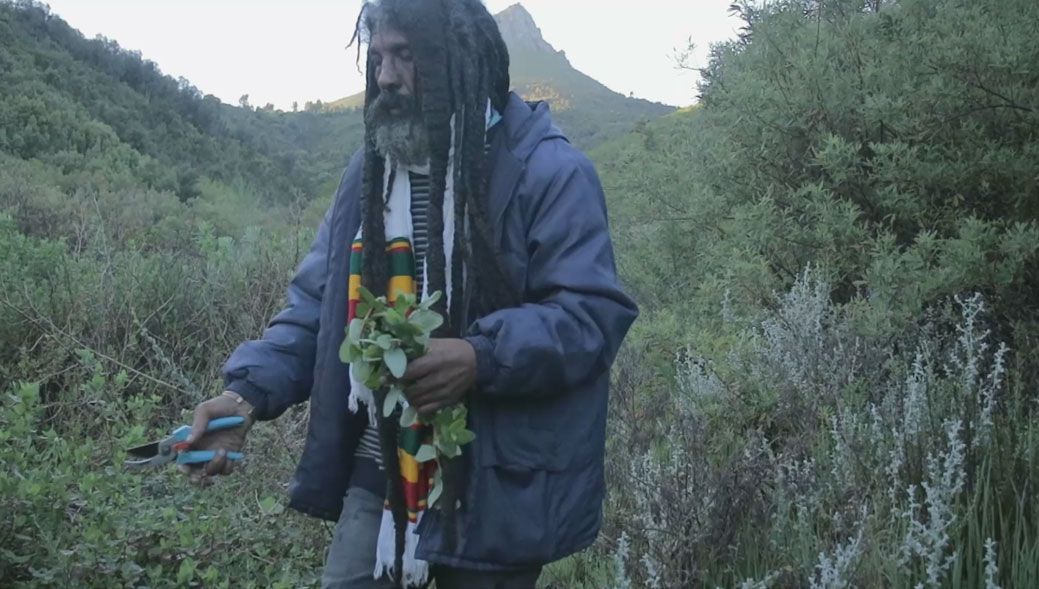
Neville van Schalkwyk – bossiedokter
We cannot stop the trend of time, you know? What must be has got to be. We need to go back to creation, then there’s a solution, you know? The only way to get out of this mentality is to go back to creation, you know? Deal with herbs, you know, go back to nature, mentally. You need to… I don’t work for another man. If I’m hungry today, and I go to the mountain, I go pick my herbs, and then I go work, then I can eat them.
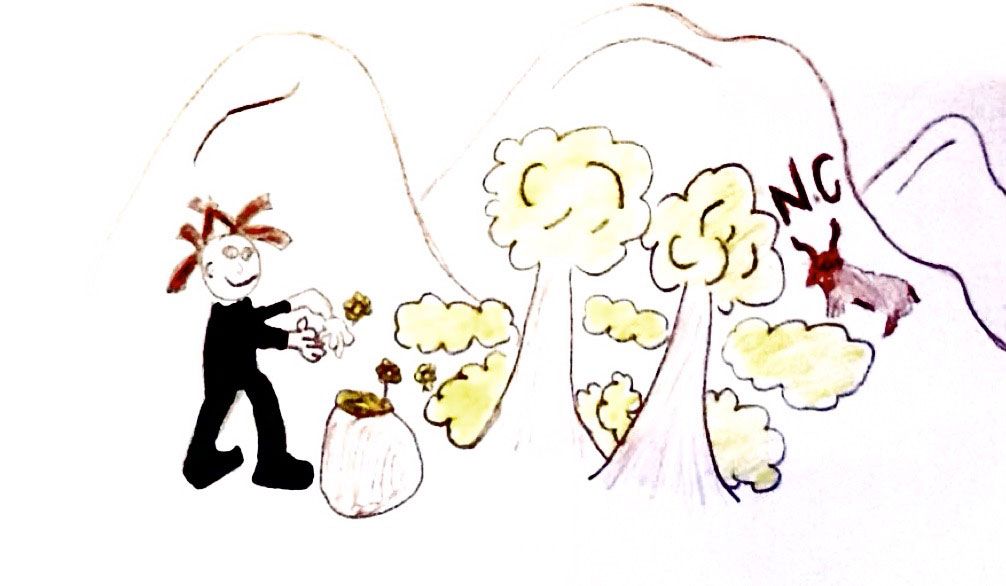
Leif – Decay
When I decided to take part in the Decay Without Mourning project, it was clear where I took my inspiration from. Neville introduced me to his community. And that’s where I met Michelle. She also became part of this story.
After my initial meeting with Neville, I learned he was a Bossiedokter, or bush doctor. The indigenous people of South Africa, the Khoisan[2]This is a highly contested term, see Patric Mellet: Leonard Schultze and the term “Khoisan”, from whom Neville and the Bossiedokters are descended, have been gathering herbs for thousands of years. Neville picks these plants for medicinal purposes. The culture of the Bossiedokters evolved for a reason. The Western Cape’s diversity is vast and staggering. There are around 9,000 plant species. 70% of these cannot be found anywhere else in the world. To give you some perspective, the Table Mountain National Park alone has more plant species per square kilometre than the Amazon, and more than the whole of the United Kingdom, despite being 4,000 times smaller. Neville carries with him a culture and tradition of gathering and healing for his local community. This healing comes at an affordable price for the poor. It felt to me that Neville was in harmony and at one with nature and his surroundings. That was in direct contrast to the chaotic, anarchic nature of Sea Wings in the Cape Flats, the township where we met Neville and where he lived. But of course, there’s always another side to a story.
I wanted to find out more about Neville’s journey and about how he became a Bossie doctor. Neville’s path to his vocation was not an easy one. He taught me that some stories start with chaos and decay and grow into something more positive. It felt like this entropy was a necessary counterpart for his personal development.
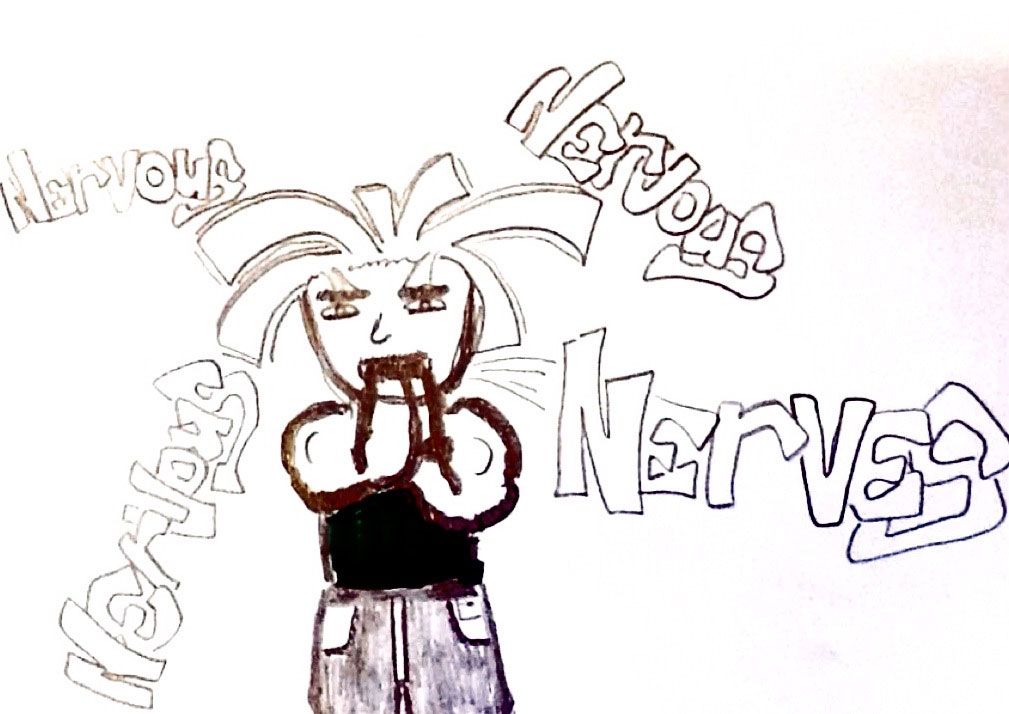
Neville – bossiedokter
I’m Neville Van Schalkwyk. I’m a Kaapse Bossiedokter, Cape Bush doctor. Before I became a Rastafarian, I was drinking, smoking, doing things that I shouldn’t do, swearing, fighting. When I became a Rastafarian, I became humble. I left everything behind. It was a total change for me. Because when I opened my eyes I was staying in a bush under sails, sleeping in cars, among my brethren, the Rastafarian brethren. So that is where I come from.
It’s not an easy path. There’s a lot of rocks in the way. But you are humble. You are looking up to people instead of looking down. You do not look at the colour or the race or the creed. You just look at the person as we are, who we are. We are basically energies. We are not the person that you see. And that connectivity I define. I don’t look at people, I feel the energies.
Leif – Decay
In his youth, Neville chose a path. I realised this path was born from hardship. His enlightenment grew out of decay.
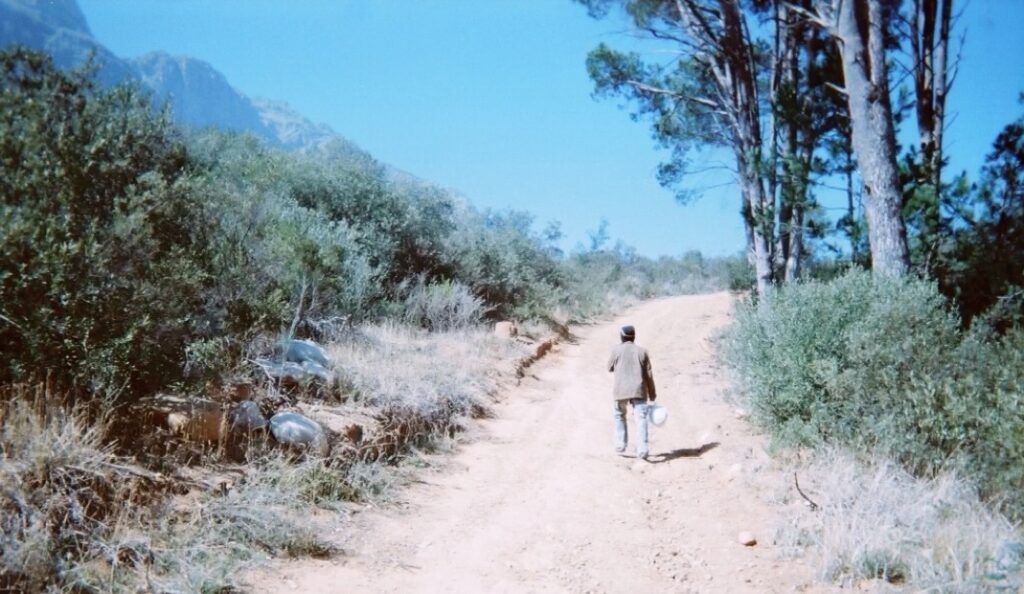
Michelle – Bossiedokter
My name is Michelle and I’m a herbalist. I’m a Bossie doctor. My husband, he’s a Bossi doctor, so sometimes he gets a job, then I have to follow in. At first, I didn’t know this stuff. It didn’t take me long to remember it and to keep it in my head. For me, it’s like a job. And sometimes I’m so glad to go, to see a lot of people. I sit, the customers come, say not a lot. Sometimes they come to now, to half an hour or an hour’s time. And then for that half an hour I can sit and relax. I take my chair also with me. It’s good to talk about it, because most of the people there, women, then they see my husband there and they don’t want to talk. They don’t want to come to him. Then they wait for me to come. They wait for me. And when I’m there, they’ll tell me, you know, I was here how week you didn’t come. I’ve been waiting for you. So I said, why? You must talk to him also. We the doctors, you must talk to us. Even though we’re a woman or a man, you must talk to us. For me to have this as a job full time, I don’t mind. But I tell them also, if you buy this herbs that you need. I always pray on what I do. Those hands is making it. I ask the Lord to bless those hands, making those herbs for you. And you must believe that it will happen for you. Even if it’s not happening, there’s a reason for that.
Leif – Decay
Like Neville, Michelle’s journey had many challenges. But nature provided an income and a genuine contentment. A purpose to life. So it all looks fine and dandy, right? Remember, you rarely see the decay while it’s happening. Slow and subtle. And if you’re not looking for it, you won’t find it. But that’s why we’re here.
Leif – Decay
Neville previously spoke about how his chosen path was not an easy one. That is an understatement. When we talked to his community, we were told of harassment, intimidation, violence and imprisonment. The laws that were designed to protect the wildlife have made it impossible to carry on his work without breaking a law at every step of the process.
Joseph Johnson – Bossiedokter
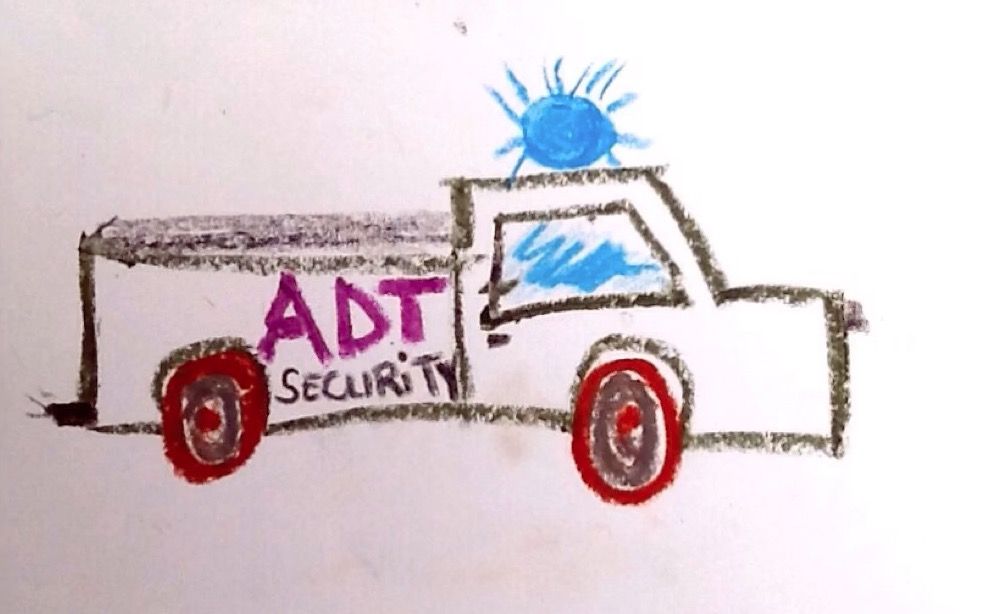
The elder said, Joseph, hide yourself. I hid himself under his paper bush, the bush that grows like a blanket, and Anna used it to hide himself. Where Anna was hiding, I could hear ADT talking to Nature Conservation. He asked Nature Conservation, do you know about the rastas in the mountain? Yeah, just keep a watch out for them, because they were watching us. I had to hide my bags and just go walking the hiking trails like everybody else.
When I look at all this, it makes me think, where do you fit in Rasta? We did hide our bags away to look like everybody else, but it didn’t work. And all other people on the mountain look like, at us, and I don’t know what they see. But I think they are afraid. How are we and them gonna work this out? I need to look at creation being destroyed and I know not being free when everybody else is free, and I know that… This will only lead to destruction if there’s no solution. We need restoration because the mountains belong to all of us.
Rasta, you’re not free because of who you are and the way you look.
Andrew Benji Overmeyer – Bossiedokter
People was already using herbs from that time and now in this time the people is this. We are here to make them used to it again, like go back to your roots, like something like that. And at the end of the day it works for us as Rastafarians. We can make a living, we can eat every day, every day we will have a bread, work with the herbs. So we hope and pray for the herbs to, for we to get the permits for the herbs, you see. Just praying for Rastaman to get legal in the mountains as our foreparents like the Khoisans that was go in the mountain and harvest their traditional herbs, traditional healings.
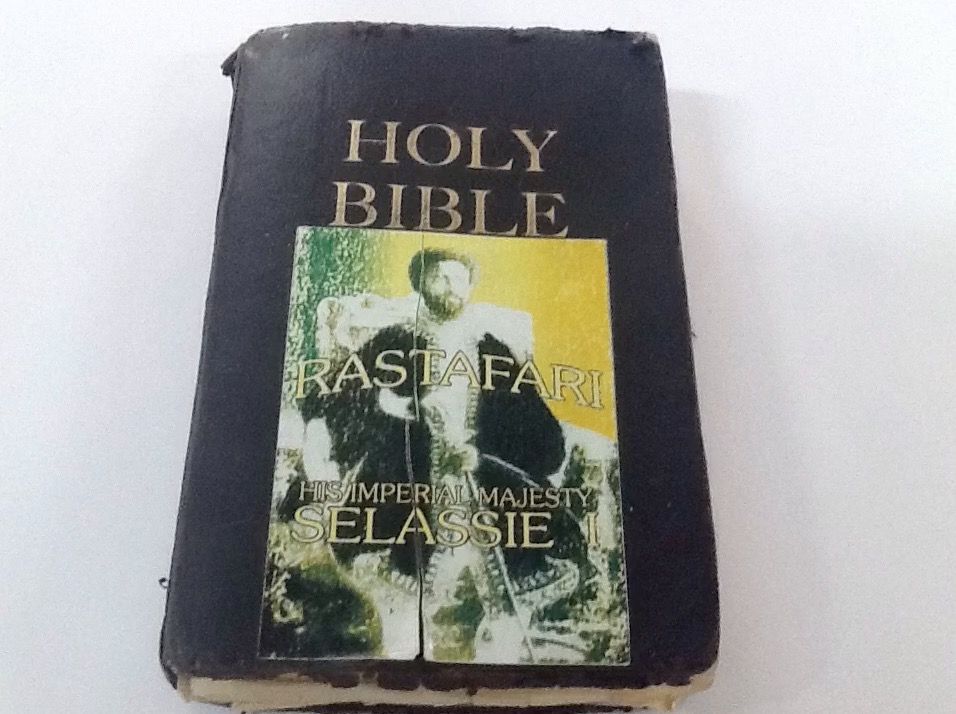
Judah – Bossiedokter
I’m a Rastafarian. I’m very close to nature because that is part of our life, the way we live. We are very much about nature, you know, plants, animals, whatever grace and interval.
We as Rastaman, we are the reincarnation of the Khoisan. We are the people that realise our roots and our culture because as the Western civilisation came, they just brought in buildings and work, but they forgot their roots and their culture and even lost valuable things that is valuable to us, even as an inheritance. And Africa has the most blessed land, it is the most blessed creation place. So we as creation people, we see it as our life, we see it as our duty, we see it as upliftment to the community and bringing a smile back to the community and even bringing joy and even love to community’s hearts. So togetherness is happiness and happiness is unity. So it is more precious than money, more than idol, more than anything else, you see. So we thank the Creator for that.
Neville – bossiedokter
It’s widespread. It’s not only in the West, based in the Western Cape. It’s Northern Cape, Eastern Cape. It’s why I mention the Rastafarians because we’ve been used, and I call it prophecy. We’ve been used by the Creator to bring back something which has been lost. Through technology, through time.
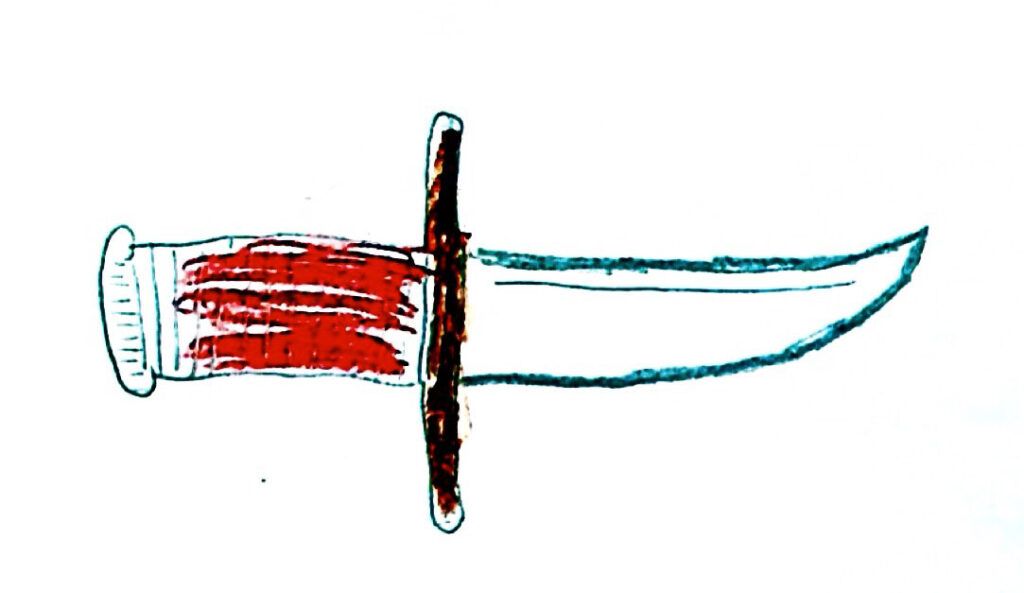
Leif – Decay
The Bossiedokters feel that their purpose in life is as custodians or guardians of nature, and to utilize the inherent bounty for healing. They understand the logic of conservation. But can we wrap our heads around the preservation of their historic culture? It felt to me that the real enemy, the real decay, was being ignored. The elephant in the room wasn’t the indigenous people or the Bossie doctors. They had only been repeatedly performing the same rituals for centuries.
Decay is slow and sometimes unrecognisable in its form. Sometimes it manifests as order amongst chaos, or method within madness. These bush doctors are easy to legislate against, but perhaps the real decay is too uncomfortable to face. Have we chosen to ignore the signs?
Cape Town is growing at an alarming rate. Ever since Jan van Riebeeck arrived in Table Bay in 1652, the landscape has transformed at an increasing rate, and it’s picking up speed. Colonisation, immigration, the discovery of gold, silver, diamonds, minerals have given some economic prosperity. Industrialisation, intensive farming, slavery, apartheid, along with employment opportunities have all contributed to this growth. By the time democracy arrived in 1994, the population had grown from a few hundred people to 2.3 million. Today, the population stands at over 5 million. By 2050, the population is estimated to be around 7 million people. This will have a huge and inevitable impact on the diversity and proportion of nature in Cape Town. Of course, as the urbanisation spreads, the needs of the population increase. And so, the land grab continues. Farmland and dwellings creep up the mountains until the gradient wins. 300 hectares a year of residential estates, gated developments for older and longer living communities, shacks stacked up nose to nose for working migrants, golf courses for the wealthy, industry and infrastructure for an ever-expanding population. To put it in perspective, one single development has the potential to wipe out a species unique and endemic to that area. Nature doesn’t have a chance. And as the city grows and nature retreats, what does that mean for the Bossiedokters and Cape Town’s indigenous people and their culture and their livelihoods?
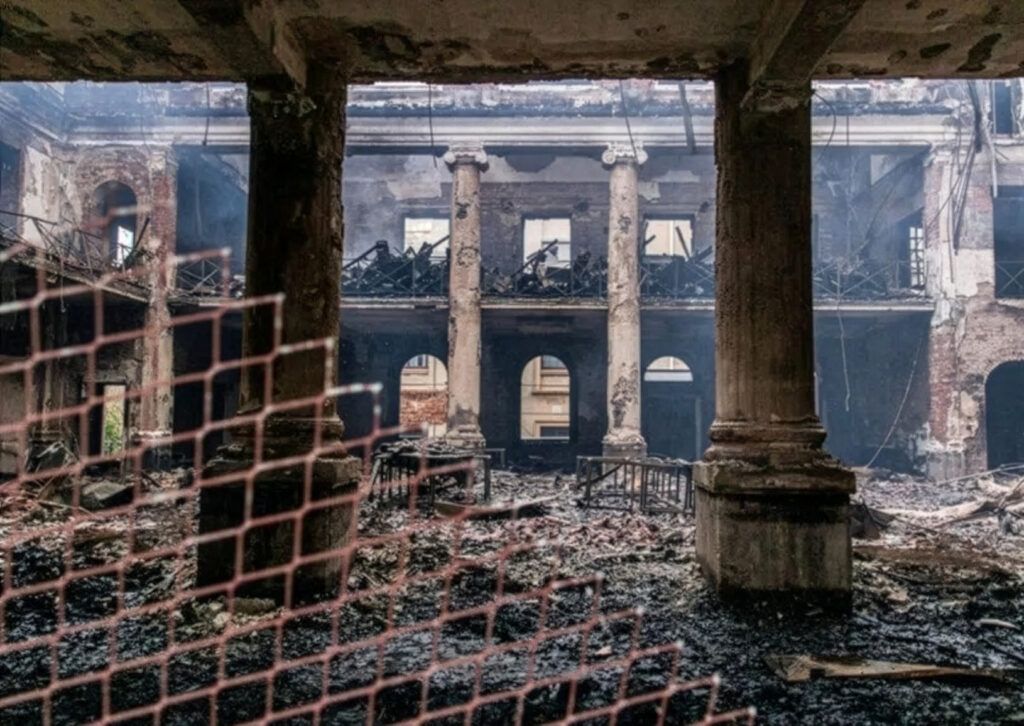
Global warming is also taking its toll on Cape Town. The fires, which are crucial to the life cycle of the indigenous plant life, are becoming far too commonplace due to the disruption of weather patterns. A University of Cape Town study found that extreme fire weather, defined by high temperatures, low humidity and strong winds, is now 90% more likely due to human-caused climate change. This is exacerbated by the invasive species, which burn more intensely than the fynbos. The fire season is now becoming a thing of the past, as the incidence of fire is now considered an all-year-round threat. The year in which this film was made has been noted by the authorities as being one of the most severe in terms of wildfires in the last decade. Invasive species come in different forms, and the reasons for introducing them were often well-intended at the time. The Port Jackson, rooikrans, longleaf wattle, eucalyptus and pine species were cultivated for building materials, fuel and to stabilise soil erosion. We now know that they displace biodiversity and alter ecosystems.
Other species brought in for aesthetic value can be less harmful and thus adapt in a more harmonious manner. The crops that are cultivated and harvested are necessary for agriculture, food security and export. But the cumulative effect is still the same. The natural indigenous flora diminishes and slowly retreats, quietly and invisibly.
The last threat to biodiversity is notable because historically it has had the least impact. But because of the necessity of conservation, it is the factor that is the easiest to legislate and control. Overexploitation can include the harvesting of nature for the means of fuel, food, and in the case of the Bossiedokter community, for medicinal purposes. It is also worth noting that the other factors we’ve highlighted—urban expansion, global warming, bushfires, invasive species and agriculture—were not evolved or sanctioned by Neville or his community, or indeed by their ancestors who carried out their work for thousands of years. Neville’s ancestors would have enjoyed the freedom and abundance of nature. The evolution and necessity of conservation evolved because it was disappearing so fast. The irony is that those least complicit in historical decay would be the ones to witness the most decay in their own culture and heritage, yet face punishment for doing something about it.
When we started making this film over two years ago, I didn’t have a complete vision of what direction it was going in or what point I even wanted to make. The plight of the Bossiedokters and the surrounding community, in my opinion, was unjust. But where does it stand through the lens of decay? In a world of mounting losses, should we not be mourning? For me, the concept of being at peace with the mourning process seemed alien. From my perspective, both decay and mourning were unpleasant. But I started to realise something, that actually both were fundamentally necessary. I was drawn back to the first words that Neville spoke when we met him years back. “You cannot stop the trend of time. What must be has got to be.” These are not empty platitudes. Neville has been harassed, victimised and even imprisoned for practising his culture. Of all the people in this story, Neville had the biggest reason to feel aggrieved at his situation. But instead, he is at peace with the process and his destiny. Neville came from a humble background and went through a time of decay and hardship before he decided where his destiny ultimately lied. He realised that this process, the process of decay, was an absolute necessity to get where he is today.
When Neville looks at the city surrounding Cape Town, he doesn’t see an amazing, thriving metropolis with opportunity and excitement. What Neville sees is his nature displaced and destroyed irreparably, no longer fit for purpose. After hundreds of thousands of years, a natural equilibrium was destroyed in the last few hundred. But he also knows the decay of Cape Town and its nature will ultimately lead to something else. No one knows what that thing is. And that’s the scary part. The uncertainty of what grows out from decay. But you know what? Neville isn’t scared. Remember what he said when I met him. “What must be has got to be.” We are all, in our own way, sons of the spoil. Whether it’s a mountain being carved up by a city, a culture being displaced by a law, or a life being torn through its own foundations.
We are defined by what we do with the debris of the past.
We often mistake the overturned earth for the end of the garden, and the wreckage of a life for its conclusion. But the spoil is not just waste. It’s the necessary displacement of what was to make room for what must be. To witness decay is not to watch a death, but to stand on the fertile ground of a new beginning. Whether it is slow, like the loss of a habitat to a city, or fast, like the upheaval of a personal journey, without decay, nothing would be precious. What must be, has got to be.
| 1. | ↑ | information about the film is here. |
| 2. | ↑ | This is a highly contested term, see Patric Mellet: Leonard Schultze and the term “Khoisan” |