NJABULO CHIPANGURA
Relational care in reimaging meanings of African Heritage Objects at Manchester Museum
The Manchester Museum which is a part of the University of Manchester holds approximately 35,000 ethnographic collections mostly dispossessed from local communities and ordered and categorized according to geographical regions of Africa, the Americas, Oceania, and Asia.
The African collection is the largest with over 15 000 provenanced objects and an estimate of 1500 unprovenanced objects. In this paper I will look at what it means to relationally care for African collections from colonial context in view of collaborating with and giving access to diasporic African communities as part of decolonisation.
An empirical practice of decolonisation informed by notions of relational care and the disobedient museum will be presented drawn from my own practice and positionality having been the curator of this collection between 2022 – 2025.
I argue that curating with care is not only a way of work but is a theoretical perspective that challenges structural discrimination, sexism, racism, systematic injustices and colonial legacies in museums.
Care is also extended in this discussion to look at what it means to care for each other’s pluriversality of epistemologies and ontologies by subverting epistemicides that are still embedded in museums.
I will use examples drawn from an object handling workshop that I hosted at Manchester Museum as part of the ‘Being Human’ festival in November 2024. The aim of this workshop was to collaborate with communities of African heritage in Greater Manchester, and to gather new information about objects of African origin in the collection of Manchester Museum.
Thereafter, meanings were reimagined transcending usual anthropological discourses that traditionally treat African objects as timeless representations of cultures of the “other”. Using this workshop as a contact zone of engagement – I present curating as a space of social care that facilitated dialogue and building of active relationships with diaspora communities.
Keynote Presentation at Decay Without Mourning Conference, STIAS (Stellenbosch Institute for Advanced Study), Stellenbosch, Wednesday 15 April 2026.
The talk that I’m going to give you today is based on my work experience as a curator of anthropology at Manchester Museum, which is part of the University of Manchester. I was a curator at the Manchester Museum for five years, and I was taking care of anthropological, problematic anthropological objects from colonial contexts that were ‘collected’.
And I’m going to use the word collecting very carefully, because there are different colonial collecting practices that I’m going to highlight to you in this talk. So since we are talking about decay I’m a curator, I’m an anthropologist, but the whole idea of curating comes from this notion of taking care of things.
When you’re a curator, you’re supposed to take care of a collection. The word curator comes from a Latin word called cura, which means to care[1]curator(n.) “a guardian; one who has care or superintendence of something,” late 14c., curatour “a parish priest,” from Latin curator “overseer, manager, guardian,” agent noun from curatus, past participle of curare (see cure (v.) ). From early 15c. in reference to those put in charge of minors, lunatics, etc.; meaning “officer in charge of a museum, library, etc.” is from 1660s. Related: Curatorship. https://www.etymonline.com/word/curator. But the idea of caring in a museum is benchmarked on this notion of taking care of material objects to live forever for posterity. They’re not supposed to decay. They’re supposed to live there forever. But my question here is, whose posterity? Whose posterity are we guaranteeing in museums if we cannot give access to these collections, to originating communities?
So the work that I was doing in Manchester was benchmarked on undertaking collaborative provenance research and object biographical research with communities of origins who for, for a long time, they’ve never been given an opportunity to come into the space to see their own heritage objects, which are literally incarcerated.
So Manchester Museum holds more than 15,000 objects from Africa that were collected during the colonial period. And all of these objects are not exhibited. They are in collections. They are cared for to live forever, that they don’t deteriorate. So my, my talk is going to look at how then can we think about what I call relational care, relational care, build on building collaborations with curators like myself, experts with anthropological knowledge and originating communities, or even diaspora communities in Manchester. African diaspora.
What kind of stories can we learn from them that can unlock the meanings of these living cultures rather?
So for me, I also think about decolonizing,if I can wish that that word, the whole notion of anthropological object, to think about these as living cultures, they’re not anthropological objects, of course, they’re static, frozen, lifeless, but from wherever they were collected from in Africa, these are living cultures.
They’re living people touch, people smell. People use these objects. So that’s my point of departure and things in terms of kind of critiquing the whole idea of conserving forever in the museum. Yes, they can be conserved forever to live in glass cases in boxes, but whose forever? Whose posterity?
So I’m a professor in Ireland and I once worked at the National Museum in Zimbabwe. I’m Zimbabwean. For ten years I was a curator of archeology there. And then I took my PhD. I once taught in the social anthropology department for a year. The first author of a book called Museums as Agents of Social Change – Collaborative Programs with the Museum, which was published by Routledge in 2021. I have a new co-authored book called Race, Genetics and History, New Practices, New Approaches, which was published by Cambridge University Museum University last year.
And this book is very interesting because apart from me taking care of objects in Manchester living cultures, I also used to take care of what you’d call human remains in museums.
Just a question of objects. These museums, they also hold ancestral remains of the people of Africa with dehumanized were collected during the colonial period. So this book looks at the idea of rehumanizing.
How then can we start thinking about human remains in Manchester? Museums as ancestors of living people? What can be done to ethically take care of these ancestors as they sit in museum basements?
So this book thinks about all the ideas of ethically taking care of ancestral remains in museums, and what should be done to proactively facilitate the repatriation and the reburials of some of these ancestral remains. A very interesting book.
And then another footnote. I recently completed editing this very interesting journal called Museum International. It’s a special issue on provenance research. And provenance research has become a very topical issue in museums in the global north. Like everyone is talking about provenance research.
Why? Why are we doing provenance research? Why are you worried about provenance of these objects? It’s because they’re problematic. They are coming from a colonial context. So what can be done to trace the provenance of these anthropological objects? So it’s a very interesting journal published by Museum International last month. You can check it. Very interesting articles on how museums in the global North are grappling with the issue of provenance research on their collections, from colonial contexts.
Now to my story.
I always start with this interesting book. What are museums for? By a colleague of mine called Why Do We Need Museum? Do we really need museums? What? Why do we need museums?
So John argues that museums must be for all people, and inclusion must be at the heart of everything that they do. Museums are for the people, and inclusion must be the head of everything that they do.
Why are we calling for me to be inclusive? It’s because traditionally museums are known to be exclusive spaces of anthropological knowledge production, archeological, botanical, zoological experts in museums like myself, an anthropologist.
We hold cultural knowledge on behalf of communities. So the call for inclusion is the call for bringing other ways of knowing and doing. Coming from communities who are being represented by their cultural heritage objects. That’s my call. Inclusivity is about bringing people, people whose heritage objects we care for, to live forever in it. Again, I go back to my first point. Whose forever? Whose posterity?
If originating communities cannot be given access to their own heritage, the problem with ethnographic museums here, the Berlin conference. This is where I start with this question of colonial collections. You know, we’re always talking about coloniality, coloniality. It’s becoming the buzzword.
Some salt decolonization.
But for me, as a curator who worked with deeply problematic anthropological objects, I always think about the Berlin conference as the starting point that ushered in this kind of partitioning for Africa, the division of Africa, and the collecting of some of these ancestral objects, ancestral heritages that found their way into the museum during a colonial period. But the colonial period can be located from the beginning of this conference that ushered in the division of Africa into this.
I won’t spend time on this. I’m sure everyone you know, the empires that are literally collapsed Africa into portions, the British, the Germans, the Dutch, the Portuguese, the Spaniards and the French. So this is how Africa was after the Berlin conference. So what I’m going to call colonial collecting practices are located within this conference as the precursor to what later led on to the violent looting of the Benin Bronzes. Are you name all the looting that perhaps you know, it’s because of that colonial function.
So let me let me take you to Manchester Museum for a while. So this is Manchester Museum on Oxford Road. Manchester Museum is considered to be the largest university museum in the UK in terms of sheer size of the of collections, this museum sits over more than 4.5 million objects, million objects. All of these objects are coming from a colonial context. You can call them cultural history objects.
As usual, the binary or natural history objects in museums. That’s what we do. There’s this dividing line between cultural history collections, natural history collections. So in total, Manchester Museum sits over 4.5 million objects. And these objects are coming from a colonial context associated with expansion of the empire to different parts of the world Africa, Asia, America, Oceania.
It’s more like an encyclopedic museum, really like everything the material, the material representation of, you know, everything. Okay, you can literally get any objects, either cultural specimen or object or artifact within this collection.
So the problem with these encyclopedic museums is this idea of just classifying, categorizing objects as things. You know, this is just objects, what I call the esthetic gaze. Most of the times it’s about the object as a thing.
But the biographies or the communities rather where these objects were collected from are usually silenced. You don’t get to hear about the people, but you hear about the collector. Prominently. The labels are ARB, about the collector. This was collected by Sir Henry Walker. It’s called the Wellcome Collection. It’s not the Zulu collection. It’s not the collection. It’s not the Shona collection. No. Communities are invisible on those labels. Those are colonial collecting practices, essentially.
How then can we think about reinserting these communities back into museum practices? What should be done to respect the agents of communities? And in most cases, these communities are not even dared by. They are still making almost similar objects in some cases. So how do we make those kind of connections? So that’s that’s my central question in undertaking this research or this work rather. So that’s Manchester Museum again. So the collection that I used to take care of as a curator was the anthropological collection of more than 25, 35,000 objects coming from all over the world. It’s called the Global Cultures Collection, but we prefer to call it the Living Cultures collection deliberately.
I was a curator of living cultures, not a curator of anthropology.
Why? Very fancy title, right? This is the idea of thinking about as a curator, I’m taking care of not frozen, lifeless objects, but these are living cultures that are coming from living people. So let’s respect these as objects representing living people’s cultural practices.
So we had from Africa 15,000, obviously Africa, the largest number because of what I showed you earlier on the colonial project. A Oceania, 7000 objects, Asia, 4500 objects, Americas 4000. And lastly, the category of ancestral remains, or what you call human remains. I do know the number there. I know I used to take care of this collection. I know, but because we are trying to think about best ways of rehumanizing these ancestors, which come in different body parts. They are not just skulls. Some of them took the form of hairpieces, nails, and all these are there within the museum.
So for us to keep on counting them with numbers, I mean for scientific study or for racial studies is further dehumanizing them. So I don’t prefer to give you the count there, but I do know it’s a way of trying to respect these ancestors as they sit in the museum basement, as we think about proactive ways of returning them to wherever they came from and reburying them, and letting these ancestors rest in peace.
I’ll show you this picture. Just as a disclaimer, I’m just using this as an illustration. This is how the ancestors are kept in these little boxes in Manchester Museum. This is where the ancestors would be like this. I’m just using it for illustration. I don’t intend to keep on perpetuating the. But this is the state of how ordinarily you would see ancestors sit in museums.
So there are different ways in which objects or living cultures in museums came to be what they are, what I call colonial collecting practices. We have salvage anthropology, a very popular practice in 19th century. The idea that we’re going to rescue these objects from becoming extinct. So let’s bring them to me. Let’s save them from decaying, right?
Let’s go back to decaying. If we don’t keep them there in Africa, they’re going to deteriorate or they’re going to become extinct. That’s one practice.
And then you have missionaries. We’re also moving around different African countries, collecting with a view of Christianizing or converting the natives to become Christians. So what do you do? You have to disempower them from the African traditional religious objects, the so-called fetish objects. If you go to a museum, if you see an object written fetish, object fetish, most of them are coming from this context of missionaries who were collecting these objects with a view of converting the African natives to become Christians.
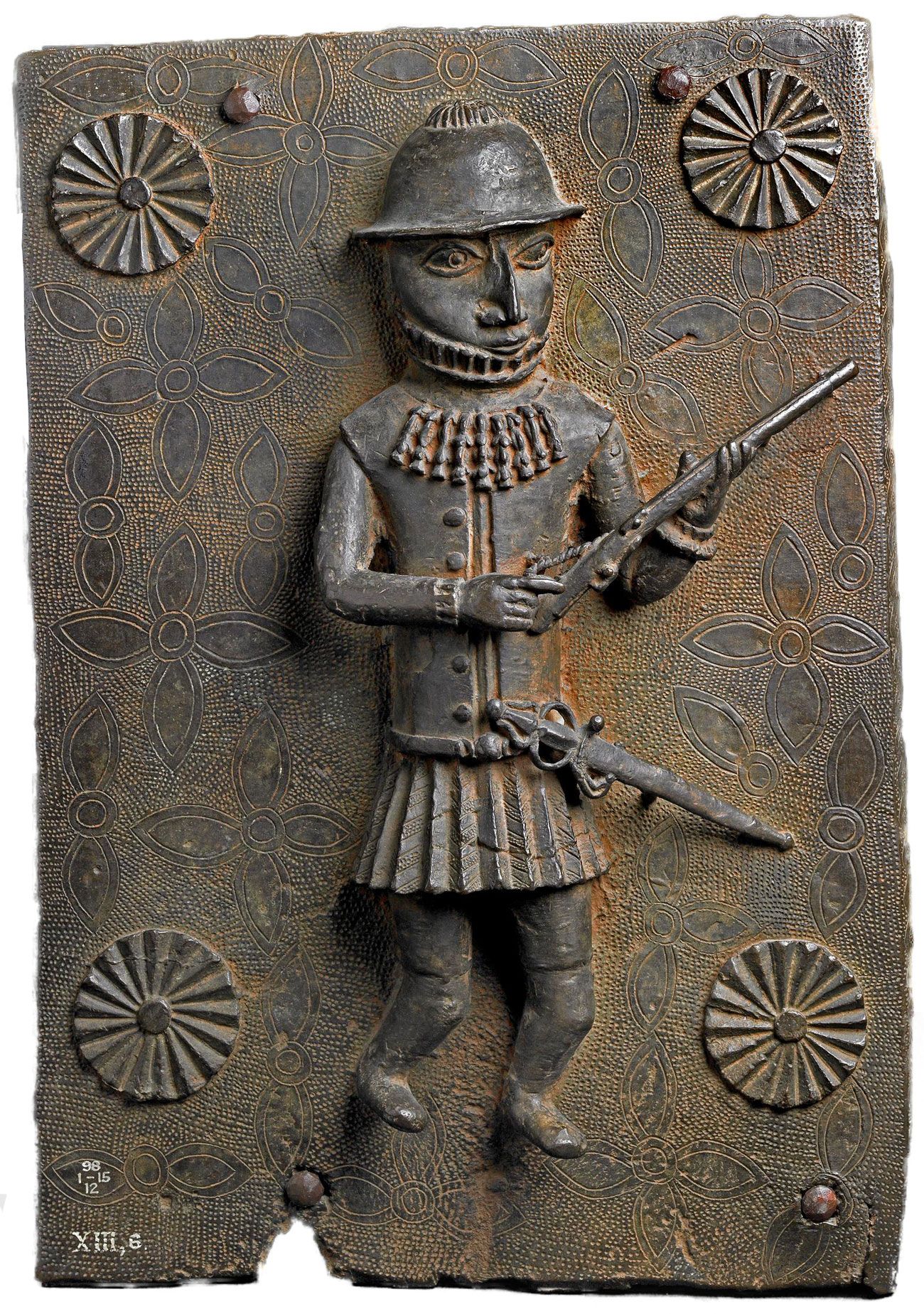
And then you have violent looting by colonial officers. One popular example of looting is the Benin Bronzes from Nigeria. Very popular story. We’re going to talk about that. I’m sure most of you are aware of this ongoing conversation on the repatriation of more than 5000 Benin Bronzes from different European and American museums.
Then you’ve got trophies of colonial conquest. There’s another colonial collecting practice like ancestral remains of those who are resisting colonial rule. Sometimes you get killed and your remains will be your body, or your remains will be taken to such museums as a way of trying to kind of stop any future prospects of insurgency by those who would want to rise again. So your body will be taken away and placed into the museum donations. You do get an idea of objects in a museum having been donated. It’s a very popular collecting practice. This was donated by. But for me as a curator, I always think about the power dynamics around the so-called donations within a colonial context.
And then you have exchanges of museum, museum transfers. Today, museums were in the habit of exchanging objects amongst themselves as well as a way of, you know, specializing in certain collections, like, for example, the Manchester Museum received much of its African collections from Salford Museum was an exchange in 1969, when Salford Museum gave Manchester Museum all of its African collections. The Manchester Museum gave Salford Museum its European antiquities. It’s an exchange of specializing.
So when you want to. If you come to Manchester, you want to look at African collections. Instead they go to Liverpool or to Manchester. If you want to look at antique European antiquities, go to Bolton or to Salford. So there was this idea of centralizing and regionalizing and specializing in particular collections as a way of classifying African objects.
Now.
So the work that I’ve been doing looks at not just the 15,000 objects from Africa that are provenanced. So the idea of provenance just for an explanation is this idea of thinking about objects as having been collected from specific non-African countries that were created after the colonial project. These objects came from South Africa, Zimbabwe, Malawi, Tanzania, Ghana. Yes, we know the provenance. The provenance. Right. But we don’t know the communities where these objects came from.
But however, we do have other objects within this collection, 1500 that are not even proven. They only have labels written Africa with question marks. So we don’t even know where the Africa is not a country, right? So this is what I was working on. These 1500 objects from Africa that were not provenance. This whole shelf there is full of unprovenanced African collections.
So what do you do as a curator who’s taking care of this? Or what do you do when you start? So what I did, I was bringing together a collective of African diaspora living in Manchester, hoping that their lived experiences would help us to, to at least know some of these baskets, some of these meds, and then we can at least start having a dialogue on possible provenances of these unknown provenance objects.
So I had a group of diasporans from Congo, Malawi, Zambia, Zimbabwe, Nigeria and Kenya, and we used the Being Human Festival 2024 to kind of congregate these diasporans and allow them for the first time access to the collection. And these objects are in the basement. They are not on the collection exhibitions, they are in the basement. So giving them access to the collection would also entail us working together with them in developing new biographies and new provenances for these objects. That’s the relational care that I’m talking about here. Relational care with African diaspora community members, the example of objects that we came across from the collection, this object was written fetish object from Uganda.
And it does look like a laughing, right? If you look at it carefully, it’s more than an object. It’s a human figure. It’s telling you a story just looking at this, but within the museum it’s just a fetish object.
So objects are not just products of a society, but they are living entities. They’re living cultures with personalities similar to their own makers like this one. So you can’t just call this a fetish object, right? It’s got meaning.
So how do we get those meanings back? By working with our communities of origins.
And then another interesting example is this. This, this drama again, the drum in the museum, static, frozen, lifeless. But one of the diaspora community members spoke to us as she said to us, this is a talking drum. She was from Nigeria. It’s just drums that you see are in the museum glass case. But they’ve got meanings. When people use such terms, they’re communicating different messages, the rhythms that they play on the drum. They’re supposed to be relaying a message to other community members. But when in the museum, these drums are just frozen, they’re static, they’re lifeless.
We’re arresting the decay, you know, we don’t want them to decay, but taken care of. We’re conserving them. But beyond conservation, these drums have got meaning. They’ve got biographies that are connected to ritual and cultural uses from communities of origins.
Moving on to rethinking, curating as a function of ethical care, as a function of social. Okay, now I think about care beyond the object. I also think about caring for the stories that are embedded in these objects, caring for the people, for the communities. How do we then transcend the notion of care beyond the predication on conserving to live forever?
As curators, let’s think about the stories that are embedded in these objects. Let’s also care for the people. Let’s care for communities.
And lastly, how do you also care for staff members like myself? How do you do that? Like this work comes with a lot of emotional labour. How would Manchester Museum ensure that I’m also taken care of mentally?
As I always go into the basement, see multiple layers of colonial violence represented by these objects? How do you care for staff working with problematic collections from colonial contexts? Not just about the communities, it’s also about staff who deal with these objects every day.
So I think of this concept I’m rounding up now are called curatorial humility or Ubuntu humility. How then, as a curator, can you practice humility? So this, this for me is both a methodological and epistemological approach that incorporates reconciliation, critical reflexivity, and reciprocity with originating communities to address exclusions of the past. Where curators like myself used to speak on behalf of the communities as an expert.
But rather, if you think about Ubuntu as a concept that can be deployed in museum practices, you are saying you are, because we are.
You’re emphasizing connectedness across people, collections and time.
You’re also challenging curatorial silencing epistemic injustices and paternalism in museums, and you are also promoting truth telling. Disclosure, openness, which is a key, I think I would say when you want to think about decolonizing Indonesia, you can’t do that without telling the truth about the circumstances around how the objects that you are keeping came to be what they are.
So museums are supposed to practice truth telling, open disclosure and accountability.
And lastly, just acknowledging the role of colonial violence. How colonial violence was essential in shaping what we are calling collections in museums. That’s curatorial humility. That’s Ubuntu in, in a museum.
And then when you do that now, you can think about this notion of relational curatorship. You are now building relations. The ground is now open to start building those new relations with communities. So when I think about relational curatorship, I see this as a reciprocal practice of caring for objects through active dialogue and relations with either your African diaspora communities, Manchester, or your originating community in South Africa, Zimbabwe, Malawi, Tanzania.
Through emphasizing the ethic of care, inclusion and imagination, relational curatorship also recognizes and accepts communities as aspects, sources of knowledge and research partners, and for the future of curating, I always think about this interesting book called Curatopia Museums and the Future of Curating. It’s a very interesting book, same old books about five years ago, but it’s kind of, I wouldn’t say utopian anyway, but we’re thinking about what then, after all I’ve said, how then can we imagine? Museum curator for the future? What should ethnographic museums of the future look like?
We can’t keep on complaining about coloniality colonial collections. We need to do something to move these museums into the future. So that’s what Curatopia talks about, right? An imagined ideal model of the future. And this utopia again, it explores reciprocal, symmetrical forms of cross-cultural relationship in the present. It looks at how we can engage originating communities, diaspora communities in working through collections that are coming from colonial contexts. In museums.
So Curatopia is an emerging model, curating that is more collaborative, that is more collaborative, that brings communities into the space. Now, when you do practice all these utopia models, then the curator is ceding some of their powers, but the curator is no longer a towering figure of authority.
This picture is coming from the work that I did in my KwaZulu Natal with a colleague of mine called More, Curator of Anthropology and Cultural History Museum in Pretoria. So we looked at a collection of Zulu beads in Manchester Museum, impressive beads that were in the basement, never touched, never exhibited. They were just beads, beads, good beads. I mean, beads are well known all over historical, but there are no stories, there are no meanings whatever.
So we went to OMA with pictures. Only pictures. Representation of the beads showed some of these community members, and then they started developing stories on meanings of these beads and how they are almost making similar beads now. And those stories were used to rethink the collection access the database of Manchester Museum.
So these kind of initiatives can also democratize the power of the curator and give communities a voice in interpreting their own cultural heritage, objects that are meant to be arrested from decay in a museum.
And then lastly, when you when you do these initiatives, then you are thinking of people first and objects second, curators then become custodians. I’m a custodian of people’s heritage.
I wouldn’t think of myself as the aspect of 15,000 objects in Manchester Museum. I wouldn’t know everything. So what I’m doing, what I was doing was just taking care of these objects on behalf of communities. I was the custodian.
Stewardship must be seen as a more appropriate term of thinking about curating. You are not the owner of the collection, just taking care of these objects on behalf of you must also allow shared authority and you can facilitate dialogues and conversations.
Q: Thank you for your talk, Jabu. I have two questions. The first is how does this collection that you are curator of differ in any way to the Pitt Rivers collection? And the second is, I would assume, and it’s an assumption, of course, that many of the British audiences, let’s say, or black British audiences wouldn’t. They might feel. And I cannot say what what anybody would feel, but. Okay, this comes from a heritage which might be related to my heritage. But is there really, you know, how do you. There’s different ways of sharing. And I’m wondering how these heritage objects or objects and their histories and the communities and the contexts that they come from actually relate to the people that are probably looking at the objects.
A: Very interesting question. The Pitt-Rivers one. So Pitt-Rivers is part of the Oxford University. They’ve got a huge collection of anthropological objects, huge, much bigger than Manchester Museum. But what I can say is that you’ll find that some of the collectors who were depositing objects within Pitt-Rivers are the same. People were also bringing things to Manchester Museum like, say, Andrew, for example. It’s a good example. Andrew was a millionaire, a philanthropist, a medical anthropologist. He was sending people across the world buying, collecting, so-called medical anthropological objects. So Pitt Rivers Museum has got a large collection of the Henry Wellcome Collection, as well as Manchester Museum as well as Liverpool. So when he died in 1949, Medical History Museum was disbanded. And all of these objects that were part of the Wellcome Collection were dispersed across most ethnographic museums in the UK. So there are similarities in how these University Museum, even Cambridge University Museum of Anthropology and Archeology. We do share similar collectors who are coming to Africa, for example, who would end up distributing their collections to these university museum in the UK. So we, we’re sitting on a similar kind of problem on how to deal with these collections from colonial contexts. I’ll give you a good example. In 2023 we repatriated some objects to the community of Goat Island in Australia. Aboriginal community 174 cultural heritage objects were collected by Professor Peter Housley in 1940. He was doing his PhD in Ireland, doing anthropology, collecting back paintings. Magic doors, boomerangs brought them to Manchester. He was appointed professor of social anthropology. When he retired in 1983 he donated his collection. Part of it came to Manchester Museum, the other one went to Pitt Rivers Museum, then the other one went to Cambridge Anthropology Museum. So all of these museums, they have similarities in terms of how collectors were dispersing their collections. But Manchester Museum successfully repatriated the collection in 2024.
Back to unconditionally. I didn’t want to talk about repatriation because it’s another story. But museums are also proactively repatriating some of these objects. And then for the British, black British Africans who are living in the UK, I think there’s this idea which is coming up now of some people believe in shared heritages, that this is part of my African identity.
Like the Benin Bronzes, for example, there are ongoing court cases in America where some African Americans are saying, no, you can’t repatriate this process. The Kingdom of Benin was responsible for some of these acts of slavery, and they got the Manila to do the bronze from exchanging people for slaves. Right.
So this is part of my heritage. I’m supposed to enjoy it as a diasporan, even myself. I’m a Zimbabwean, I’ll be proud to see Zimbabwean heritage objects. Manchester Museum. It’s part of shared heritage. So how then do we think about these objects as shared heritages?
| 1. | ↑ | curator(n.) “a guardian; one who has care or superintendence of something,” late 14c., curatour “a parish priest,” from Latin curator “overseer, manager, guardian,” agent noun from curatus, past participle of curare (see cure (v.) ). From early 15c. in reference to those put in charge of minors, lunatics, etc.; meaning “officer in charge of a museum, library, etc.” is from 1660s. Related: Curatorship. https://www.etymonline.com/word/curator |