MURIEL TINEL-TEMPLE
Jonas Mekas, Shiver of Memory, by Peter Delpeut.
Jonas Mekas, Shiver of Memory by Peter Delpeut is not a conventional academic book, but an investigation into Jonas Mekas’s life and work triggered by the publication, in summer 2018, of an article titled “I Was There” written by the American historian Michael Casper. The latter “claimed that in his films, publications and interviews, Mekas had deliberately forgotten or misrepresented important events from his younger years in the Lithuania of the Second World War” (20). “I was shocked”, declared Delpeut, and after pondering the importance of Jonas Mekas’s work in his own life, and the effective tone of Casper’s article, Delpeut decided to “do [his] own research. About Mekas, about Casper, about [Delpeut’s] own judgements, which were searching diligently for solid ground” (45). Thus, the book is not another study of Mekas’s work, but a reflection on Mekas’s past and his media image, the role of the historian, the way collective and individual memories work, and certain events that happened in Lithuania during the Second World War.
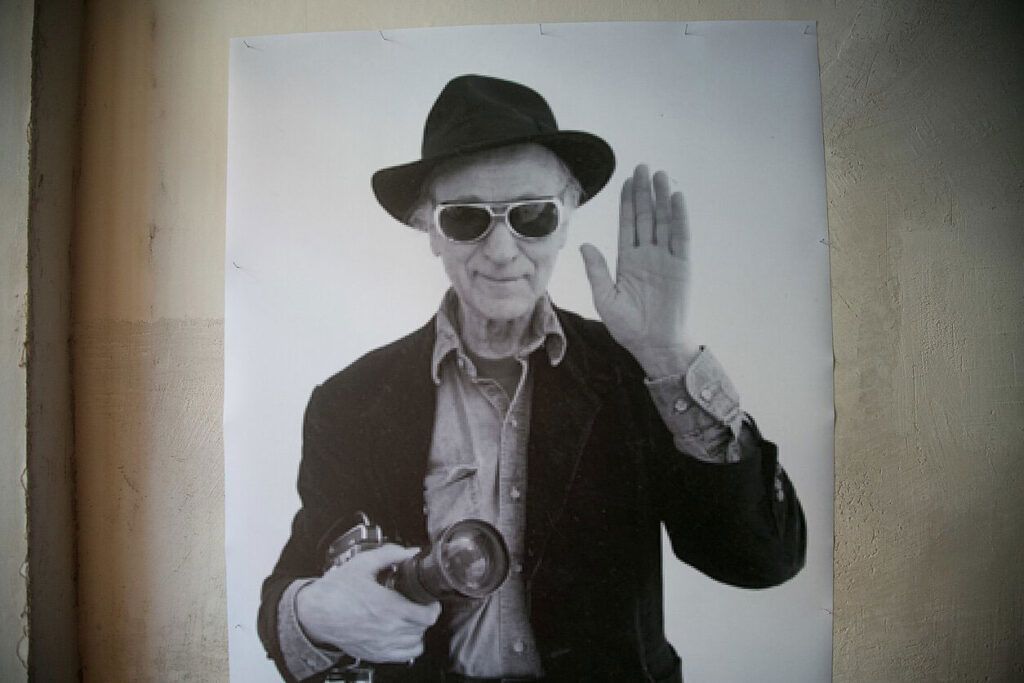
When Casper’s controversial article was published, Jonas Mekas was ninety-five years old. He was celebrated everywhere as the godfather of avant-garde cinema and the co-founder of Anthology Film Archives, the Film-Makers’ Cooperative, and the journal Film Culture. He had been acclaimed by generations of critics and fellow filmmakers for his massive body of work revolving around his personal story: his life as a displaced person, his longing for Lithuania, his active engagement with the underground scene in New York over six decades, and his voice, humour, longevity and loyalty. He died in January 2019, six months after the publication of Casper’s articles and, during these six months, Mekas had responded to Casper’s claims, sticking stubbornly to his own memories and his radical idea of subjectivity, in which, according to Delpeut, “only the now counts and one’s own perception of it; and this applies to what we remember from the past” (20). As Delpeut clarifies, for Mekas, Casper “could not know anything about his past, [as] he had not been there” (20).
Disturbed by Casper’s persuasive evidence of the historical events that Mekas must have witnessed before leaving Lithuania, and which he seems to have never discussed, Delpeut starts to question Mekas’s narrative, but also Casper’s own agenda. This research takes us into key moments in the history of Lithuania and the Holocaust, more precisely into the history of antisemitic massacres that took place between 1941 and 1944, but also into the life journey of Mekas’s compatriots such as the semiotician Algirdas J. Greimas, and into Delpeut’s self- introspection about his own way of remembering or misremembering events.
As Delpeut notes, the context of “the Mekas affair” is not totally anodyne, as it happens within a broader movement of “cancel culture”, and more specifically after controversies around the names of Günter Grass, Paul de Man, Emil Nolde or indeed Greimas, whose legacy was challenged in 2017, twenty-five years after his death, for his antisemitic positions and texts written in his youth. Undoubtedly, the publication of Casper’s articles was influenced by such a climate, as two years earlier a version of the article was reviewed and checked by the magazine The Nation, but not published. Delpeut wonders if the readership of “America’s leading source of progressive politics and culture” (as advertised on their website) was then ready to question an old man’s heroic image. But Ian Buruma, editor of The New York Review of Books, was less cautious, and published the article as “it was worthwhile, even if it was painful to read” for both Mekas and his supporters (219).
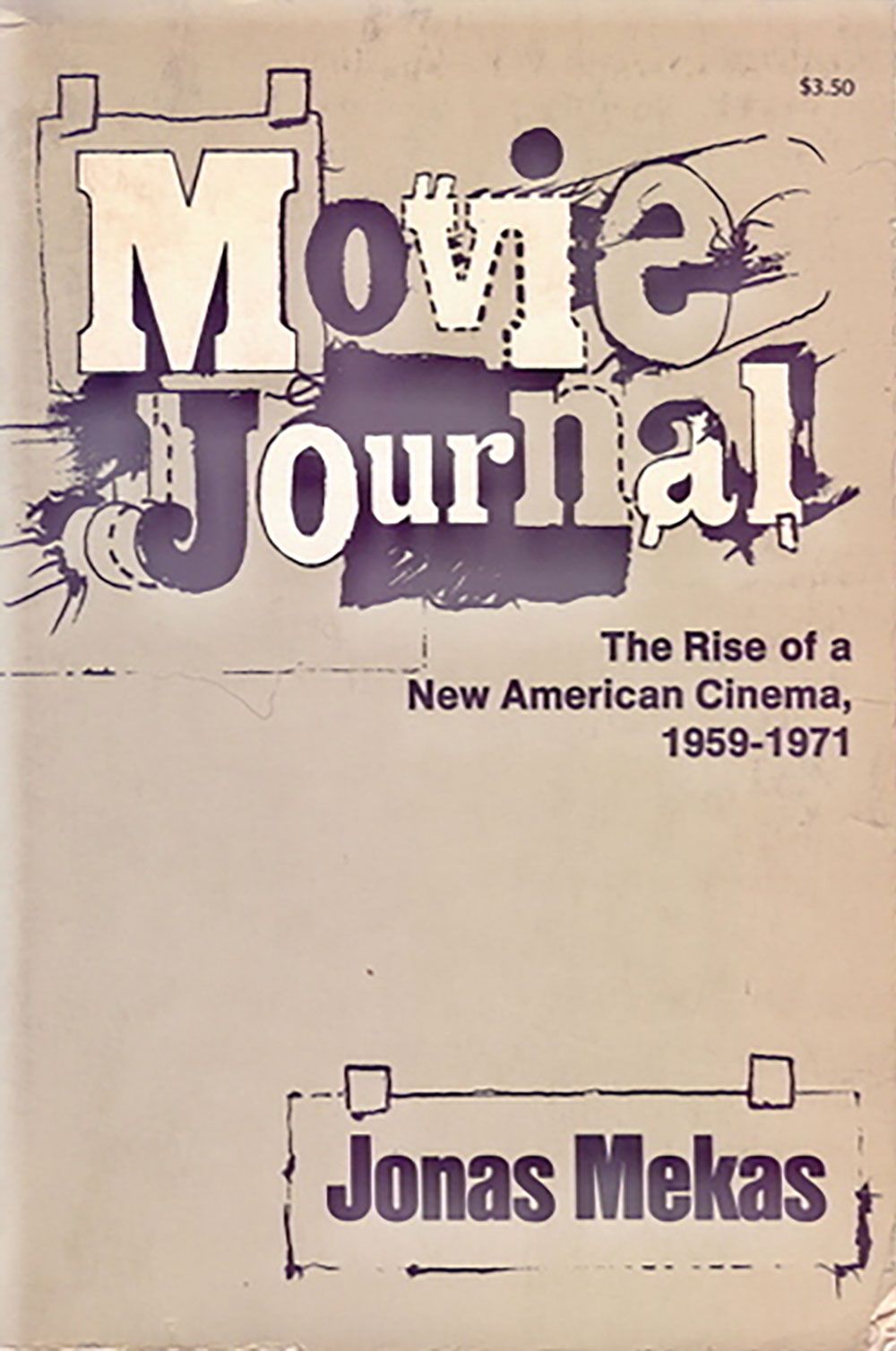
It should be stressed that Delpeut is definitely one of Mekas’s long-time admirers. The book starts with an account of how Mekas’s body of work, and especially the book Movie Journal, were so formative for Delpeut as a young cinephile. Mekas’s unconditional and proactive defence of independent, “poor” and difficult cinema was decisive and fundamental to the whole avant-garde network: for example, London Film-Makers’ Co-op (now LUX) and Light Cone in Paris were founded and structured following the Film-Makers’ Cooperative model. The debt that independent film culture owes to Mekas today is immense. That is why Delpeut is at first shocked and wants to know more. But this is not the only reason.
In fact, Delpeut realises quite quickly that the reason for Casper’s reproach is less about Mekas’s actions and what he did or didn’t do, than about his amnesia, specifically, his not remembering a horrific event that took place in Biržai on 8 August 1941, just a few miles away from Semeniškiai, where Mekas was born and was still living at the time. Mekas is accused of not remembering, not telling, not having tried to discover more about this massacre, and having been rather imprecise about the real circumstances in which he left Lithuania in 1944, when the Soviet Union recaptured Lithuania from the hands of the Nazis.
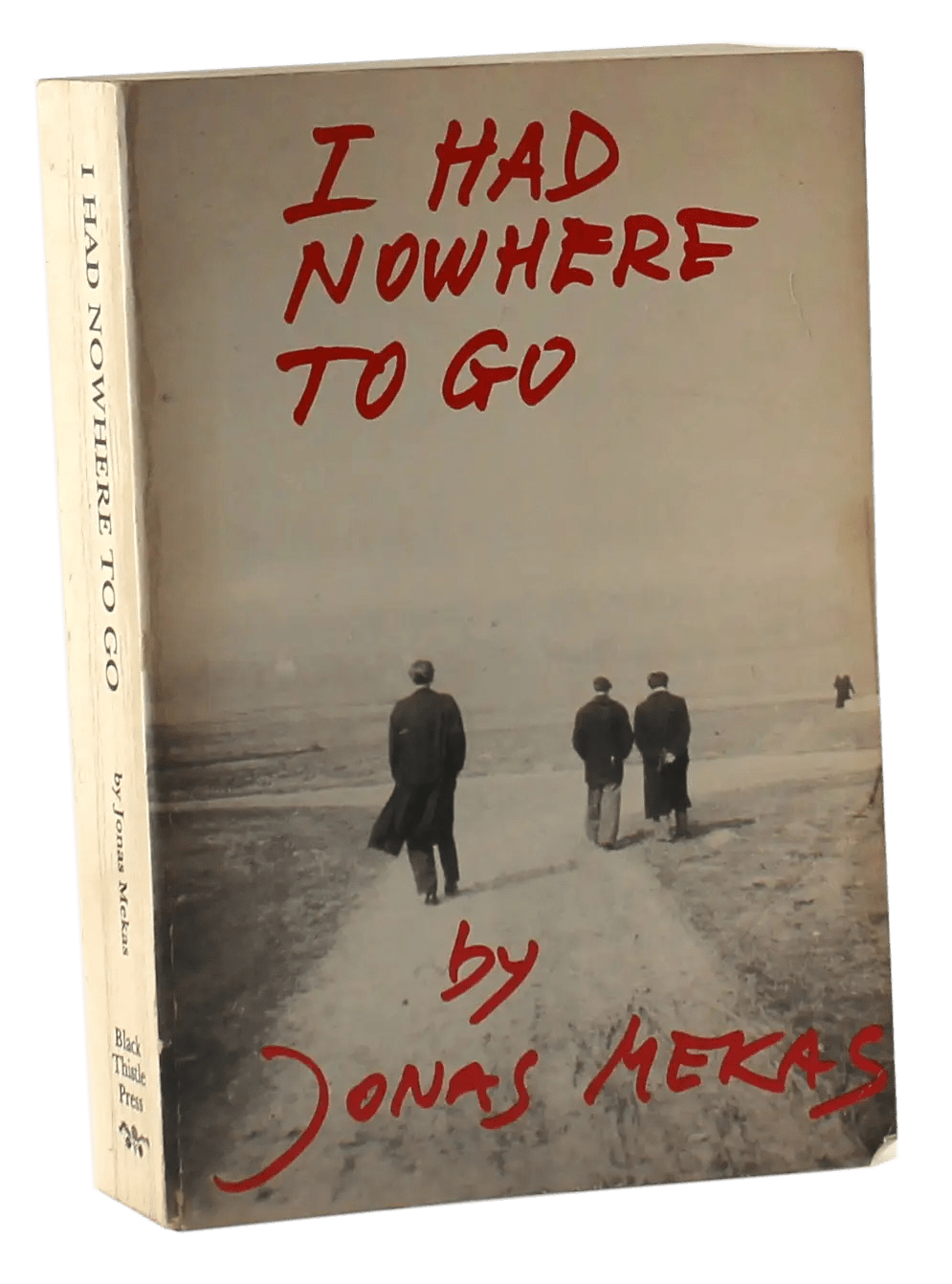
The lack of memory and selective ambiguity is, for Delpeut, highly paradoxical, as Mekas “has been obsessed with preserving memories from an early age” (27). Indeed, Mekas documented his life in the US almost every day, on celluloid and then on digital, and before that, he kept a written diary between 1944 to 1955 (published in 1991 under the title I Had Nowhere to Go).
He went back to Lithuania in 1972 to make Reminiscences of a Journey to Lithuania and to film his native land, to see his mother after twenty-five years of separation, to meet his siblings, and still, as Delpeut comments, in this film, there is selective recollection of the war years. For example, his editorial role for two pro-German weekly magazines published by the LAF (Lithuanian Activist Front) is not really discussed, but he mentions that he acted as translator for the Resistance.
It is not surprising then that Delpeut was absorbed in “the Mekas affair”, to the point of writing about it, as most of his own work deals with memory, archives, stories, and the tensions between the three. Delpeut is a filmmaker, novelist, and essayist who worked as curator and deputy-director of the Netherlands Filmmuseum (known as EYE Film Museum today) from 1988 to 1995. He is known for his work with found footage, notably for Lyrical Nitrate (Lyrisch nitraat, 1991), made during his years at EYE Film Museum, and composed of clips of nitrate films discovered in an attic. No commentary accompanies this film, but in the following one, The Forbidden Quest (1993), Delpeut fictionalises the film archives shot in the Arctic region in the early twentieth century, transforming the moving images into an improbable but fascinating story.
Delpeut’s work scrutinises archives and makes them “talk” to the present, and this is probably why he is fascinated by Casper’s systematic research into Mekas’s past, and why he is motivated to systematically review all of Mekas’s vast filmography.
“In Mekas’s films”, Delpeut states, “there is only one protagonist and one central point of the narrative: Jonas Mekas himself” (46). This means that to explore Mekas’s past is also to rewatch all of his films: “It was a strange experience to watch the films again after reading Casper’s article.
Suddenly, they seemed to pretend to be a fixable rebus” (45). One question seems to haunt Delpeut: why doubt Mekas’s story as he had already written it all down in his diaries and told it in his films? (30). But, after detailing his viewing experience and noting the “missing” parts, the “annoying” repetitions, and the stylistic patterns, Delpeut has this striking reflection: “Has all this self-presentation been nothing more than an ingenious smokescreen, a big vanishing trick?” (206).
This is quite a disconcerting hypothesis, but it encourages the reader to think about the differences between self-presentation and self-representation. Mekas’s work is seen as a model of self-representation: the filmmaker is the model, and the model is the filmmaker, in his creative and everyday life. After reading Delpeut’s book, this entanglement is not so solid anymore, and the self-(re)presentation needs to be reconsidered in the wider context of what has not been filmed, not been told, and not been controlled by Mekas’s editing skills and film style.
Thus, throughout the book, among other documents, Delpeut mentions several times the six hours of testimony Mekas recorded for the oral history collection of the United States Holocaust Memorial Museum on 29 June and 1 July 2019, immediately after the publication of the article and just six months before his death. As Delpeut explains, the Memorial Museum had been chasing Mekas in vain to record his testimony for more than ten years. Delpeut watches attentively everything and sees a hesitant man, who contradicts himself and struggles to be convincing. Visibly, Delpeut suffers with Mekas while he is also irritated by the old man’s dismissive attitude.
As an experimental audio-visual presentation, Delpeut published three chapters of the book in the digital journal herri [chapter 5, chapter 9, chapter 11], integrating the original text, still images, graphics, and moving images, including clips of this long interview. I recommend checking out this herri material, as the experience of encountering Mekas’s testimony after reading Delpeut’s book is very powerful and unsettling. It becomes impossible not to find yourself in the shoes of the investigator, observing and deciphering each movement of Mekas’s hands, each fluctuation of his voice. It is also very moving and tragic: “Was it worth challenging an old man’s memory?”, Delpeut asks incessantly.
Couldn’t he have died peacefully without having to face events he did not want to or could not recall? Even if those events are painful and complex and need to be rescued from oblivion urgently? At no point in the book does Delpeut position himself as a judge. He is very attentive to details and very careful to let the facts and archives talk while constantly engaging with his own ambiguous and changing thoughts as he goes deeper into the investigation.
This book is absolutely timely and essential, raising key questions about memories and the way to record, collect, or relate them. It is also about silence and trauma, about not being able to remember or revisit past experiences, about history and subjectivity, and about individual responsibility too. And it certainly invites us to reconsider the life and work of one of the twentieth century’s major film artists.
DoppelHouse Press, 2022, 229 pp. © Muriel Tinel-Temple This article is published as Open Access under the terms of the Creative Commons Attribution-Non Commercial Licence (creativecommons) which permits non-commercial use, distribution and reproduction provided the original work is cited
This review was first published in Alphaville: Journal of Film and Screen Mediano. 26, 2023, pp. 221–224 DOI: doi.org and is re-published in herri with kind permission of the author and the editor of Alphaville.

Delpeut, Peter. “The Forgotten Evil–pilot project digital version.” herri, No. 5, Spring 2021, herri Accessed 14 Nov. 2023.
——, director. Lyrical Nitrate [Lyrisch nitraat]. Yuca Film, 1991.
——, director. The Forbidden Quest. Ariel Film, 1993.
Mekas, Jonas. I Had Nowhere to Go. Spector Books, 2017.
——. Movie Journal: The Rise of New American Cinema, 1959–1971. Edited by Gregory R. Smulewicz-Zucker, 2nd ed., Columbia UP, 2016.
——, director. Reminiscences of a Journey to Lithuania. Vaughan Films, 1972.
Tinel-Temple, Muriel. “Jonas Mekas, Shiver of Memory, by Peter Delpeut.” Alphaville: Journal of Film and Screen Media, no. 26, 2023, pp. 221–224. DOI: doi.org