GAVIN STEINGO
Historicizing Kwaito
In the standard narrative, kwaito is described as a form of electronic dance music that emerged alongside the democratization of South Africa between Nelson Mandela’s release from prison (1990) and the democratic elections of 1994.[1]I would like to thank Carol Muller, Roger Grant, and the anonymous reviewers for their thoughtful comments. Thanks also to Diane Thram for her support and encouragement. In most cases, scholars have claimed that kwaito emerged as a direct response to the end of apartheid and the birth of the South African “rainbow nation”.[2]See Allen 2004; Boloka 2003; Coplan 2005; Impey 2001; Peterson 2004; Satyo 2001; Steingo 2005, 2007; Stephens 2000. While there is certainly some truth in such a claim, the present essay is an attempt to complicate this rather simplistic and monolithic historical narrative.
Before engaging carefully both with kwaito history and historiographical issues more generally, it is necessary to establish the “kwaito story” as it is usually told. While a review of kwaito’s histories might lead in many directions, down labyrinthine paths of oral history, newspaper archives, and sound recordings, I focus here on academic historicizing which is, for the most part, based on a multiplicity of voices and media.[3]This paper represents preliminary thoughts about historicizing kwaito, derived from several short term periods of field research in preparation for the large project that will bgin in November 2008, funded by a Benjamin Franklin Fellowship from the University of Pennsylvania. In the following section I will review some of the extant literature on kwaito, observing common tendencies and lines of flight in and among various academic works.
Kwaito Stories
Bhekezizwe Peterson has written one of the most imaginative and lucid accounts of kwaito’s history. In a section titled “And then there was kwaito” Peterson (2004:198-9) suggests:
Kwaito’s genesis is accredited to DJs who, after 1994, had to respond to the need expressed on the dance floors for a new music. After the decades of the politically charged toyi-toyi the call was for sound, dance and attendant styles that would capture the sense of release that young people felt following the demise of apartheid.
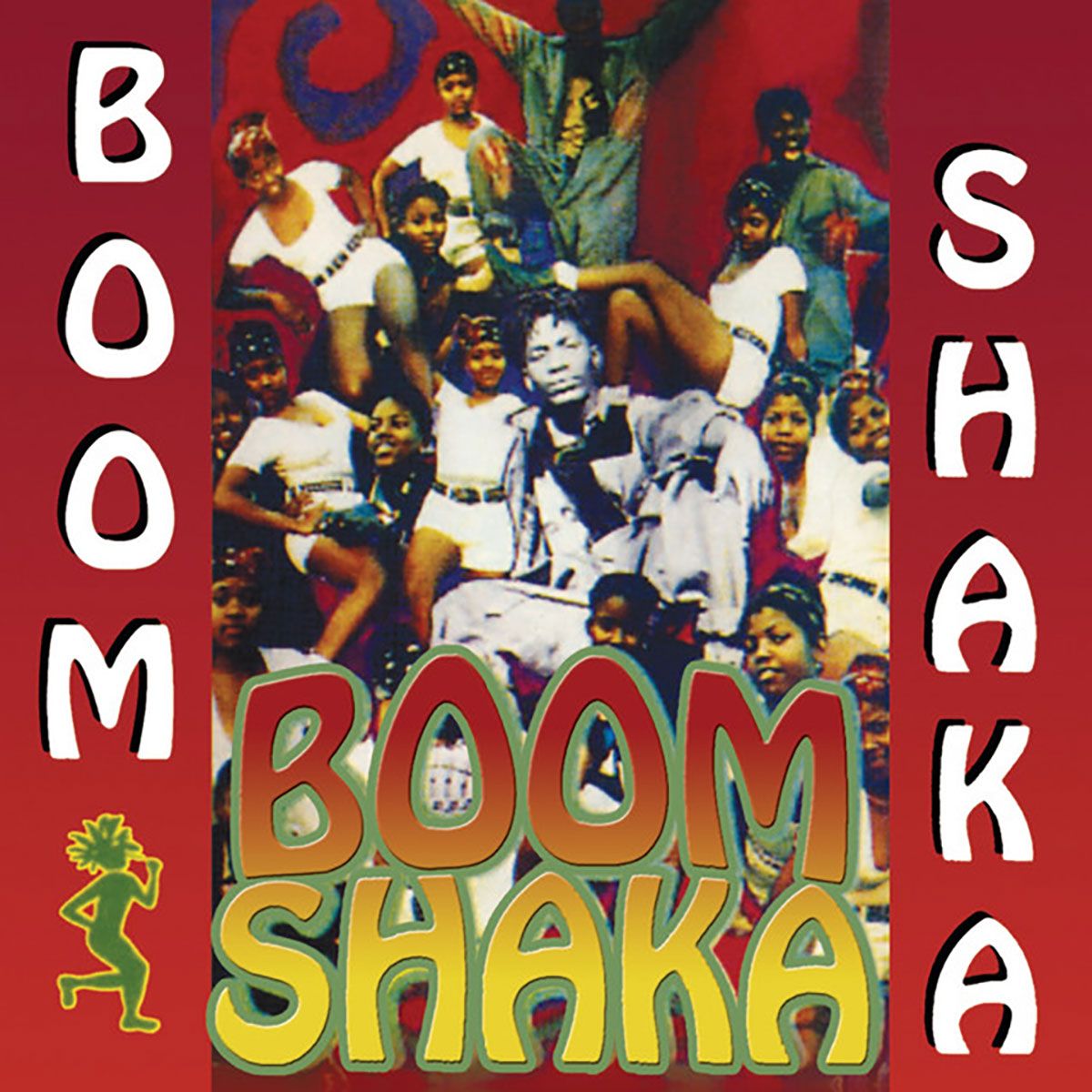
Among other things, Peterson clearly correlates kwaito’s “genesis” with the precise date of apartheid’s formal demise. Ignoring, for the moment, the fact that Peterson is incorrect about the exact date (kwaito had emerged at least by 1993 with Boom Shaka’s first album), his basic point that kwaito was a response to the end of oppositional politics at the end of apartheid is an archetypal example of the dominant kwaito historicization.
Ethnomusicologist Angela Impey (2001:45) historicizes kwaito in much the same way:
While the kwaito movement appeared to adopt the politically defiant posturing of Cape rap and hip-hop, in reality, it appropriated defiance as a fashion statement…Groups such as Boom Shaka appeared to unleash among young black consumers an explosive desire to disengage from the long years of oppression and political protest of the apartheid era. No longer restrained by the need to comment on racial injustice and political freedom, it expressed a new set of dreams.
Like Peterson, lmpey draws a direct parallel (indeed, proposes a direct causality) between the end of apartheid and the beginning of kwaito. It perhaps is worth noting that Impey does inject a certain disturbance into the coherent narrative that is often told about kwaito. Unlike Peterson and several other scholars, Impey suggests that kwaito’s rejection of oppositional politics is not immediately apparent, and that the “kwaito movement appeared to adopt” — even though it did not — “the politically defiant posturing of Cape rap and hip-hop”. Put otherwise, kwaito’s rejection of oppositional politics was not apparent, and needed to be uncovered through analysis. Impey’s precise construction is doubly confounding because she continues that “Groups such as Boom Shaka appeared to unleash among young black consumers an explosive desire to disengage from the long years of oppression and political protest of the apartheid era” (emphasis mine).
While in the first instance kwaito’s appearance as political defiance was, in reality, only the appropriation of defiance as a fashion statement, in the second instance kwaito’s appearance as a form of political disengagement appears to be interpreted by Impey as a “true appearance”, as not simply an appearance, but an immediate reality. The slippage between “appearance” as the covering up of reality to “appearance” as the disclosure of reality in Impey’s text certainly does unsettle any straightforward reading. However, putting aside these slight difficulties in the text, it is possible to conclude that Impey’s and Peterson’s basic historical narratives of kwaito are similar.
The basic claims that (1) kwaito emerged as a response to the end of apartheid and that (2) kwaito was a form of disengagement from the oppositional politics of the apartheid era, can be found in a vast majority of the extant literature on the music genre. I would like to suggest that there are two problems — or, at the very least, two limitations — with the story of kwaito that we have become accustomed to telling ourselves. Firstly, discussions of kwaito have failed to take into account larger shifts in global political economy, on the one hand, and “North American global’. (Jameson 1991) popular culture, on the other hand. Here I am specifically thinking of the triumph of neo-liberalism and the end of the Cold War, along with associated transformations in popular culture. Secondly, the precise dating of kwaito’s genealogy is slightly skewed. There is ample evidence that the form of music we today call “kwaito” emerged, not in the “celebratory” early 1990s as most people believe, but rather in the far more ambiguous and violent 1980s. Moreover, the periodizing of kwaito’s birth at 1990 creates a false dichotomy between the 1980s and 1990s. Thus, in addition to resituating kwaito as a slightly older genre than is usually imagined, a rethinking of South African popular music in the 1980s is also necessary.
Bubblegum
Regarding the second problem, David Coplan (2005:11) has done much to blur the boundary between pre- and post-1990s South African popular music:
[K]waito has never existed as the genre-apart that it has widely been made out to be. Furthermore, its most skilled and creative exponents, such as Arthur, Abashante, Trompies, M’du or TKZee, were swimming in the broader stream of South African pop traditions from the very first plunge.
What troubles Coplan is not so much the particular way in which histories of kwaito have been written as what he refers to as “inappropriate inscriptions of generic labeling” (2005:12). It is not only that kwaito in particular never existed as a “genre-apart”, but also that the naming of genres in general fails to take into consideration the complexities and textures of historical unfolding. To make this point, Coplan turns away from kwaito briefly:
There is no better illustration of the inappropriate inscriptions of generic labeling than the term applied to the popular black dance music style that preceded kwaito in the 1980s: “bubblegum”. Perhaps it was the perceived shallowness in the midst of the gathering political storm that led somc radio disk jockey to dismiss the new style of township pop as “bubblegum”: a childish tease in which the initial burst of sweetness quickly vanishes on the tongue. (2005:12)
While I certainly agree with Coplan here, it seems to me that his nuancing of the “names of history” forcefully brings to light my first major criticism of kwaito historicizing: the failure to take into consideration international cultural production. For, while Coplan has done much to complicate the alleged fracture line between the 1980s and 1990s, his omission of any international bubblegum music is striking. It seems unlikely that a radio DJ named 1980s South African pop music “bubblegum” solely because such music was perceived as shallow. It seems more likely that South African bubblegum was so called because it resembled (very closely, in fact) the contemporaneous bubblegum music in Europe and the USA. It may be true that South African bubblegum was perceived as “shallow”, but the inappropriate inscription of “bubblegum” clearly needs to be viewed in a larger context, a context in which the word “bubblegum” was frequently used to describe 1980s electronic disco music.
Lara Allen’s entry on bubblegum in the New Grave Dictionary of Music and Musicians is also relevant. Allen (2001 ) writes that the “worldwide popularity of disco in the 1980s spawned a South African township variant commonly called ‘bubblegum’, although its exponents prefer the official classification ‘township pop’”. Allen does, it needs to be said, situate bubblegum within the “worldwide popularity of disco in the 1980s”. What Allen does not mention, however, is that bubblegum was not exclusively the name of a South African township variant of disco. In fact, the word “bubblegum” was commonly used to describe the music of 1980s European, American, and Australian pop groups and singers such as Bananarama, Tiffany, and Kylie Minogue[4]See Cooper and Smay 2001.. Of course, the genre known as “bubblegum” existed long before the 1980s. Carl Cafarelli (2001), for example, observes that the term “bubblegum music” was being used as early as the 1960s.
More recently, Coplan has in fact addressed the possible international influence on South African bubblegum. Writes Coplan (2008:294):
The new township style…was unflatteringly known as “bubblegum”. There is no better illustration of the inappropriate inscriptions of generic labeling than this term. Both Ansell and Meintjies, – who self-admittedly have not researched this genre – misidentify it as a term for superficial British-style local pop. Even the first infectiously bouncy recordings were not the tasteless ephemera, musically or politically, that the dismissive “bubblegum” label assumed.
Coplan suggests that perhaps the label “bubblegum” served a similar function to the earlier “jive” which was chosen specifically to “deliberately mislead government watchdogs”. Ultimately, writes Coplan, bubblegum “clearly had both audible roots in local black popular balladry as well as engagement with popular social and political issues”.
There are many ways that one might respond to Coplan’s arguments that are, as usual, both insightful and well informed. Here I simply raise a few issues that will not be easily resolved. Firstly, I see no reason to assume that “bubblegum” is an unflattering label. Whether or not the term was used to deliberately mislead government officials, the term is (and was) certainly open to multiple interpretations and need not be thought of as inherently derogatory. Secondly, dismissing British-style bubblegum pop as “superficial” (as Coplan seems to have done) is predicated on a problematic notion of authenticity. As Fred Maus (2001) has suggested, the superficiality of groups such as the Pet Shop Boys was not as superficial as one might imagine. Or, to put it otherwise, “superficiality” itself can be mobilized politically towards progressive ends. Thirdly, Coplan gives a quick nod to Brenda Fassie’s Weekend Special which he suggests was “political only in the sexual sense of protesting against the subordinate romantic status of the ‘weekends-only’ girlfriend” but quickly moves on to explicitly political songs like Black President and Shoot Them Before They Grow.
On the one hand, one can point to dozens of bubblegum songs with “superficial” lyrics (think, for example, of Yvonne Chaka Chaka’s Thank You Mr DJ); on the other hand, a focus on explicitly “political” lyrics often both misses the point of songs and risks a too narrow understanding of the political – as Coplan himself has pointed out. Fourth and last, one should not forget that it is music we are in fact writing about. Even the most cursory hearing of bubblegums from South Africa and Britain reveals obvious similarities: repeated electronic drum tracks; simple, repeated vocal refrains; heavy use of synthesizers as vocal accompaniment; pristine production quality, without distortion or clipping; emphasis of sonorities in the upper registers?[5]On the last point (about musical characteristics), see Meintjes (2003). In fact, Meintjes’ discussions on bubblegum are rather insightful, if brief. Meintjes says that bubblegum (which she alternatively labels “township pop”) is keyboard and drum based with short call-and-response vocals. It is largely programmed and sequenced – and meant to sound that way. It uses a lot of absolutely electronic, contemporary sounding timbres, created as themselves rather than designed to represent amplified or acoustic instruments. Signal-processing effects such as reverb, chorus and echo are self-consciously added to the recorded voice…” (2003: 154). However, Meintjes is less interested in comprehensively historicizing bubblegum than understanding discourses about bubblegum within the mbaqanga community. It is occasionally difficult to ascertain whether Meintjes is representing the voices of her interlocutors, or if she is making her own point. For example, after observing that mbaqanga musicians often talk about bubblegum as “whitey” music, she writes: “Musically, township pop is white because it shares formal characteristics with particular popular styles that black South Africans in the early 1990s identified as music produced and consumed by white people, namely, intensively produced studio music that grew out of a rock tradition” (153).
Now, disco of the 1970s, a large amount of 1980s American and British bubblegum, and electronic dance musics such as house and trance, were all originally produced and consumed by black people. While I do not doubt that (some) black South Africans think of those genres as “white”, Meintjes herself says nothing about these genre histories. Similarly, while Meintjes does not offer us her own take on the issue, “whitey bubblegum” did not grow out of rock music in any obvious way (it was both a descendant of, and reaction against, rock music), and rock music, again, was invented by African Americans, and not whites.
My aim, of course, is not simply to draw attention to the international use of the term “bubblegum”. Instead, I would like to argue that in historicizing kwaito it is imperative to consider larger global flows and shifts.[6]Of course, several ethnomusicological studies have carefully elucidated the ways in which South African musicians have interacted with African American music. See, for example, Ballantine (1993); Coplan (2008); Erlmann (1999); and Muller (2006). In this vein, I suggest that the triumph of neo-liberalism and the end of the Cold War in the late 1980s were more significant events (or series of events) in the history of kwaito than the end of apartheid. It is to this point that I now turn.
Ends and Means: The Two Stages of Postcoloniality
In his notorious The End of History and the Last Man (1992), Francis Fukuyama argued that “Hegel had been right in saying that history had ended in 1806, since there had been no essential political progress beyond the principles of the French Revolution, which he had seen consolidated by Napoleon’s victory in the Battle of Jena that year. The collapse of communism in 1989 signaled only the denouement of a broader liberal democracy around the globe.”[7]This synopsis of The End of History is from the preface to Fukuyama’s later book Our Posthuman Future (2002: xi-xii). While it is possible to dismiss Fukuyama as a conservative ideologue (which, of course, he is), it is difficult to deny the hegemony of global capitalism after 1989.[8]For more on South Africa’s “neoliberal turn”, see, for example Marais (2001) and Bond (2004).
Put another way, the fact that there is no Fidel Castro Street in Johannesburg (as there is in cities such as Maputo and Windhoek) signals the relative lack of communist influence on South Africa’s 1994 “transition” into a neo-liberal state.
Anthropologist John Comaroff has approached this topic from a slightly different angle. He suggests that “postcoloniality” is not monolithic, and instead asks if “postcoloniality” might not be parsed into two broad stages:
Is it possible or useful to separate the first – which began with the “decolonization” of India in 1947, brought forth most of the “independent” nations of the “Third World”, and ushered in the age of high neocolonialism – from a second, imagined to have had its genesis in 1989, with the end of the Cold War, the “triumph” of neoliberal capitalism, democratization movements, and the rise of a new wave of postrevolutionary societies in Central Europe, South Africa, and elsewhere? (Shaba and Comaroff 2002:15)
Leaving aside, for the moment, all the difficulties involved in this question (the fact that South Africa was not, strictly speaking, a “colony” for many decades before 1994; the obvious differences between Central Europe and South Africa), I would argue that Comaroff’s “parsing” is indeed possible and useful in understanding kwaito. For, while many academic researchers and journalists have commented on kwaito’s striking lack of overtly “political” content, kwaito’s conditions of possibility have been all but ignored. The crucial point is that whereas “liberation” musics in countries such as Zimbabwe, Mozambique, and Angola were often agitprop or linked to organized politics (Bender 1991), kwaito musicians and fans eschew sloganeering and celebrate pleasure, the body, and consumerism. Seen this way, kwaito is more meaningfully understood as a genre of global neoliberalism than a narrowly conceived “post-apartheid” genre.
In a recent interview, activist and intellectual Jeremy Cronin was asked how the Left in South Africa coped with the collapse of the Soviet Union. Cronin answered that the top communist leaders left the South African Communist Party for the ANC in 1990, and “the social-democratic project was rolled back. In a way, the new South Africa emerged in a kind of neo-liberal triumphalism” (see Das 2008). While analysts and historians have emphasized South Africa’s “peaceful transition”, Nelson Mandela’s humility and forgivingness, and the spirit of reconciliation in the mid-1990s, insufficient attention has been paid to the global conditions that shaped and constrained these events and sentiments.
Thus, while a commentator such as Patrick Neate (2003) can interpret kwaito as the confluence of international genres flooding into South Africa after apartheid, a more elaborate meditation would map the transformation of the politics behind such genres between the 1980s and 1990s. To do so would be to more carefully understand the position of South Africa in global history.
Fissures: Between Decades
In this section 1 would like to turn to my second major area of inquiry: the diachronic historiography of kwaito. As suggested earlier in relation to Coplan’s discussion of bubblegum, believing that kwaito simply appeared ex nihilo as Nelson Mandela stepped out of jail is rather simplistic. In the following section, I present several problems with the assertion that kwaito appeared suddenly in the early 1990s.
The 1980s was a particularly ambiguous time in South African history. Despite the rampant violence and frightening uncertainties, the promise of a democratic horizon seemed to finally be on the horizon. Of course, people had been prophesying almost since apartheid’s advent that the regime of apart-hate would end in the next five years, so the future of the 1980s certainly did not seem determined. Nonetheless, increased pressure on the Nationalist government both from within South Africa and internationally created a particular sense of political excitement and anxiety. Paradoxically, South Africa’s isolation from the rest of the world also began to loosen in the late 1980s.
Ethnomusicological studies on “world music”, and specifically Paul Simon’s Graceland, have illustrated in detail that the international cultural boycott against South Africa was highly contested in the mid- and late 1980s. The complexities of the cultural boycott in the 1980s have been documented in detail, and need not be rehearsed here.[9]See, for example, Meintjes 1990; Nixon 1994; Muller 2008. I wish to only point out what Rob Nixon (1994) has characterized as the shift from obstructive to constructive strategies.
Nixon argues that the cultural boycott was more appropriate for the specificities of South African politics in the 1960s, and that by the 1980s black South Africans were dissatisfied with international obstruction.
While international movements (such as Artists United Against Apartheid) attempted to encourage and enforce the terms of the United Nations’ restrictions, important black South African musicians such as Hugh Masekela and Joseph Tshabalala were reconfiguring South African international representation.
Many black South African musicians were beginning to encourage, rather than to thwart, collaborations with American and European musicians. A conference of South African artists and musicians took place in Amsterdam in 1987 to access the future of “Culture in Another South Africa”.
“Many of the three hundred participating artists maintained that world isolation of apartheid had to be complemented by international exposure to the creative energies of those South African artists who were giving imaginative form to an alternative order” (Nixon 1994:168). The Amsterdam conference resulted in a restriction and limiting of boycott policies, that is to say, a selective boycott. In some senses the selective boycott was simply impossible to administer. In 1988 the Mass Democratic Movement instigated the “cultural desk”, whose task it was to decide who the boycott applied to. The cultural desk was wildly unpopular and was soon dissolved. Although the cultural boycott officially lasted until the end of apartheid in 1994, its efficacy and value was widely contested in the late 1980s and 1990s. Moreover, as we have seen, between the years 1987 and 1994, the boycott was loss aggressive and less comprehensive.
The majority of anti-boycott voices came from within South Africa. Beginning with the Black Consciousness movement of the 1970s, black South Africans hoped to displace censure with affirmation (Nixon 1994:162). Interviews with black South African musicians in the 1980s illustrate an overwhelming desire to challenge the “poor African” stereotype.
The important point is that in the extremely repressive decade of the 1980s, the majority of black South African musical voices were affirmative. Black culture was being affirmed; South African culture was being affirmed; in a sense, life itself was being affirmed.
Seen this way, the “celebratory” ethos of kwaito is perhaps not as markedly different from the 1980s as is often thought. David Coplan observes that the emphasis on enjoyment and pleasure in kwaito music in the early and mid-1990s was not really anything new. Coplan quotes Johnny Clegg on musical life in the 1980s:
The weekends are for reconstitution…”Good time” music is reconstitutive because it says, climb inside and I’ll make you whole, get up off your chair, don’t feel so bad, let’s move together, a bit more strongly with each repeated cycle of the song. It is defiant. It expresses the determination that every one of us will be free one day. It cannot be explicitly political… it expresses in its tone, in the sound of the voice and the sound of the instruments, the soul of the black South African.[10]Coplan 2005:16, quote from Taylor 1997:82, 80. It is perhaps ironic that at this point Coplan (and Taylor) has a white man commenting. Nonetheless, black South African musicians (such as Joseph Shabalala and Philip Tabane) were reported to have said similar things during apartheid.
We see from Clegg’s comments that perhaps the reception and meaning of kwaito is not so different from that of earlier South African music. Of course, it is possible to argue that, whereas in the 1980s the enjoyment of music was in stark opposition to “lived conditions”, in the 1990s there was something like a dialectical resolution whereby the enjoyment of music reflected (rather than contradicted) political and social life. I would argue, however, that this interpretation is too simplistic. Significantly, the politicized black youth of South Africa have always been aware of the ambiguities of political life in South Africa, in the 1980s as well as in the 1990s. While kwaito was and is certainly the soundtrack of a different South Africa, the notion that kwaito is simply about “celebration” is highly reductive. After all, as Veit Erlmann (1991:3) points out, material conditions do not determine social practice.
The following lengthy excerpts from Niq Mhlongo’s (2004) brilliant quasi-autobiographical novel elucidate the anxieties that continued into the post-apartheid era. Here, the protagonist of the novel is queuing in line to vote in the first democratic elections in 1994:
Different political parties had mumbled their big lies to rally people to vote for them. I had not made up my mind as to which parry to vote for, but I definitely wanted to see a black party in government. I didn’t care that my Big Brothers were said to be still wet behind their ears when it came to naming a country as big as South Africa. I would even have voted for the Jahman candidate who had vowed to legalise dagga in his very first term as president. To me, just as long as he was black it was fine, as stupid as that. (2004:61)
In the following excerpt, the protagonist and a friend arc going home in a minibus taxi after having voted:
Theks and myself remained seated uncomfortably on the back seat of a noisy death-trap minibus. It ran hell for leather along Commissioner Street via John Vorster Square. Ear-splitting music was blasting from a pair of speakers right behind us. The bass was pounding my eardrums, but the driver and the two teenagers in front of us were nodding along to Joe Nina.
Maria Podesta maan. Ding-dong.
Yeah, yeah, yeah baby.
Ungishaya ding, ding ding ding-dong.
It was so loud that it was difficult for people sitting next to each other to have any kind of conversation...The old minibus skidded at the red robots along Main Reef Road near the Fordsburg Shopping Mall. I watched Theks as she shut her eyes with fright. The minibus started to yam all over the road. There were screams from the commuters inside. Fortunately, the driver managed to control the skid by applying the brakes just before he collided with the BP petrol tanker that had come to halt in front of us...
The robot changed to green, but before the driver could accelerate the passenger door, which was fastened by a wire, swung open. The guy sitting next to it was instructed to hold onto the door until the driver was able to pull the taxi onto the side of the road. Since the indicator and brake lights of his minibus were dead, the driver waves his hand out of his window to signal to the other road users that he intended to move his car into the slower lane. A white 3-serics BMW Dolphin came speeding up from behind. Its driver was forced to make an emergency stop, the tires screeching on the road to avoid an accident. In a sudden flash the two drivers were swearing at each other.
"Where did you buy your driver's license, you moron? Don't you know to indicate when you have to change lanes? You think this is your road?" shouted the white bearded man inside BMW.
"I bought it from your mother's arse," retorted the minibus driver.
"Your mind is as short as your hair, you piece of shit."
"Go fuck yourself, you white bastard."
"Who do you think you are? You think democracy means running around driving the way you like without thinking? You uncivilized black shit,"
"You can suck my dick. I don't give a shit about you, you racist bastard." (2004:77-78)
As the above quotes indicate, the claim that – unlike music of the 1980s – music of the 1990s “celebrates” freedom is clearly reductive. On the one hand, much music of the 1980s was celebratory in a certain sense, even if what the music celebrated is rather difficult to define. On the other hand, kwaito fans in the early and mid-I990s were well aware that other struggles were clearly on the horizon: crime, poverty, and HIV/AIDS. Both the 1980s and the 1990s were shot through with ambiguity, joy, excitement, and pain. While the pre- and post-apartheid periods certainly do differ in many respects, the 1990s cannot be understood as the emancipatory telos of the 1980s.
In a poignant dialectical reversal, kwaito superstar Zola suggests that freedom is itself a type of struggle: “As much as the children of the ’70s and ’80s had to be violent to make a point, the generation of the ’90s had to deal with freedom and that is hard. Whoever says the struggle continues didn’t tell us how. Kwaito came out of that” (cited in Neatc 2004:142). Kwaito is thus the product and production not of the struggle for freedom, but rather the struggle of freedom.
I would like to add one final observation about the 1980s that goes against the grain of dominant kwaito historicization. It is true in some sense that the 1980s was a decade of violent struggle. However, it is also true that the struggle often took on the form of frenzied “fun”. One of the major anti-apartheid strategies amongst youth in the 1980s was “ungovernability”. The Young Lions of the ANC Youth League advocated organized but disruptive strikes and marches on the one hand, and complete chaos and unruliness on the other. “Liberation before Education” — this was the slogan of the times (see van der Vliet 2001:154). As Steve Mokwena[11]See 1992; cited in van der Vliet 2001:154. observes about the 1980s: “all forms of control were challenged. Some argue that it was the strategy of ‘ungovernability’, preached by sections of the political movement, which is directly responsible for the breakdown of control in the townships.” While the strategy of ungovernability was often scary and dangerous, it was also a politics of refusal that produced a certain chaotic enjoyment. In a sense, the hedonism of kwaito is not very different from the liberating politics of refusal in the late 1980s.
Other Stories
In the final section of this article, I would like to review several accounts of kwaito’s history and origins by kwaito musicians and cultural brokers themselves. I am also interested in how knowledge is produced within dialogue. I will thus focus exclusively on a single interviewer, Aryan Kaganof.[12]Kaganof is a South African filmmaker, novelist, poet, and artist. In 2003 he directed the documentary Sharp Sharp! (The Kwaito Story) (South African: Mandala Films). Transcriptions of interviews from the film are available online at kagablog, accessed on 20 February 2008. All subsequent quotes from Kaganof interviews are from this webpage. I have made very slight changes to interviews where transcriptions have been entirely incomprehensible or in order to correct minor typographical errors. In addition to paying close attention to the words of kwaito musicians and cultural brokers, the questions framing the answers also require consideration.
This section will, fortunately or not, do little to clarify kwaito’s history. Instead, I hope to point to several statements that complicate the normative historical account of kwaito. Moreover, the interviews below give body to, and materialize, the texture of lived experience, the contradictions in the lives of historical actors.[13]I plan to do extensive interviews with kwaito musicians and cultural brokers during my fieldwork beginning in November. The historians told be people such as Arthur Mafokate, M’du, and Oskido are invaluable for any history of the genre. Academics have paid insufficient attention to the testimonies of the “founding fathers and mothers” of the genre.
As the “King of Kwaito” (see Steingo 2005), I believe that Arthur’s statements about the emergence of kwaito are extremely important. Arthur is not only an important kwaito musician in his own right; he has also produced many of the leading kwaito groups. In an interview with Kaganof, Arthur defines kwaito like this:
Kwaito is basically South African ghetto or township dance music and it came about in the sense that we, as the youth of South Africa feeling that there’s a lot that we need to say that hasn’t been said before through a music format, you know expressing our own selves in the best way possible for ourselves because we’ve always had music genres before our time but it was for their age and period, but people like me, when we were born we saw things differently and we saw things happening in front of our eyes and we felt the need to express ourselves in a way that would be more appropriate for ourselves.
Perhaps unsurprisingly, Kaganof assumes the normative historical narrative of kwaito and asks Arthur: “When you say earlier genres are you referring specifically to bubblegum?” Arthur’s response is not the expected one:
I wouldn’t even say bubblegum music, I would say everything that happened before me, you know all the music genres expressed people’s lives in their own period but when my period came I felt I have to express myself in my own way.
Arthur does not single out bubblegum as the predecessor of kwaito; instead, he endeavors to present a more inclusive history. Kaganof continues by asking the rather obvious question: “So how does for example, the release of Nelson Mandela from prison, or the democratic elections, help shape the development of kwaito culture?” Arthur’s response is rather striking: “I would say it’s a music format that had to come about because of the South African youth feeling they needed to have a voice of their own and coincidentally it happened whilst he [Mandela] was in jail…”
According to Arthur, kwaito emerged — not because of Nelson Mandela— but because the youth felt that they needed to have a voice. Arthur firmly locates agency in the youth, and not in a much older imprisoned politician. Let us sharpen this into two points. Firstly, the voice of the black youth emerged, according to Arthur, coincidentally while Mandela was in jail. Arthur seems to be refuting, or at least complicating, the idea that there was a direct causality between Mandela’s imprisonment (and subsequent release) and the birth of kwaito. Kwaito emerged while Mandela was in jail, and not because Mandela was in jail. Secondly, kwaito emerged not when Mandela was released from jail, but while he was in jail. In one sentence, Arthur’s comments turn our normative narrative of kwaito on its head. Arthur elaborates on these ideas later in the interview:
For me basically the struggle continues which is why I say somehow there was a political contribution to kwaito or we contributed vice versa you know. We contributed to politics, politics contributed to kwaito being there, but one wouldn’t say it came about because Mandela was released because you cannot just think of an idea overnight. Mandela was released at the time when already the youth were affected in this country, we felt we needed to have a voice.
Arthur thus rejects a simple periodizing history of kwaito, arguing instead that “you cannot just think of an idea overnight”. Put another way, historical change is not punctual — it does not happen in an instant. Arthur does not simply recount an inventory of events that conflicts with what I have been calling the “dominant narrative”. More importantly, Arthur subtly proposes an entirely different form of historiography, a different mode of inscribing history. In fact, Arthur seems rather frustrated by journalists who interview him anticipating specific answers. Responding to Kaganof’s question, “Would you call the post-apartheid generation the kwaito generation?” Arthur’s annoyance finally surfaces: “Yes you can call them that depending on what you would be referring to.” I interpret this sentence to mean: “Yes, Mr. Kaganof, you can call them that if you want to.” Arthur continues:
Because so far I’ve seen in papers people writing different stuff about kwaito and for me that has been behind the whole thing of kwaito, I always feel bad, which is why I sometimes refuse to do interviews unless if it’s a sensible interview that does justice to kwaito because we are proper human beings and we know our story and we know what we want to achieve out of life.
In summary, Kaganof entered the interview expecting to hear that bubblegum led directly to kwaito, and that Mandela’s release from jail coincided directly with (or, perhaps, caused) the birth of kwaito. However, Arthur seems to refute, or at least infinitely complicate, both of these assumptions.
Several other interviews by Kaganof problematize the rather simplistic hermeneutics that have come to characterize much kwaito historicizing. For example, Oskido — undoubtedly one of the founders of kwaito — stated that he started DJing in clubs in about 1987. He says that at that time he was playing “a lot of house music”. Because kwaito is, in many ways, a derivative of house, it is impossible to ascertain precisely at what point house “became” kwaito. If nothing else, Oskido implies that a kind of proto-kwaito emerged in the late 1980s, before Mandela’s release from prison.
In terms of generic markers, the late Lebo Mathosa recounts:
I got involved in a group called Boom Shaka. We were one of the groups which started the whole controversy about the changing of the music which we call kwaito. At fast it was Gong but then they said no we want a better name so it was kwaito and I guess I took it from there.
It seems that the music we today call “kwaito” was not always known as such. To, knowledge, no one has fully historicized the various names that were applied to this new genre. But what new genre? Surely the argument is circular? Angela lmpey (2001:46) writes that “kwaito” operates as “an umbrella term for a variety of styles ranging from guz, d’gong, and isghubu, to swaito”. While this may be true in some sense, at least according to Lebo Mathosa kwaito was not always an “umbrella term” for these genres, but was rather a generic marker competing with and against other markers. Perhaps with the exception of “isghubu”, I have not heard the genres “guz”, “d’gong”, or “swaito” ever mentioned in South Africa. At what point did the term “kwaito” become dominant, Which historical actors were important in establishing the hegemony of the term “kwaito”? A complete history of kwaito will necessarily trace how the word “kwaito” rose to prominence.
My observations in this section have done little to clarify kwaito’s history. In fact, it seems like kwaito has become ever more elusive. Nonetheless, I hope to have provided several points of departure for future work.
Concluding Remarks
In this article I have attempted to broaden the possibilities of historical research on kwaito. I have suggested that taking global flows into consideration is imperative if we are to write a meaningful history of the genre, and indeed, of South African cultural history in general. Moreover, I have argued that overly reductive, periodizing histories (notably, those histories that posit a radical fissure between South African music of the 1980s and the 1990s) do little to further our thinking about kwaito’s history.
As academics slowly come to terms with the historicization of kwaito, kwaito itself is becoming less popular. Perhaps in several years, when no one is listening to kwaito anymore, academics will write a definitive history of kwaito. Perhaps the truth lies here: fourteen years after the birth of South African “democracy”, we write kwaito’s history as its eulogy, kwaito the nostalgic, fictive historical marker of jubilation in a “rainbow nation” that stubbornly refused to materialize.
This article was first published in African Music Vol.8 No.2, 2008. Published here with kind permission of the author.
All, Lara 2001 “Bubblegum”, Grove Music Online. Edited by L. Macy, <http:/;proxy. library.upemedu:5542>, accessed 22 February 2008
2004 “Kwaito versus Crossed-Ova: Music and Identity during South Africa’s Rainbow Years, 1994-1996, Social Dynamics, 30(2):82-111
Ballantine, Christopher 1993 Marabi Nights Early South African Jazz and Vaudeville, Johannesburg: Ravan Press Bender, Wolfgang
1991 Sweet Mother: Modern African Music, Trans. Wolfgang Freis, Chicago: University of Chicago Press
Boloka, Gibson 2003 “Cultural Studies and the Transformation of the Music Wintry: Some Reflections on Kwaito”, in Herman Wasserman and Sean Jacobs (eds) Shifting Selves: Past-Apartheid Essays on Mass Media, Culture and Identity, pp. 97-108. Cape Town: Kwela Books
Bond, Patrick 2004 Elite Transition: From Apartheid to Neoliberalism in South Africa, 2nd ed., London: Pluto Press and Pietermaritzburg: University of Natal Press
Bhaba, Homi and John Comaroff 2002 “Speaking of Postcoloniality, in the Continuous Present: A Conversation”, in David Theo Goldberg and Ato Quayson (eds) Relocating Postcolonialism, pp. 15-46. Oxford: Blackwell.
Cafarelli, Carl 2001 “An Informal History of Bubblegum Music”, in Cooper, Kim and David Smay (eds) Bubblegum Music is the Naked Truth, pp. 13-22. Los Angeles: Feral House
Coplan, David 2005 “God Rock Africa: Thoughts on Politics in Popular Black Performance in South Africa”, African Studies 64(1):9-27
2008 In Township Tonight, South Africa’s Black City Music and Theatre, 2nd ed., Chicago: University of Chicago Press
Das, Antara 2008 “Being Left-Wing in South Africa” (Interview with Jeremy Cronin) in The Hindu, 6 January. <http://www.hindu.conilmag/2008/01/06/stories/2008010650040200.htm>, accessed 22 February 2008
Erlmann, Veit 1991 African Stars: Studies in Black South African Performance, Chicago: University of Chicago Press
1999 Music, Modernity, and the Global Imagination: South Africa and the West, New York: Oxford University Press
Fukuyama, Francis 1992 The End of History and the Last Man, New York: Free Press
2002 Our Posthuman Future, New York: Farrar Straus and Giroux Impey, Angela
2001 “Resurrecting the Flesh: Reflections on Women in Kwaito”, Agenda 49:44-50
Jameson, Fredric 1991 Postmodernism, or, The Cultural Logic of Late Capitalism, Duke: Duke University Press
Kaganof, Aryan 2003 Sharp Sharp! The Kwaito Story, Johannesburg, African Noise Foundation
Marais, Hein 2001 South Africa: Limits to Change: The Political Economy of Transition, 2nd ed., London and New York: Zed Books and Cape Town: University of Cape Town Press
Maus, Fred E. 2001 “Glamour and Evasion: The Fabulous Ambivalence of the Pet Shop Boys”, Popular Music 20(3):379-393
Meintjes, Louise 1990 “Paul Simon’s Graceland, South Africa, and the Mediation of Musical Meaning”, Ethnomusicology 36(1):37-73
2003 Sound of Africa, Making Music Zulu in a South African Studio, Durham: Duke University Press
Mhlongo, Niq 2004 Dog Eat Dog, Cape Town: Kwela
Mokwena, Steve 1992 “Living on the Wrong Side of the Law: Marginalisation, Youth and Violence”, in David Everatt and Elinor Sisulu (eds) Black Youth in Crisis: Facing the Future, pp. 30-51. Braamfornein: Ravan Press Muller, Carol
2006 “The New African Diaspora, thc Built Environment and the Past in Jazz”, Ethnomusicology Forum, 15(11:63-86
2008 South African Music: A Century of Traditions in Transformation, 2nd ed., New York: Routledge
Neate, Patrick 2004 Where You’re At: Notes from the Frontline of a Hip-Hop Planet, New York: Riverhead Books
Nixon, Rob 1994 Homelands, Harlem, and Hollywood. South African Culture and World Beyond, New York: Routledge
Peterson, Bhekizizwe 2004 “Kwaito, ‘Dawgs,’ and the Antimonies of Hustling”, African Identities
Satyo, Siziwe 2001 “Kwaito-Speak: A Language Variety Created by the Youth for the Youth”, in Elaine Ridge, Sinfree Makoni and Stanley G.M. Ridge (eds) Freedom and Discipline: Essays in Applied Linguistics from Southern Africa, pp. 139-48. New Dehli: Bahri Publications
Steingo, Gavin 2005 “South African Music After Apartheid: Kwaito, the ‘Party Politic’, and the Appropriation of Gold as a Sign of Success”, Popular Music and Society 28(3):333-357
2007 “The Politicization of Kwaito: From the Party Politic, to Party Politics”, Black Music Research Journal, 27(1):23-44
Stephens, Simon 2000 “Kwaito”, in Sarah Nuttall and Cheryl-Ann Michael (eds) Senses of Culture: South African Cultural Studies, pp. 256-273. Cape Town: Oxford University Press
Taylor, Tim 1997 Global Pop: World Music, World Markets, New York: Routledge Van der Vliet, Virginia
2001 “AIDS: Losing ‘The New Struggle’?”, Daedalus 130(1):151-184 Viljoen, Martina
Forthcoming “On the Margins of Kwaito”, in Worlds of Music (a special issue on kwaito, guest edited by Gavin Steingo)
| 1. | ↑ | I would like to thank Carol Muller, Roger Grant, and the anonymous reviewers for their thoughtful comments. Thanks also to Diane Thram for her support and encouragement. |
| 2. | ↑ | See Allen 2004; Boloka 2003; Coplan 2005; Impey 2001; Peterson 2004; Satyo 2001; Steingo 2005, 2007; Stephens 2000. |
| 3. | ↑ | This paper represents preliminary thoughts about historicizing kwaito, derived from several short term periods of field research in preparation for the large project that will bgin in November 2008, funded by a Benjamin Franklin Fellowship from the University of Pennsylvania. |
| 4. | ↑ | See Cooper and Smay 2001. |
| 5. | ↑ | On the last point (about musical characteristics), see Meintjes (2003). In fact, Meintjes’ discussions on bubblegum are rather insightful, if brief. Meintjes says that bubblegum (which she alternatively labels “township pop”) is keyboard and drum based with short call-and-response vocals. It is largely programmed and sequenced – and meant to sound that way. It uses a lot of absolutely electronic, contemporary sounding timbres, created as themselves rather than designed to represent amplified or acoustic instruments. Signal-processing effects such as reverb, chorus and echo are self-consciously added to the recorded voice…” (2003: 154). However, Meintjes is less interested in comprehensively historicizing bubblegum than understanding discourses about bubblegum within the mbaqanga community. It is occasionally difficult to ascertain whether Meintjes is representing the voices of her interlocutors, or if she is making her own point. For example, after observing that mbaqanga musicians often talk about bubblegum as “whitey” music, she writes: “Musically, township pop is white because it shares formal characteristics with particular popular styles that black South Africans in the early 1990s identified as music produced and consumed by white people, namely, intensively produced studio music that grew out of a rock tradition” (153).
Now, disco of the 1970s, a large amount of 1980s American and British bubblegum, and electronic dance musics such as house and trance, were all originally produced and consumed by black people. While I do not doubt that (some) black South Africans think of those genres as “white”, Meintjes herself says nothing about these genre histories. Similarly, while Meintjes does not offer us her own take on the issue, “whitey bubblegum” did not grow out of rock music in any obvious way (it was both a descendant of, and reaction against, rock music), and rock music, again, was invented by African Americans, and not whites. |
| 6. | ↑ | Of course, several ethnomusicological studies have carefully elucidated the ways in which South African musicians have interacted with African American music. See, for example, Ballantine (1993); Coplan (2008); Erlmann (1999); and Muller (2006). |
| 7. | ↑ | This synopsis of The End of History is from the preface to Fukuyama’s later book Our Posthuman Future (2002: xi-xii). |
| 8. | ↑ | For more on South Africa’s “neoliberal turn”, see, for example Marais (2001) and Bond (2004). |
| 9. | ↑ | See, for example, Meintjes 1990; Nixon 1994; Muller 2008. |
| 10. | ↑ | Coplan 2005:16, quote from Taylor 1997:82, 80. It is perhaps ironic that at this point Coplan (and Taylor) has a white man commenting. Nonetheless, black South African musicians (such as Joseph Shabalala and Philip Tabane) were reported to have said similar things during apartheid. |
| 11. | ↑ | See 1992; cited in van der Vliet 2001:154. |
| 12. | ↑ | Kaganof is a South African filmmaker, novelist, poet, and artist. In 2003 he directed the documentary Sharp Sharp! (The Kwaito Story) (South African: Mandala Films). Transcriptions of interviews from the film are available online at kagablog, accessed on 20 February 2008. All subsequent quotes from Kaganof interviews are from this webpage. I have made very slight changes to interviews where transcriptions have been entirely incomprehensible or in order to correct minor typographical errors. |
| 13. | ↑ | I plan to do extensive interviews with kwaito musicians and cultural brokers during my fieldwork beginning in November. The historians told be people such as Arthur Mafokate, M’du, and Oskido are invaluable for any history of the genre. Academics have paid insufficient attention to the testimonies of the “founding fathers and mothers” of the genre. |