ARYAN KAGANOF
herri films
These ten short film works give a tiny glimpse into the incredibly rich world of contemporary experimental film as curated and gallerised in the South African online archival cybermag herri. Here “ghosts of multiple unstable memories” are “spectral evidence of mutable reality” as South African film artists Paul Khahliso describes the video poems that have absorbed the oral storytelling traditions. If these disparate films have anything in common it is that their makers are all deeply concerned with issues of form. “We’re living in ghost-time. Even at light speed, everything is after-effect. A universe perceived in the throes of extinction exceeds & cancels out the present as the tense of being or perception.” (Louis Armand, Entropology, 2023).The medium therefore, opens up in these works, autoptically. Seeing is never quite the same after experiencing any one of these extraordinary short films. The eyes hear, the ears see, or, as Cape Town based film-maker Nicola Deane has it, “through the ear we will enter the invisibility of things.”
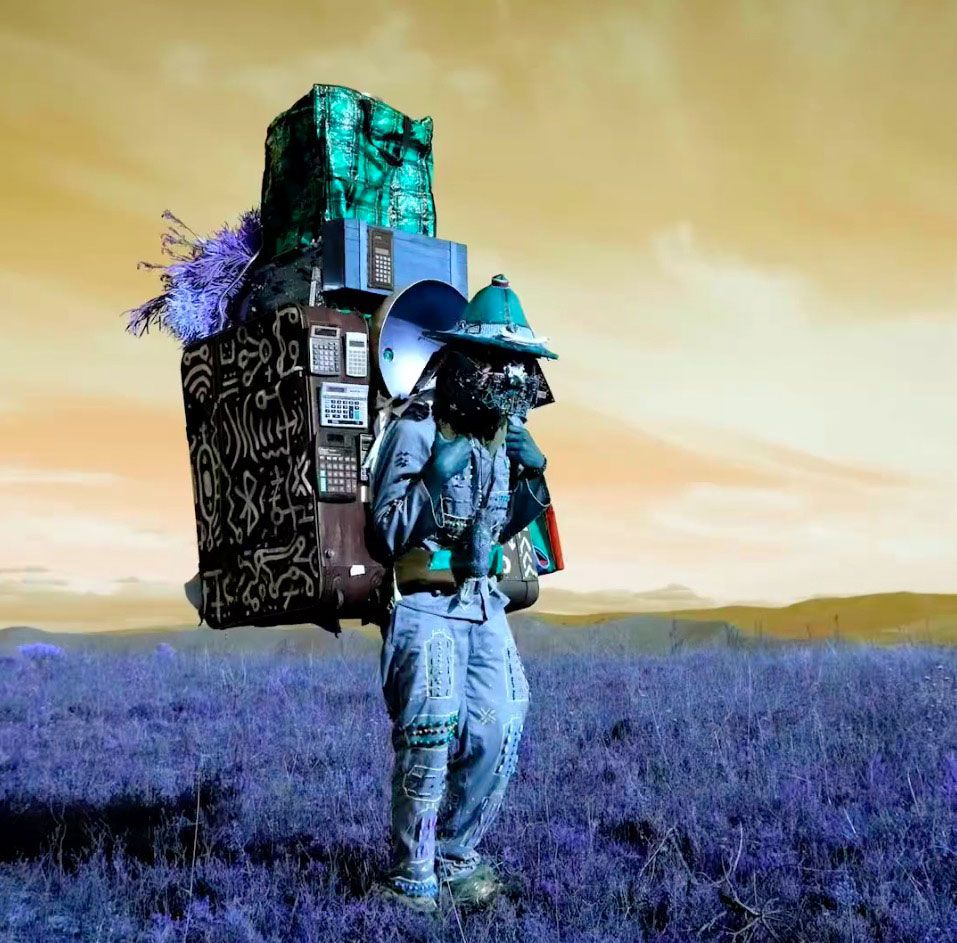
Dzata: The Institute of Technological Consciousness – Russel Hlongwane (South Africa, 2023, 8min25sec)
According to Dzata some of the oldest secrets of the cosmos are concealed in water, coded deep in water molecules. These scattered river systems are places of high data flows. These river basins have moved datasets across regions. They are streams of (data) consciousness. But who or what is Dzata? Dzata is a network. Dzata is a school. Dzata is an Institute of Technological Consciousness. Dzata is where African AI meets the future.
watch the film in the context of an expanded visual essay here.

She Is Always Here, Like Water – blk banaana (South Africa, 2021, 4min53sec)
blk banaana is the code name that Duduetsang Lamola uses for her multidisciplinary work with collage, poetry, video and installation. Fictionalising dominant notions of temporality, place, nature, body, data, identity and belonging, her practice explores speculative reconstruction as a mode of resilience for fragmented identities rendered through colonial, anthropologic and algorithmic violence, and considers the role of myth and imagination in the retelling of history. The childlike imagination of nature is timelessly making multiple phases of itself. While we watch and pretend to forget that we are part. Our spirits and eyes transfixed by the white light distraction of webs being wound around us. This permeable film of fragility. Bondage made of shot nerves and tight blood veins. Body and mind dismembered. Our spirits dissected. Broken down into digestible cubes. Running from our boundless potential to remember who we are. Wound tight by the binds and binaries of the million legged lusus naturae. The freak of nature.
watch the film in the context of a visual essay by the filmmaker here.
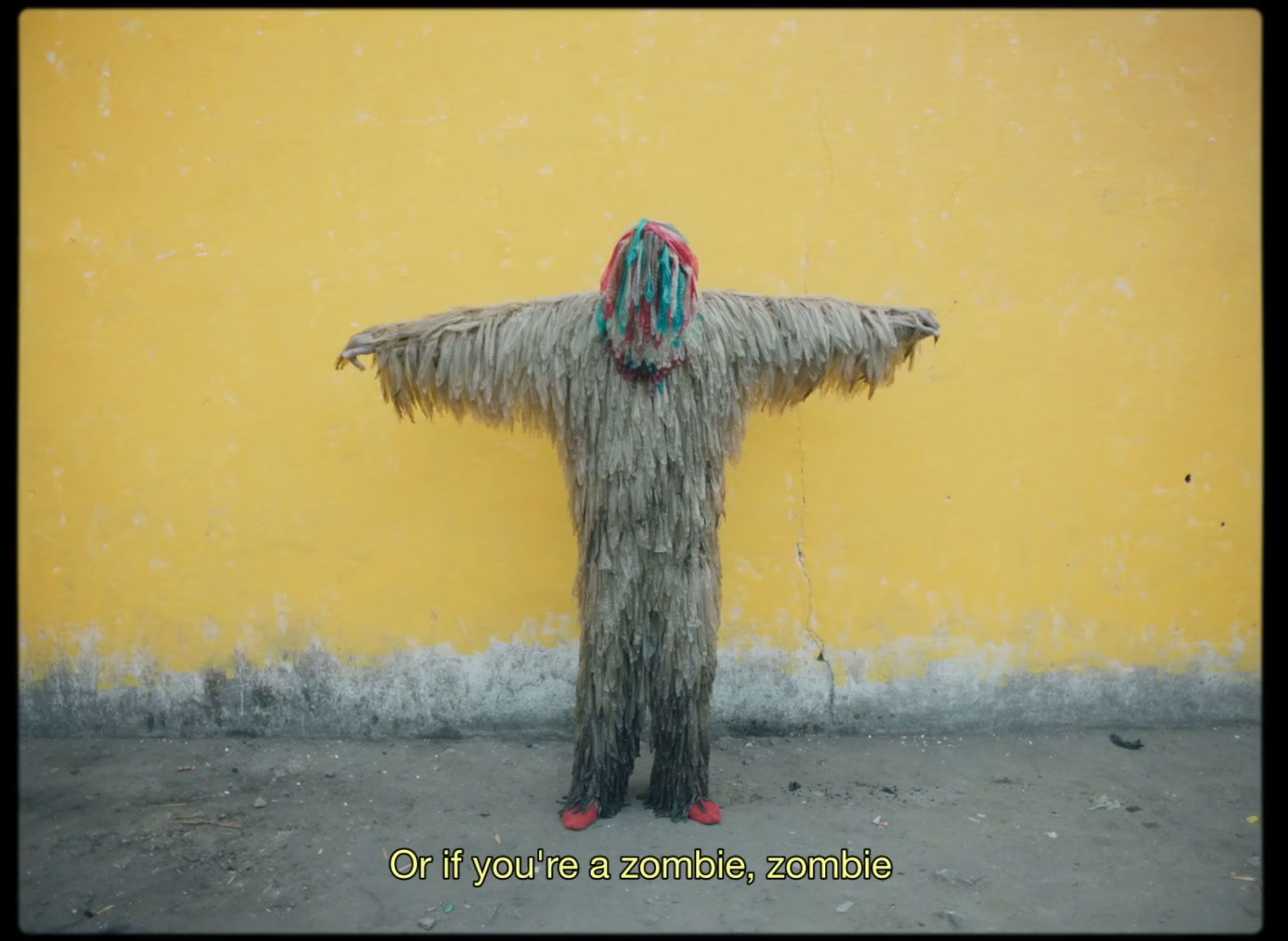
Zombies – Baloji (Congo, 2019, 13minutes)
Bemoaning, all at once, the fucked-up-ness of communication-technology ala cellphones and the hyper-exploitation of the Democratic Republic of Congo and its people in furthering this dilemma, Congolese-Belgian musician and filmmaker Baloji has self-directed a kaleidoscopic 14-minute motion-picture titled ZOMBIES. Baloji is an artist in motion, a musician, poet, film director and a man of images and ideas. Baloji means “man of science” in Swahili, but during the colonial period, that meaning shifted as a result of Christian evangelisation, to signify “man of the occult sciences” and then “sorcerer”.
watch it here.
read an essay about Zombies here.
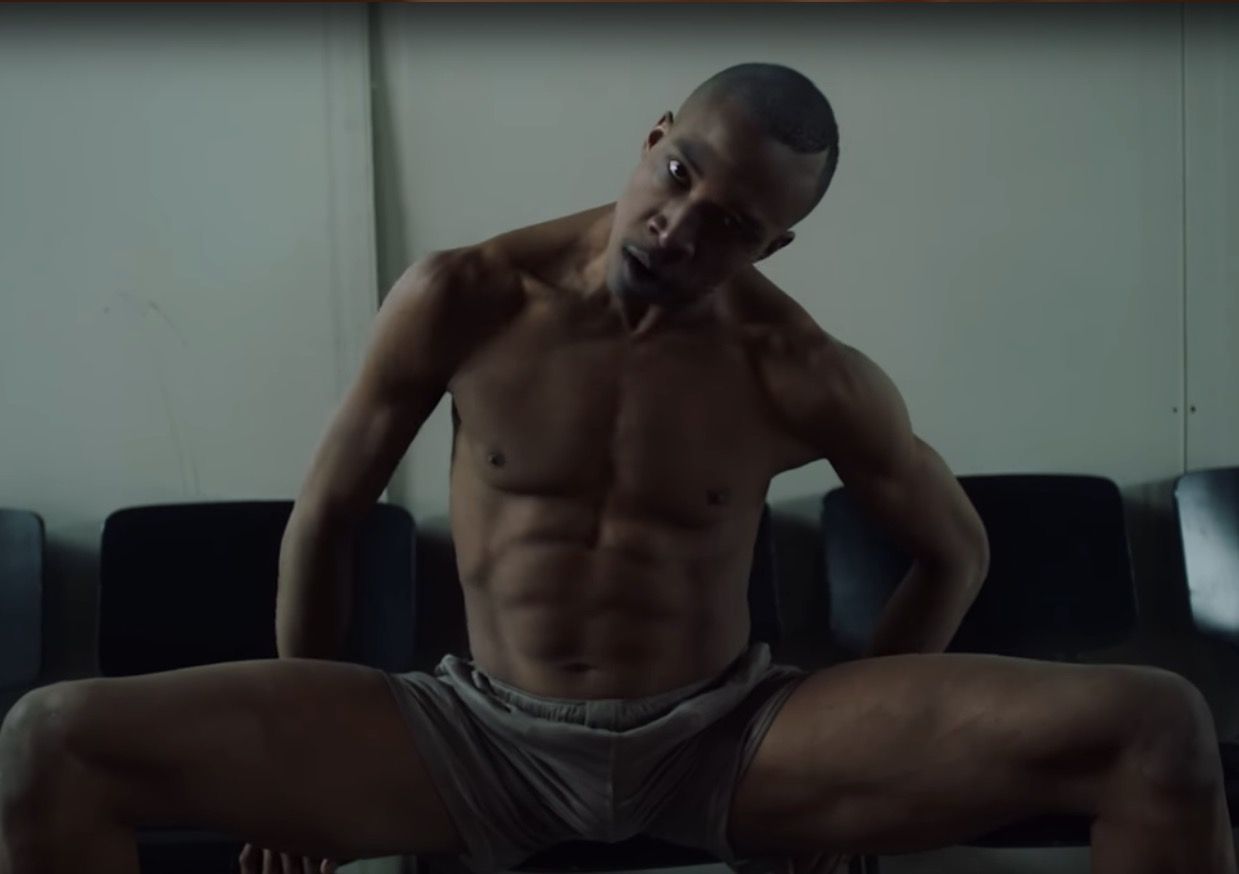
Carbon 7 (161) – Jlin & Joji Koyama (USA, 2017, 4min39sec)
Choreographed & performed by Corey Scott-Gilbert. Before the introduction of cognition, all music is just air. It is our understanding that shapes into rhythm and rationale. Our lived experiences and societal exposure then beat this down into right or wrong. In the music of JLin, the strata are multitudinous. Each buzzing layer has its own vibration, a particular tremble, its own fears. The air around each note hums noisily. The unrelenting timbre of five million feet tapping – beating music out of the earth, kicking up pitch and timbre – myriad miniature helicopters rotating electric into life. The sky opening up in faint pats-tiny droplets tripping the light fantastic on aluminium roofing. So soft, so consistent that it almost isn’t there.
watch Carbon 7 (161) and read an essay about Jlin here.
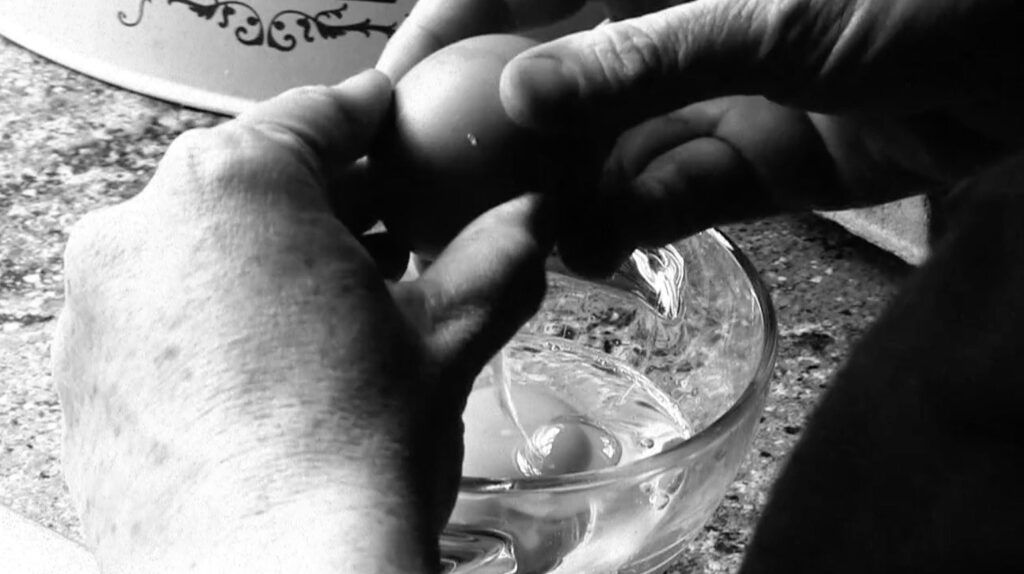
“Through the ear, we shall enter the invisibility of things” – Nicola Deane (South Africa, 2017, 6min23sec)
The expression “everything but the kitchen sink” implies everything imaginable whereas (a shot of) nothing but the kitchen sink confines our focus to an area of daily interaction bound to the kitchen and its relevant tasks of cleaning and nurturing. Deane re-presents this site as possible contemplation point where notions of pleasure and sacrifice meet, offering some kind of escape from domestic tedium.
watch the film and read Deane’s essay about Invagination here.
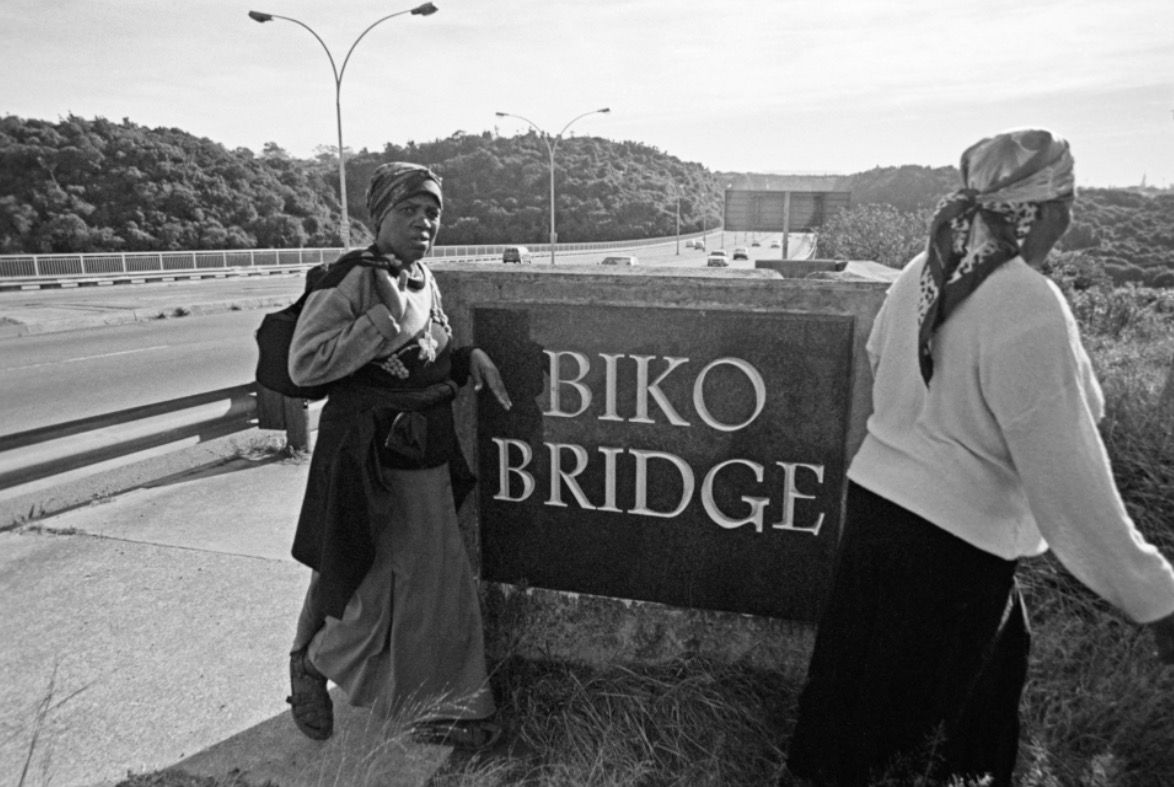
Chant of Divination for Steve Biko (A purification by exorcism of his apartheid murderers) – Eugene Skeef (South Africa, 202, 3min25sec)
“The profoundly painful personal impact of Steve’s death on me is rooted in a cardinal experience that took place during our student days in the early seventies. Every step I have taken since the day I learned that I was targeted as an informer has been a determined stride towards the destination of my healing.” Eugene Skeef
watch Chant of Divination for Steve Biko and read filmmaker Eugene Skeef’s powerful personal reason for making this short film here.
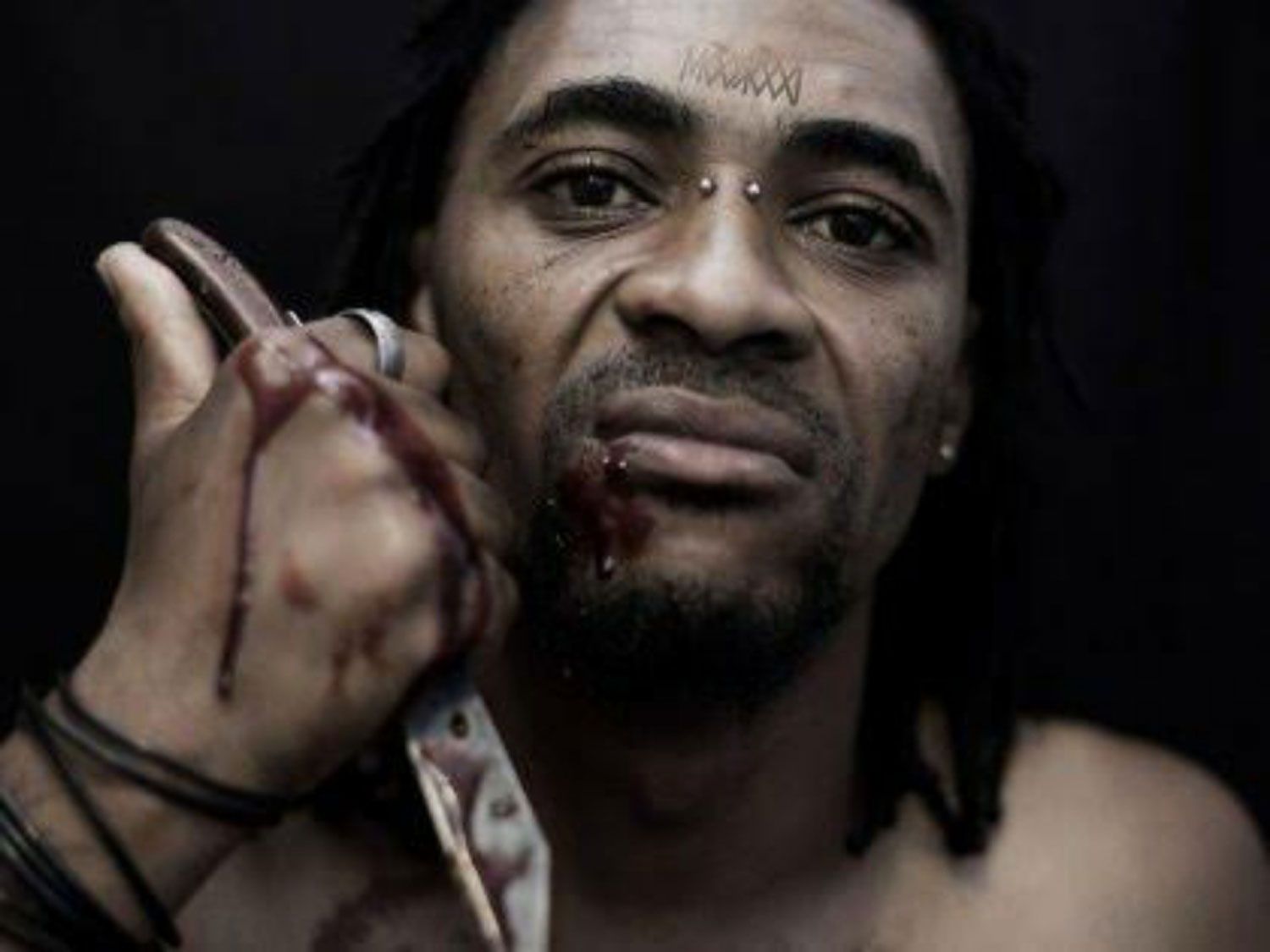
Mutant – Lebogang Rasethaba and Nthato Mokgata (South Africa, 2021, 62min)
Rasethaba and Mokgata are both stylistas, less known for their story-telling skills than their ability to just create a platform where things kind of unfold and a narrative starts taking shape over a period of time. This works well in the context of Mutant and his story because the film, shot over a period of a few years, sees a man going through the process of changes as he becomes older and more settled, realizing that he cannot change the world but he can still talk about its wrongs.
The documentary paints an intimate portrait of Isaac Mutant, one of South Africa’s most outspoken and controversial artists, and the turbulent world he lives in. In a world of extremes, the story captures the harsh realities of living in one of the most dangerous corners of the earth, juxtaposed against the humanity and beauty enshrined in the details of everyday life, a community that loves, lives, and laughs. Central to the film is Mutant’s current state of existence, explored through his history, his art, his perspective, and his rhetoric. The filmmakers follow Isaac over five years as he emerges – as a champion of his marginalized community. Their plight is the ink of his lyrical pen. “I am their voice,” he boldly proclaims.
watch Mutant and read an article about the film written by Deon Maas here.
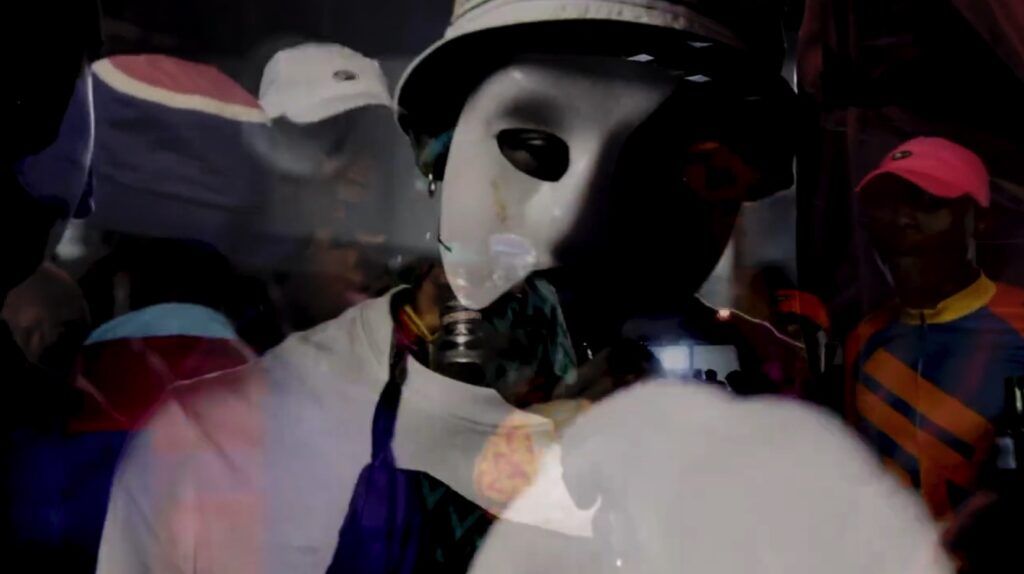
Shebeening (A NIght of Debauchery at a Tavern that Loves People) – Tjobollo Khahliso (South Africa, 2022, 8min)
Khahliso is a one-man renaissance whose output is both prolific and formidable. He shoots, edits, mixes the sound and writes beautifully about his own work and film aesthetics in an African context. The recent work Shebeening was filmed in his local tavern (shebeen is the word used in South Africa for a semi-legal or illegal tavern). Here “an art premised on aberrations, expanded histories and chromatic alterations, distortions and noises of elegantly captured memories, sweltering in the heat of projection light” is “reflected on lucid faces, yet retaining their alternative recollections.” (Paul Khahliso, Can Video Be Poetry).
watch the video here.
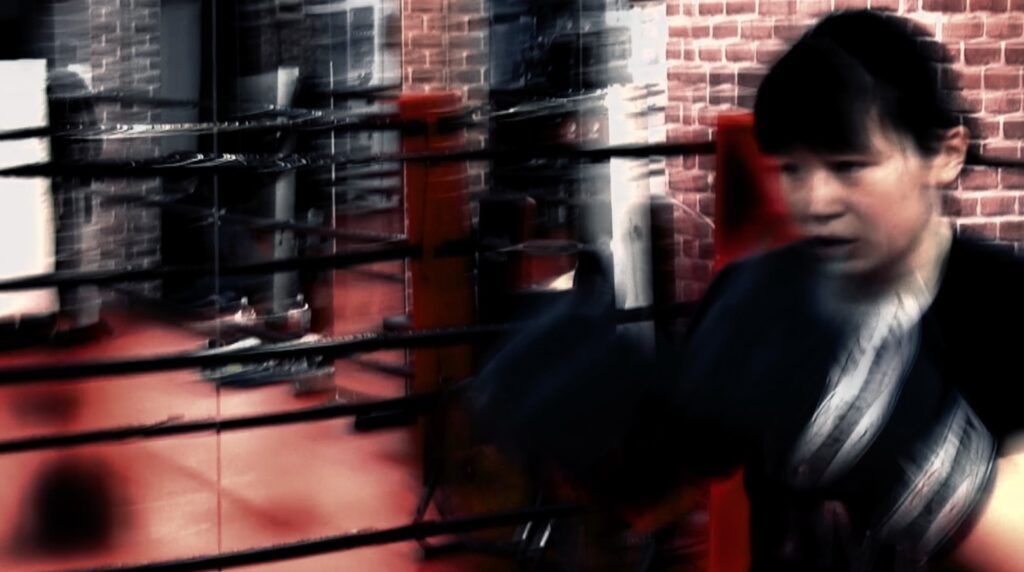
RAW POWER/HYPNAGOGIA – Pierre-Luc Vaillancourt (Canada/Japan, 2020, 11min)
Energy release, rigorous temper, violence as hallucinogen dilation sends eyes pulsating in visual streaks of skin dancing in a ring of rage; RAW POWER is trippy and on the brink of an emergency. Smeared across a screen exhibiting is an image that at first doesn’t appropriate anything or action, until slight movement of angle of view connects us to the visceral experience of a boxer in full exertion, in a state distinct from sleep but on that verge of spectral dissolution. Eventually, with a negligible merger of sound with image, random speckles whirling in circular lines emerge, orderly strokes akin to a Jackson Pollok painting fill a cathode frame with movements, motion beyond spectral confines.
watch Pierre-Luc Vaillancourt’s short films of bruising genius and read South African avant-garde film maker and theorist Paul Khahliso’s essay about the films here.
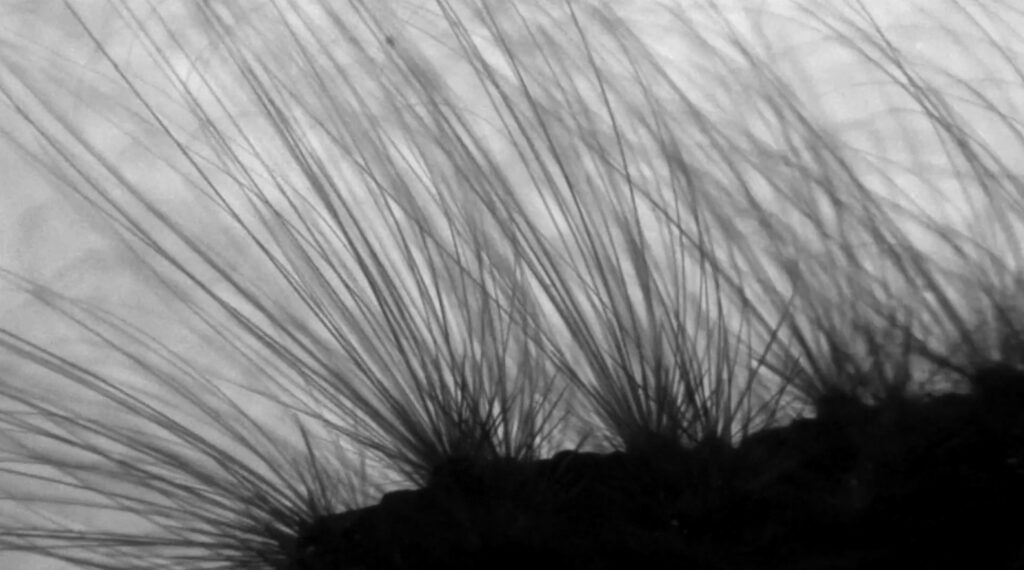
Nagmusiek – Pluto Panoussis (South Africa, 2020, 30min15sec)
This project was conceived as a live performance celebrating the centenary of the birth of seminal South African composer, Arnold van Wyk, and his revered 1955 solo piano work, Nagmusiek. Based on the reception of that performance, it was decided to try and create a stand-alone sight-sound work inspired (visually) and supported (aurally) by van Wyk’s Nagmusiek.
watch Nagmusiek and read an essay about it here.
Bonus track!