EUGENE SKEEF
THEN AND NOW
The Quest For Freedom
Covenants of freedom made between our deeper selves and our ancestors provided us with the courage to overcome our fear and a commitment to removing the shackles that kept us from the truth of our beauty. Our obedience was not to a god of alien configurations and conformities but to our faith in our inherent capacity to determine who we truly are. When we raised the salute of our clenched fists our arteries pulsed with a flourish as of skylarks gathering to presage a storm of unimaginable magnitude. The oxygen of our collective conviction danced like an invisible flag announcing a freedom that did not need to be beckoned for it was already there in the nascent infusion of the myriads. We did not require the permission of a superior force of creation to untether our own residential power to clear the path to where we would create our own future.
We needed only to believe in ourselves.
The epiphany of dreams harmonised across generations and regional diffusions would elevate our self-regard to new heights of consciousness. Thus rose the tides of the becoming of our true selves. No longer would we flinch at the pungent foretaste of freedom because we were savouring our own blood in the sacrificial ceremony of unadulterated dawnings.
The symmetrical parting between Steve Biko’s front teeth was to be fetishized far beyond his passing because the moorings of his teachings would remain forever steadfast at the gate to his indestructible legacy. We who strode alongside him are indelibly incised with the scars of a consciousness and self-belief of rare rigour.
Meeting Steve Biko when I was a student in the early seventies was a fortuitous event. I was drawn to his charismatic leadership, his espoused worldview of independent thinking, and his commitment to the freedom of our people. I became close to him through the fact that I was a good driver, when this skill was in short supply in the Black Consciousness Movement (BCM) in those days.
My father had taught me to drive when I was nine years old on the potholed roads of Clermont Township. By the time I was in my twenties and driving Biko, it was not easy for the racist Special Branch police agents who preyed on us to catch us. So I was essentially Biko’s getaway driver.
My independent thinking was rooted in my consciousness at that early stage of my creative life. For instance, I defied the customary rule whereby buttons of boys’ shirts were sewn on the left side, by asking my aunt Katie to modify one of my sisters’ shirts to fit me, then I would paint my own designer label onto the pocket. I also remember another time, as a teenager, asking Auntie Katie to stitch a delicate powder blue lace butterfly patch onto my fashionable windbreaker. Because I wore the shirts and jackets with my trademark style, nobody made fun of me in the culture of bullying that I cut my teeth in.
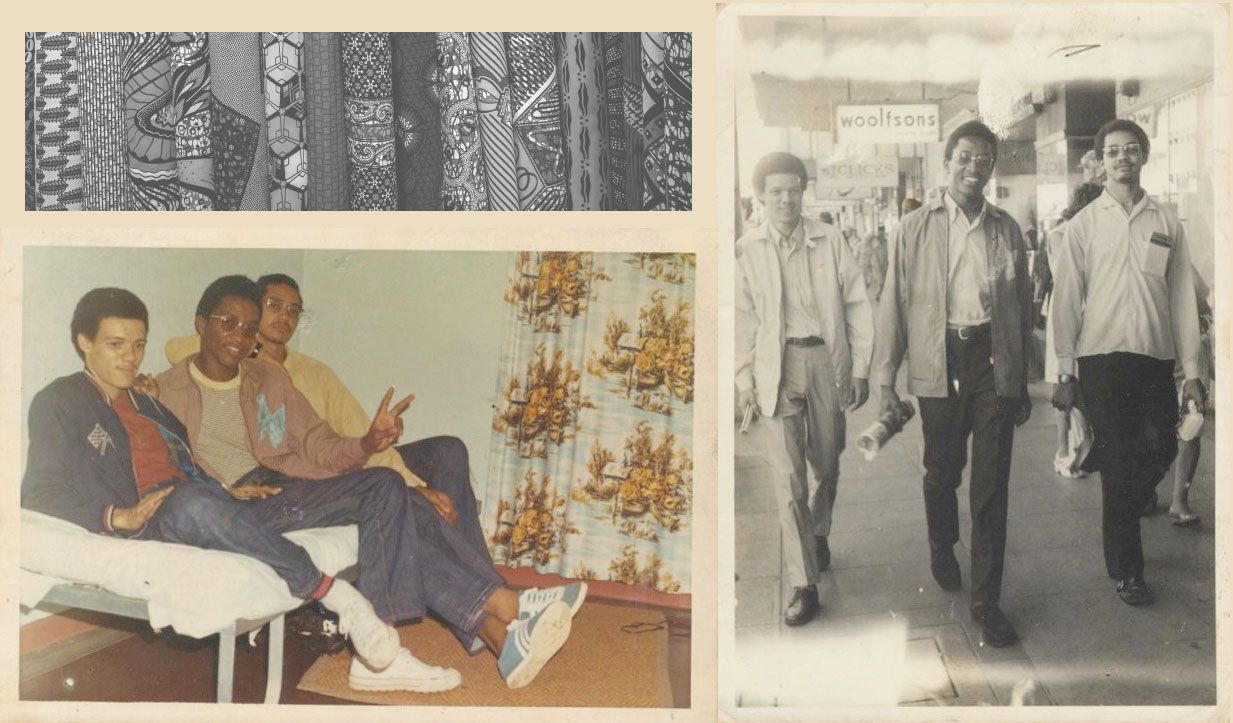
My ageing mind is indelibly marked with a memory of an experience from the early seventies when Steve Biko, Ben Langa, Harry Nengwekhulu, and I embarked on a national tour of Black universities to conscientize students. This kicked off at Alan Taylor Residence for Black students in Wentworth, Durban, where I had earlier witnessed Biko’s charisma and eloquence for the first time in public. The occasion was a student rally that was held in the main hall on campus. I remember distinctly, as if it was only yesterday, hearing a resonant voice coming from the right back corner of the hall in response to a statement that someone on stage had made. The entire hall turned round to see who the owner of the voice was. It was Biko. That proved to be a major turning point in my life. There would be no looking back after that.
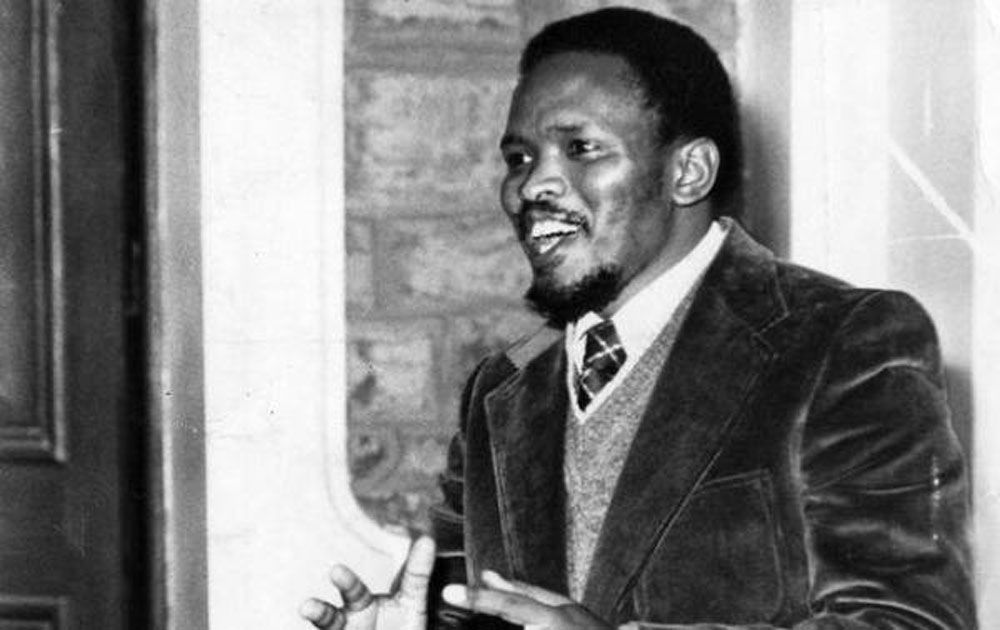
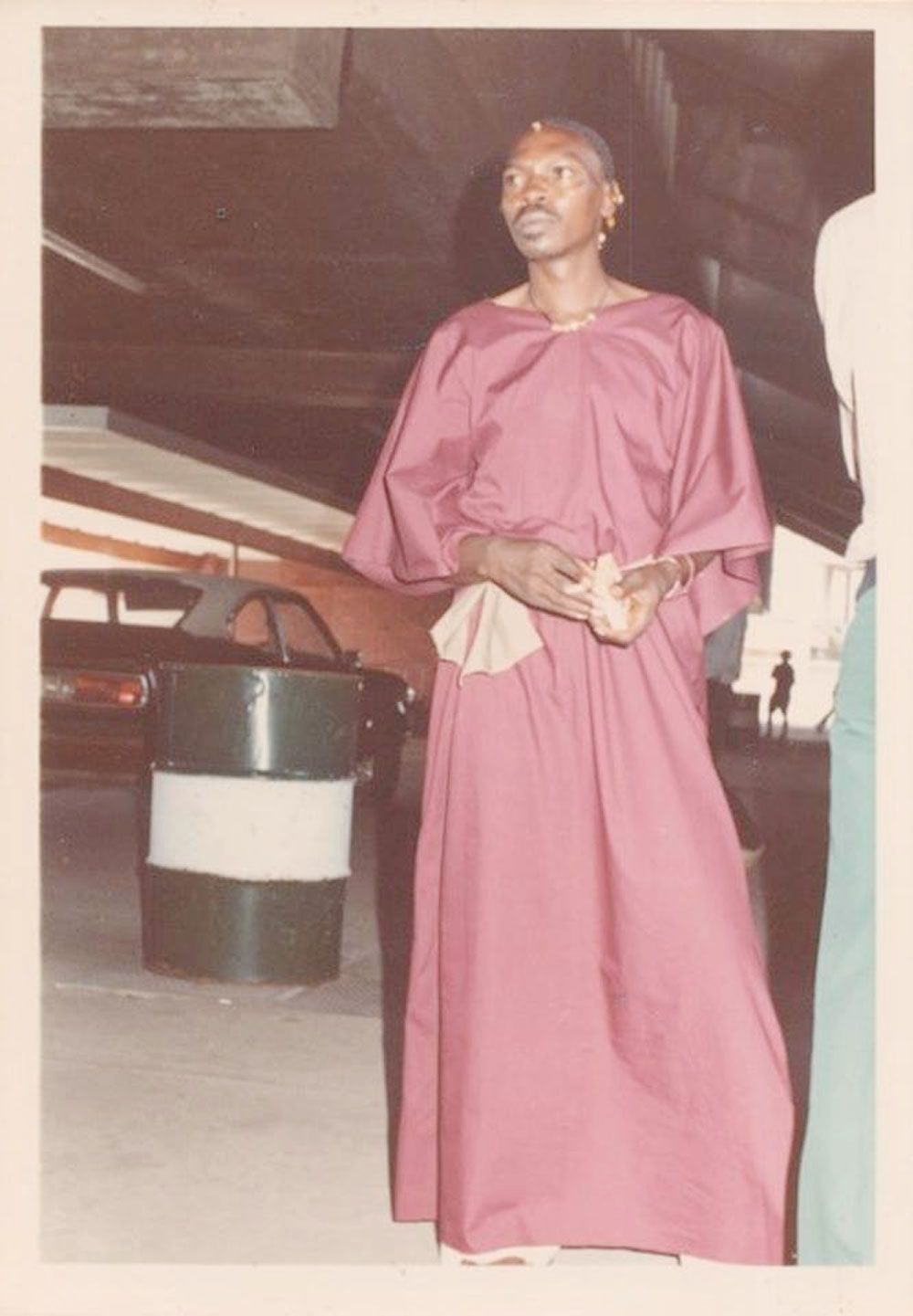
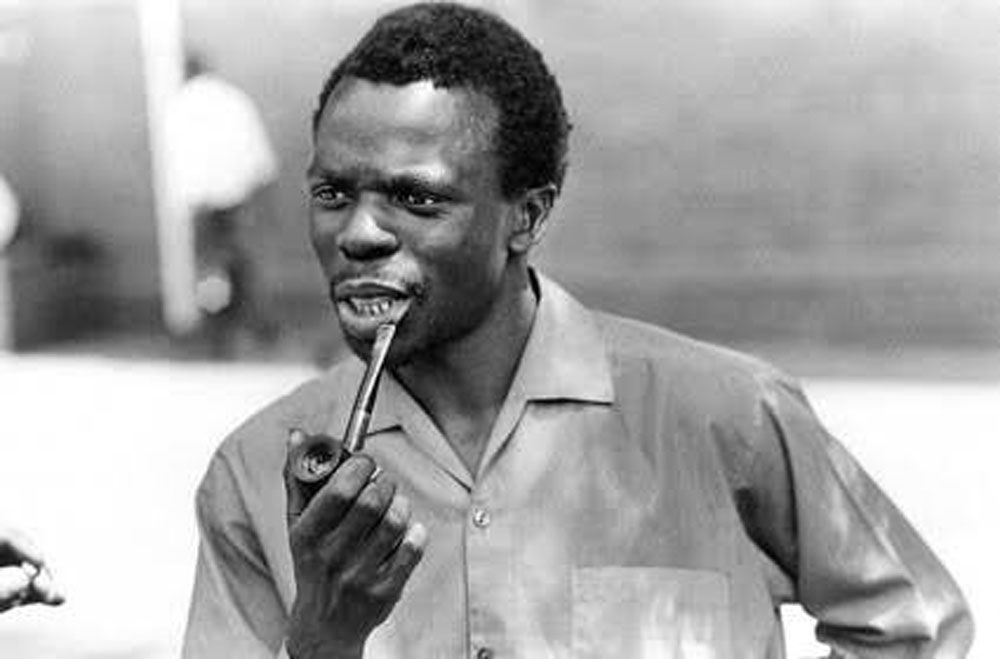
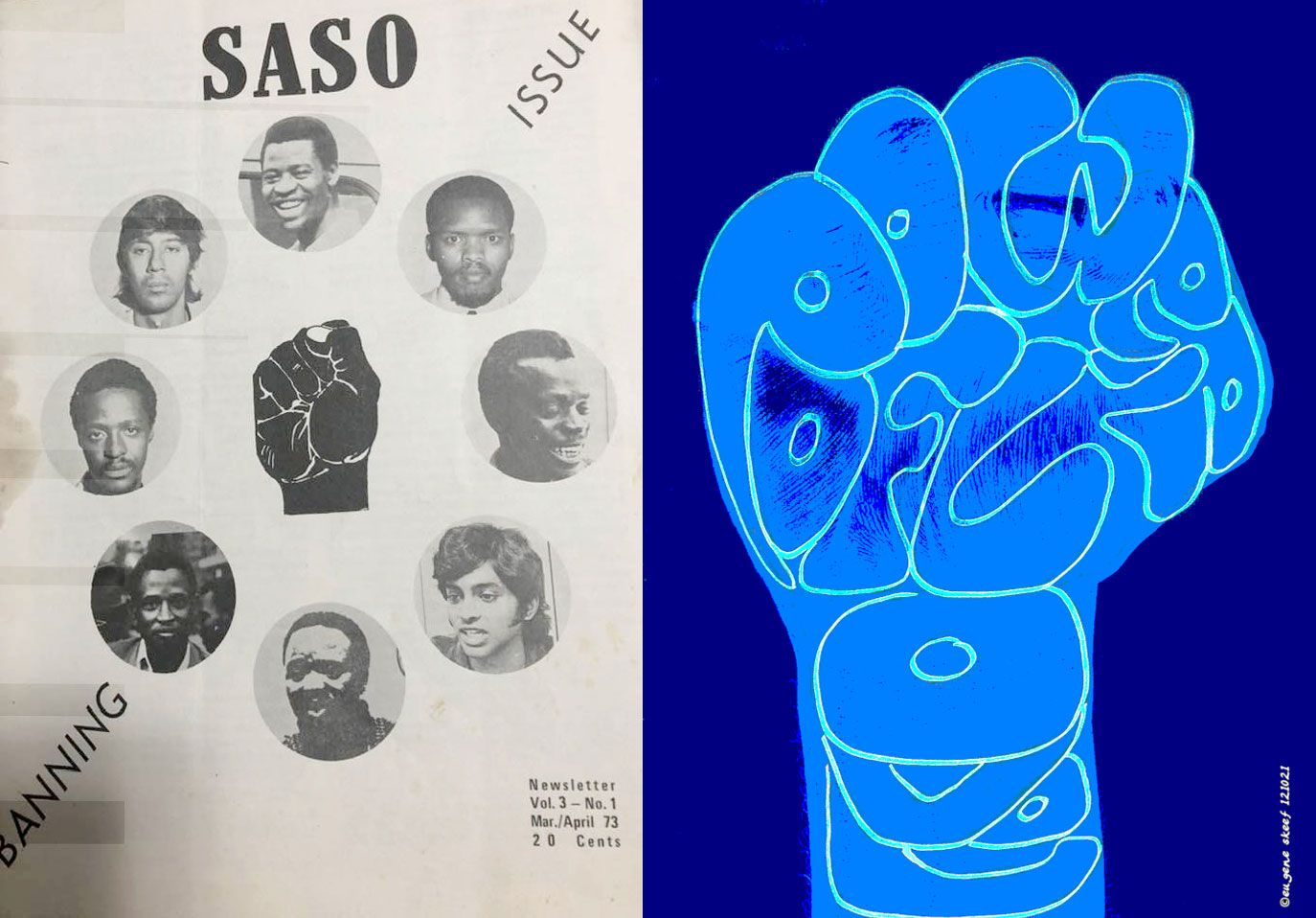
I consider myself to be very fortunate, and in many ways blessed, to have known Steve Biko closely. The brief relationship that blossomed between us was toned by a spiritual resonance of a kind that exists only in an environment of love, respect and the fluorescence of human resonance. Three dimensions of this relationship are indelibly inscribed in the temple of my deepest memories. One is the experience of drawing the first ever South African version of the clenched fist symbol of Black Consciousness in Steve’s presence at Alan Taylor Residence; the second is the exhilaration of driving him when we were being chased by the Special Branch; and the third is the everlastingly profound sadness of his death, which has enveloped me ever since that terrible moment and continues to propel my breath with a meditative pulse.
Nostalgia can act as a stimulant for the nourishment of the present. Some of us from the BCM era continue to find purpose in these days of the rampant social media scramble for the crumbs of a diminished significance. We have found that we can be the water to quench the thirst of those young people who seek meaning in a world desolate of a deeper sense of identity and belonging.
Sam Moodley, another member of the Black Consciousness Movement who was central to its operations, remembers how the conscientization tour of universities unfolded. Here is her description of it:
All was quiet at the BCP offices on the morning of 3 March 1973. Business as usual you would say. The TECON (Theatre Council of Natal) van had left taking Harry Nengwekhulu, Steve Biko, Ben Langa with Eugene at the helm. Not much fuss as the guys left on their national visits to Universities beginning their first leg of the journey to Ngoye University (now known as University of Zululand).
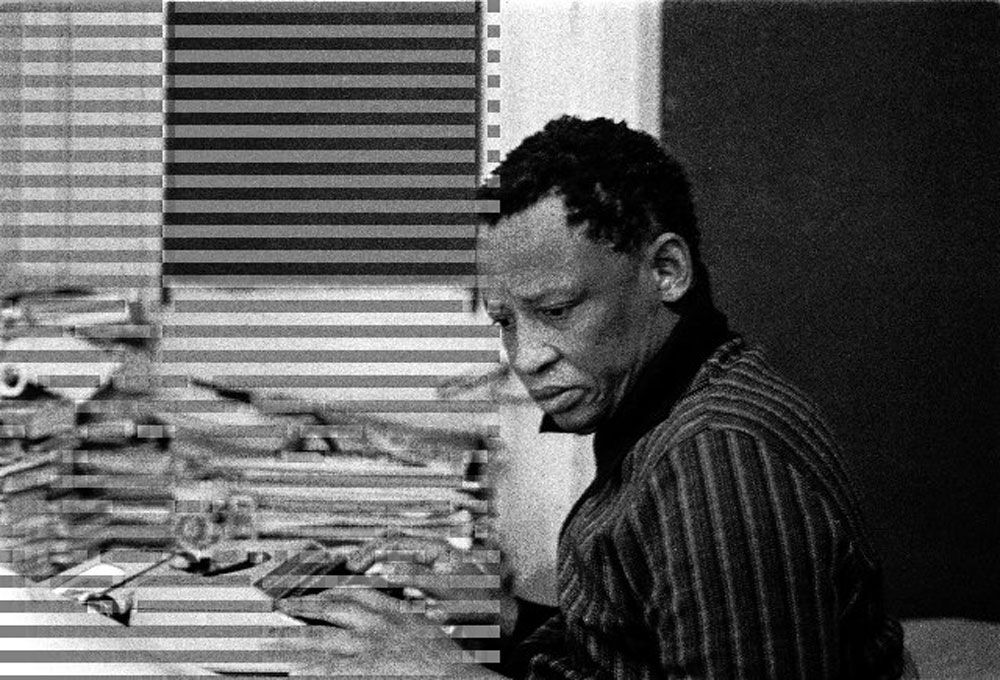
The photojournalist and activist Bokwe Mafuna, an elder from our time with Biko, is one of these beacons of hope still living with undimmed purpose among us. We collected him from Johannesburg on that fateful tour of Black universities and drove on to the University of the North (informally known as Turfloop). From there we proceeded to the Eastern Cape where Steve was due to address a student conference. It was here that the Special Branch finally caught up with us. They swooped down on the conference and immediately came for Biko and Mafuna and told them that they were being banned under the Suppression of Communism Act of 1950. In keeping with the restrictive nature of the ban, their 5-year banning orders would banish them to the separate ‘homelands’ of their birth. But first I had to drive them both to the infamous Security Police Headquarters in the blue Sanlam Building overlooking the Indian Ocean in Port Elizabeth (now Gqeberha).
That was the last time Bokwe would see Biko alive.
Biko’s banning order would have expired in 1978. It was clear that having him alive beyond that did not figure in the evil plans of the apartheid regime; and so they killed him.
Many years later, in 2020, Bokwe would write a post on Facebook accusing all of us from the BCM era of a failure to fulfil a fundamental moral obligation as a movement:
I was just lazily searching for any images of Mthuli ka Shezi on the internet for research purposes. There was only one. ONE! And that one was taken at Park Station on the day Security Branch and Railway Police officers accosted us when we were selling the SASO Newsletter in the streets to black passers-by. It seems to have been preserved by the SBF. I did not search for others, like Mapetla Mohapi’s and many other people. I was myself a photographer those days, but lost all my work – or couldn’t take pics myself – through various reasons; mostly security reasons. Political reasons, if you like. A long story on its own. If only we could start recording Our Own Story, our own stories!
I am wondering if any of us – or other people – have any other photographs of Mthuli, Mapetla, Nomsisi Kraai and others; so that we could start collecting them and writing around their memory. I will repeat this in various BC platforms, if you could also copy and paste. Maybe we could work towards a joint project; or a collaborative project with others. This is unbelievable. Only the system[1]Within BCM circles, the apartheid state apparatus was colloquially referred to as “the system”. has all our memories?
Bokwe Mafuna (Bra B)
Bokwe was deeply inspired by my Facebook posts of poems, stories, music, and other arts. This led him to suggest that people from our BC era should write, sing, dance, photograph, paint, film our story as a people – for generations to follow. I was moved and humbled by the amount of respect this elder expressed towards me.
On 26 October 2017, Bokwe appeared in an interview about his memory of Biko. The interview was uploaded onto the Black Consciousness Reader YouTube channel. Here is the transcript of him talking about his friendship with the Man of the People. He mentions me contextually:
Eugene Skeef, who was a poet and a member of SASO (South African Students’ Organisation), drove Steve to the… I think it was Warmer Police Station, if I’m not mistaken. I don’t know the name of that police station where we were taken. It was the security police headquarters. I can’t remember. Because it was the first time I was there, and it was the last time I was there… And those were exactly the same guys who murdered Steve. Those, that group of security police. Nieuwoudt[2]Gideon Nieuwoudt was a notorious apartheid-era South African security police officer heavily involved in the 1977 torture and killing of Steve Biko. was there. … because I got to know him later through his notoriety. I don’t remember the others by name because it was not something that I concentrated on for the rest of my life. They started questioning us and they told us that we were banned.
And I can only remember one particular thing, which was that they threatened Steve with violence, and he stood up to them… and he was defiant to a point where I was trembling, thinking, good God, they’re going to murder him or what! The atmosphere in that room! And Steve was standing his ground! You can never understand it until you saw it. But it happened within a few seconds or maybe a minute or two, and it was over. And after having seen that, I understood what happened later when he was defying them, the time that they actually beat him to death.
I understood because I had seen him defying them. And that was more or less… It was second nature to him. He lived what he preached. He was never afraid. I’ve never seen a man who was unafraid like him when faced by white people. It’s a huge problem given today in South Africa, black people. They’re afraid of whites, deep down. Now, you have to meet someone like him to realize… and you see the white man crumble. That kind of thing doesn’t happen every day. We shrink, we give ground, especially in the work situation where… I don’t know where you are working now and how the conditions are there, but black people give ground quickly in order not to jeopardize their situation.
I can tell you about so many other people in the Black Consciousness Movement of those days when it was absolutely crazy to stand up to any white man. I remember one day we were coming from Hammanskraal and I was beaten up by a policeman because they were beating a black woman and I stood… we stood with our cousin and I was photographing them; and they beat me up. And I defied that white man, and they took me to the police station. They charged me. They left me because the Rand Daily Mail[3]The newspaper that Bokwe worked for. was phoning and saying this and that. And when we went to court, Steve came all the way from Durban to come and give me support. Because it was so rare to stand up to a white person in those, especially police people. You defy yourself, you defy your habits, you defy your upbringing, you defy your conditioning, and because something has ticked in your mind that that’s where we were.
Bokwe Mafuna
In October 2018, I visited South Africa to perform music and poetry and to conduct workshops at a storytelling festival organised by my friend and creative associate Gcina Mhlophe, the world-renowned author, storyteller, actor, activist, and community leader. While in the country, I felt the urge to visit the site of the legendary Black Consciousness Movement headquarters at 86 Beatrice Street. I was shocked by the dereliction and dilapidation that stood before my unbelieving eyes. I vowed instantly to begin a campaign for the site to be declared a heritage site and to build a museum on the original foundation in memory of its historic significance.
The first image I saw as my niece Khaya who was driving me turned left off Grey Street (now Dr Yusuf Dadoo Street) into Beatrice Street (now Charlotte Maxeke Street) was a young man pissing against the ramshackle fence enclosing the property. I could not imagine a more poignant statement on the sad state of affairs. I got out of the car and walked towards the dismal spot. My heart sank as I surveyed the remains of some of the most powerful memories I have ever had as an activist. The sight was like the excavation of my buried soul. My niece, who was brought up in my poetry, music, and stories of my activism with Biko and our comrades, shed tears when she joined me after parking the car. She could not believe her eyes. She asked me how such an important part of our history could be allowed to fall into disrepair just round the corner from where people go about their daily business. Have we become like unfeeling robots?
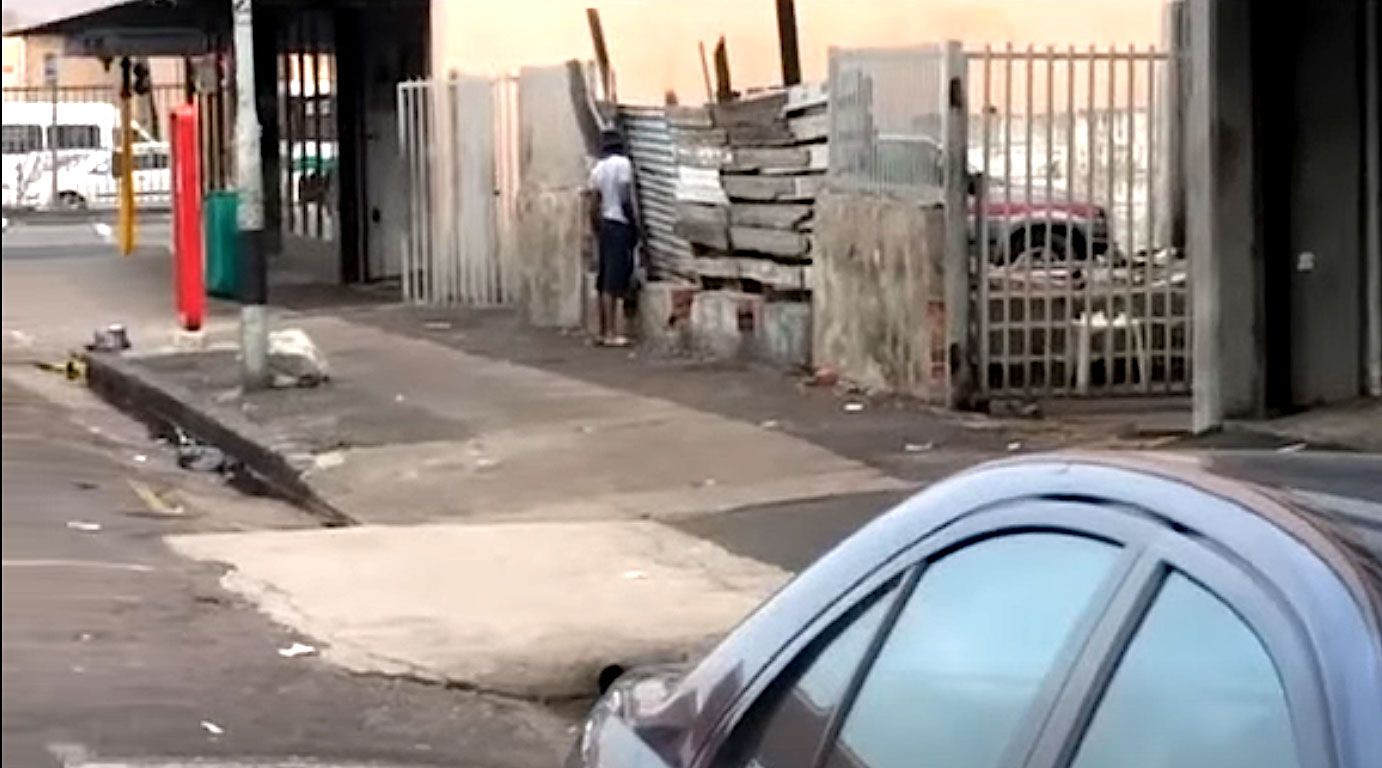
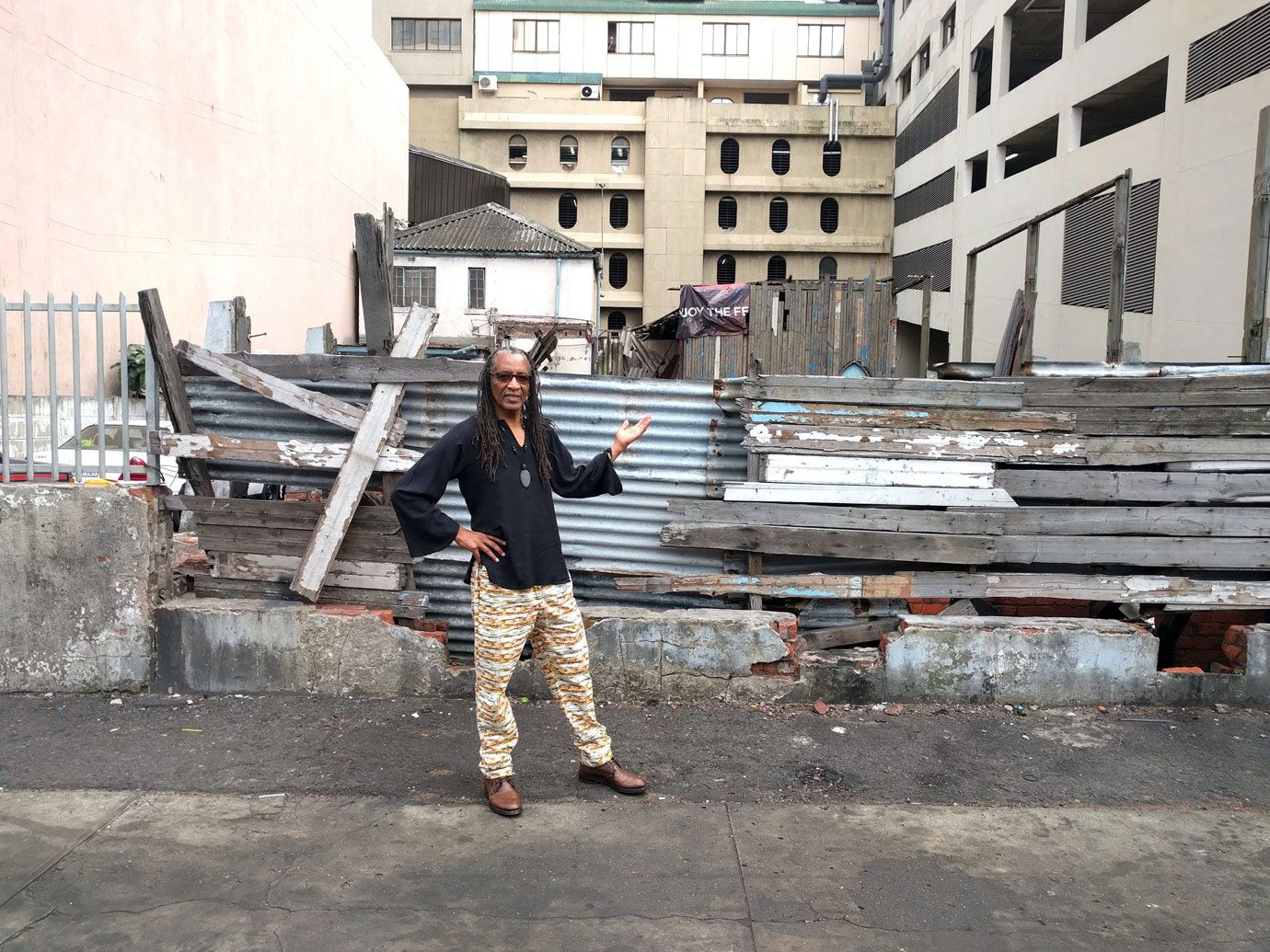
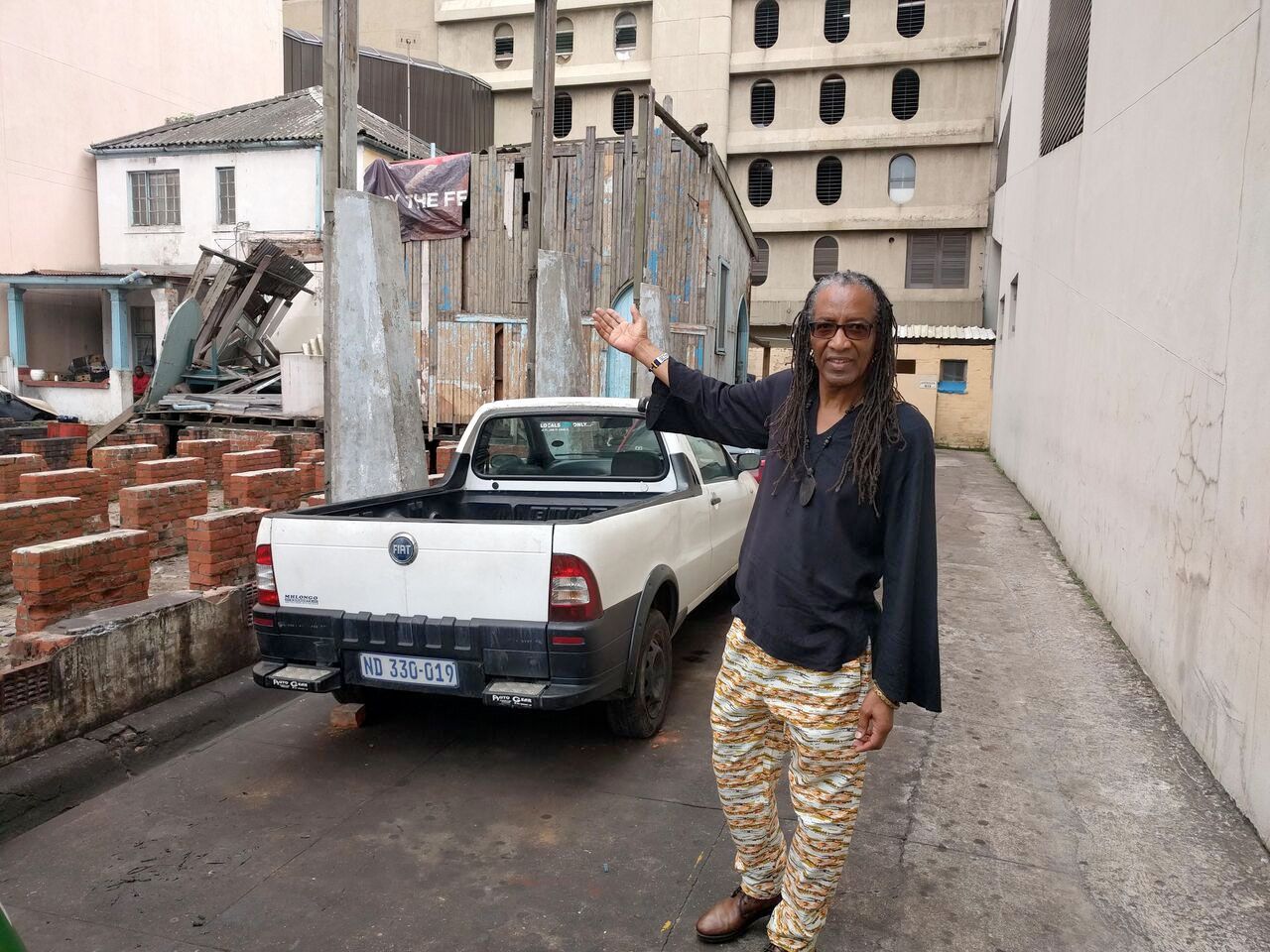
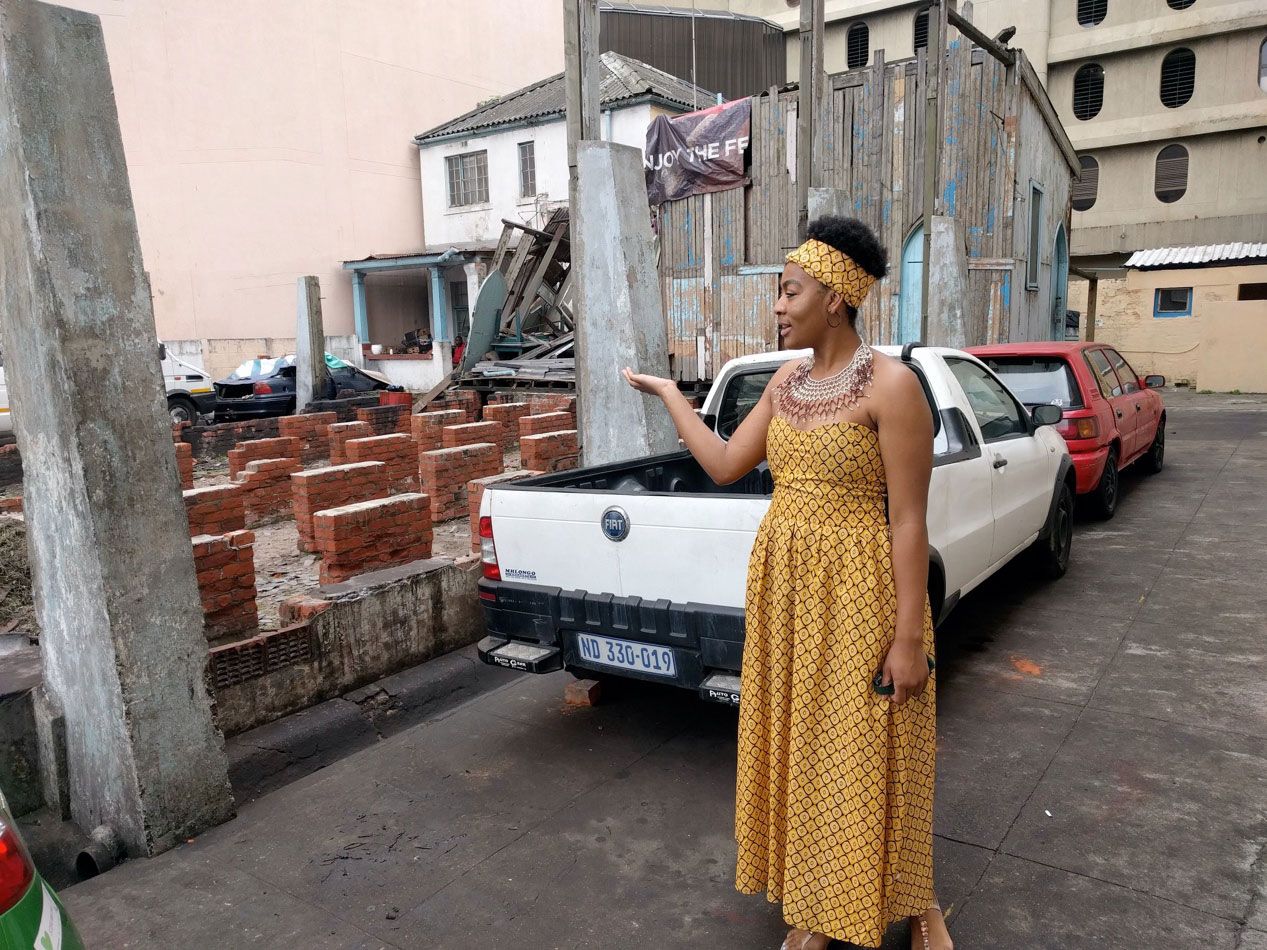
I noticed that there was some activity at the back, just beyond the perimeter of destruction, and decided to check it out. I found a young man busy hanging clothes on a sagging washing line. I asked him who lived in the humble structure hidden in the corner. He said it was the pastor. Of course! This was what remained of the original manse. We knocked on the rickety door. A tall handsome man with glasses, a perfectly trimmed moustache, an amiable disposition, and a broad smile welcomed us. I immediately recognised the face of Reverend BK Dludla even though it was decades since I had last seen him.
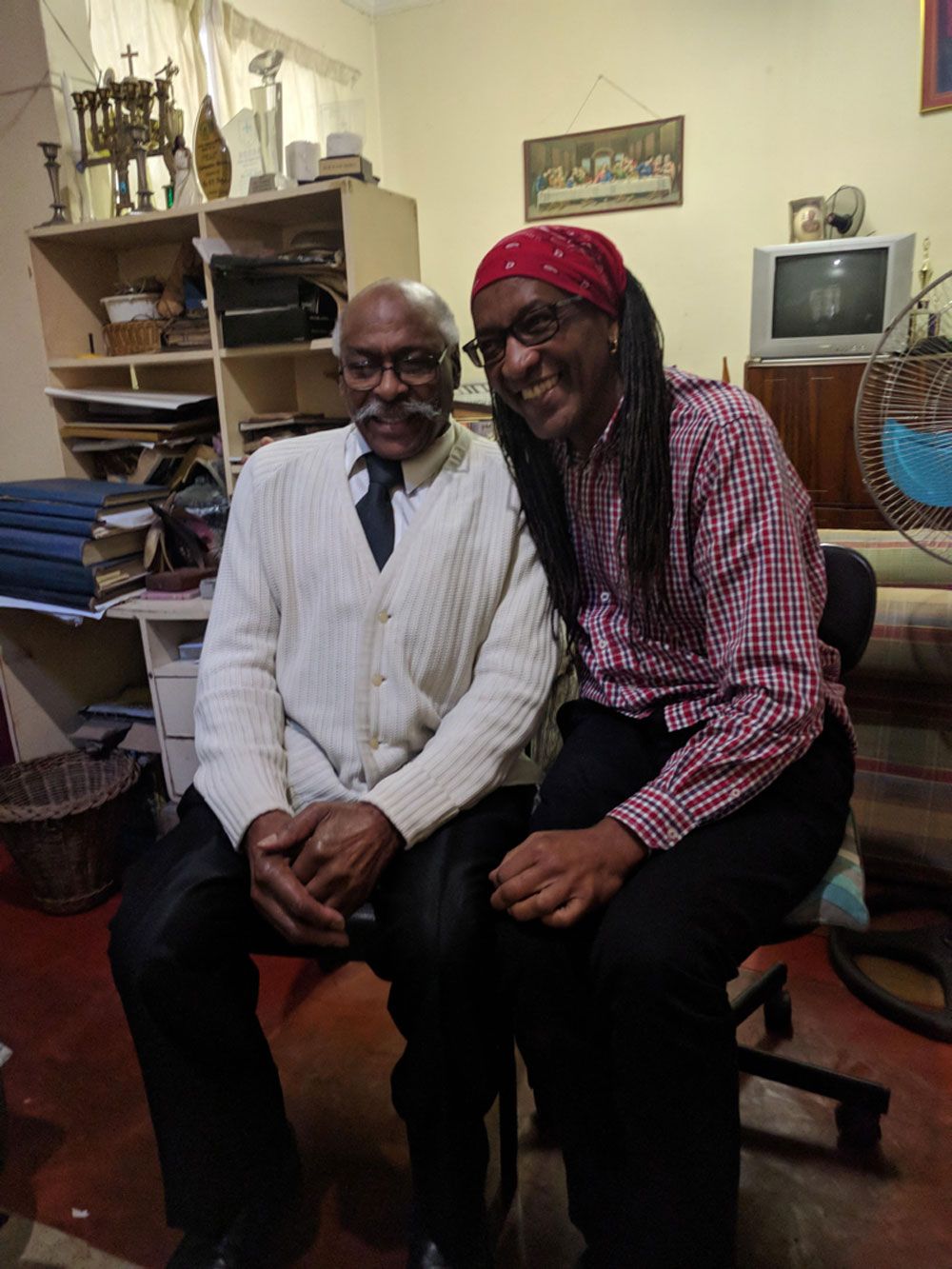
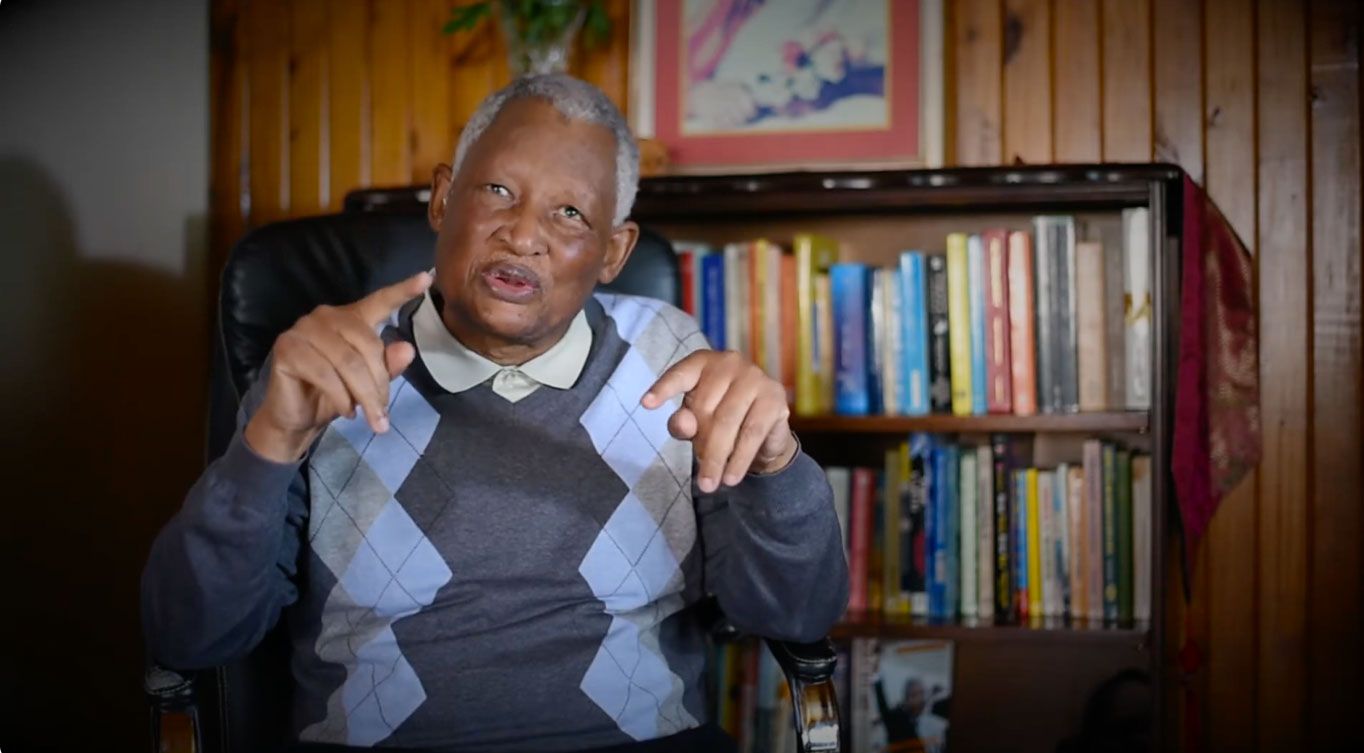
Reverend BK Dludla was a pastor with the United Congregational Church of Southern Africa (UCCSA) that leased the offices to Steve Biko and the Black Consciousness Movement back in the seventies during apartheid. I could not believe the appearance of this great man in his 93rd year on this planet. He offered us tea and biscuits and started to tell us the sad story of how the historic property would eventually be lost to developers – but, until then, he would continue to resist.
His memory of Steve Biko was of a very gifted young man who was devoted to defending the human rights of all people, but especially Black people who were the most oppressed by the racist apartheid system. He remembers once telling Steve that he needed to be careful and not endanger his life, because South Africa needed him alive. Dludla was himself a radical pastor. He told us that he once led a delegation of clerics to meet with then Prime Minister P.W. Botha to convince him to ditch the racist policies of his government.
In 1937, a manse was built behind the church. It became the home of Rev Bhekisipho Dludla in 1964 and there he remained for almost 60 years until his death in about 2023, a year or two short of his 100th birthday. City hospital tried for many years to acquire the site in order to build a parking garage, offering various proposals to accommodate Rev Dludla and the church, to no avail. In the end, he witnessed the complete loss of everything he had hoped could be preserved. All that is left of this once charming church of historic importance in Durban’s social history, is a valuable site with an unknown future.”
Mark Levin, 2025.
My determination is undimmed by passing time… I have not the slightest doubt that we will bring to fruition the dream that I share with others from the BCM. At the centre of this dream is my comrade Sam Moodley. She was part of a thwarted campaign to have the location of the SASO/BCM offices officially preserved as a national heritage site. In reigniting this vision, we will work closely with the young people that I have remained connected with through my community-based creative projects, and forge alliances with new youth-led ventures. We proceed to meditate on the effort of reconnecting the severed tendons of time’s servitude of memory with a considered tenderness of the rehabilitated truth of our pain.
Education For Liberation
An alternative, free education is one of the most pertinent components of any struggle for true freedom. I remember the BCM as being a time in apartheid South Africa when we forged radically new ways of raising the consciousness of our people. The arts played a central role in this process.
During this period, I was relied on to obtain copies of books that we needed for our political education and inspiration, which were banned under apartheid laws. Using creative methods honed in the township, I used to procure books by James Baldwin, Eldridge Cleaver, Angela Davis, Frantz Fanon, Aimé Césaire, Amilcar Cabral and other radical writers from Adams & Griggs bookstore. I would circulate them in our roving BCM library with no detectable address. It was through this resourceful improvisation that the award-winning South African author Mandla Langa got to read his first James Baldwin novel, Go Tell It On The Mountain.
As part of my BCM work, I politicised young people in Clermont Township where I lived. I would identify one of these as a perfect candidate for a resourceful scheme we in the movement called ‘repossession’ or ‘liberation’, as opposed to ‘stealing’. The concept was that we were merely taking back what the colonial oppressors had actually stolen from us by way of dispossessing us of our true identity and cultural heritage and collective oeuvre. Books were at the centre of this radical device. Having trained the chosen young person to the highest level of consciousness, I would then encourage them to apply for a menial job at one of the bookstores like Adams & Griggs on West Street in central Durban – shelf-packing, cleaning, making tea for the ‘Madam’… anything that brought him close to the books of our choice.
I knew that White bookshops had permission from the state to stock banned books for their internal purposes that were otherwise on the long list of those that were banned for general readership. Once the young trickster had got the job, I would visit them at home and give them the titles of the books that they needed to search for in the recesses of the storeroom and have them ready. I would then arrange to visit the bookshop at a particular time on a particular day.
On the day, I entered the bookshop wearing an extra-large windbreaker. I headed for the bookshelves and browsed as if I intended to buy books. The feather duster-wielding young person pretended to clean the shelves next to me and stealthily slipped me the titles I had ordered. I received silently, zipped up, carried on browsing for a few seconds, then left the shop with a stack of books hidden in the billows of my jacket.
He would search for the kind of titles we students of the Black Consciousness Movement knew would be kept in the English South African-owned bookstore. Then I would go into the store and browse as if I intended to buy books. Of course I had no money of the kind that could afford me a book, but I knew I would leave the shop with more than one book hidden in the billows of my jacket.
I brought home books by many radical writers on our reading list in the movement. I circulated them in our informal roving BCM library. Woe betides anyone in the circle who scribbled on the pages of the book, dog-eared it, or did not pass it on to the next person but hung on to it for their own purposes. Mandla Langa went on to become one of the world’s leading experts on James Baldwin.
I look at the political situation in South Africa today and am appalled to see unbelievable levels of the twin states of poverty and lack of education among the majority. Those in power have betrayed the so-called masses by virtue of abrogating the responsibility of ensuring the education and material wellbeing of those who placed them in power.
I will never forget the powerful feeling of fulfilment that I felt as a young activist when I participated in community programmes under the auspices of the BCM. One of these involved building schools for the people, where we instilled a progressive curriculum taught by volunteer university students with books that spoke to our collective ideology of liberation. Even teaching a seemingly ideologically neutral subject like maths offered the opportunity to educate our people about the true history of the knowledge of theories that revolutionised our understanding of the world into which we were born. So, it hurts me profoundly when I consider the extent to which my people appear desperately powerless in the face of the unbelievable levels of poverty and ignorance in the land of their ancestors – ancestors who charted the plains and rivers and forests and mountains of this majestically beautiful and vast land, so rich and bountiful that it is a not a metaphor but a manifestation of munificence.
However, no sooner do I feel the pain of this situation than I recall the creativity and resourcefulness of our time with Biko. On a personal level, I believe that anyone who regards themselves as committed to the social cause of freedom has the inbuilt capacity to do something, however small, to make a difference. It is fine to sport and chant power slogans, but I believe it is much better to take our awareness to its logical conclusion of action. This approach to political awareness makes manifest the statement: “Knowledge is action”. If we Know, then we must Act!
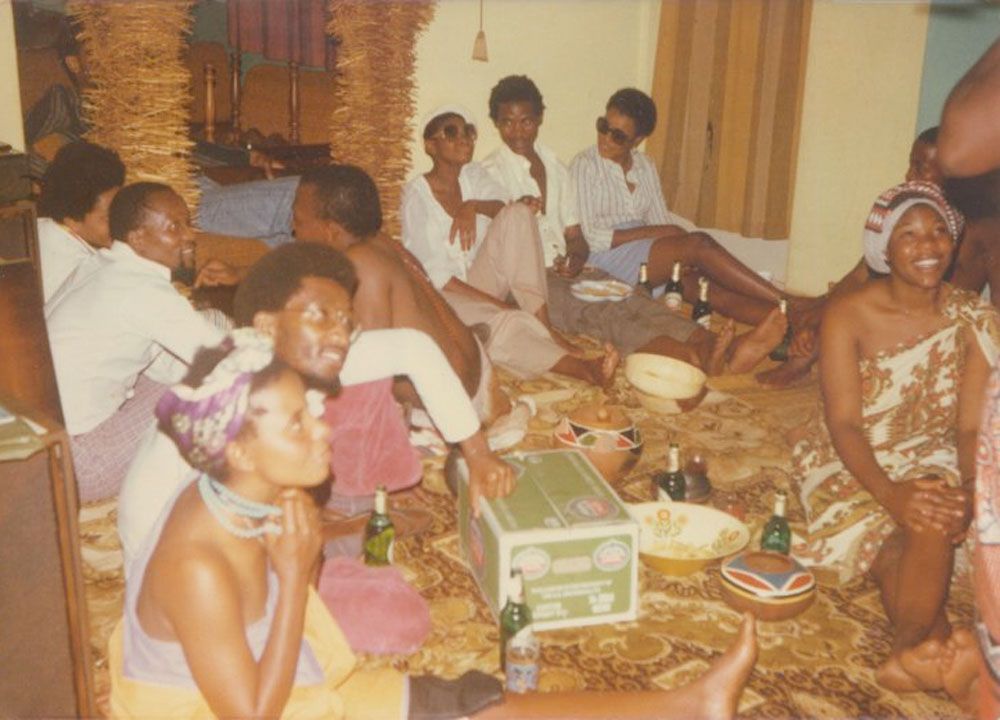
Going back to my experience of building schools: I recall borrowing a van on behalf of the movement from a man who owned a local dry-cleaning service. I needed the vehicle to ferry student volunteers to where we were building a school. The man was proud to be supporting the struggle by donating his van for the day with a full tank of petrol. I drove the van to Alan Taylor students’ residence in Wentworth, Durban to pick up the students who the night before had volunteered to join me and others on the project. But when I arrived at the door of the first room, I found that a broom had been lodged inside in such a way as to make it impossible to turn the door handle, even after I had got the caretaker to lend me spare keys. I peeped through the keyhole and saw a pile of bodies on the bed. These were some of the clenched fist-wielding radicals who were still asleep and heavily hung over from the previous night’s gumba session, during which we grooved and discoursed to the hip sounds of Letta Mbulu, Caiphus Semenya, Hugh Masekela, Miriam Makeba, Roberta Flack, Donny Hathaway (The Ghetto), Curtis Mayfield (Keep On Pushing), and countless other progressive musicians of the time.
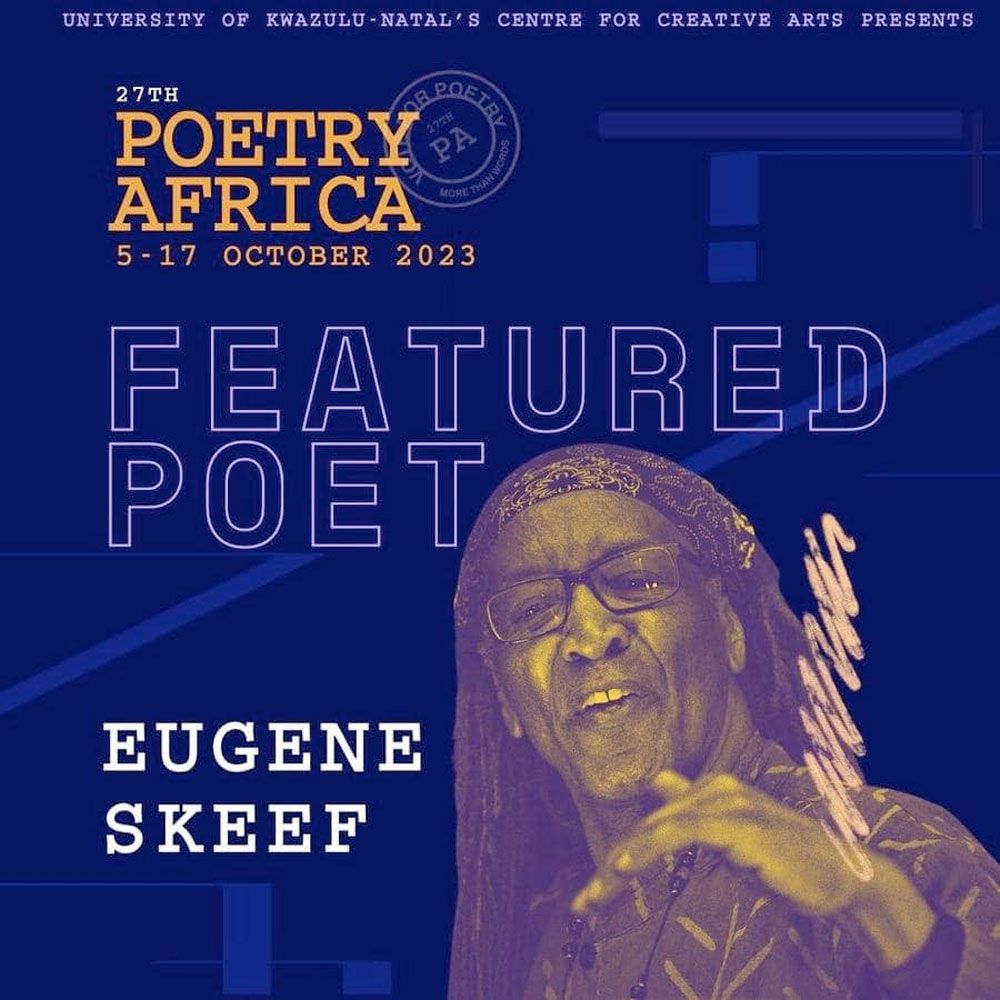
I was the Featured Poet of the 27th edition of the Poetry Africa festival with appearances that extended to Johannesburg and Bloemfontein. Poetry Africa is an annual international poetry festival curated and presented by the Centre for Creative Arts at the University of Kwazulu-Natal in Durban each year during October. The festival features poets in performances and dynamic engagements which includes panel discussions, campus and school visits, poetry exchanges, book launches, open mic sessions, and the ever-popular slam jam competition.
Poetry more than words… Ancestral immersions at the opening of my Poetry Africa keynote address.
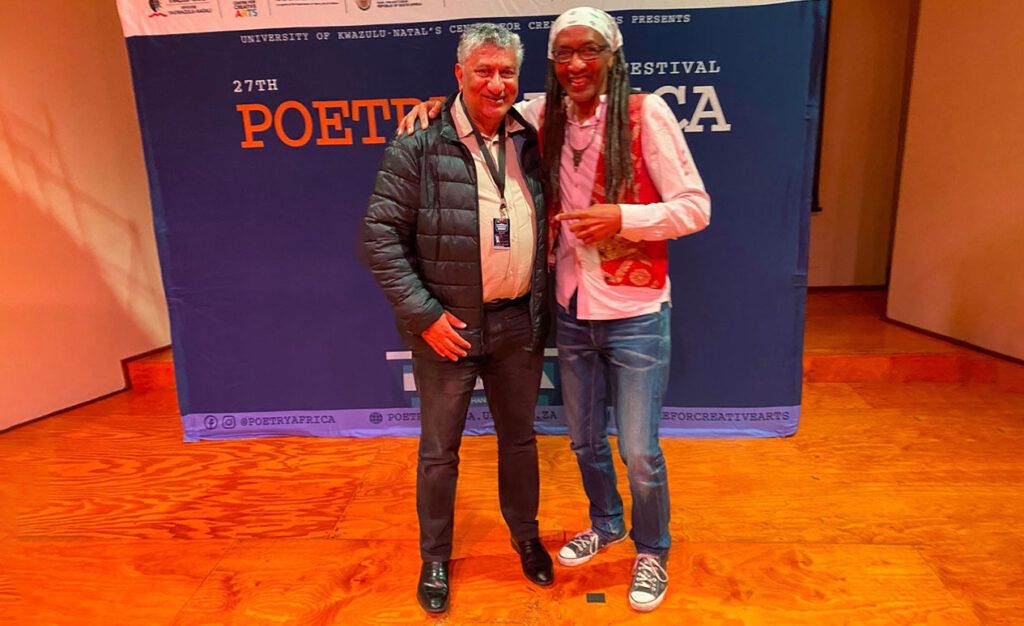
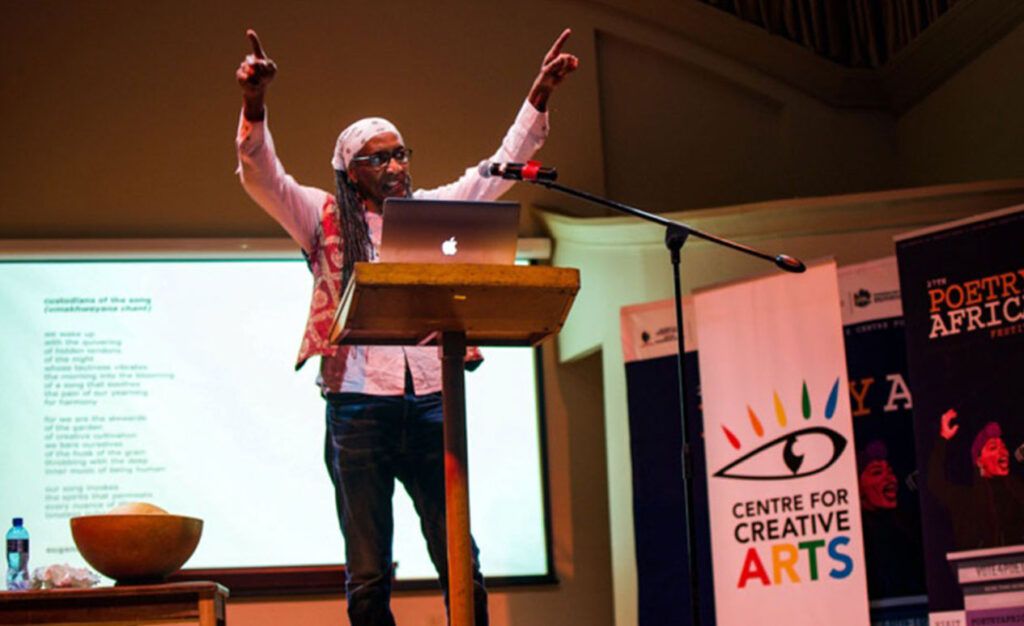
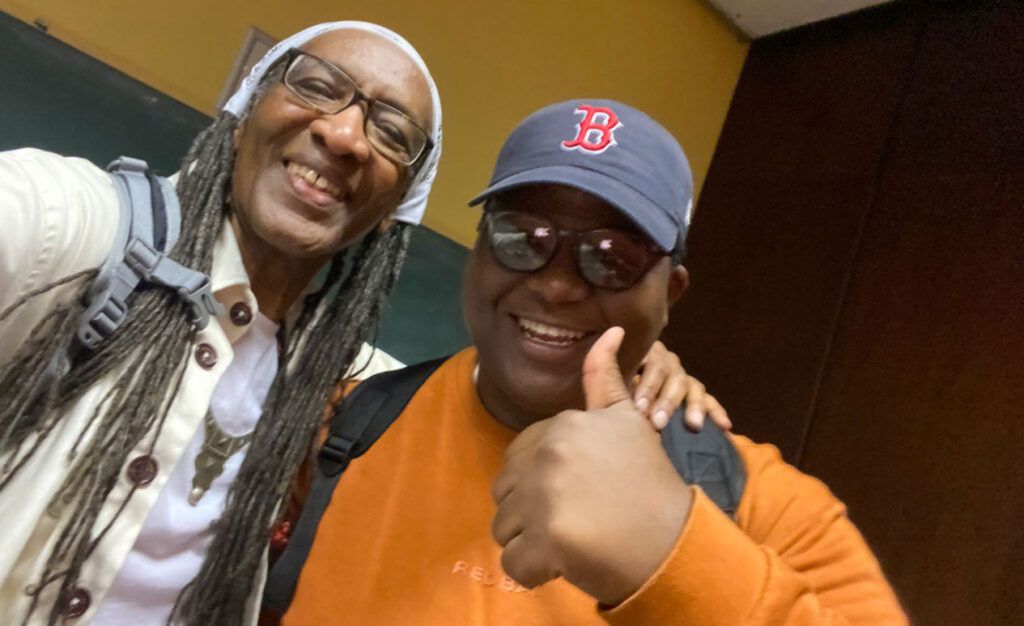
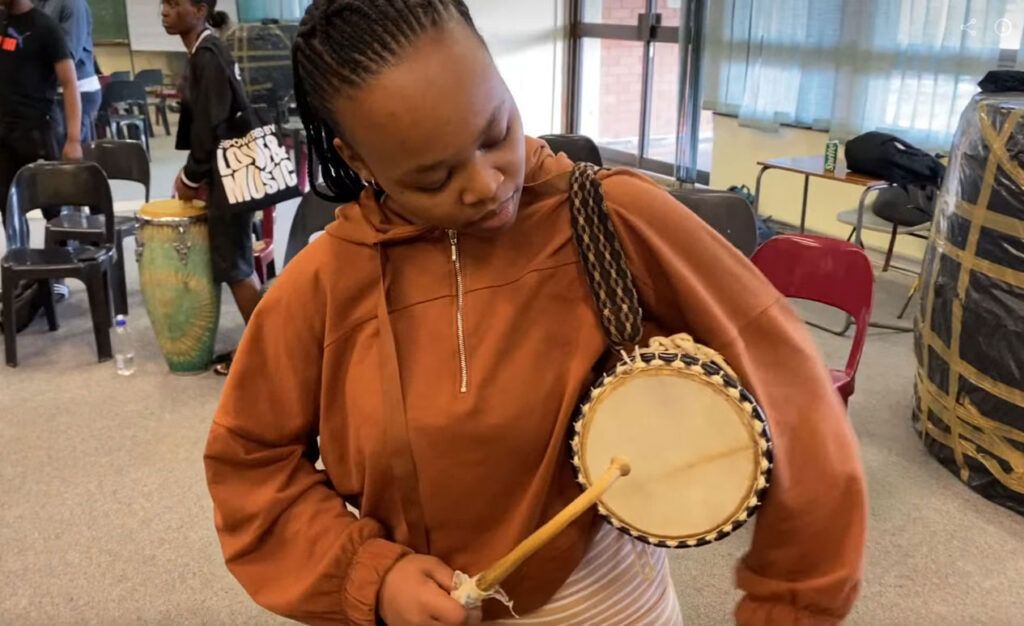
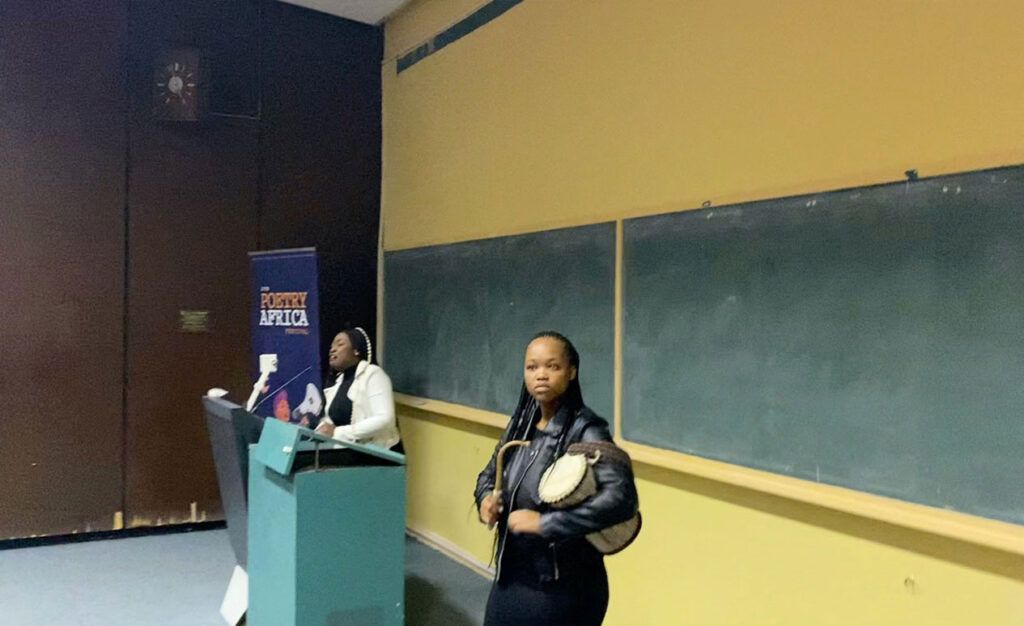
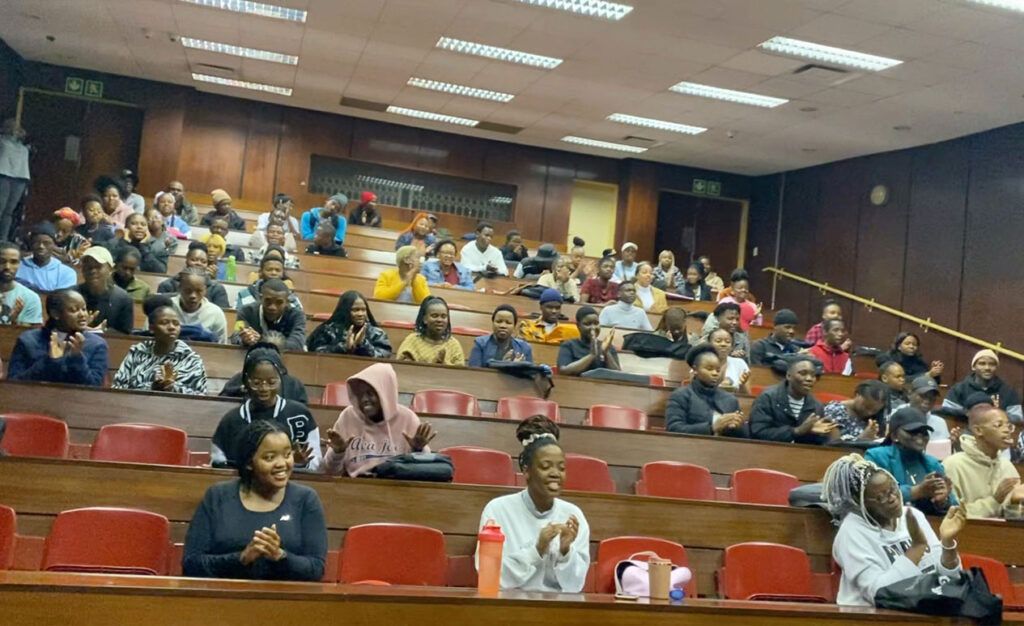
There were several highlights for me, one of which was the honour of meeting the supremely gifted young poet and performer Leah Mollink after my keynote address in Durban. She was studying at the University of Johannesburg where I was Professor of Practice at the Centre for Education Rights & Transformation (CERT) in the Faculty of Education. She came up to me after my participative performance and introduced herself. She told me that her mother had called her from Johannesburg, got her to listen to my entire interview on her phone, and insisted she make sure to meet me.
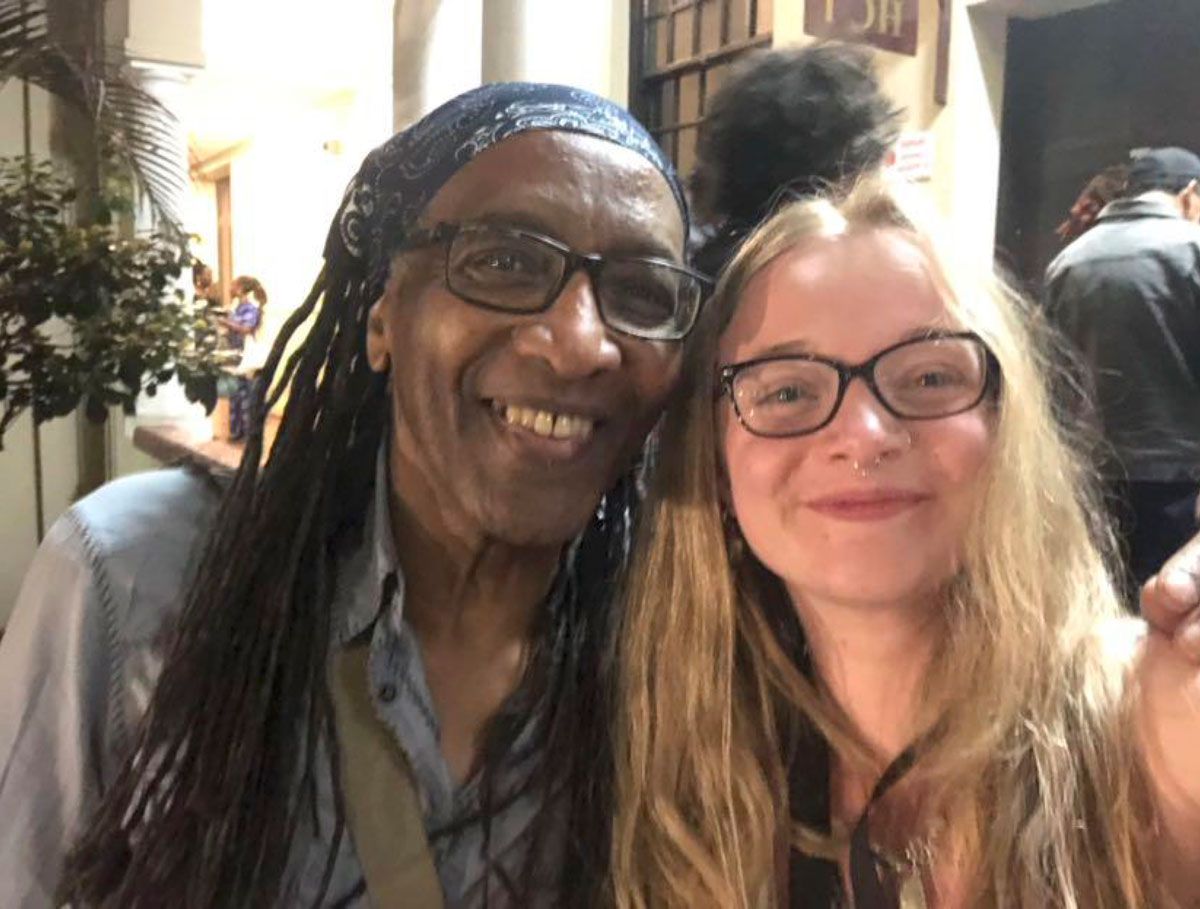
Leah sent me an email on the Sunday evening of 22 October:
Hi Eugene!
This is Leah who performed at Poetry Africa at the outreach centre. Apologies that I haven’t emailed yet! I got your email from but honestly I’ve really struggled to send anything because I’ve not been sure what to say. I can write a poem but emails are a whole different skill set! Anyway, if you need further clarification, I’ve attached a photo I got of us on the last night. It truly was an honour to meet you! I’ve never felt quite as connected as I did during the festival and to have your performance be the first one I watched, I will cherish that! I loved the way you made the audience feel like one organism! It was truly beautiful and connected. That’s the one word I can’t stop using when talking about my time with all of these other poets: connected. And what a beautiful thing to feel! I hope you are doing well and I hope I am able to interact with you very much in the future! I felt deeply connected with you and with your work, and I hope I was able to give you some of that connection too!
Love and light,
Leah
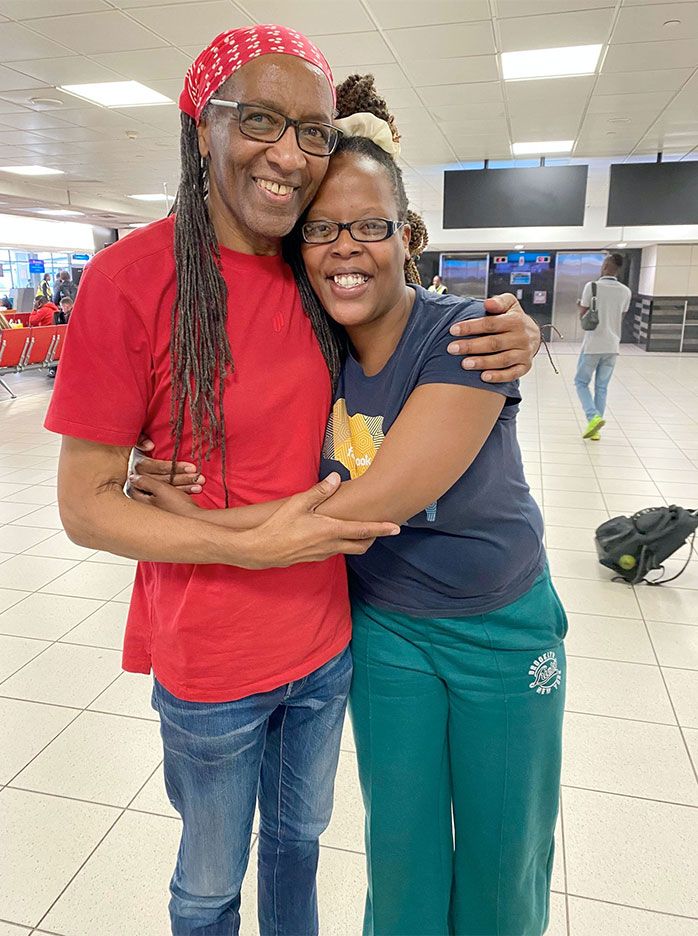
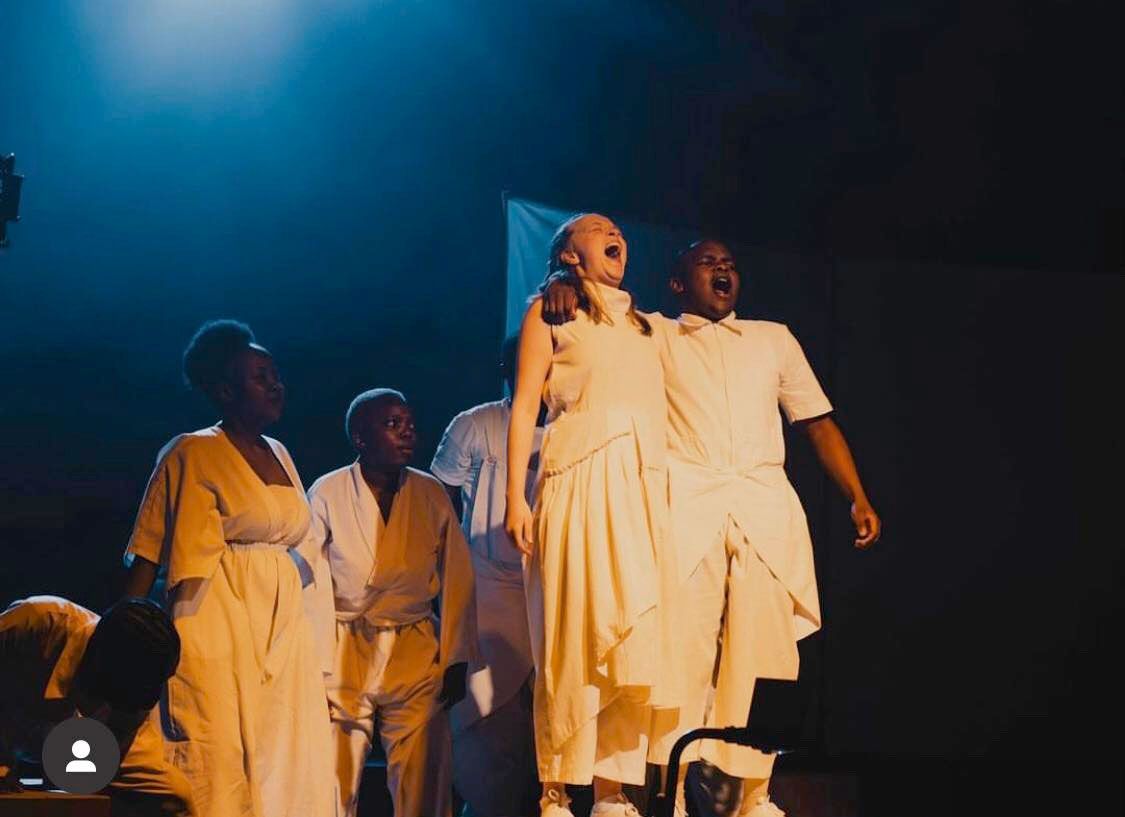
I was particularly struck by Leah because she was the only White person nestled among a cluster of Black fellow students. She was not visibly as volubly demonstrative as they were, but there was no doubt that she quietly matched their spirit and inner resolve to be an active part of a new testament to the transformative power of Black Consciousness Poetry.
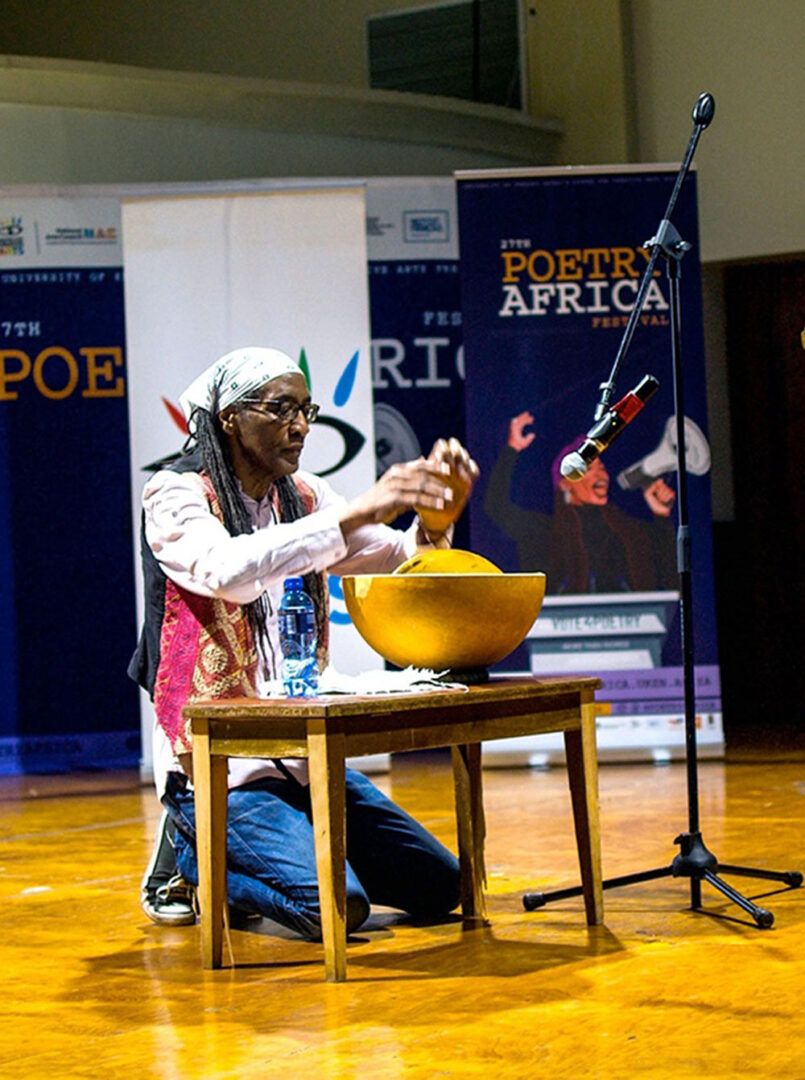
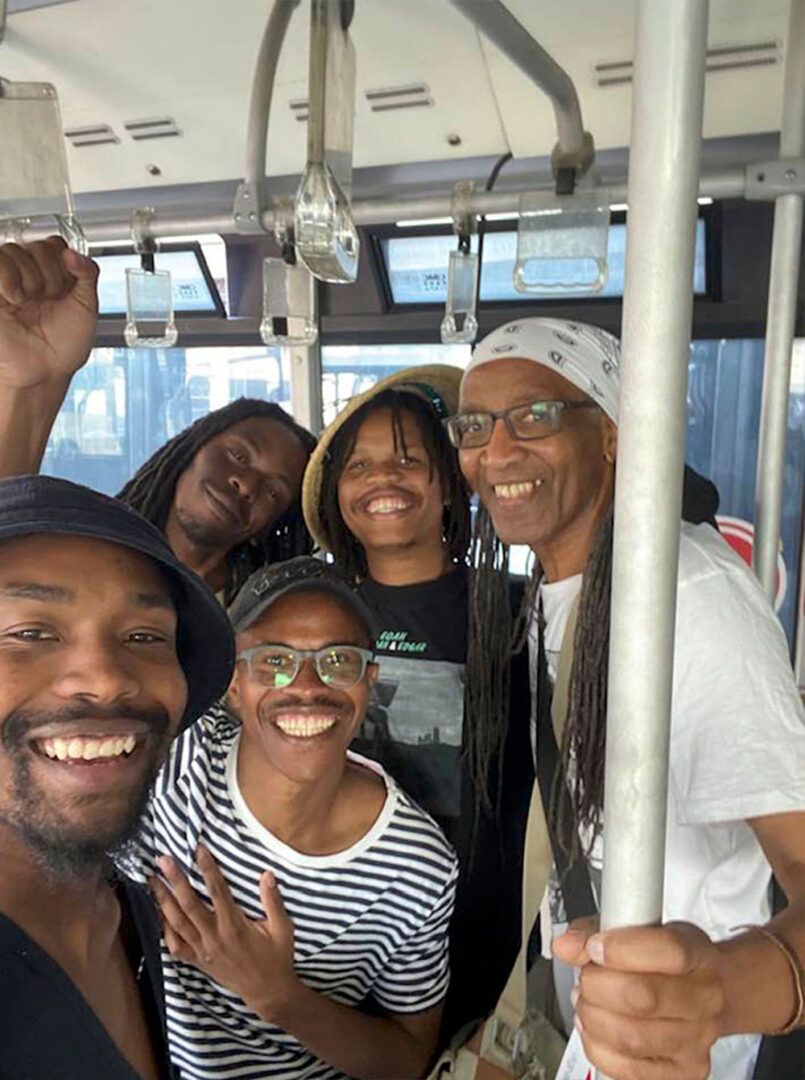
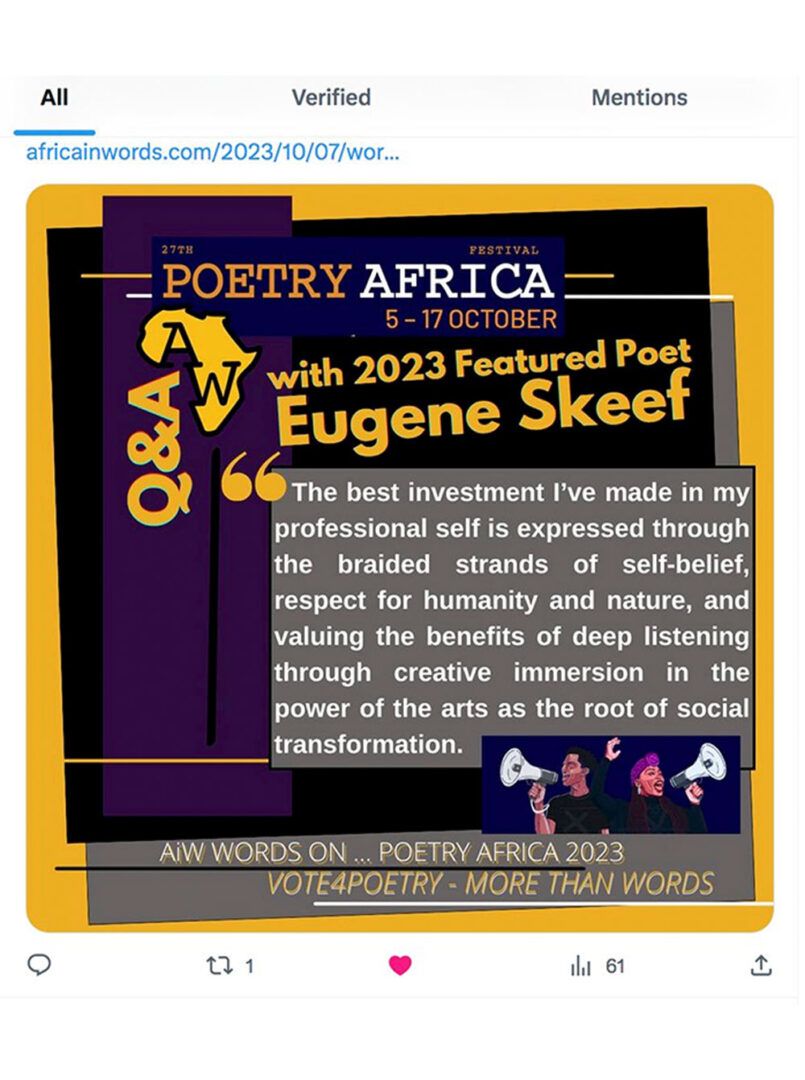
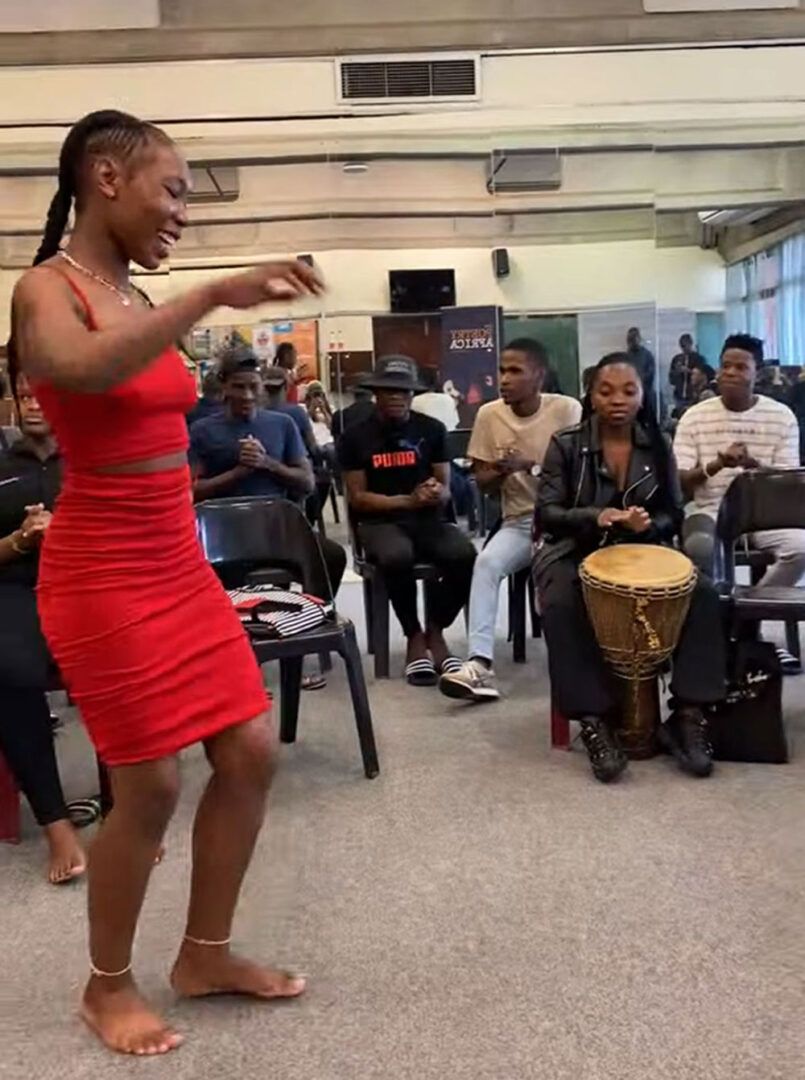
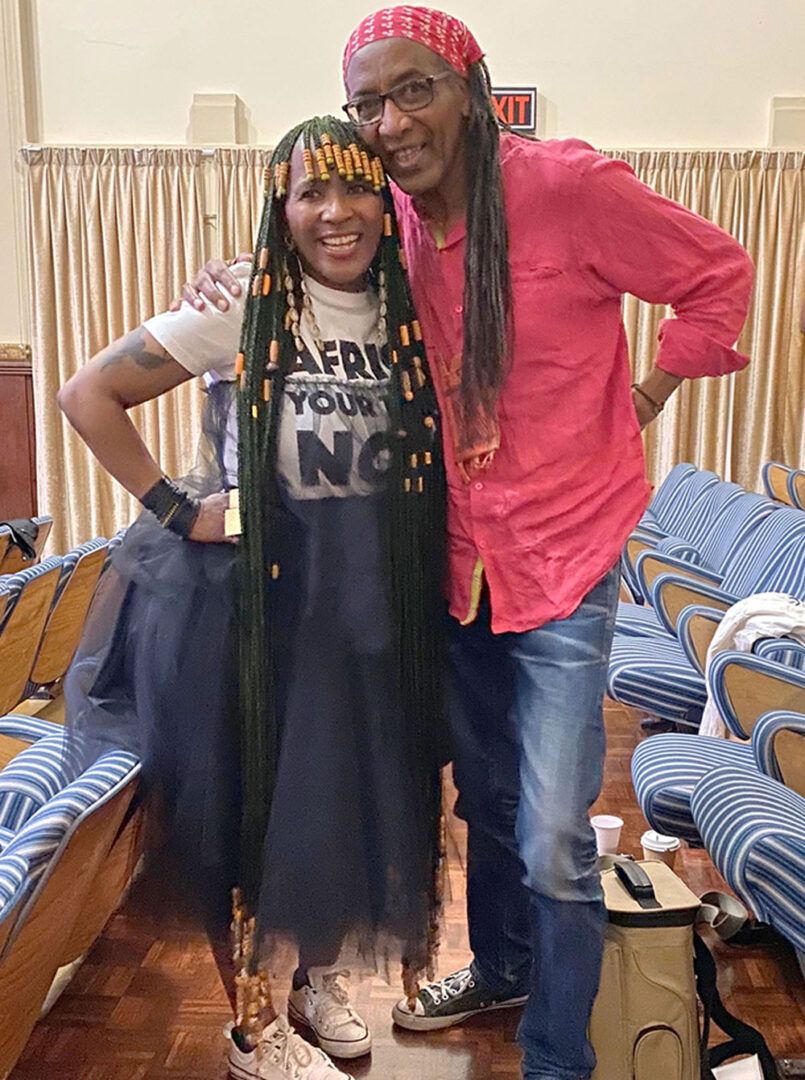
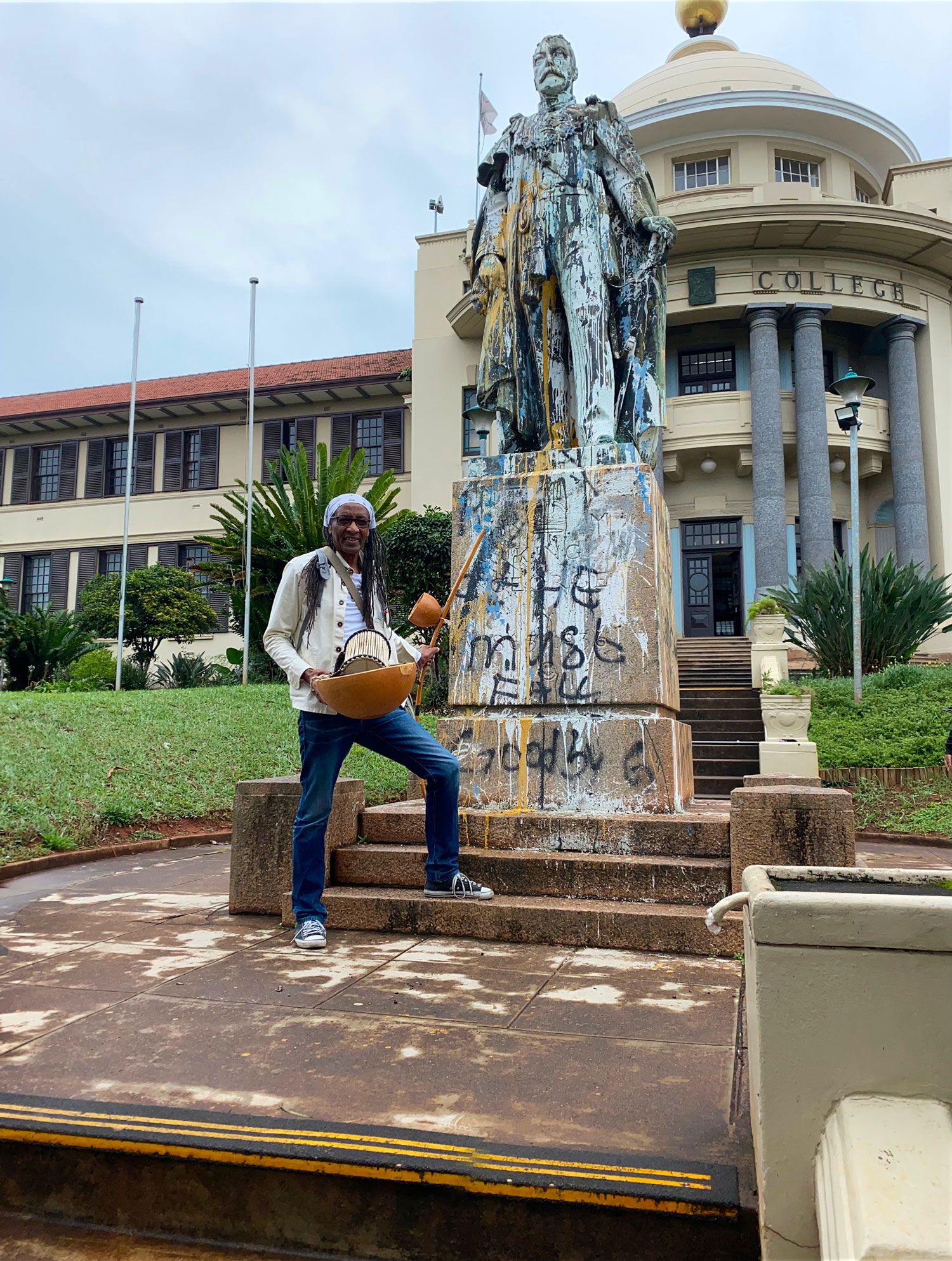
Poetry Africa sought to resuscitate the dormant voice of the liberating spirit of African poetic consciousness and its commitment to change. My keynote address to a packed theatre at Howard College spoke to the origins and re-emergence of African poetry. As I approached the historic building with its iconic dome on the hill that could be seen for miles from anywhere in Durban, I remembered an event that was a critical turning point in the formation of the BCM in the late 1960s and early 1970s. Decades before, Biko had stood in this very building (Howard College was often referred to as the white campus) during a conference of the National Union of South African Students (NUSAS) and told the gathering of Black and White students that SASO would not become an affiliate of NUSAS.
It was heartening for me, therefore, to meet a young White student who was unapologetically immersed in the contemporary Black Consciousness culture of spoken word, poetry, and related artforms. This discovery gave me much more hope and affirmation that Steve Biko was very much alive and in our midst.
From the Man Of The People to the Poet Of The People
In my keynote address at Poetry Africa, titled Poetry For Life – Is’khathi Sethu/It’s Our Time, I explained that in my personal lexicon poetry is a feast for all the senses because it embodies every imaginable human expressive form, including music, movement and visual interpretations of life within and around us. I went on to say that I cultivated my personal craft of poetry and music precisely because normal language falls profoundly short in trying to express the inexplicable eternity of the universe. For me, poetry and music are coterminous with love, in the sense that I understand it only through indulging profusely in it.
I believe we are chosen as poets to be scribes of spiritual permeance – to give voice to the silent song of creation as it unfolds in all directions at once. For everything is everything in the eternal moment of being one immeasurable whole: a manifestation of the Divine. Therefore, poetry can unveil the truth that is embedded within the invisible and bring out the beauty of its form for all to revel in its magnificence. The true poet finds form in the discarded shavings from the monolithic sculpture that has been erected in the path of the sun so that its shine does not reach some concealed parts of the society. The true poet dissolves the monument to rebuild the desecrated truth. In our times, the true poet is the spoken word poet. The spoken word poet speaks words that are hot to the touch – fresh from the crucible of truth. The spoken word poet spits fire because they have learned to shape their lips around the sun. The veracity of the verse of the spoken word poet is in the sincerity of their expression. They are the unwavering voice of truth.
The Nguni word for poet is imbongi. Ukubonga means to be grateful, to sing praises, and to say grace. This is why some people call poetry the language of the gods. The spoken word poet is the new imbongi.
benediction of the african child
(written for african remembrance day)
I
and the child said
send me the ocean
and i will show you
how to replenish the tears
of the people who thirst
for the ultimate baptism
of pain’s deluge
and she looked up
towards the heavens
of our memory
and the fire from
her blood filtered eyes
lacerated the darkened skies
and tore them asunder
with a meridian rupture
that cleansed the air
of all lingering uncertainties
II
the particles of memory
are invisible
they elude all the human senses
yet infuse them wholly
with the essence
of the lived moment
within the timelines of the soul
and so the child said
if you follow the ribbon
of all time
you will eventually find
the kite of the human story
guided in its flight
by the fabric’s celestial dance
you will rediscover the genesis
of all songs
all dances
all portrayals of the immortal
in its journey
across the unmeasured millennia
III
the litanies of all our tribulations
are embossed on the symphonic
buoyancy of the triumphalism
of false intonations passed as truths
yet no expurgation
of our collective memory
will perpetually rob us
of the rapture of our embedded virtue
for like truncated limbs
we can still feel the extremities
of the reach
of our original branches
as if the fruits
of the severed tree
were still in the sap
of our throbbing hearts
IV
and from the gallery
of resurrected bridges
the chorus of voices rose
african child
you carry within you
the seed of the light
that our ancestors
seek to manifest
in our circle
teach us the anthem
for the new world
waiting for us
to bring to fruition
remind us that love
is the key
to the iron gates
that imprison the hearts
of all who hesitate
in the morning of their calling
to sing in the face
of the blazing fire
of the ever rising african sun
we look to you
to comprehend and learn
the choreographic florescence
of your whirling flourish
as a flower in the garden
of our people’s dreams
for when you open your hands
to the light of nature’s munificence
it is the infusion of your ka
that liberates the flavours
of our quest for a truer self
let us recalibrate our consciousness
and fashion our future
from the shards of the parched earth
let us bleed
from deep within
and restore the dying soil
of memory
with the resurrected rivers
that we may recast the mould
of the african mind
according to the inflection
of the original resonance
of our gathering song
let us blend the clay
from the source and the estuary
to reinforce our pliancy
with the residual solidity
of the burdened tenderness
of our blood
let us step into the surf
once more
but with an intention
tempered by the wisdom
of the seasons of our pain
so that we may ride the waves
with new resolve
to salvage the sunken spirit
of the buoyancy
of our collective beat
let us tender our hearts
to the submergence
into the inflammable waters
of a child's prescience
for all learning
rises from the surrender of fear
to the depths of a new calling
and in the transmigration
of our unregulated consciousness
our signature pelvic pulsations
will yield to revelations
of emergent undulations
of a newly incisive intellect
where our nascent quest
will find a nest to incubate
in preparation for our fledgling flight
into our newly claimed height
let us be the firmament
of our own attainment
010820
mother of music - a liberation notion
as a boy
i met an old woman
whose name was marimba
which in our ancestral language
translated as mother of music
one day she stopped me
along the dusty roadside
and told me to remember
that morals are not for sale
she said
we dignify horrors
by naming them
we give them a gilt shape
so they can hold our nightmares
then she said
our true voice can be born
by erupting our silence
and inflating our breaths
into metrics of retribution
she also told me that
music and poetry loosen the threads
of freedom’s inhibitions
liberation’s apron floats
in a sky cleansed of purified flags
and now she lives in a stateless notion…
161125
alive in their promise
and the people woke up one morning
and walked in crooked lines
bending over to pick up
the pieces of broken promises
littering the desecrated fields
and they used the blood they found
congealed in the crevices of sunken light
to glue the pieces together
in an attempt to recreate the flowers
the formation of whose scattered petals
spelt certainty in a forgotten syntax
lost in the feculence of the lies
that they were so used to
that they thought that
was what freedom smelt like
and then they came to a stop
and realised that they were
the ones they were searching for
in the vacant spaces of melody
between their yearning breaths
190725
another country
the tip of the motherland
with its ever prominent bergs
is a different country
from what i remember
when i fled it
seasons of multiple moults
have left it with a coat
of many colours
but that still appear
monochrome to the eye
of permanently lost vision
and no visible growth
from the constraints
of non adjustable dominance
so i peruse the waste dumps
of discarded dreams
in the stubborn hope
of finding the forgotten beauty
that may yet rise
from the proud filth
230723
heritage in deed
(in a country called south africa)
the infestation of
your threadbare blanket
with spores of amnesia
the alien distillations
that intoxicate you
through a drip feed
from paler skies
the prefabricated coop
that no longer needs
the central pillar
for your ancestral rituals
the polymers that
populate the plumes
of your parading progeny’s
ill-fitting headdress
and their fake civet fur
waving a shaky tale of conquest
hanging from their synthetic skirt
unable to shake the concrete earth
with their misplaced footwork
to the perpetually earthbound beat
as you rest your bunions
from another era
all of this is your heritage
250922
The Power Of Meditation
Through meditation we can herd our endorphins into the pastures of daily joy. I have sustained the practice of meditation for most of my life and this has brought me untold amounts of joy and fulfilment This has been especially the case when I have used meditation to dispel the dark clouds that often attempt to descend over me in moments of compromised wellbeing. I am happy to say that I have always succeeded to reach a sustained state of high spirits no matter the scale of challenges to my perpetuation of love.
When we are preparing to perform, as poets or indeed any other kind of artists, we quiver exquisitely. Our body ripples like water. This is a form of divination.
If this didn’t happen, we would need to think deeply about the purpose of the performance we were about to give. Giving of ourselves is an act of divination. In the spirit of our early ancestors who could be found walking in meditation along the beaches of time, for our poets the rivers and oceans were like a libation poured from the heavens. They saw in these bodies of water the same waters that conveyed their others’ reassuring heartbeat in cosmic cycles of three while they were in the womb. This spiritual connection with the legacy of our communal song is the paradigm of their expression, a state of being they did not choose, but which chose them. This kind of artist is called in our Nguni languages isithunywa, literally meaning one who has been sent. We are couriers for the messages that our ancestors continually send through us to the community for its aggregation and elevation.
The poets and other artists that I interacted with during the Steve Biko-led Black Consciousness Movement were stewards of the truth of this spiritual immersion. This gesture represents the ethos I strongly advocate of integrating the community in all the work that I do, which is an extension of the ideology that informed everything we did in the cause of the Black Consciousness Movement. Our mission gained real significance through its engagement of the community from which we emerged as a collective of activists who knew the power of the arts in transforming our political and spiritual situation. We were an active bridge between our communities and the academic institutions where some of us were students. It is a foregone conclusion that one of the core principles of my creative activism is the repairing of the broken link between our academic institutions and our communities.
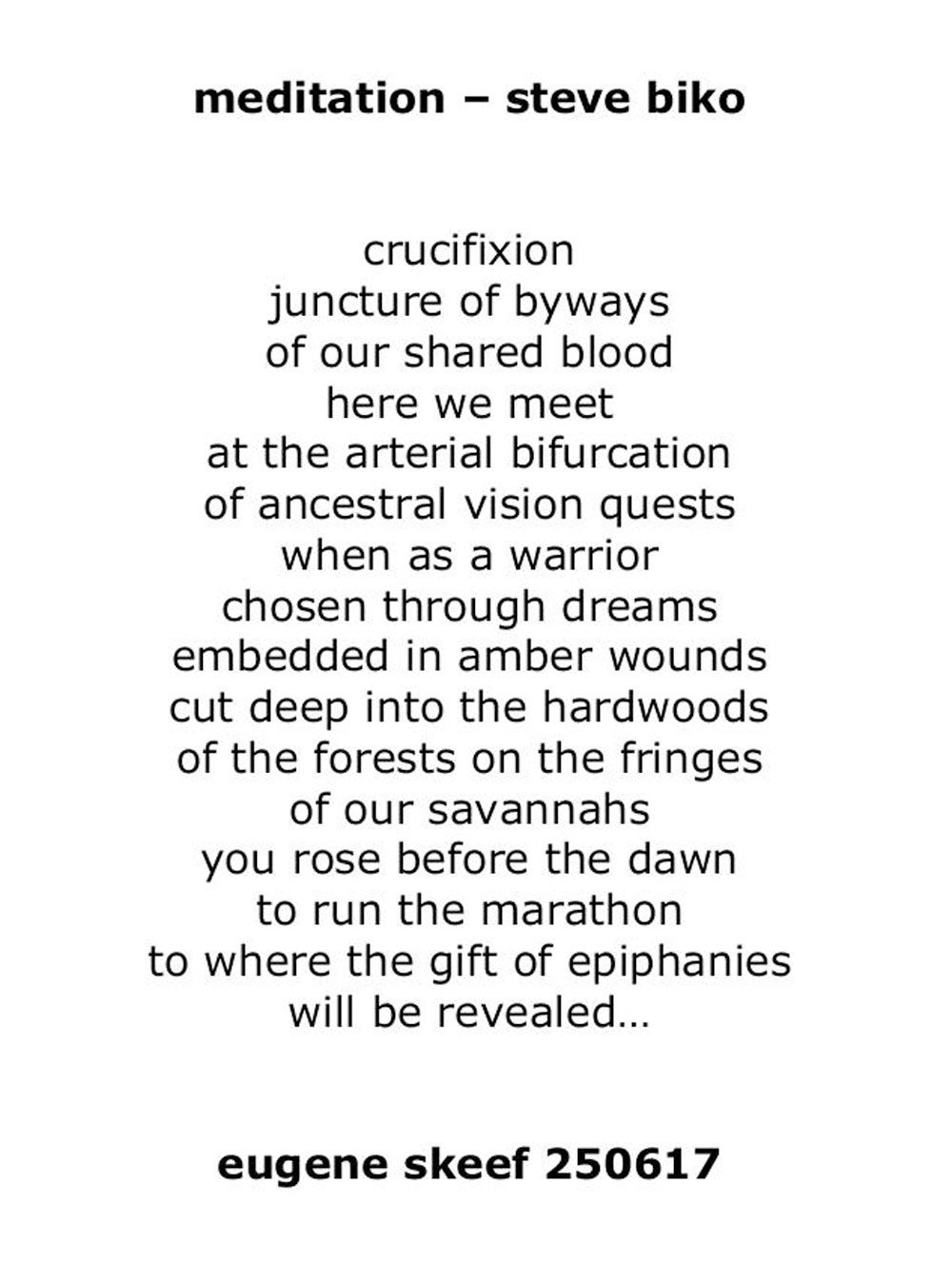
And now, more poetry:
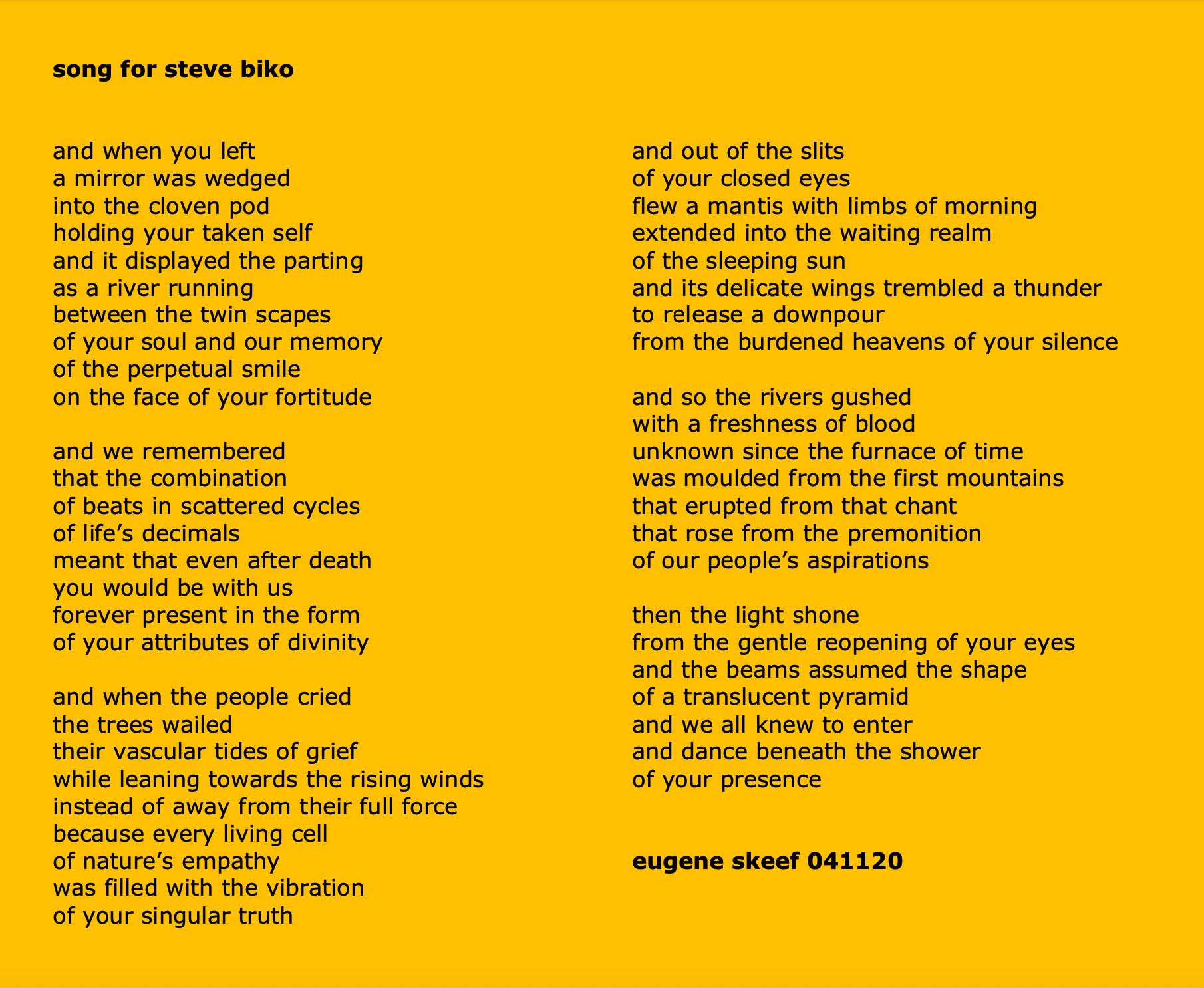
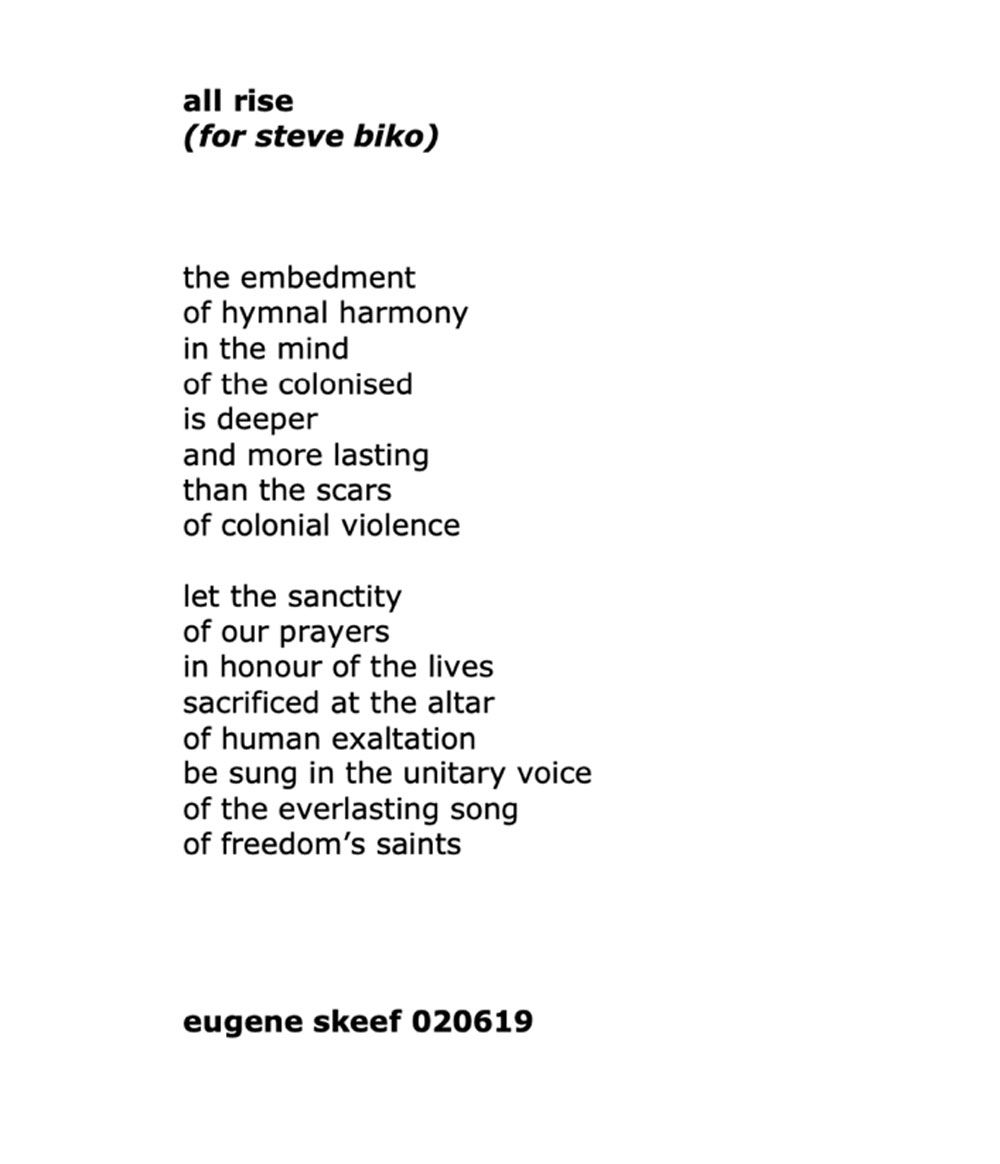
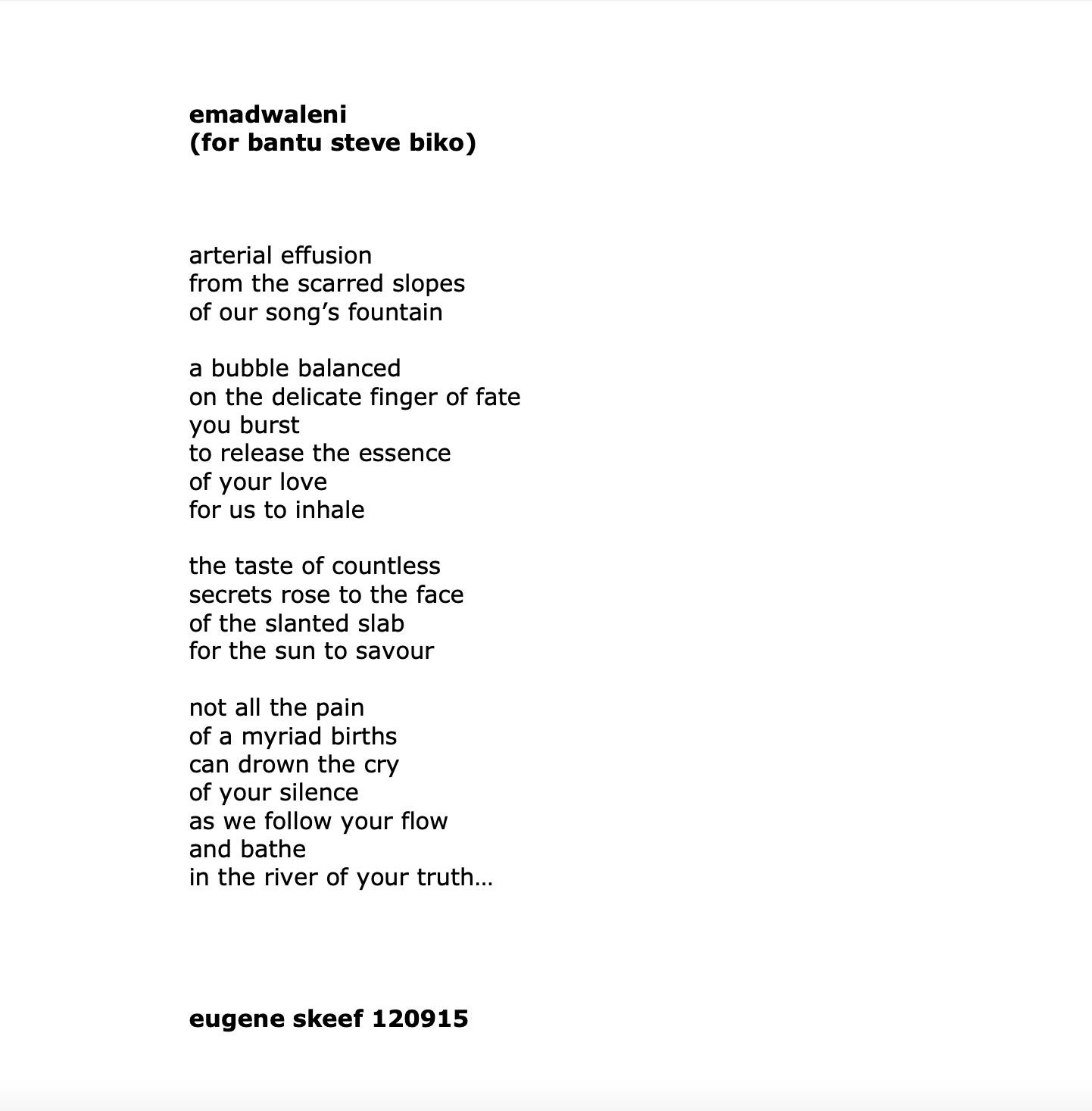
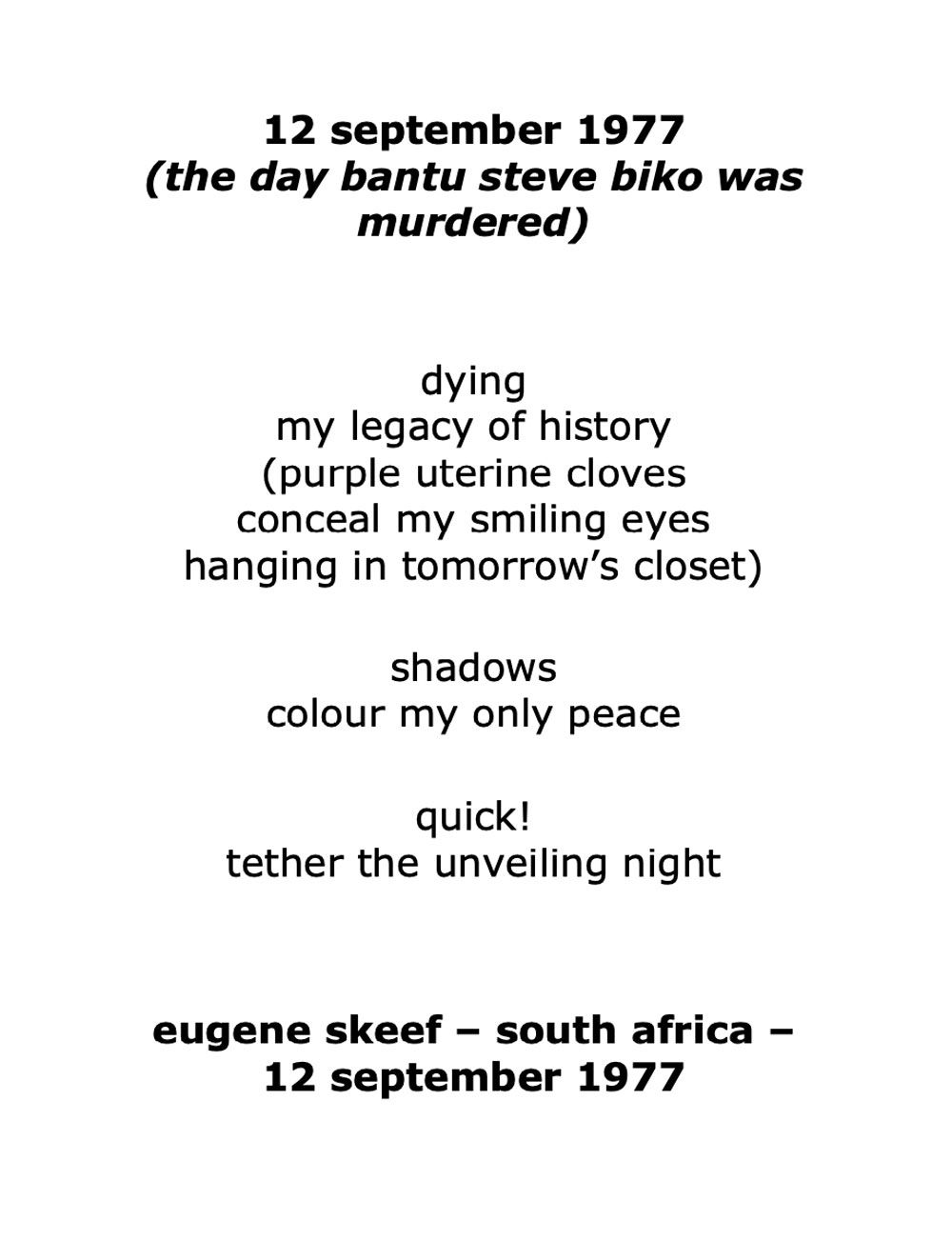
I used meditation even when I did trauma healing workshops in Bosnia and Croatia through my position as Director of Music Development at the Pavarotti Music Centre in Mostar.
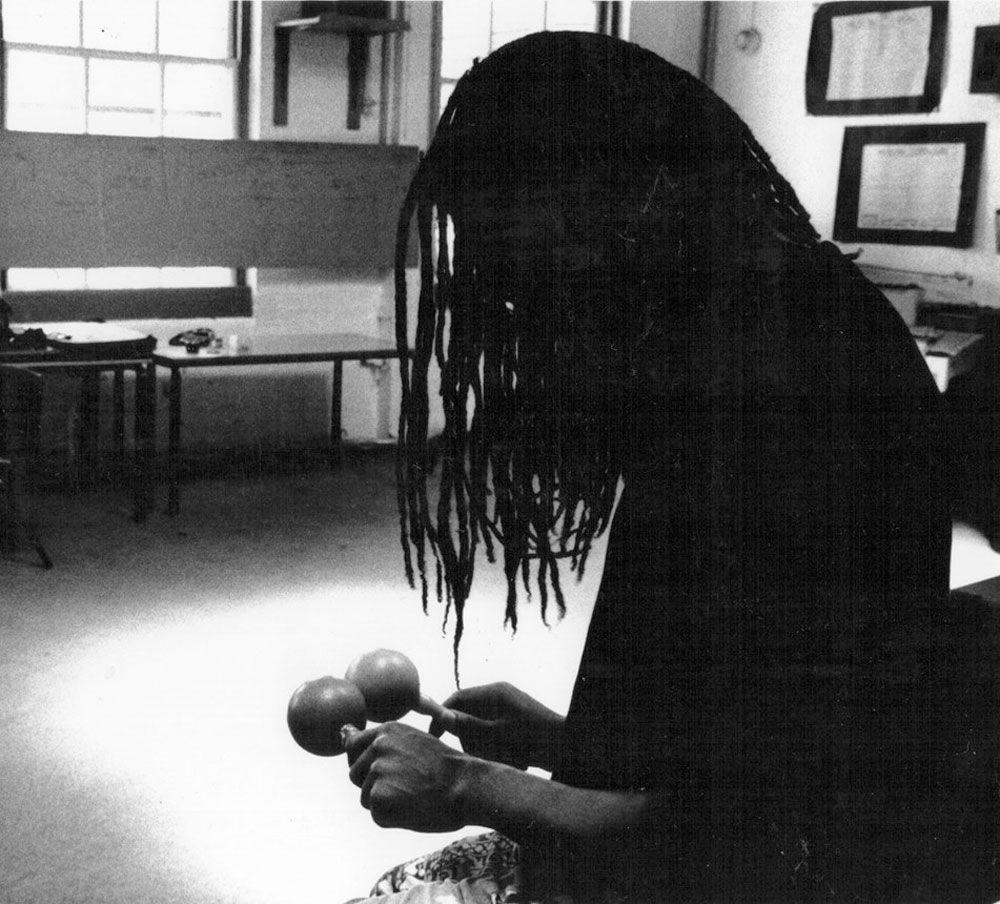
There was a time when we communicated by way of telepathy and deep meditation over vast distances. Now is the time! There was always going to be a problem with the fusion of aesthetics into longitudinal time frames. Now is the time to transcend place as a signifier of identity as the sun continues to brand us according to the unity of our place on this planet.
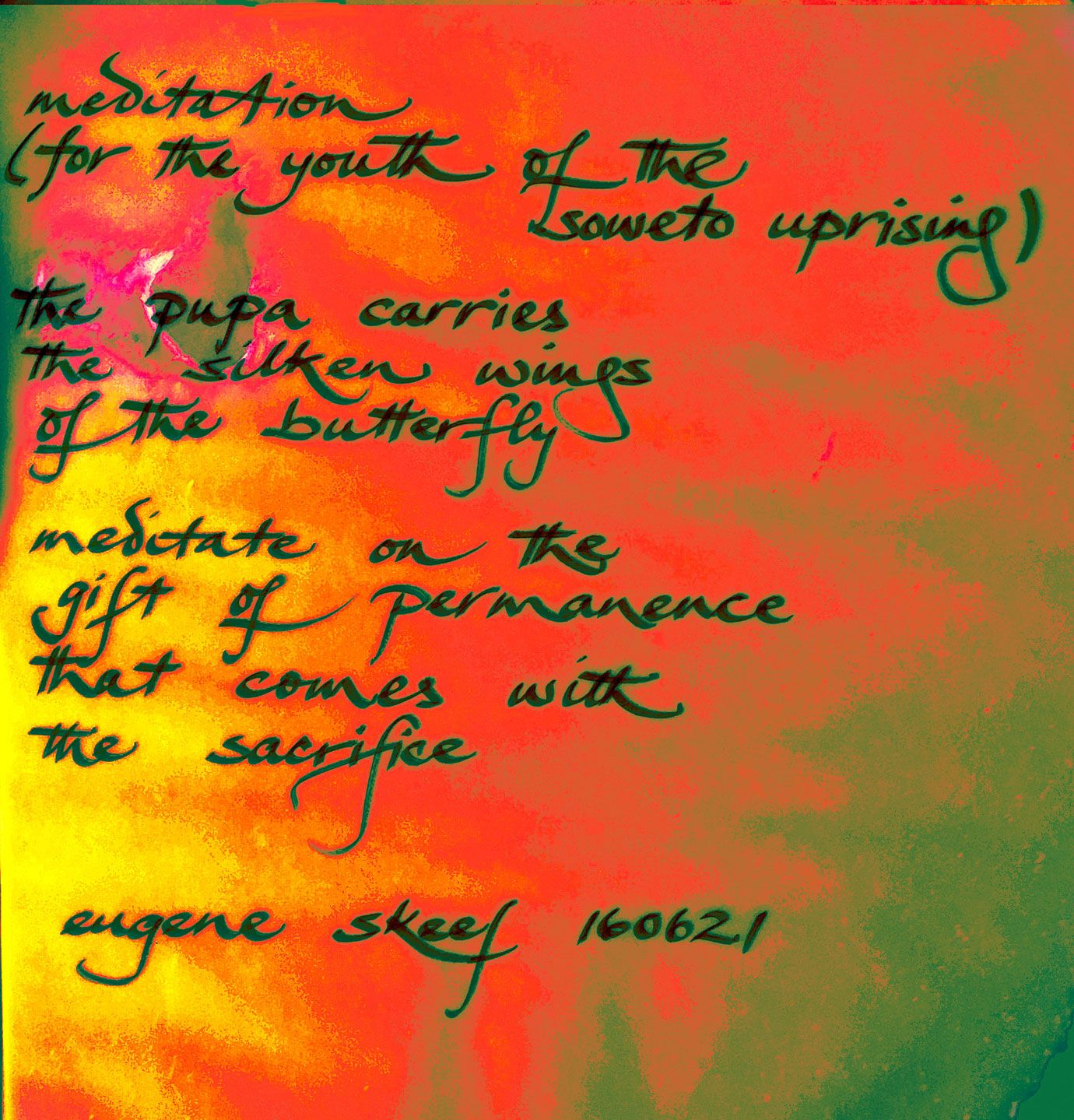
race?
our place
in the river of race
is recent
but i was re-sent
in my deep meditation
on meanings of nation
beyond the horizon
of the plantation
of damnation
to a space
where race
renders us invisible
so it is advisable
for those who know
to take it slow
because at the finishing line
of the eternal incline
in the hidden tempo
rich and po’
are but one
or simply none
coz everything
is everything…
160419
Meditation As Freedom
Some of the problems I experienced even as a boy growing up in South Africa were the result of my intolerance of control. I was always inspired by the impulse to be free and to be the master of my mission in life. My work with Steve Biko served to reinforce this feeling very strongly.
Now I sing myself out of the debilitating sadness that even the brightest among us on this planet adhere to the fallacious concept of elected leaders and fabricated hierarchies. In this regard I am with the Baka people of the African rainforest, whose society is acephalous – they have no political leaders or hierarchies. It is no accident, therefore, that their group singing is one of the most beautiful forms of human expression. The cyclicity of their polyphony means that while each person can express themselves to their own melodic fulfilment, they also contribute to the uplifting collective power of the group harmony and the symphony of the forest.
This embodies the ethos of my personal life. Kwande!
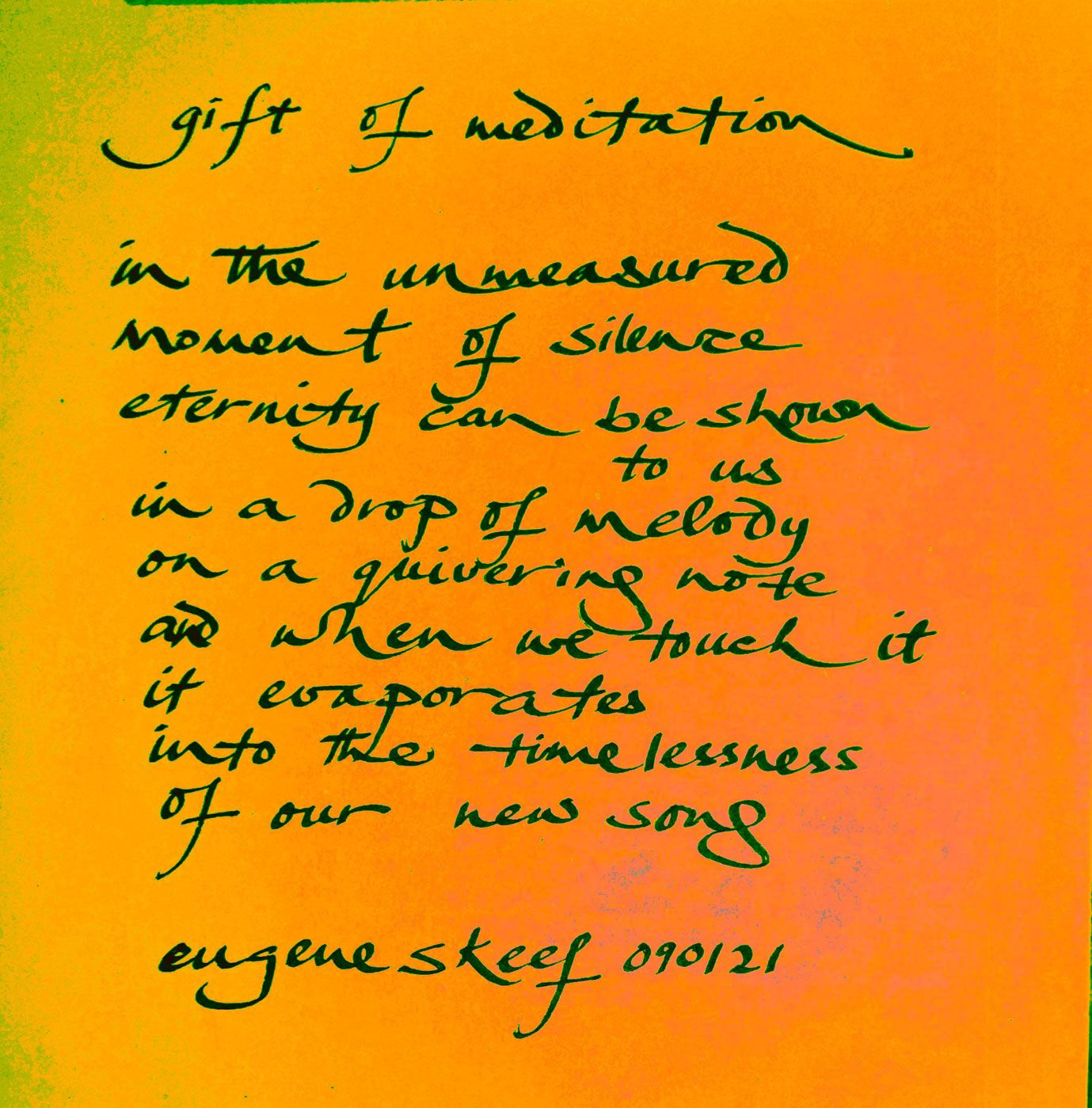
My Morning Meditation
My creativity is an expression of attaining towards my childhood. When I act like a child, I become one with myself. This is not a regression, a going backwards. It is an advancement to that point in my life where everything is everything. All things in the universe move in cycles. The more I progress, the closer I get to where I started. So, right now, I’m at the most beautiful place I could imagine. I am where poetry speaks to me as a child and asks me to write it with the innocence of having just learned to respond to the revelation of the beauty of nature’s bounty.
In seemingly going backward, therefore, I am moving forward while fully indulging in the inflated moment of the super present. For there is nowhere else to go but where I am – where I have always been – where I shall always be…
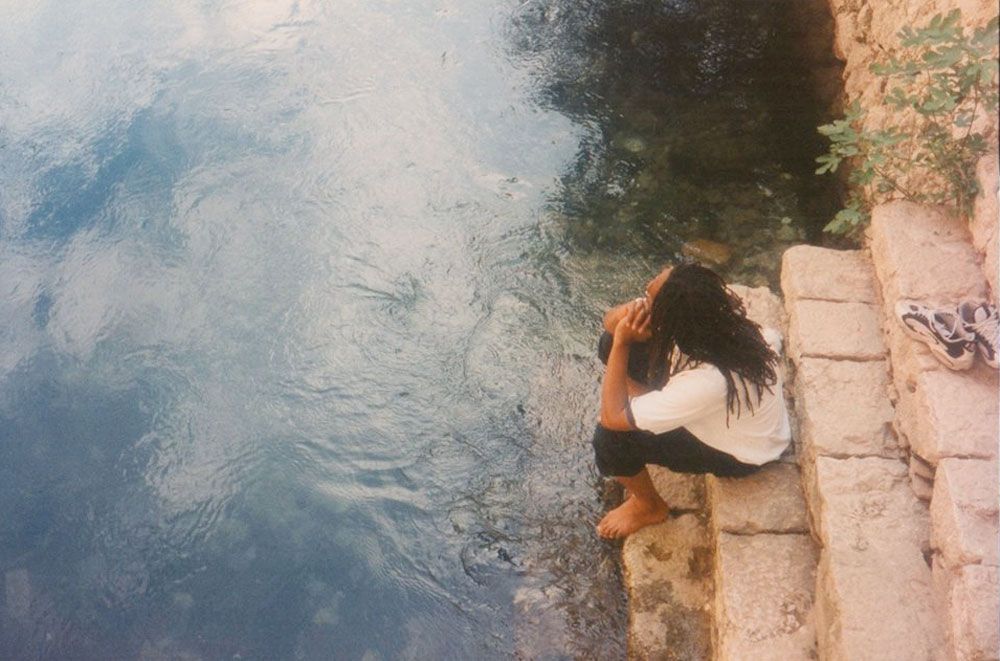
The Need To Belong
Sometimes all we desire as human beings is a little acknowledgement of who we are, a little recognition for our contribution to society. We are all impelled by a deep need to belong, to be part of a community. We yearn to play a meaningful role in the dynamism of life beyond ourselves. Even those among us who tend towards isolating ourselves from the rhythm of the collective dance will send a pulse outward in the hope that its ripples will touch the beating hearts, even if it is just on the outer edges of the beat. We come together from the darkness of isolation to find freedom in the revelations of love and light.
The Music Of The Black Consciousness Movement
We started by making music based on the two-chord ostinato antiphonal rhythmic conversations of our collective culture, whose pivot was centred in the spiritual dialogue that we had with our ancestors. Any further harmonic development was fleshed around the seed of this conceptual fruit. So that even in the compositions and improvisations of Bheki Mseleku, the most advanced musician to emerge from South Africa, you will always hear the creative manifestations of this deep rooted African sensibility inviting you to dance, even when you feel like flying, because in flying we dance with our ancestors beyond the stars.
The Healing Drum
Nature’s imperfections hint at the inherently pristine qualities of its hidden completeness. This is the mystery of chaos that informs our eternal quest for the symmetry of perfection. The repetitive rhythmic cycles of African drumming are a symbolic expression of this paradoxical paradigm. Before I knew about this truth I used to wonder why I felt at home with myself and immeasurably at ease when I drummed on the steering wheel of the South African Students’ Organisation (SASO) VW Kombi when I was on one the many missions on behalf of Steve Biko and the Black Consciousness Movement. It dawned on me much later in my life that by tapping the wheel according to a system of repetitive patterns I was essentially reassuring myself of the security of my home base within me. I was ensuring my inner stability in spite of the instability of my situation within apartheid society.
Drumming on the steering wheel kept my confidence afloat. By repeating the cyclical rhythmic patterns, I was reminding my whole body and consciousness that I was ultimately in command of the possibilities in my life; that I had the built-in facility to correct whatever error of parallax by fine tuning the alignment of my self-perception. Essentially what I was doing back then, without consciously knowing, constituted the beginnings of healing myself through drumming.
Here is something I wrote towards my keynote address at the International Conference On Music And Healing In Africa And The Diaspora. The conference took place at International Centre For Music And Dance in association with the Institute Of African Studies at the University Of Ghana in Legon, Accra. My contribution detailed the nature of my work as Director of Music Development at the recently established Pavarotti Music Centre in war-torn Mostar, Bosnia-Herzegovina.
Here is the quote:
Let me explain my understanding of ‘healing’ in greater detail here. I understand the word to mean making whole, striving for balance, repairing out-of-tuneness with oneself and with the environment. This concept is based on a view of the world which does not separate the person from their environment. We need to abandon the Western way of regarding the environment as something out there, other than ourselves. If I did not have a firm foundation in my African regard for nature as a mutual part of me, the fallacious Western notion drilled into us at school that humans were the pinnacle of a natural hierarchy would have taken undue root in my thinking. The destruction visited upon the planet in the name of advancement is more than sufficient proof that those of us whose basic education and development was fired in the Western mould need to exercise a rare humility before proceeding to administer aid to others. We all know that the so-called first world has a great deal to learn from the so- called third world, if they could just step back, join the circle and let someone else lead the song with a different rhythmic melody.
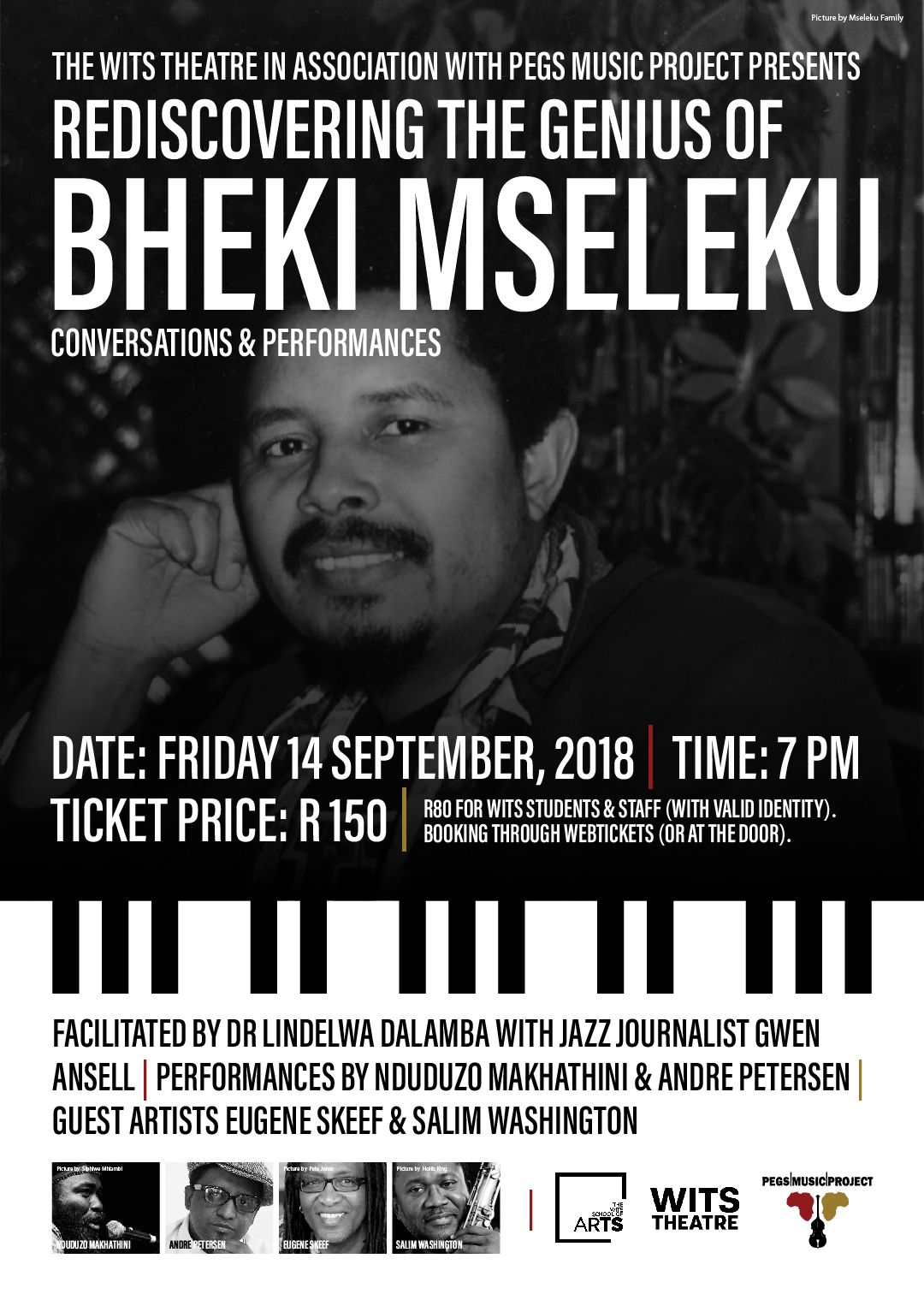
In 2018, Ayméric Peguillan, Founder and Director of Pegs Music Project, invited me to contribute to his special event at the Wits Theatre in Johannesburg. The event was titled Rediscovering The Genius Of Bheki Mseleku – Conversations & Performances. The basis on which Ayméric invited me was my close friendship with Bheki and my exhaustive knowledge of his story and the nature of his profoundly spiritual approach to creating and performing music. I was honoured to be in the esteemed company of fellow panellists historian/lecturer Lindelwa Dalamba, saxophonist/music professor Salim Washington, jazz writer/arts & culture journalist/academic Gwen Ansell, pianist/music professor/healer Nduduzo Makhathini, and pianist/composer/educator Afrika Mhize.
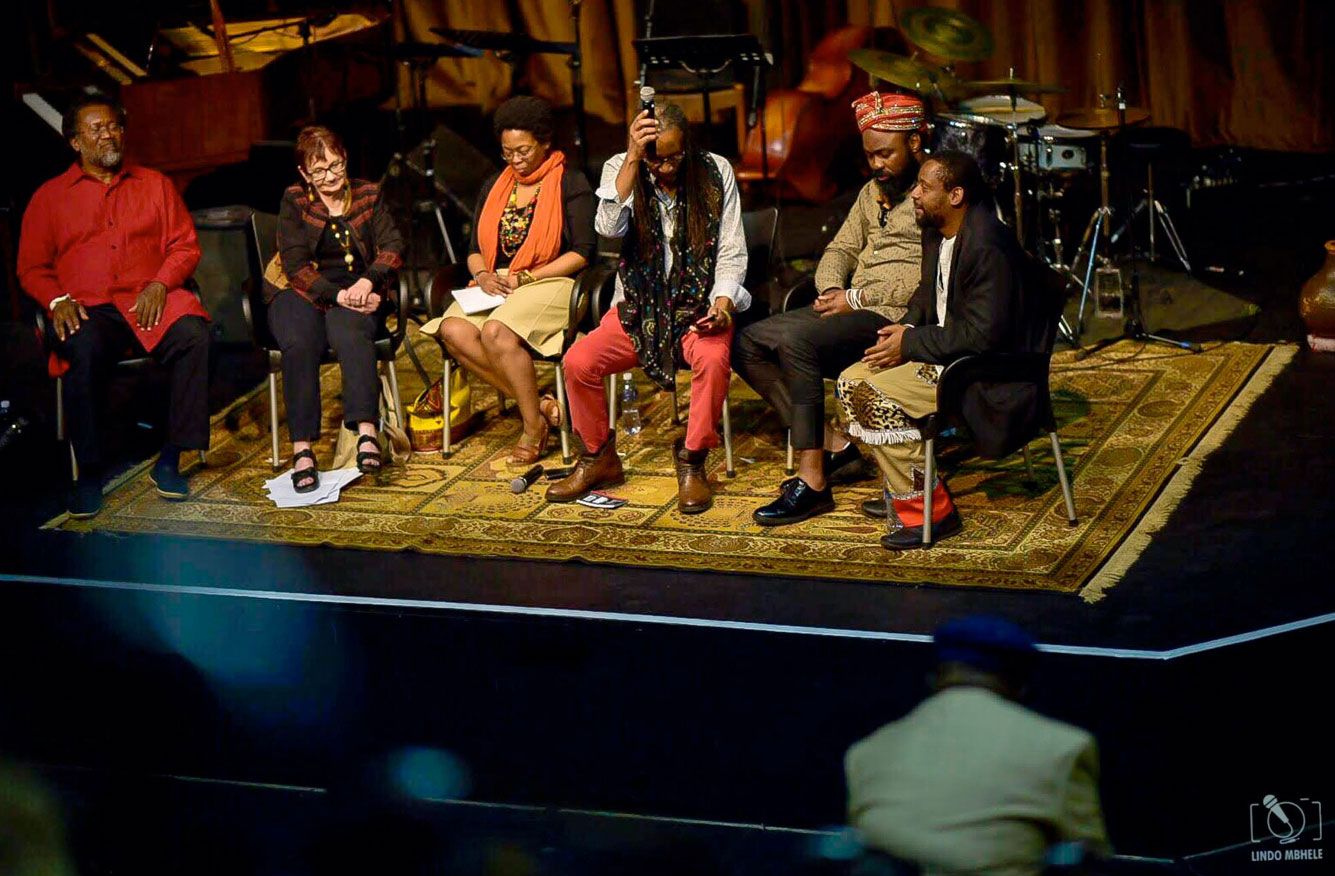
As part of my involvement sharing insights and experiences of my relationship with Mseleku, I led a spontaneous workshop with the support of a quintet built around Nduduzo and Salim, which included saxophonist Linda Sikhakhane, trumpeter Siyanda M. Zulu, and drummer Ayanda Sikade. This took place in a congested space with chairs, tables, audiovisual equipment, other bits of furniture, and a piano on a raised wooden stage.
I started by asking the students to turn their smartphones off and put them away, remove their jackets and any other heavy items of clothing. Then I asked them to stand up and help me move the white board and every table and chair, and other bits of furniture to one corner of the room – because we were all going to be moving. We created a circle. I invited a few of them, one at a time, to come into the centre of the circle and teach the rest of us their personal warm-up stretches, gradually evolving these into a stylised movement that we would all imitate. I got the band to leave their instruments and join the circle. The room was soon filled with laughter and expressions of joy. Once the ice had been broken and everyone was in the inflated moment, I went into the centre and started playing a rhythmic clapping game whereby I would distribute a clapping beat around the circle while they were expected to synchronise perfectly with my clap. This exercise demands total focus; but then I would trick the participants by either slowing down or pretending to miss-time the action of bringing my hands together. Naturally, they would all miss the beat and laugh at themselves. This would develop into a sort of Taichi or slow-motion dance as I drew them even deeper into the spirit of Oneness by adopting fluid shapes. Within minutes we were all moving around the room, each finding their own shape and posture of beauty.
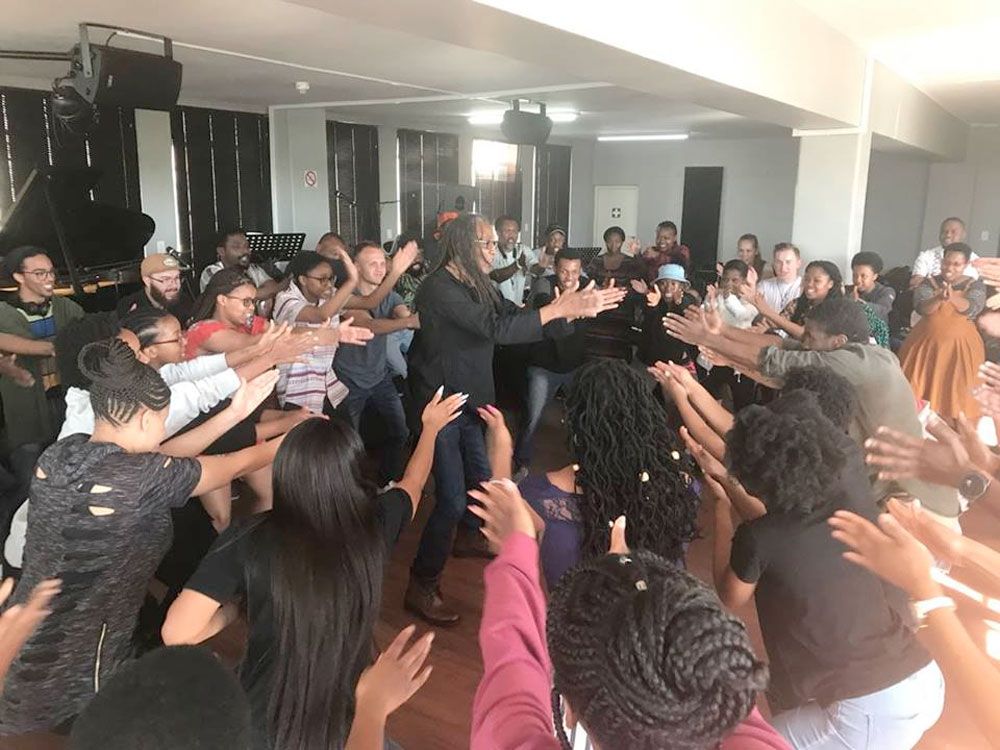
The chant “Who We! Simunye!” flowed straight from this as we clapped the beautiful energy back and forth to each other in every direction. I asked the musicians to return to their instruments and play to the groove we had arrived at. The students slowly danced to places they could find among the migrated chairs and enjoyed the music as each member of the band took a solo. We received a standing ovation! A few of them came up to thank me individually and said that they wished their lectures could be immediately decolonised and conducted in the manner they had just experienced. Simunye! We Are One!
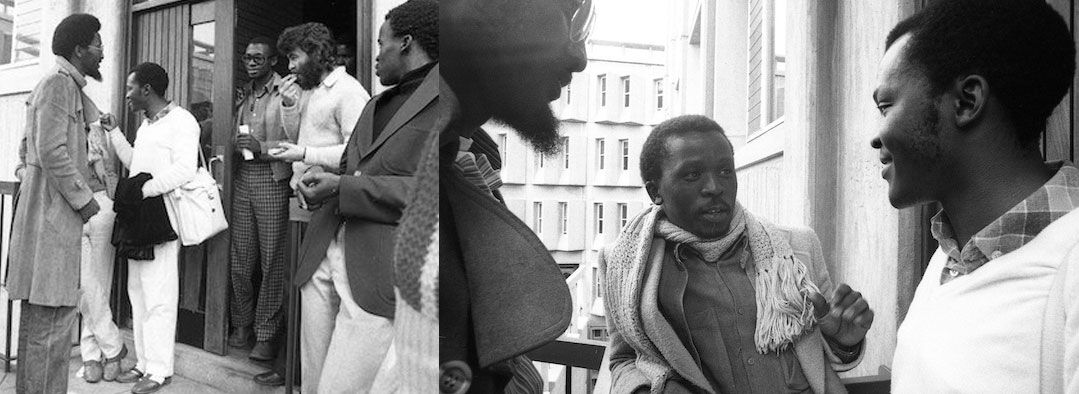
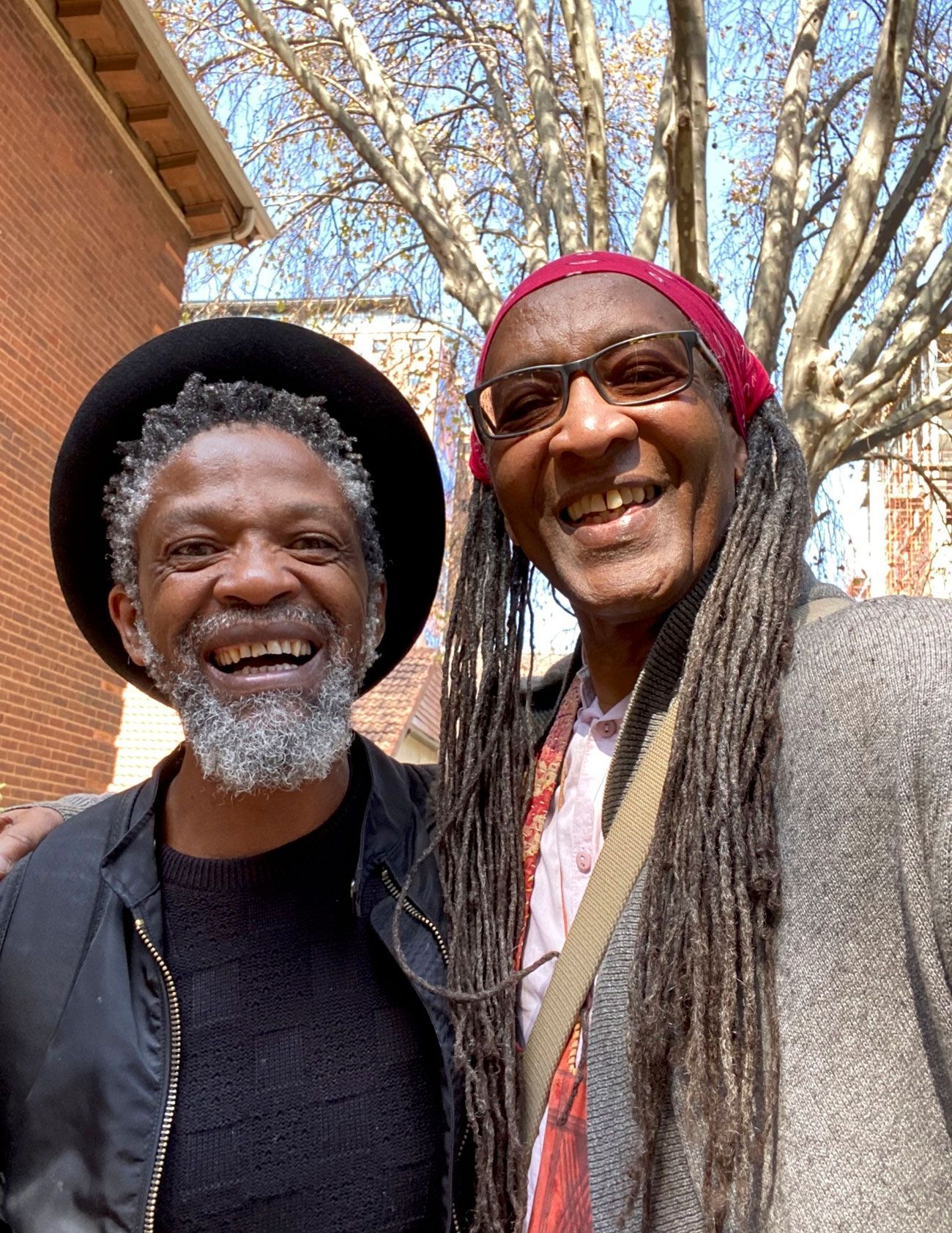
My beautiful brother Kgafela Oa Magogodi lectures at the University of Witwatersrand in Johannesburg. He teaches the Theatre and Performance module in the Wits School Of Arts on East Campus.
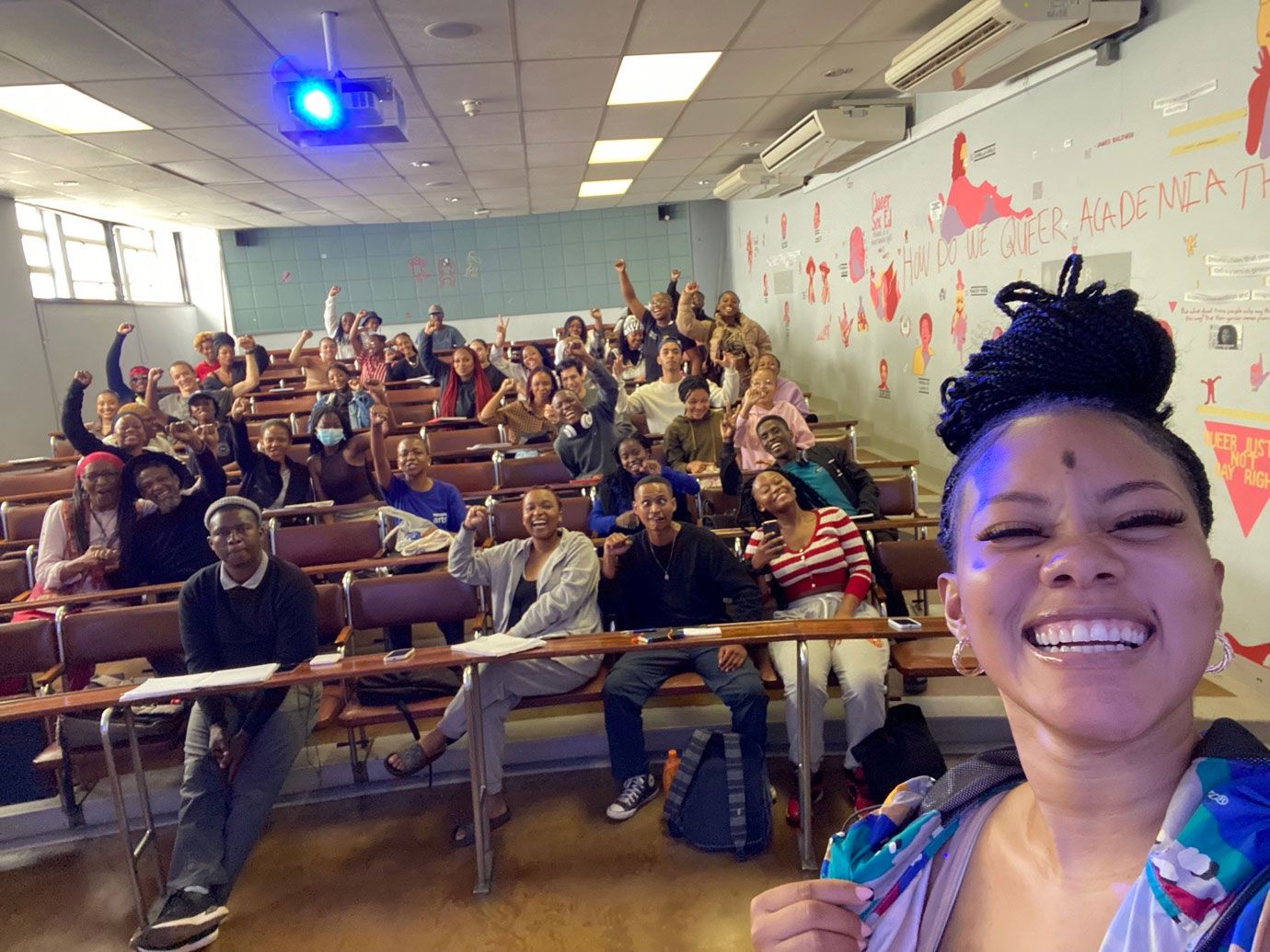
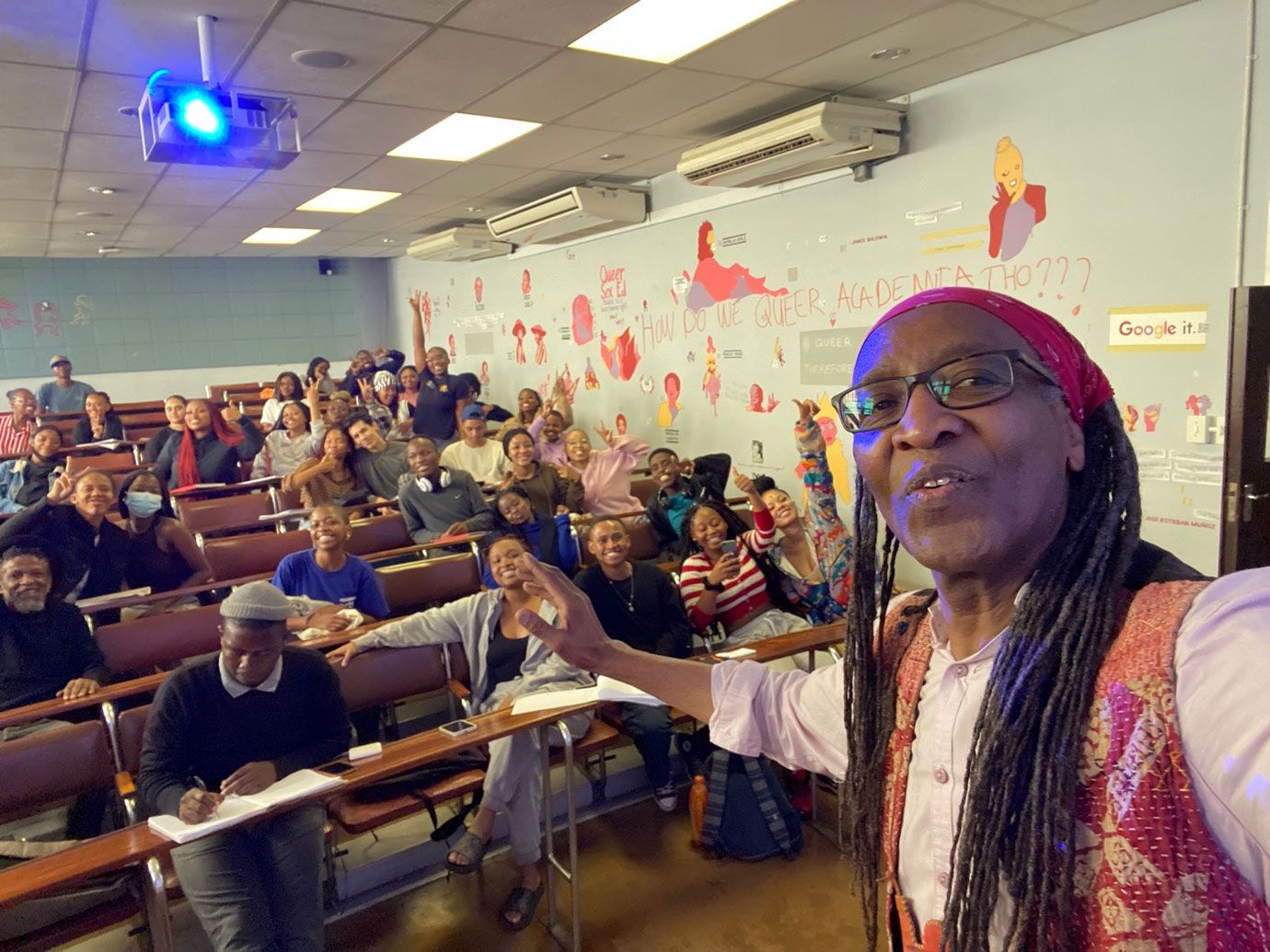
In May 2023, he invited me to give a lecture to his students on my personal take on Black Theatre, with a special emphasis on the ground-breaking group Malopoets that I formed in the 1970s. I have never experienced or witnessed a river of spiritual beauty being fed by the confluence of so much love streaming from deep within the fountainhead of our ancestral harmony. The lecture hall was abuzz with insurmountably positive energy from the resonance of my delivery. By the end, the wholly permeable elation in the room inspired both students and lecturer to invite me to come back.
During the largely improvised lecture, my laptop and the giant screen felt so ignored that twice Kgafela had to call for technical assistance to resuscitate them. In the end, right towards the end of the session, which overran quite significantly, I felt for the devices and settled on using the configuration to at least show the original ink logo I designed for Malopoets (combining the words ‘Malopo’ – Spirits in seSotho – and ‘Poets’).
I found time to contextualise my personal trajectory as a creative person by mentioning a long list of names close to my unfolding, including Steve Biko, Barney Pityana, Bokwe Mafuna, Sam Moodley, Mamphela Ramphele, Strini Moodley, Saths Cooper, Drake Koka, Harry Nengwekhulu, Jerry Modisane, Bheki Mseleku, Khaya Mahlangu, Vusi Mchunu, Ben Langa, Mandla Langa, Pius Langa, Kessie Govender, Lefifi Tladi , Abbey Cindi, Philip Tabane, Julian Bahula, Nick Kganane and Malopoets members Sam Tshabalala, Duze Mahlobo, Pat Sefolosha, Bruce Madoda Sosibo, and Pat Mokoka, plus Don Laka, Wangui Wa Goro, Ngũgĩ wa Thiong’o, Onyekachi Wambu, June Bam-Hutchison, Brenda Sisane, and my family in London…
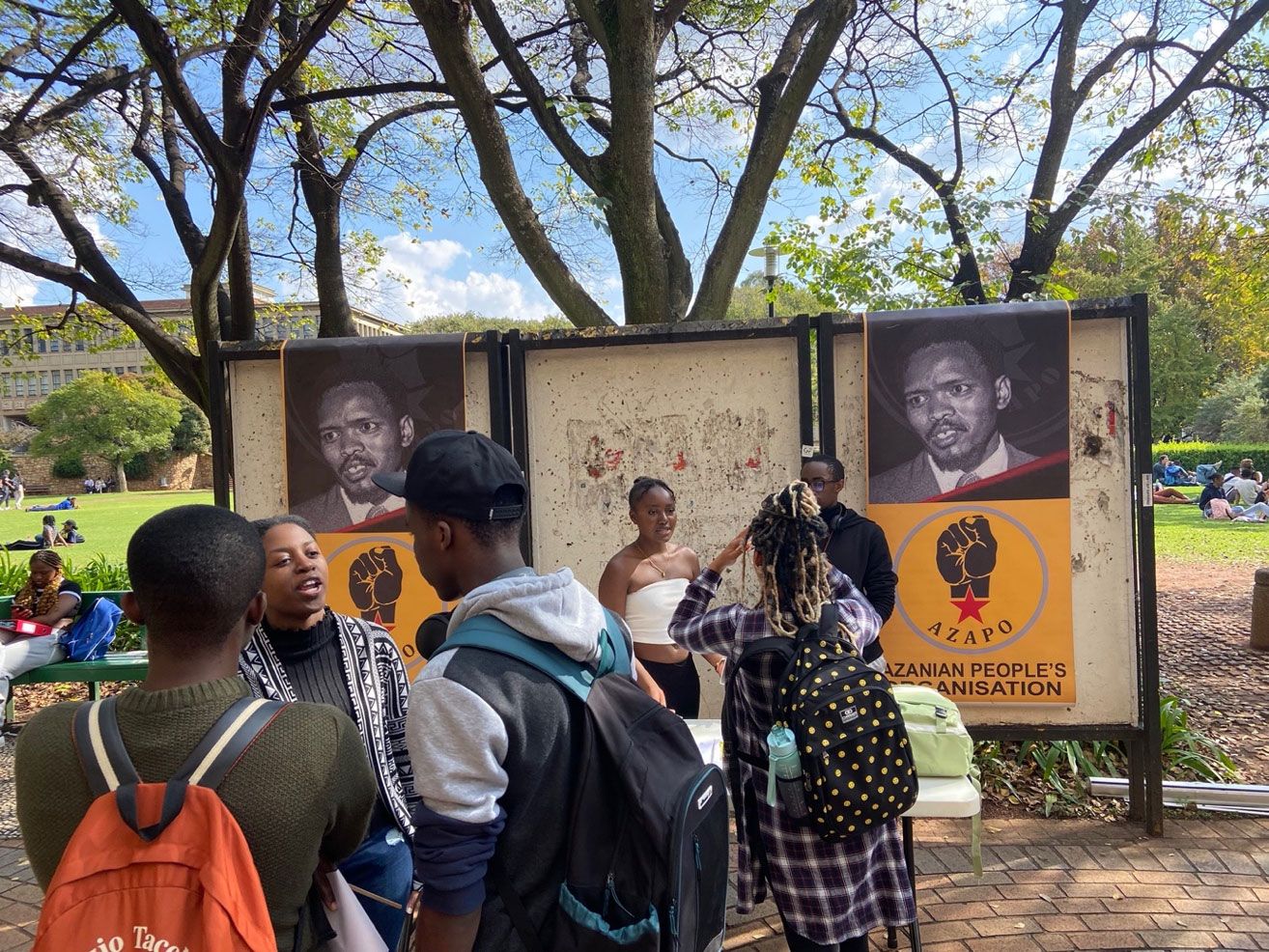
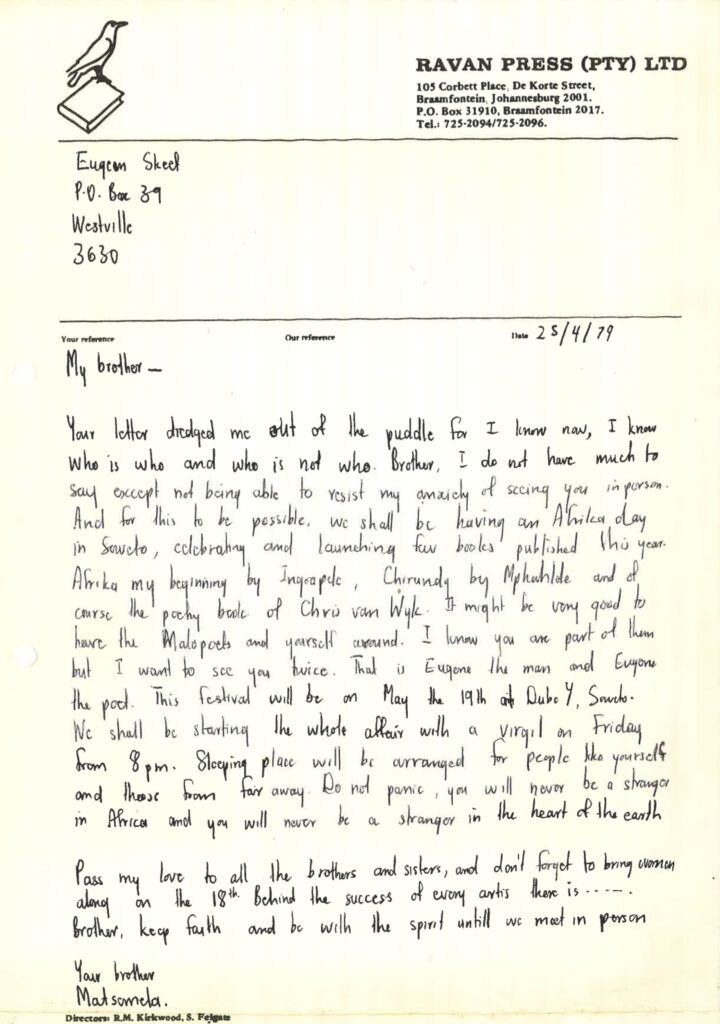
Reparations
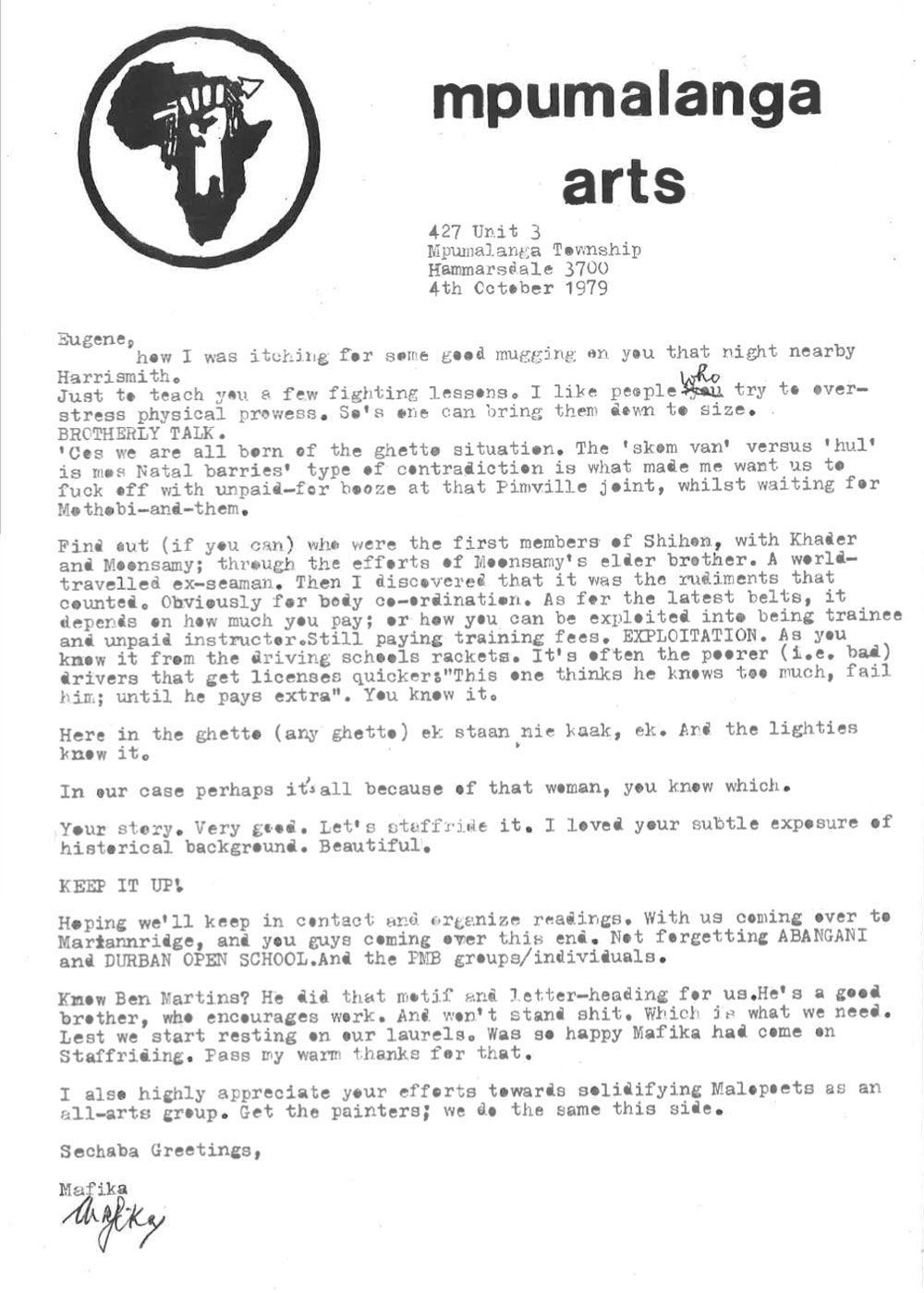
This is a letter to me from the Radical BCM writer and activist Mafika Gwala written in 1979 around the time when I drove a group of Staffrider affiliated writers around the country to conduct writers’ workshops and perform poetry readings in the community. Mafika and I were both what we called back then ‘karatekas’ (karate exponents). We used to joke around a lot but were also known for our no-bullshit resources in tight situations. On the trip to Cape Town, I recall Mafika always wanting to sit next to me as the driver of the VW Kombi. We would have long conversations, regaling each other and the rest of the group with lavish stories of our escapades. He would sometimes fall asleep with a glass of whiskey in his hand, without even as much as a drop leaving the glass. I remember being particularly fascinated at how stable the glass would be when I drove along the bendy roads on the slopes of Table Mountain. But once I heard him snoring heavily, I knew that he was fast asleep. Then I would lean over to carefully remove the glass… and, I tell you, it was unbelievable how the brother would immediately tighten his grip and sit up straight and tell me to f**k off, before taking another swig, as if he’d been wide awake all the time.
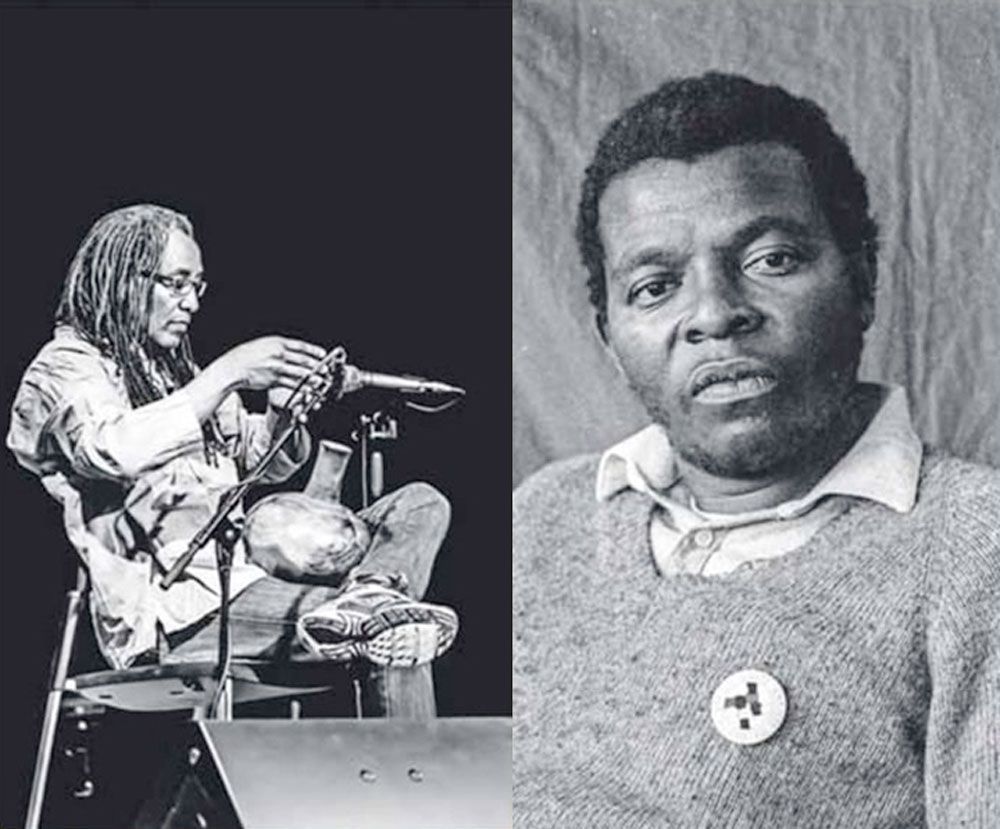
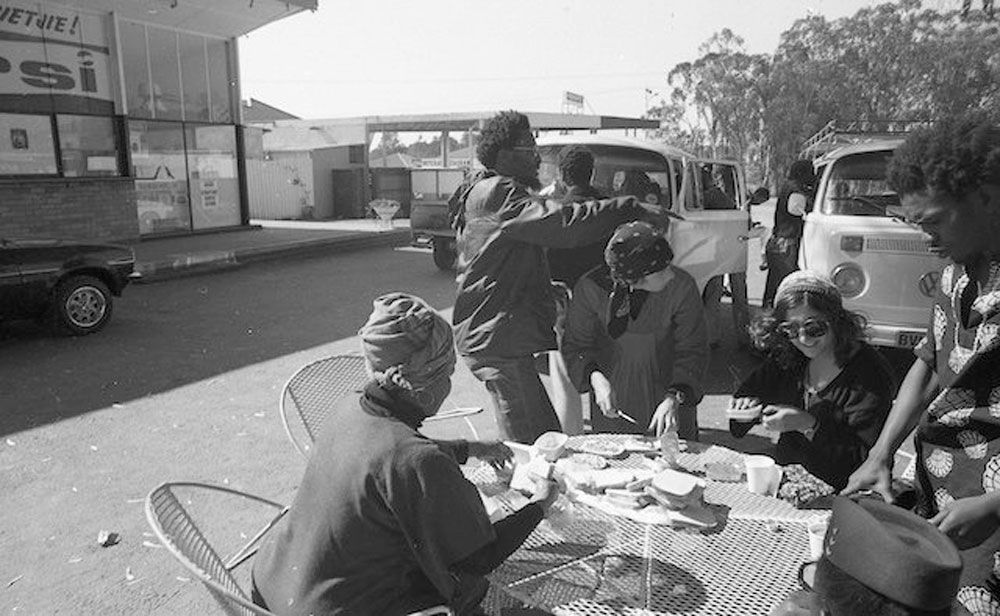
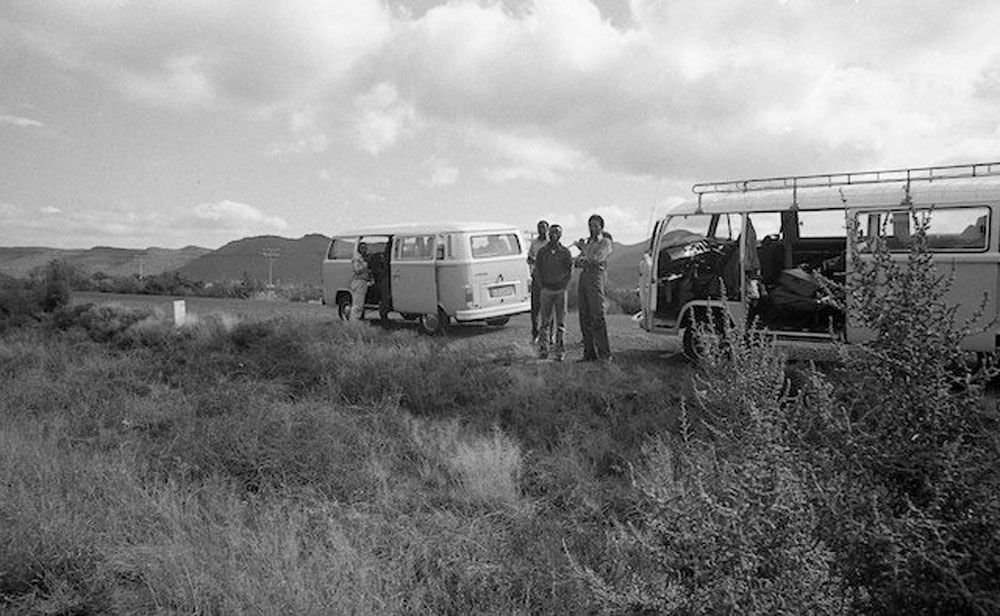
Let us inhale the incense of poetry in exorcising a sordid chapter in our history…
The South African human rights lawyer Mafika Mbuli (a blood relative of ‘The People’s Poet’ Mzwakhe Mbuli), who was gruesomely murdered in KwaMashu in the run-up to the 1994 elections, was a close friend and comrade during our struggle against apartheid in the 1970s with the likes of Steve Biko. He was part of a team of radical Black solicitors that included Griffiths Mxenge, Thembile Lewis Skweyiya, and Pius Langa (elder brother to Ben Langa and the novelist Mandla Langa, and first Chief Justice of the democratic South Africa), who represented pro bono many activists and vulnerable members of our community on political charges brought by the racist regime.
When Ben and I were developing the cultural group Malopoets, some members and I would sometimes sleep on the floor of Mafika and Pius’s offices. One day, knowing that Mbuli sometimes wrote poems as a private hobby, and that he was a fan of Malopoets, I encouraged him to write a poem so that he could read with us. In Memoriam: Speak Like A Child is the result of the inspiration that superseded his initial shyness. I helped him develop his performance skills; then Ben and I invited him to join Malopoets on stage in his first ever poetry performance.

Mbuli was killed by armed Inkatha Freedom Party (IFP) members at the entrance to KwaMashu township. The brutal murder of this intellectual giant and committed freedom fighter is a terrible loss to Africa. The timelessness of his pervasive spirit is poignantly preserved in this majestic poem he wrote in Durban in 1978. This beautiful man, known universally for advocating peace through his legal work, had his life woefully snuffed out by the evil of factional violence.
Ilanga Libantu Bahle/Postures Of African Beauty
Ilanga Libantu Bahle/Postures Of African Beauty is a meditation on the abiding spirits of our African ancestral guardians. We conjure their presence in our midst through dreams of a timeless landscape of boundless dimensions. We immerse ourselves in the rippling rhythms of water to access the healing tones of their song through the flowing movement emanating from postures of beauty rooted in the ancient memory of peace, love and harmony of being. Towards the assured entombment of the legacy of our oppression, we embody the truth that resistance becomes a ligature to stem the loss of a beautiful people’s dignity. This is how we become our true selves.
Power Of The Truth
You can never hide the truth forever. It is bound to come out like pus from a sore so swollen that all that remains is for it to erupt. It does not matter how long the sore takes to erupt; the truth will eventually burst open for everyone to see. Then what is left is to see how deeply the rot of hidden truth has poisoned the ecosystem of the body politic. I remember reading an article in a British newspaper about the South African spy killer Craig Williamson being granted amnesty by the Truth and Reconciliation Commission. He mentions the extraordinary reputation of Nelson Mandela and Archbishop Desmond Tutu’s high profile legitimising what he referred to as South Africa’s Faustian pact of truth without justice.
Poverty
Poverty is a condition that finds us on the edges of society. Being relegated to the perimeters of everything that seems to matter in our lives is a very sad state of affairs. Some of us can cope with this situation and are able to find the resources to overcome it; but many of us just disappear from the centre of activities that are known to keep a society in some form of forward motion. At no point in my life could I say I was far away from the perimeters of society as far as my material wellbeing. However, I believe that throughout my conscious life I have always been a significant cog in the engine of any society that I have found myself in. My creative instincts have been my ticket to freedom. I have always used my mind in such a way as to benefit whatever cause I have chosen to be a proponent of.
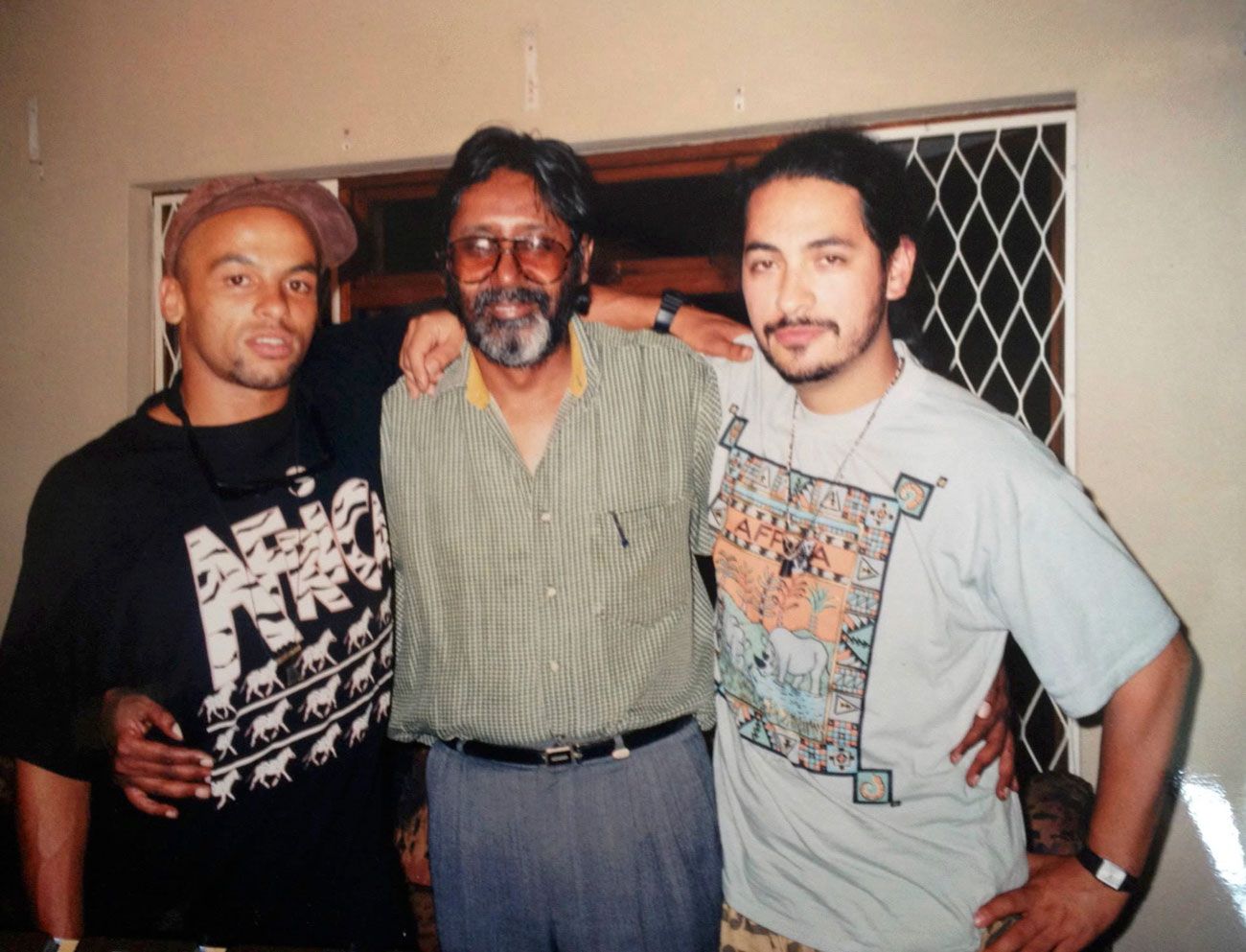
In this photo Ngoma team members Curtis Watt and Francisco Carrasco are embraced by the legendary Strini Moodley, my close comrade and associate of Steve Biko during the Black Consciousness days. We were honoured to be invited by Strini’s home to sample his delicious curry and partake of his incisive wit and intellectual rigour. We spent many hours in discussion with him to explore radical and innovative concepts of using cultural education as a tool for empowering the youth as truly enlightened leaders of the envisioned democratic South Africa.
Meeting Nadia Kamies
I was recently introduced to the writer and activist from Cape Town by our mutual friend Jimi Matthews, filmmaker and photographer son of the legendary South African poet and activist James Matthews. Nadia was coming to London to relaunch her book and Jimi thought it would be great if she could meet me and benefit from my cultural networks in the UK.
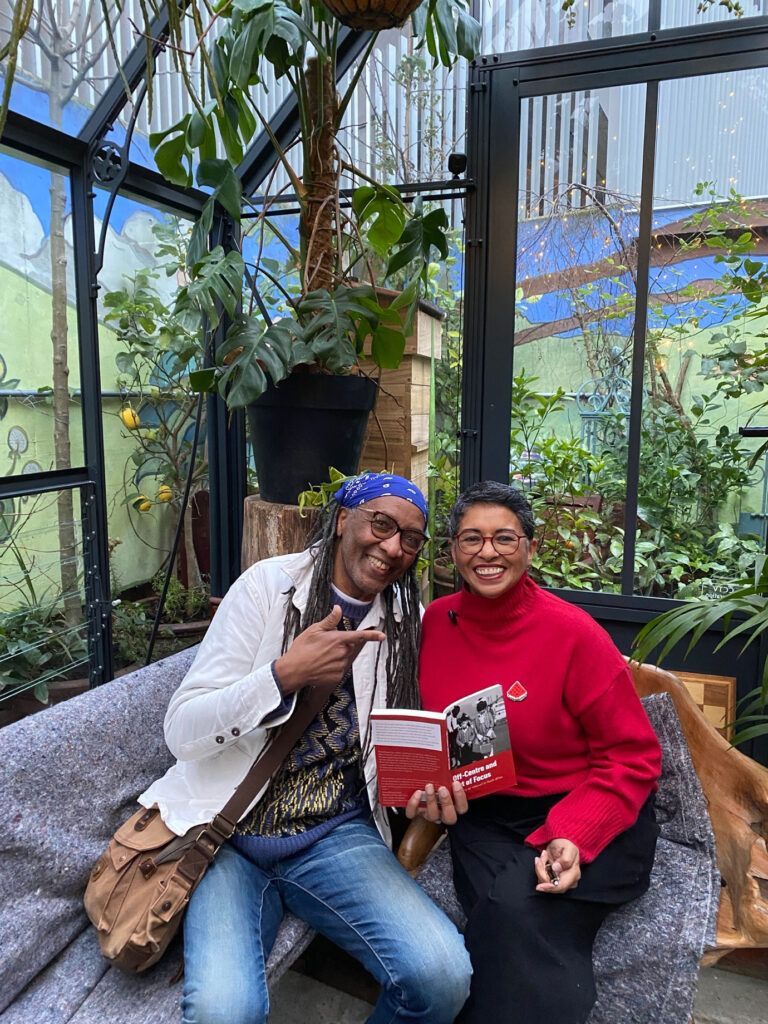
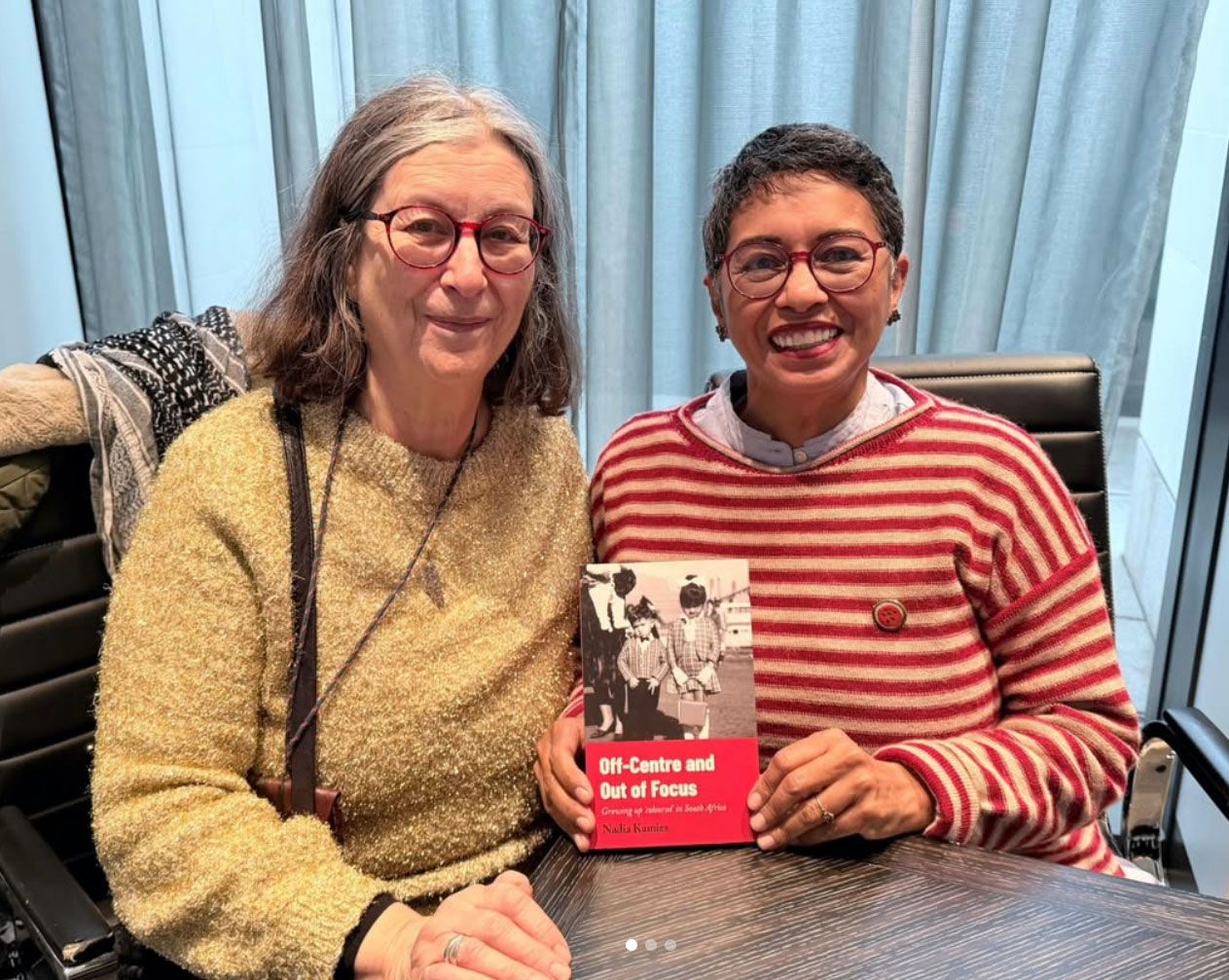
I introduced Nadia to my friend and creative colleague Debbie Golt, the radical London DJ, broadcaster, and activist, in the hope that she could interview her. In the interview, Debbie asks Nadia about post-apartheid South Africa, with special reference to the so-called coloured community. Nadia is unapologetically scathing about how much she feels her people were let down by the Truth and Reconciliation Committee, especially with regards to the lack of closure for many who lost loved ones to the brutality of the racist regime. Her son and daughter experienced racism during high school at one of the “better schools that were mainly white” – well into the new dispensation. She could see no signs of “progress”.
Progress is a slippery word on the twisted tongues of the oppressor. It diverts dramatically from the idea of identity, belonging, self-advancement in the lives of the oppressed.
In a recent keynote address I prepared for a wellness retreat in Cape Town led by my new friend and creative associate Nomzamo Vali, I wrote: “We are gathered here to tell the story of our personal journey through life. To share our personal experiences of spreading our wings towards becoming the most beautiful examples of ourselves. The first step in telling our story is to isolate our own voice from the multiple competing voices in the thicket of expressive tones that oscillate throughout the environment that constitutes our world. I used to have a so-called coloured friend from Cape Town who was in exile with me. He suffered from self-loathing and referred to his people as “die Duiwel se kinders” – the Devil’s children. He was a phenomenally gifted musician but could not embrace his inner beauty and use his art to express it.“
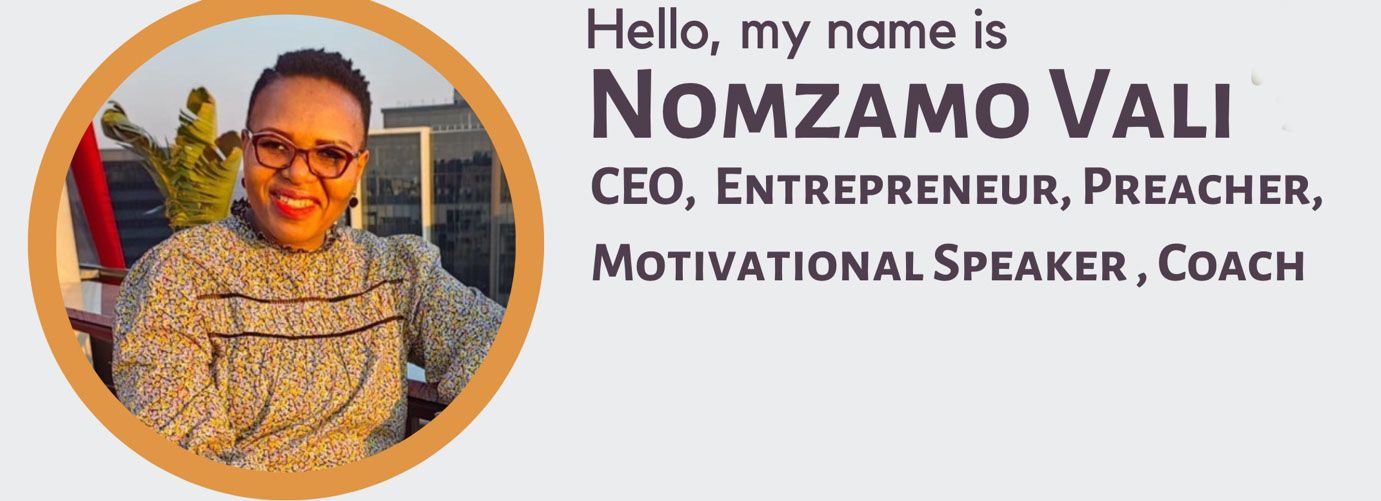
Ms Vali is a certified preacher with qualifications that include Epidemiology and Control of HIV/AIDS, TB & Malaria. She is also an entrepreneur, motivational speaker, and coach. Through her non-profit-organisation, Ncedo Comms, she organised a wellness retreat targeting disaffected young men in some of the most underprivileged communities in the Cape Flats. These young men are mainly of Xhosa and so-called coloured heritage.
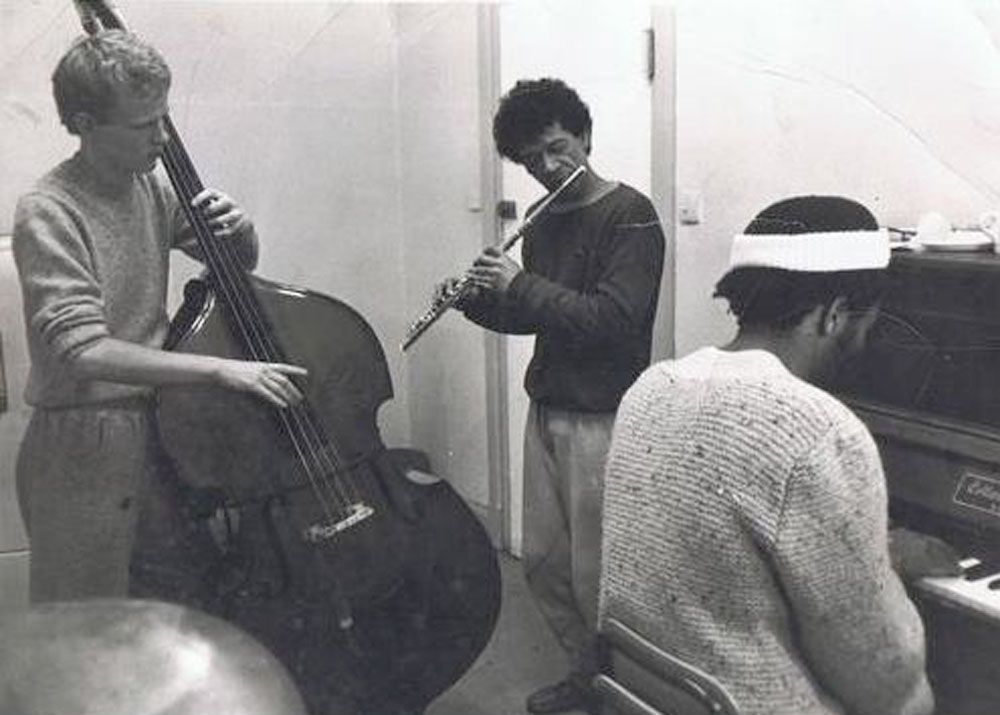
As part of my keynote address, I included a song that I composed jointly with the legendary multi-instrumentalist genius Bheki Mseleku. The song is titled Ilanga Libantubahle (The Sun Is Beautiful People), which was to be used as a grounding, bonding, and focusing chant by the gathered participants – with Vuyani Dyoli from Philippi township on marimba and UWC graduate Rodney van Staden, who teaches music at Athlone School for the Blind, on piano.
Ilanga Libantubahle/Postures Of African Beauty is a meditation on the abiding spirits of our African ancestral guardians. We conjure their presence in our midst through dreams of a timeless landscape of boundless dimensions. We immerse ourselves in the rippling rhythms of water to access the healing tones of their song through the flowing movement emanating from postures of beauty rooted in the ancient memory of peace, love, and the harmony of being.
The ritual of ‘Ilanga libantubahle’ is a traditional African ceremony of honouring the cycles of the sun. It evolved as a way of telling the time before the arrival of the Westernised wristwatch or clock. The ritual was originally practiced at the end of the day, when the sky was blood red, and the sun was a gigantic shimmering circle on the horizon. Our people would stop whatever they were doing and look towards the setting sun; and precisely at that magical moment of exquisite vibrational beauty, when it was about to disappear into the waiting slot of eternal harmony, each person would hold their personal posture of beauty. These postures were often associated with the type of activity the person was engaged in. This was their way of saluting the sun and thanking it for giving them yet another beautiful day. It would also be a gesture of hope that it would bring them blessings of good fortune the next day.
Our people have forgotten that we were once beautiful. They are not aware that we are still beautiful because we have allowed our natural beauty to be buried beneath the endless layers of the filth of falsehood. We woke up one dismal morning, after the terrible nightmare, and failed to realise that we had lost our memory of the truth that once upon a time we were spoken to in song.
We were always the ones we’ve been waiting for, ever the ones born beautiful. We breathe beauty. We inhale beauty and exhale beauty. But today, young and old alike do not love themselves, because they are surrounded by the absence of beauty. Most of our surroundings are ugly in one way or another.
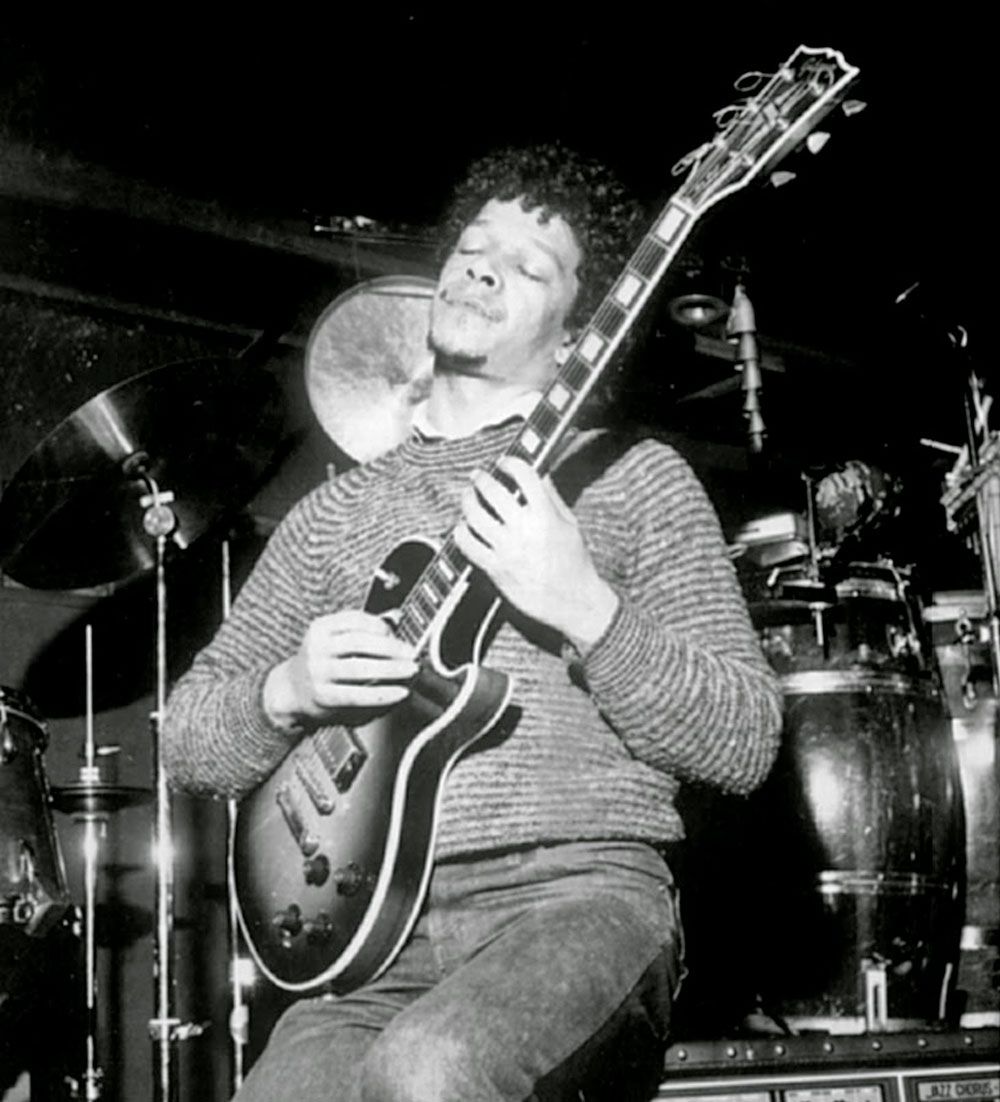
An artist is one who is spoken to by the Holy Spirit. An artist is a channel of the Divine who has to use their gifts to make a difference. An artist has this primary responsibility to bring humanity and our environment into a state of harmony and balance. An artist is a transformer.
Through this initiative, we hope to leave a legacy of dissolved walls of conceptual, cultural, and political division, and the expansion of horizons of unity, compassion, justice, forgiveness, and peace.
As the artist who drew the original Black Power clenched fist symbol in Steve Biko’s presence, I say loudly that, put simply, Black Power was the Power of Black People’s Self-Knowledge, Black People’s Agency. This is what Biko stood for! There is no greater power than the power of knowing yourself wholly. In a perfect society, no-one can know you better or more than yourself, because you are an expression of the embodiment of the Most Powerful or Highest Creative Force. Anyone who denies you this divine right has designs that are the extreme opposite of the blessings of life’s beneficial gifts.
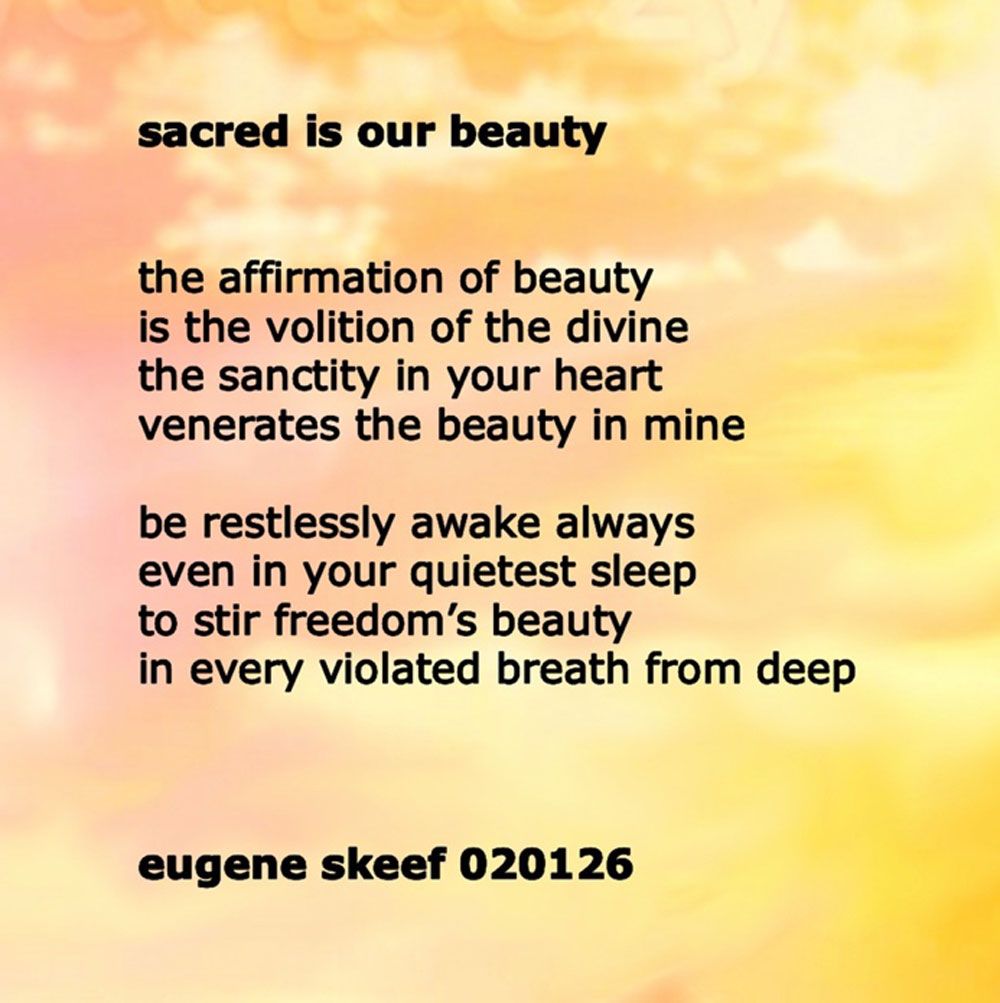
My father was a key influence as far as my resilience and fortitude. When I was still a little boy growing up in a violent township completely buried in the total absence of beauty, he once told me that life must be an act of beauty for it to be worth living. Love is the bud from which our beauty blossoms. I took my father’s philosophy further to mean that love is the most courageous act of life. The life of my colleague Steve Biko, the inspirational leader of the Black Consciousness Movement, was an embodiment of this ethos. His fearless love of humanity was an inspiration to the rest of us.
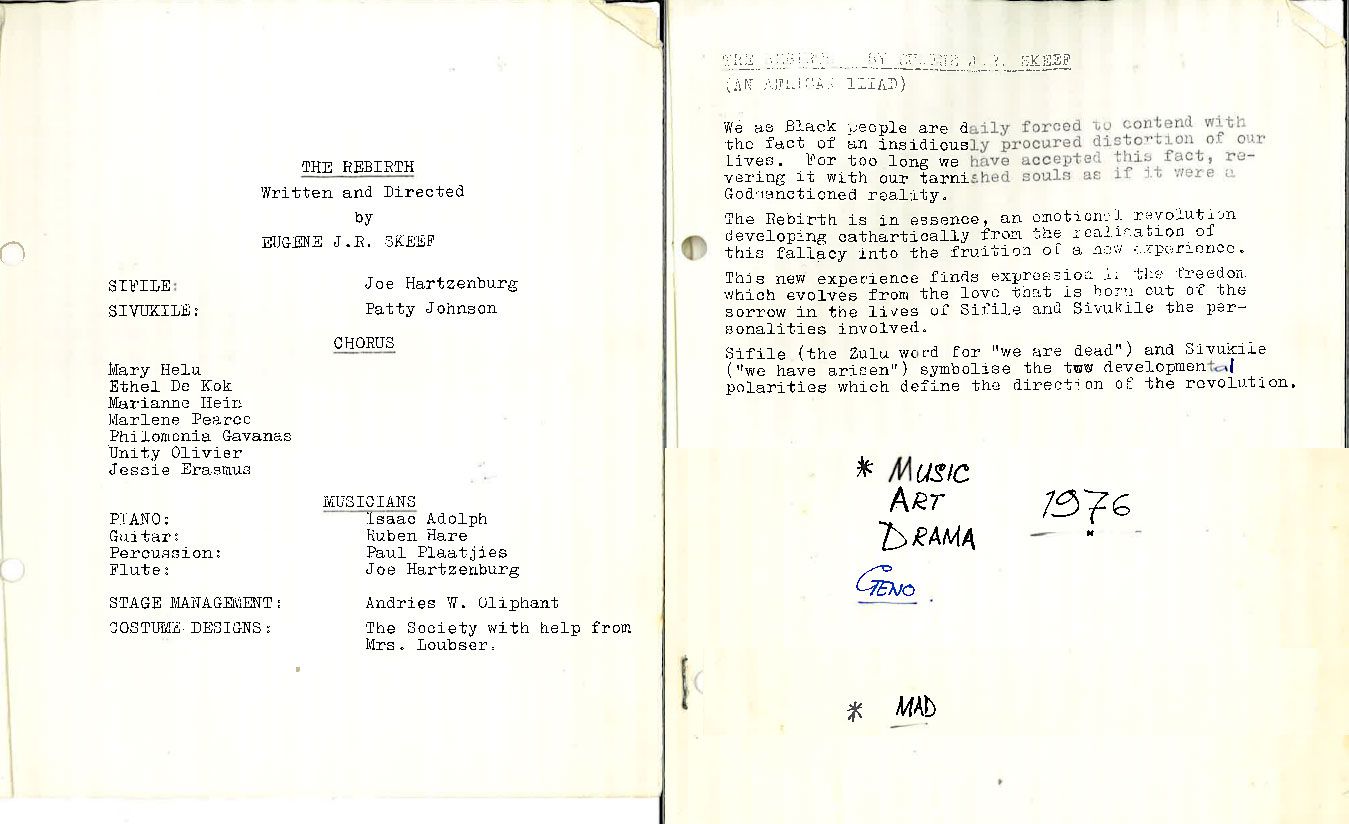
As a student at the University of the Western Cape (UWC), which has the reputation of being one of the most radical tertiary institutions in South Africa, I wrote a dance drama called The Rebirth to address this important issue of the integrative term Black in the lexicon of the BCM. I used my membership of the Drama Society to stage the performance with a handful of my colleagues. This mixed media production explored themes of identity and belonging and celebrated the inherent beauty of our ancestral cultural traditions, which we would embrace as a principal motivation in our struggle for freedom.
We were fearless! Paul Plaatjies, AKA Larro, landed on Robben Island. Some of us went into exile. Joe Hartzenburg ended up in New Zealand. Hamilton Marks who was at UWC with us remembers this about us: Thank you very much Eugene for turning on the light, in my head…Joe Hartzenburg, room mate to Owen Stuurman. Joe made it known, that if any Special Branch cop would attempt to take him into custody, that cop would do so at his/her own peril. He would break every bone in that cop’s body. Our days of defiance and machismo…sadly lacking today.
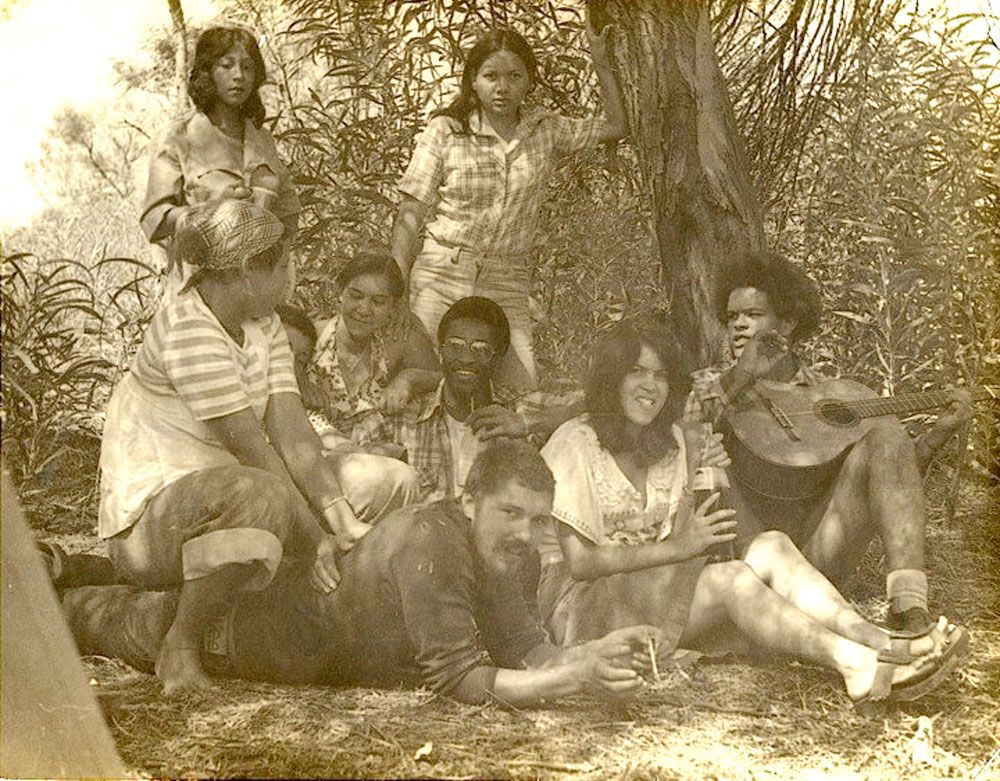
The Drama Society represented the cutting edge of the student movement, with members including Unity Olivier, Andries Oliphant, Joe Hartzenburg, Paul Plaatjies, Ziggy Adolph, Jessie Burgess, and Garnett Robert. Our group of campaigners included the legendary Ruben Hare, who would go on to become Deputy President of the South African Students’ Organisation (SASO), and the formidable activist Jean Swanson, who brought in the might of her family’s business chain to support our activism with much needed provisions for our sustenance.
This was a very important chapter in the campaign to situate the so-called coloured community unambiguously within the visionary Black Consciousness Movement gathering. This is the message that Hartzenburg and I took to Soweto when we drove 1,400 km to further inspire the student uprising in 1976.
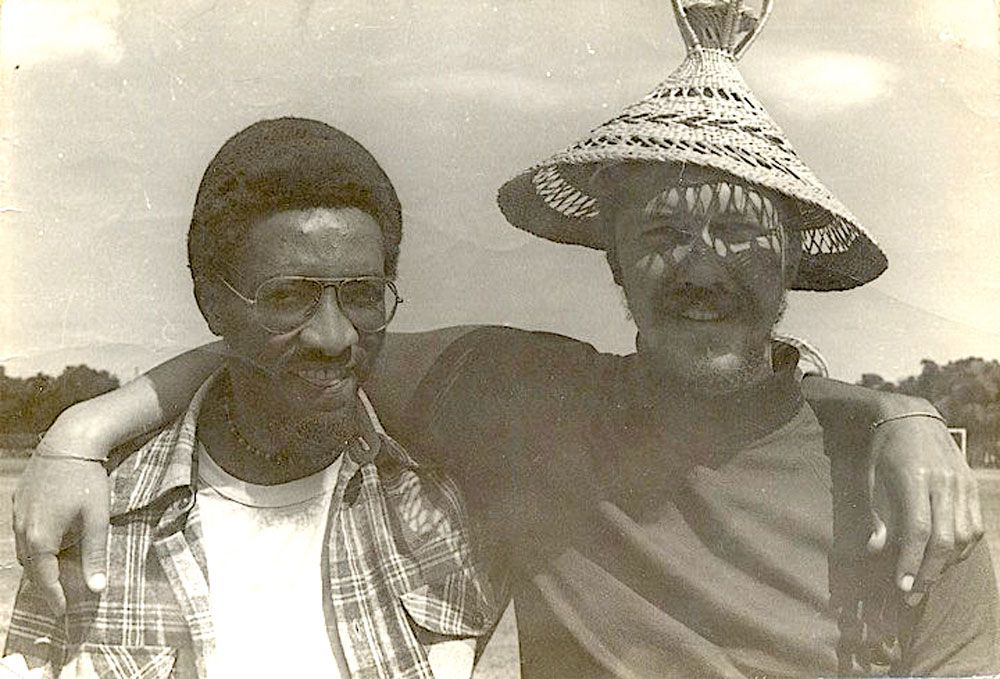
Cultural, political, and scientific progress are largely driven by cumulative knowledge and environmental factors, making breakthroughs inevitable when the time is right. The Soweto Uprising is a classic affirmation of this truth.
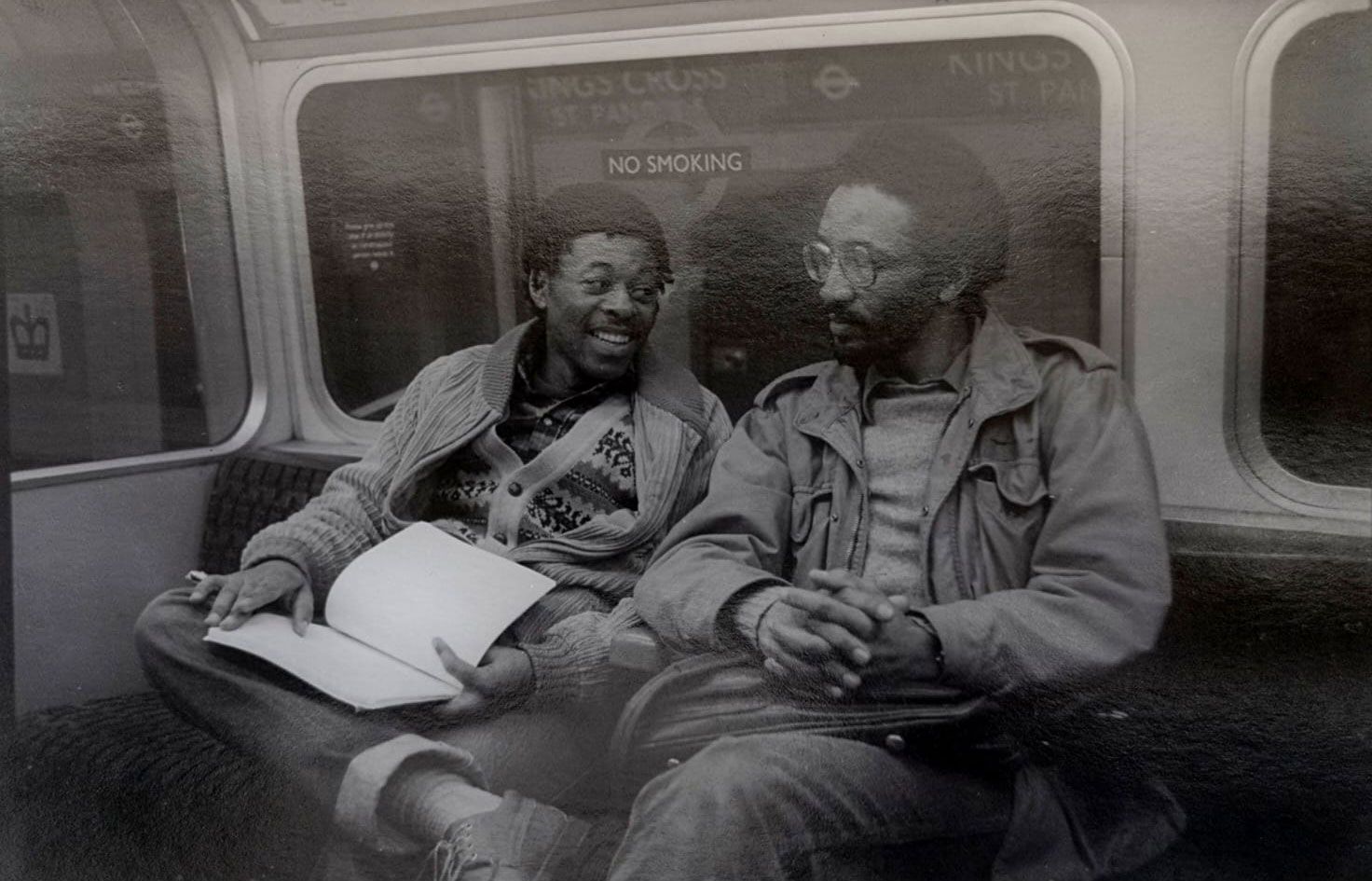
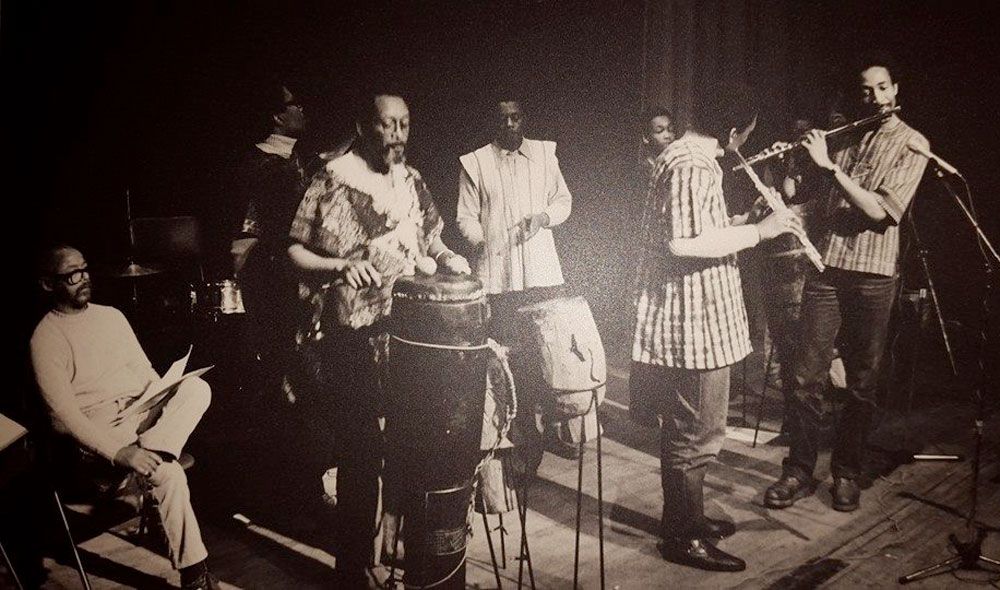
Our Black Consciousness activism did not take place in a vacuum. Its culmination in the momentous upsurge of the 16th of June 1976 event was the result of incremental additions to existing knowledge. The struggle for freedom from the claws of apartheid reached a certain level of maturity that galvanised the ripe knowledge base into a cadence of a magnified consciousness among the youth.
In the entanglement of roots of memory thrive intertwined routes of the origins of our struggles towards horizons of ever-beckoning freedom. It is along these spiritual meridians that we navigate and integrate our collaborative visions of a more humane life for all.
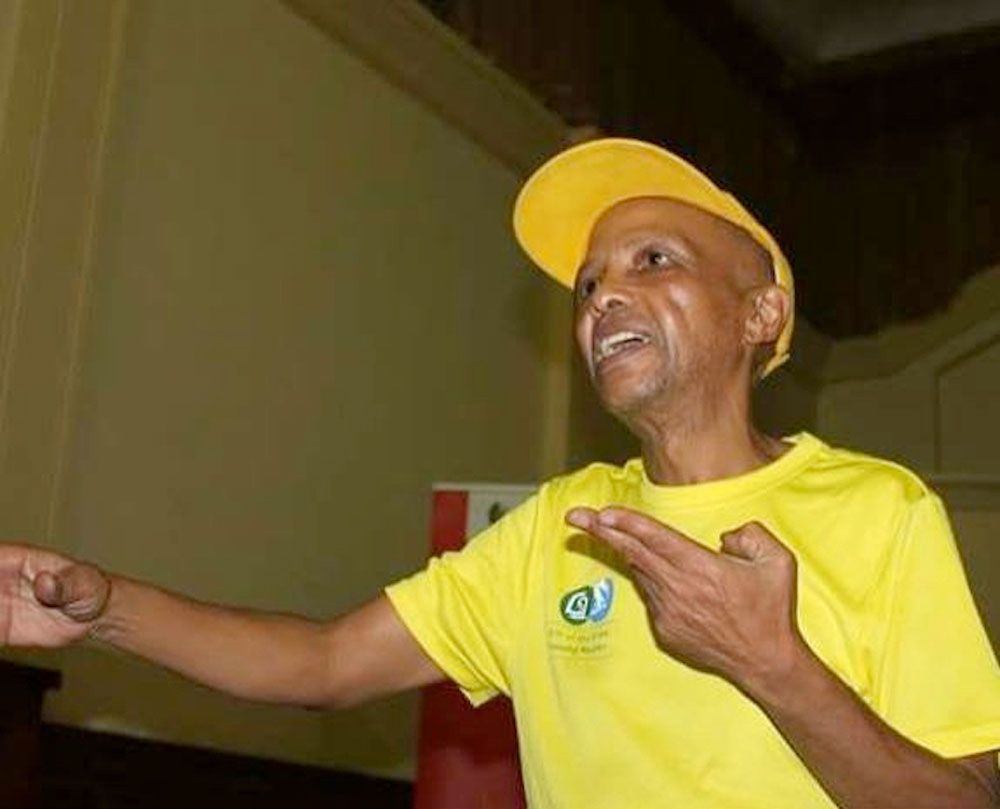
The struggle heritage vanguard was devastated by the sad news of the death of Rubin Hare in October 2019 after a prolonged battle with health and political issues related to his disbarment as an advocate. I had been trying to help him earn some much-needed cash at the most desperate moment of his life, when he had lost practically everything to his name, except his sharpness of mind. The most promising route, beyond the bits of money that I gave him and that I arranged for one of my brothers in South Africa to deliver to him, came via an email I received from Sarah Lazare in the US.
A telling comment by Ebrahim Harvey, the renowned political analyst and UWC alumnus with Rubin and me: “Post-apartheid SA was not kind to Ruben, as it has not been kind to so many others who sacrificed so much for the liberation of this country.”
Rubin’s last words to me were in a Facebook message: “Your attitude towards me and my writing is perhaps the best thing that has happened to me in the last 30 years. I have ALWAYS and inter alia wanted to be…an author. This is where the aberrant symptomics of oppression – rather the rejection thereof – comes into play.
We never AFFIRMED each other in the (ongoing) Struggle as you are doing to me now. Please do NOT later blame ME for the results including the now first-time insight that THAT is where YOUR strength, power and influence lies: you make people feel GREAT about themselves you bugger. Wow…”
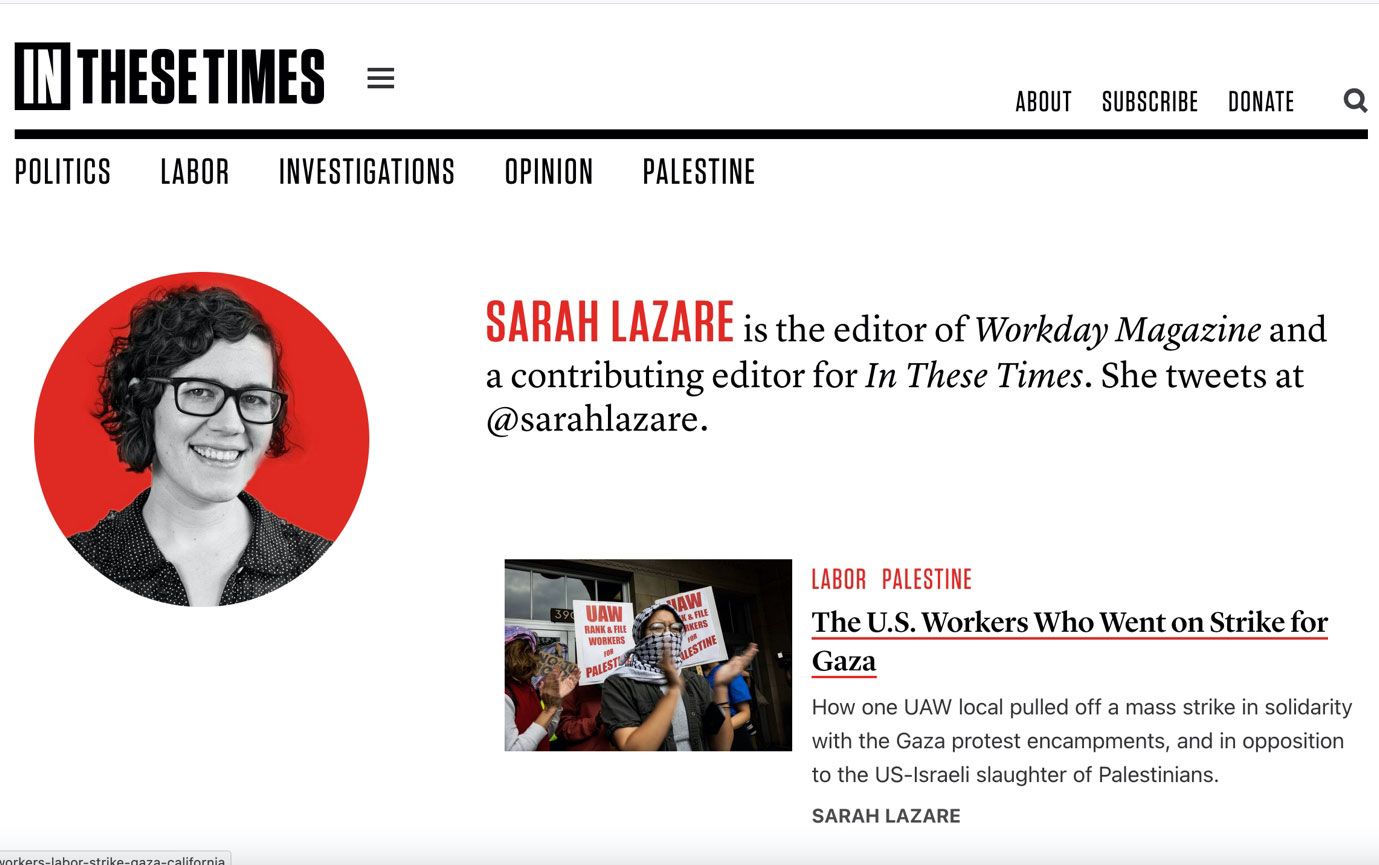
Our mutual friend from New York, Jessica Violetta, artist/cultural curator/producer with a special connection to South Africa, recommended me to Sarah about help she needed for an article she was working on. She told me…
I am a reporter for the left-leaning U.S. publication In These Times. I’m working on an article examining the strategy of ungovernability as part of the anti-apartheid resistance. Here in the United States, movements opposing Trump often proclaim that we need to make ourselves ungovernable. But many do not understand the historical reference or lessons. I’m hoping to talk to elders and people with connection to the anti-apartheid movement to get this perspective.
Here are my main questions for you. They are very open-ended, so please answer however you like. And, of course, if you are not well, feel free to not answer at all, or just answer one of these.
1. What was the strategy of ungovernability during South Africa’s
anti-apartheid movement?
2. How did this strategy play out, on the ground? What made it effective?
3. What lessons do you think U.S. social movements can learn from the
strategy of ungovernability?
4. What is the continued relevance of this strategy for modern-day South Africa?
Thanks and solidarity,
Sarah Lazare
The fee that Sarah offered me was lucrative. I immediately recommended Rubin as the ideal person to provide the answers to her pertinent questions. Sadly, our brother took ill and passed away before he could complete the task.
On 17 November 2019, the politically radical BCM poet, activist, and dramatist Mphutlane Wa Bofelo felt compelled to write this on Facebook – after the devastating news of the untimely death of Rubin Hare:
Eugene Skeef wrote several emails to us Black Consciousness activists in the country about the plight of Rubin Hare. None of us cared to lift a finger or open a mouth to help. Now that he has passed on we suddenly come out of hibernation to write long pieces on him and even organise a memorial service. The Muslims suddenly say he is their brother, Rashid Hare! The list of BC people who died lonely and treated like lepers by their comrades is too long. It will take years to read the names. It is clear that many of us are still going to die alone and shunned by our comrades; only to be “rehabilitated” after death and declared heroes. Deena Padayachee will remember how the efforts to get the government and different political organisations to do something about the plight of Mafika Gwala fell on deaf ears. After he passed, he was on the lips of everyone; MEMORIAL LECTURES at universities and all.
Mphutlane wa Bofelo
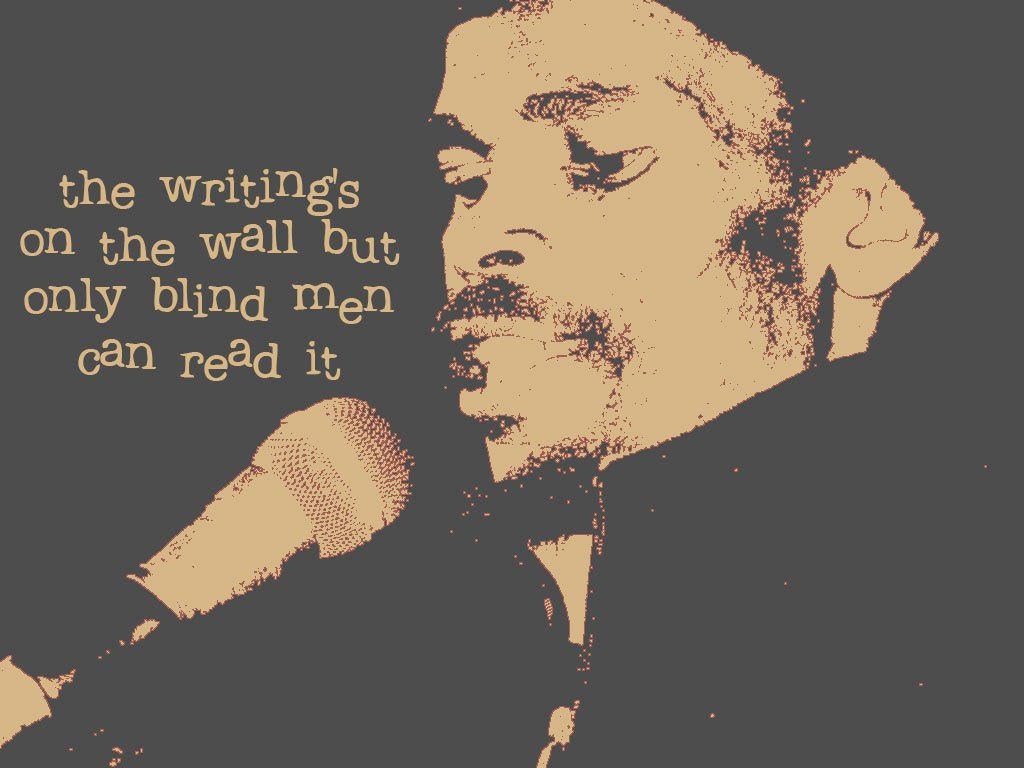
The station has changed, but the mission continues
These are the words (above) of my comrade Thabo Lehlongwa, AKA Common Man/Motho Fela, the blisteringly gifted and committed poet of the people from Soweto who coined the term Blacktualism, which refers to when we actualise Black Love. He says, “You can’t speak about consciousness when you cannot practice the love”. He is affirming his recognition of this practice in the artistry and activism of Bheki Mseleku and me. Anyway, the words at the top of this paragraph are Thabo’s WhatsApp voice note to me on the 22nd of February 2026. He says: “Rhythm-And-Word is what connects us – RAW; so, let’s keep it raw”. His message was in reference to the voice of the world-renowned sculptor, poet, freedom fighter, and academic Professor Pitika Ntuli narrating his tribute to the recently passed musician Estelle Kokot. His poem was directed at me as a gesture of assuagement of my pain at losing my creative collaborator. Thabo’s words are a summary of Pitika’s poetically assertive reminder to me that the project of inspiring the young people whose lives Estelle and I planned to transform through our art does not end with her passing. The struggle continues…
Thabo expresses gratitude for the experienced leadership of activists of the ilk and age of Pitika, poet/painter/activist/linguist Lefifi Tladi, and me. He believes that the vast collective experience of those of us who were active in the 1970s Black Consciousness Movement is greatly needed to fuel the resurgence of consciousness among today’s youth. He speaks from a position of knowledge as one who is actively engaged in the mission of moulding this consciousness into practical action in some of the most disempowered communities.
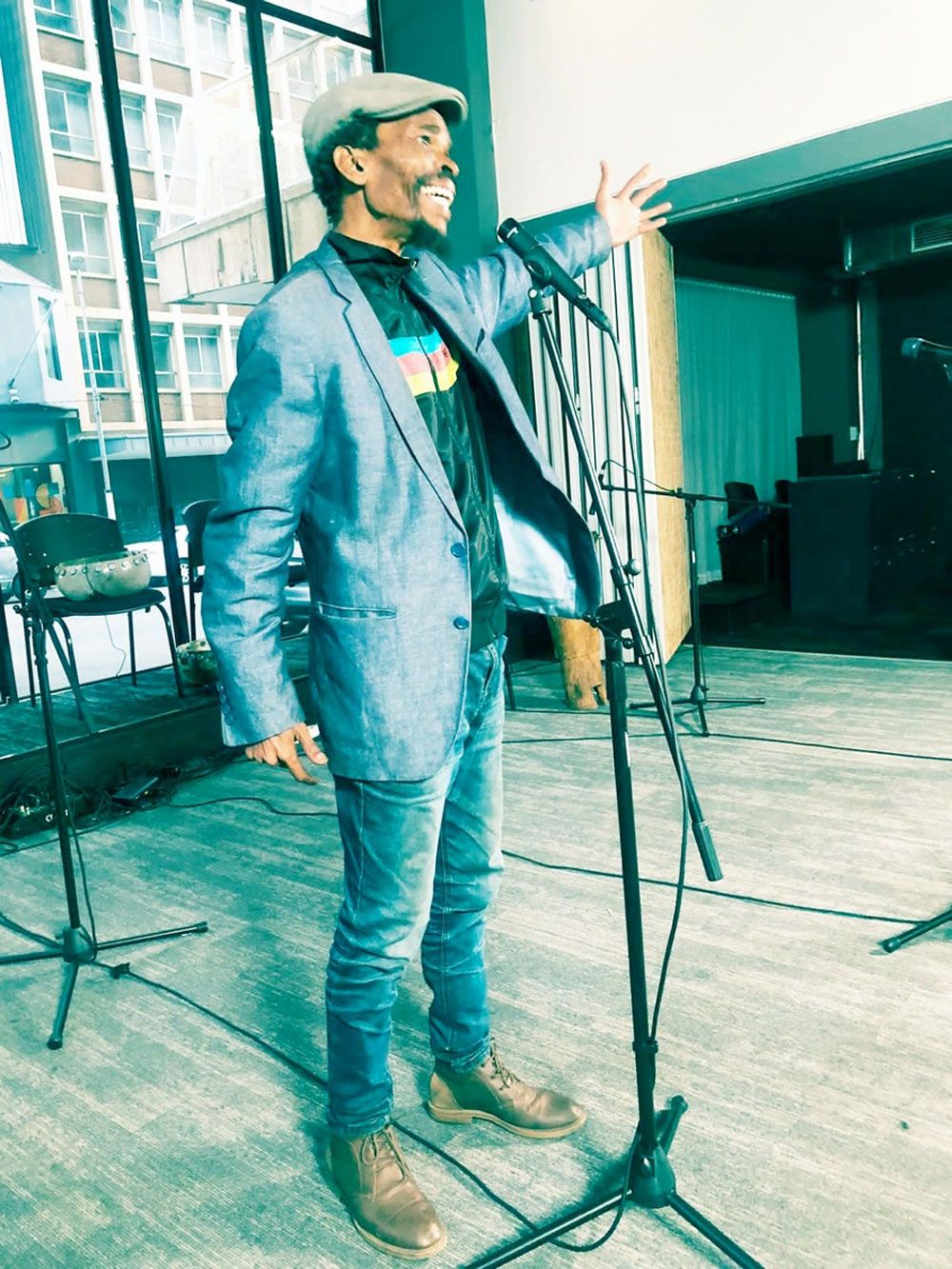
Thabo is at the forefront of the revival of LOKSHIN CONNEXION, the movement behind Black Student Diaries, which foregrounds the pool of decolonial campaigns that include #RhodesMustFall, #BlackLivesMatter, and #FeesMustFall. Together with others in our shared ambit, including key members of the 16 June 1976 Soweto Uprising, we are reigniting this consciousness among contemporary youth. We are gathering the lost wax of our melted timelines and remoulding candles in the dark to reignite the African humanism of Steve Biko, Eskia Mphahele, Mazisi Kunene, Bloke Modisane, Bessie Head, Nadine Gordimer, Miriam Tlali, Chabani Manganyi, Mafika Gwala, and Lefifi Tladi.
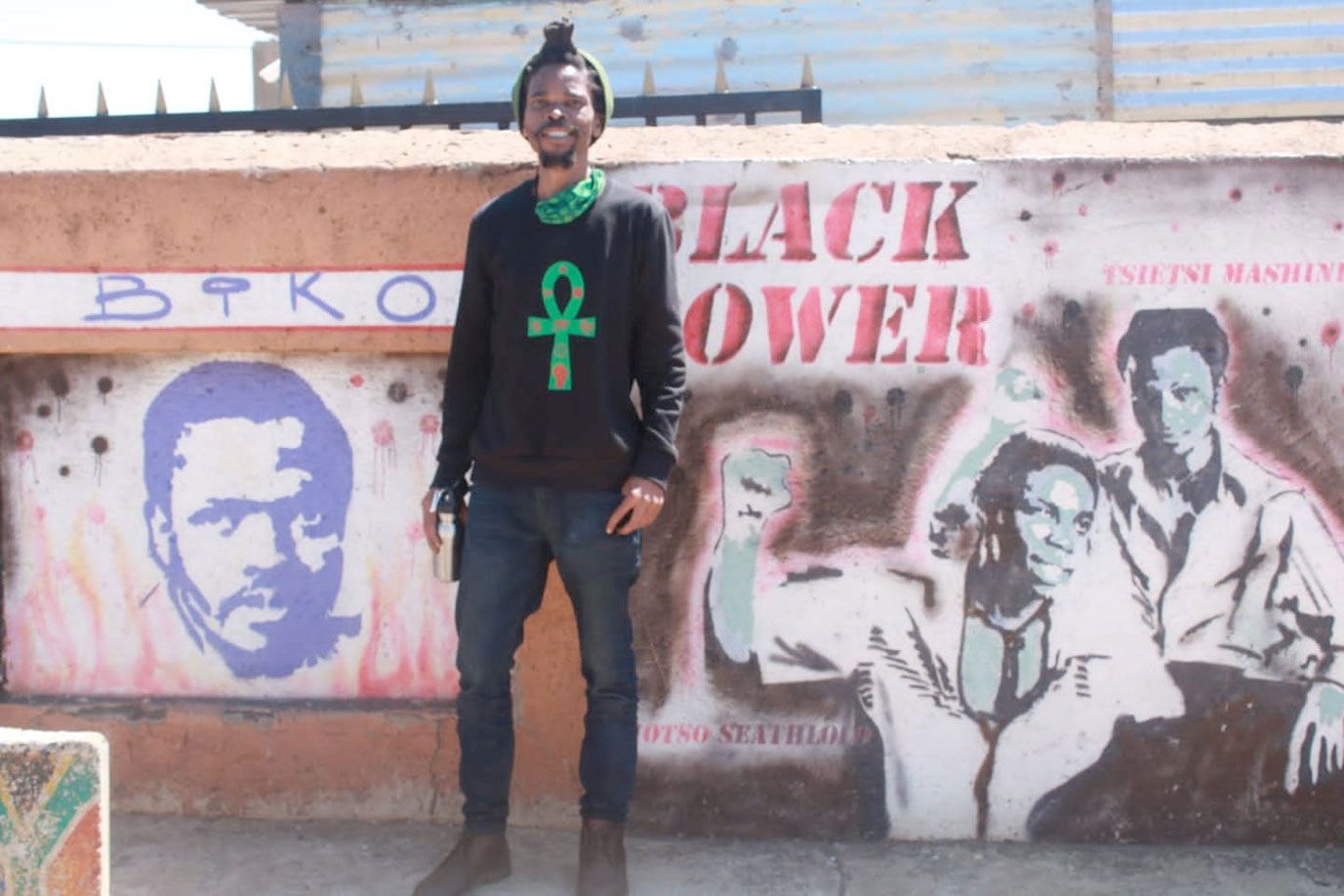
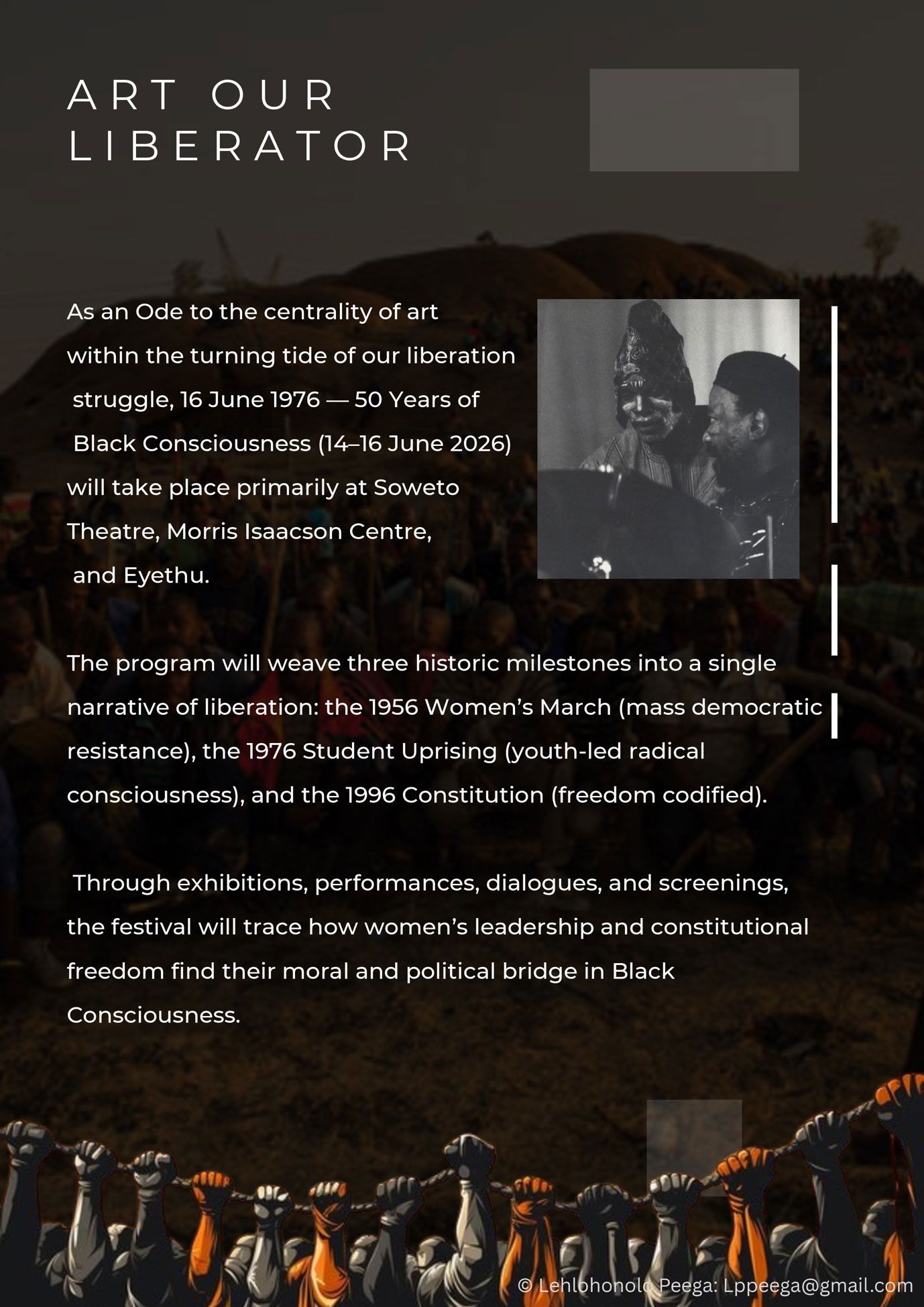
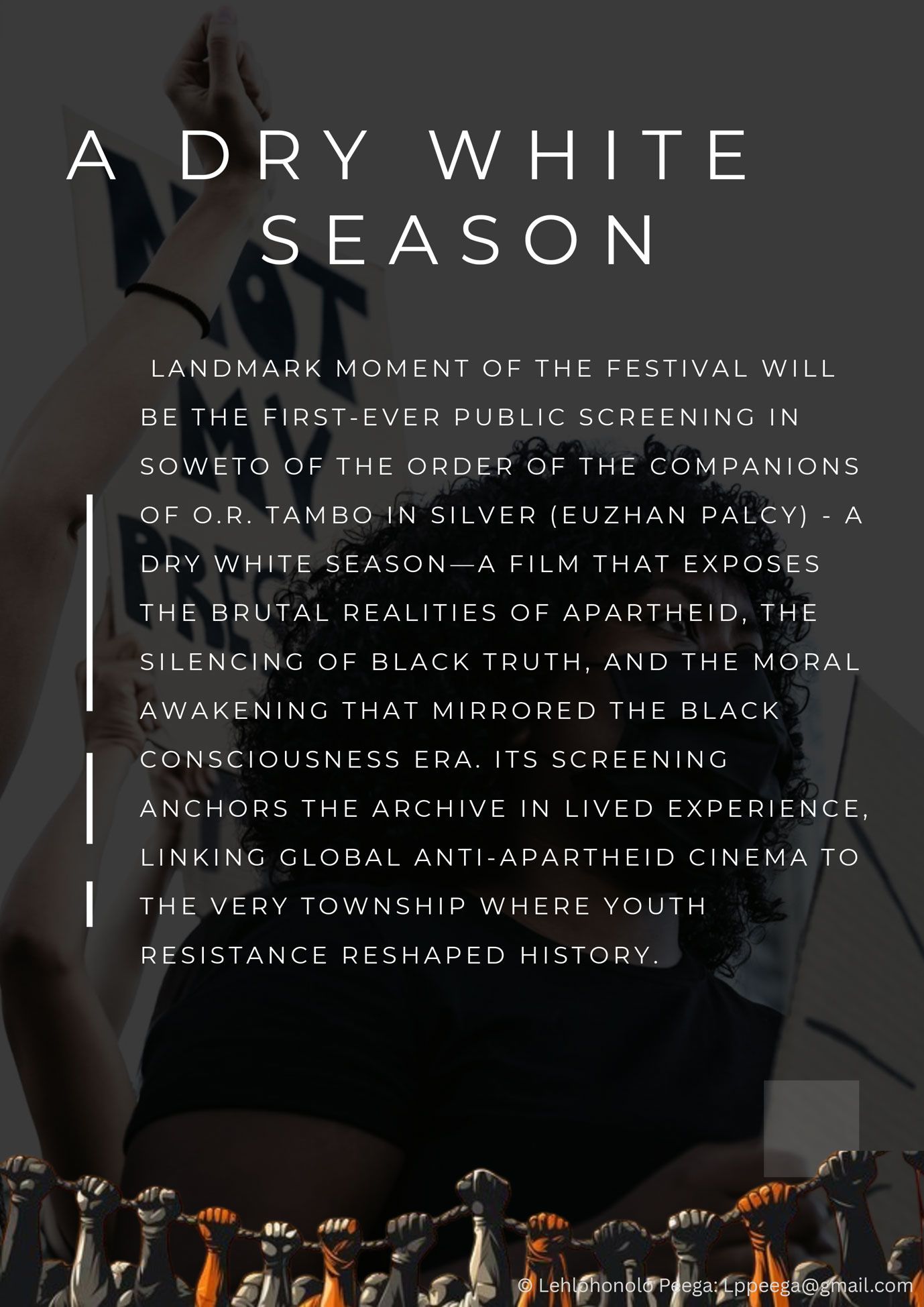
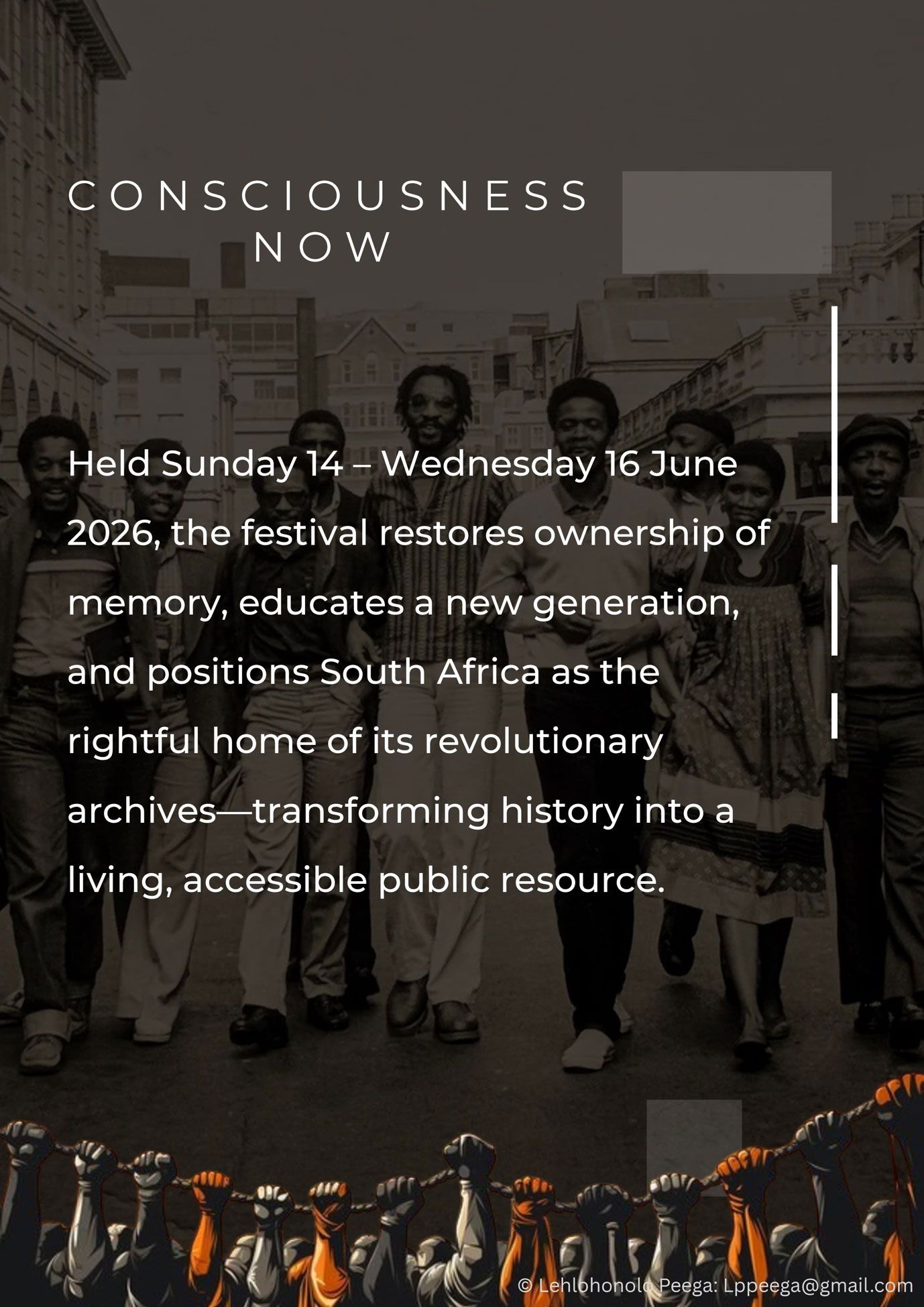
Thabo was further enthused when he discovered that I was being positioned as a major feature of events marking the 50th anniversary of the Soweto Uprising – with my association with the Biko-led Black Consciousness Movement being a central pillar in the feature. My involvement in this historic venture is the initiative of one of my mentees in Soweto, the young visionary composer, cultural activist, and creative producer Lehlohonolo Peega. Lehlohonolo is also the Festival Director for FESTAC AFRICA, the current incarnation of the original pan-African festival aimed at uniting Africans and celebrating culture. He inherited this role through the resuscitation of the ideals of the famous first World Festival of Black Arts (FESMAN) that was launched in 1966 in Dakar, Senegal by the renowned poet and first President Léopold Sédar Senghor, before being repeated as FESTAC (also known as the Second World Black and African Festival of Arts and Culture) in 1977 in Lagos, Nigeria.
The ethos of African independence and decolonisation that inspired these festivals is at the root of our celebration of the BCM as the principal engine that drives the commemoration of the Soweto Uprising. Together with these young visionaries, we are Ancient to the Future!
We transcend fixations of narrow tribal lineages epitomised during apartheid. Instead, we place a series of izivivane (sacred stone piles/pyramids to honour ancestral spirits of collective memory) along excavated routes of the golden meridian of the blood-soaked earth’s scarred memory. We journey along our brutalised rivers to the ocean to gather for the healing of our collective psyche. We will commission sculptures of the igneous remains of our wounded legacy at sacred nodes of memory for our people to visit on meditation retreats. The purpose of these would be to restore peace within and between the peoples. We will restore the central role of bow instruments in ceremonial gatherings in healing gardens.
We will hold onto our rediscovered identity as complete beings with a renewed tenacity of our revitalised consciousness. Having come this far in the arc of our grief, with the impetus of this renewal, we will not wallow in self-pity. We will raise our heads to the beckoning horizon and proceed forward. For the resurrection of the spirit of our brother Biko, who was affectionately known as Man of the People, is the keynote of the harmony of our chorus. As ruminants of the pastures of our own timeline, we must chew on the partially digested sacrifices regurgitated by our transposed activism. Now is the time for the young voices to once more lead the choir of consciousness.
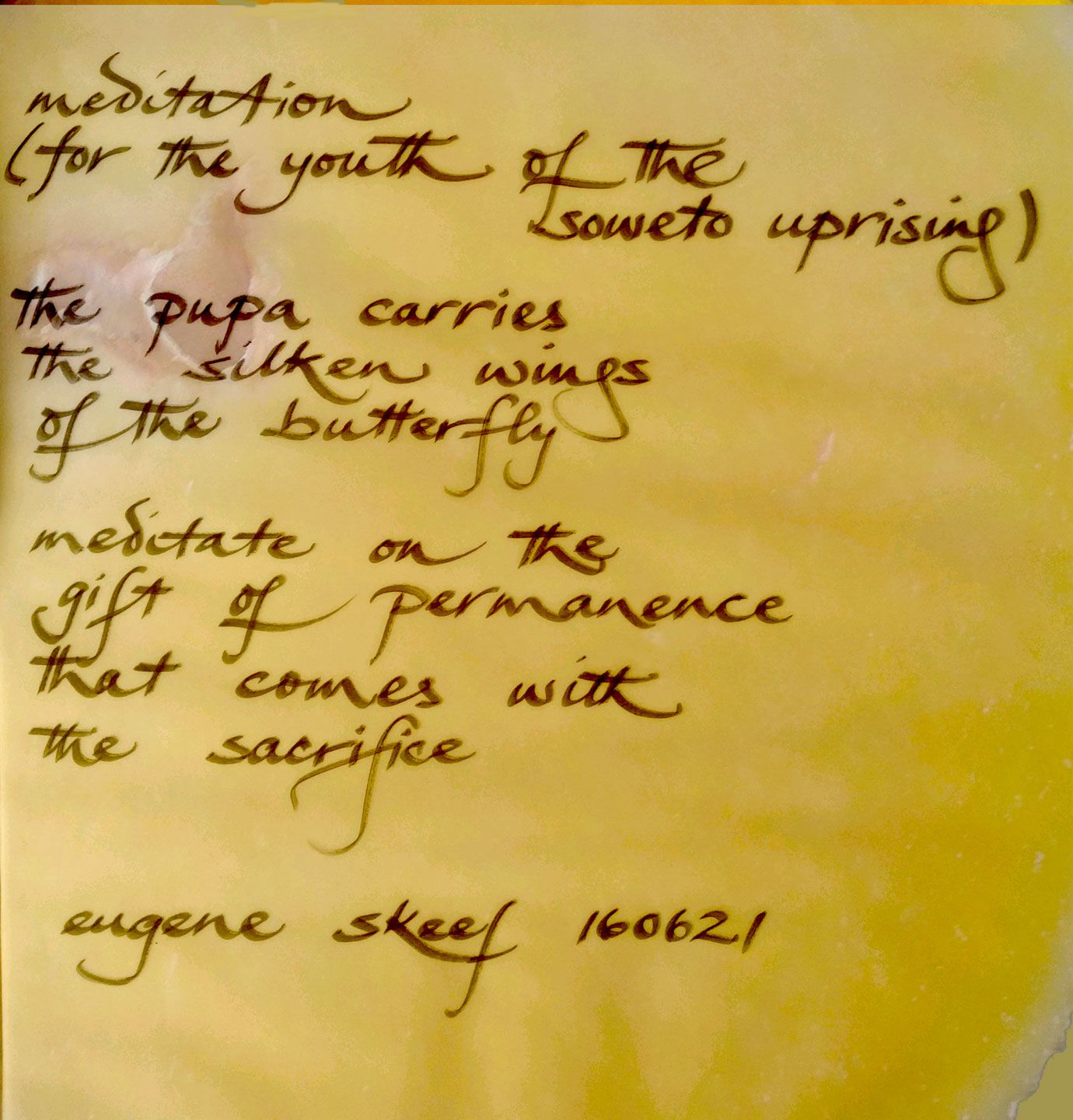
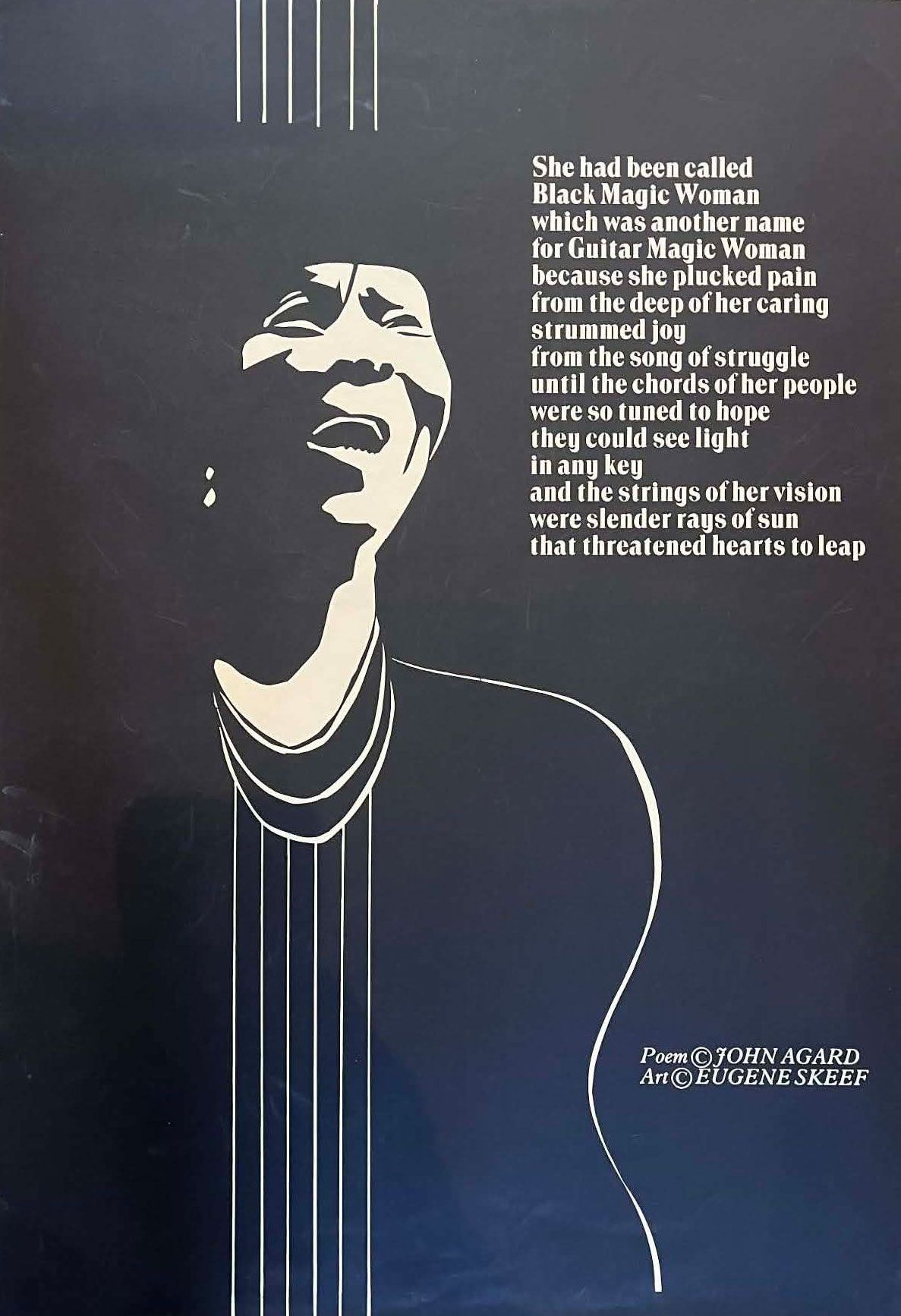
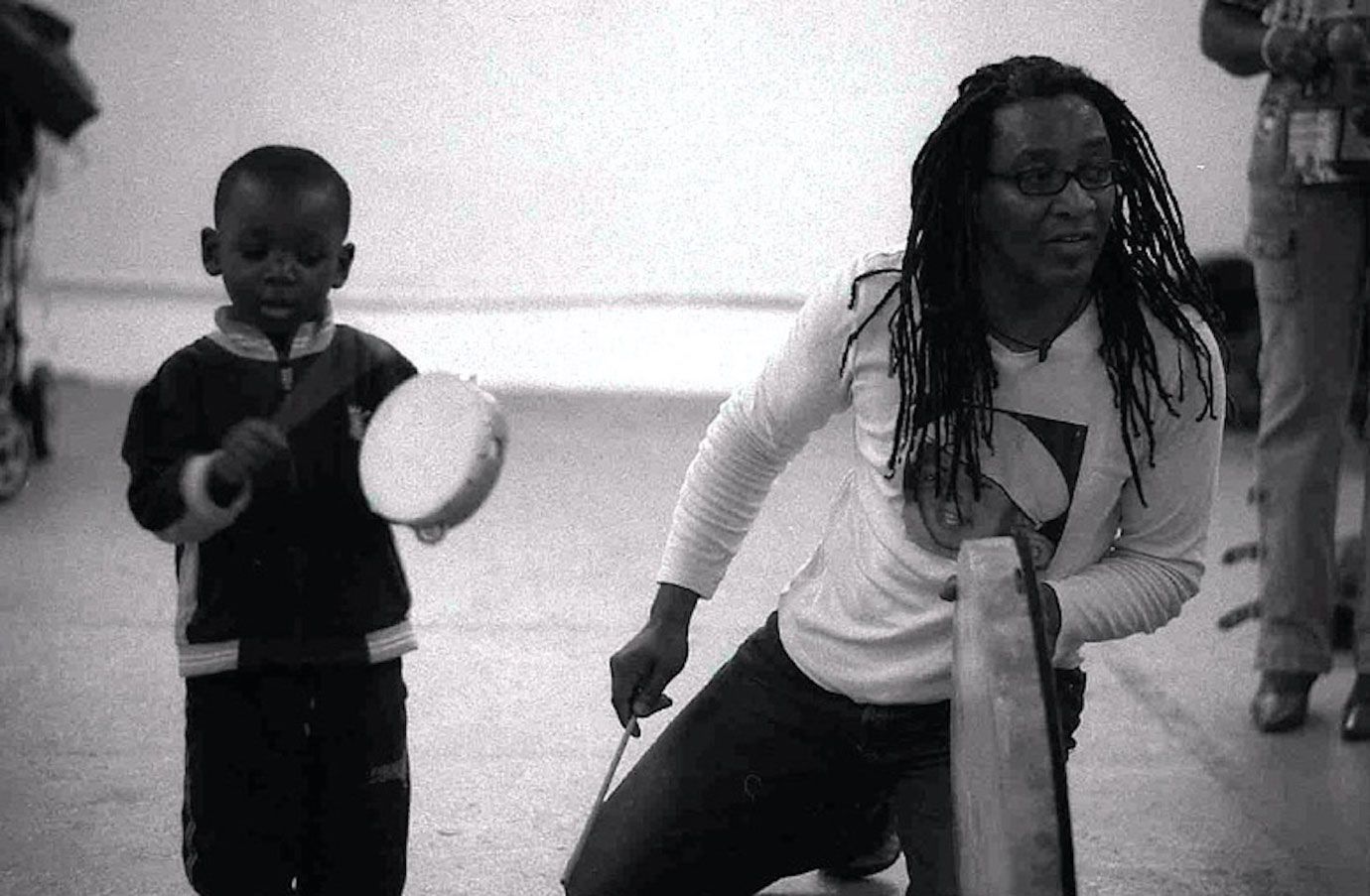
I conclude with my mentee Lehlohonolo Peega’s vision for 50 Years Of Black Consciousness:
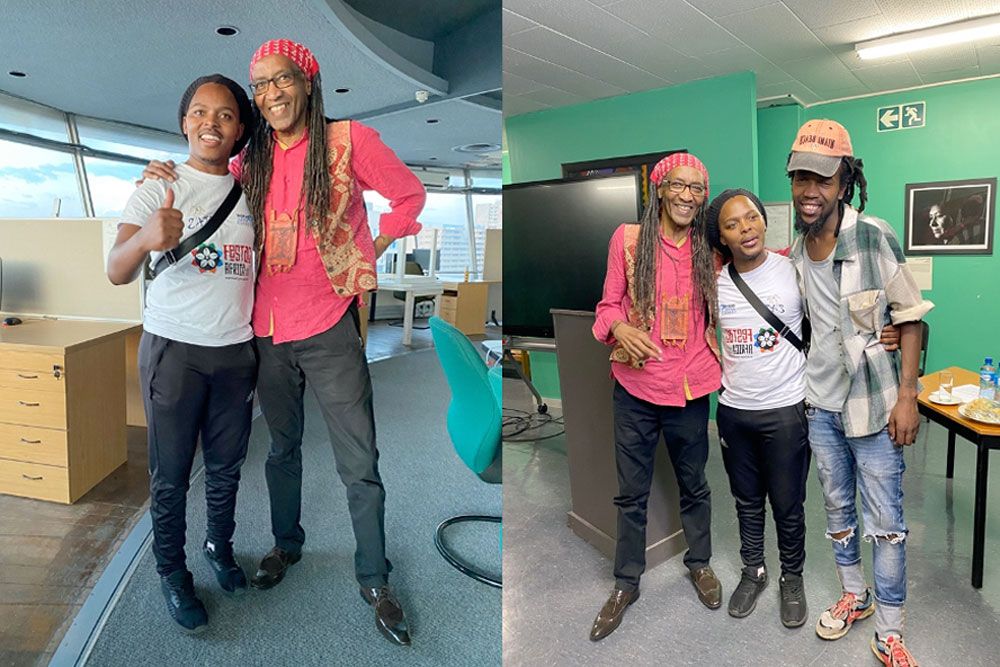
Lehlohonolo asked me to provide a few compositions that will be used as inspirational stimuli for the three chosen musicians/composers (Peega, Thandi Ntuli, and Msaki Mvana) to arrange for their performances as part of the historic event.
Here are the pieces:
Sumud Choir – Eugene Skeef; Marcina Arnold; Eric Appapoulay
Ilanga Libantubahle – Bheki Mseleku; Eugene Skeef
tell us your truth (in memory of the south african troops who lost their lives with ss mendi) – music and poem: Eugene Skeef
Mamafreeme – music and lyrics: Eugene Skeef
Namhlanje Siyajabula – Johnny Dyani; Abdullah Ibrahim
Yehlisan’ Umoya or Amagugu – Busi Mhlongo
Bam’bulal’ uBiko – music: Eugene Skeef; lyrics: Pinise Saul
Pinise at The BBC with the South African Gospel Choir (Ziyaduma)
Music – Sathima Bea Benjamin
| 1. | ↑ | Within BCM circles, the apartheid state apparatus was colloquially referred to as “the system”. |
| 2. | ↑ | Gideon Nieuwoudt was a notorious apartheid-era South African security police officer heavily involved in the 1977 torture and killing of Steve Biko. |
| 3. | ↑ | The newspaper that Bokwe worked for. |