VUYISILE MSILA
People’s English in the Poetry of Mzi Mahola and Vonani Bila
Abstract
Black poets and various wordsmiths in South Africa played a critical role in liberating the country. Several of these artists wrote in indigenous languages, but during the 1960s and 1970s some protest poets expressed their opposition to oppression in English. These artists also played a pivotal role in ensuring that the outside world became aware of apartheid suppression. Other critics have, however, questioned the role of the English language for the masses that surrounded these artists. It is also important to understand how these artists perceived their role in their society as English poets. The article focuses on two South African poets, Mzi Mahola and Vonani Bila, whose recent poetry examines the current struggles, joys, and happenings in their communities. The article focuses on how these two poets use English to express their experiences. Furthermore, the themes explored in the article reveal the commonalities that may exist among “black English poets” in South Africa. More than three decades after the demise of apartheid some themes have pervaded their writings as new struggles have emerged. Furthermore, People’s English continues to be a vital tool in expressing black and human emotions in post-apartheid South Africa.
Introduction
Chinweizu, Onwuchekwa, and Ihechukwu (1985) write about the need to decolonise African literature. In South Africa, the growth of black voices in the form of the “Black Consciousness era” poets and later Soweto poets demonstrated that English can be appropriated by African creative writers to reveal the sacred and mystic world, African joys, and black impatience. Poetry is usually the most intimate and emotional art that needs a level of spontaneity, yet, in an attempt to speak to their specific audiences, black poets have been able to use a second or third language to express their fears and their wants.
In the 1979 poem, Africa My Beginning, Ingoapele Madingoane (1979) speaks to a dispossessed people. It is a long and moving poem the spirit of which spoke to the people. Alfred Qabula was a worker poet, and in 1986 he produced a poem that spoke to the workers, “Black Mamba Rising: South African Worker Poets in Struggle” (Qabula, Hlatshwayo, and Malange 1986) in which he mysteriously raises the mamba to display the power of the workers. Qabula, one of the foremost worker poets, spoke to workers in English using indigenous language phrases.
Many black poets in the 1970s and 1980s were able to “indigenise” English as they expressed their verses of protest. Many of these poets used the English idiom to speak to the oppressed and politically wounded. They addressed the pain and the condition of the exploited. English became a conduit of the struggle and resistance. These artists were among the first to “decolonise” the English language because they appropriated it to express their condition. One cannot miss the “black voice” behind the lofty diction and rhythmic verses in many works.
In the 1960s and 1970s, several protest “black English writers” in South Africa were repeatedly banned by the apartheid government. Paradoxically, at the height of apartheid, the English language became the relevant medium as a voice that communicated to the world South Africa’s plight. One can even say that the decolonised use of English described above played a decolonising role in society. André Brink[1]Gordimer, Mphahlele, and Brink 1979 articulated the implications of the bannings when one is silenced in the language in which one writes. It meant that writers wasted time and energy thinking about the censorship of their work instead of planning their next creative outputs. The careful examination of their books in English provided these writers with the potential to tell apartheid’s story to the world, a story that Gordimer[2]Gordimer, Mphahlele, and Brink 1979, 2 referred to as “most reprehensible and diabolical.” But black literature in English suffered from all corners during apartheid South Africa, from government and institutions of higher learning alike. Mphahlele (1979) bewails that African writers in English have struggled to earn full recognition as serious writers because their works are not supposed to be “classics.” Mphahlele[3]Gordimer, Mphahlele, and Brink 1979, 6–7 opines:
“Are they really good English?” people ask. “Is it worthwhile reading such literature?” They feel unsafe and they feel you are selling them short if you try to push the idea that they should read African literature. I’m very distressed by it and it seems it’s going to take a long time. … Look at Wits itself, a big university like that. … but the English department is as stuffy as you could ever imagine in its view of what literature is. … They want to try to push African literature aside to another Institute so that the Department won’t have to deal with this.
Yet society cannot deny black English writers as part of the English tradition, especially at a time when intellectuals such as Mazrui (1986) talk of “counter penetration” which refers to the appropriation of English for black struggles.
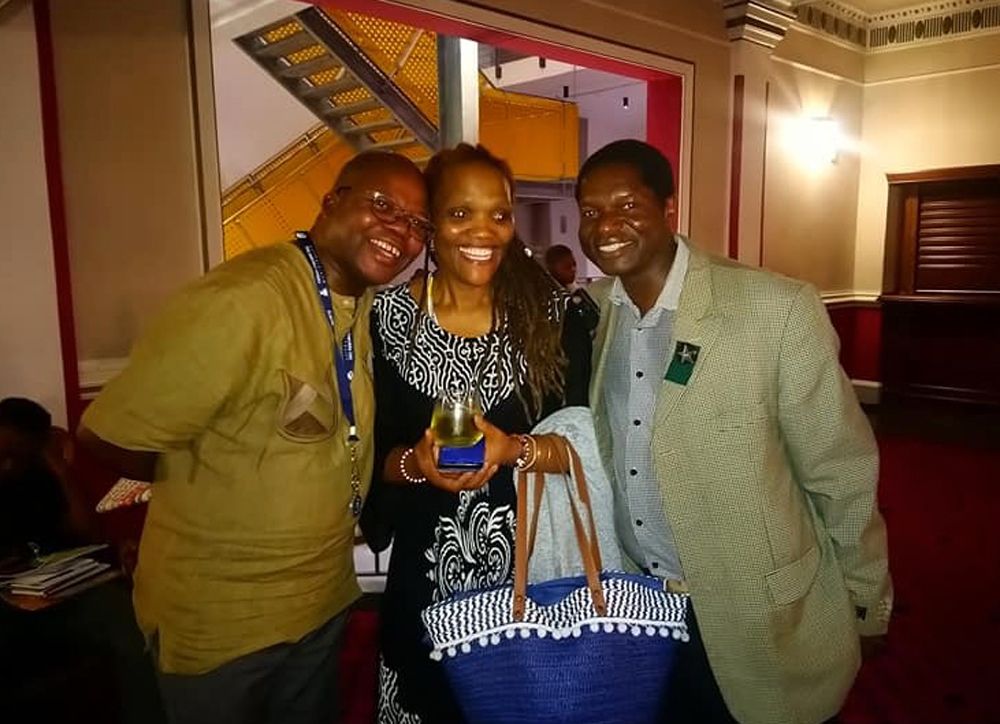
This article focuses on the poetry of two black South African poets, Mzi Mahola and Vonani Bila. Mahola was a Thomas Pringle Award winner for poetry in 2001. He hails from the Eastern Cape. His poetry reflects the dilemmas and exertions of a country that is slowly approaching the crossroads from the moribund terrain of timid freedom to the territory of trying to revive a social consciousness. Vonani Bila is the founder of the Timbila Poetry Project and comes from Elim in Limpopo Province. His poetry reflects the lives of black people and he is not fearful to confront the unfairness that hinders the success of black people.
The works of these two poets will be examined under the following themes: mystic narration, Black Consciousness, hope and hopelessness, and the religious realm. However, before delving into these, the focus will be on the meaning of the concept “People’s English,” which I maintain several black poets utilise to communicate with their audience. I use the concept synonymously with “decolonised English,” hence “People’s English” and “People’s Literature” are both referred to here as part of the decolonisation of black English poets.
Black Poets and People’s English
In analysing literary works written in English by black second-language artists we may have to examine whether the English used serves the “people.” Many black artists express themselves in English although they are talking to people whose home language is one of the indigenous languages. In his novels, particularly Arrow of God (1964) and Things Fall Apart (1958), the Nigerian academic, Chinua Achebe, narrates in English as he unearths the cultures of Igboland. Reading these works one feels empowered in the Igbo language as one engages with the idiom and expression of the language. The rituals are narrated in English, and the characters are described in English, but the author has appropriated the English language to reflect the Igbo dialogue and African life.
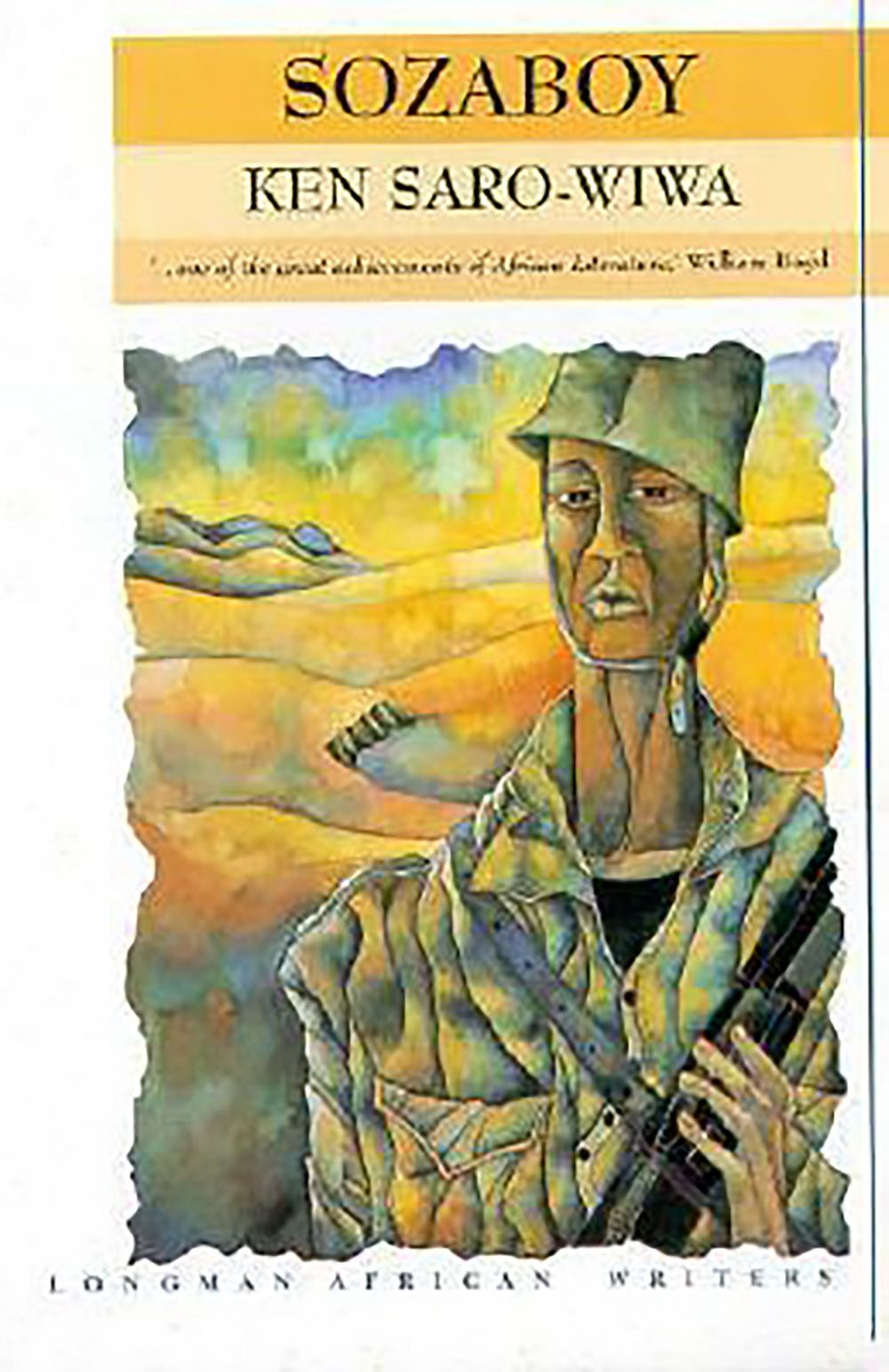
Furthermore, in 1985, Ken Saro Wiwa wrote a novel titled Sozaboy which deliberated on the Biafran civil war. The English language used by the protagonist is non-standard English which the author refers to as “rotten English” or pidgin English. While this is broken English, it speaks to the thousands who converse in pidgin English.
Mphahlele (1974) argues that Africans would not benefit if they wanted to curtail English because countries like those in East Africa are indebted to the English language for their freedom from colonisation. Mphahlele (2009) argues that English has been a weapon of struggle because those in apartheid South Africa who wanted blacks to be stuck in Bantu culture wanted them to leave English to justify the existence of apartheid’s Bantustans. Furthermore, according to Mphahlele, many African states could not have been liberated without the English language. It then becomes critical how artists speak with the masses. Gordimer[4]Gordimer, Mphahlele, and Brink 1979, 8 concurs, “As soon as you use a language, you appropriate anything that it has to give you. … To me, it seems appropriate to use that tool to deal with our situation as Africans, whatever colour we are.” Achebe (1975) also argues that writers need to use culture as language is part of that culture.
In highlighting the English language, Nadine Gordimer highlights the importance of People’s Literature, and she refers to this as literature written by, and not about, the people (1990). She explains who the people are:
Virtually all blacks and so-called coloureds who comprise the overwhelming majority of our population, qualify under the blunt definition of workers as those who, if they don’t get up in the morning and go to work, won’t eat they don’t have unearned income. But the image of “the people” has come to be symbolized more specifically in the features of farm workers, miners, and construction workers: the rural people and the labour power they export under the migratory labour system to single-sex hostels in the industrial areas.
Gordimer 1990, 37.
Chinweizu (1987) contends that writers in Africa have several responsibilities; among these are (a) to perceive literature as part of a dialogue that unmasks history, and (b) to see that literary work is like a diamond in the dark. The reader’s mind makes it shine for work will be more meaningful when the reader is sharp in thinking. I see these two responsibilities as pivotal in decolonising English as writers redress the past. Gordimer adapts Walter Benjamin’s definition when she points out that People’s Literature is borne out of the people’s ability to relate to their own lives.
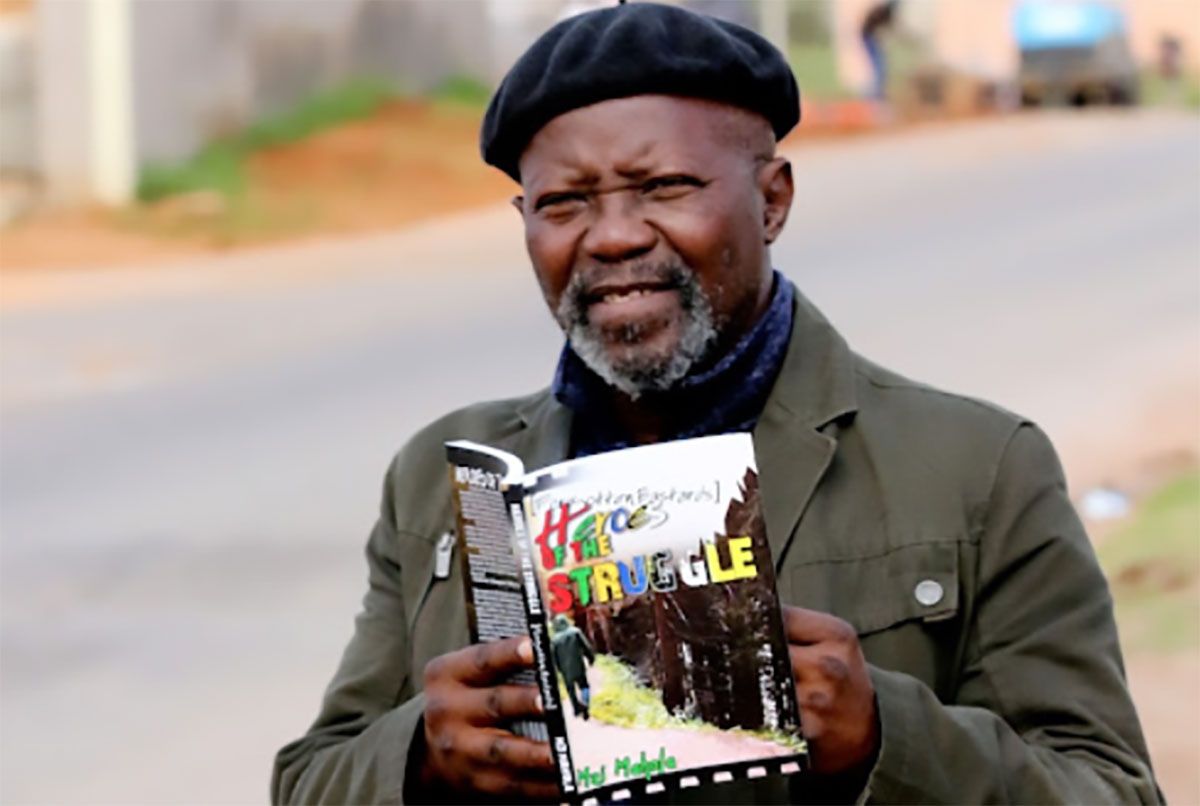
The poetry of Mzi Mahola and Vonani Bila reflects many of the elements highlighted above. Mahola uses symbolism and diction that is catchy and simple, thus relating to the lives of ordinary people. It imbues peoples’ English with isiXhosa idiom and culture. In “We Washed Our Hands” Mahola portrays the ignorance of the children who brought home dishes from the graveyard only to be welcomed by a screaming grandmother who yelled that they had brought death to the house (Mahola 2000, 20). The grandmother instructed them to take the dishes back to the graveyard. On coming back the children had to wash their hands as demanded by culture (2000, 21):
When we came back,
We waited at the gate,
And uncle brought us water
To wash our hands (Stanza 6, lines 40–43)
There is profound meaning here and Mahola has used English and culture that people would understand. Mahola uses similar simplicity in “Impassable Bridge” (2000, 16), in which a secretary would not let the angry poet see his friend who is an MP. The secretary reminds the angry poet that he must keep to his kind instead of trying to hang out with MPs:
But she was quick to add,
She said,
And lizards don’t fly
For their food
They crawl. (Stanza 4, lines 15–19)
In The Last Chapter (2014), there are even more examples of poems that reflect Peoples’ English and People’s Literature. The poems “A Cemetery of Hopes” (36), “This Curse Comes to Pass” (54), and “New Proverbs” (65) are examples of poems in which Mahola uses People’s English and appeals to the people’s culture.

Bila’s poetry in all his anthologies reflects the people’s culture reflected in People’s English. Any poem Bila recites talks directly to his black audience. Like Mahola, Bila uses the art of narration in his poetry and his stories are conversations with his people. Traditional culture, indigenous languages, black oppression, suppressed joys, and elusive freedom are some of the themes Bila examines as he communicates to his audience. In “Maria’s Burden” in Magicstan Fires (Bila 2000, 40). Bila opens the poem as follows:
The young widow next door
With a furrowed face
Wears a black dress everyday
Neighbours say she lynched her husband in bed
They call her a mental case (Stanza 1, lines 1–5)
In “Cocktail Minister” (2000, 67), Bila writes:
i saw the man of integrity
wrapped in a blue navy suit and tie
in the bar at hotel concorde
two o clock in the morning
guzzling beer
like a fish (Stanza 1, lines 1–6)
Bila uses his voice to challenge freedom promises as he conscientises. One can never miss who his audience is. In “Comrades, Don’t We Delude Ourselves?” (2000, 80), Bila writes:
We don’t talk about racism
We put it under the carpet
For we don’t want to offend nobody
We think the ghost of Apartheid is long dead-
Comrades, don’t we delude ourselves? (Stanza 1, lines 1–5)
The language used in People’s Literature is ordinary people’s language and even when written in English it unmasks history and expresses the people’s hopes, doubts, excitement, and disappointments. Furthermore, as Gordimer (1990) contends, the language used in People’s Literature talks to all people, including the poor farm workers, the poor workers, and the less educated.
Mystic Narration
Both poets are adept at using the English language to portray reality in the magical world. They use language and word richness to enhance their metaphors and similes. Appropriating English language from indigenous languages and street or colloquial languages they share experiences from a frequently elusive world. Where they struggle to find words, they use strong and unforgettable images. The mystical and the magical are concerned with life’s everyday experiences such as death, the mysterious, and the supernatural. Magical and mystical poems often have a way of playing with the audience’s emotions. Sometimes spooky and fantastical, they show a transcendent realm. Over the centuries, works of art have revealed various mystical poets, including those from English literature, such as William Wordsworth, Samuel Taylor Coleridge, Robert Browning, John Keats, William Blake, and Percy Shelley. In Africa, the work of poets such as Mazisi Kunene, Wole Soyinka, and Ben Okri rates among the best.
Plato leads as the father of mystical forms of writing. William James (1902) characterised the mystical experience as ineffable, noetic, transient, and passive. Some have described mysticism as referring to becoming one with God (McGinn 2005). But it may also refer to altered states of consciousness which have deep spiritual meaning. Those who use mysticism claim to know concealed truths. Apart from the mystical, some of the poems below have a magical slant that refers to the supernatural, black magic, and ghosts. In the English tradition, John Donne and Alfred Lord Tennyson are among these poets whilst in Africa Ben Okri, Zakes Mda (Hi Andrea please link this to the Zakes Mda p age in this issue’s Off The Record section) , and Wole Soyinka reflect the magical in some of their works.
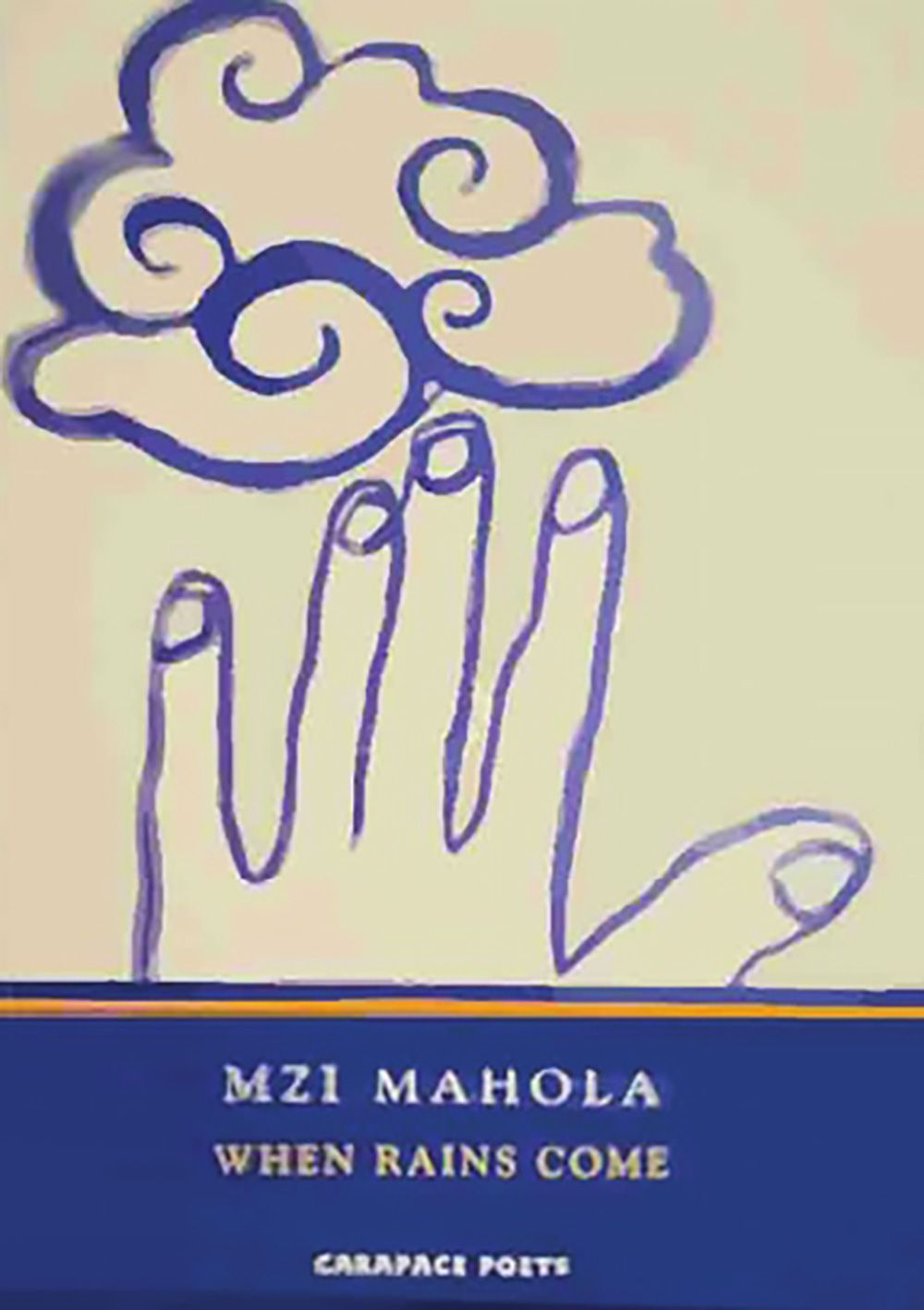
In both of Mahola’s anthologies, When Rains Come (2000) and The Last Chapter (2014), several poems reflect the mystical and magical. One discovers these elements in four of Mahola’s poems, “Dying in the Sun,” “Let There Be Water,” “Search for Your Heart,” and “Homecoming.”. In all these poems Mahola has a way with words; he uses his original Xhosa language to translate into English with perfection. In “Dying in the Sun” (2000, 7), Mahola writes about a man he finds rummaging for food in the dirt:
I, who see
The bony grip of hunger
Forcing him into a ditch
To grovel in filth,
To learn the habits,
Of neglected scum,
And lose himself with this lot:
The defeated bastards
Who also braved the fire-spitting beast
And now strain under sprained backs
And broken shoulders. (Stanza 3, lines 15–25)
The poet reveals the truth about a man who is dying in the sun from lack of food although he fought in a committed fashion in the liberation struggle as he opposed apartheid (“the fire-spitting beast”). The speaker sees the man who is rummaging for food in the filth. The man cannot see as he learns the ways of the “neglected scum” and “defeated bastards.”
The speaker draws the hidden truths that show that even those who fought for liberation loiter on the streets with nothing, not even dignity, and are like “luckless prostitutes.”
Then the spiritual is clear in “Let There Be Water (God Said),” (2000, 8). The book of Genesis in the Bible portrays the earth’s creation where God entrusted the wealth of nature to the people and water was among these gifts. Yet the speaker sees how the water God has given to the people giggles at the people as floods punish the world and personifies the cliffs as villains waiting to witness the destruction. This is reminiscent of Noah’s Ark and the destruction of the world. People cry in desolation as their livestock die in the mud:
I’ve also seen the dirty washing
Hung high on tress to dry
After the rains,
But too high for the tired tide to take down.
I’ve also seen some of our sheep
Bloated in the mud, Limbs extended,
And, where our crops grew,
Saw Dongas smiling.
Men weeping. (Stanza 4, lines 24–33)
There is much that is magical in Bila’s poetry. In “Wood Warrior,” a poem dedicated to the sculptor, Jackson Xidonkana Hlungwani, Hlungwani is portrayed as a man who lives amongst the spirits; he is a spirit himself. Hlungwani is regal, immortal, and has supernatural powers. He has the power to make birds sing. Bila states that Hlungwani’s spirit saunters in tranquil streets, “drumming, whistling, potting and panning / songs chanted out loud / to the reverberating sound of the domba drum.” This man has always had the gift of seeing what ordinary people cannot see. Bila writes (2000, 12):
Years ago
You saw satan with your own naked eyes
shooting arrows through your legs
you say one arrow sunk into your body
becoming a snake
then you burnt your leg and sins
warmed the rotting world on fire
now it has healed
and the magnetized world knows
the mystic sculptures come from mbhokota (Stanza 2, lines 10–19)
The world of the wood warrior is incredibly bright. Bila says it exhumes the glitter in the sky as the “wood radiates warmth” (line 28). This is a man who is nature and is with nature for everything is connected with him. In stanza 5, lines 31–34 (2000, 13), Bila portrays
the moon glows up in the sky
Erotic women are god and satan
Exotic angels with overarching wings sing
& dance joyously
The wood warrior is a spiritualist, a sorcerer who dominates his surroundings with his mysticism and regal aura. He is like “the long python god across the field (that) protects the village” (line 35). Hlungwani is a “diminutive man” (line 3) but as a warrior he is magnanimous, as long as the python with the regal strength to protect the entire village. Bila is in awe of the man who creates life as he tells the stories of his people through carving the wood.
Black Consciousness
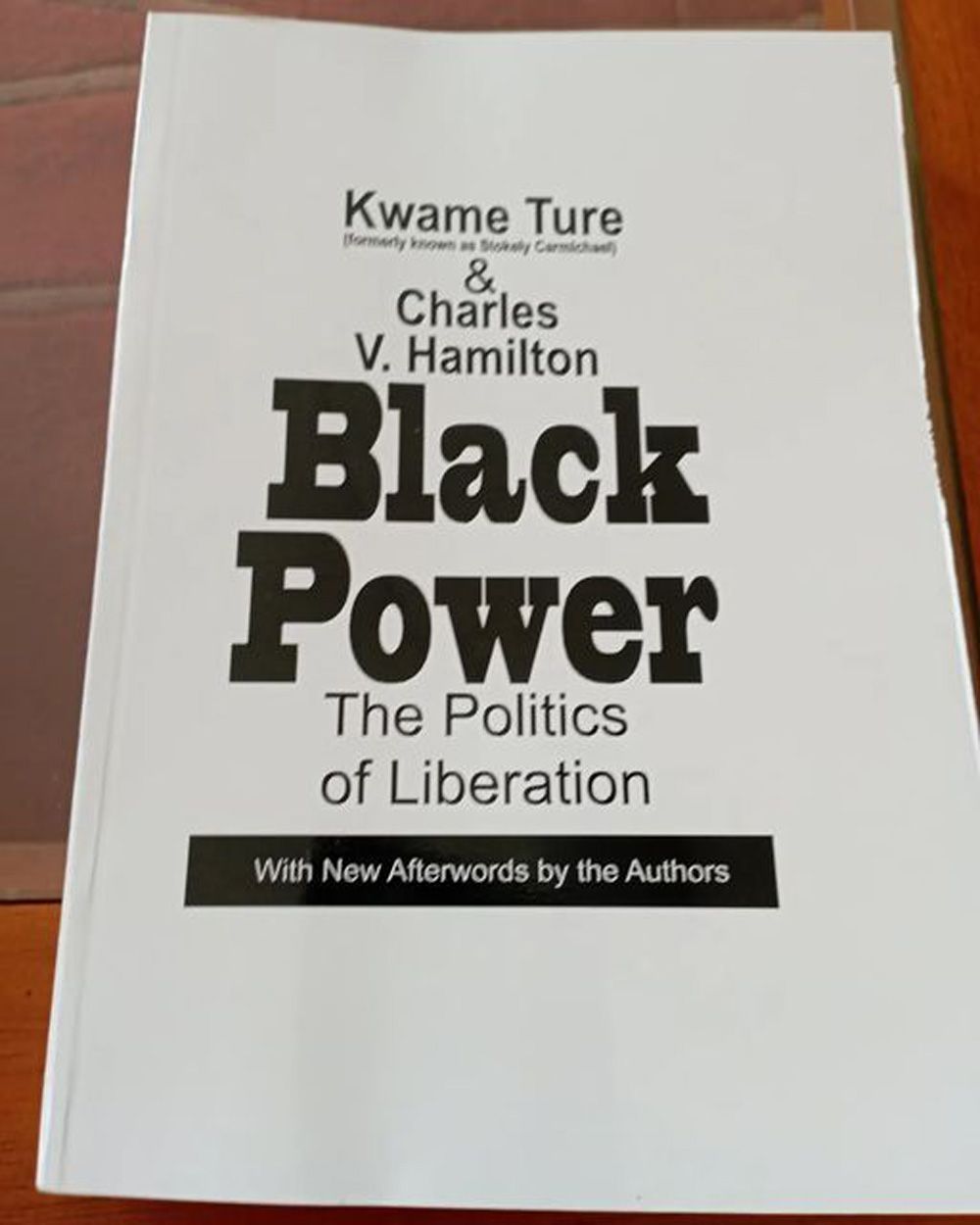
In South Africa, the Black Consciousness philosophy was popularised by Steve Biko, a martyr who died in police cells fighting for the black cause. He was himself influenced by black philosophers from Africa and the world, including Kwame Ture (formerly Stokely Carmichael), Malcolm X, Julius Nyerere, the Negritude Movement, and many other individuals and like-minded groups. In defining Black Consciousness, Biko (2004, 99) states, “Black Consciousness is, in essence, the realisation by the black man of the need to rally together with his brothers around the cause of their oppression—the blackness of their skin—and to operate as a group to rid themselves of the shackles that bind them to perpetual servitude.”
In almost all his poetry Bila rouses the consciousness within black people as he wants to see them opposing the status quo although sometimes he simply highlights their plight, and so does Mahola whose narrations reflect black people’s condition. This can be subtle in some poems. In “Sweat of Their Brows” (2000, 10) Mahola mentions Frantz Fanon who wrote about the change that would happen to the middle class after freedom was attained in a country like South Africa. The chapter titled “The Pitfalls of National Consciousness” in Wretched of the Earth (Fanon 1961) is about how the unpreparedness and ignorance of the middle class or educated classes would lead to mishaps and even more oppression of the masses.
Fanon maintains that the ill-equipped black bourgeoisie will oppress the masses like previous oppressors.
This literature bewailed how conditions changed for the oppressed after the attainment of freedom where one group would amass wealth whilst the other larger group would languish in hunger and squalor. Fanon was referenced lavishly by Biko who fought for black people to oppose the idea of black people being empty shells. He sought to ensure that they injected life into their blackness. Mahola states that the people destroyed apartheid, “the hydra-headed beast,” in “Sweat of Their Brows” (line 2), yet, even beyond freedom, many black people do not enjoy freedom because of the imposing bourgeoisie (stanza 5, lines 26–34).
Bila’s poetry is reminiscent of the Black Consciousness poets who were sometimes wrongly referred to as “Soweto Poets.” He speaks about the black condition, black strife, and oppression. All of his works reflect black people as victims of oppression in society even beyond apartheid. In “Apartheid Commando in the Park” (2000, 71), Bila shows how even the poor vagabonds undermine the black face:
His ragged body sprawled
On the lawn like a dog
Old Apartheid commando
With scruff beard
& unkempt bushy hair mumbled
…
People simply walked past,
Talking into cell phones. (Stanza 1, lines 1–6)
Again, the reader will find the poem “Outpouring Love” (2000, 116) reminiscent of the 1970s when black activists were repeating the slogan, “Black is beautiful.” Steve Biko and his comrades preached the need for Africans to embrace pure natural beauty. Biko (1987) explained why black women should not enhance their beauty by mimicking whiteness. Biko maintained that the term “black is beautiful” challenges exactly that belief which makes people negate themselves.
Bila describes a black woman who will be embraced in the Black Consciousness fold. Bila praises this woman for her natural beauty. Bila (2000, 116) writes:
black african woman
morning star
you are warmth beyond heat
love is beyond me:
the feeling so sea-deep
irresistible dark liquid
big brown eyes oh,
I drown in you your gaze
whispers blue magic in
my running blood (Stanza 3, lines 42–52)
Hope and Hopelessness
From time immemorial conscientious poets have tried to find hope and resilience in society as they simultaneously expose the reality of hopelessness. Mahola largely reveals the foibles of society. He sows his frustration, but in a few poems he sees dim light at the end of the tunnel. However, he frequently fails to promote grit because his world is full of emptiness. He has a few poems in the various collections where the reader witnesses sardonic humour, and some form of hope. In “He Came Down the Street” (2000, 17), Mahola portrays, in typical township fashion, preparation for a meal:
He came down the street In one hand
Holding a live chicken
By its wings,
In the other
A packet of onions
And potatoes. (Stanza 1, lines 1–7)
The live chicken is soon to be a meal and it is the humorous picture Mahola portrays showing that the runabout chicken—referred to as mleqwa in Xhosa—will soon fill the aroma of some house in a gravy, adorned by potatoes and onions. Yet, in the poem “The Land Will Heal” (2000, 19), Mahola shows the hopefulness he rarely uncovers. When he does sow humour as he does in “He Came down the Street,” or hope in “The Land Will Heal,” he elevates creative portrayal with potent images and unforgettable metaphors. In the last stanza, Mahola writes:
They will not throw in the air
Angry arms of despair
When truth eludes lips.
The sun of our land
Will ease their wrinkled spirits,
Thread those devalued hopes,
Mend their fractured souls. (Stanza 4, lines 22–28)
Like several contemporary black poets, Mahola comments on the misery and hopelessness in South African society. The emptiness is evident in poems such as “We Shall Reap in Tears” (2000, 12), “The Fishing Lady” (2000, 14), “House of the Poor” (2000, 18), “The Land Will Heal” (2000, 19), “My Ultimate Song” (2000, 34), “Pawns” (2000, 86), and “Our Paralyzed Spirits” (2000, 80). In these poems, Mahola uses images that reflect futility and, even when a glint of hope is possible, it becomes just that, a mere glint. In “We’ve Lost It” (2014, 34), the speaker bewails his society’s loss of morals and as such, the morals are at “the bottom of the staircase” (line 16). Even when the people he is observing are impoverished, he is incredulous that they can use headstones from the cemetery to refurbish their homes:
I entered one of the shacks
bordering the cemetery
its makeshift furniture
Suddenly caught my eye;
the frame of the table
Was a classroom desk
its thick maroon top
a headstone
the dead owner’s name
probably scrawled
on the flipside. (Stanza 1, lines 1–11)
Yet, in “We Shall Reap in Tears” (2000, 12), Mahola reflects a decolonial view as he mourns the loss of culture by his people:
We’ve battered our manhood,
Our pride,
For values of the West.
Paralyzed our dreams. (Stanza 1, lines 6–9)
Mahola laments that people have turned to intoxication while thinking they can discipline their children “with lame hopes and frozen promises” (line 13). He is nostalgic as he thinks of a romanticised past where the forefathers were strong and wise, but now Western culture has come to defeat that glistening past which ended up being “whitewashed” (line 23). He concludes the poem as follows:
Glitterings of the West
Which we so much embrace
Like pythons their prey,
Have bound our hands,
Obscured our vision.
It is our undoing
That our children,
Bubbling with knowledge of distant places,
Are strangers to respect,
Prostitute their culture.
We shall reap in tears
For soiling the water from upstream. (Stanza 4, lines 24–35)
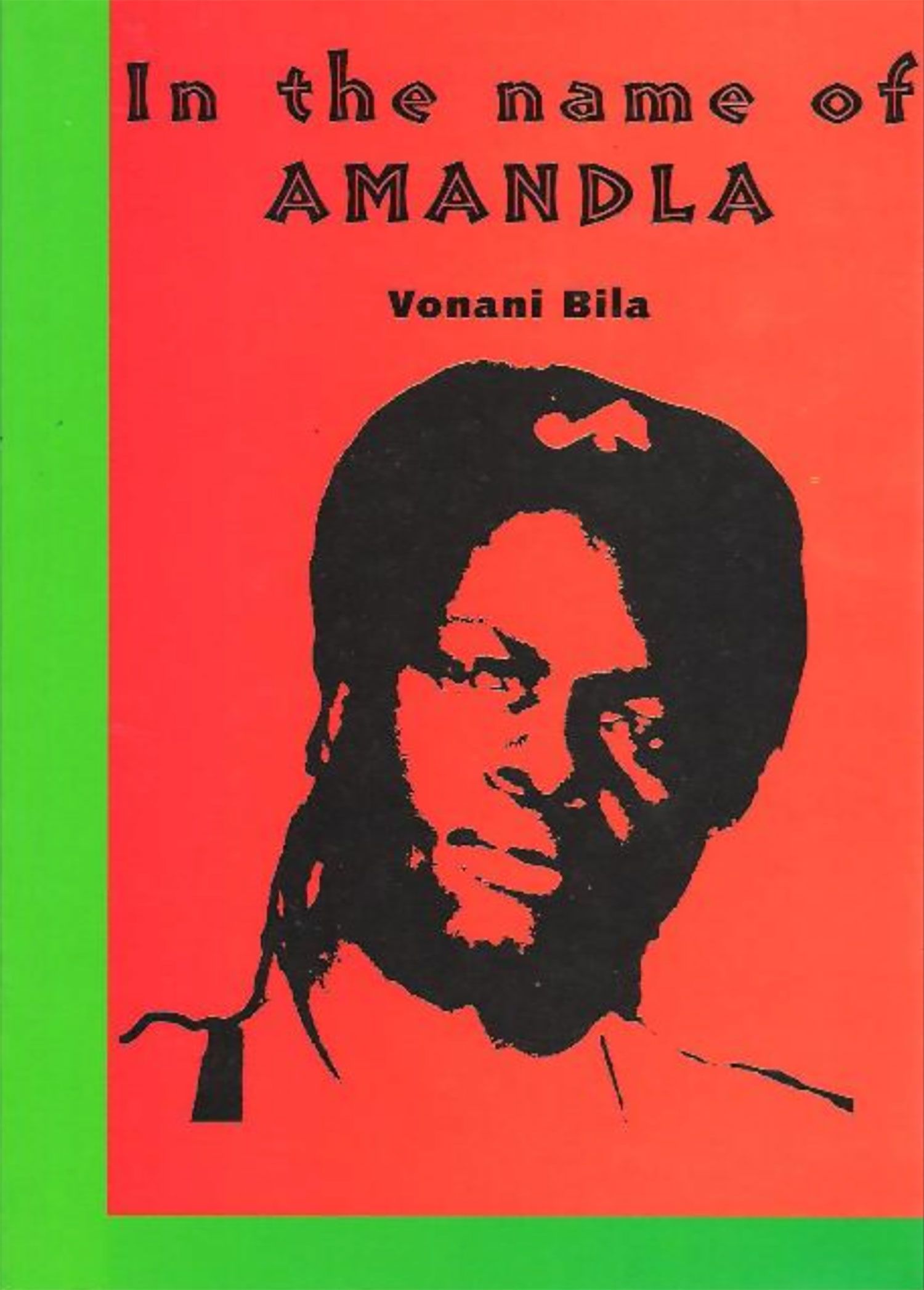
Vonani Bila’s poetry is much about hopelessness and the dire black condition. In the anthology, In the Name of Amandla (2004), the poet portrays hopelessness for black people. In the poem that shares the title of the anthology, “In the Name of Amandla,” Bila laments that nothing has changed for black people (2004, 100):
In the name of Amandla
Tell me what has changed in this village
We are in trouble
Our electricity is weak
Switch off everything else when you use a stove
It stops when it rains … (Stanza 4, lines 55–60)
In “Mr President, Let the Babies Die” (2004, 96) there is even less hope as the poet observes his people consumed by the politicians. The poet’s voice echoes disillusionment:
Boom! Boom!
We blew horns when exiles returned-
We did not know you befriended Ronald Reagan
and Margaret Thatcher.
We strummed guitars when the prisoners walked free-
We did not know the mind got frozen in prison winter. We shouted power to the people!
But business sucked the power of the state. (Stanza 4, lines 27–34)
In “Silence” (2000, 91), Bila is even more frustrated by his people who are silent as they suffer. He laments that people keep on voting despite non-delivery by the government. People live in poverty but they keep voting for the same people:
it’s the choking silence
of the disgruntled shack dweller that mutilates my spirit
he who votes for perpetual unemployment
year after year
hope manacled (Stanza 1, lines 1–5)
In many of his poems in Magicstan Fires, Bila does not see the bright side of life in South Africa, and even when he does, this is eclipsed by the dark side; “Baba Mandela” (2000, 9), “The Hawker” (2000, 16), “Woman behind the Window” (2000, 34) and “Maria’s Burden” (2000, 40) demonstrate the evil and dirt of black life. Maria lives in filth, pain, hunger, and gruesome memories; her husband died a painful death. In stanza 7 (lines 54–56) Bila depicts a horrific scene:
He crushed his skull into pieces
Brain scattered on a concrete ground
He feared deadlife behind bars
Even the poems where the titles reflect hope end up being gory and portray decadence. The poem “Beautiful Daughter” (2004, 12) has a title that evinces this hope, but the daughter walks in darkness (line 3). Bila continues:
Beautiful daughter
In the field near the post office
Opposite our big house
They chased her like a deer
Crushed her knees with steel
So she could stop galloping
Four of them huffed and puffed like animals
On top of her … (Stanza 3, lines 21–27)
In this poem, Bila demonstrates that this is a land where hopeful daughters have their dreams shattered—the beautiful daughter wanted to be a doctor (line 44). In “The Graduate” (2004, 36) Bila reveals a potential celebration of success for the fat graduate from “the bush varsity” (line 2), but there are no celebrations for the young person who is not employed despite sending out several applications.
Yet the poet wants love, for in “Give Me Love, Rwanda” (2004, 40) he sees flowers that blossom, bees collecting honey, and cattle that give birth to young. Yet the poet discovers that Rwanda is not giving him love:
I am tired,
Tired of seeing people fall
From hunger,
The aged stand in the current
Of streams,
I am tired,
Give me love Rwanda. (Stanza 4, lines 16–22)
There is hope in Rwanda, but it is ravaged by blood, drowning, hunger, and death. The poet sees the exalted beauty; he loves Rwanda, but she is destroying herself (2004, 41):
Give me love-
Beautiful Rwanda.!
Give me honey- (Stanza 8, lines 44–46)
The Religious
In different ways, the poets tackle the religious themes because they may believe in some presence of a super being, a God. Mahola also believes in this, and we can see this in his poetry, sometimes overt and sometimes a subtle presence. Some titles of his poems are evidence of this: “Let There Be Water (God Said)” (2000, 8), and “Sweat of Their Brows” (2000, 10), both in the collection When Rains Come. Yet, it is “Hunting on Christmas” (2000, 31) that shows the betrayal of God’s plan by the hunter who wants to end life on a day that was supposed to be the celebration of the nativity. Mahola is commenting more on society’s treachery. Christmas is an annual celebration that reveals the birth of Jesus Christ, falling on 25 December. Christian families come together to share gifts and there is much feasting and praise of the significance of the nativity of Jesus. Jesus Christ’s birth is always linked to angels and joy. However, in “Hunting on Christmas,” the speaker portrays how Mrs van Derk went out hunting being “thirsty for blood” (line 9). She came for the boys carrying her gun and the incident is reminiscent of several incidents in society where hunters shoot black people mistaking them for baboons or other wild animals. Mahola writes (2000, 33):
She was hunting us as game
For Christmas dinner,
To appease her satanic whims (Stanza 10, lines 59–61)
Even at Christmas, Mrs van Derk cannot conceal her evil nature and she displayed “a heart of stone” and had once killed before. The paradox is that it is not human beings who give the running boys protection but inanimate groves, boulders, and a stream that open their arms to protect the children in the bosom of a thicket. The hunter was unrelenting as she combed the area with sanguine zeal (2000, 33):
The Boer vrou was silently hunting
From one boulder to the next,
Patiently combing the area
As stunned villagers watched,
Unaware how narrowly
Her bullets had missed
Even their own hearts. (Stanza 13, lines 72–78)
Yet in “I Called to God” (2014, 89), Mahola presents a speaker who displays Job’s determination. Job of the Bible did not forsake the Lord even when affliction and misery were causing him much harm physically and psychologically. He prayed as his wife was suffering from pain just before midnight; she was facing death. He called upon the angels to come and save her from the debilitating condition. Many spiritual poems show the conviction of a spiritual nature or a Christian-based belief system. These poems reveal the spiritual realm from whence the speaker’s strength comes. As his wife lay there with demonic affliction, he asked God to send St Michael, the archangel, who is a spiritual warrior and the captain of angels, to come and wrestle evil over good. Michael is the champion of justice and a protector of the church of God. Even at dawn when there was minimal change in the condition of the sick woman, the speaker lays his trust in God (2014, 89):
When dawn finally came
We were still fighting;
It had taken her voice
paralyzed her right side,
but she had won
through divine intervention. (Stanza 4, lines 20–25)
Then Mahola shows how obstinate the society, especially politicians, had become in creating a secular state that disregards God. The constitution here is the culprit for it makes people doubt God and question his wisdom. In “They Say” (2014, 39) Mahola writes:
Time has come
To rebel against God
Who thinks
He can entice us
With heaven.
He must keep away
And respect our constitution;
His methods are old fashioned
He failed to design
a human species
conceived of same gender unions … (Stanza 1, lines 1–10)
Mahola is fed up because people now want to dictate to God as they scheme to leave him. Bila also examines god and godliness in his poetry. In “Sacred Bush” (2004, 103), Bila deals with a surreal theme in this poem. He believes in the unwavering strength of the tree called Matsakali. This is a sacred bush that represents the strength of his ancestors as well as supernatural beings from his people. The tree refuses to be felled by Western enemies for, like his disillusioned ancestors, it has nowhere else to go. This poem demonstrates that no one would destroy his culture and being:
There’s a sacred tree
That no one can move
It’s a tree deeply entrenched
Anchored and rooted to the land
…
I’ve been living here in peace
…
You want to build a township
On top of me
Matsakali
White man, stop infuriating me
For I’ll avenge with storms never seen in your life. (Stanza 2, lines 13–16; 30–36)
Bila is very close to his roots and his ancestors. He believes in conversing with the departed. This is visible as he talks to his departed father. He concludes his poem Ancestral Wealth as follows (2015, 41):
Papa, I know it took us twenty years to erect your tombstone
All along the wind was blowing you away
The sun was burning you
Your pillow was your hand
But now Bila, Mhlahlandlela, rest in peace
Do not open the grave and come home wearing shorts
Since you left, your wife has remained in the house
I’ve not seen a man sitting on your chair
It’s still your house
Fall of trees and vegetables (Stanza 27, lines 470–480)
Bila believes that the dead do not die but they replenish. As he spoke to his father, he does the same as he pays tribute to the “wood warrior” (2000, 12). Hlungwani is a sculptor he revered. He believes that, even in death, the sculptor’s works will bring him to life—after all Hlungwani is an “immortal wood warrior” (line 5). Bila maintains that the sculptor will continue to live in the afterlife. His “spirit walks in serene streets and fields drumming, whistling, potting and panning” (line 100). He exudes Hlungwani’s spirit (2000, 14):
Earth-anchored visionary
You trudge forward toward the fountain
Of human rebirth
The lost birds and cows will return
With the apple-red setting sun … (Stanza 13, lines 84–88)
Conclusion
Both Mahola and Bila’s poetry is potent because their verses evince images that accurately display pictures of hope, emptiness, sadness, joy, and fading beauty. On the one hand, Mahola rejects the label “African writer” as he wants to be perceived as a poet not bound by nationality. His subject is deeply African, however, and the landscape and voice reveal his African identity. On the other hand, Bila’s poetry reminds one of “Soweto Poetry”; the Black Consciousness poetry of the 1970s that reflected black suffering and the black cause. In addition, Bila does not deny the label of a “Black Consciousness” poet (personal interview, 2018). Yet for both poets it is clear that some of their phrases come from People’s English, hence their work forms part of People’s
Literature. Both write for the people as they highlight crucial topics to transform society. These topics are relevant to their communities, be they religion, politics, or personal memories. What works in this poetry is that it refuses to hide deep meanings in pomposity for these poets are enthralled with simple language which may be mistaken as lacking thoughtfulness. Yet, the power of their poetry is concealed in this simplicity, for behind the simple landscape and everyday occurrences lies their deep dominance over their language craft and acumen.
This article was first published by the English Academy Review DOI: 10.1080/10131752.2024.2395698 and is re-published in herri with kind permission of the author.
Achebe, C. 1958. Things Fall Apart. London: Heinemann.
Achebe, C. 1964. Arrow of God. London: Heinemann. https://doi.org/10.2307/2934524 Achebe, C. 1975. Morning Yet on Creation Day. New York: Anchor Press.
Biko, S. 1987. I Write What I Like. London: Heinemann.
Biko, S. 2004. “The Definition of Black Consciousness.” In Steve Biko: Voices of Liberation, edited by D. Hook, 99–103, Pretoria: HSRC Press.
Bila, V. 2000. Magicstan Fires. Elim: Timbila.
Bila, V. 2004. In the Name of Amandla. Elim: Timbila.
Bila, V. 2015. Bilakhulu! Longer Poems. Grahamstown: Deep South. Chinweizu. 1987. Decolonising the African Mind. Lagos: Pero Press.
Chinweizu, J. Onwuchekwa, and M. Ihechukwu. 1985. Toward the Decolonisation of African Literature: African Fiction and Poetry and their Critics. London: KPI.
Fanon, F. 1961. Wretched of the Earth. Translated by Richard Philcox. New York: Grove Press.
Gordimer, N. 1990. “Who Writes? Who Reads? The Concept of a People’s Literature.”
Staffrider 9 (1): 36–41.
Gordimer, N., E. Mphahlele, and A. Brink. 1979. “South African Writers Talking: Nadine Gordimer, Es’kia Mphahlele, Andre Brink.” English in Africa 6 (2): 1–23.
James, W. 1902. The Varieties of Religious Experience. New York: Mentor Books. https://doi.org/10.1037/10004-000
Madingoane, I. 1979. Africa My Beginning. Braamfontein: Ravan.
Mahola, M. 2000. When Rains Come. Plumstead: Carapace Poets.
Mahola, M. 2014. The Last Chapter. Port Elizabeth: IASA.
Mazrui, A. 1986. The Triple Heritage. New York: Little Brown & Co.
McGinn. 2005. The Harvest of Mysticism in Medieval Germany (The Presence of God). New York: Herder & Herder.
Mphahlele, E. 1974. African image. New York: Praeger.
Mphahlele, E. 2009. “(1963) Es’kia (Ezekiel) Mphahlele, ‘On Negritude in Literature.’” Blackpast, 19 January 2009. https://www.blackpast.org/global-african-history/speeches- global-african-history/1963-eskia-ezekiel-mphahlele-negritude-literature/
Qabula, A. M., M. I. Hlatshwayo, and N. Malange. 1986. Black Mamba Rising: South African Worker Poets in Struggle. Durban: COSATU.
Saro Wiwa, K. 1985. Sozaboy: A Novel in Rotten English. Longman: Pearson.
| 1. | ↑ | Gordimer, Mphahlele, and Brink 1979 |
| 2. | ↑ | Gordimer, Mphahlele, and Brink 1979, 2 |
| 3. | ↑ | Gordimer, Mphahlele, and Brink 1979, 6–7 |
| 4. | ↑ | Gordimer, Mphahlele, and Brink 1979, 8 |