SEAN JACOBS
Mr. Entertainment
Popular discourse and memories of the famed Cape Town musician Taliep Petersen tend to fall into a familiar groove, shaped by two dominant narratives: the sensational story of his murder in December 2006 – often fixated on the fact that his second wife was responsible – and simplified takes on his long creative partnership with another musician, David Kramer, who is white. In this telling, Petersen is either reduced to the tragedy of his death or cast as the lesser figure in a collaboration whose authorship is still debated. His lack of formal musical training and his own insecurities about it have only added fuel to these arguments, with debates about who was really driving the work behind District Six: The Musical and the productions that it spawned (most notably Fairyland, Poison, Crooners, Kat and the Kings, and Goema) between 1997 and 2005. What gets lost in all of this is a fuller sense of Petersen himself – his range, his musical and business instincts, and the ways his music can’t be neatly folded into either of these narratives.
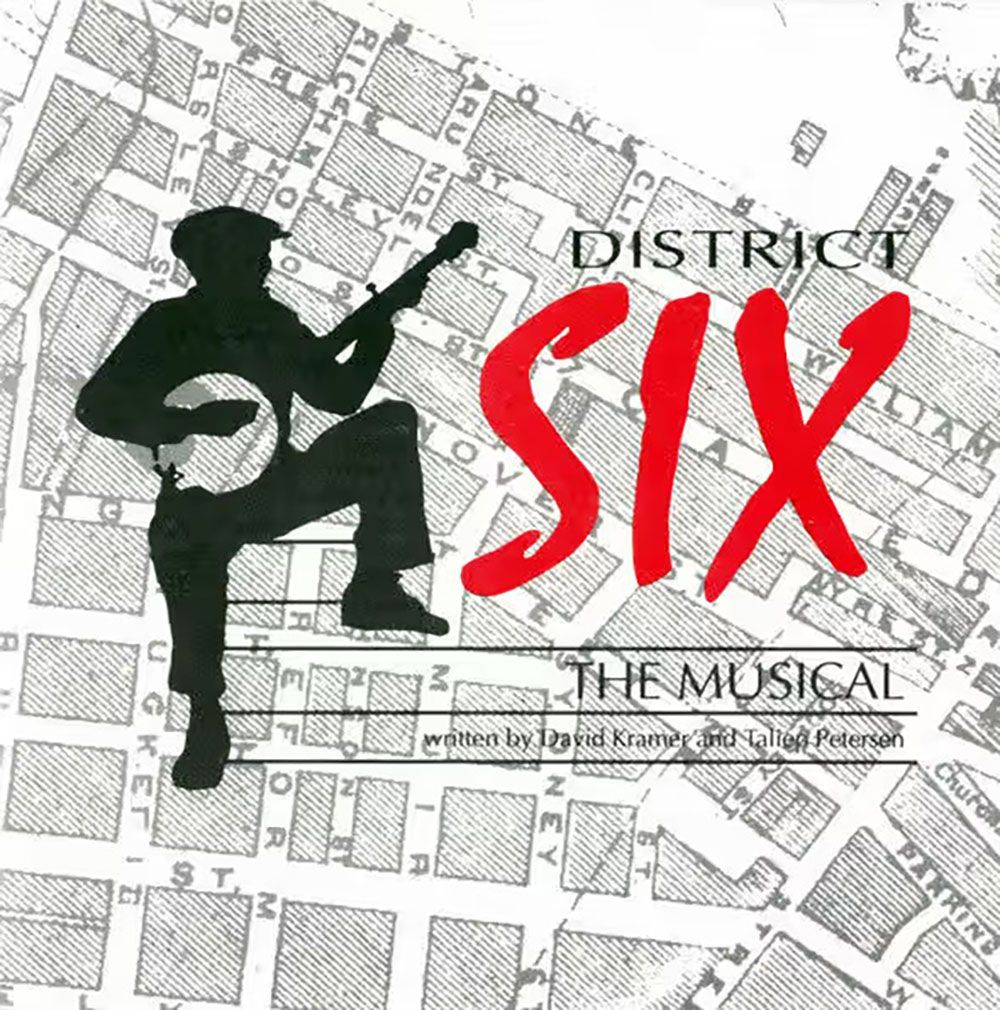
I am well aware of the cultural significance of District Six: The Musical – I even once took my parents and my then-new American wife to see it. My father was born in Peninsula Maternity Hospital, frequented District Six as a young man, and was himself a member of a Klopse troupe before he found religion. The production was emotionally powerful, and one could see why it plays a key role in cementing a particular view of Cape Town’s musical culture.
Petersen’s early work and his collaborations with Kramer reworked American popular forms, especially the idioms of doo-wop and crooner traditions, which were dominant in District Six, while also portraying coloured life as largely jolly in the face of extreme oppression and structural violence. This framing has had lasting consequences: it has shaped the mainstream memory of Petersen after his death, to which his own family and former collaborators have actively contributed, and, in turn, narrowed the reception of his broader body of work.
In the years since his untimely death, celebrations of his music have often reproduced this lens (just google his name on YouTube), flattening a far richer and more varied artistic life, and influencing critics to judge him as breezy or overly aligned with stereotypes of coloured communities as turning even painful histories into a dance number. His many musical productions foregrounded upbeat, accessible music for mass audiences – at first, the white patrons during dinner hour on the hotel circuit in the 1970s, then for coloured audiences in halls and theaters like the Luxurama in Wynberg in the early 1980s. At times, they fed off the taken-for-granted racism and self-hatred of his coloured audiences. In one of his musicals, the two coloured characters who narrate the proceedings are known as “Hot” and “Tot.”
But Petersen has always been more complex – one who was more than the sum of these parts, and whose work extended well beyond cabaret and musical theatre. Paula Fourie’s 2022 biography of Petersen, Mr Entertainment, foregrounds this complexity. Fourie treats Petersen’s death with restraint rather than sensation, allowing its significance, both for his family and for South African culture, to register without excess. In her account of his association and collaboration with Kramer, she gives due attention to their partnership without getting mired in unproductive debates about who was in charge, making clear that they worked as equals and fed off each other’s creativity. More importantly, what emerges is that, long before “District Six the Musical” reached the stage, Petersen had already conceived and mounted performances in the late 1970s (“Carnival a la District Six” and “Carnival Part II”) that contained the seeds of what the production would become. He understood the political weight of what had happened to his community; he did not need to be awakened by Kramer. For his part, Kramer comes across as genuinely curious about that history and as someone who prided himself on his collaboration with Petersen.
In tracing Petersen’s life, Paula Fourie, who never met him, offers a social history of a coloured musician coming of age in postwar central Cape Town (Petersen was born in 1950 in District Six) – navigating the upheavals of the Group Areas Act, winning local music competitions, often making it up as he goes along (Petersen invents some facts about his life), adapting through what was effectively a coloured vaudeville circuit and hotel cabarets, singing covers, and eventually crossing into the white mainstream of musical theatre, first as a performer (with Des and Dawn Linberg) and then as a producer and creator (with Kramer and eventually on his own). Along the way, Petersen moves through the political transition while continually trying to define his own artistic path in a cultural landscape that did not always welcome the sounds he wanted to make on his own terms. Just as he begins to find firmer ground – repairing relationships with his children, making amends with his first wife Madeegha, taking control of his finances, and pursuing work less dictated by the market – his life is cruelly cut short.
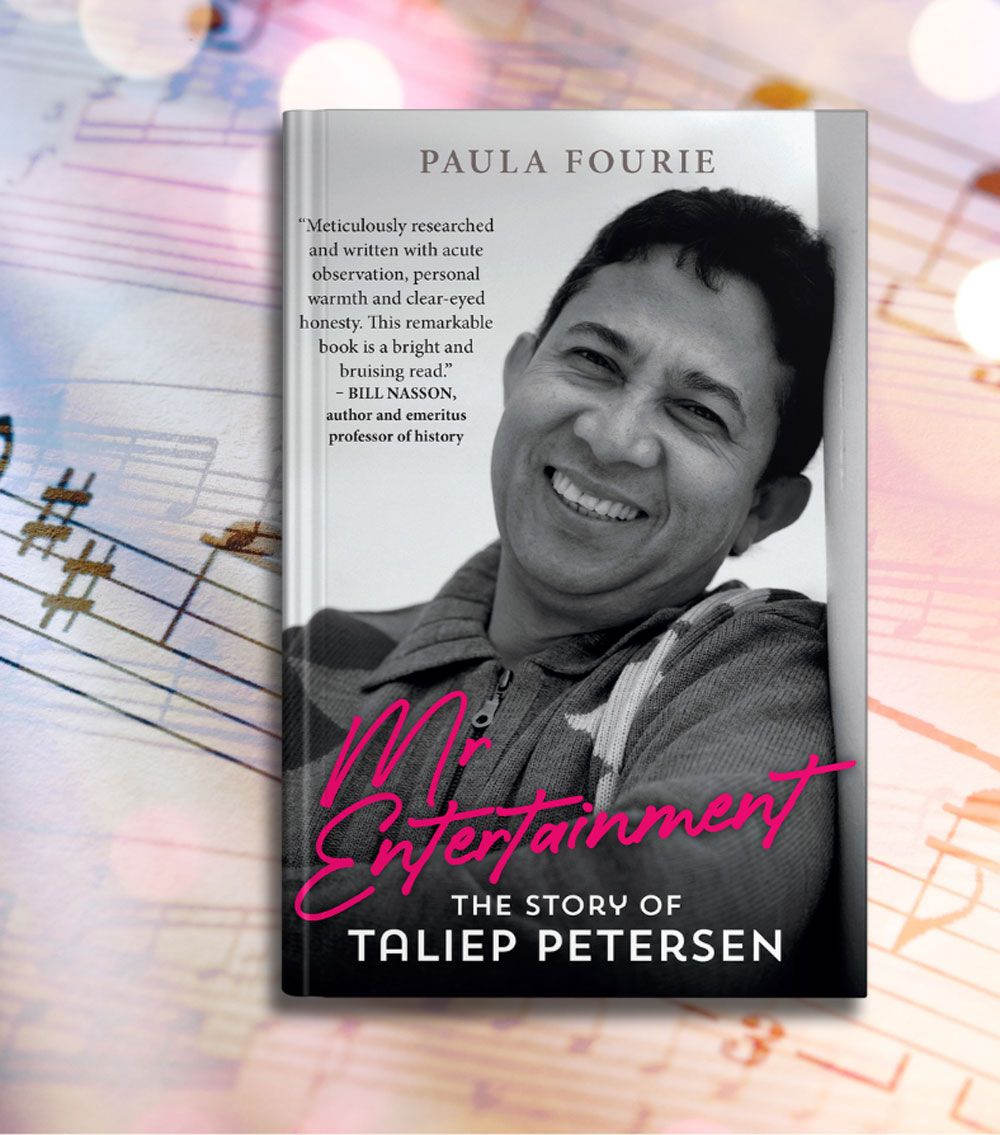
Mr Entertainment is rich in details that complexify any potted narratives about Petersen, his music, and the social and political contexts he occupied and responded to. For example, we learn that Petersen has influenced far beyond the genres with which he is associated.
For instance, the pianist Paul Hanmer began his career as a working musician in Petersen’s band, Sapphyre, in 1981. Hanmer went on to build a successful career blending jazz improvisation with indigenous musical forms (on albums like Train to Taung, Payola, and Water from an Ancient Well) and is especially known for his collaborations with another Cape Town musician, McCoy Mrubata. Others, including Robbie Jansen, Basil “Manenberg” Coetzee, Mervyn Afrika, Errol Dyers, Mark Fransman, and Hotep Galeta – figures more typically associated with “serious” jazz music – either played in, recorded, or acted in some of Petersen’s productions.
Hanmer, from a family of educators, studied music at the University of Cape Town when he met Petersen. Petersen teased Hanmer as a “supercoloured” and “uitgevriet” (spoiled). The Hanmers disavowed those aspects of “coloured culture” that Petersen foregrounded in his music and performances. As Hanmer tells Fourie: “I come from a family where my father told me, you see the Coons and the klopse and all this, it portrays coloured people in a derogatory way.” Paul credits his time on Sapphyre for disabusing him of some of those preconceptions.
That defining aspect of Petersen’s wide-ranging musical explorations, which Fourie highlights, was his commitment to preserving Cape Town’s traditional sounds. This included the music of nagtroepe, choirs, and other forms that placed coloured communities at the heart of what would later be recognized as integral to Afrikaans cultural production, rather than as a mere appendage. Notably, the only album recorded by Sapphyre, the band in which Hanmer played, was 1983’s Rosa. Beyond the title track – a love song and sometimes jokingly referred to by Malay choir elders as the “Cape Malay” anthem – the album featured several other “nederlands liedjies” (Dutch colonial-era songs) popularized by Malay choirs. Petersen enriched his renditions with electronic instrumentation, signaling new ways these traditions could be adapted, expanded, and reimagined. Yet his innovations often put him at odds with established authorities in Coloured music hierarchies, particularly choir directors who objected to electronic instrumentation, revealing the tension between tradition and experimentation.
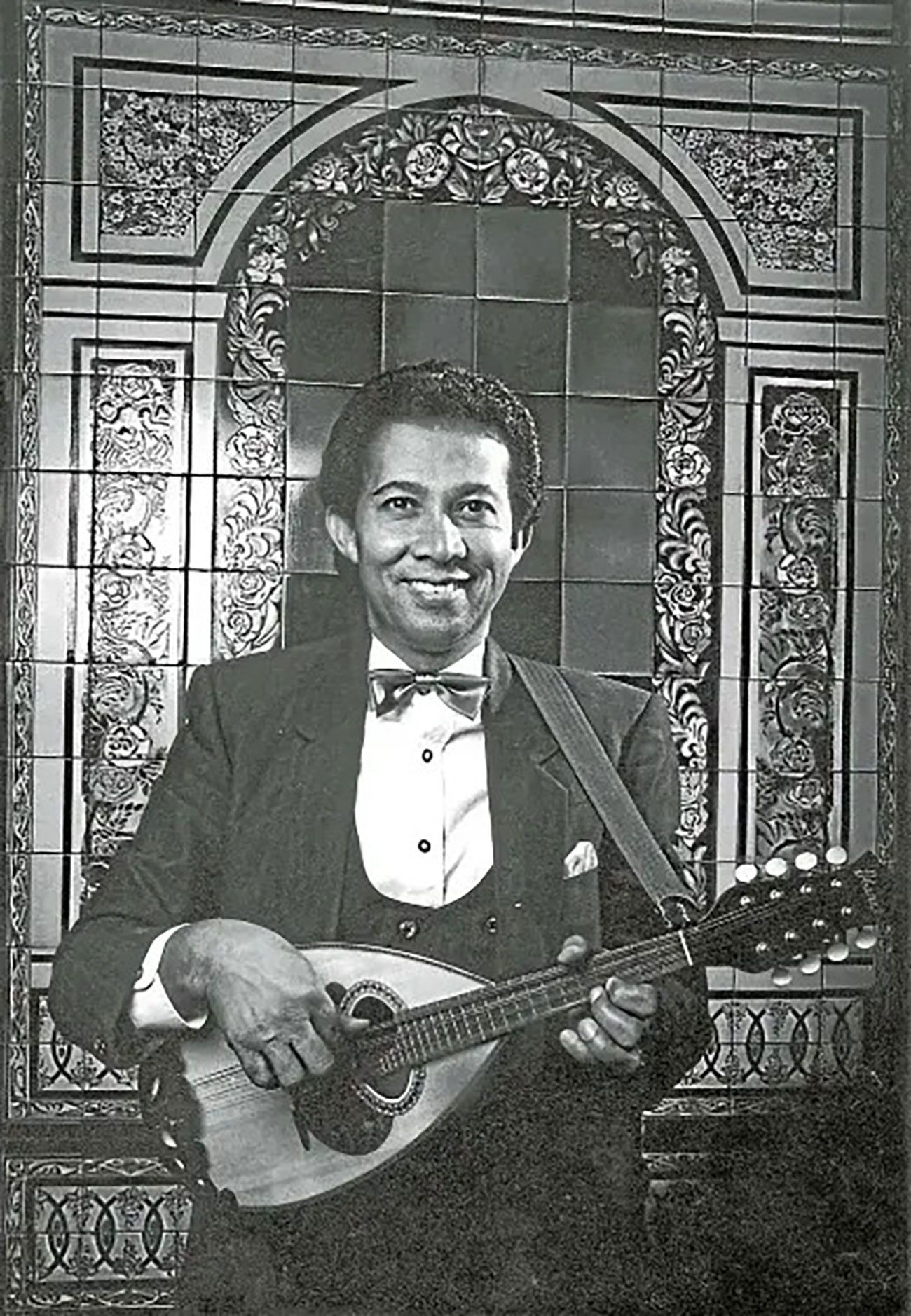
In January 1979, when Petersen briefly went to try his luck in the UK (he traveled with a friend, the singer Terry Fortune), he encountered pianist Mervyn Afrika, whom he knew from their shared time in the Cape Town music scene of the 1970s. Afrika had previously played with Pacific Express, a seminal group that also included, at various points, Dyers, Jansen, and Coetzee. Later, Afrika would rejoin Petersen to provide music for a post-apartheid television series on District Six for Kyknet, a local Afrikaans channel, which Petersen fronted as both presenter and producer. Mark Fransman, a multi-instrumentalist, composer, and accomplished singer, was part of the original cast of Kat and the Kings. At the same time, Galeta, after returning from a self-imposed exile in the US, served as musical director for Poison in 1992.
Petersen also moved within circles that included Abdullah Ibrahim and Sathima Bea Benjamin. Petersen was attentive to the innovations of figures like Ibrahim, particularly in the reworking of Cape Town’s sonic archive. As drummer Monty Weber, who performed and recorded with Ibrahim in the early to mid-1970s, put it, some of what the Cape Town musicians like Petersen were playing was “sopvleis” (soup meat) – a term Ibrahim himself has used – suggesting a layered, hybrid musical sensibility rooted in local experience. Fourie cites an interview with a journalist in which Petersen recalls seeing Abdullah Ibrahim play on that first trip to London in 1979, realizing that “his traditional music had value in the wider world.” As Petersen recalls: “So, I go to his show and expect jazz. But what do I hear? Our music. Cape Town music. And if Dollar could send 10,000 people … like … mad, it means we have the stuff. It’s huistoe (homecoming) music now.”
On a later overseas trip with his first wife and singing partner, Madeegha (formerly Valma) Anders, they stop in London, New York, and Paris. In New York City, Petersen visited Ibrahim and Benjamin’s apartment in the Chelsea Hotel. The latter gifted him her new album, which featured songs like Cape Town. Petersen was especially excited when he found out Benjamin’s record company is called “Ekapa,” isiXhosa for “In Cape Town.”
Another dimension of Petersen’s work was his engagement with Islamic devotional music, rooted in the strong Sufi influences on Cape Town’s historical Muslim communities. Petersen, known for his personal piety (he also went on hajj twice), joined groups that regularly prayed at the kramats on Table Mountain and participated in Sufi remembrance practices such as ratiep ceremonies, demonstrating a profound engagement with these devotional forms and their musical expressions, as Fourie highlights. Here too, his reinterpretations sometimes clashed with religious authorities and those who deemed certain music haram, even as these same authorities had limited control over how the music reached broader audiences. Petersen’s work, therefore, not only preserved and celebrated local musical traditions but also expanded their possibilities, often challenging the boundaries imposed by both cultural and religious gatekeepers. At the same time, Petersen’s pursuit of Cape Town’s slave past is not without ambiguity. His later preoccupation with “Malayness” raises questions the book does not fully resolve. It coincided with a broader racial politics of slavery that downplayed the Mozambican and Malagasy strands of enslaved peoples’ origins, while foregrounding connections to Malaysia and Indonesia. This emphasis overlapped with Petersen’s attempt to cultivate a second career in Indonesia.
As a biography, Mr Entertainment has clear strengths but also notable limitations. Fourie is an excellent and thorough researcher: she conducted interviews with over thirty people, and it took her more than a decade to complete the work. At the same time, Fourie, who is white and whose research originated in her PhD about Malay choirs, occasionally centers her own positionality in ways that feel overemphasized. Sometimes, this seems to seek reassurance from the reader rather than let the discomfort of her perspective stand on its own.
One aspect of the book’s style that is particularly laudable is its inventive use of language.
Fourie incorporates the idiomatic, creolized Afrikaans spoken by the Petersens and other coloured interlocutors in the book, frequently rendering it in the original; she provides footnotes at the end of each page for those not conversant with it to consult. This choice adds texture and authenticity, grounding the narrative in the linguistic realities of Cape Town. Fourie also lets Petersen’s family speak, especially his dad, Mogamat Ladien (whose outmoded views about gender and sexuality will offend some readers), and his sisters. Large passages are produced in their own words. The book ends with the days leading up to and the events of his murder. Her description of the days leading up to his death and her visit with Mogamat Ladien to Petersen and his mother’s graves exhibits a sensibility that informs the book as a whole and makes it a satisfying experience for the reader.