PHILLIPPA YAA DE VILLIERS
Voices of the Land: Poets of Connection
We need acts of restoration, not only for polluted waters and degraded lands, but also for our relationship to the world.
(Kimmerer 2021)
In The Democracy of Species, the Native American botanist and poet, Robin Wall Kimmerer details her rediscovery of the Potawatomi language whilst closely observing the land, weather and plants around her. As her knowledge of the natural world grows, her relationship with it changes, it becomes less a resource to be plundered than a sentient, mostly benevolent, collaborator. Kimmerer practices a time-honoured methodology of deep listening.
I came here to listen, to nestle in the curve of the roots in a soft hollow of pine needles, to lean my bones against the column of white pine, to turn off the voice in my head till I can hear the voices outside it…
From this beginning, she proceeds to a disquisition on the ethics of living with nature, which draws from existing understandings built into the lore and native language of her people in conversation with hard science.
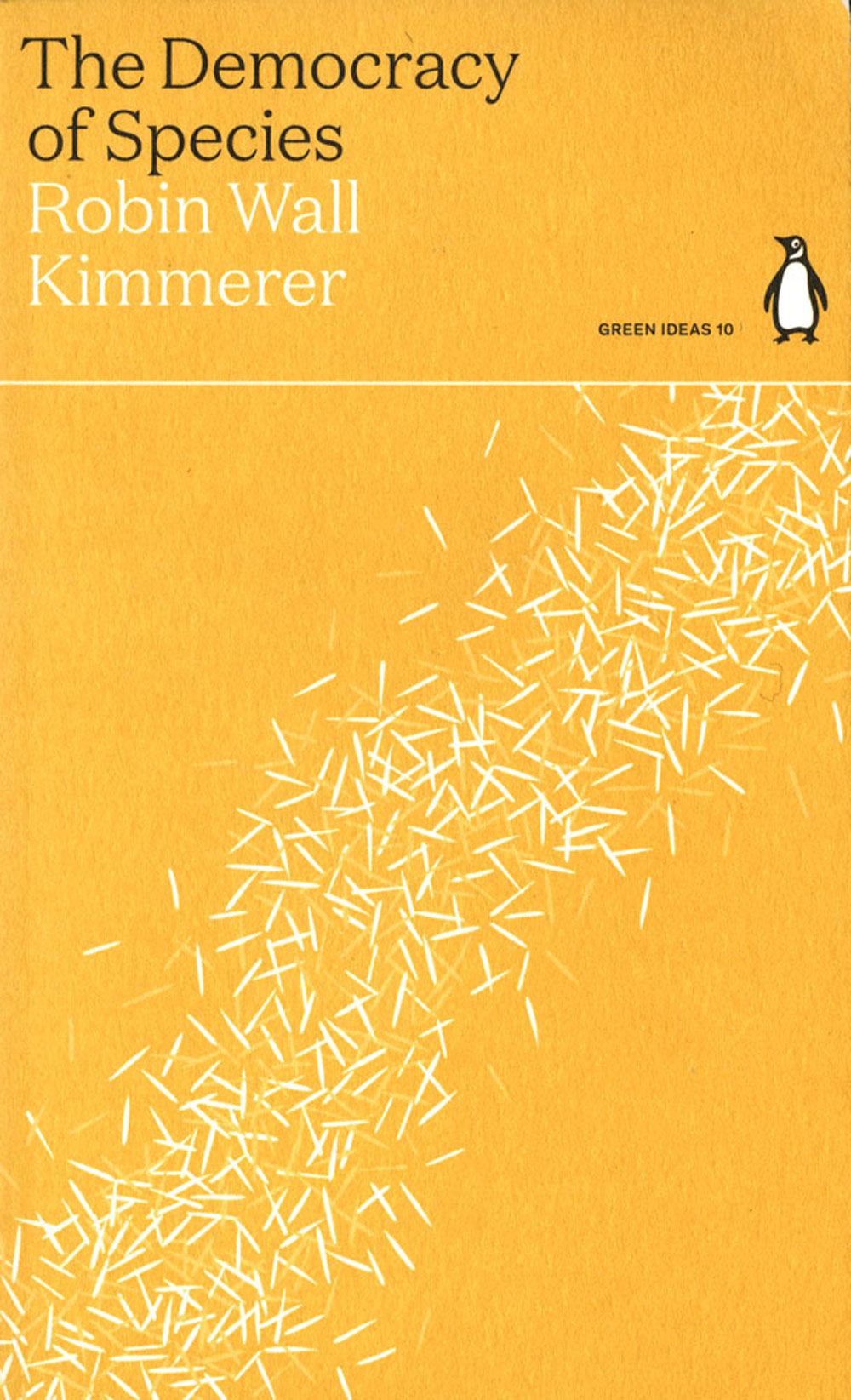
Although Kimmerer’s experiments take place on a different continent, the Americas share a history of violent conquest and occupation. Material from indigenous knowledge systems is infiltrating the mainstream more frequently and with more authority. The indigenous voice is relational, ethical, sensual, closely attuned to the natural environment and its ebbs and flows. The indigenous voice of connection is ubiquitous.
South African poetry in English, carefully and exhaustively studied by one of the acknowledged authorities like Michael Chapman, is rarely seen as an organic cultural artefact that emerges from the human landscape with various purposes including critiquing, remembering, and healing, but rather as moments of brilliant stylistic innovations in response to literary tradition practiced by those exceptional individuals, artists. The notion of purpose and spirituality is missing from the discourse of art in general and poetry in particular, written in registers that are squeamish about representations of emotion. But how to speak about the unspeakable, subject the numinous to the rigours of academic scrutiny? By not speaking about it at all, but recognising three practitioners whose poetic output, like Kimmerer’s, performs “everyday acts of practical reverence” (Kimmerer 2021) which restore the individual relationship to self, to other humans and beyond that, to the more-than-human world.
In the foreword to their introduction to the 1985 anthology, Voices of the Land, Marcia Levenson and Jonathan Paton have chosen poetry that was published after 1960 because “the flowering of poetry could be said to have taken place… since it is then that black poets began to be widely published.” (Leveson 1985) The anthology is named from a line from Jeremy Cronin’s poem, To Learn How to Speak, an echo which produces a politics of solidarity, evoking a kind of cultural, ethical ecosystem. Both the anthology and Cronin’s poem offer sound and tactile image to my attempt to propose a critical register for the poetics of Myesha Jenkins (1948-2020), Don Mattera (1935-1922) and Diana Ferrus (1953-2026), three poets whose prolific production – between the three of them, eight poetry collections, a memoir, two anthologies and countless performances – has yet to be plotted into South Africa’s literary canon.
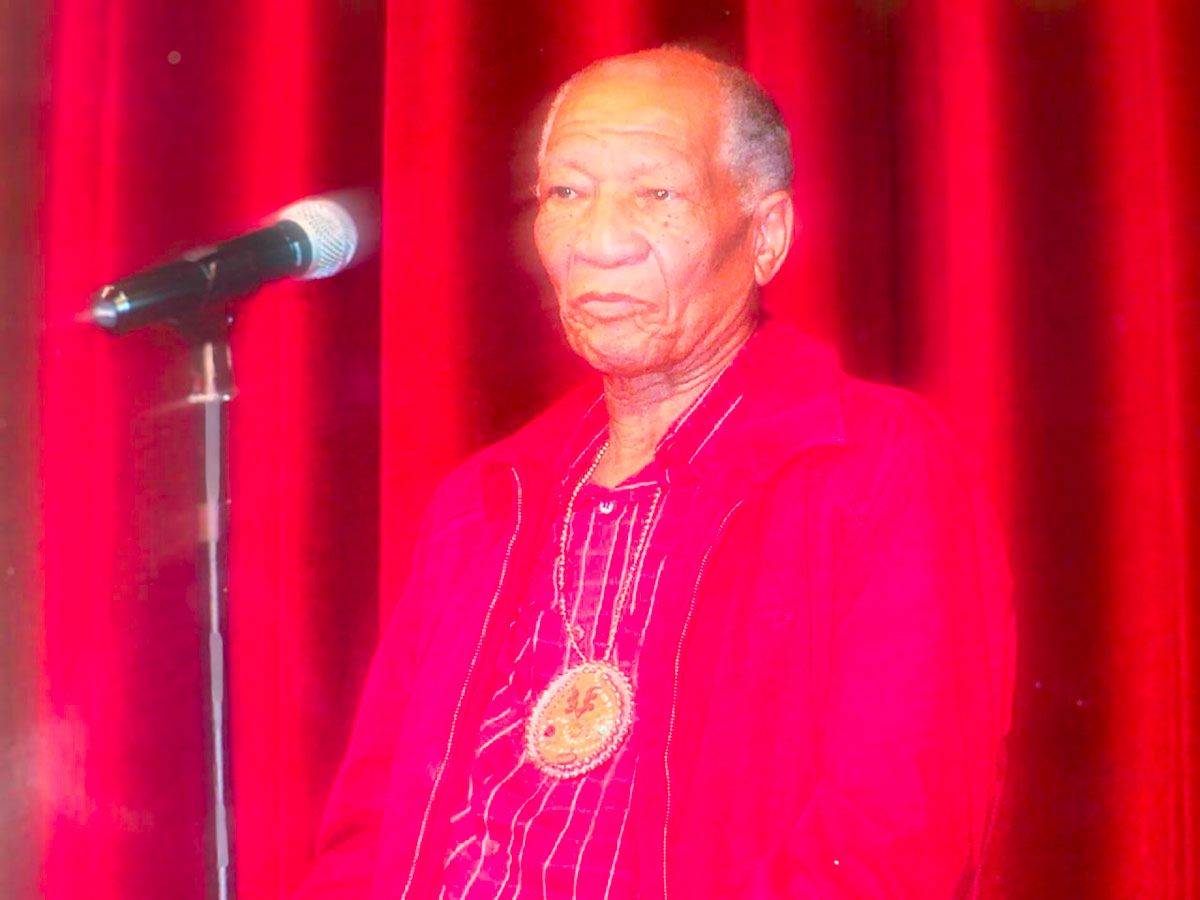
Each of the selected poets were performers whose singular voices and public service may have eclipsed the urgency to commit their work to paper and enter the conventional mode of literary production and its machinery of criticism and commercialization. These poets should rather be seen as contributors to orature and performative/ performance traditions, which are far more popular in South Africa than the written word, their poetry is teaching, prophesy and healing. They are ‘voices of the land’, South African indigenous poets writing in English, and their primary impact is restorative, not only through the words on the page, but through their performances, and their supplementary literary contributions – workshopping, mentoring, editing – work across communities of practice and ordinary people.
Cronin’s To Learn How to Speak begins with openness to the idea that there are things beyond our comprehension, and the primary tool for addressing this lack is learning, a learning facilitated by deep listening.
To learn how to speak
With the voices of the land,
To parse the speech in its rivers,
To catch in the inarticulate grunt,
Stammer, call, cry, babble, tongues knot,
A sense of the stoneness of these stones
From which all words are cut… (Cronin 1983)
The speaker of Cronin’s poem yearns for the land and its waters through its sounds and physical textures, the certainty of ‘stoneness’, permanence and stability. Besides their provenance in nature, stones are used to build walls, homes, and as weapons, suggesting that each of these functions produces language, produces meaning, a meaning that is inextricably tied to history and the place from which these ‘stones’ originate.
In her monograph Resistance Literature, Barbara Harlow, building on Palestinian artist and revolutionary Ghassan Khanafani’s writings, asks “Can they [Western literary theories] be deployed in analysing the literary output of geopolitical areas which stand in opposition to the very social and political organisation within which the theories are located and to which they respond?” (Harlow 1987). It behooves the scholar then, to attempt to assimilate the poetics of the writer, without imagining the intentions of the writer in some kind of authorial fallacy, but to attempt to parse the sources of poetic forms which “we can only understand … through an attentiveness to the preoccupations and dissonances of society and consciousness which have formulated them.” (Sole 2016)
This essay attempts to locate Jenkins, Mattera and Ferrus’ poetics within the broader whole by briefly exploring some of their poems and also other “restorative” acts that impacted on the people around them. Cronin’s poem seems appropriate because it evokes a quality that lies beyond language, a sensibility deeply attuned to the features of the landscape, which, by virtue of its occupation, is inaccessible and problematised. Like the poets in question, the poem speaks to what lies outside the margins and could easily be overlooked. Eventually the poem uses words in Afrikaans and Johannesburg township dialect, as if the land gave birth to language, not the other way round. It ends with repeating the opening couplet.
Three months before the children’s revolution of 1976, there were solidarity protests against apartheid at the University of Texas while the university was hosting the first meeting of the African Literature Association. In the Panel on Committed Writing, exiled South African poet Keorapetse Kgositsile cited Ayi Kwei Armah to set the tone for the discussion.
You hearers, seers, imaginers, thinkers, rememberers, you prophets called to communicate truths of the living way to a people fascinated unto death, you called to link memory with forelistening, to join the uncountable seasons of our flowing to unknown tomorrows even more numerous, communicators doomed to pass on truths of our origins to a people rushing deathward, grown contemptuous in our ignorance of our source, prejudiced against our own survival, how shall your vocation’s utterance be heard?
(Keorapetse Kgositsile 1976)
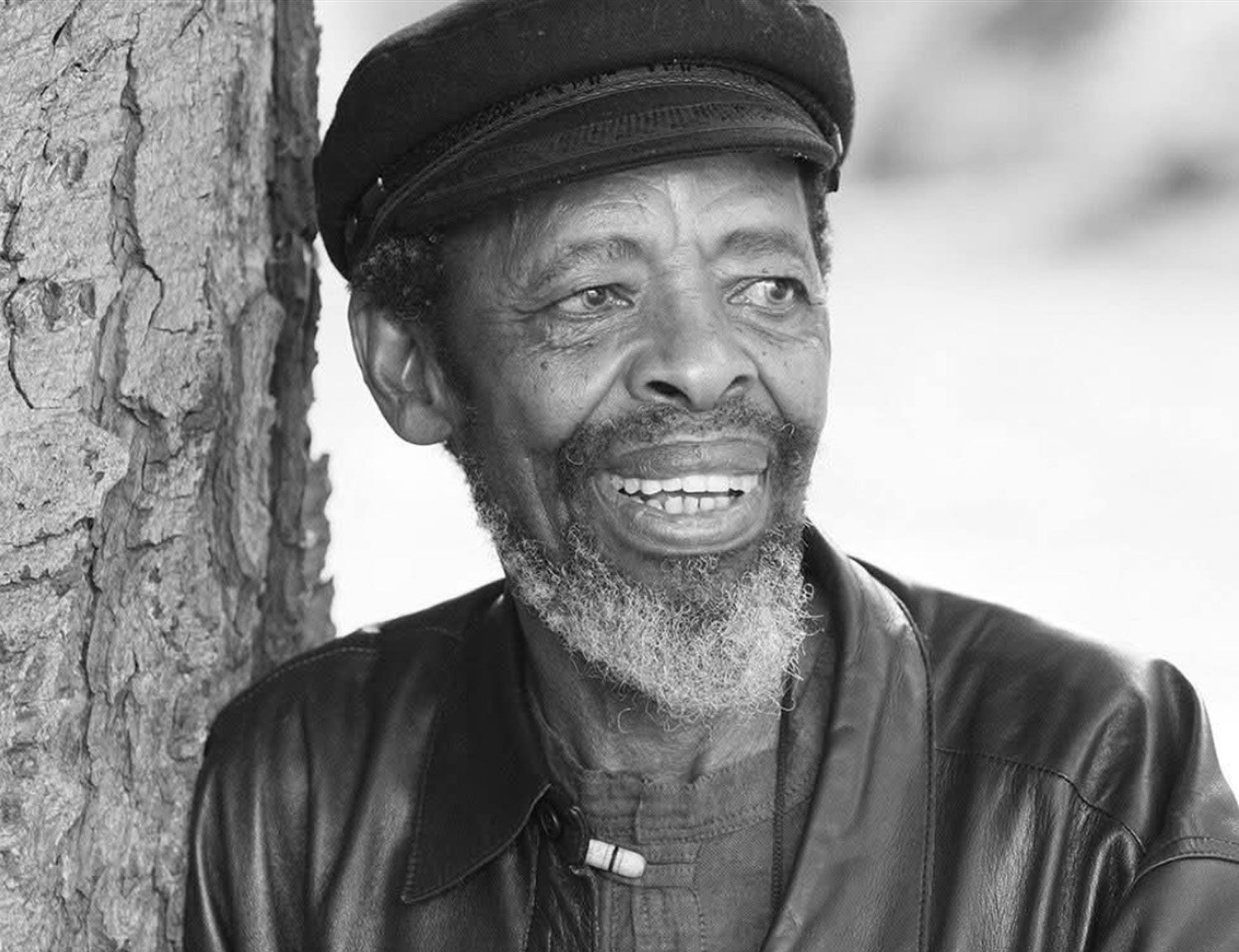
These writers saw their purpose beyond writing, and also expected themselves to contribute to change in their societies. The panel overtly made a case for their revolutionary aesthetics, which challenged existing assumptions about literature and aesthetics. For Kgositsile ‘poetry of commitment’ is a poetry that “might instigate the people to action, that might create something other than peace in South Africa.” (Keorapetse Kgositsile 1976) While Mattera was part of this cohort, Ferrus and Jenkins’ work came later, but I mention it because there is a clear commitment to certain values, which may have changed over time but broadly align with the anti-apartheid struggle for freedom and broader decolonial demands.
I link Jenkins, Mattera and Ferrus to what Mignolo and Walsh describe as “translocal struggles, movements and actions to resist and refuse the legacies and ongoing relations and patterns of power established by external and internal colonialism … and the global designs of the modern colonial world.” (W. A. Mignolo 2010) Kgositsile’s argument asserts that “anytime you … sit at a typewriter, you are either opposing, affirming, or proposing certain values, which means every time you do that, you are showing your commitment. In a situation of oppression, there are no choices beyond didactic writing; either you are a tool of oppression or an instrument of liberation.” (Keorapetse Kgositsile 1976)
Louise Bethlehem claims that “discussions of literary function and value in South African literature in English … are refracted through an elaborate rhetoric of urgency that strains to effect a secular closure between the word and the world precisely to safeguard the ethical claims of South African literary culture.” (Bethlehem 2001) Bethlehem draws from Ndebele’s Rediscovery of the Ordinary, Mphahlele’s The Tyranny of Place and Nkosi’s Home and Exile to propose that, in Mphahlele’s words, “The intention to make literature is either ignored or subdued.” But for Kgositsile, Brutus, Achebe and Mazrui, there is no separation between literature and life.
One does not “make literature” elsewhere than in one’s own life.
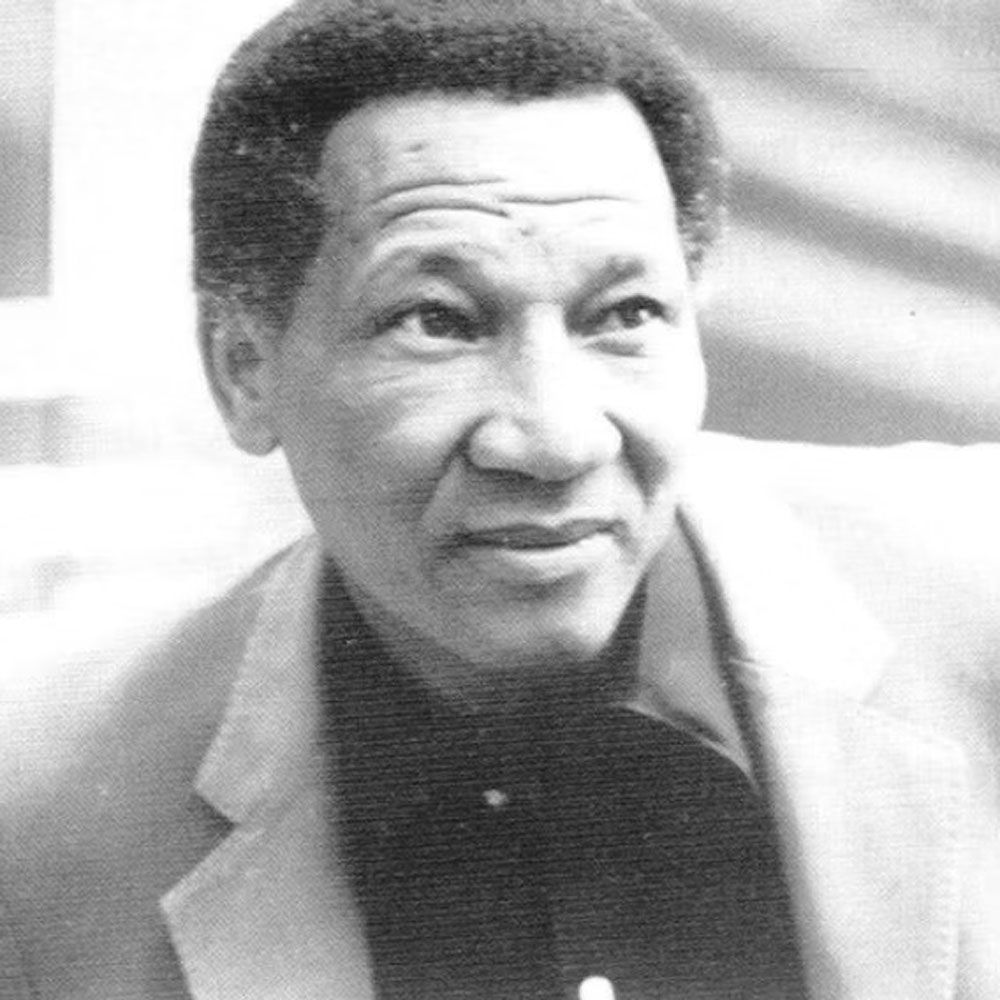
Don ‘Bra Zinga’ Mattera: Western Township’s poet laureate
Although Jenkins and Ferrus’ poetics also aspire to transformation, Mattera’s work would be closest to Kgositsile’s formulation of the ‘committed poet’ with its more overt preoccupations with the struggle and injustice. As Bhekizizwe Peterson observes in his chapter on Vilakazi,
The nationalist poet who operates from the intersections of history is compelled …to try and apprehend the future at the very moment when it is being painfully spawned out of the mesmerising ruins of the past and the alienation of the present. (Peterson 2000)
Most of his poems are short lyrics, memorializing the lives of what he calls “the debris/the litter…” (Mattera, The Moon is Asleep 2008)A prolific poet, with hundreds of poems anthologised, most of his collections were banned as he produced them during apartheid. I, it was only after the end of apartheid that his works could be gathered to be published in volumes that included earlier poems. The trauma of forced removal is a recurring theme in his poetry and the central idea in his seminal memoir, Memory is the Weapon. As he describes in The Day they came for our House, “Slow, painfully slow/clumsy crushes crawls/over the firm pillars/into the rooms/and the roof that covered our heads…” (Mattera, Faces of Trees 2008).
In Song for Yesterday, he croons “Oh Sophia, Sophiatown/you speak to me from the ashes of broken days” (Mattera, Faces of Trees 2008). Mattera, like Ferrus, chronicles the effects of separation, “when as a child/I was torn from family/and home;/a family that lay crumpled on my return.” (Mattera, Faces of Trees 2008). On the page, the poetry is still filled with the feeling of his voice.
It is important to locate the specifics of Mattera’s voice, because “Without carefully historicising oral forms, one runs the risk of consigning them to a monolithic and undifferentiated time and space. One also runs the risk of projecting the present into the past.” (Hofmeyr, Not The Magic Talisman: Rethinking Oral Literature in South Africa 1996).
Don Mattera worked as an usher in the Odin cinema in Sophiatown and once told me that he saw the 1963 version of Anthony and Cleopatra, with Elizabeth Taylor and Richard Burton, hundreds of times and memorised all the lines. No doubt this exposure to fine diction and the high drama of Hollywood acting lent fire to his own particular voice, as did the stories told by his large Italian family and the poetics brought to the city by his Xhosa mother, who also spoke Setswana and what was then called Khoi-Khoi – an indigenous language.
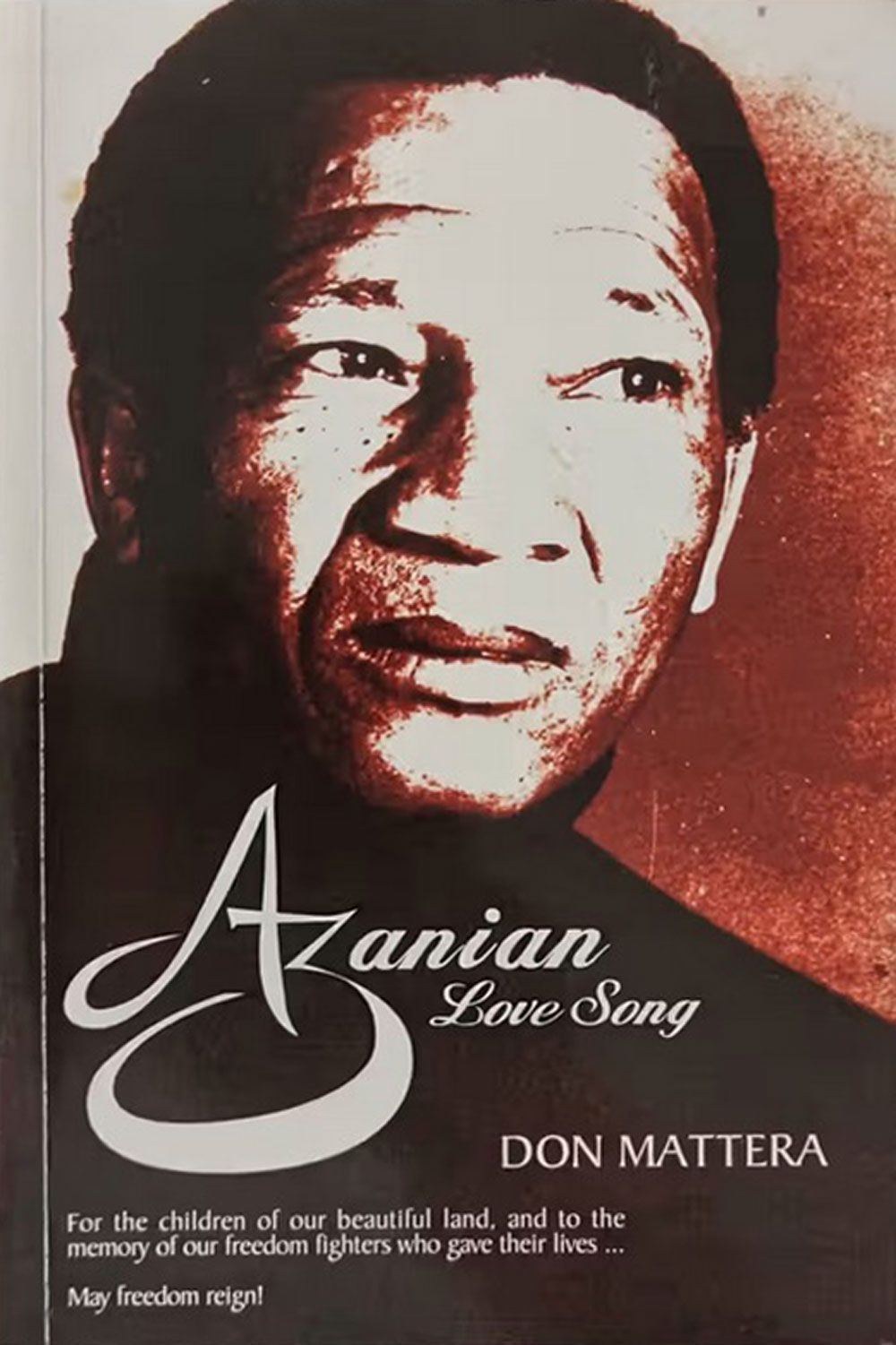
From 1973 until 1982 he was banned by the apartheid government and spent a significant period under house arrest. Banning restricted writers’ literary production, not only were they forbidden to publish, but even writing was also not allowed. During this period he converted to Islam, and a significant number of the poems from Azanian Love Song and The Moon is Asleep address the Beloved like the Sufi poets Rumi and Hafiz.
I was privy to a moving moment in 2007 when travelling to Cuba with Keorapetse Kgositsile, Siphiwo Mahala, Lebo Mashile, Khanyi Magubane and James Matthews, which was repeated again when travelling to the United Kingdom with Kgositsile, Don Mattera, and Siphiwo Mahala. When walking through the airport after surrendering our luggage, we were surrounded by the waiters, cooks and cleaners that run the airport and are largely invisible. It was clear that these poets were recognised and valued members of society, that they provided something that all the plethora of cultural products could not satisfy. Indeed, when a tragic stampede killed 43 soccer fans at Ellis Park during a match between Orlando Pirates and Kaizer Chiefs in 2001, Mattera spontaneously created a poem in response, which offered comfort and calm in a moment of trauma. Like an emergency healthcare worker, he quickly moved to offer much-needed emotional support through his primary mode of expression, poetry. Highly dramatic as befitting the occasion, “Ah, the flaming tear within that mother’s eye/Ask why her tortured child should cry,’/’Why flesh that mirrors God, must die.’
I also witnessed Mattera’s popularity travelling to the Northern Cape Writers Festival in Kimberley and elsewhere in the country on several occasions. It was not only in the act of oration, or recital of his poems that I saw the deep respect and love that all kinds of people, gardeners, police people, clergy, children, cooks, had for him. He was also a great listener. He would ask questions and then bend his head attentively towards them. Afterwards, when we returned the following year, he would remember the names and faces, conferring on them the same respect they had for him. I am aware that these memories do not have the authority of numbers like the statistics recorded on Spotify, the online listening platform. I can’t quantify their value; like the community of listeners to a poem, the reader will determine its purpose.
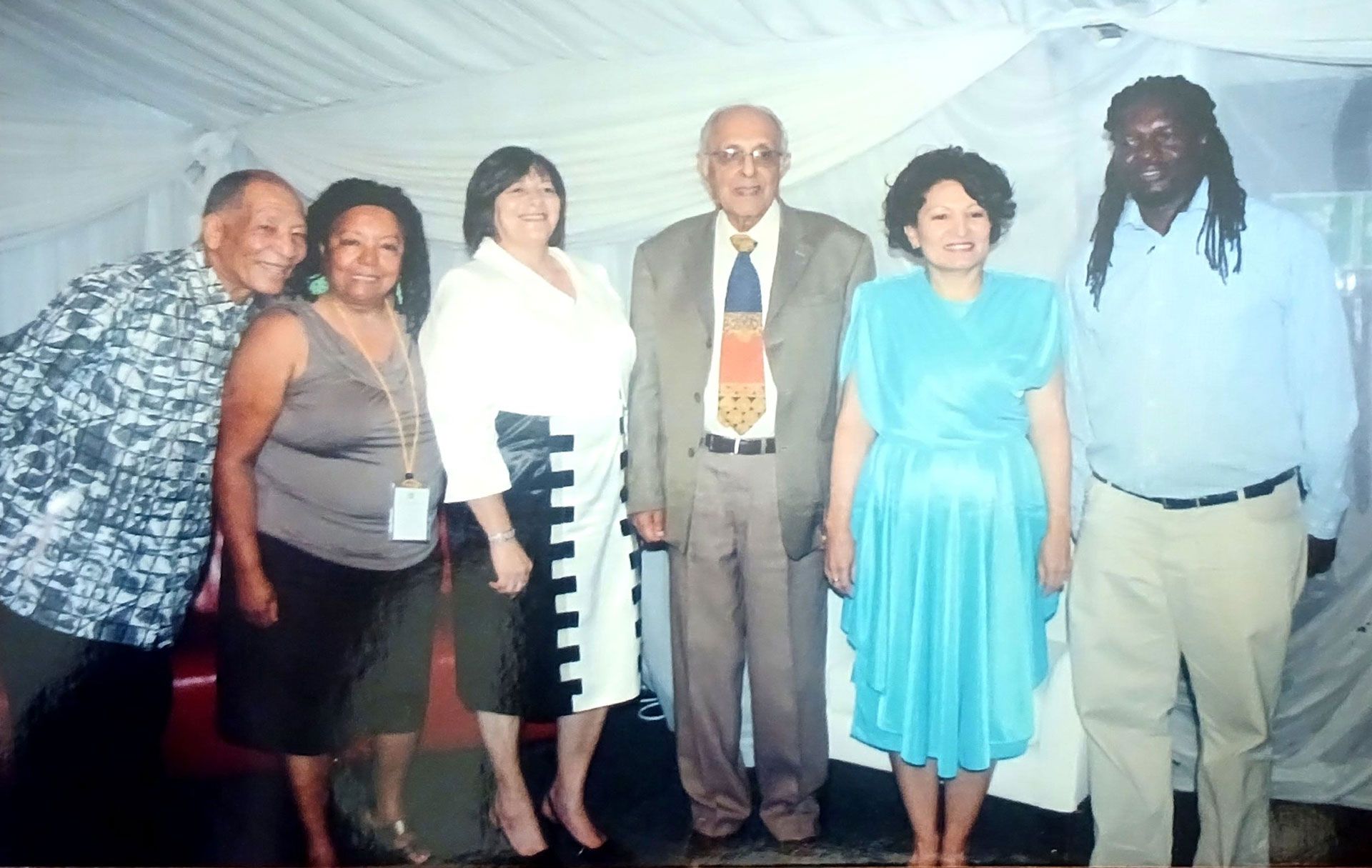
Diana Ferrus: Keeper of History and the family
Like Mattera, Diana Ferrus wrote English and an Afrikaans that is rare and exquisitely precise. Poets are also guardians of literary value and reference the great poets in the tradition and in the epistolary anthology of daughters’ letters to their fathers Slaan Vir My ‘n Masker, Vader, Ferrus and her co-editor invoke NP van Wyk Louw’s Asterion. In her letter to her father a young Diana tells her father that “ek kan nou ‘n [Don Maclean] CD bekostig” and recalls how “Ek was net so vol weemoed toe ek ‘n tiener was.” (McKerron n.d.). Looking up the dictionary definition of ‘weemoed’, I note that it doesn’t appear in more recent dictionaries, but exists in older Afrikaans dictionaries. ‘Weemoed’ is a Dutch word, deepening and complicating the emotion of sadness.
Family relationships are particularly poignantly observed in Ferrus’ work, which lends to her poems about large historical themes like slavery, an intimacy which effortlessly makes the political personal.
Was dit my ma se ma se ma, se ma, se ma,
of
haar pa, se pa, se pa, se pa
in boeie,
vasgemaak
en diep onder
in ‘n skip gegooi,
en nagte lank en dagte lank
gevoel het hoe waters hard
aan hulle ore slaan?
Wat was hul gedagtes?
Het hulle gehuil?
Het hulle gevrees?
Het hulle gebid
vir die dood om te kom? (Ferrus, Ons Kom Vandaan 2005)
The percussive rhythm of the short lines, the repetition of sounds recalls the rhythm of the ocean, but instead of locking the poem into a predictable shape, it has the sense of a nursery rhyme or game, which ends with a question and openness.
Poetry is the oldest language, so old that it can contain the sharpest of contradictions.
While a sense of connection is what one hopes to experience from most poems, these poets’ work ranges beyond the remit of literature into law, ecology, history and wherever they are needed. They enter the world with the purpose of spreading empathy, as Warsan Shire’s poem What They Did Yesterday Afternoon tells us. “they set my aunt’s house on fire/i cried the way women on tv do/folding at the middle/like a five pound note.” (Shire 2012)
If the purpose of the sciences is to elevate the highest human achievement of discovery, the purpose of the humanities is to demonstrate the best of humane qualities. Ferrus’ iconic poem I’ve Come to Take You Home catapulted her to international fame, and importantly, keeps Sarah Baartman and what happened to her part of the debate on human rights. But it is a poem, not a manifesto, and rich with sensory detail “the lush green grass beneath the big oak trees”, “your blankets are covered with buchu and mint”, “the proteas stand in yellow and white” (Ferrus, I’ve come to take you home 2010)
The poet, in her homage to Baartman, fulfills the aspiration articulated so elegantly by Makhosazana Xaba in Tongues of their Mothers: to “conjure[s] up her wholeness” (Xaba 2008) through her praise of the land, the flora and the whole natural world. By connecting the burial of an historical figure who has come to embody and epitomize colonial cruelty and dismemberment, to a stream that “chuckles sing-songs/as it hobbles over little stones”, the poem offers comfort and dignity to anyone who identifies with Sarah Baartman. Xaba’s injunction is to be “silent on her torturers” (Xaba, 2008): Ferrus diminishes them; they literally don’t exist, not in an act of ‘magical thinking’ erasing them and their acts, but by focusing on her resilience and the many ways in which the community can honourably lay her to rest.
Eendag’s speaker is between childhood and adulthood “wanneer die kinderskoene my voete nie meer pas/en ek uit my valle-rokkie bars/sal ek oor my lewe spring en ‘n ander een begin…” (Ferrus, Ons Kom Vandaan 2005) The images are vivid, and more so when performed – Ferrus often memorised her poems and recited them as if she were speaking. There are many videos of her performing online, at schools, at galleries and other educational events. Ferrus was the very picture of the vocational poet, and epitomised the traditional poet as envisaged by AC Jordan in Tales of Southern Africa.
Publishers who have brought the work of these poets to light are rare, and tend to be outfits that are run by poets themselves: Vonani Bila’s Timbila and the Botsotso collective, led by Allan Kolski Horwitz, have published multiple poems of each of these poets, and Timbila published Jenkins’ first collection, Breaking the Surface (2005). Poets of connection, the voices of the land often self-publish their work, a practice which has advantages and disadvantages. They retain creative control and can also maximise whatever income may accrue from selling the books. In the case of all three of the poets in this article, their meticulous attention to the spelling and layout of the books makes them as professional as conventionally published books. One of the disadvantages of self-publication is the stigma – some bookshops only stock books from conventional publishers, so distribution is a challenge, and many writing competitions discriminate against self-published books.
Myesha Jenkins: Jazz and Revolution
Born in San Francisco in the United States of America, Jenkins first engaged with South Africa as an anti-apartheid activist and a jazz-lover. Her relocation to the country in 1993, where she remained until her death in 2020, was a profound encounter with an aspect of her identity she had only ever dreamt of – that of a poet. She began her expressive career as an activist, fighting apartheid, sexism, and importantly, publicly articulating debates, policies, historical narratives. One of the striking features of her poetry is its clarity and directness, one of the reasons it sometimes received critique. But her vivid observations of ordinary people are rendered so economically as to burn themselves in the reader’s memory. “100% pure bitch/said her t-shirt/trying hard to be grown” (Dream Girl) (Jenkins 2005) “wet clothes clinging to big bodies” (Gathering of the tribe) “Like that litchi you love so well/I lay brown and a little rough” (Litchi) “A small wad of carefully wrapped cheese/tucked in the corner of the cutlery drawer” (Dementia) (Jenkins 2011).
Jenkins claimed sensuality as a human right, the erotic always within reach.
She balanced poems that reflected the horror of violence against women, with moving poems about intimacy, flirting, and good men. Because she began writing poetry in her 40s, her poems chart aging, the changes that women experience, and the relationship between different generations with a simmering intensity.
In the middle of life
There is so much more
Learning nakedness repeatedly
I am quietly voracious (Jenkins 2005)
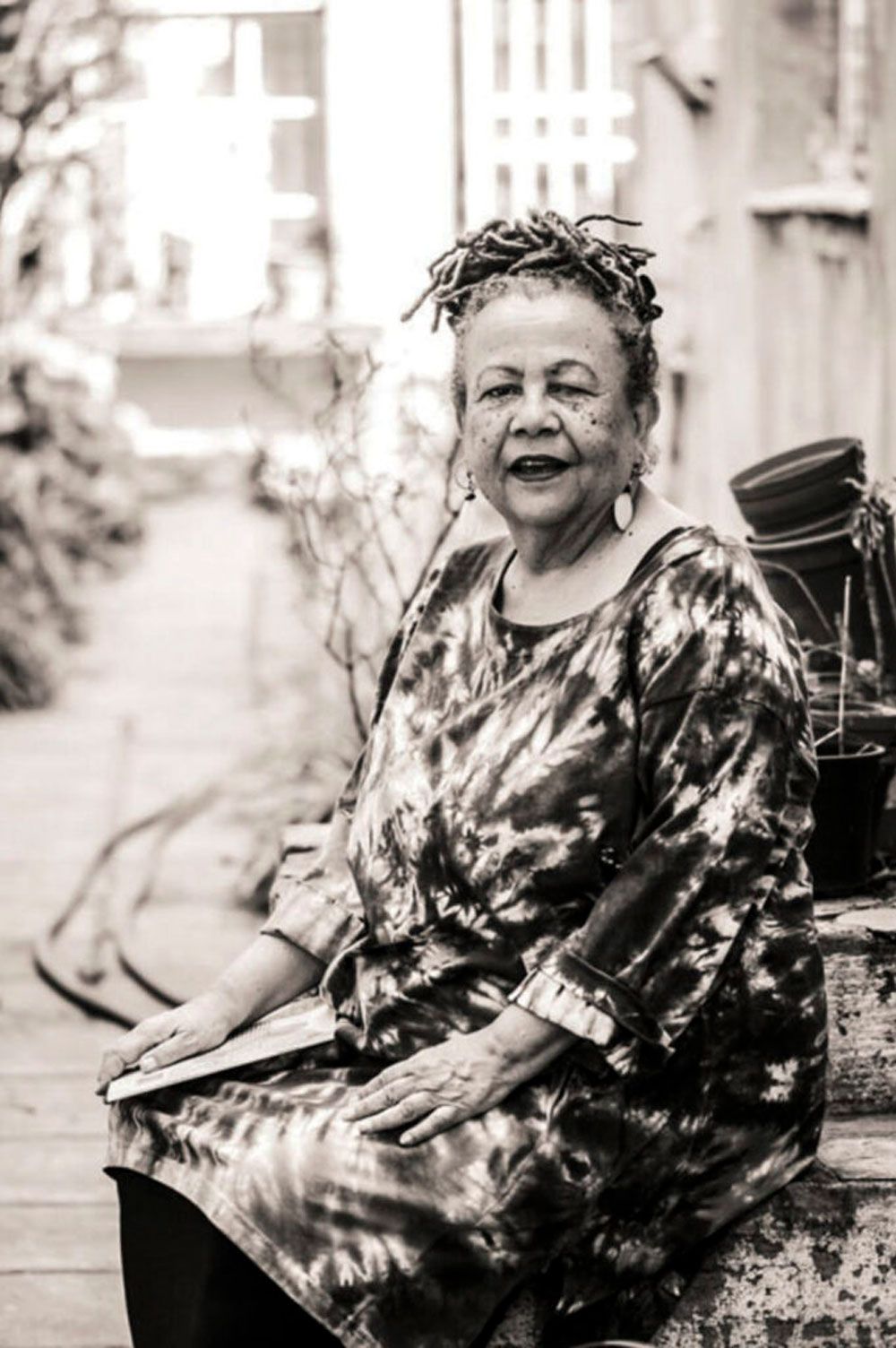
The combination of jazz with poetry was a large part of her generous legacy, many of her poems are honorific odes to various jazz greats or vivid renditions of jazz experiences: “on Sunday afternoons/old me sit under a tree/listening to their music/laughing loudly/sipping brandy and coke/tapping their two-toned shoes/remembering dreams of /red dresses and flying brown legs (M. Jenkins, 35 Poems 2021).
She initiated Poetry in the Air, an annual month of poetry on South African FM (SAFM) which aired for five years, where she gave at least 100 poets a slot to read their work, for many of them their first exposure to the medium, and their first national audience. She followed this with a jazz and poetry show on Kaya FM, and also curated several poetry shows, the most significant being at the Orbit, which gave many poets a chance to read their work with a live band.
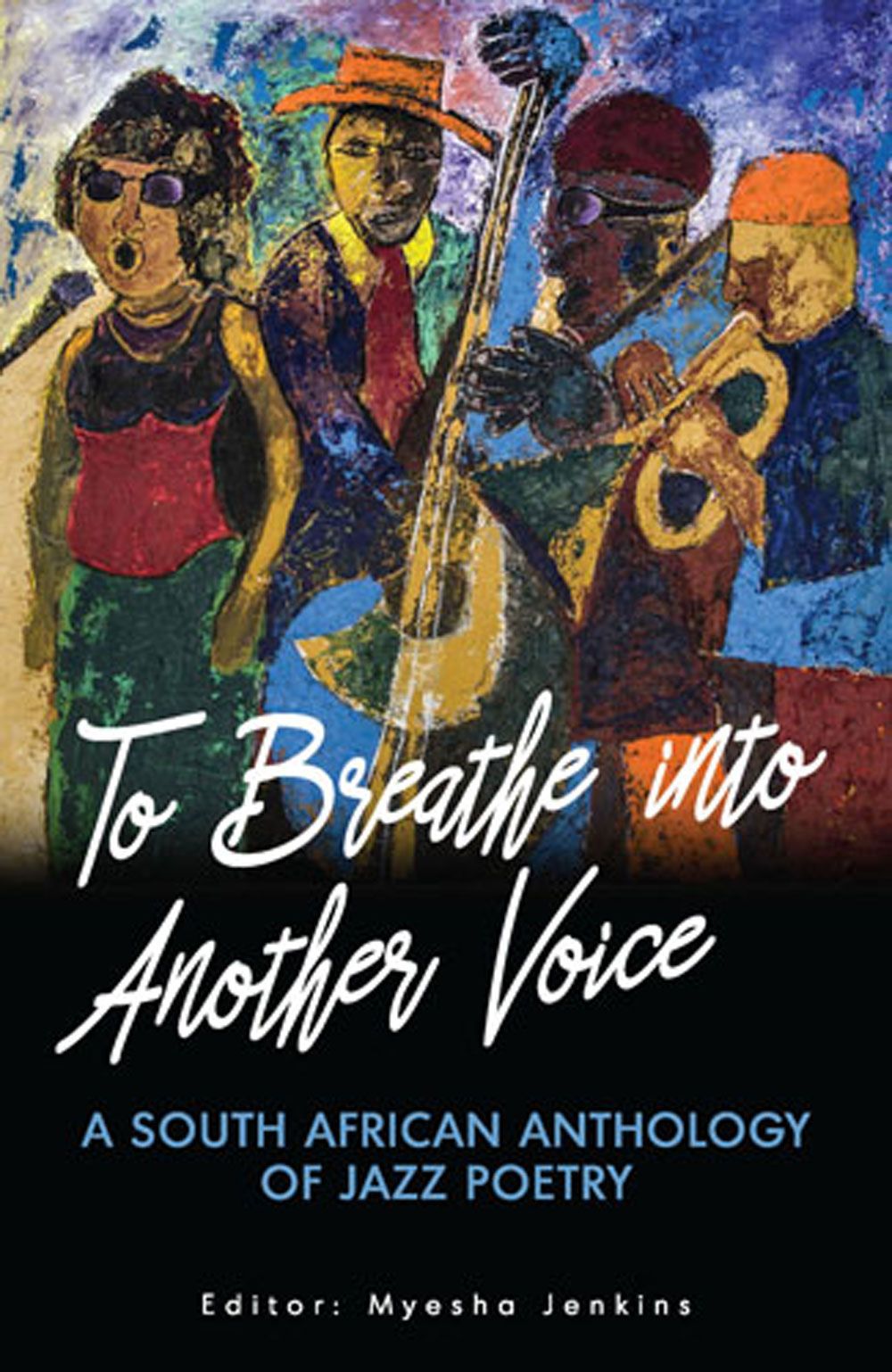
She compiled and edited the first jazz poetry anthology in South Africa, To Breathe Into Another Voice, and writes in the foreword: “You will encounter the landscapes and cultures of this diverse nation. These poets truly represent South Africa as they open up, revealing the myriad ways that jazz has shaped and impacted on their lives.” (M. Jenkins, To Breathe Into Another Voice 2017)
Poets of connection serve various parts of society with their art, rather than engaging only within the narrow literary space. Their poems perform the crucial work of naming violation, celebrating achievement, critiquing excess and observing humans, what they make, and the natural worldaroundus. Mattera and Ferrus had complex identities, and owned all of them, publicly speaking in their ancestors’ voices. Despite her foreign birth, Jenkins embodied the continuity that indigeneity offers. Her poem, Heritage lists her inherited characteristics and what she has made of them. It concludes
“My people were African, Choctaw, Irish and Cherokee/I am black”
The poet, as creator, links individuals, phenomena, movements, aspects of the world in such a way that it can see itself differently. For poets of connection, and their promoters and publishers, these links are intended to restore – pride, dignity, humanity.
Bethlehem, Louise. 2001. “‘‘A Primary Need as Strong as Hunger’’: The Rhetoric of Urgency in South African Literature under Apartheid.” Poetics Today 22:2 365-389.
Cronin, Jeremy. 1983. Inside. Johannesburg: Ravan Press.
Ferrus, Diana. 2010. I’ve come to take you home. Cape Town: Diana Ferrus Publishers.
—. 2005. Ons Kom Vandaan. Cape Town: Diana Ferrus Uitgewery.
Harlow, Barbara. 1987. Resistance Literature. New York: Methuen.
Hofmeyr, Isabel. 1996. “Not The Magic Talisman: Rethinking Oral Literature in South Africa.” World Literature Today , Winter, 1996, Vol. 70, No. 1 88-92.
Hofmeyr, Isabel. n.d. “Not the Magic Talisman: Oral Literature in South Africa.” World Literature Today , Winter, 1996, Vol. 70, No. 1, South African Literature.
Horwitz, Allan Kolski. 2005. Isis X. Johannesburg: Botsotso.
Jenkins, Myesha. 2005. Breaking the Surface. Elim, Timbila Poetry Project.
Jenkins, Myesha. 2021. 35 Poems. Kraaifontein: Lukhanyo Publishers.
—. 2011. Dreams of Flight. Johannesburg: Geck’o Publishing.
—. 2017. To Breathe Into Another Voice. Johannesburg: Real African Publishers.
Keorapetse Kgositsile, Dennis Brutus, Chinua Achebe and Ali A. Mazrui. 1976. “Panel on Literature and Commitment.” A Journal of Opinion , Proceedings of the First Symposium of African Literature Association, Spring: 34-36.
Kimmerer, Robin Wall. 2021. The Democracy of Species. Milton Keynes: Penguin Books.
Leveson, M and Paton, J. 1985. Voices of the Land. Johannesburg: AD Donker.
Mattera, Don. 2008. Faces of Trees. Johannesburg: African Morning Star Publications.
—. 2008. The Moon is Asleep. Johannesburg: African Morning Star Productions.
McKerron, S and Ferrus, D. n.d. Slaan Vir My ‘n Masker, Vader.
Mignolo, W and Walsh, C. 2010. Decoloniality: Concepts, Analytics, Praxis. Durham and London: Duke University.
Mignolo, Walter and w. n.d. On Decoloniality: Concepts, Analytics, Praxis.
Peterson, Bhekizizwe. 2000. Monarchs, Missionaries and African Intellectuals: African Theatre and the Unmaking of Colonial Marginality. New Jersey: Africa World Press.
Sole, Kelwyn. 2016. ““Here it is safe to assume nothing at all”: aesthetics and the impasse of South African poetry criticism.” Scrutiny2 (21) 2, https://doi.org/10.1080/18125441.2016.1192674: 85-98.
Xaba, Makhosazana. 2008. Tongues of their Mothers. Pietermaritzburg: University of Kwazulu-Natal Press.