PHILANI A. NYONI
The Mad
I received a copy of Ignatius Mabasa’s The Mad with the anticipation of a bottle green fly washing its hands over a pile of human shit. I like shit, good shit, Ignatius usually writes good shit and I hoped this one, J. Tsitsi Mutiti’s translation of his iconic debut, Mapenzi, would fall into that category.
Soon after getting into the text I had the feeling I should read the original book in chiShona. I suppose I wanted to see how far from the original text The Mad had strayed. I was bothered by the translation of “Shirikadzi inochema-chema” into “The widow sobs” (36). It felt inadequate, and so I got the original version, in chiShona, and began to read them side by side. I quickly abandoned the comparison, satisfied that language carries a whole world on its shoulders: cosmology, symbols, blood memory and all that juicy stuff.
I have, for a while, been speaking to Mabasa about translation, have followed Ngugi’s spectre to Limuru and stood in the Polytechnic raised where his theatre was razed, and one thing I know for certain, is that translation is more an act of rewriting.
A simple phrase like “he felt as if a heavy person was sitting on him” when read in chiShona has supernatural connotations which the English does not convey, unless one chooses to overexplain.
In the same vein, there are instances where the Shona idiom shines through translation, and the translator’s care is evident when she prefaces with phrases like “the ancients knew about life when they stated…” (51). I abandoned my duel-wielding style and decided to read The Mad for what it is, not the book I had formed up in my head.
In this translation, Mabasa’s timelessness shines through. What seemed to concern the writer in the year 2000 is still contemporary; in the eyes of his characters I saw a Harare that hadn’t changed much in twenty years. Over the course of my reading, I pondered one question: WHAT IS MADNESS? According to Einstein, it is doing the same thing over and over while expecting different results.
“I am not mad, but I know those who are mad” (183). We are offered many definitions of madness throughout the book, blessed with various samples and each invites one to ponder deeply. Sometimes madness is pathological, at times behavioural. It is institutional as well, it is all around us. Stylistically, it is not deployed as a tool with scat and jazzy rhythm like Brian Chikwava’s Seventh Street Alchemy, but appearances can be deceiving. Perhaps the style represents some semblance of sanity, a world that looks ordered and stable, but beneath the surface, fire burns and cauldron bubbles.
The text is acutely aware of its timelessness.
On page 15 the narrator laments not being able to read his Mungoshi in an unlit minibus, on page 19 we are offered an insight into the persona’s inner turmoil when he says, “Now I appreciate Dambudzo Marechera’s sufferings as he carried around his idiosyncratic ideas, with those who didn’t think the same way as him calling him insane”. Again, the reader asks, WHAT IS MADNESS? It is interesting to ponder that line in connection with one on page 15, “No, don’t think that I am mad. When I am out of my mind I will let you know.” Or another on the following page: “Where can you find the strength to argue with someone and convince them that you aren’t crazy? It is not possible. That only makes them think your madness has stepped up a notch”.
In these passages, the author not only nods at Marechera and Mungoshi, like books that have literary characters are wont to do, there is hint of legacy and continuity, which justifies the existence of this publication as though answering the question of what has changed from the Harare Marechera sketched in Mindblast, or the place Mungoshi’s Lucifer Mandengu described as a failure’s junk heap in Waiting for the Rain.
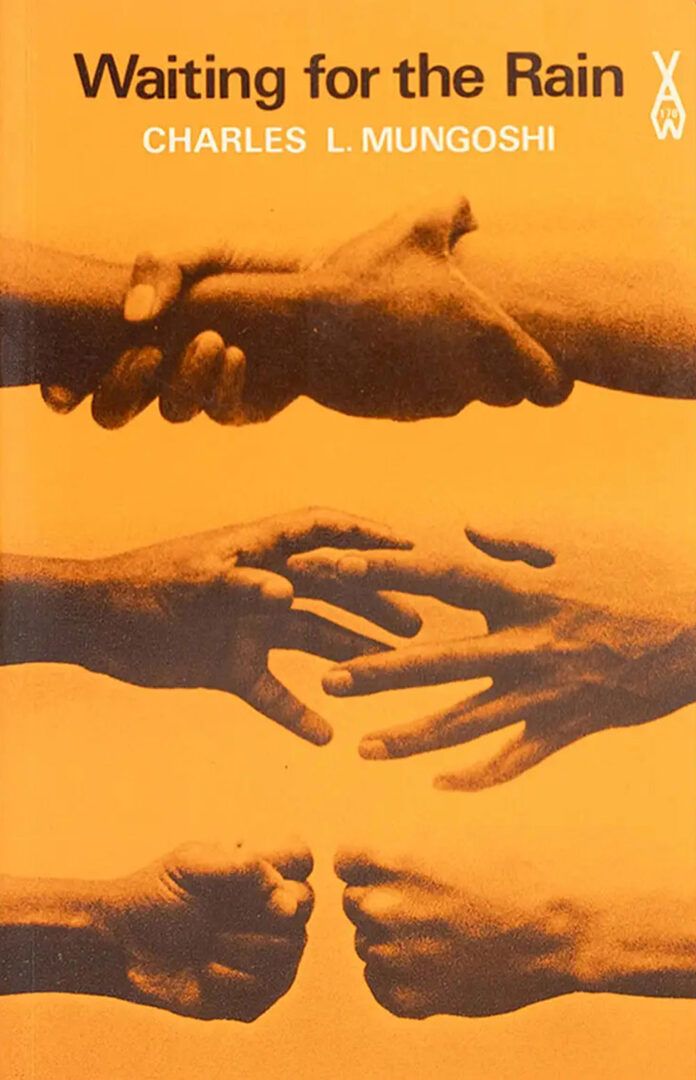
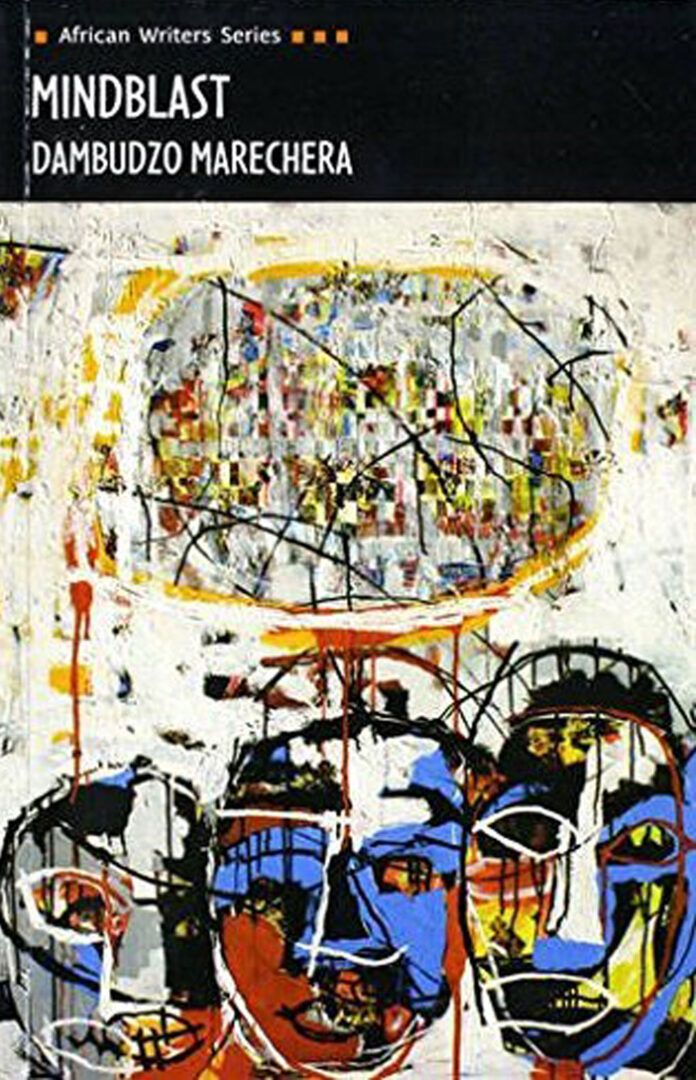
Marechera, Mungoshi and Stanley Nyafukudza are often described in Zimbabwean literature as the Unbelievers who were disillusioned early with the liberation struggle. In Mabasa’s offering, the liberation war is a major part of the plot, and this time we see the fortunes of those who faced the bullets turned upside down, mostly through the plight of Hamundigone. “I am no longer a comrade, every other lizard is now calling itself a comrade” (36).
The population is vastly disillusioned with the war, those ‘born free’ profess that, “…this war you always talk about has nothing to do with us. I don’t even know what Smith, whom you fought, looks like, so don’t keep irritating us. Were you forced to go to war?” (111). Meanwhile, some are claiming to have fought in the war and it seems to be a currency of power (183).
It is still an Animal Farm, as per a subtle nod to Orwell that references the new elite as not made in the image of God but with hooves to tread on the masses (18). The country seems to have gone to the dogs; and that is why “my brother is a real dog, like Harare” (85), an image that’s a bit on the (wet?) nose, since we have an actual dog named Harare featuring in the novel.
Nutters are not welcome near Parliament, “even though the place itself is riddled with lunatics” (23). Although, I dare say, across the world, very few houses of Parliament aren’t nuthouses. Sewage flows in the streets (71), “Harare is worthless. Like bubblegum that has lost its flavour and just wastes your energy in chewing.” (38). Harare is brutal (57). Harare is a witch (35). Harare is a garishly painted whore… Harare is shameless do you know – and heartless. It is immoral like a plate that you dish out on even though it has not been washed… Harare! I fear Harare! (40). The Zimbabwe portrayed here, “has scooped out my spirit, the same way you do when digging a grave” (15). And whose fault is it? “…it’s those who have so pissed on you that even a war slogan has become nauseating” (13).
The pages are heavy with the smell of decay.
Not just the piss and sewage drowning out the streets that even the blind know by smell when they have reached, but everyday life itself is in decay, “the life of youths in Harare is much like the heavily polluted Mukuvisi River” (56).
In Harare, “…the truth is that we all prostitute ourselves” (64). Although the characters are well sketched and fleshed out, we see people alienated from themselves, transformed by poverty into caricatures in this Harare. They begin “to act like Americans who have no time for others” (25) and even walk headlong into destructive ways through alcohol and substance abuse, after all, “what way is not death?” (219)
“Totems and clan names in Harare are the car you drive, the chequebook and MasterCard you carry, the suits you wear and the cellphone you have” (46).
Humour carries this text a long way, reminiscent of Marechera’s House of Hunger where the horror of the details is saved by the quality of writing. The situations may be tragic but you have to laugh. It is not a damp and morose story of trial and flowing shit, that river of shit has many nuggets in it, sometimes the simple advice, like, “Bunny, do you know that if you steal you’ll be arrested? So let some things alone, like a sister’s breast” (194), because, “you may admire your sister’s breast, but no matter how arousing it may be, there’s not a thing that you as a brother can do about it” (44).
I hate that this book comes at a time when we have become obsessed with African positivity and enjoy labelling critical writers like Noviolet Bulawayo sellouts, a time when we seem to have forgotten that literature is a mirror, and breaking it doesn’t improve your veneer. I think such criticisms do not consider who we are writing for. For me, as it is with Stephen King, “writing is necessary for my sanity. As a writer, I can externalize my fears and insecurities… I’m able to ‘write myself sane’”.
It is still a good story, and for those who have seen sewage flow in the streets who have run out of candles during power cuts, or seen people lose their sanity and still go to work, with nobody stopping them even though they are crazy (34), it stands as relevant today as it did back in the year 2000 when it ws first published. If only African writers could choose to write something more positive; right? Well, “…’if only’ is a madman’s philosophy” (55).
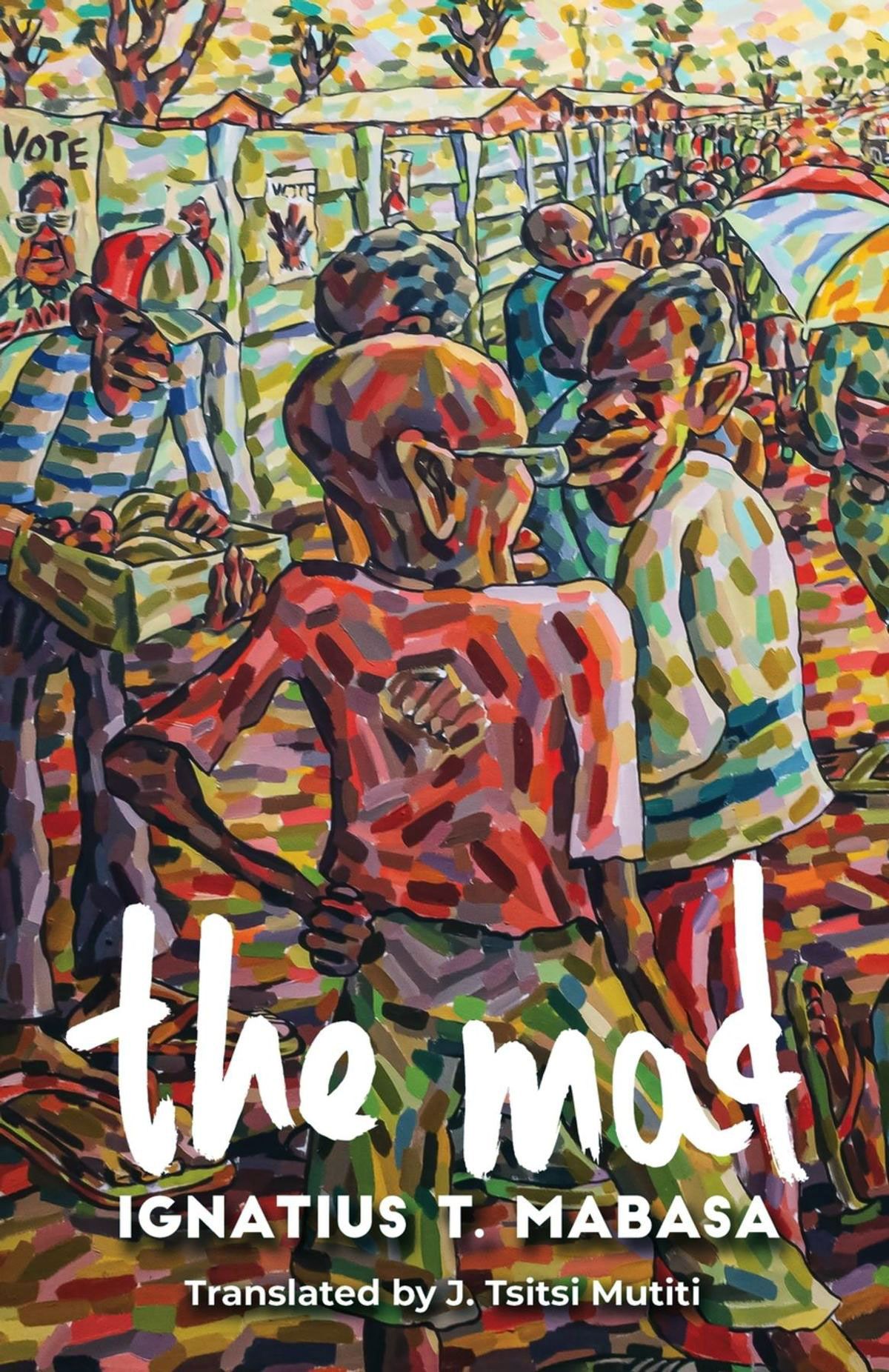
TITLE: The Mad | PUBLISHED BY: Amabooks Publishers & Carnelian Heart Publishing | ISBN: 978-1-914287-96-1 | PAGES: 235 | AUTHOR: Ignatius Mabasa, Translated by J. Tsitsi Mutiti. This review was first published here and is re-published in herri with kind permission of the author.