NELSON RATAU
On Culture and Liberation Struggle in South Africa — From Colonialism to Post-Apartheid, Lebogang Lance Nawa [Editor]
Thematically, Culture and Liberation Struggle in South Africa — From Colonialism to Post-Apartheid encapsulates culture as a weapon in the liberation struggle, mainly in South Africa. The book interrogates the enduring cultural and political legacies of colonialism across diverse African societies. Edited by cultural policy scholar and poet Lebogang Lance Nawa, this collection brings together interdisciplinary voices to examine how culture functions in the post-colonial and post-apartheid era. Drawing on historical, literary, and theoretical perspectives, the book advances a compelling argument that liberation in Africa, and the struggle for it, cannot be fully understood without critically engaging cultural production, memory and identity.
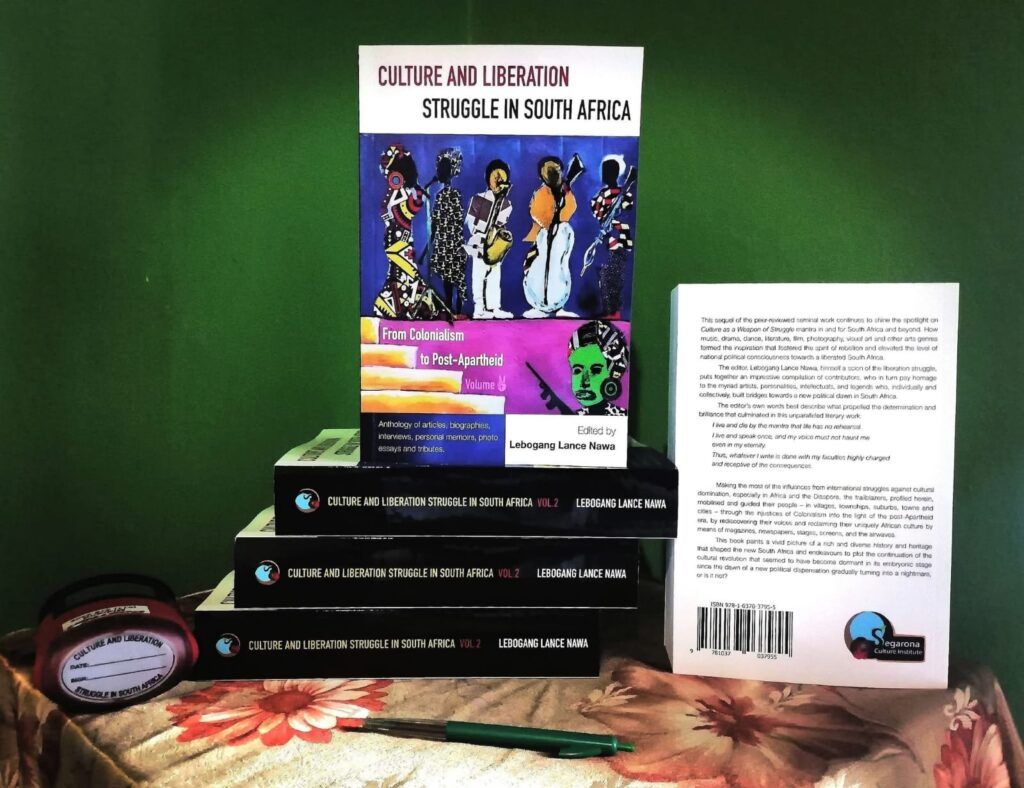
The essays in this volume provide rich insights, though the chapters vary in analytical depth, methodological approach, and style, a variation that has implications for the overall coherence of the collection. While such differences have sometimes made collaboration across disciplines difficult, this book demonstrates the importance of interdisciplinarity, showing that scholars from different schools of thought, practices, and fields can produce work that is not constrained by uniformity in style or method. This volume makes a significant contribution to African studies and post-colonial discourse by foregrounding the dynamic interplay between culture and political emancipation.
This volume, adding to the pulse and cry of the previous one, emerges at a moment when South African artists are once again decrying their marginalisation within the very nation whose liberation was realised, in no small measure, through their courageous and incisive participation. It appears at a time when to be an artist in South Africa is to confront the paradox of historical indispensability and contemporary neglect. The book thus poses a poignant question to the nation and its people: “So, now you will forget about me?” In doing so, it chronicles art as a form of political and epistemic resistance against colonialism and apartheid, reminding readers that artistic production was never peripheral to the liberation struggle but constitutive of it. As Zakes Mda observes in his review of the first volume observes in his review of the first volume in this important series, contemporary South African artists, readers and scholars alike “did not emerge in a vacuum and miraculously become the greatest they are, without the foundation and building block laid by activists of the past.” This volume extends that insight by insisting on historical continuity and intellectual indebtedness.
Today, art and the artist in South Africa are too often reduced to the domain of entertainment, rather than recognised for what they have historically been: teachers, activists, knowledge producers and preservers who assist a people to (re)assert themselves within the consciousness of the world. By paying homage to both celebrated and unsung artists and intellectuals who inspired courage among the oppressed and affirmed the humanity of the dehumanised, this volume positions itself as a significant contribution to the decolonial archive. It participates in the ongoing task of emancipating the African mind from the shroud of self-alienation and historical amnesia, restoring to it the knowledge of itself and of its people.
The book consists of over thirty chapters, categorised under six thematic areas. Since it is impossible to mention all the chapters, I have opted to sample chapters across the thematic areas. The themes are: Politics of the arts for colonial exemption (1916-56), King Kong Musical and its impact on the arts and society (1950-90), Cinema, print and broadcast media and the enterprise of Black struggle (1916-2016), Cultural boycott and international isolation of South Africa (1960-2000), Three decades of fire (1960-1990s) and Politics and the arts in a post-Apartheid South Africa (1994-2022).
As such, my sampling of chapters seeks to ensure that each thematic area in the volume finds some measure of representation in this review. But what, precisely, is the animating thesis of this expansive work?

In the introduction, Nawa, explains that the volume “seeks to rekindle the spirit of emancipatory cultural renaissance through the reconstruction of the role of culture in the national liberation struggle by giving platform to the actual voices, sounds and images from ‘the trenches’ that inspired the public, and political activists into a formidable collective force that eventually collapsed the Apartheid system.”
There are chapters in this volume that rise with remarkable clarity to the book’s central thesis. They are marked by intellectual depth and careful scholarship, embodying thorough, conceptually assured research. In these contributions, the reader encounters essays that not only engage the themes of culture and liberation with analytical precision but also venture into novel, sometimes strikingly original ways of thinking knowledge from within a decolonial African praxis. Such chapters constitute the intellectual backbone of the collection and are its most compelling strength. Two particularly strong chapters are Judy Seidman’s “Culture as a Weapon of Struggle on the Battleground” (pp. 267–290) and “Beyond Boycott: Towards Normalising Cultural Contact” (pp. 291–305). Both chapters appear under the thematic section Cultural Boycott and International Isolation of South Africa (1960–2000) and provide a superb historical account as well as a thoughtful theorisation of the cultural boycott as a significant site of political and artistic resistance. Through careful historical reconstruction, Seidman demonstrates how the boycott of cultural products functioned as a strategic weapon employed by activists and artists in the struggle against imperialism and colonial domination.
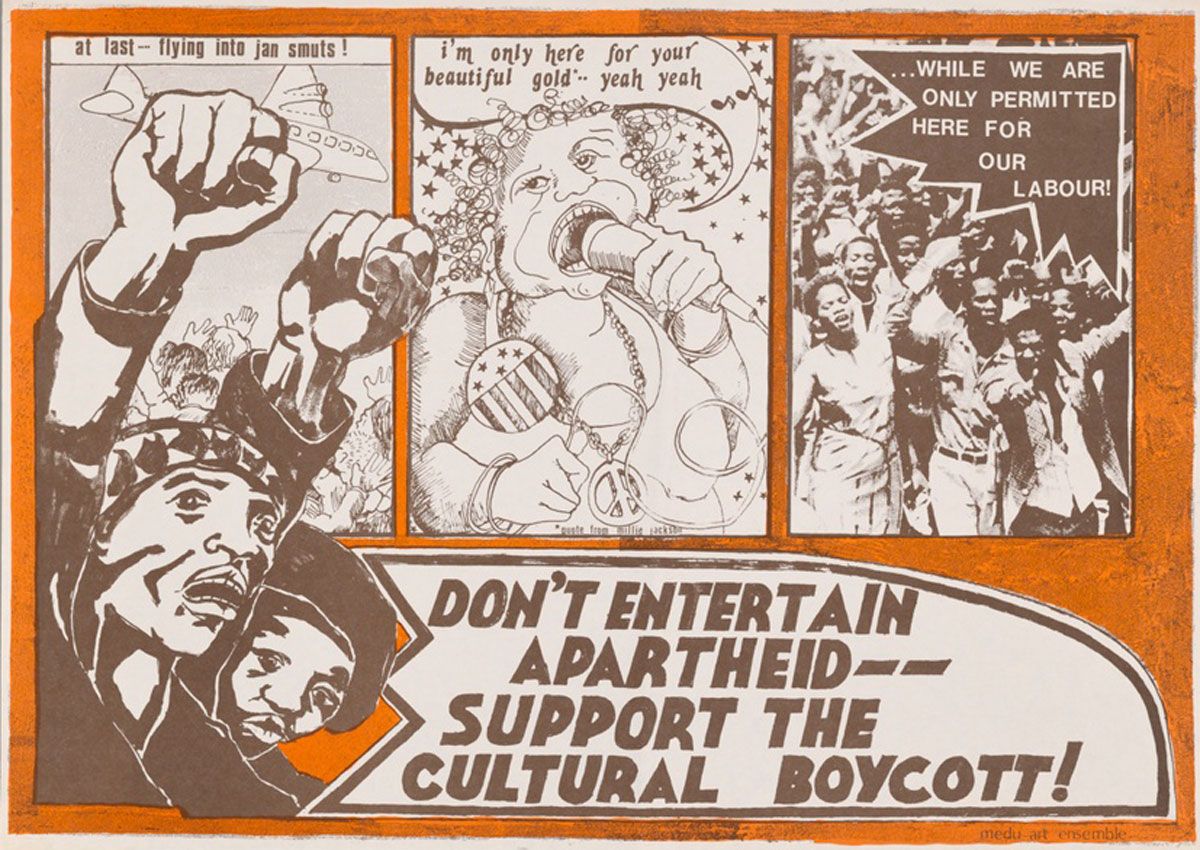
Seidman’s analysis is particularly valuable for its insistence that the activism underpinning the cultural boycott forms an important history of art that cannot be dismissed through the reductive label of propaganda. Instead, she reminds us that this art “spoke to our own communities, to the people standing beside us” (p. 284). The author grounds this argument in Dikobe wa Mogale Martins’s well-known formulation that “as politics must teach people the ways and give them the means to take control over their own lives, art must teach people, in the most vivid and imaginative ways possible, how to take control over their own experience and observations, how to link these with the struggle for liberation and a just society, free of race, class and exploitation” (p. 287). Through this framing, Seidman positions cultural production as inseparable from political education and collective mobilisation. In this sense, the chapter encourages contemporary readers to recognise the cultural boycott not merely as a political tactic but as an essential component of South Africa’s liberation history. Seidman further argues for the importance of valuing “personal memory and experienced reality” (p. 284), thereby resisting revisionist tendencies that seek to diminish or discredit the cultural history of the liberation struggle.
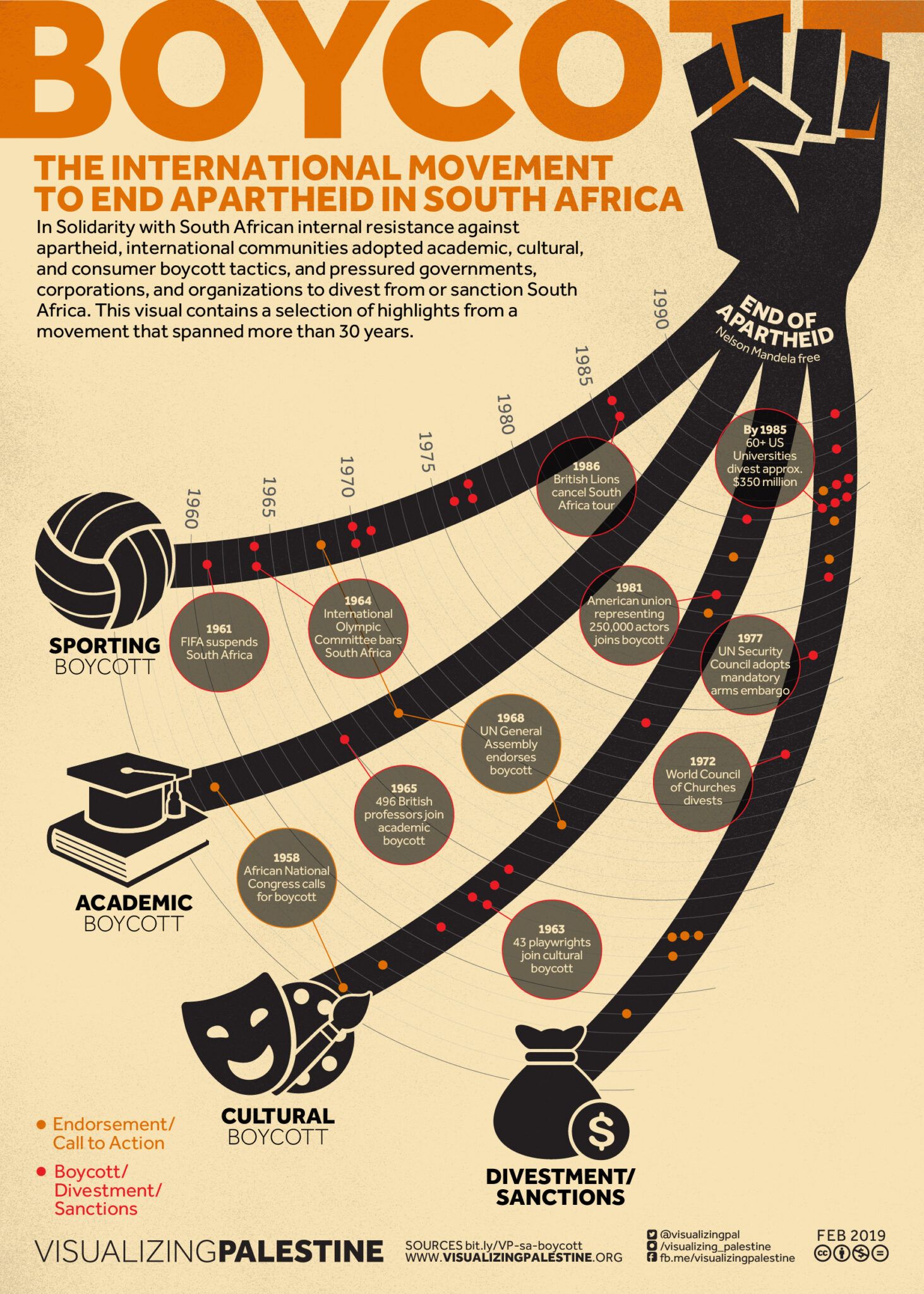
By revisiting the cultural boycott in this way, Seidman illuminates how South African artists drew inspiration from revolutionary movements and visual traditions beyond the country’s borders, adapting these influences on local struggles. This reinterpretation not only highlights the transnational dimensions of cultural resistance but also restores confidence in the historical significance of artistic activism during the liberation era. Ultimately, these chapters remind readers that cultural production played a crucial role in shaping political consciousness and that the legacy of such artistic interventions remains a source of pride within South Africa’s history of resistance.
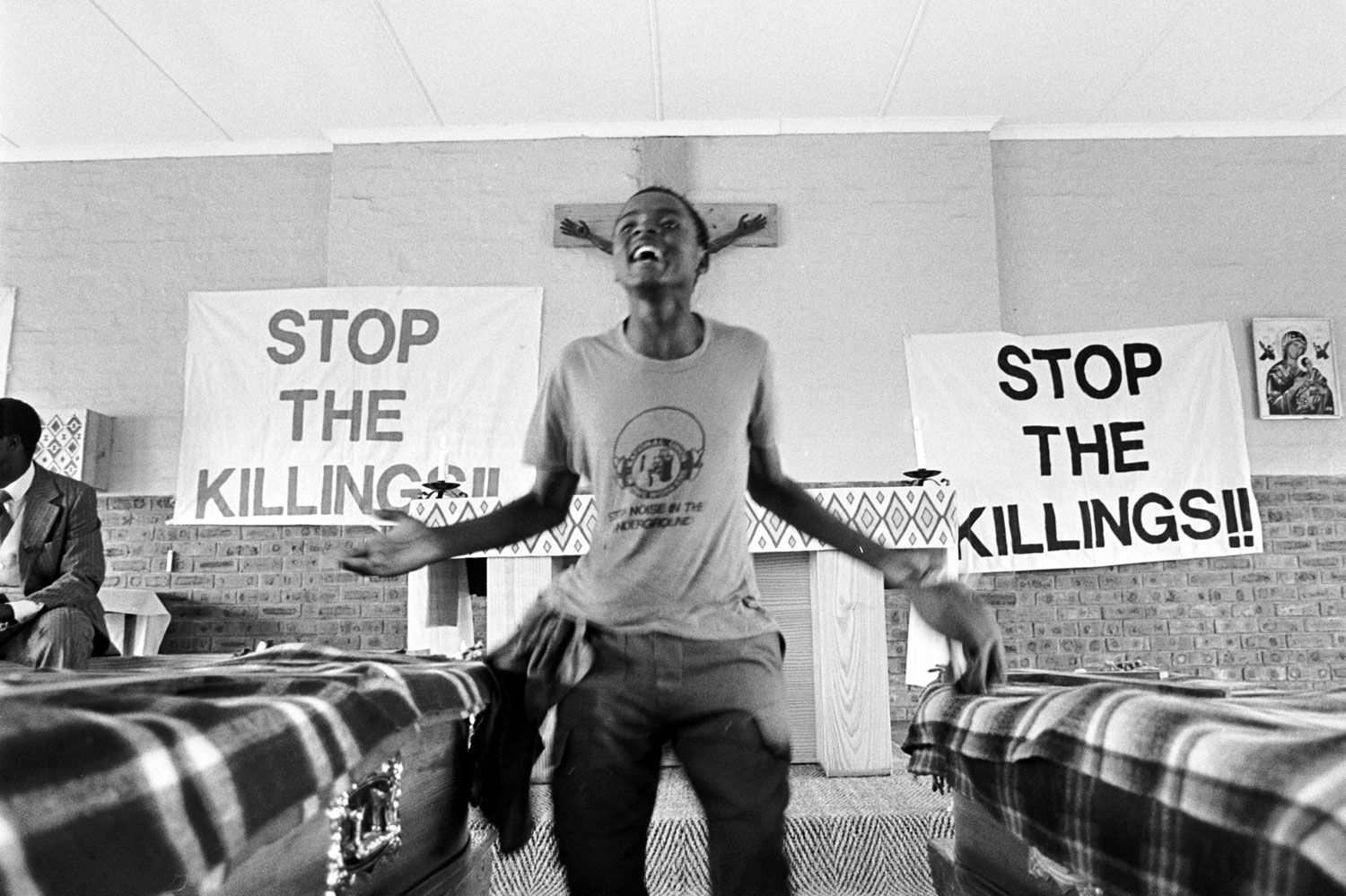
Alongside the more accomplished essays are chapters that are descriptive, piecemeal or whose arguments appear insufficiently developed. At times, the ideas seem only partially realised, as though the intellectual labour required to bring them to full maturity was left unfinished. An example of this “Represent! Photography in South Africa During and After Apartheid” (pp. 198–226) by Cedric Nunn, who reflects on photography as documentation and resistance, drawing on his experiences to show how images captured political struggle and social change. The chapter’s strength lies in its historical and experiential insight, offering vivid testimony of apartheid and post-apartheid life. However, its largely descriptive, autobiographical approach limits theoretical engagement, making it more a reflective narrative than sustained scholarly analysis, though it does not trivialise the topic.
The chapter titled “Of White Collars and Red Ink in Concealing Real Agenda: The Battle to Win the Soul of the Oppressed through their Language” (pp. 15–19) by Shalo Mbatha illustrates some of the weaknesses evident in parts of the collection. The title is ambitious and suggests a substantive discussion of the politics of language and ideological domination. However, the chapter’s content does not fully deliver on the promise implied by its framing. Much of the text consists of extended quotations, with relatively limited analytical intervention from the author. As a result, the chapter reads more as a compilation of contextual references than as a sustained argument.
It appears that the chapter may have been intended as a form of contextual introduction to the section ‘Politics of the Arts for Colonial Exemption (1916–1956)’, although this function is not explicitly articulated. If such a framing role was indeed intended, the chapter does not fully succeed in establishing a clear conceptual foundation for the contributions that follow. The ambitious title suggests the possibility of a deeper exploration of language as a site of ideological struggle under colonial conditions, which could have provided a compelling thematic thread for the section. However, this potential remains largely underdeveloped. Consequently, the scope of the title and the analytical depth of the discussion appear somewhat misaligned.
Compounding this unevenness are certain editorial shortcomings (see pp. 49), including grammatical lapses and a less consistent regulation of the intellectual rigour across chapters than one might expect in a work of this scale and ambition.
The chapters in this volume collectively illuminate the many ways in which culture became a site of resistance against colonial domination and apartheid oppression. Rather than approaching liberation solely through political events or armed struggle, the contributors foreground the cultural infrastructures that sustained the intellectual and emotional life of resistance movements. These include religion, music, theatre, media and community ritual practices. When viewed thematically, the chapters trace an historical arc that moves from colonial cultural suppression, through the creative resistance of the liberation era, to the complex cultural politics of the post-apartheid period.
Several chapters establish the historical and conceptual foundations necessary for understanding the relationship between resistance culture and liberation. These essays foreground the ideological confrontation between colonial power and African cultural self-assertion. A notable contribution in this regard is “African Spiritual Devotion Through Movement and Dance: South African Religious Practices from Colonialism to Post-Apartheid” (pp. 20-38) by Obakeng Kgwasi. The chapter examines African spiritual practices as embodied forms of resistance against colonial religious hegemony. Kgwasi demonstrates that colonial missionary discourse frequently constructed African spirituality as primitive to legitimise European cultural superiority. As the author writes:
European Christian missionaries’ ideologies in Africa during the colonial period held that the ultimate racial symbol of the devil on earth was the Black man and Blackness was imagined as the furthest distance away from humanness.(p. 20)
By foregrounding ritual movement and dance as expressions of African spirituality, the chapter illustrates how cultural performance became a form of epistemic resistance. Its strength lies in connecting religious practice with broader debates about coloniality, identity and cultural survival.
A second cluster of chapters, which I find central to the volume, examines artistic (including broadcasting) and literary production as instruments of political consciousness and resistance. These contributions demonstrate that cultural expression did not merely mirror political struggle but functioned as a constitutive part of the liberation discourse and narrative. Through poetry, theatre, music and broadcasting, artists and intellectuals produced symbolic languages through which communities articulated dissent, identity and collective aspiration.
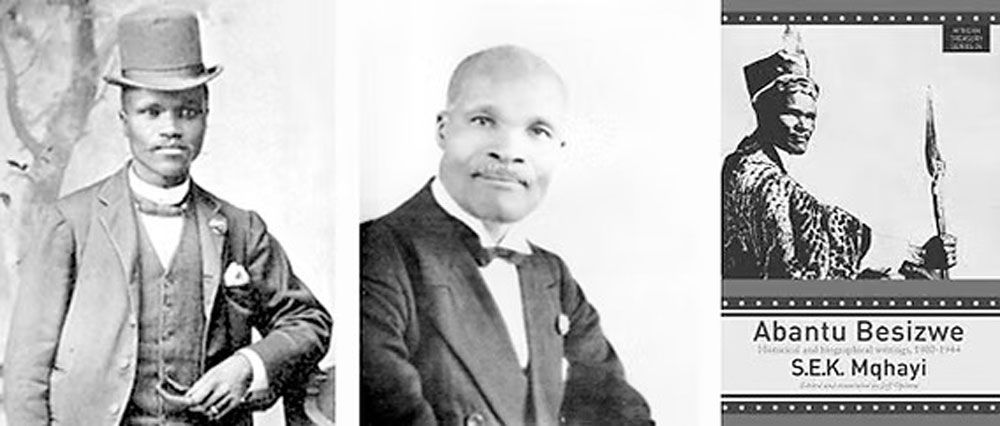
One of the more historically oriented contributions is Berrington Ntombela’s chapter, “Poet S.E.K. Mqhayi and British Colonial Ambivalence” (pp. 49-61). Ntombela revisits the literary and intellectual legacy of the Xhosa imbongi S.E.K. Mqhayi, situating his work within the contradictory cultural politics of early colonial South Africa. The chapter foregrounds how Mqhayi simultaneously engaged with, and resisted colonial structures through literary expression. Ntombela observes that Mqhayi occupied a complex intellectual position within colonial society, noting that the poet’s work reflects the ambivalent relationship between African cultural assertion and the ideological authority (advanced through missionary work and education) of British colonial modernity (cf. pp. 50).
Citing Schoots, Ntombela captures the pioneering poet’s ambivalence thus: “Mqhayi embraced both the African tradition which he imbibed in his early years growing up in Centane among ‘abantu ababomvu’ (those who remained traditional and resisted the encroachment of Colonialism), and the Christian religion that characterised ‘abantu basesikolweni’ (those who embraced civilisation brought by the colonial system)” (pp. 57). Mqhayi is presented here as one of the earliest Black poets who drew on the colonialists’ Christian tradition and European culture, taking what was beneficial while resisting what was oppressive, thereby becoming something of a hybrid intellectual imbongi. Ntombela notes again: “… Mqhayi understood those who had been completely sold to the Western notions of existence and those who remained truthful to the African ways of living. He had a duty to capture all their plight” (pp. 59).
There is a slight problematic conceptual framing in the chapter. The author characterises Mqhayi as an intellectual working within the tradition of the imbongi, whose poetic repertoire addressed the tensions arising from encounters between Africans and Europeans. Ntombela notes that Mqhayi “was at that time regarded as a contemporary intellectual in the tradition of imbongi whose repertoire tackled pertinent issues that were characteristic of the clash between Africans and Europeans” (Mandela, 2019). The chapter further suggests that Mqhayi’s prophetic voice allowed him to speak into otherwise restricted social spaces, noting that “his name, Samuel, made him a replica of the Old Testament prophet — Samuel the seer” (Mzizi, 2007).
While the comparison is presumably intended to emphasise Mqhayi’s moral authority and visionary role within his community, this formulation raises certain conceptual concerns.
By invoking a Biblical analogy to explain Mqhayi’s intellectual stature, the argument risks positioning African intellectual legitimacy within a framework derived from Christian or Western symbolic references. Such framing may inadvertently reproduce colonial discursive patterns in which African thinkers are validated through comparison with figures from European or Biblical traditions.
In this sense, describing Mqhayi as a “replica” of a Biblical prophet potentially diminishes the cultural autonomy of the imbongi tradition itself. A more productive approach might recognise Mqhayi as a prophetic figure within the epistemic and cultural framework of African oral traditions, where the imbongi historically occupies a role as social critic, moral commentator and custodian of communal memory. From this perspective, Mqhayi’s intellectual authority emerges not from Biblical parallels but from his embeddedness in indigenous poetic traditions and his capacity to articulate the lived experiences of African communities under colonial rule.
Ntombela’s chapter strength lies in its attempt to reposition Mqhayi as a foundational African intellectual whose literary interventions prefigured later cultural forms of resistance. By examining poetry as a medium through which African thinkers negotiated colonial power, Ntombela underscores the significance of literary discourse within the broader anti-colonial intellectual traditions. Nevertheless, the chapter is somewhat undermined by editorial weaknesses. At several points, grammatical and structural inconsistencies disrupt the flow of the argument, and the movement between historical narrative and analytical interpretation occasionally feels uneven. Nonetheless, the chapter remains valuable for foregrounding the role of early African literary figures in shaping intellectual resistance to colonial authority.
A more sustained literary analysis appears in Sekgothe Mokgoatšana’s chapter, “Nna ke Mobu – I am the Soil: Nativity and Resistance in N.S. Puleng’s Poetry” (pp. 70–91). Mokgoatšana examines the work of Northern Sotho poet N.S. Puleng, interpreting his poetry written in Northern Sotho – through the intertwined concepts of land (and by extension, nature), belonging and resistance. Mokgoatšana argues that Puleng’s poetic voice articulates a deeply rooted sense of nativity in which the relationship between the self and the land becomes a metaphor for political and cultural survival. As Mokgoatšana explains,
Puleng’s poetic persona declares a profound identification with land and ancestry, insisting that the subject is inseparable from the soil that sustains communal life. The declaration “Nna ke Mobu — I am the soil” becomes an affirmation of ontological belonging and a form of resistance against colonial dispossession.
Mokgoatšana expresses that through looking at the poetry of Puelng, we now understand that “… poetry was used as a weapon to conscientise the masses, and influence them to act in order to change the political situation in South Africa” (p.71). The author contributes to what I would call ‘a re-membering of the role of the poet in society’, a role which is informed by the ethos and challenges of the time. Furthermore, through close reading of Puleng’s poetry, Mokgoatšana demonstrates how indigenous conceptions of land and identity operate as counter-discourses to colonial narratives of domination. The chapter samples the poet extensively and relevantly, and stands out for its engagement with African philosophical ideas of place, ancestry, and communal continuity.
By grounding literary interpretation in indigenous epistemological frameworks, Mokgoatšana offers one of the volume’s more theoretically nuanced discussions of poetic resistance.
Another noteworthy contribution by Sekgothe Mokgoatšana is the chapter, “Seboko se tsebe nyobeng! Ba llela go tomola naga mootlwa: Diketapele tsa tokologo thetong ya Sepedi (1955–1990)” (pp. 227–245). Written in Northern Sotho (Sepedi), the chapter is particularly significant for its linguistic choice.
By presenting scholarly analysis in an African language that has historically been marginalised in academic publishing, Mokgoatšana contributes to the intellectualisation and scholarly legitimisation of indigenous languages.
As the chapter suggests through the poetic register of liberation praise, “ba llela go tomola naga mootlwa”, invoking the image of people “crying out to remove the thorn from land,” a metaphor for the struggle to remove oppressive political conditions. The chapter demonstrates that African languages can sustain rigorous literary and historical analysis, thereby challenging the dominance of colonial languages in academic knowledge production. In this sense, the use of Northern Sotho becomes not merely stylistic but an important epistemic intervention within a volume concerned with culture and liberation.
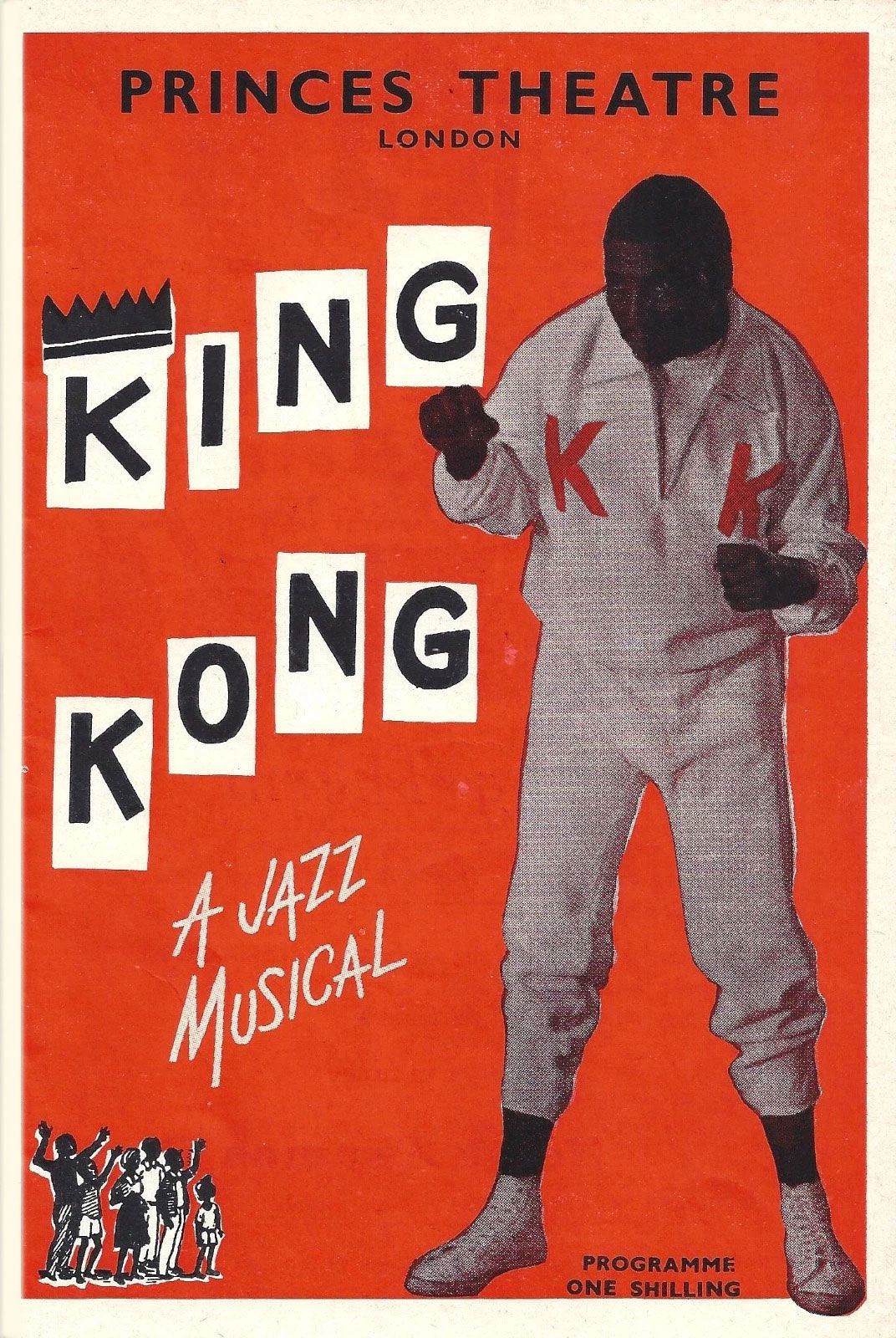
Gwen Ansell examines the cultural politics surrounding the musical in her chapter “‘Darling, We’re Going to Write a Musical’: Appropriation and Assumption in the Making of the King Kong Myth” (pp. 108–124). Rather than offering a celebratory account of the production, Ansell interrogates how the musical King Kong (1959) came to occupy a mythic status in South African cultural memory. The chapter revisits the circumstances surrounding its creation and highlights the complex cultural dynamics that shaped the collaboration between Black performers and the largely white institutional structures that enabled the production. Ansell begins by recalling the moment that inspired the project, captured in the phrase that later became emblematic of the production: “Darling, we’re going to write a musical” (p. 109). From this starting point, the chapter traces how journalistic storytelling, theatrical ambition and international interest in urban African modernity converged in the making of King Kong.
Ansell shows that while the production provided a significant platform for Black South African performers and musicians, the narrative that later celebrated it as a spontaneous cultural triumph tends to obscure the complex processes of authorship, mediation and institutional power involved in its creation. It also exposes the persistent overlooking of elderly women in the creation of films, and these women, mostly uneducated in the Western sense, are regarded by the author as “significant, powerful storytellers” (pp.117). One of the strengths of the chapter lies in its critical interrogation of this cultural mythology, which is appropriated into cinema and thereby transformed. The chapter’s take on the erasure (conscious and unconscious), and marginalisation of key custodians of the African myth – elders in communities – is superb. In other words, Ansell is advancing the view that appropriation is a form of transformation; it must be done with precision and respect for the community’s key players. By unpacking the processes of appropriation and assumption that shaped the musical’s production and reception, Ansell offers a more nuanced understanding of how cultural memory is constructed or should be constructed.
Through examining the circumstances surrounding the musical’s development, Ansell highlights how narratives of artistic collaboration sometimes conceal asymmetries in cultural authority and authorship. The chapter carefully reconstructs the social and institutional context in which the musical emerged, showing how journalistic storytelling, theatrical experimentation and international fascination with urban African modernity converged in the making of King Kong. Another strength of Ansell’s contribution lies in its critical interrogation of cultural memory. Rather than reproducing celebratory accounts of the musical, the chapter complicates them by revealing the dynamics of appropriation and assumption that shaped its production and later reception.
The importance of media infrastructure in sustaining liberation consciousness is further explored in Sekibakiba Peter Lekgoathi’s chapter, “Radio Freedom, Music and the Struggle against Apartheid, 1970s–1980s” (pp. 171-197) Lekgoathi examines the role of Radio Freedom as a clandestine broadcasting platform through which the liberation movement communicated with audiences inside South Africa. The chapter demonstrates that radio functioned as both a technological and symbolic instrument of resistance. The author shares the following on the struggle role of the station: “Not only did Radio Freedom open its broadcasting with music, but it closed its broadcasts with the singing of Nkosi Sikele’ iAfrica (God Bless Africa); a song composed in 1897 by Enoch Sontonga…” (p.175).
Nkosi Sikele’ iAfrica is not just a national anthem and prayer, but at its core, it speaks to the plight of Black people at the time it was composed (colonial period) and during the apartheid era. It is also a prayer to God to give the oppressed Black people the strength to fight their enemies, to live longer to see freedom realised; an idea Lekgoathi vividly illuminates. Moreover, through broadcasts of speeches, news and music, Radio Freedom – the underground radio station of the African National Congress (ANC) maintained ideological connections between exiled activists and oppressed communities within the country. Lekgoathi highlights that the station’s programming deliberately incorporated liberation songs and political commentary to cultivate political awareness and solidarity among listeners. In this sense, broadcasting became an extension of the struggle itself, enabling the liberation movement to sustain what might be called a dispersed political community across borders and conditions of censorship.
Now, taken together, these chapters demonstrate that cultural production operated as a crucial dimension of resistance against colonialism and apartheid. Through poetry, music and broadcasting, artists and intellectuals produced symbolic forms that sustained political consciousness and affirmed collective identity. By foregrounding these cultural practices, the volume reinforces the broader argument that the liberation struggle was fought not only in political arenas but also within the imaginative and expressive domains of culture.
The collection also contains chapters that do not reach the same level of analytical depth, such as Shalo Mbatha’s, which is piecemeal and relies more on extensively quoted material than on the author’s voice. Some contributions remain largely descriptive, cataloguing artists, institutions or cultural events without sufficiently interrogating their broader political or theoretical implications. In these instances, the chapters provide useful historical information but stop short of developing sustained arguments about the relationship between culture and liberation. There are also chapters in which promising themes are introduced but remain insufficiently theorised. Discussions of cultural identity, memory, and artistic activism sometimes read as suggestive rather than fully developed. A more consistent engagement with theoretical frameworks from African cultural studies and postcolonial scholarship would have strengthened these contributions. A concrete illustration appears in Cedric Nunn’s chapter “Represent! Photography in South Africa During and After Apartheid” (pp. 198 226). Nunn describes the political climate of his youth as “a world that was in the teeth of the Apartheid era … in which the tsunami of legislation that followed the repression of the Sharpeville Massacre, the Treason Trials, the June 76 Uprisings and the death of Steve Bantu Biko created an icy cold and sterile era” (p. 198). While such reflections provide valuable historical testimony, the discussion remains largely descriptive and autobiographical, with limited engagement with theoretical debates about visual culture or the politics of photographic representation.
Nevertheless, despite this unevenness, the strongest essays collectively demonstrate the volume’s intellectual significance. They affirm the editor’s central premise that cultural production was not peripheral to the liberation struggle but constituted one of its most powerful instruments. By recovering the cultural histories of resistance, the volume contributes meaningfully to contemporary debates about decolonisation, cultural memory and the role of artistic expression in shaping South Africa’s democratic imagination.
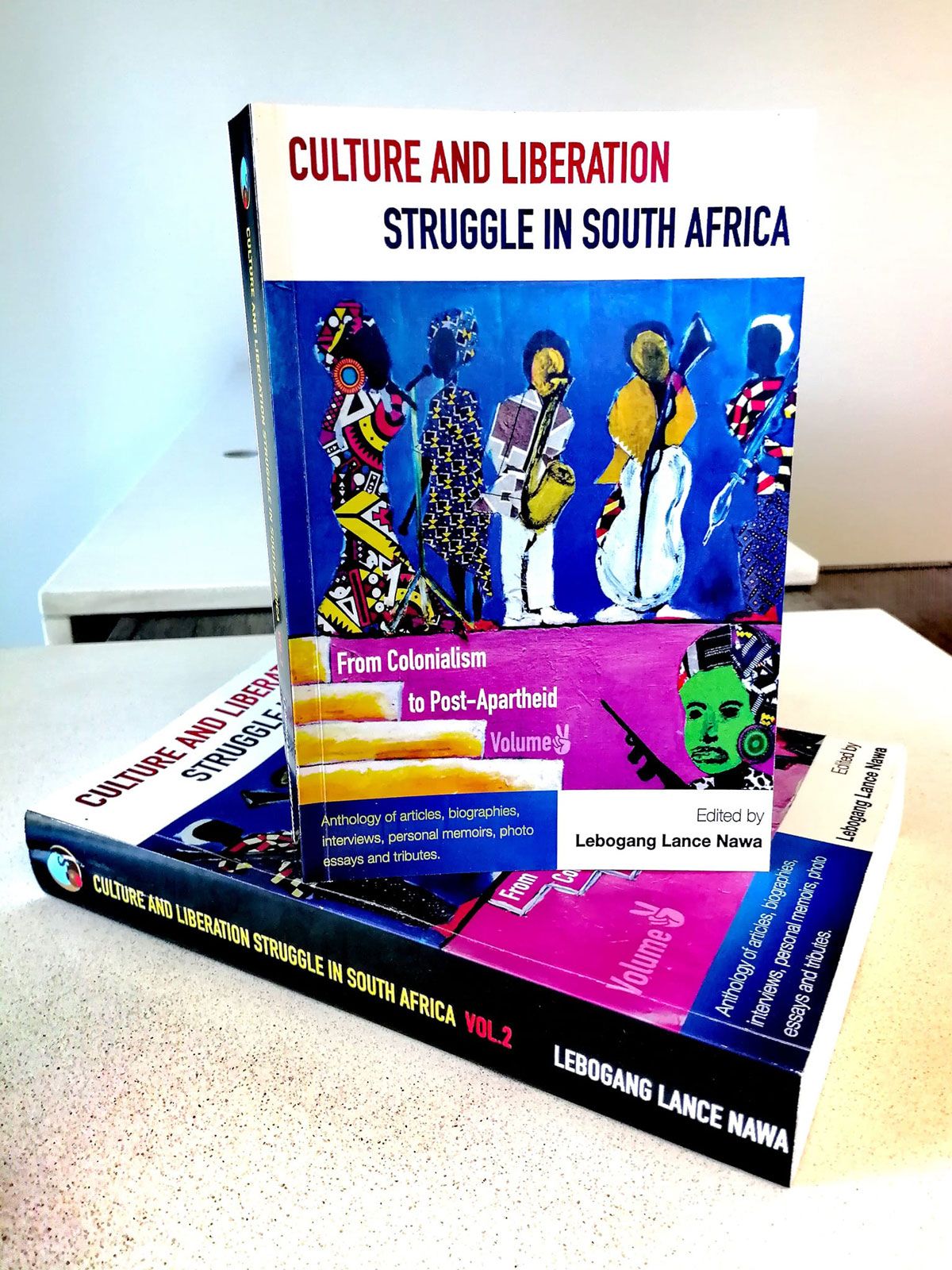
Culture and Liberation Struggle in South Africa — From Colonialism to Post-Apartheid ultimately succeeds in foregrounding culture as a critical dimension of South Africa’s liberation history. By assembling a wide range of interdisciplinary contributions, the volume demonstrates that artistic and cultural production played a decisive role in shaping the intellectual, emotional and symbolic resources of resistance. Its strongest chapters offer well-researched, conceptually grounded analyses that illuminate how religion, theatre, media, community ritual practices, personal memory, and other cultural forms functioned as vehicles of political mobilisation and collective consciousness. In this respect, the book makes a meaningful contribution to African studies and to broader conversations about the cultural foundations of liberation struggles.
Several chapters remain largely descriptive or insufficiently theorised, and the volume would have benefited from more consistent editorial regulation of analytical depth across its essays. Nevertheless, these limitations do not overshadow the project’s overall importance.
The book will be of particular value to scholars and students of African literature, cultural studies, history and postcolonial theory, as well as to researchers interested in the cultural dimensions of political struggle and liberation heritage. It also offers important insights for policymakers and cultural practitioners concerned with the place of artists and cultural workers in contemporary South Africa. Ultimately, the volume serves as a reminder that the liberation of a people is not achieved only on the battlefield or in political negotiations, but also in the realm of culture, where imagination, memory and identity continue to shape the meaning of freedom.
Culture and Liberation Struggle in South Africa — From Colonialism to Post-Apartheid | Lebogang Lance Nawa [Editor] | (Segarona Culture Institute, 2025, Midrand, South Africa | 753 pages | ISBN: 978-1-0370-3795-5)