MZWANDILE MATIWANA
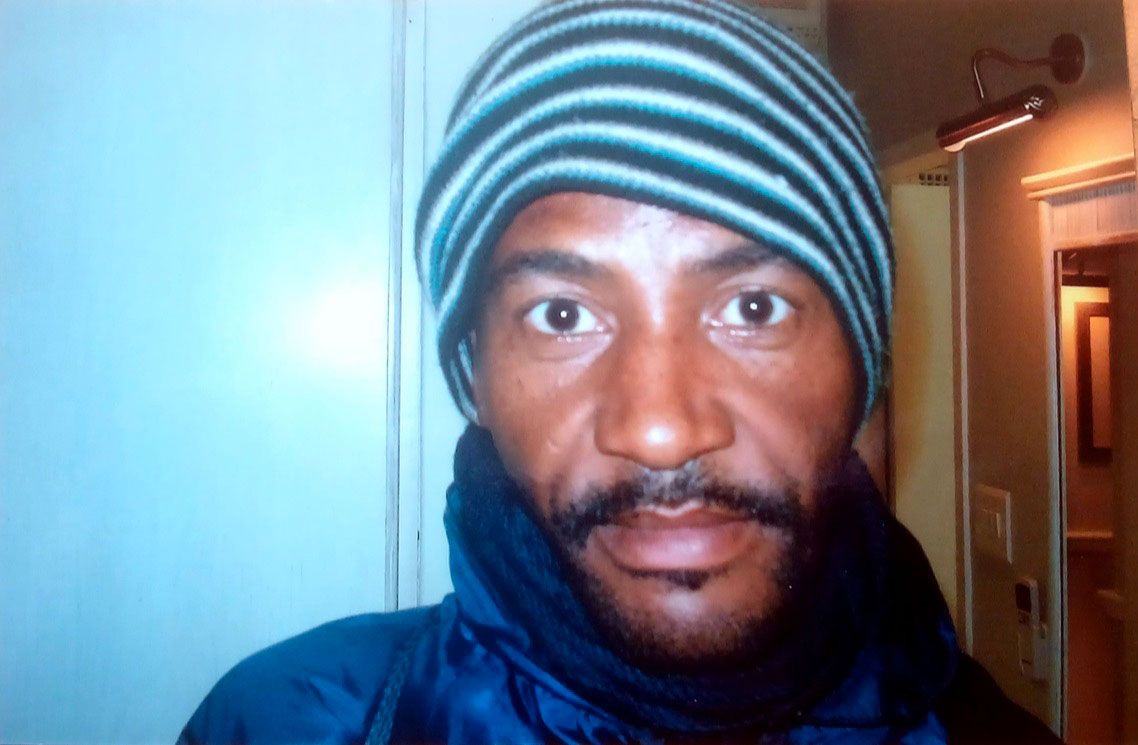
The surviving poet
In 1967, I was born of a single parent — the mother. No father, except my grandpa Oom Tas. I started to do praise-singing at the age of six at a nearby hostel. By the age of eleven I was sniffing glue, petrol and benzene. I also started to smoke. At fifteen I left school and started to write poetry and plays, but later went to pursue a career in crime, for which I was later convicted to a twelve-year term for armed robbery and possession of a fire-arm. I joined gangsters in prison but later realised that education was the most important weapon to fight for the betterment of my life. So I became engaged in many cultural activities. I formed a choir and a dance group, composed songs for my choir.
Ndazala ngonyaka we-1967 ndakhuliswa ngumzali omnye – umama. Kwakungekho tata, ngaphandle ko tatomkhulu, u-OomTas. Ndaqala ukubonga ndineminyaka emithandathu kwihostela ekufutshane. Pha kwiminyaka elishumi elinanye ndandifunxa iglue, petrol ne benzene.Ndaqalisa nokutshaya. Kwiminyaka elishumi elinesihlanu ndayeka isikolo, ndaqala ukubhala imibongo nemidlalo yeqonga, kodwa ekmva kwexeha ndaya kugaxeleka kulwaphulo-mthetho. Iziphumo zoko yaba kukugwetywa iminyaka elishumi elinesibini ngenxa yokuphanga ndixhobe ngomkhono wekati (umpu). Ndazimanya namaqela emigulukudu entolongweni kodwa ingqondo zaphinda zabuya ndaqonda ukuba imfundo sesona sixhobo sibalulekiyo sokulwela ukuphucula ubomi bam. Ngoko ke ndabandakanyeka kwizinto ezininzi zenkcubeko. Ndaseka ikwayala neqela lomngqungqo ndaqamba iingoma zekwayala yam.
I returned back to school and started to write again, and won two NICRO Arts & Crafts Awards, i.e. nationally and provincially, in the category of poetry and prose.
Ndaphinda ndabuyela esikolweni ndaphinda ndaqalisa ukubhala,ndaza ndawongwa ngeembasa ngu NICRO Arts & Crafts Awards, kuzwelonke nephondo kudidi lweemibongo nobhalo-gabalala.
In 1998 I was published in Kotaz, after a long spell of writing love poems to my lover, Patricia, in Bloemfontein, whom I had met through the pen-pals column of a commercial magazine. Patricia played an important role in my revival back to poetry. Within us nature has sensuous equivalents that must be discoverable, I presume Patricia was such. She was a close friend and a trusted counsellor to me. Because she is a teacher, I took her advice to try and get my work published, but I had no knowledge of where to go then. Thanks to Vuyisile Msila for taking my work to Kotaz.
Ngonyaka we– 1998 ndapapashwa kwi – Kotaz, emva kwethuba elide lokubhala imibongo emide ngezothando eya kwisithandwa sam uPatricia, eBloemfontein endazana naye nge kholamu yephepha-ncwadi yabantu abakha ubuhlobo ngokuqhakamshelana. UPatrcia udlale indima ebalulekileyo ekuvuselelekeni kwam ekubuyeleni kwimibongo. Ngaphakathi kuthi indalo ineengqamaniso ezineemvakalelo ekufuneka zifunyenwe, ndicinga ukuba u Patricia wayenjalo. Wayesisihlobo esisenyongweni nomcebisi othembekileyo kum. Ngenxa yokuba wayengumfundisi-ntsapho, ndathatha icebiso lakhe lokuzama ukuba umsebenzi wam upapashwe, kodwa ndandingena lwazi lokuba mandiyephi ngoko. Ndibulela uVuyisile Msila ngokuthatha umsebenzi wam awuse eKotaz.
My writing as an art is sort of self-discovery, almost like a discovery and revelation of the mystery and wonder of life. My work means for me more and more the experiencing and expression of reality, of the intensity of being. I find more and more outwardness in my works. And moreover, however I sound personal, the original meaning of the word poem becomes the task of my life, hence I try to record every detail of my life as a lover, convict or a free person.
Ukubhala kwam njengegcisa luhlobolo kuzifumanisa, phantse njengokufunyanwa kunye nokutyhilwa kwemfihlakalo kunye nokumangalisa kobomi. Umsebenzi wam uthetha kum ngakumbi nangakumbi ukuba namava kunye nokubonakaliswa kobunyani, ubunzulu bokubakho. Ndifumana ngakumbi nangakumbi ukuphuhla ngaphandle kwimisebenzi yam. Kwaye ngaphezu koko, ndivakala ngokunokwam kuba, intsingiselo yoqobo yegama lombongo iba ngumsebenzi wobomi bam, yilo nto ndizama ukurekhoda zonke iinkcukacha zobomi bam njengesithandani, ibanjwa okanye umntu okhululekileyo.
Since I experienced prison life, I am a very solitary man and sometimes I feel the need to belong. Poetry has become my religion, though I later adopted Islam, but that is not in contradiction with my work, because even our Holy Q’uran is like a poetic holy book, for there are metaphors, imagery and it is the only book in the whole world of religion that is rhyming — each and every line from the first chapter to the last — yet it still contains striking and powerful messages (if read in its Arabic version). I am a religious poet, because of my dedication to poetry and to my vocation as a poet.
Emveni kokudlula kubomi basentolongweni, ndiyindoda ethanda ukuba yodwa kwaye ngamanye amaxesha ndiye nam ndifune ukunxulumana. Imibongo ibe yinkolo yam, nangona kamva ndamkela ubu-Silamusi, kodwa lo nto ayiphikisani nomsebenzi wam, kuba neKuran yethu eNgcwele ifana nencwadi engcwele yesihobe, kuba kukho izafobe, imifanekiso eqingqiweyo kwaye kuphela kwencwadi ehlabathini lonke lwenkolo eyenza isicengcelezo mgca ngamnye ukusuka kwisahluko sokuqala ukuya kwesokugqibela – kodwa isinemiyalezo echukumisayo nenamandla (ukuba ifundwe kwinguqulelo yayo yesi-Arabhu). Ndiyimbongi yenkolo, ngenxa yokuzinikela kwam kwimibongo nakubizo lwam njengembongi.
Sometimes I marvel at these questions in my mind: What are we? Poets, what are we for? Most writers seem to have answers to these questions — for you will hear them saying, “We are the voice of the voiceless, and we are for the people.” Which makes me ask, are we really that and for that? If that is true, I suppose we don’t do our job perfectly, because these people who have their own voices still commit these crimes, or perhaps the voiceless don’t need a Voice anymore. I suggest we first, as writers, work on solving the problem of opposition between art and life and that will be achieved should we live for writing, not write for a living.
Maxa wambi ndiye ndimangaliswe yile mibuzo engqondweni yam: Singoobani? Iimbongo, singabokwenza ntoni? Uninzi lwababhali lubonakala lunazo iimpendulo kule mibuzo – kuba uyakuva besithi “Sililizwi labangenalizwi, kwaye singaba bantu.” Yinto ebangela ndizibuze, ngaba sinjalo ngokwenene kwaye siyenzela lo nto? Ukuba oko kunjalo, ndicinga ukuba asiwenzi ngokugqibeleleyo umsebenzi wethu, kuba aba bantu banamazwi abo basalwenza olu lwaphulo-mthetho, okanye mhlawumbi abangenalizwi abasalifuni iLizwi. Ndicebisa ukuba kuqala, njengababhali, sisebenze ekusombululeni ingxaki yokuchasana phakathi kobugcisa nobomi kwaye oko kuya kuphunyezwa ukuba siphilela ukubhala, hayi ukubhalela ukuphila.
About my writing love poems that are drenched in tears of pain, I suppose it is because I have a need of belonging to some truthful one, who will not regard me as a money-making machine; someone who will be selfless enough to know that writing is not part of my life — but my life.
Ngokubhala kwam imibongo yothando esekelwe ezinyembezini zeentlungu, ndicinga ukuba kungenxa yokuba ndinesidingo sokuba ngowa lowo unenyaniso, ongazukundithatha njengomatshini wokwenza imali; umntu oyakuzincama ngokwaneleyo ukuba azi ukuba ukubhala ayonxalenye yobomi bam – bubomi bam.
As a writer I think I have contributed less in the process of building up a reading culture within the once disadvantaged societies. Because once more I have landed in prison again I think I have failed my readers and admirers, though at the same time it is a blessing in disguise; for I get enough time to look at my inner-self better, which is what every budding poet needs to do, but not by coming into prison, no! Although from the experience I can feel that great surge of creative energy.
Njengombhali ndicinga ukuba ndibe negalelo elincinane kwinkqubo yokwakha inkcubeko yokufunda ngaphakathi kubantu ababekhe bavinjwa amathuba. Ngokuphindela kwam kwakhoa entolongweni ndicinga ukuba ndibaphoxile abafundi nabathandi bomsebenzi wam, nangona kunjalo kwaxesha-nye ikwayi ntsikelelo ngokufihlakeleyo; kuba ndifumane ixesha elaneleyo lokujonga ngcono ingaphakathi lam, nto leyo efuneka yenziwe yimbongi nganye esakhasayo, kodwa ingabi ngokuya entolongweni, hayi! Nangona kunj alo, ngokusuka kumava ndiyakwazi ukuva oko kunyuka okukhulu kwamandla okudala.
I have often been asked what my influence has been on South African poetry, and that has always depressed me, because I still need to establish myself as a poet and carve a territory within the South African map of poetry, that I can tell my children, well, look what your father has done. That is why I see a need for me to publish a book in English and in my Xhosa language. I hope that all my endeavours have been to produce something of the relationship between the language and my poetry and that of common speech. Here, experience and review the life of a solitary man.
Soloko ndibuzwa ukuba ifuthe lam libe yintoni na kwimibongo yase-Mzantsi Afrika, kwaye oko bekusoloko kundidandathekisa, kuba kusafuneka ndizimise njengembongi ndiqingqe ummandla ongaphakathi kwimephu yesihobe yase-Mzantsi Afrika, ukuze ndikwazi ukuxelela abantwana bam, bonani uyihlo akwenzileyo! Yiyo lo nto ndibona imfuneko yokuba ndipapashe incwadi ngeSingesi nangolwimi lwam lwesiXhosa. Ndiyathemba ukuba zonke iinzame zam ibikukuvelisa into yobudlelwane phakathi kolwimi kunye nesihobe sam kananjalo kunye nentetho kawonke-wonke. Apha, bona kwaye uphonononge ubomi bendoda ethanda ukuba yodwa.
Mzwandile Matiwana
From Timbila – a journal of onion skin poetry, 2003. IsiXhosa translation by Thembile Ndabeni, March 2026.
Isuka kwi – Timbila – Ijenali ye onion skin poetry
Suicide Blues in Prison
(The HIV memories inside)
Still under a cloud of death
I thought as I lay
on my torn and lumpy mattress
infested with vermin
and insects –
enclosed in the icy tomb
7 x 11 width and breadth
I lost all the shape
And found the rope –
But I could not do it
I wanted it to be a secret
for the warden kept on watching me.
I wanted to write
my last chapter
and finish it smiling
But the watcher kept looking on
And the bomb in my blood ticked slowly.
The Last Swing
(To all the families and friends who lost their loved ones during the times of Capital punishment)
They weighed him
and measured his neck
took his pulse –
They brought a priest
to cajole him
into his last confessions
He was collared
and blind-folded
and waited
for the exact moment of death
The signal was given
And the lever pulled
He did not fight it
His arms fluttered violently –
And still
They took off the blindfold
the mouth was open
and the face pale
His eyes flared wide open
In a death stare –
He took his last swing.
To my sisters
Once I am dead
let no dogs have ball
with my flesh –
flesh of my flesh –
daughters of my mothers.
Once I am dead
urinate on your hands
and wash your faces
and cleanse off the curse
that has befallen the Amangarwane clan.
Once the sudden end arrives
go – hibernate with your mates
after you’ve placed me
where the river stops flowing.
Once the sudden end arrives
do not shed tears
and sing sad songs
(for these are in my biggest fears)
When you bid me farewell
let it be scribbled on the wall of history
and then scribes
and bards will chant my name forever
(though I existed carelessly).
When you bid me farewell
let it be innocently
implanted in the cells of MEMORY.
The rhythm of love
After falling down very deep
in the abyss
and gutter of human slumber
here I am
with the rhythm of love
my heart sings with joy
like birds at prayer time
for I have found my love
after a long road
of thorny dialects
and fanged songs.
Donker-gat
"The resurrection of demonic evil in the world"
Mxolisi Nyezwa
No windows
no lights, not even
a toilet
just a shithole in the floor.
The bed was made of only
one sisal mat
so hard that when you woke up
your back would be painful
and looked like a geography notebook
or textbook, whatever.
The door was of steel
with its small inspection hole
and a slider
where my spare-diet
was shoved in
as if feeding a dog -
even dogs are better treated.
I was in Brandvlei prison
having the taste
of what was called discipline procedure
for violent gangster members -
I had lost the sense of time
(and leg irons were the worst of it)
My mind was occupied
with recital of gangster laws
and history.
I stared into the darkness
day and night
until that steel door swung open
to the usual place
where all doors at home stay
during daytime.
Light blinded me
and my limbs were near atrophy
but the boots
of Sergeant Koekemoer gave life
to them
when he kicked my ribs -
And to gang members
I came out a hero.
I was taken back to a communal cell
where I was honoured
and made a lieutenant
given a prize
in a form of a young boy.
God knows I am no homo
but I slept with a man
to appease my lust
and to show my manhood.