MALIKA NDLOVU
Beloved sister Diana
I don’t want to write about you. I want to write to, with, alongside and spiraling through time with you. That’s the only way that makes sense now… as January into February and March 2026 collapses timelines. So many conversations with you over three decades and the ones most recent lingering and unfinished… are where I am not letting go. I want to continue our conversations. Why should they end?
I was on the final lap of moving house when I got the update of your second stroke and just a few hours later, the shockwave of a single line in our WEAVE WhatsApp group announcing your passing, on that last Friday of January. Since then, I have been swimming between distraction, denial and uncharacteristically, a deferment of my tears. I had come across a praise poem for you online, written by a young poet (Luthando St Lucas) I had not heard of, just three days before. His words carried such authentic gratitude but for me, the unsettling air of a eulogy. Still, I shrugged off this gut feeling and reposted it to all our sister writer circles, knowing you were doing well in the rehabilitation process after the first stroke. So much so that we were told you were able to recite some of your poetry to the staff taking care of you, greeting each one by name. Then this bewildering, heartstopping end.
Witnessing the swift flood of tributes, rapid arrangement of memorial events, national media headlines and finally the official burial ritual with those haunting live-streamed images of a white hearse carrying your body, slowly meandering through the streets of your birthplace, Worcester. So much has happened in this blur of the last thirty-three days. Tears have come and gone, like a stubborn undertow. I have not been able to speak about you, other than to the few close friends also grappling with the wordlessness, this grief over you. We too had been invited to show up, to speak, perform, to write and felt it way too public, way too soon. We also understood the necessity and urgency we saw reflected in others’ responses, in the many spaces you were known and treasured. In those first stunned days, having not yet found my own words, I observed myself passing on funeral arrangement updates, tributes and memorial event adverts like hot potatoes. A habitual networker and community space holder, one part of me did so on autopilot, ensuring that information was shared, calls to gather were amplified and fellow writers or artists across the globe received these local communications, beyond the more generic media releases and sound bites.
There’s something to be said for holding back the tide … (when it feels right for you.)
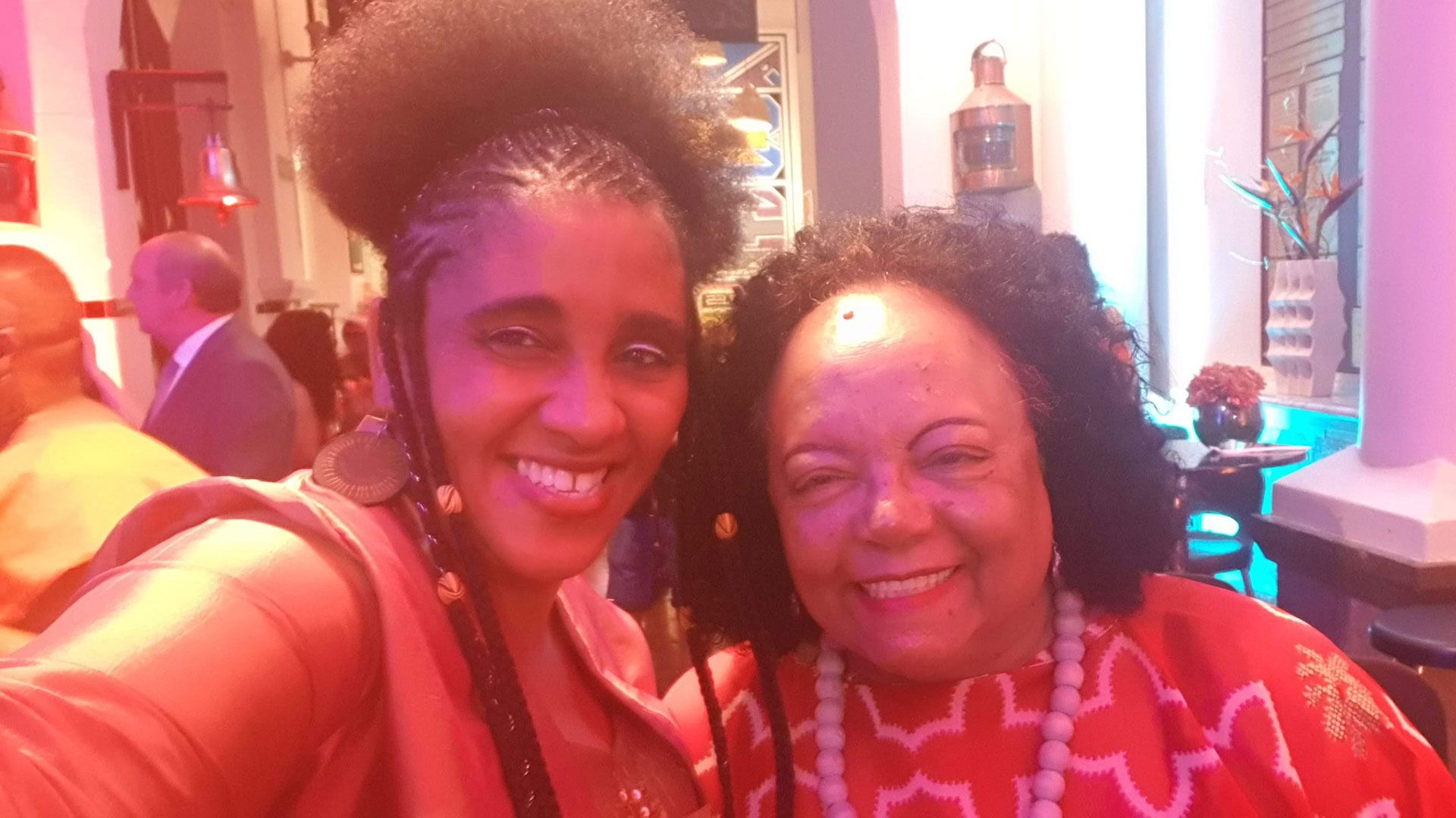
Grief has been my more consistent guru over the last ten or so years of my life, even a companion I have intentionally given attention to. I marvel at how it messes with your entire reality, especially the fresh hits, where even the sound of your voice captured on my phone, my sister, a video clip or a photograph with you I had seen many times before, now had me frozen or choked up or wanting to drop everything and lie down. Since I was a teen, it has been my instinct in times of great personal upheaval or change to take my overwhelming emotions to the sea. Your death on the same day of my landing in a new home – my third in the last three years of chosen migration – was not random timing. Neither was it coincidence that my 15 day ritual: a series of Instagram posts called Grief Tending Time, marking the first year anniversary of my book Griefseed, concluded on this morning too. Once the final suitcases and boxes were offloaded, I never left the house for the first week, grounding, moving slowly in what appeared to be the typical unpacking and homemaking process. Amidst all this inner and outer movement I was in silent circling with you, allowing the cold facts, the myriad impacts of your passing on my life, the lives of so many – to settle in, much like the soft, soaking rain falling outside intermittently.
I could have gone to the Umzimkhulu river, now close by that I had been so excited to meet or gone to the beach on any day. But it only felt right on day seven. My body was calling me outdoors. I chose to go alone, savouring my anonymity in this unfamiliar place, my solitude on this first ritual greeting of the waters. I shouldn’t have been surprised that thoughts of you rose up the moment I put my soles on the sand. This simple, human pleasure you would no longer have. The way your work in the world tied together so much of our painfully entangled histories across the seas. The salty wind on my skin gave my tears permission as I walked a long way, stopping only to marvel at some beautiful sun-bleached tree bodies, remembering you. You were, you are, more than the most famous (Sarah Baartman) chapter of your life being told and retold. You gave us so much more than your poems, your stories and songs. I know you understood how grief weaves its vast web of connections across time. How our very ordinary beginnings, our ancestral and immediate family roots, our everyday community injustices and tragedies, are where the primary work of healing must be done. How our bereavement compounds as we age, how today’s new loss can ricochet us in disorienting directions that have nothing to do with linear time. You embodied an empathy that I can viscerally recall. It could, I can, hear it in the lowered tones of your voice. They carried your heart, your integrity. Whether in fierce poetic declaration, sorrowful story or truth telling, making the music of your moedertaal Afrikaans, or encouraging someone who knew the particular weight of words coming from you.
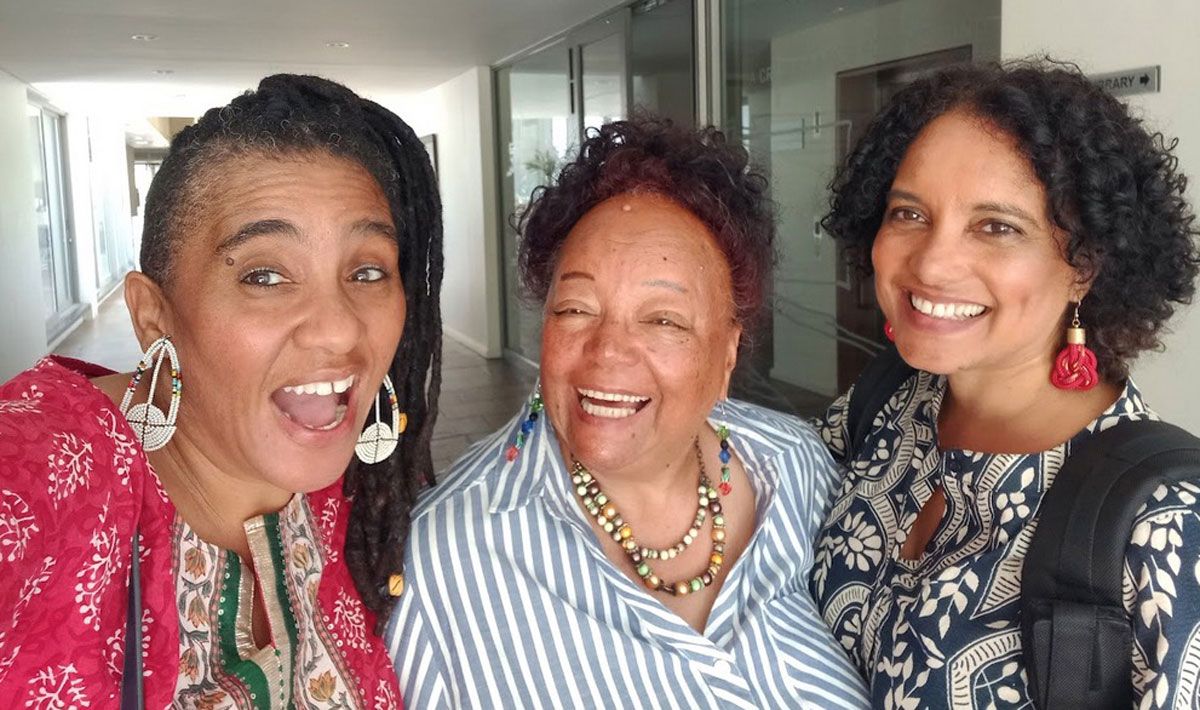
Yesterday, after braving my way through so many photographs of us together, I listened to a few loving, laughter-punctuated voice notes from you. The one sent in October 2023 when I was leaving Cape Town after 30 years and another on 30th November 2025, just two months before you died, epitomized the banter the bond between us over time. You always affirming me, praising my work, my sons, teasing about how deurmekaar you were about certain things and how much you’d learned from me. It has also dawned on me, only now that you have left your body, that you were just one year younger than my mother. I could have had a daughter or elder mentor, even an auntie relationship with you – but ours was a mutual love and learning sisterhood from the outset, unframed by age or projected status. Priceless. Timeless.
I was thrilled when Athambile Masola and Bibi Burger invited me to fly back to Cape Town in February 2025 to interview you, as part of their symposium honouring the 20th anniversary of your self-published debut poetry collection Ons Komvandaan. The title I offered for the programme was Re-turning Timelines, described as an “intentionally spiraling conversation between Malika Ndlovu and Diana Ferrus, journeying back into herstory, memory, ancestry and ever- evolving personal story, identity and creative expression.” This non-linear navigation of various interweaving timelines is not only true to our indigenous understandings of time, place and being, but what both of us have been guided by and amplified through our trans-disciplinary work across arts, culture, heritage and education in South Africa. We were thankfully free to have our verbal rieldans rather than a formal Q and A. In the company of all the participants there to honour you, your legacy of work and this brave first solo digbundel, we were so at home in that STIAS seminar room, where I had decorated the table with herbs, shells and stones and a candle in place of a fire for all of us to circle around.
I teased you about my well-loved yet mish-mash copy of Ons Komvandaan (2005), missing several poems and duplicate pages that your original printer back then had gotten all mixed up. My debut collection Born in Africa But (1999) had had a similar rough arrival in its first print run and we’d both learnt even more about the high and lows of self-publishing, with WEAVE’s Ink @ Boiling Point: a 21st Century Selection of Black Women Writers from the Southern Tip of Africa (2000). I opened our ‘riel dans’ with gratitudes and sang our closing with my acapella “I don’t wanna wait to praise you, I don’t wanna ever forget your name” and these final words: sister, it is your season of receiving, having given and continuing to give so much over such a long time! Who could have known that this symposium harnessing papers towards a commemorative publication of Ons Komvandaan, would end up being published posthumously?
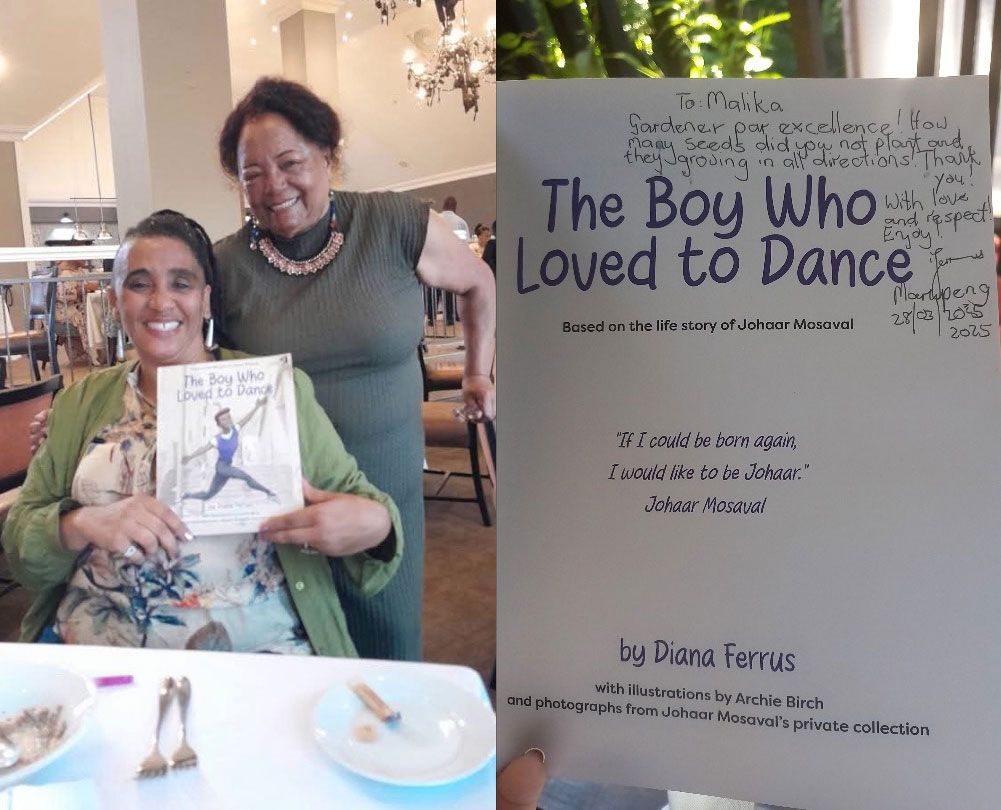
In March 2025, now exactly one year ago, so fresh in my mind – you and I together again on a different ‘mission’, this time on a long shuttle ride from OR Tambo to our accommodation near The Cradle of Humankind in Maropeng, where our annual NIHSS awards gig would take place. We chatted all the way, as we’d done before, enthusiastically sharing inspirational nuggets from the new South African fiction and poetry submissions we’d been tasked with adjudicating. Gaaning aan about our own works-in-progress, the pros and cons of working with editors – you proudly gifting me a copy of your freshly published children’s book The Boy Who Loved to Dance, based on the story of Johaar Mosaval.
When I’d said goodbye after the awards ceremony, telling you that I somehow knew 2026 would be a very different year and that I wasn’t sure we’d meet in this way again. In that moment another bell rang in my gut – I ignored it, as we parted for different planes, you back to Cape Town and me to KZN.
This is how it is, with the earthquake of your leaving. Our seemingly casual words, last hugs, shared meals, emails, photographs, voice notes gain gravity and unearth more meaning. Memory tides of our decades of collaboration, mutual growth witnessing and celebration, keep washing up on the shore of each new day. They change in the shifting light, with the passage of time. I know I will continue to learn more about you, that I never knew, now that many more of us are dedicated to not forgetting. All you have done. All you have been. All you are.