MAKHOSAZANA XABA
“Unmapped roads in us”: A Review of Siphokazi Jonas's Weeping Becomes a River
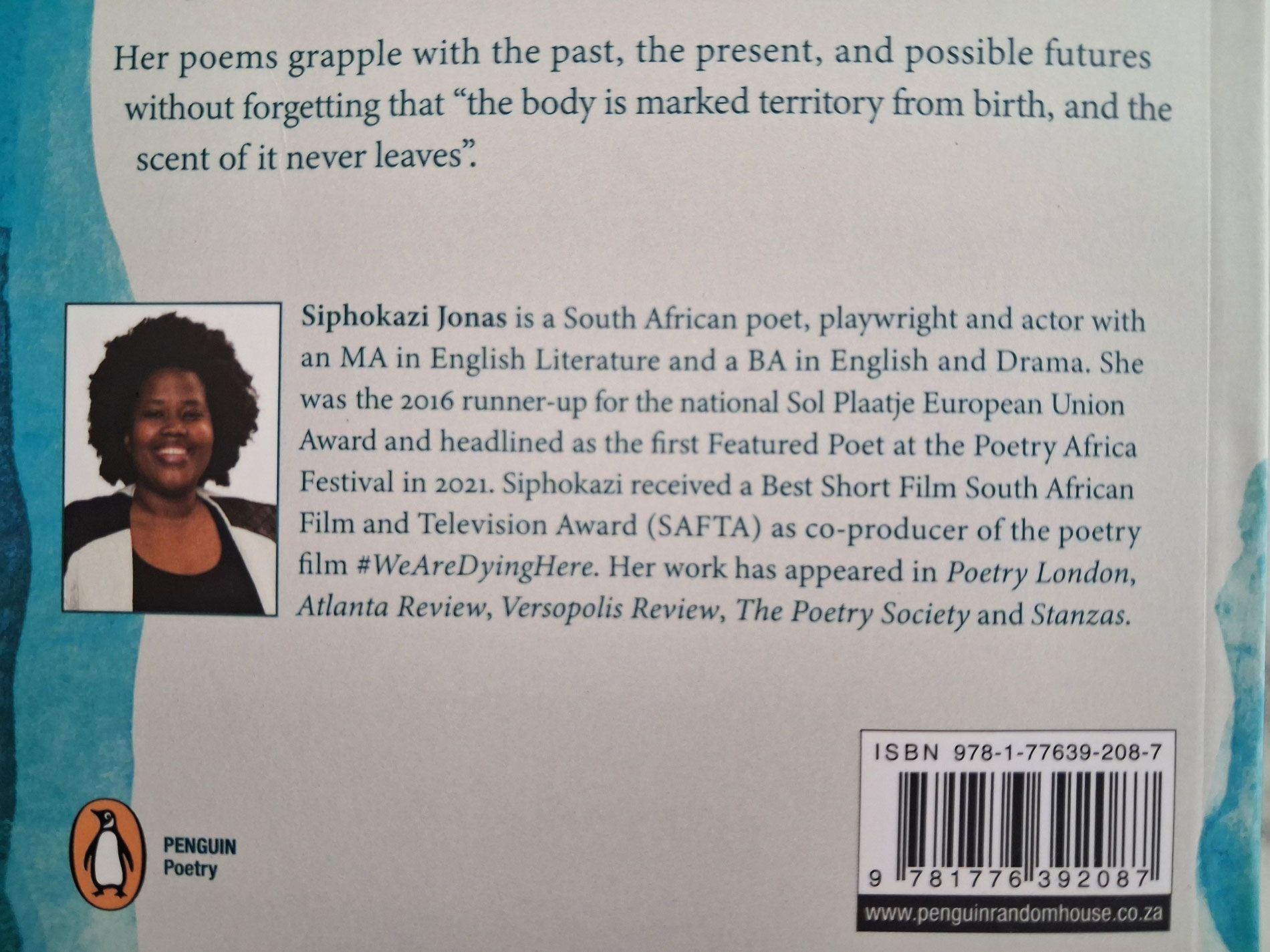
The biography on the back cover of Sophokazi Jonas’s debut collection Weeping Becomes a River (Weeping) published in 2024 by Penguin Randon House introduces readers to the poet joining the growing numbers of Black women opting to publish in South Africa. In 2024, Jonas plus four others I am aware of Nkateko Masinga, Lindokuhle Mathenjwa, Duduzile Noeleen Ngwenya and Koleka Putuma – contributed poetry collections to our literary landscape.
Siphokazi Jonas is a South African poet, playwright and actor with an MA in English Literature and a BA in English and Drama. She was the 2016 runner-up for the National European Union Award and headlined as the first Featured Poet at the Poetry Africa Festival in 2021. Siphokazi received a Best Short Film South African Film and Television Award (SAFTA) as co-producer of the poetry film #WeAreDyingHere. Her work has appeared in Poetry London, Atlanta Review, Versopolis Review, Poetry Society and Stanzas.
What makes Weeping “boundary-scaling”? There are 33 poems in this collection that live on the pages with ten iterations of intsomi. This boundary shifting is a welcome offer – positioning poetry alongside intsomi – that returns readers to the frequently referenced ways of telling stories in the African continent. Put differently, it returns us to our ancestry. As Nigerian literary scholar Harry Garuba informs us
There is a crucial consensus that, unlike the novel, for instance, poetry was not first introduced to Africa as a result of the colonial encounter. Of the three major genres of literature – drama, the novel and poetry – it is only poetry that has always been universally accepted by scholars and critics as being indigenous to Africa. (Garuba in Gikandi: 437)
In this encyclopaedia Garuba also contributed on oral literature and performance and asserted that “African oral forms include ritual, divining/healing, folk tales, myths, legends and song and dance.” (Garuba in Gikandi: 416).
Intsomi is inganekwane in isiZulu and is one of these oral literatures Garuba mentions. Jonas’s intsomi begins with a woman who gave birth to a child whose cry would wake the dead, yet she refused to be breastfed. This child was later known as Olinde Ukuthiywa because on the day of her naming ceremony something that had never been heard of or seen in the village happened: “Ismanga sento.” This nganekwane progresses in interesting ways: a xhalanga is involved, so is Olinde Ukuthiywa who ends up with the new name, “Named One”. Then there is the journey to the island and Named One’s journey with Prospero and many more. In typical nganekwane style, the end induces curiosity.
In Weeping the two genres, poetry and intsomi, live comfortably on the pages as if to declare: this is what ancestral African literature looks like.
These ten “chapters” of this nganekwane sit inside the four sections of the poetry that Jonas calls “The Village”, “Prospero’s Island”, “Returning” and, “The River”. The section titles resonate more with the content in the chapters of intsomi than they do with the poems in each section. This curation welcomes poems in this intsomi frame and thus holds both genres with ease. This is not surprising considering that Jonas is an established producer. In a profile written by Zingisa Mase titled Siphokazi Jonas: On Storytelling, Survival and the Future of African Literature we read
With deep roots in storytelling and theatre, she brings a rare power to the stage, crafting performances that linger long after the curtain falls. Jonas has created and showcased many performances, including collaborations with musicians such as Sipho “Hotstix” Mabuse, Freshlyground, Pops Mohamed, Dizu Plaatjies and Dave Reynolds.
The title I use for this review speaks to Jonas’s own concerns and questions about lineages. In the same piece by Zingisa Mase, Jonas is quoted:
South African feminism has a long, often under-documented, genealogy. Where do you place your work within that lineage and how does it differ from, or expand on, earlier traditions?
The question of lineages is also close to my thinking, reading and engaging with the feminism in South Africa and elsewhere. My curiosity about Black women poets who published poetry at the beginning of the 21st century led me to research and compile a table I titled “Poetry Collections by Black South African Women 2000 – 2018” which appears in the a chapter titled “Black Women Poets and their Books as Contributions to the Agenda of Feminism” published in Our Words, Our Worlds: Writing on Black South African Women Poets, 2000 – 2018. I have subsequently updated this table to include Jonas’s the year, 2024. To date there is a provisional total of 137 titles of poetry collections.
Jonas asks: Where do you place your work within that lineage? The time frame of the poetry collection’s lineage is contemporary. What does it mean to look way back into history? How far back can we go?
The poem titled “Road Trip (for my nephew)” ends with the couplet
Your coming is a reminder
of unmapped roads in us. (p. 53 )
While the “us” in this poem is a reference to family, this couplet is also a metaphor for the broad context of Black women’s writing of poetry in South Africa and the African diaspora.
The poets Phyllis Wheatly and Nontsizi Mgqwetho come to mind as reminders of the previously “unmapped roads”. In 1773 when Phyllis Wheately published her debut collection Poems on Various Subjects, Religious and Moral during New England’s colonial century thus becoming the first Black person to be published, she engraved a moment that we can look back to and own.
The girl has some sort of gift… Soon they purchased her off the slave ship Phillis in 1761, they had noticed her ‘endeavouring to make letters upon the wall with pieces of chalk or charcoal’. (Waldstreicher: p. 3)
Wheatley had been forced into slavery as a child, from West Africa and grew up in Boston, America. Wheatly became ivulandlela that we need to remember and reference frequently enough that it becomes the natural flow of our vocabulary as Black women who are on poem-mapping journeys. In the last chapter of the 2023 tome The Odyssey of PHILLIS WHEATLEY: A Poet’s Journeys through American Slavery and Independence by historian David Waldstreicher, titled “The Afterlives” we read:
Hers is an African diaspora story…. Phillis Wheatley proves that the story of the American Revolution is one of black resilience and creativity, of antislavery and antiracist possibilities, and of backlash and loss, dreams dashed and dreams deferred.” (Waldstreicher: 352)
Wheatley has been celebrated as an “African American” and or as a “diaspora African” and her story tells us that her gifts – poetry in particular – were noticeable when she was a child in West Africa where poetry is an indigenous genre.
In 2007 Nontsizi’s poetry was assembled in The Nation’s Bounty: The Xhosa Poetry of Nontsizi Mgqwetho translated and edited by Jeff Opland. In the foreword written by Isabel Hofmeyr we read: “As cultural and literary documents, the poems resonate with both historical and contemporary significance” (Hofmeyr in Opland: x) These exact words are also applicable to Weeping Becomes a River (Weeping). Jonas’s range is impressive.
The 2025 scholarly offer Nontsizi Mgqwetho: The Poet of the People (1919 – 1929) by Thulani Mkhize tells a story of South Africa’s earliest published poet.
As the only female contributor of poetry to Abantu-Batho and Umteteli wa Bantu newspapers in the 1920s, Nontsizi Mgqwetho was a trailblazer. Her poetry is a classic example of a modern poet who not only artfully traversed oral and literate cultures with ease and prowess but also immersed herself in a political and social condition of her people in search of a solution that would lead them out of mental and eventually political subjugation (Mkhize: Back cover).
While “amavulandlela” is an identity I am ascribing to Wheatley, the West African, later American who published in New England during the 18th century and Mgqwetho from the Eastern Cape who published in Johannesburg during in the early 20th century in South Africa who are simultaneously our “worthy ancestors”.
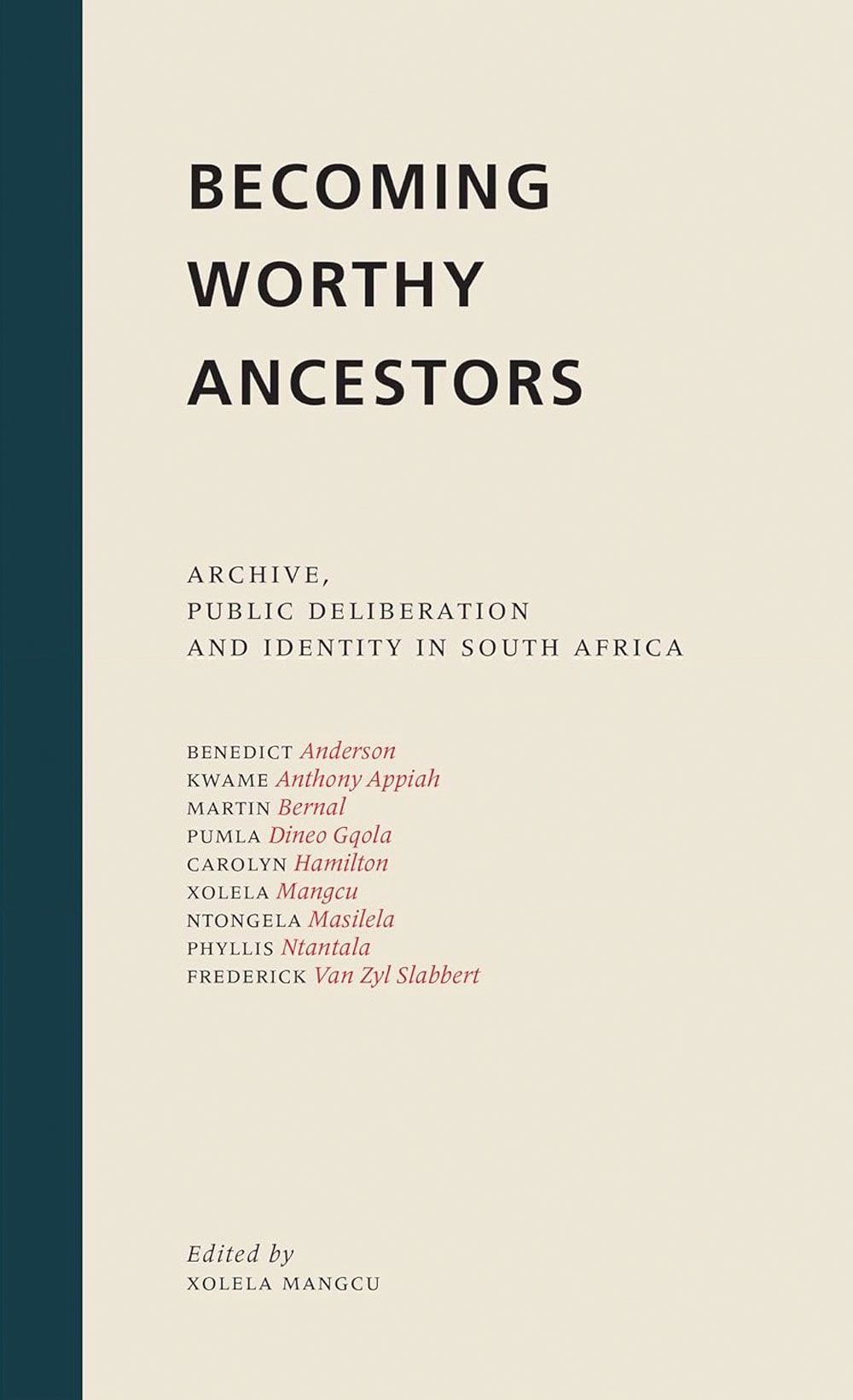
In Becoming Worthy Ancestors: Archive, Public Deliberation and Identity in South Africa Kwame Anthony Appiah writes about the four elements of identity: ascription, identification, treatment and norms of identification in the chapter “Identity, Politics and the Archive.” (Appiah: 89). Poems in Weeping invite us to revisit conversations on identity, politics and the archive in ways that allow us to mapsomeof the roads in us!
Weeping Becomes A River is thus a reminder of both the recently mapped and the yet-to-be-mapped roads in us.
There is a wide range of themes in Weeping. In these poems biblical references sit comfortably with Model C education references, as do personal and banal stories that sit with those of revered South African icons like Miriam Makeba and Beyoncé from the diaspora. The poem on Makeba for instance, lives under the title “What is the collective noun for a group of passports?” Here, Jonas flexes her creative muscle in ways that are “energising” to use Gabeba Baderoon’s word. Jonas references Makeba’s classic music while centring the world of exile she traversed.
What is the collective noun for a group of passports?
Sukumumatha ukutya, we tell children
chew and swallow
kodwa umam’ uMiriam Makeba
smuggled uQongqothwane past French customs
released it onstage in Cannes
in black and white
one click at a time.
Nine countries pocketed her citizenship
in their mouths when home spat her out
she dined on South Africa in her music
until she could drag her weary stomach
back to us from exile
xa eqabel’ egqitha apha
we do not let her leave us again. (p. 26)
The final line ropes readers in and we become one. As the opening line has the word “we” this ending with those two “us” words, in the final stanza enhance the idea of national pride.
“He leadeth me in the path of righteousness for his namesake” (another poem with a noticeably long title), is a highly creative rendition of the story of the inhumane brutality of imperialism and colonialism, invoking the artist Michaelangelo. Considering the world changing Sarah Baartman poem “I’ve come to take you home” by Diana Ferrus, Jonas returns to the story with a detail-infused originality that asserts, we should never stop mapping these multifaceted roads. The details in this stanza bring out the historian in Jonas.
Did George Cuvier believe himself a Michelangelo
When he cast Sarah Baartman’s body in plaster
Dividing and pickling her remains?
What made this science?
The hand wielding the scalpel
or spectators at Musée de l’Homme
who gawked at her skeleton
without dissecting the pedestal
on which their macabre interest was raised (p. 28)
From the foreword written by Trevor Jones
I am struck by the choice of subject matter, the specificity in selection of words, the timbre of sound, the rhythms of phrases, harmony, juxtaposition and counterpoint, all harnessed with sensitivity to impart feelings and emotion. (p. vii)
I could not agree more with Jones. We also learn from this foreword written in July 2024 that Jones is working on “customised, carefully tailored music” to accompany Jonas’s poems. A quick Google search suggests this music is yet to be released.
There are few poems in this collection that simply sound beautiful without the reader having to understand what they mean, without feeling the pressure to ask Google and ChatGPT for meaning, context or detail. “Wick” is one of these poems:
Wick
Light disrobes night
breath
breath
silence.
Self-immolating candle
Gibbous waning into dark
Her anxious shadow
peeling from the bedroom wall
like wax. (p. 18)
Weeping maps roads in memorable ways. Jonas welcomes us with her words, and we luxuriate in her innovation. It historicises existences through unforgettable figures. Then there are poems that render ordinariness in relatable ways like “Social distancing” , “big shoes”, and “making bread”; while biblical references – Abraham, Amen, David, Goliath, Isaiah 1:18, Jacob, Jesus, Jezebel, Judas and Leviticus 15:19, to mention just a few – are sprinkled in so many poems in Weeping, it is fascinating to witness this biblical ordinariness alongside the other ways of being ordinary. Hallelujah kuleyondawo! On that note: Amen!
“I was breathless after reading this collection.
Gabeba Baderoon
It is exquisite, courageous, energising, boundary-scaling, mesmerising, moving.”
Ferrus, Diana 2010. I’ve Come to Take You Home. Kuils River. Diana Ferrus Publishers.
Gikandi, Simon (ed.) 2003. The Routledge Encyclopedia of African Literature. London and New York. Routledge Taylor and Francis Group.
Mangcu, Xolela. (ed.) 2011. Becoming Worthy Ancestors: Archive, Public Deliberation and Identity in South Africa. Johannesburg, Wits University Press.
Mkhize, Thulani. 2025. NONTSIZI MGQWETHO: The Poet of the People (1919-1929), Pietermaritzburg. UKZN Press.
Opland, Jeff. (ed. & translator) 2007. The Nation’s Bounty: The Xhosa Poetry of Nontsizi Mgqwetho. Johannesburg. African Treasure Series 22, Wits University Press.
Waldstreicher, David. 2023. The Odyssey of PHILLIS WHEATLEY. A Poet’s Journey Through American Slavery and Independence. New York. Farrar, Straus and Giroux.
Xaba, Makhosazana. 2019. Our Words, Our Worlds: Writing on Black South African Women Poets, 2000 – 2018. Pietermaritzburg. UKZN Press