MAKGATLA THEPA-LEPHALE
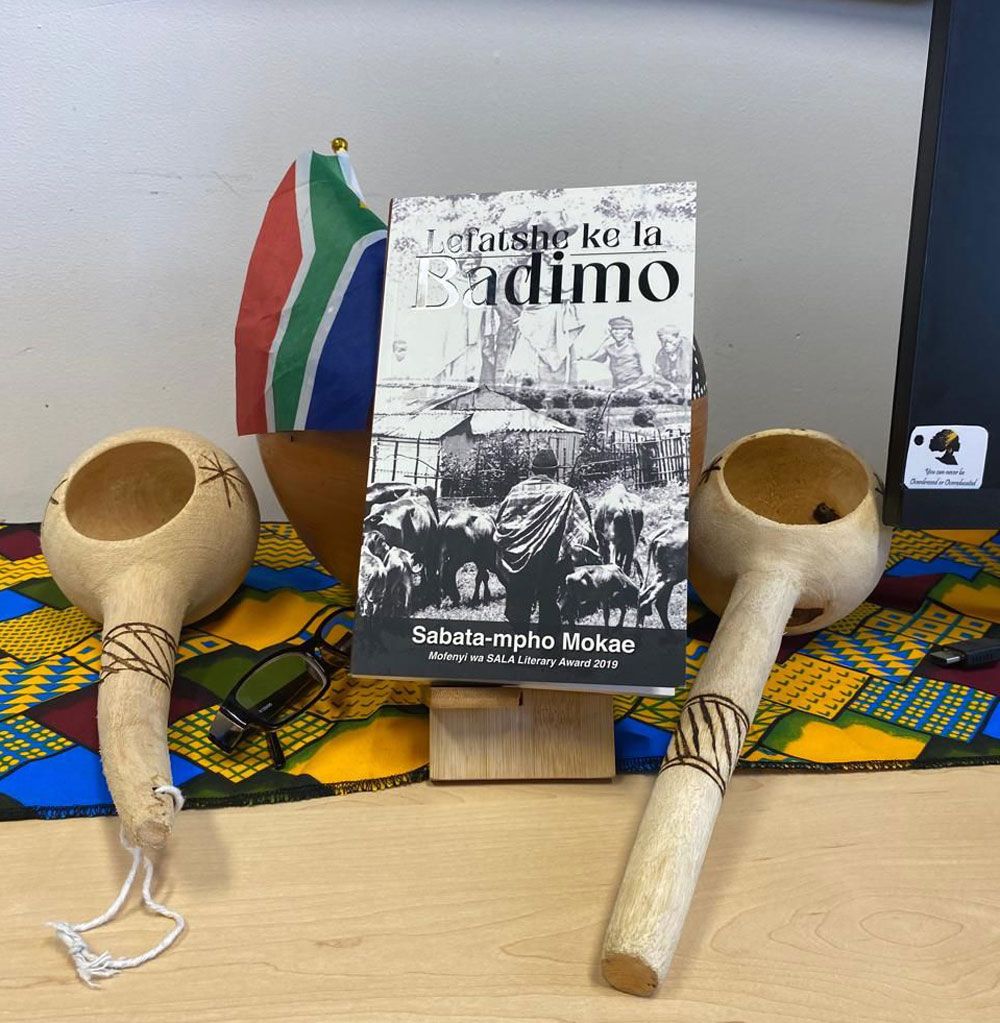
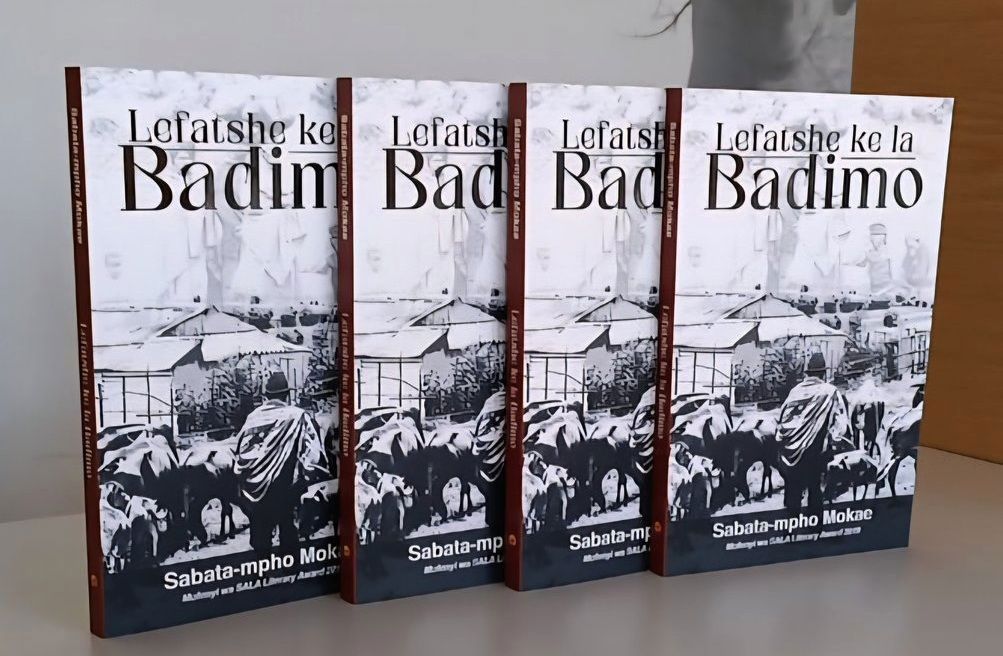
Lefatshe ke la Badimo by Sabata-mpho Mokae
The land question remains one of the emotionally charged topics in South Africa. Almost every black South African has a story to tell about land dispossession and how it affected them and their families. I, too, have a story that my grandfather shared with me about how he was sent packing from the farm he was working on, for merely building his family a brick house that looked like the one of the “land owner” had.
I am deliberately putting the land owner in inverted commas, because in all honesty, the land belongs to our ancestors.
In a country where the majority of black people still find themselves landless, dispossessed, and historically displaced, it is not enough to speak of land in languages that are not understood by the majority of those affected by the land dispossession. Speaking of land in the confusing language of policy jargon is more confusing to the landless than providing answers.
Since I have immersed myself in various works on land dispossession and listened to stories from the elderly about land conquest, I have always had a question that the literature I read has failed to answer. Even though my grandparents always told me that the land belonged to our ancestors, it took seeing a Facebook post about a new book alert, Lefatshe ke la badimo, to give me my answer. Paging through the book, and coming across these words, from the foreword, by an equally prolific Setswana writer, Tuelo Gabonewe, “ Lefatshe ke boipelo, lefatshe ke khumo, lefatshe ga se la ga ope gape, ke la badimo ba rona le bana ba rona. This paragraph alone answered my long-standing question of “Ke lefase la mang? Whose land is it?
Even though the title of book was captivating and seemed to hold answers to my question on the land question, I had doubts on whether I will be able to comprehend what is written, since the book is written in Setswana and I am Motlokwa speaking. Setlokwa is a dialect from Northern Sotho language which is spoken largely in the Northern Part of South Africa.
Luckily, I grew up watching Setswana TV dramas. Reading the book was not as difficult as I thought, as I understood most of it without relying on translation services. As I have indicated, I have read a number of literary works on the land topic; the majority of the books I read address the land question from a policy, academic, and historical perspective. Very few of them offer the reader a human face to the land question in South Africa.
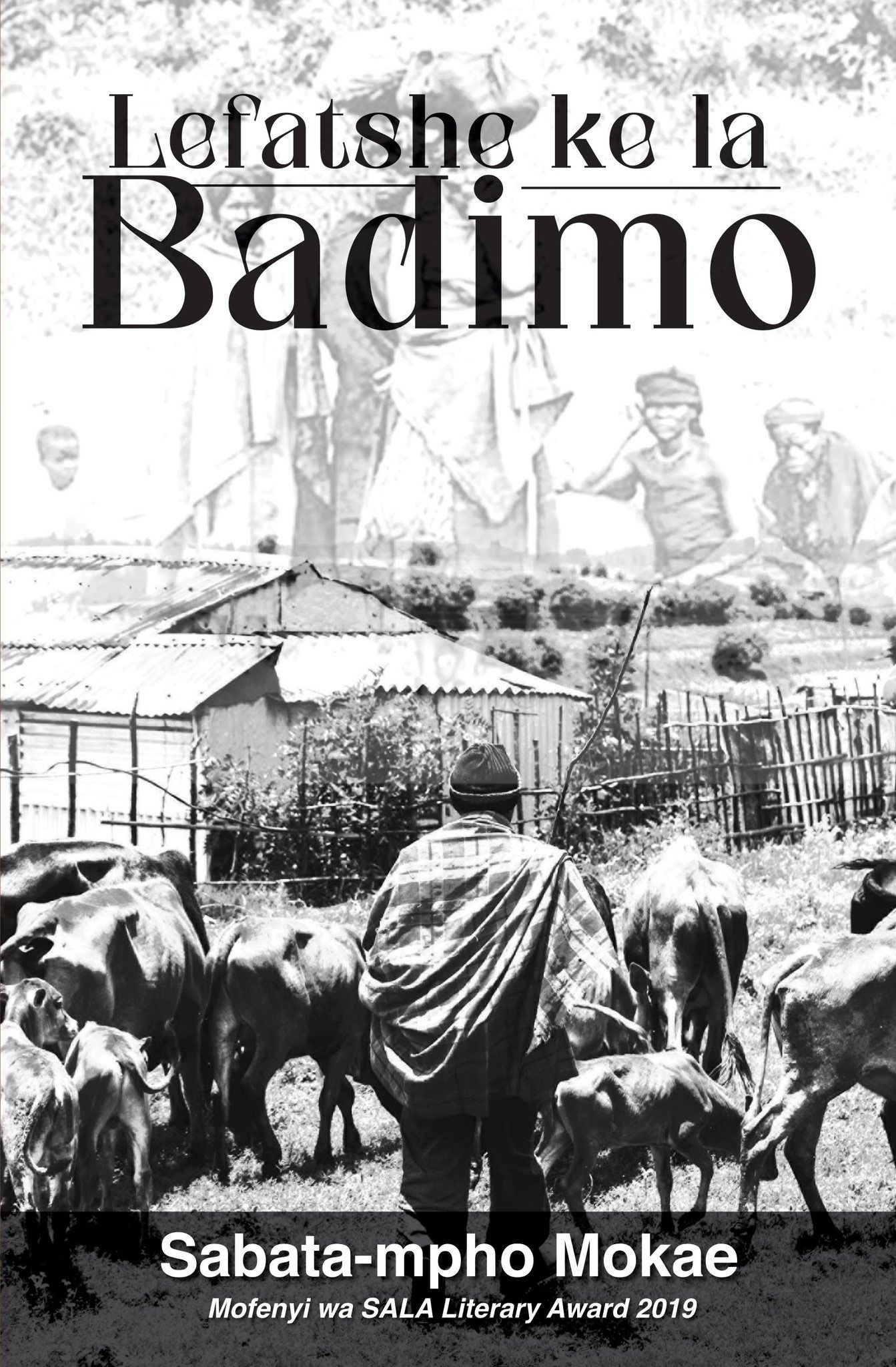
Mokae’s book became a breath of fresh air in the literary collection on the land question. It offers the human face to the struggle of land dispossession. How he centred the land question around the Kgobadi family. There are so many stories similar to the Kgobadi one. So many families woke up to the news of having to pack their own lives and move to an unknown land with an uncertain future because the then system decided that a black person was not worthy of owning land. Placing the Kgobadi family at the centre of the book gives the reader an opportunity to understand land dispossession as not merely a theoretical experiment.
Mokae’s book, while addressing the land question, also seeks to provide context for the relationship between land and African spirituality. At the beginning of the book, there is Piet, who had a dream and questions about its meaning. In African spirituality, when one has a dream, especially one involving someone who has passed on, there is often an interpretation of its meaning. In African spirituality, there is no dream that is just a dream; every dream is treated as a message from those who lived before us and transcended to the land of no return. Mokae further sheds light on the African spirituality aspect when he narrates the story of the Kgobadi family losing their daughter while travelling. The tragedy of land dispossession affected them. The story is a testament to how cruel the system of land dispossession, in particular the 1913 Land Act, was on black people. Even though the story is fiction, it felt so real. It reminded me of stories I had, of people not knowing where the bones of their forefathers are buried, because of land dispossession and forced removals.
Having to bury your own flesh and blood in a foreign land, the land that you are not even sure of, whose bones lie on it, is one of the tragic stories that captivated me about Mokae’s book. It shows how the 1913 Land Act disrupted lives and interfered with people’s customs and ways of living. Burying a loved one is not merely an act of putting the body underground; it is a sacred ritual that involves family customs and a process of returning a loved one to the land of their ancestors and lying next to those ancestors.
Mokae’s book confronts the reader with the unbearable, tragic reality of the consequences of the 1913 Land Act, leaving generational trauma and pain that might take centuries to heal.
I have known Sabata-mpo Mokae to be a prolific writer of our generation, but how he incorporates the story of Sol Plaatjie into the fictional novel makes it a masterpiece. It shifts the story from a mere novel to historical fiction, seeking to resonate with readers about the collective trauma of land dispossession.
Although the book is narrated as an informal meeting between the Kgobadi family and Sol Plaatjie, it adds a whole different dimension, from the individual trauma and pain of the Kgobadi family to shedding light on the broader struggle against land dispossession. Mokae makes the reader understand that land dispossession is not an isolated, individual struggle but one that every black household faced under the notorious 1913 Land Act.
The chapter on the Kgobadi family meeting Sol Plaatjie narrates and explores the relationship between the lived experiences of land-dispossessed people and documented stories. Mokae has attempted to give the reader a sense of who Solomon Plaatjie was; the Plaatjie he narrates in the book is the same Plaatjie we read about in other non-fiction books.
Chapter 13 of Mokae’s book offers the reader an opportunity to engage critically because it is packed with emotion and knowledge. While land dispossession fractured many families and disrupted lives, it also produced great voices of resistance, such as that of Solomon Plaatjie.
Mokae’s book also touches on the principle of botho, or Ubuntu, as many people call it. Chapter 16 of the book captures the essence of unity amongst African society. Mokae explores the African value system of “motho ke motho ka batho” when the Kgobadi family arrive in the new village of Dikhudung and is given a warm reception by the community, which ultimately gives them a sense of home and belonging.
Many families who went through the process of forced removals narrate how welcoming and warm the hospitality they always received when moving to new settlements where other African people were. Mokae brings to the fore that even in harsh conditions of displacement and forced removals, the African value system of togetherness, which resists alienation and restores the Kgobadi family’s dignity which was stripped away by being forcibly removed from the place they knew as home.
Mokae touches on the principle of “Letsema”, a great principle that underpins the African value system. He does this in Chapter 16 when the community of Dikhudung assists the Kgobadi family in building a shelter, and, in thanking the community, the Kgobadi family has to slaughter a cow for them to feast on. The principle of letsema reflects traditional African practices in which communality is promoted rather than individuality. Mokae reminds us, as readers, that the principles of ubuntu and letsema were among those that kept African communities surviving during the harsh days of colonialism, especially during the 1913 Land Act era. After reading chapter 16, I was left with a question I did not have an immediate answer to:
Does the principle of Letsema still have a place in our modern societies?
Mokae’s book is packed with layers, while the chapter on the arrival of the Kgobadi family in the new village of Dikhudung, which focuses on the spirit of communality and Ubuntu, adds a new dimension to how Christianity disrupted this togetherness and introduced class politics in the village. The arrival of the new white pastor in the village of Dikhudung is not only a reflection of a new spiritual leader, but also a representation and introduction of new value systems that were foreign to the village. The Pastor introduced a new ideology that shifted power relations in the community. The disruption does not happen loudly; it creeps in as a form of saving the community, connecting them to God and promoting moral reformation. This is witnessed when the village remains underdeveloped while the chief and the pastor’s lives are developed. Such is a demonstration of the power relations and class struggle that Colonialism bred.
The introduction of mining in the community, as seen even in the present age, where many mining communities still live in squalor and poverty while big Mining giants live comfortably. The less said about Marikana, the better.
While the arrival of the Pastor disrupted the lives of the village by replacing accountable, consultative leadership with classism, there were positives that emerged. The facilitation of Kgobadi’s son, Leruo, going to school is one of the positives that one may argue came with the arrival of the new pastor. However, the education of one person can hardly be equated to community progress.
Sabata Mpho-Mokae’s book is intriguing, has answers and questions. It unpacks the impact of the 1913 Land Act and puts a human face to the Forced Removals struggle. It is a book that can be recommended to anyone who wants to understand the Land Question in a simple, non-technical way, without being confused by legal and policy jargon. Even though the book is written in Setswana, it uses straightforward language with no ambiguity. I would recommend this book to anyone who is interested in historical fiction.
I feel that the ending was suspenseful because I would have loved to read about the Kgobadi family returning to where they buried their daughter, Seyanokeng, and reburying her, then settling there. “Ngwanake, lefatshe ga se la motho a le Mongwe, Lefatshe le, ke lefatshe la badimo. Lefatshe le re fa botshelo go fithla re ikela badimong mme le sale la bana ba rona. Le bona ba tla le tlogela fa ba ya badimong mme le tswelele go tshedisa bana ba bona.” These are words that are worth engaging critically.
Whose land is it? The land belongs to the ancestors.