LUCAS LEDWABA
Festival in forgotten community seeks to amplify rural voices through art
In the township of Waterval in the hills of Elim in Limpopo, poet, publisher, and cultural activist Vonani Bila staged a festival that is as much a celebration of art as it is a declaration of resistance.
The Herri and Timbila Literary & Music Festival, held at the Elim Hlanganani Society for the Care of the Aged on the outskirts of Louis Trichardt, is not just another cultural event—it is a profound statement about the role of art in rural South Africa, about reclaiming dignity, and about amplifying voices too often silenced by geography, poverty, and neglect.
Art against hardship
Bila’s motivation for staging the festival is rooted in a deep awareness of the hardships rural communities endure. Waterval is a township located about 25km east of the town of Louis Trichardt.
It is located in the heart of a rural area comprising villages and citrus farms in the Levubu Valley. Like most townships on the outskirts of small agricultural towns, it has very little to offer in terms of recreational facilities and, more especially, exposure to the arts.
Football remains by far the most popular pastime for youths, and the area is not immune to the scourge of alcohol and substance abuse plaguing many communities.
“Artistic life is abundant and rich in the outskirts of towns and cities, yet there’s little support to nurture, develop and grow it. These forgotten villages, townships and informal settlements are known to produce the best artists and writers, but often these artists are not well supported outside the urban and cosmopolitan spaces where art life is valued,” he says.
Bila speaks of social injustice, economic precarity, landlessness, and gender-based violence as daily realities. Yet, he insists that art thrives even in the face of abjection.
Quoting Daniel Simon of World Literature Today, Bila says: “Writers and artists continue to make art in the face of abjection, violence, and death itself, and—even while hovering over the abyss—we cling to the belief that art will preserve our humanity.”
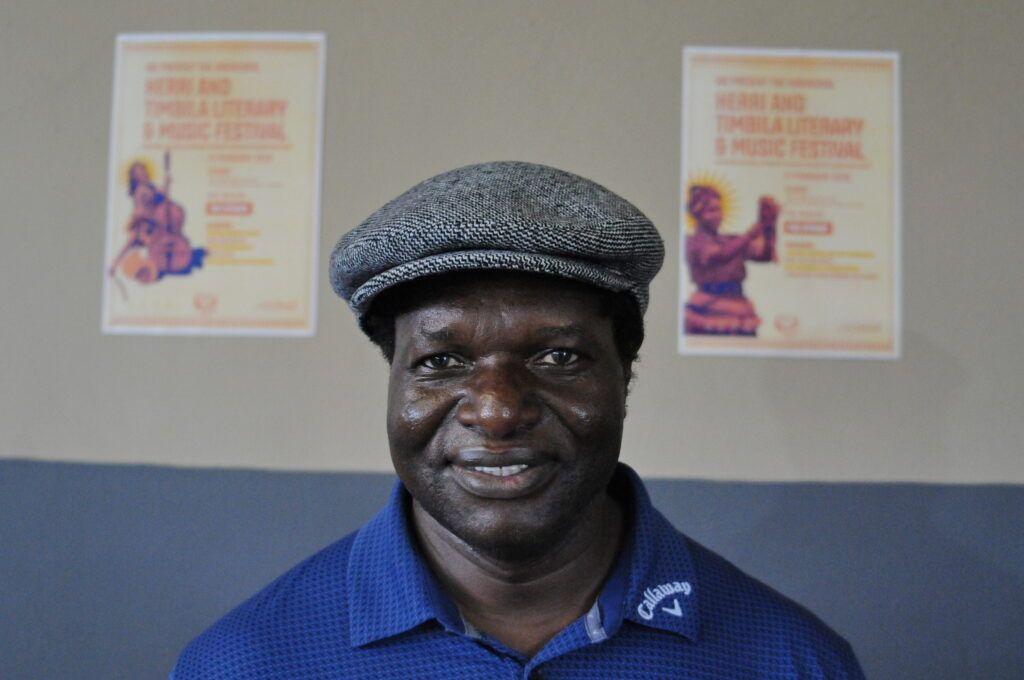
For Bila, the Herri and Timbila Festival is both a memorial and a celebration. It honours Timbila poets who have passed away prematurely—figures like Gerrie Magwaza, Nosipho Kota, and Myesha Jenkins—while affirming the resilience of those still creating.
It is also deeply personal. Bila survived five gunshots in 2015, an experience that sharpened his sense of urgency.
“I pay homage to my ancestors and thank God for sparing my life so that I can continue making art, teaching, playing music and mentoring writers,” he reflects.
The festival is a partnership between Timbila Poetry Project and Herri Publishing – an online arts and culture archive founded and curated by poet and film-maker Aryan Kaganof.
“We hope this festival will go a long way in positioning indigenous African languages as complete languages that are capable of handling complex and diverse matters beyond communication and religious prayers and worship,” Bila says.
An unusual venue – art for the elderly
Choosing the Elim Hlanganani Society for the Care of the Aged as the venue was deliberate. Bila wanted to break the assumption that art belongs only in urban theatres or to young audiences.
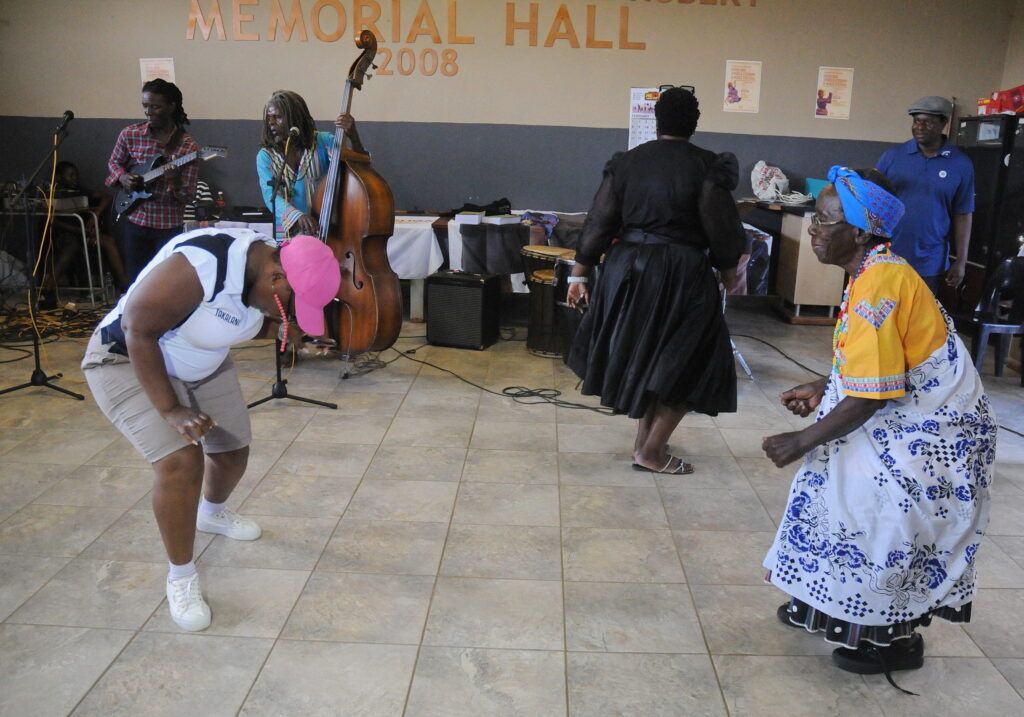
The elderly, he argues, are bearers of culture and heritage, often condemned to loneliness and grief. By staging performances in their space, Bila sought to offer therapy through art, enabling gogos to laugh, dance, ululate, and share their stories.
“Rendering our work here is to plough back to them for the wisdom they have shared with us over their lifetime. It is to recognise that the elderly who are often condemned to a lonely life of always attending funerals and resolving family disputes have a right to a pleasurable life derived from their participation in the cultural festival,” reflects Bila.
“The elderly shouldn’t always be seen as depressed and nearing the grave; instead, they should be treasured and protected like we ought to do with our own bodies and the changing climate,” he says.
He adds that the elderly are often relegated to a life of depression due to many social factors, including raising their orphaned grandchildren or looking after children whose parents are swallows by migrant labour in faraway places.
“So when these experienced artists perform here, the attempt is to use the arts as therapy so that the grieving gogos can release the disempowering weight of stress weighing them down.”
This choice also underscores a political point: rural communities deserve cultural infrastructure. Elim, despite its history of producing intellectuals and artists, has no theatre, museum, or library for its estimated 50,000 residents.
“This festival asserts that rural people have a right to public goods. When artists come here to Waterval (Elim/Shirley), they witness the broken down infrastructure, and they mirror this malaise in their work. So I hope that the writers, poets, playwrights and musicians who have managed to come here will return home with a rich socio-political sense of the nature of things in rural South Africa,” Bila says.
He further argues that a lack of facilities does not necessarily have to silence the voice of the artists.
“We can still have theatre under a tree. We can read poetry at a dilapidated school,” Bila insists.
The festival thus becomes both a celebration and a demand—a call for investment in rural arts facilities.
He reasons that had they wanted a proper venue with air conditioners, a public address system, and sophisticated technology, they would have only one in the town of Louis Trichardt 25km away.
“The intended audience lives here, not in town. Of course, the town people are not excluded, but
it’s high time we broke away from the notion that cultural events and arts productions can only be staged in wealthy towns and not on the periphery.
The rich people from town hardly bring their festivals to the villages,” he says, adding that the cycle has to be broken through action.
“They bring their shops and banks to siphon the little cash and human resources that should be circulating in the village and building our own economy without the dictates of outsiders,” Bila says.
Multilingualism and decolonial messaging
The herri and Timbila Literary and Music Festival was staged on International Mother Tongue Day, February 21, aligning with Bila’s lifelong advocacy for indigenous languages. He rejects the dominance of hegemonic languages and insists that African languages are fully capable of handling complex ideas. “A monolithic linguistic world is a myth,” he declares.
Partnering with Herri Publishing, founded by poet-filmmaker Aryan Kaganof, the festival amplified anti-colonial messaging and celebrated Africanness. Bila invokes Ngugi wa Thiong’o’s dictum that “language carries culture, and culture carries the entire body of values by which we perceive ourselves.”
For him, the festival is about validating Blackness, humanity, and pluralism.
A tapestry of disciplines
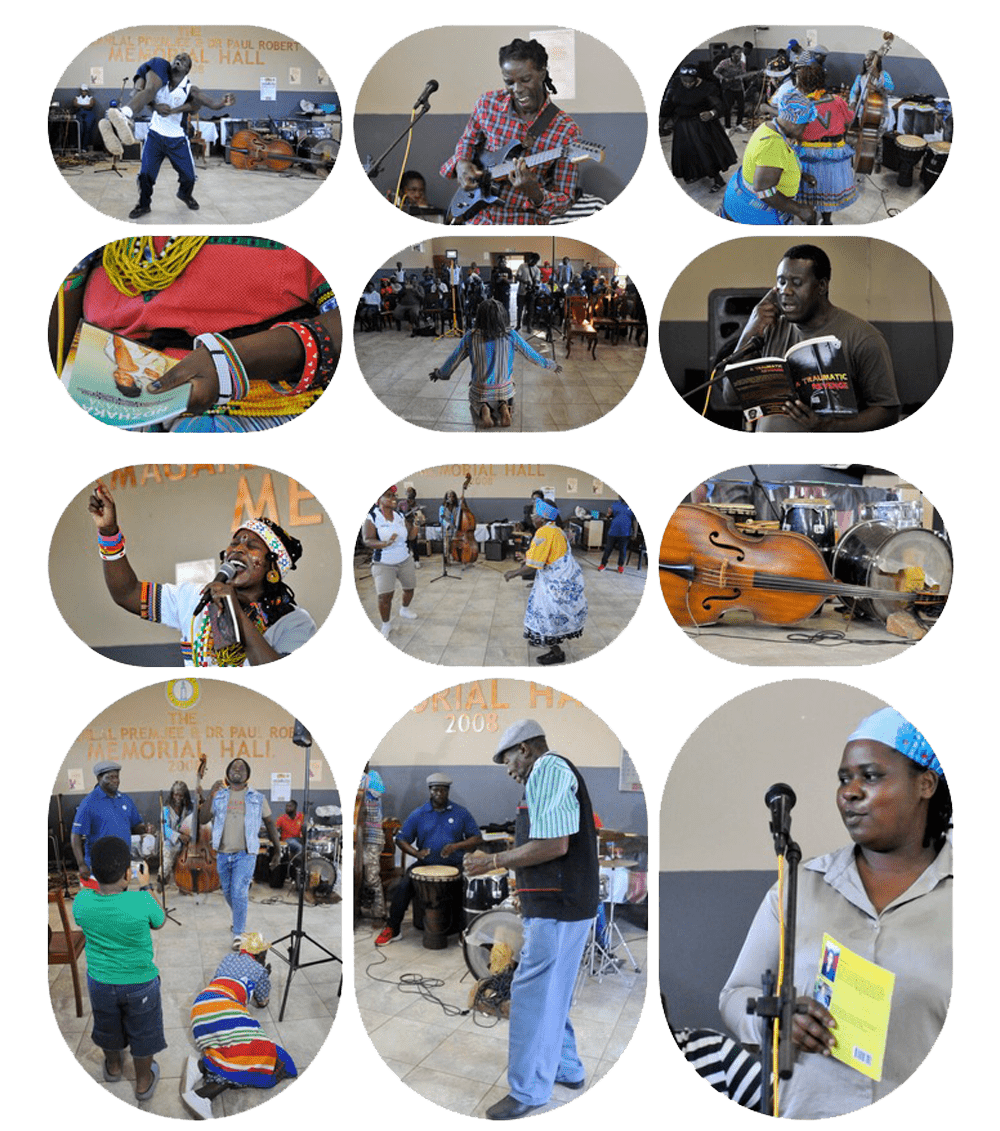
The herri and Timbila Festival was deliberately eclectic, weaving together music, poetry, theatre, storytelling, and dance. Bila curated a program that reflected the diversity of tastes in the community—from amapiano to rumba, elegies to praise poetry.
“We included an array of art forms and disciplines because people thirst for the arts in totality. We are a diverse community with different yet related artistic tastes and preferences. Take music tastes, ranges from amapiano, reggae, rumba, jazz, mbaqanga, xingondo, etcetera, but it’s all music,” Bila explains the reason behind fusing together different art disciplines as part of the festival.
He cites the example that in poetry, for instance, saying “some like elegies and laments, others like chants, wedding poems and limericks.”
Bila argues that even in an established art form, there are sub-genres that can define one’s taste.
“It’s not an easy task to curate an all-inclusive art festival over a day, but it is also important to introduce the artists and writers to the audience and leave the audience to decide what moves them. Popular disciplines like music and dance will always draw crowds, but we also want to use that card to entice the audience to appreciate literature and theatre,” Bila says.
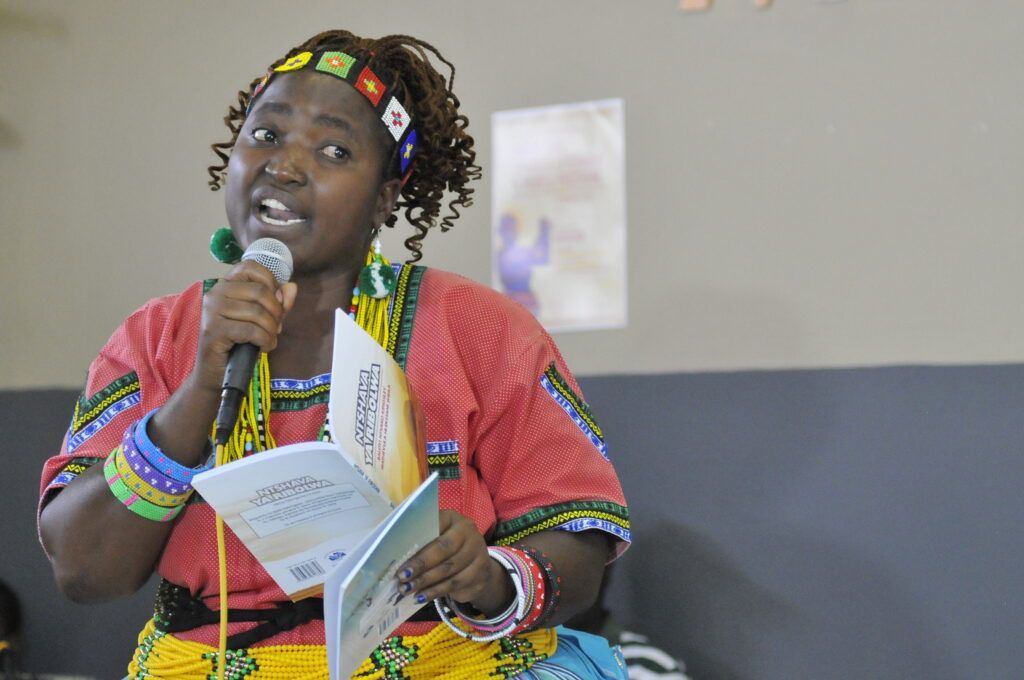
The highlights of the festival included a musical theatre piece, My Tiny Voice, by the Tshidudu Arts Academy, which blended poetry, dialogue, dance, and music; oral poetry by N’wa-Jika and Sheila de Poetic Queen, rich with riddles, proverbs, and clan histories.
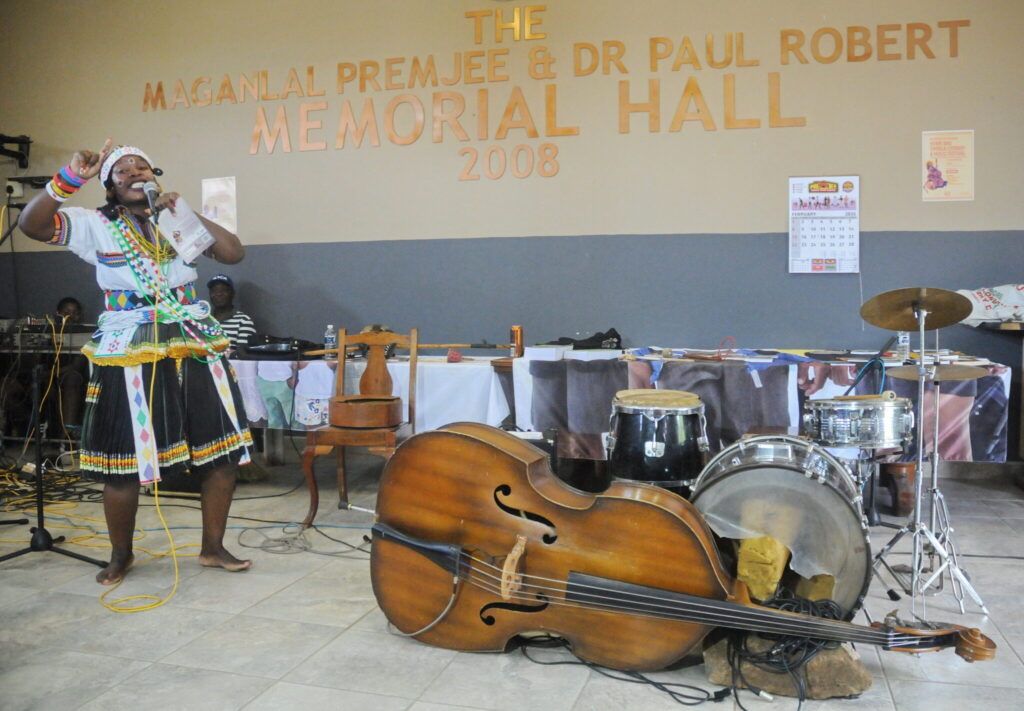
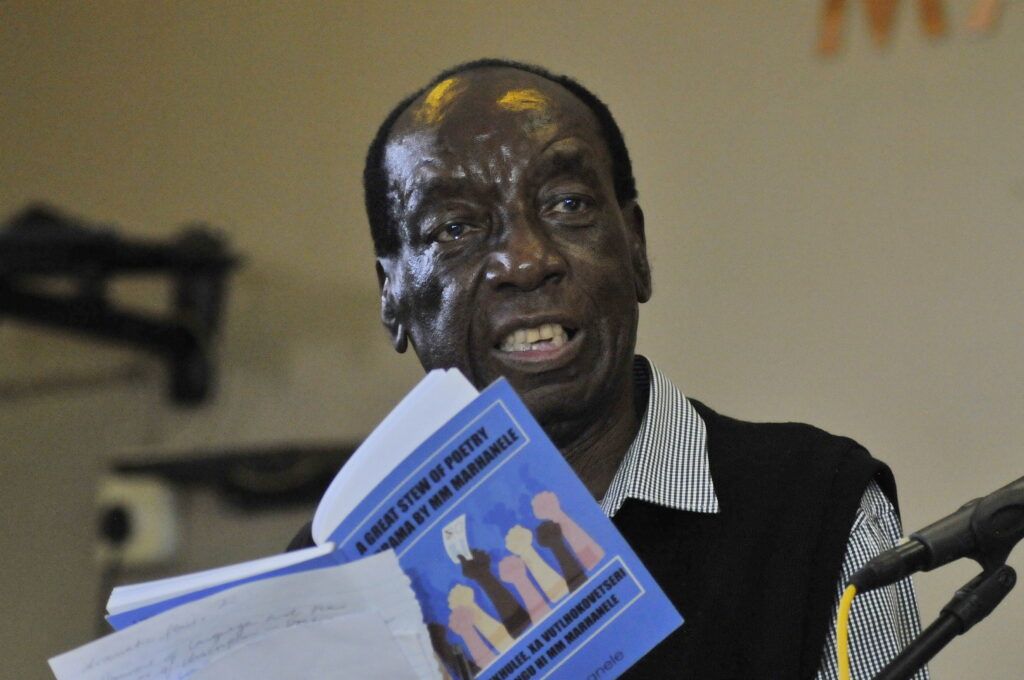
Furthermore the veteran poet Dr Max Marhanele, offered insights into brevity, imagery, and sincerity in poetry. Readings by Gudani Bila from her children’s book In the Valley of the Rising Sun, and Given Mukwevho, whose prison writings testify to literature’s power to heal.
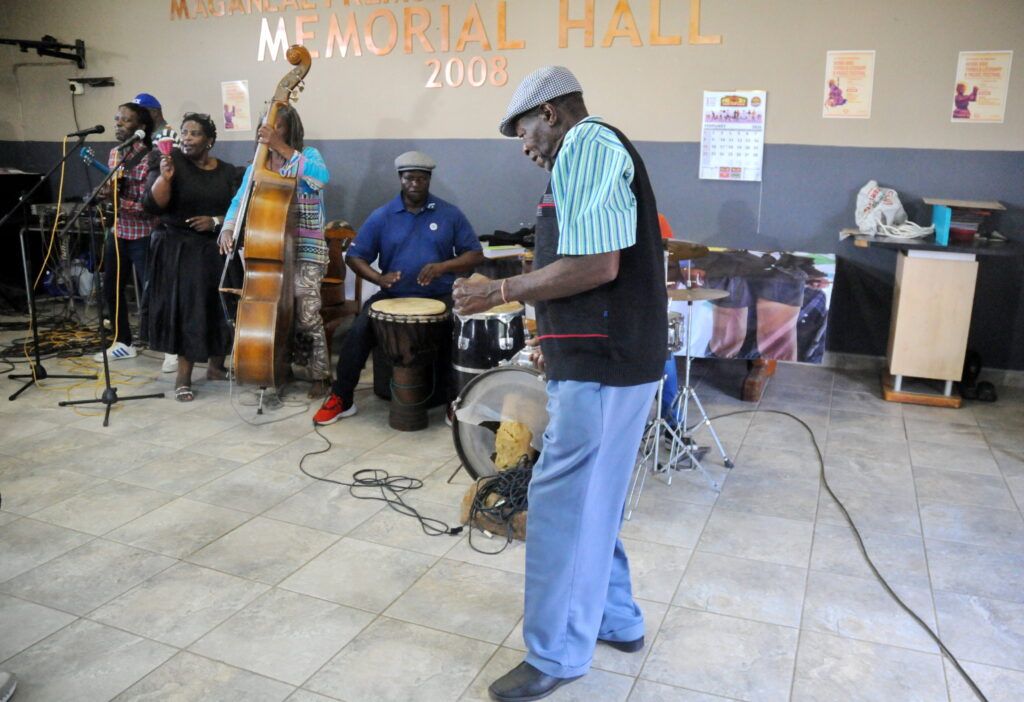
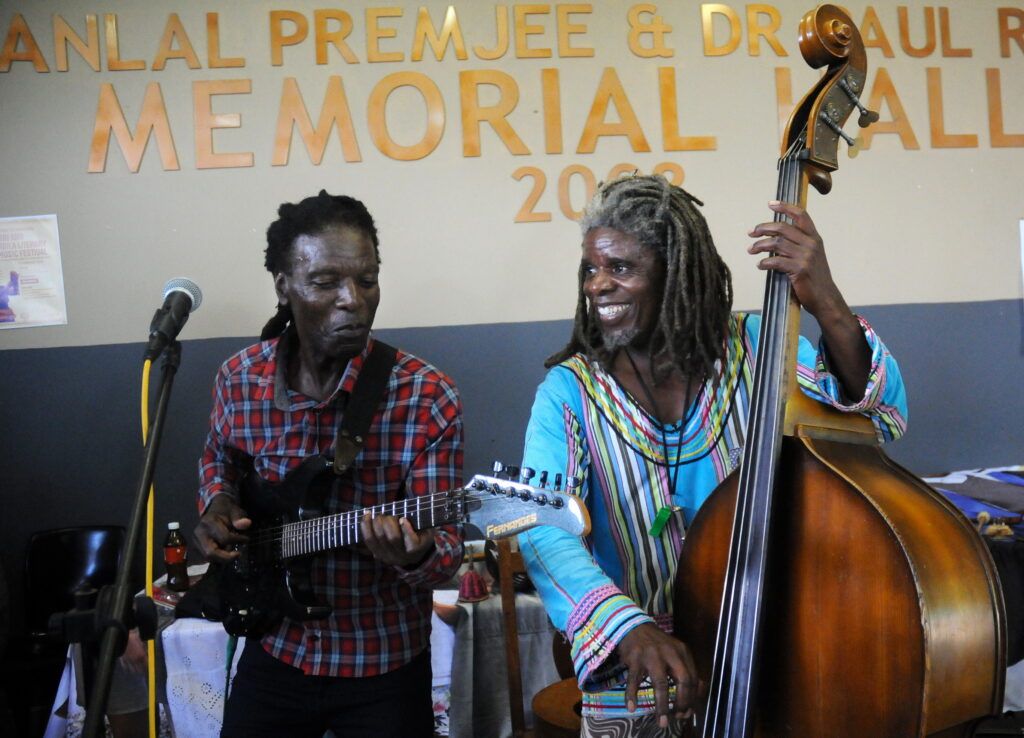
Risenga Makondo, an internationally acclaimed multi-instrumentalist and former member of Amampondo, composer, arranger and dancer who is also considered by many as a music therapist, gave a spellbinding performance that had even the senior citizens on their feet, to shake off the aches and pains of old age.
Makondo, a native of Limpopo, returned home to Elim a few years ago after spending over three decades performing his craft in Europe. Backed by a lead guitarist and drummer,
Risenga Makondo’s musical pieces, rooted in the deep spiritual tunes of the great north, sounded more like offerings of healing to the soul than mere tunes of music.
He switched from upright bass, umrhube and djembe drums with ease, and regularly took to the centre of the hall, barefoot, to indulge in some dance moves drawn from indigenous routines synonymous with the traditional, spiritual dances from these parts.
These performances affirmed Bila’s belief that art is whole and interconnected, flowing into the human soul like rivers into the ocean.
The Timbila Journey
The Herri Festival is the latest chapter in Bila’s long journey as founder of Timbila Poetry Project. Established in the late 1990s, Timbila was a response to the diminishing literary space at the dawn of democracy. Bila envisioned it as a collective of poets, committed to publishing voices marginalised by mainstream publishers.
Over the years, Timbila has produced the groundbreaking Timbila: Journal of Onion Skin Poetry, hosted workshops, public readings, and cultural exchanges, and established a rural writers’ retreat.
Bila dreams of a Timbila People’s University, prioritising humanities and arts, countering the marginalisation of disciplines like literature and history in favour of science and technology.
“Timbila exists to canonise Black South African writing,”
Bila asserts, “to inspire a reading culture in communities through workshops, fairs, and dialogues on social justice.”
Challenges of Publishing
Bila is candid about the challenges of independent publishing. Without the resources of mainstream conglomerates, Timbila operates from backyards, facing high production costs and limited distribution.
Bookshops are rare in rural areas, and libraries are underfunded. Instead, villages are saturated with liquor outlets and moneylenders.
He laments the government’s failure to support local publishers, contrasting it with apartheid-era policies that at least ensured libraries stocked thousands of copies of new books. Today, he argues, Pan-Africanism and Africanness are absent from library shelves.
“How will we decolonise education when books that matter are deliberately made unavailable?” he asks.
Bila calls for systemic change: government procurement of local books, investment in translation across African languages, digital archives for writers, and grassroots reading clubs.
Bila is particularly critical of lazy reliance on AI in writing, insisting that human originality and aesthetics must be preserved.
Staging festivals as a form of resistance
Looking ahead, Bila envisions the Herri Festival expanding to other villages and townships, reviving the spirit of community arts festivals that galvanised resistance in the 1980s.
He sees festivals as tools to combat neoliberalism, corruption, and exclusion, and to inspire youth to pursue careers in the humanities.
Art as survival, art as hope
The herri & Timbila Festival is more than a cultural event—it is a manifesto for rural dignity. It insists that art belongs not only in urban theatres but in villages, old-age homes, and under trees. It honours the dead, uplifts the living, and demands recognition for indigenous languages and rural communities.
Bila’s life itself embodies resilience, surviving gunshots, building Timbila from scratch, and continuing to mentor writers against all odds. His festival is a reminder that art is not a luxury but a necessity, a way of recording hardship, resisting injustice, and nurturing hope.
In Waterval, amid broken infrastructure and dashed hopes, Bila has planted a seed. The herri and Timbila Arts and Literary Festival is a declaration that rural voices matter, that art can heal, and that through poetry, music, and storytelling, communities can reclaim their humanity.
“I see this festival taking root not only in Elim, but extending to other villages, informal settlements and townships, thus giving voice to the suffocated souls who yearn for freedom but burn in poverty. The absence of dynamic cultural life in rural areas is concerning. We can’t always be waiting to be united by funerals and koma/ngoma or the bottle in taverns. No, we need well-thought-out community arts festivals that will build our youth to become proud citizens, educated beyond theory, competent, self-aware and confident leaders,” Bila concludes.
Way to go, brother.