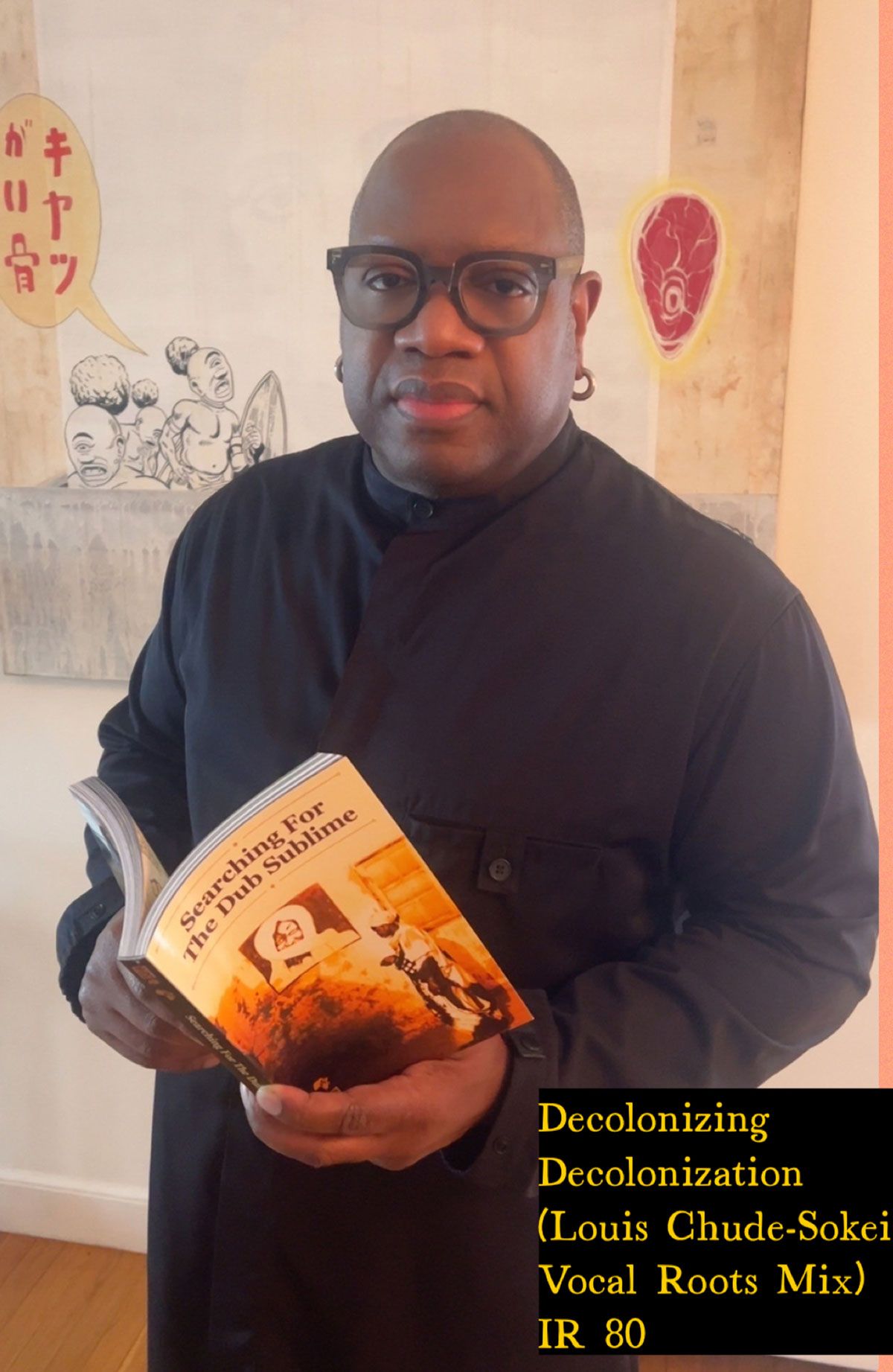
LOUIS CHUDE-SOKEI WITH IR INDIGENOUS RESISTANCE
Sharp as a Blade: Decolonizing Decolonization
On the latest IR album IR 80 Searching For The Dub Sublime the Nigerian-born, Jamaica-raised, and Turtle Island-based scholar-writer Louis Chude-Sokei is present voicing an urgent, yet poetic, critique of the language we use for decolonization.
Ultimately, he reminds us,
“to decolonize is to keep front and centre which freedom we are fighting for. And whose.”
His roots vocals are set to a combination classic reggae steppers riddim fused in a dub techno form. We felt it vital to present Louis Chude-Sokei’s compete lyrics of Decolonizing Decolonization so here they are:
“Sometimes we can’t trust our own language. That’s why it’s necessary to be hyper-vigilant when it comes to our own terminology. Because the desire to spread awareness and inspire change, because the commitment to different spaces and communities can render our terms and concepts so broad as to become meaningless or fashionable, or easily manipulable.
Take for example, the term decolonize. I’m thinking now of the work of those who Have use the term to prioritize the return of land to indigenous peoples and against what was and is the increasing tendency to use it to describe everything (it’s now common to hear it as an all too general description of any objectionable power relationship). And so people worry about the term becoming mere metaphor. As a metaphor it centralizes language, attitudes and philosophical gestures over the need to reject if not undo the material conditions of power and empire.
That’s why we must sometimes decolonize the very notion of decolonization.
Not refuse it, not reject it, but to keep it like a “stepping razor,” keep it sharp, sharp as a blade.
The term’s increasing popularity conceals as much as it reveals. It can conceal where we collectively stand in relationship to networks of global struggle and it can reveal much about where what we once called “The West” or “The Global North” or “The Overdeveloped World” or “The First World” or “Babylon” where it all stands. After all, the term decolonial—like so many others—has found space in how the West talks about itself, how it criticizes itself and how it inoculates itself by way of such criticism.
There is a history, for example, colonialism itself has been long colonized by metaphor as it has become often a mere description of unequal power relations, or unfair distributions, or prejudiced meanings. Though it is all those things we know that such uses of metaphor can become so self-serving that they inhibit change and distract us from it.
The Polish British author Joseph Conrad knew this. He made that clear in his novel Heart of Darkness, which draws a line from the colonial violence of the 19th and early 20th century Congo generated by Western industrialization to the updated colonial violence of the 20th and 21st century Congo region generated by digitization. “The horror, the horror,” he writes famously as metaphors become overwhelmed by the violence of a reality rooted in the blood flow of extraction.
Palestinian American critic Edward Said, knew this also. It was Said, along with Nigerian novelist Chinua Achebe, who were Conrad’s most insightful readers. They would point out the limits of language in the face of colonial violence and in doing so they would establish what was once called post-colonial thought. So, if the post-colonial has been weakened by metaphor, we should not be surprised that “decolonize” is also in need of reflection.
This is because so many of its critiques of power and empire are generated by power itself. Said knew this.
Said knew that the dominant metaphors of capitalism especially American style, are in fact freedom, and resistance, even as it denies them to others.
Said understood that rebellion, resistance and dis-ease with the colonial status quo, whether racial, political, sexual, or social, are in fact tools of a capitalism rooted in an obsession with personal freedom. With an obsession towards the self. That is why we understand that Freedom is how empire justifies and reconstitutes itself.
And so, we are contained by an endlessly encouraged obsession with freedom and rebellion—at least, the language and metaphors, which can dissuade us from the necessities of material change. This is exactly why a great South African poet declared at the height of anti-Apartheid struggle—as he imagined a world beyond that struggle—freedom, he said, was just a word in the mouth of tomorrow’s oppressor.
What we must take from this is not that there is no freedom, but that there are many freedoms possible, some less free than others. To decolonize is to keep front and centre which freedom we are fighting for. To decolonize is to make sure our poetry and sounds and ideas and language are in service of material transformation. Sharp. Sharp. Sharp as a blade.”
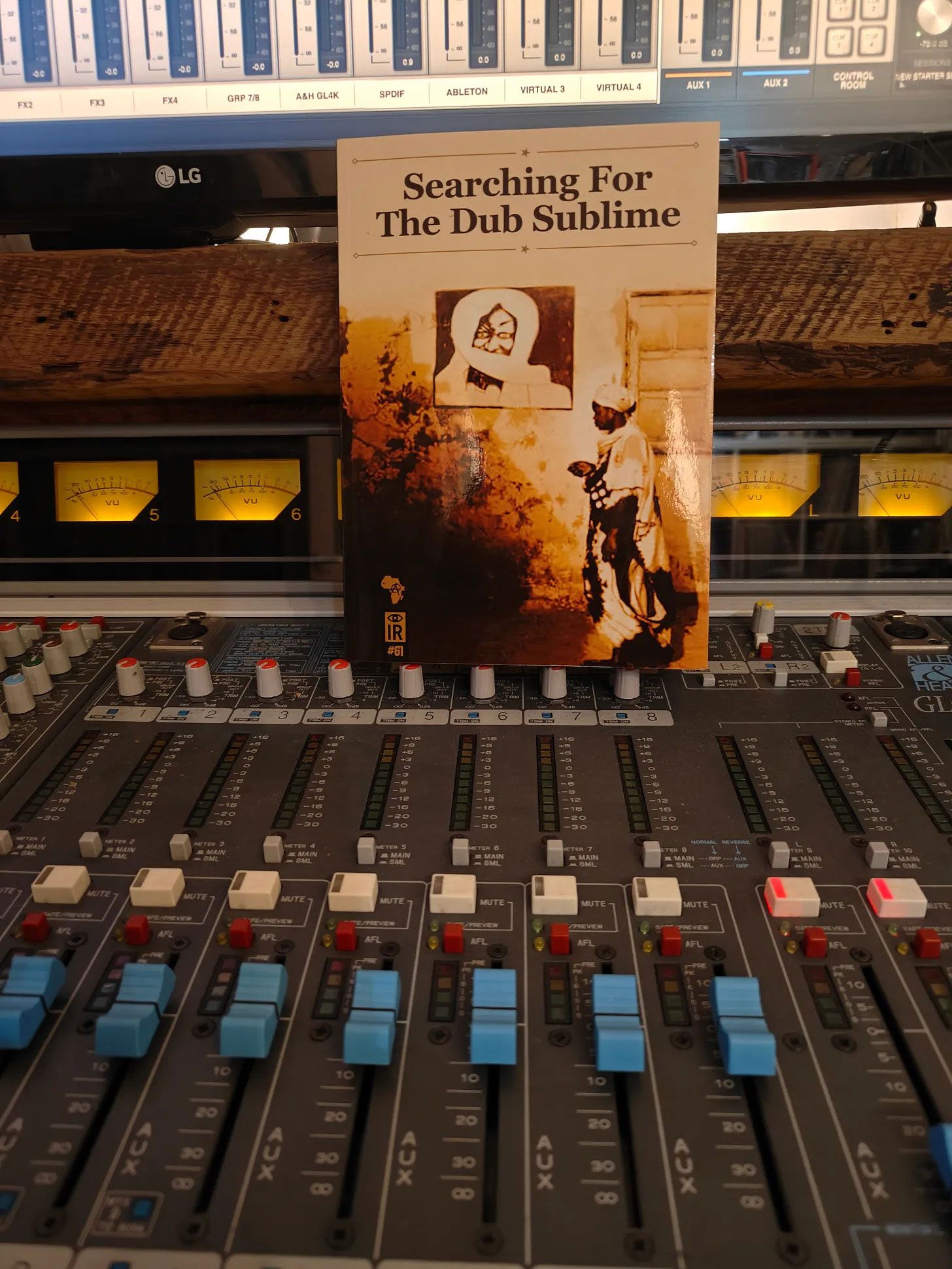
However, for IR, it bears repeating that dub is not merely a style. As defined in the opening pages of the book Searching for the Dub Sublime,
Dub is too often defined as a musical style, a sub-genre of reggae music, and its influence on other genres is equally narrow, reduced to the use of echo and reverb effects. For IR, dub is not a thing – it’s the quality of a thing, the dub quality of anything. We live in a world where music as well as other forms of resistance, protest, and social justice language are institutionalized, neutralized, and de-vitalized into the colonial, capitalist whitestream. Dub is the b-side to these moments of assimilation and co-optation.
Dub is about fermenting trouble, making Babylon tremble.
It throws our perceptions of how sonic frequencies can and should be used into total disarray. That in itself is what makes dub utterly beautiful, an affirmation of the beauty and unbridled complexity of life.
The lyrical content of our new album IR 80 Searching For The Dub Sublime addresses the ongoing genocide in Gaza, Palestine as well as Sudan, Congo, and West Papua.
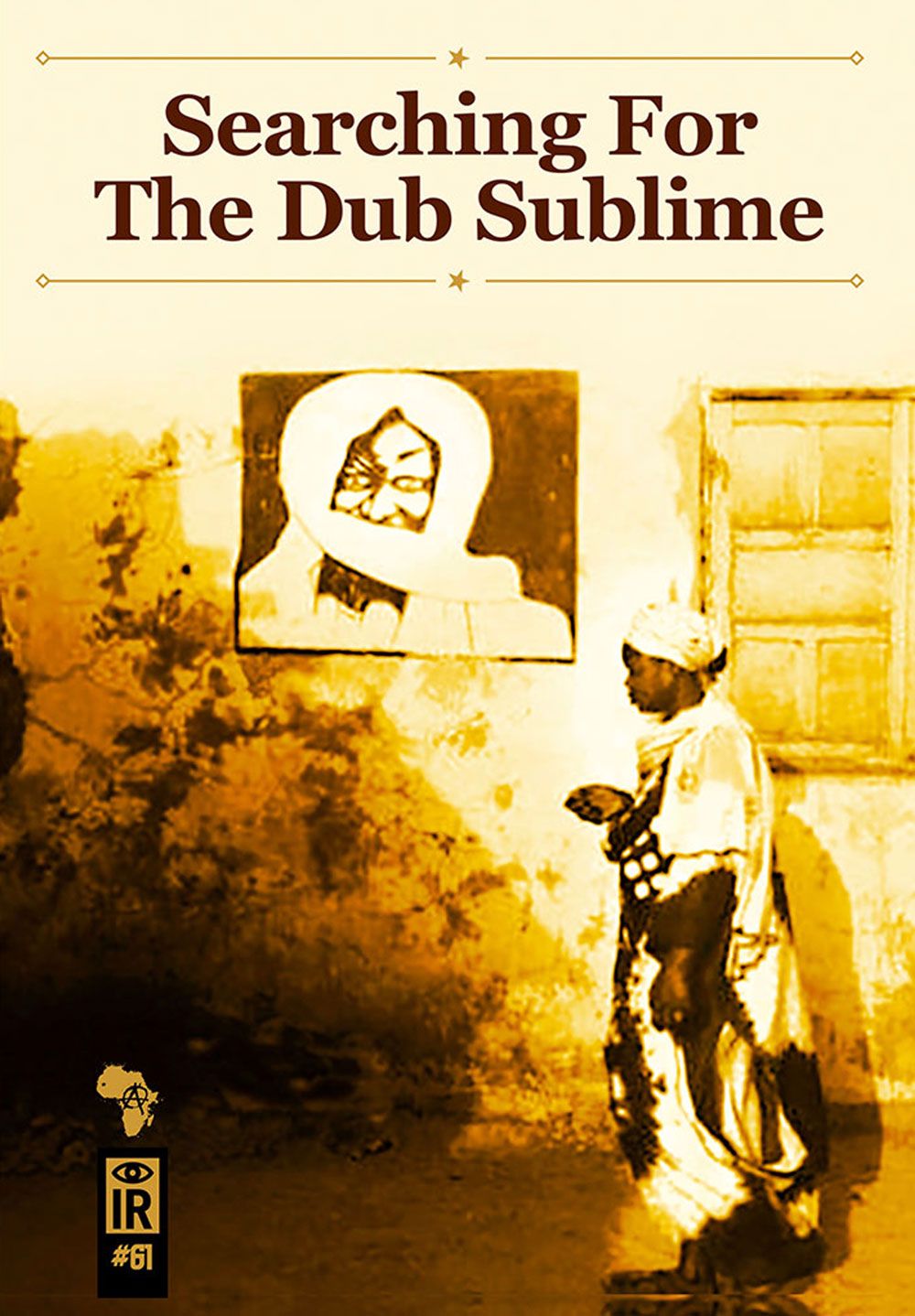
The artwork and design of the album cover for IR 80 is by Dubzaine (Brasil). It depicts a Senegalese woman walking past a mural of Shaykh Amadou Bamba, a Sufi saint and scholar who resisted French colonialism in Senegal. For IR, the combination of elements in this image evokes the words of contemporary historian and activist Dr. Butch Bilal Ware: “All the praying and all the fasting will be for nothing if we allow injustice to persist around us.”