KWANELE SOSIBO
Innervisions: The Politricks of Dub
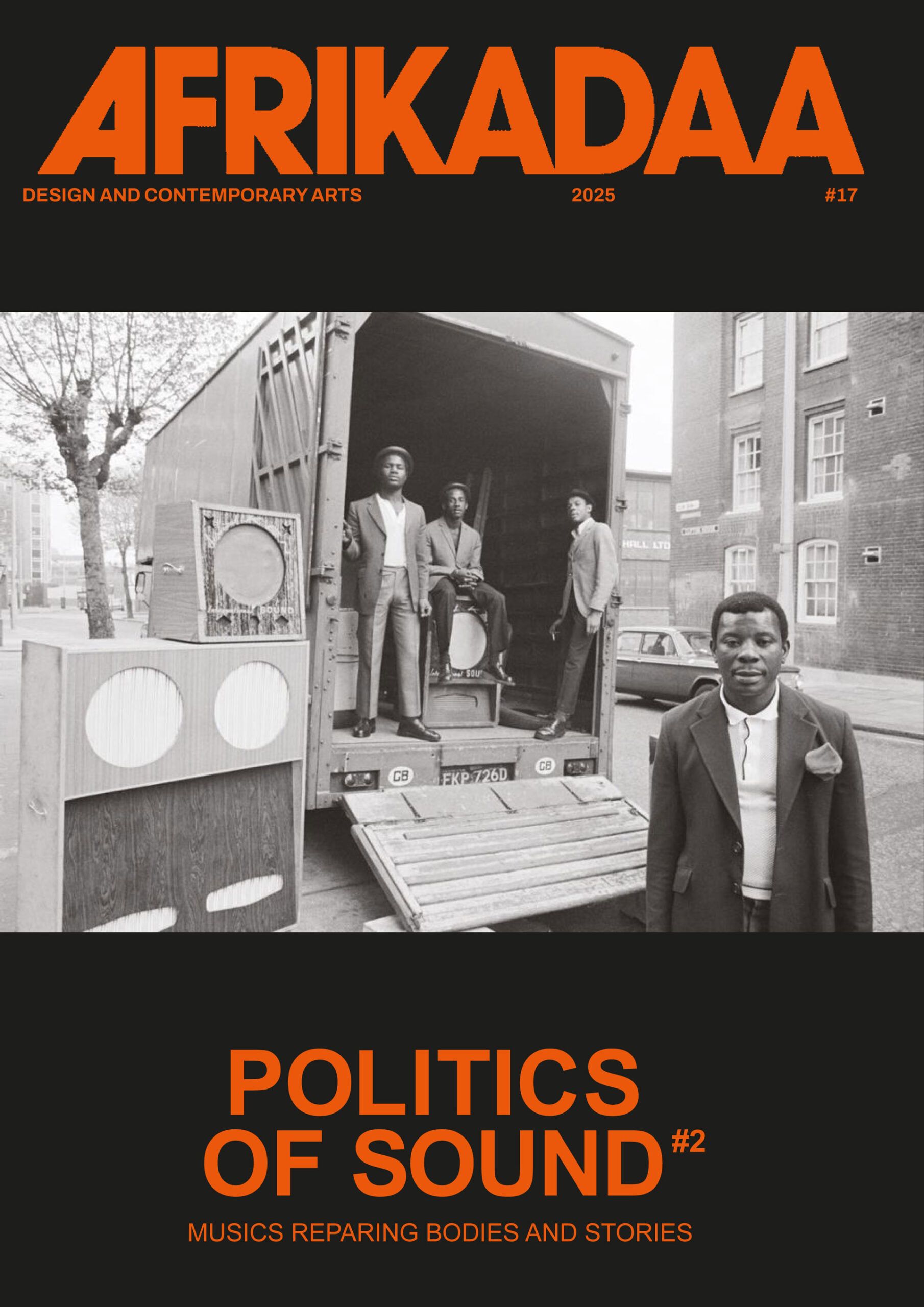
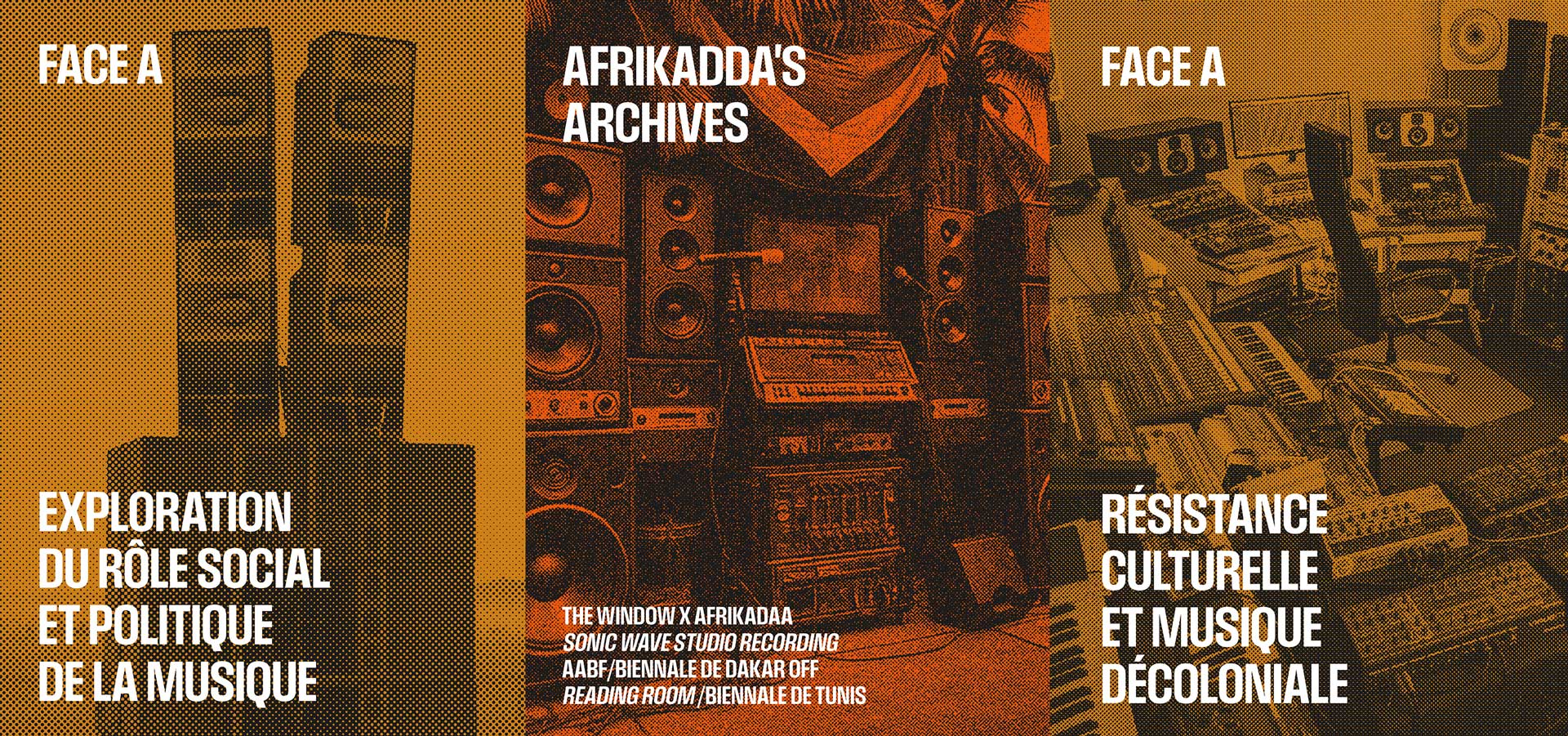
Drawn in by the speaker boxes’ promise of bass, I am inspired to re-version some images in Afrikadaa’s Politics of Sound #2. I learn to read in dub.
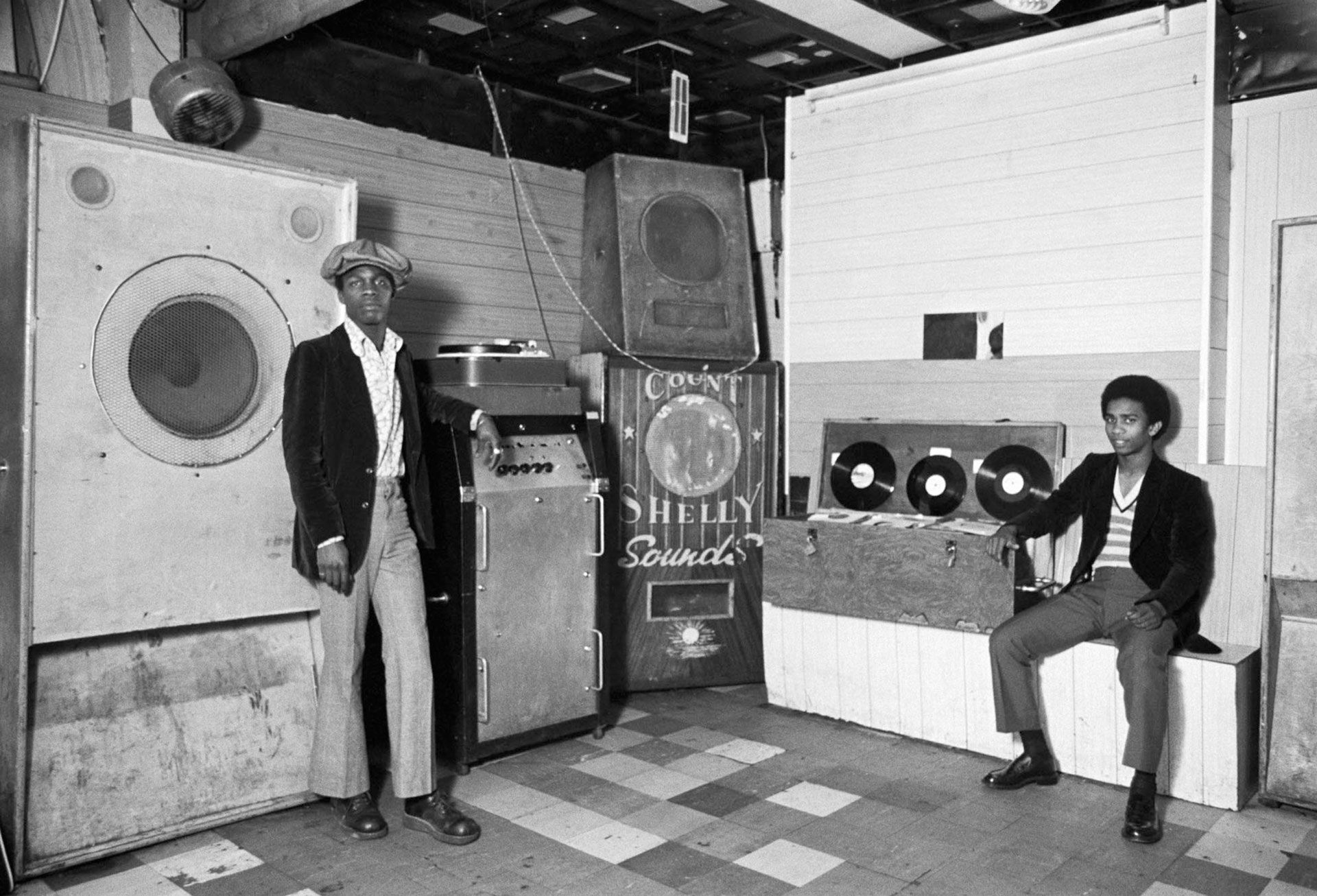
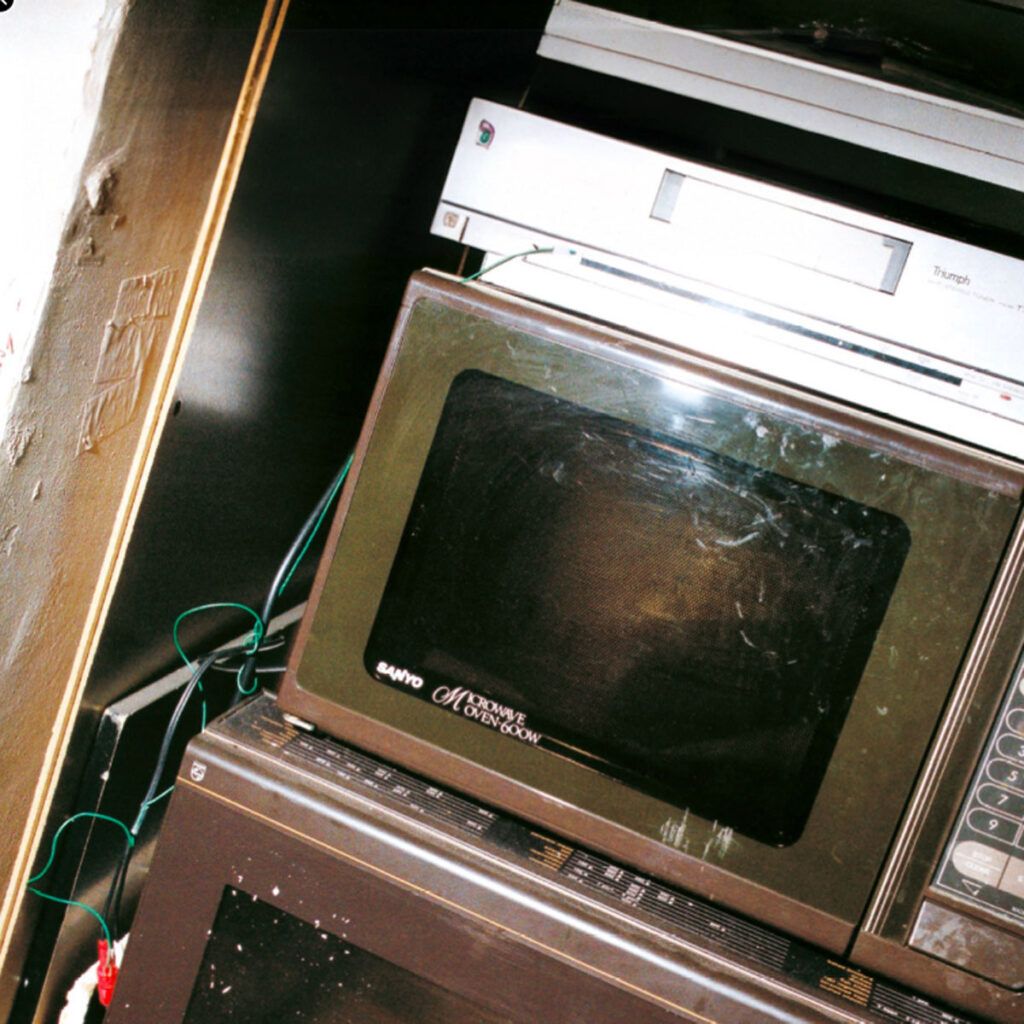
The first photo we are met with in Afrikadaa’s Politics of Sound #2 is of Count Shelly Sounds’ operators photographed in the basement of the Four Aces Club in Dalston, London. To my mind, the image recalls the cover artwork of Roots Manuva’s 1999 debut Brand New Second Hand. Both images juxtapose the monumental with the nondescript. One can read them both as defiance against planned obsolescence and a vote for the sentiment that “things of quality have no fear of time”.
While Dennis Morris’ image is of a calm-before-the-storm moment in which soundmen pose proprietorially next to their weapons of choice, Nigel Bennett’s image of junk household appliances has always felt familiar, yet only by optical illusion. I’ve always seen the used kitchen goods in their reincarnation as a sound rig. I’m drawn to the angularity of both images, one in the service of symmetry, and the other, through its diagonal framing, announcing the arrival of a quintessential misfit. As I read interviewer Juan Fortun’s question to Morris, I realised that I had always read Bennett’s cover photograph “as sound”. In my mind’s eye, those microwaves have always been transmitters of bass frequencies, the truth elixir of Brand New Second Hand.
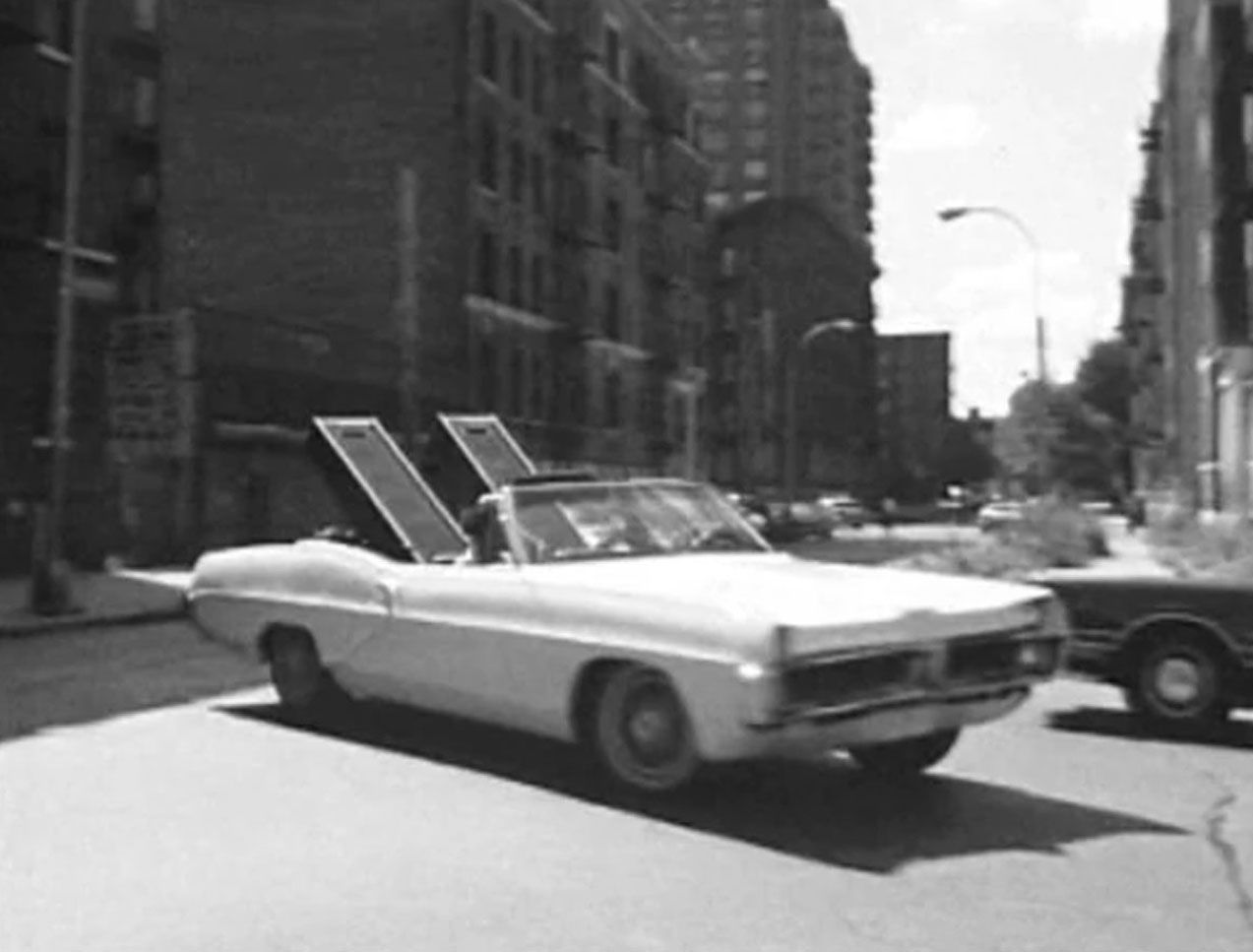
To start us off in this way; in the basement, in 1973, at the founding of the Black Ark at the “beginning” of hip-hop, is to get us to think of the high-level labour of nurturing ideas away from the glare. Picture Kool Herc in the Pontiac, with the speaker columns angled like missiles, ready to launch a counterattack from the desolation of the Bronx.
In the pages of the Politics of Sound #2, the motif of the speaker stack is both arsenal and citadel, at the ready to upset the set up. I count nine “line drawings” of these speaker stacks throughout the edition, each a textural representation of a song (a visual dub). These boxes soundtrack the reading process, periodically evoking the vibrational force of word, sound and power. A lyric is laid over each one in bold crimson letters, as if dropped into the mix to cut through hot night air. I hear each line in echo and reverb. They pulse through my body in modulating waves. I linger over the images as I play the songs I have never heard, already primed to how they’ll hit.
I’m learning to read in dub.
Read in dub within a speaker cone detail whose lines swirl like bats flying in formation, Millie Jackson’s declaration: “For all y’all hiding my shit: Fuck You” (from the song Phuck U Symphony) is no longer directed at hypocritical fans. It’s re-formed as a rebuke of the foundational colonial attempt at soul capture.

There are nine other images of either speaker rigs or studios depicted in variously tinted halftones. These signpost the reading process, serving as portals of entry into private “listening rooms”, allowing the reader to scramble the playlist to their liking. Occasionally, halftone and line image clash, manifesting new parities between diverse “social and aesthetic histories of sound”.
This is true, generally, of how the edition functions as a diasporic time capsule. Kamau Daáood’s image of the Pan Afrikan People’s Arkestra playing at South Park in 1971, for instance, recalls the footage of the Questlove-directed film Summer of Soul, which depicts the Harlem Cultural Festival in 1969. Daáood’s frame captures a crowd of Black people attentively watching a staged musical performance. A haze of sunlight drapes over the Afros and damn near every visible face. The stage is particularly sunkissed, with a quartet of women in long dresses centrestage radiating the most light. One clutches a baby, the other a tambourine. The women appear more leisurely than the brass section which appears to be leading the song. This is no ordinary commercial event. Children of all ages watch the performance from their perch off the edge of the stage. In this moment the photographer is less voyeur than channel, providing the ancestors and posterity a view from behind the foliage, which blends in harmoniously with the arched architecture of the stage. The top right corner of the print is glazed over with a golden tint from a spill or other accident that now adds to the image’s charm. This is the black gold of the sun.
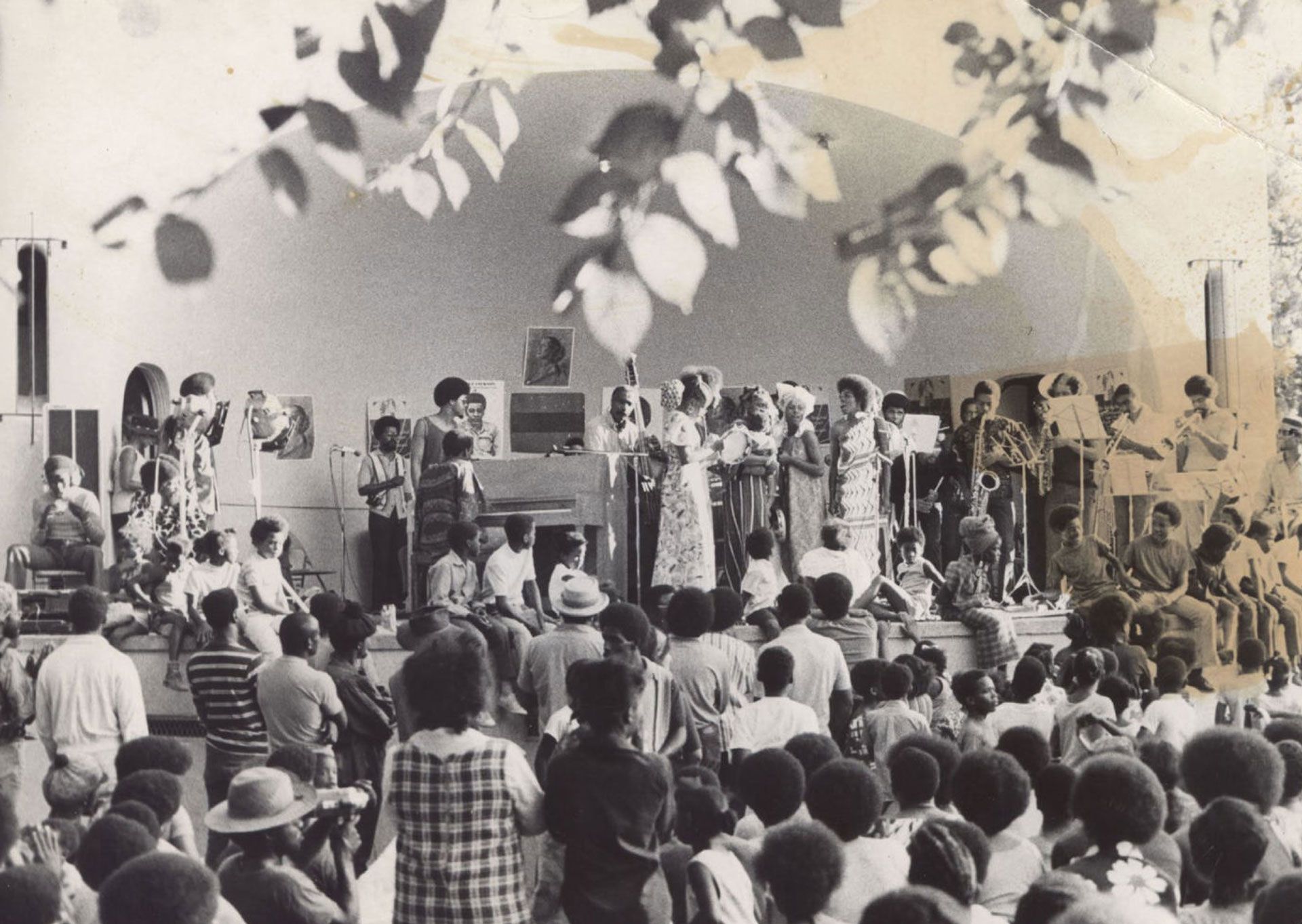
In the article The Pan Afrikan People’s Arkestra Los Angeles Jazz Power, Samuel Lamontagne writes that the group was formed out of a conscious choice to refocus the music on the communities from which it came. The image captures this mission in action, showing how the ease and comfort flowing from the stage is reflected right back by the audience.
In Ming Smith’s Free Time in the Park, a photograph taken in Piedmont Park, Atlanta in 1982, we do not see the band or the rest of the festival goers. We see one family from behind a bench. Foliage surrounds the frame, allowing us a view through the arch of a bent over tree trunk and the concrete pillars supporting the suspended bench. The father extends his arm across the panel of their seat in what an elephant.art writer calls “a pledge of protection”. There is a bashfulness to the older children, as if aware of the photographer, who makes the image from an elevated plane.
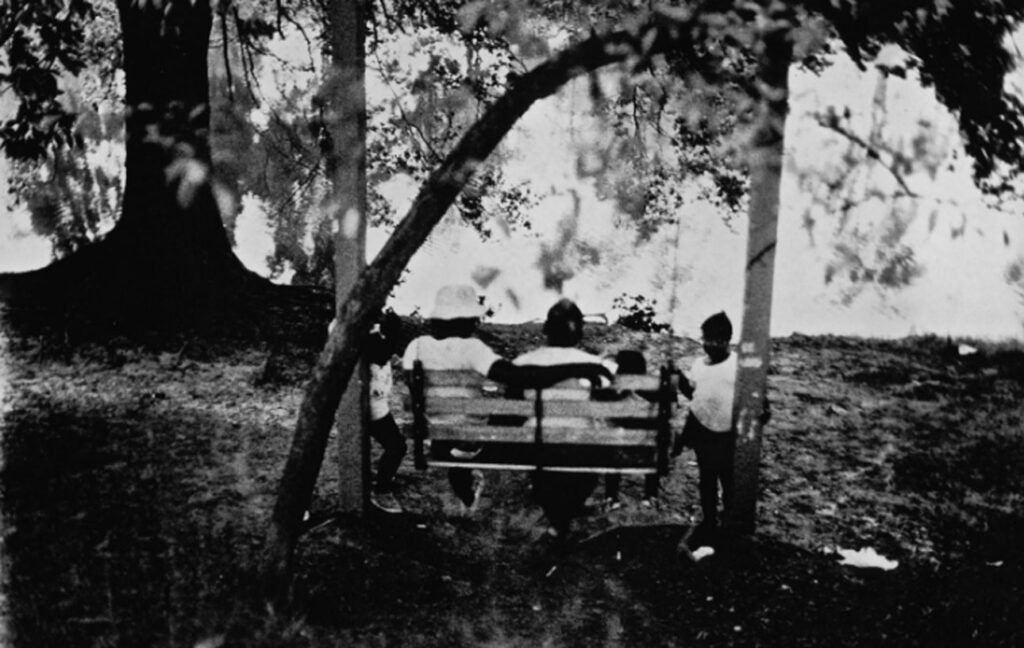
Beyond the family is an opening possibly to a body of water. Marooned on the land, they are cocooned in a bubble of safety and self possession. Smith captured the image following the murder of close to thirty Black children in Atlanta between 1979 and 1981. The children disappeared while outside in broad daylight, spreading a state of dread across Black families in the city. The police force, reportedly with Klansmen among its ranks, lacked urgency and pinned the murders on photographer Wayne Williams who had been charged with the murder of two adults. Though he was never officially charged for the murders of the children, the police began closing the cases, denying justice for decades on.
In an interview with the Moderna Museet about the photograph, Smith says the narrative of missing fathers was used almost as a justification for why the murders took place. It’s as if the two images were peeled off one another. Necessarily, Smith’s image celebrates family as cosy and insulatory. Daáood’s extends that sentiment to the setting of a community.
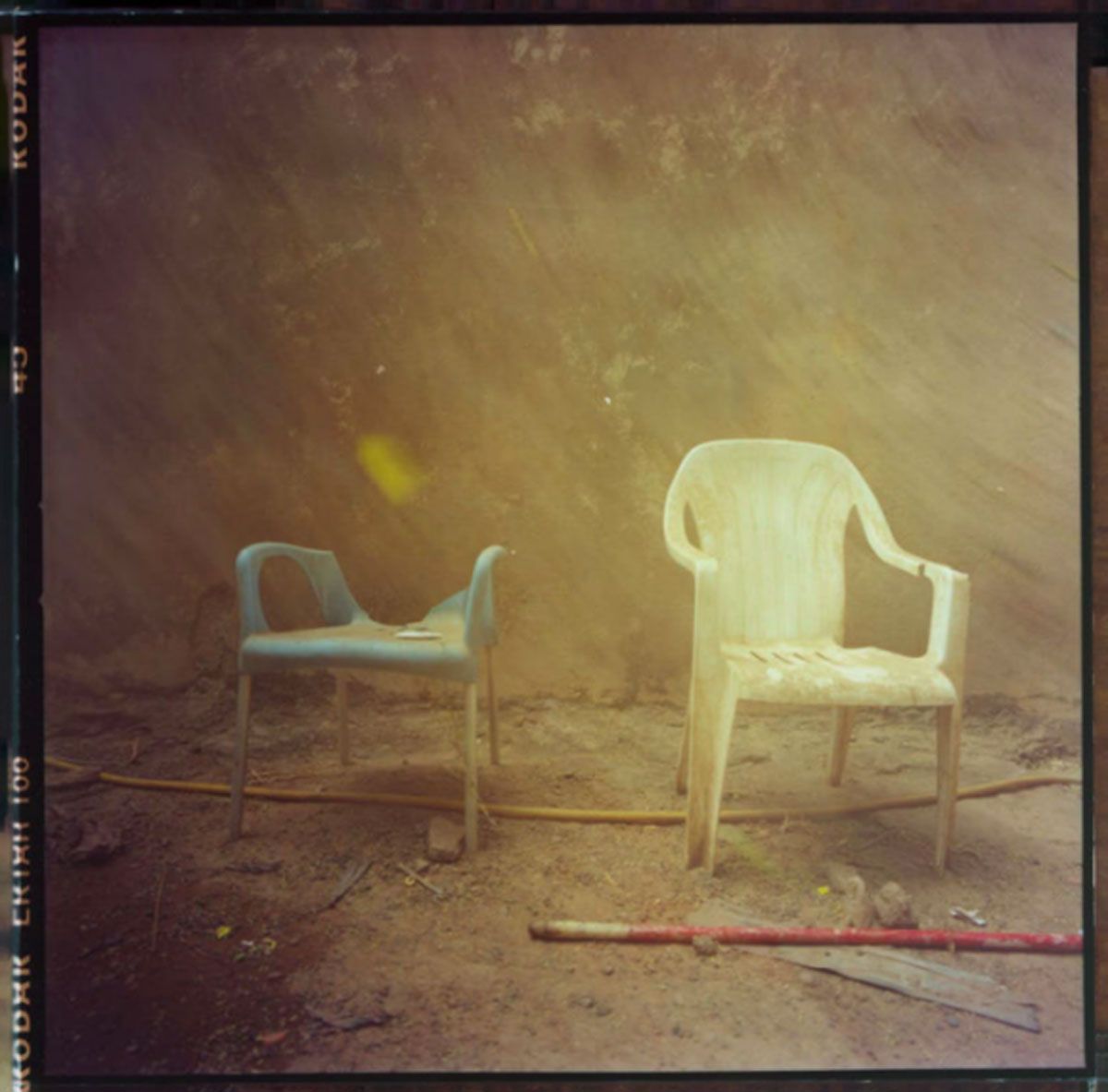
Abrie Fourie’s photograph MONOBLOC and chair, taken in Ouagadougou in 2021, vibrates with the energy of absent sitters. To gaze through the image’s haze is to intrude on a ritual whose regularity may have been abandoned, but only recently. We long for the sitters to return because the wash of light from the exposure seems to carry their essence. Perhaps the yard was until recently abuzz with the noise of construction. The earthen wall behind the chairs looks recently plastered and patches of soil still moist.
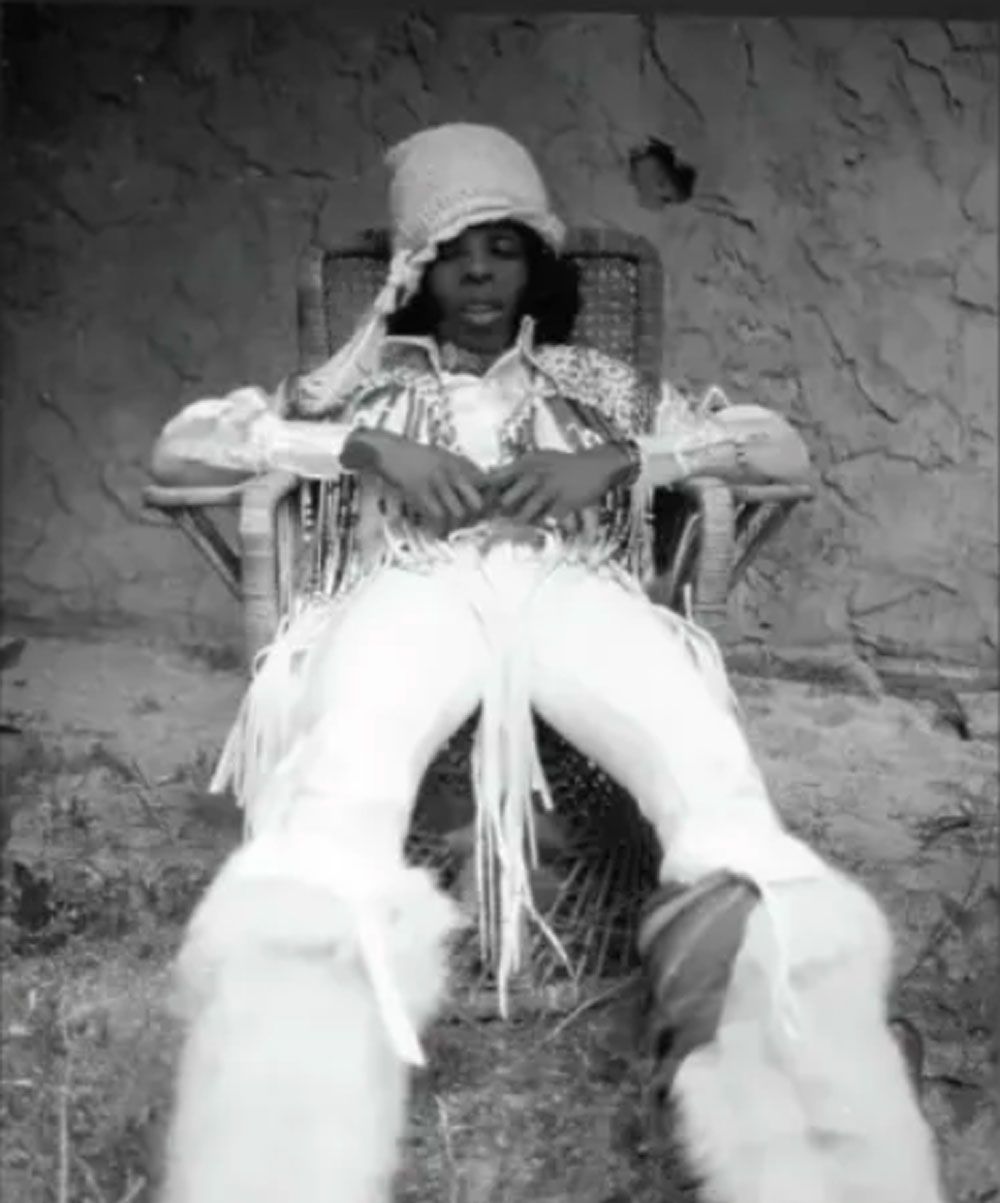
In 1970 Michael Ochs takes a portrait of Sly Stone seated against a similarly earthen wall. His legs are stretched out and his arms are folded, elbows leaning against a wooden chair’s armrests. He is every bit the star he knows everybody to be, and yet, a weariness rises to the surface. His languid posture may be a decoy. Perhaps he’s in a circle going round and round.
A monoblock is a single-channel amplifier. To hear in stereo, one would have to get them in a pair.
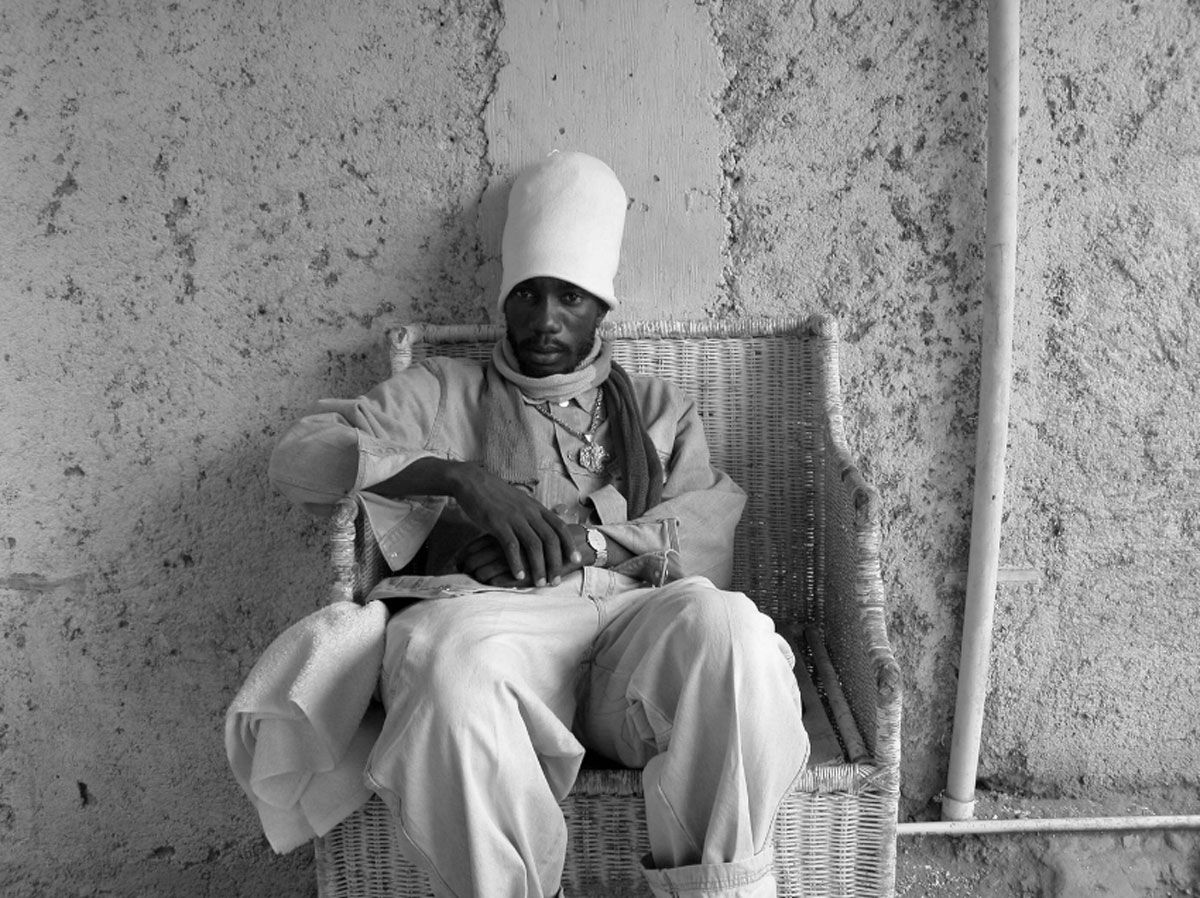
It’s likely that Peter Dean Rickards had known of the “original” before versioning it to Sly Stone Meets Sizzla Kalonji at Judgment Yard. In 2003 Sizzla gave the impression of an artist preoccupied with being his own man. While Sly is pictured in “a Warner Brothers lot”, Kalonji is pictured in Judgment Yard, his self-contained enclave in the settlement of August Town. The wall, the plumbing and the wicker chair echo his presence in formal coherence. Sizzla’s gaze is head on but not confrontational. He embodies the lyric, ‘every ghetto yout’ a superstar’, a version of Sly’s.
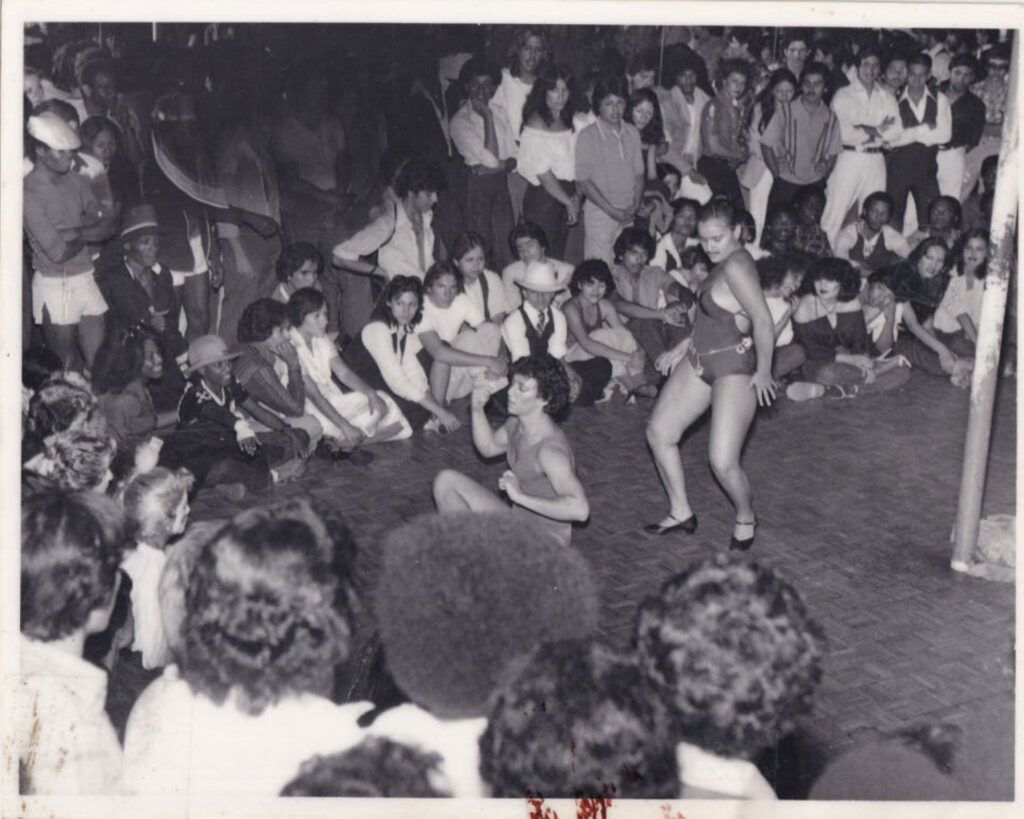
There are at least 40 years of history between Disco Maggie’s archive as a dancer and Wesley Triber’s images of raves and parties in Paris. Despite being oceans apart, the underground unites them. Maggie’s archival image of herself and a dance partner in a 1978 performance at Gino’s Club asks us to see the body as capable of dictating and directing sound. The photographer fails to freeze her frame. On it is writ large the eroticism of the body as a transmitter and amplifier of transgressive pleasure. As a teen runaway in the 1970s, Maggie ditches a rich boyfriend in order to re-enter Gino’s on her own terms. “Going to Gino’s is a practice of belonging to self in queer kinship with waacking/punking’s emergent ensemble who move Margarita to renounce all that’s signified in hetero-coupling,” writes author Naomi Macalalad Bragin in Kinethic California: Dancing Funk & Disco Era Kinships (University of Michigan Press, 2024). “[It’s] an ideal that she constructs through markers of gender and class, accented by a hierarchical Latinidad.”
For Maggie and her generation of dancers, waacking/punking is a style pushed far against palatability in order to reveal the fabric of the lives of those who lived it. “It was not dancing,” Maggie tells Bragin. It resisted commodification by its very nature.
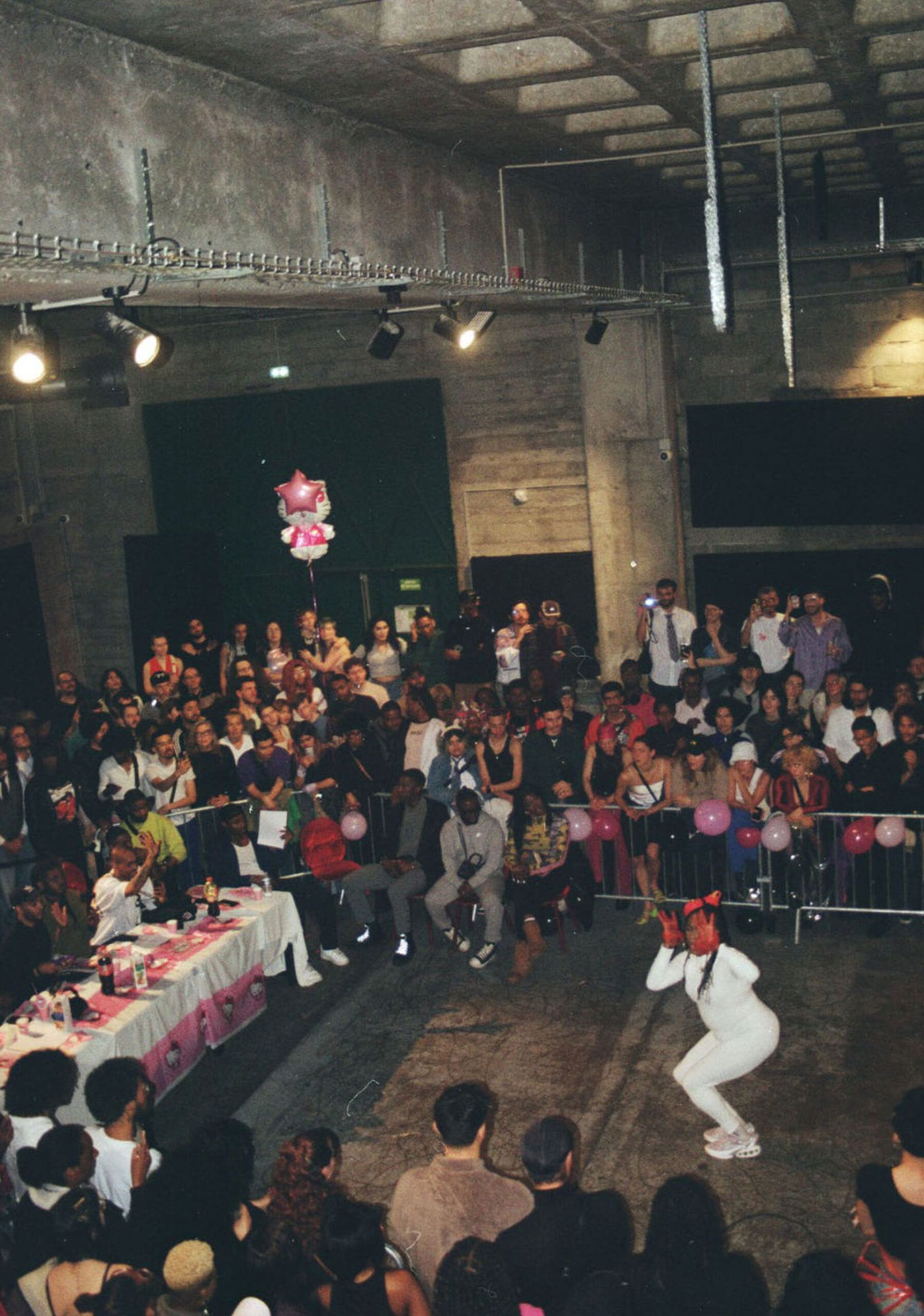
Across both Maggie and Triber’s images, the rituals of self making reflect a changing same. Triber and his cohorts speak of inheriting their generational imperative from their parents, writing “a piece of history with our bodies … in a safe space created together.” With his camera Triber captures these elusive moments when music and flesh conjoins.
“Most don’t even know what they look like when they are free,”
he says to Madina Toure in les Soirées Underground: Un Voyage Au Cceur Des Contre-Cultures, “… and, for a moment, they flourish in the present moment, together.” Indeed, most will never know. In Hello Kunty Kitty Night, the rapt attention bestowed on Maggie in “the original” drops in and out, mediated by the judge’s hand signal and cellphone footage. One step forward two steps backward
Down inna Babylon.
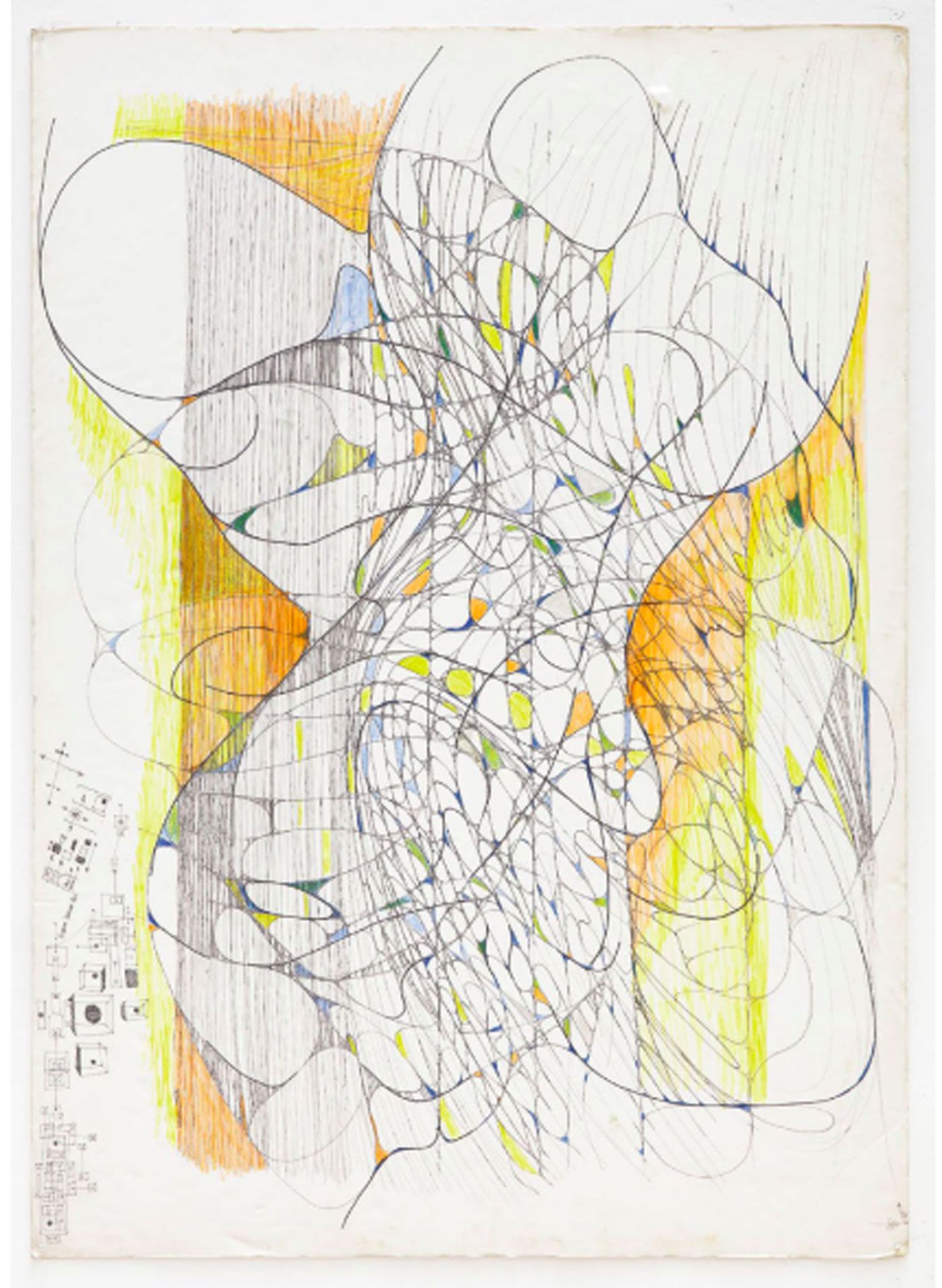
For a Paris exhibition in 2024, musician Keziah Jones titled a series of drawings he was showing The Invisible Ladder, signposting it as a bridge between the earthly and the heavenly, the music and the muse. In his interview with Pascale Obolo, published in The Politics of Sound #2, Jones offers various ways to think about his drawings, which evoke both humanoid and celestial shapes. He says he was led to drawing as a way to keep him still as a child. In adulthood it became a way to resolve musical impasses. “Over time, I started to look at the resulting images as the visual version or a visual representation to the music I was writing,” he says.
As a child, he remembers reacting quite strongly to “the scratches of the record or the percussive noises guitarists or other instrumentalists would make between the actual notes they would play.” He singles out the music of Yusufu Olatunji, and how the goje, a bow instrument integral to his music, embodies the idea of the “percussive scratching between the notes”.
Jones also mentions his father’s Yoruba statues as well as his own comic books as influencing the work. All of these fragments seem equally important in thinking about the works, for they are shapeshifters by design. Their lack of finish makes it is possible to take an element, let your imagination run and re-imagine it as whole. It is probably encouraged to read/hear the drawings in dub. In the interview, Obolo refers to Jones’ creative process as “synesthetic”, in other words, possessed with a kind of obeah, to borrow the logic of writer Lloyd Bradley.
In the chapter Dubwise Station (from the book Bass Culture), Bradley guides us through a listening tour of the Mighty Two’s Tribesman Rockers, from the album African Dub Chapter Three. He argues that “it’s not really possible to imagine a song further mutated from what its composer intended it to be … yet still remain recognisable” as a flip of Lord Creator’s Kingston Town. “To take each element of the tune as separate – the bass, the drums, the horns, the bongos, the keyboards and so on – then set out to refocus the whole piece of work by adjusting, tweaking, bringing forward or pushing back each of them individually until the whole is satisfactorily rebalanced is to reach back to Africa and the practices that came over to Jamaica as obeah… It’s an ancient African medicine that splits the body up into seven centres or selves – and by prescribing various herbs and potions would, as practitioners always describe it, ‘bring forward or push back’ different centres; remixing, as it were, a person’s physical or mental state into something very different.” As Self-Regard, the title of Jones’ main piece suggests, how you see the bigger picture is bound up with how you see yourself .