GOODENOUGH MASHEGO
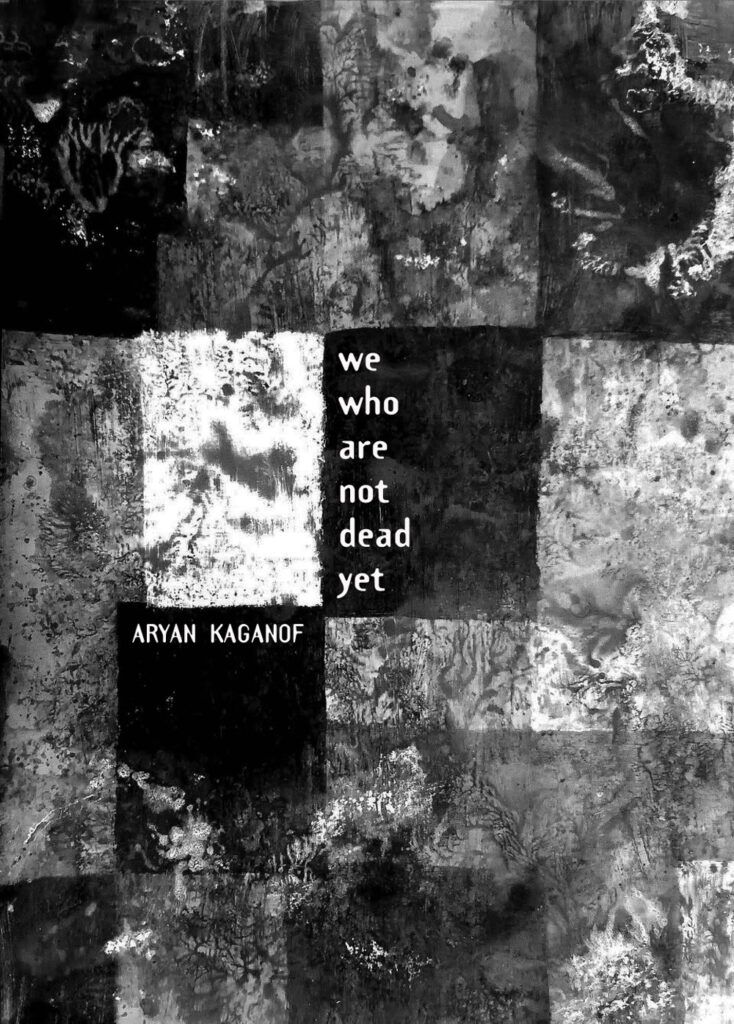
We Who Are Not Dead Yet by Aryan Kaganof
Preamble
When a new work of art lands on one’s lap, in this case Aryan Kaganof’s We Who Are Not Dead Yet, one feels pressured to find earlier versions of the published poems, to understand the evolution of both the verse and its Creator. Poems, God bless them, go through so much rigorous chiselling and panel-beating they should have been bronze sculptures (not words) curated by a naked sculptor, painfully aware that if their artistry falls short of one’s definition of aesthetic, a voyeur’s eyes will immediately shift southwards to the sculptor’s fanny. The Emperor always presents his poems to a judgmental public, naked.
Like sweetened red grapes, over time, some bards mature into fine wine from vineyards situated in Kaganof’s cynical Stellenbosch(ed); “Oh my word, the first drops of rain began to fall,/ the violet cloud was torn by lightning,/ there was a clap of thunder, and I, too,/ was running down Helderberg into Dorp/ as quickly as I could, heading for the station/ to try and shelter from the approaching thunderstorm” (2025:34). The grapes that produce the vintage mature into brandy that will later be enjoyed with coke by those who led a political dispensation for a duration the Left posits is 300 years, while the Centre Left claims 80, the Centre Right alleging ‘a mere’ 46 years and the Right, the Steve Hofmeyer Falangists yell, ‘That never happened’. Stellenbosch is where each of these disputed numbers goes to die.
“Like a Bible about to be read/ with all big books it bled/ one cold afternoon you/ said love is a step/ mother, they say/ sculpt me a/ new heart/ make use/ of the/ things/ around you/ and yes, the/ garbage truck/ as if to say:/ people are clothes, your clothes”, the poet writes in ‘Cento for David wa Maahlamela’(2025:9). The biggest trivia will be trying to fathom why Maahlamela tickled Kaganof’s fancy to be deserving of his own cento. “I remain an ordinary poet and when/ the night shadows fall I return/ to my makeshift poems/ I call home” (page 12). Maybe the answer to the trivia lies in poetry representing an abode – a sanctuary to find oneself.
The pre-94 epoch of gross human rights abuse, gross legislation of feelings, gross prescription of bitter muti even whites had no guts, liver nor tongue to imbibe, inspired some of poetry’s seminal voices. It also gave birth to some of South African poetry’s most vocal proponents. A quick name-dropping would pop like tjatjarag corn, Mongane Wally Serote, Keorapetse Willy Kgositsile, Breyten Breytenbach, Dennis Brutus, Andries Oliphant, Sipho Sepamla and many others – AmaXhosa would stop me and say, ‘ndibalantoni na?’. They will urge me to just say Staffrider.
There were loud township voices, notably Rampolokeng’s, to whom, in what can be labelled his most audacious poetry collection to date, Kaganof dedicated a cento – or an eco-friendly poem made wholly of recycled lexis. I call centos ‘poems that ratified the Kyoto Protocol’. In Movement I, Kaganof has eight such eco-poems. They are for Mphutlane wa Bofelo, David wa Maahlamela, T.S. Eliot, Eugene Skeef, Nicola Deane & Clarice Lispector, Lesego Rampolokeng, Carina Venter and Samuel Beckett.
In Rampolokeng’s cento, Kaganof compiles: “let’s turn the history/ page/ against my broken sensibilities/ kicking the tongue that licks it/ in a ball-punctured moment/ but who am i to scream?/ the word is in me” (2025:22).
AK’s style and brush-strokes on a poetic canvas are not totally divorced from Rampolokeng’s approach in earlier writings. In an old verse titled, The Word is Silence, which appears in his collection, Head on Fire, Papa Ramps writes, “gum-prophet on a mind-smile/ blindside of a BAT-COIL/ these tongues are serpents would hook their parents/ the) WORD’s not a coat but tongues twist around the throat/ sick can’t speak, so I throw up on thought’ (2012:44). Reading through Ramps’s five staccato-styled stanzas clears the fog regarding why Kaganof’s cento was crafted and dedicated to Ramps.
In retrospect, Kaganof has not always been a bard of cryptic overweight verses that require scalpels to dissect them. We Who Are Not Dead Yet looks like Eugene Terreblanche’s corpse on that Ventersdorp pathology slab the morning after it was discovered – not yet bloated but a mound nonetheless. Seventeen years ago, when AK still journaled with clear as daylight free verse, he wrote in green dragon, ‘If all that is left is to be or/ not to be then what is/ the question? She/said then I said/ We really still have to go do coffee” (2009:49). There’s almost two decades but hardly any daylight between The man without skeletons and We Who Are Not Dead Yet.
The Constitution
What you read up to now was not the critiquing of the collection but a Preamble to a Review. The Preamble is meant to say, We Who Are Not Dead Yet is matured work presenting itself as systemic cynicism. This artwork, Kaganof’s latest in a long list of various offerings across disciplines is a metaphorical take on a post-apartheid South Africa through the critical eye of a poet who seems to have forgotten to pitch for his ration of apartheid grapes – and now calls them sour. Through often unconventional structure, style and machine-gun staccato-driven verses, Kaganof is performing a post-mortem of where the rainbow nation state – littered with a litany of white crimes and lies – went. White and Black colours are missing from a spectrum.
Saying, ‘presenting itself as systemic cynicism’ is deliberate, because even going back to the poet’s earlier works across mediums (film, novel, poetry etc), AK’s approach to art has never stuck its tongue out to lick the butt of any establishment; not the past that outlawed colour, and neither the present that was supposed to paint a rainbow on a new primed canvas, but chose to do so on a same old same old parchment.
Kaganof has always been rebelliously cynical of authority; refusing to be conscripted into the apartheid army as a teenager; and rather abandoning Botha’s Ark to swim and risk drowning in the muddy waters with ‘children of a lesser God’.
With age, it is becoming obvious that AK47 spent his life flipping a bird. In a poem which jolts a reader towards hard introspection, he writes, “Perhaps some/ distant memory of who you used to be inspired you/ to make the herculean effort of getting both shoulders/ into your leader’s rectum and yes, you did it, you actually moved/ your entire body into the anal canal and crawled, wormlike to a/ distant place where you could hear the hubbub (2025:27)”. You’ll be forgiven for concluding that, in actual fact, Kaganof first writes dense prose he later chops to edible stanzas – morsels to be precise: which, as an artistic expression, often does not help, even when they say the easiest way to eat an elephant (unless you are a vulture) is to slice it into tiny nail-sized biltong, because it is AK’s nuggets that get stuck in the reader’s throat who chokes on them until they pee on self.
Like a jigsaw puzzle, the past intersects with the metaphorical present.
The provocative self-revealing poem, How I passed for white delves into the quandary late Archbishop Emeritus Desmond Tutu posited about apartheid, that it did not only make victims out of Black people but also white children who were raised in an artificial environment of political lies and cultural deception. “My mother told me not to speak loudly in public/ Not to speak loudly in private too, We don’t do/ that we’re WHITE then she pinched the skin of my forearm/ and when I yelped in pain she pinched me harder and she/ held my burning pink skin up to the light and she said No matter/ how little money we have no matter how hard our circumstance we’ve/ always got one thing that they’ll never be, WE’RE WHITE’ (2025:30).
This is how to weaponise colour – which, through clever use of nuance, Kaganof renders blunt – not only now because it has become fashionable, but retrospectively. There is a gnawing feeling that the illusion of colour as a currency that buys entitlement might be in heavy circulation today among those to whom BLACKNESS should buy what WHITENESS used to purchase. A fallacy of superior colour was one of the little white lies that characterised the hubris of a privileged minority.
Another prolific poet, Mphutlane wa Bofelo has his own cento in We Who Are Not Dead Yet. His is a visual poem which presentation simulates a film edit suite (Cutting Room for the analogue folks, MaGrootman). The poem’s subliminal message captures an occurrence during any country’s State of Emergency. The poet could be fabling about the past or the present – this collection is very much about depicting their point of convergence. Cento for Mphutlane wa Bofelo probably narrates happenings from the present because, in a no-holds barred tongue-in-cheek manner, the poet interrogates the police state which flashed in front of society’s eyes at Marikana, following weeks of a legitimate demand falling onto deafened Glencore ears. We saw a split-screen of that violence revisited again in 2025 with the police’s medieval siege of so-called zama-zamas at Stilfontein Mine; until they scavenged on each other and surfaced out of the underground death camp.
However, the poet, perhaps limited by his un-melaninated skin, has not gone full-throttle in undressing the institutions that committed the Marikana massacre, but imagines an edit suite where canned footage comes into the frame; “On Thursday 16 August/ the sheriff came but the poet/ was on leave so instead of fur/ niture the poems were attached/ they left the/ books unopened/ so they did not find/ the ransom note and/ the trickledown economics/ never trickled” (2025:6). This is a critique of the silencing of voices critical of the state of the nation.
The poem that holds this collection together is a heartfelt epic eulogy to optimism, We Who Are Not Dead Yet. The first part reads like spittle on the face of privilege, with poor Georg Wilhelm Friedrich Hegel serving as a target for sarcasm. When the poet writes, “Hegel’s not much of a page turner anyway” (2025:25), I’m quickly taken back to the philosopher’s famous quote, “Nothing great in the world has ever been accomplished without passion”.
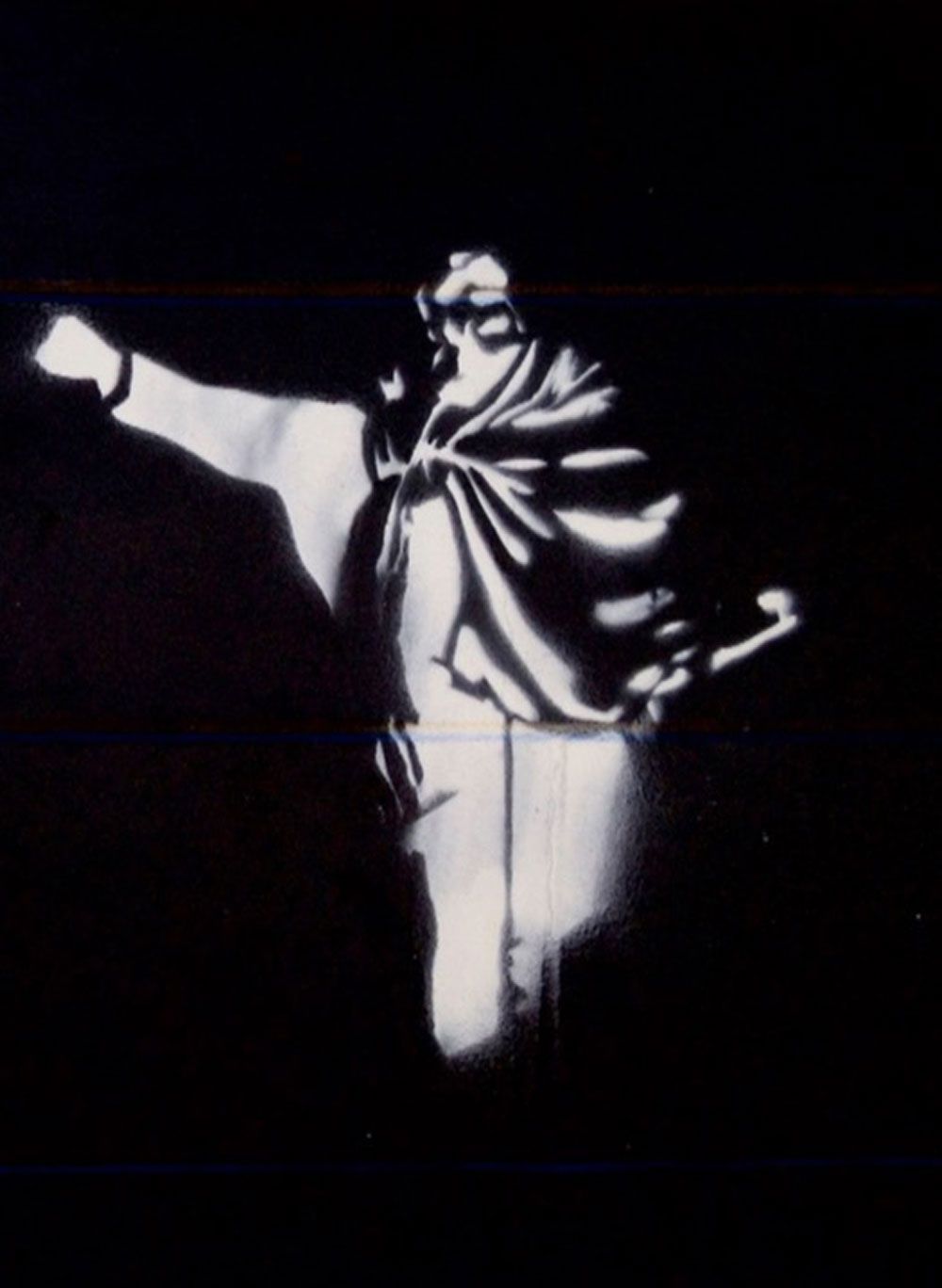
The passion with which the prevailing theme of Marikana and the rot that has befallen the post-94 dispensation comes full circle is on a literary graveyard where every fallen Marikana miner is interred, and a headstone erected with an indictive self-explaining epitaph, ‘killed by police’. The roll-call starts on page 70 to 79. The epitaph opens on page 43 with an artistic apparition of Mambush, (the man in the green blanket), who was among the first to be martyred.
Many things go missing in this volume. Often what is delivered is not always what was promised. When an actress disappears in one poem, it is difficult not to see a confluence with many things that go missing in a country that misplaces trust in untrustworthy hands. There’s a popular 1991 song by Richard Marx titled Hazard which echoes very loud in AK’s poem The Disappearance of the Actress. Hazard was about the disappearance of a woman named Mary.
In Kaganof’s rendition, the actress who goes missing is not flesh and bone but fleshes and bones that walk the earth in an awareness of pretence. He writes, “A man without a mask is indeed very rare. One even doubts the possibility of such a man” (page 93). A consolation prize is that everyone is acting and at some stage they get off stage and disappear. It’s difficult to know when exactly a metaphor began and/or ended. Marx’s Mary disappeared, which could have denoted the loss of innocence of a nondescript Nebraska town – but when we get offstage and remove our masks, we disappear and barely get missed – because those who should miss us are still in character.
Stellenbosch(ed)[1]During the Second Boer War (1899–1902), “to be Stellenbosched” was a British military term meaning to relegate an incompetent officer to a minor, safe position, often a remount station, removing them from front-line duties without a formal court-martial. The phrase originated because such officers were often sent to the quiet town of Stellenbosch in the Cape Colony. Dictionary of South African English, the moniker AK makes a verb, becomes a setting for a series of contrasts about the thread that does not join society together. That quiet university town is loathed by self-declared leftists who blame it for all that goes awry in South Africa. It has inspired conspiracy theory books of Cosa Nostra proportions such as The Stellenbosch Mafia. So, it is expected for a poem named after such a nihilistic hellhole to flirt with dystopia. In AK’s projection, Stellenbosched is not exclusivity but reverse gentrification. The poor and homeless dot the landscape like mushrooms. It is unattractive real estate with a vandalised train that regularly stops at its dilapidated station. Stellenbosch has dysfunctional toilets, overcrowded platforms and experiences downpours and thunderstorms. It’s the antithesis of a picture postcard sold and bought at Cardies.
Verdict
We Who Are Not Dead Yet is a highly experimental avante-garde work of art that refuses to be boxed. It is a nihilistic, pessimistic and cynical volume reflective of Kaganof’s collective body of work. The style adopted in this telling is obstructive. The contents are not readily accessible due to its density and irregular, awkward style of presentation. It can’t be read once and understood in its entirety. It’s like Chinua Achebe’s pre-colonial part of Things Fall Apart. It also is not – like Hegel’s philosophies which had the unwarranted misfortune of being read during a hot shower – a page turner.
This body is not just words cobbled together (in centos and parchments) to expose society’s itchy warts; it mostly is words conditioned like pubic hair to conceal warts and pacify irritating itchiness. There is little told in its 19 poems, and so much concealed from public purview. It can pass itself off as a collection of counter-culture rants that managed to escape judgment because they hide behind a mask and are easily mistaken for health-conscious neighbours during Covid.
The four Movements and countless accompanying poems play multiple characters, from scalpels slicing through thick cadavers; the most visible exposing the whiteness in society’s lard, carved from the bellies of those who swore to lead from the front but are today leading from the bank.
We Who Are Not Dead Yet is a eulogy to what could have been; a post-mortem report on a post-2012 South Africa. That is a South Africa filled with racial tension that tries to hide that it’s still Blacks who continue to be sacrificial lambs to the dysfunctional order to appear functional.
| 1. | ↑ | During the Second Boer War (1899–1902), “to be Stellenbosched” was a British military term meaning to relegate an incompetent officer to a minor, safe position, often a remount station, removing them from front-line duties without a formal court-martial. The phrase originated because such officers were often sent to the quiet town of Stellenbosch in the Cape Colony. Dictionary of South African English |