FORTUNATE JWARA
Thinking Eroticism and the Practice of Writing: An Interview with Stacy Hardy
Fortunate Jwara: Thank you for agreeing to this interview. The idea of this conversation emerged out of a desire to gain insights into the fragments of your personal life, your curiosities and wonders, positionality, and the ways these may have been shaped by your early encounters with reading and literature. I hoped to gain insights into who Stacy Hardy is: little bits online reveal that you were born in Limpopo in the 70s. If this is true, could you speak a bit to what it meant growing up during that time? This also leads me to think of writers such as Vonani Bila and Seitlhamo Motsapi, also from the same province. I am curious about potential parallels or shared influences, if any? And what does that mean, especially since they are black male writers?
Stacy Hardy: Yes, I was born in Polokwane in Limpopo—then Pietersburg—during the 1970s, in the thick of apartheid’s most ordinary violences. What that time gave me was not so much a coherent sense of place as a profound sense of disjunction: between what was said and what was lived, between bodies and laws, between intimacy and terror. It was a childhood shaped by containment, by the architecture of separation, but also by a strange excess, by animals, insects, heat, boredom, books, fantasy.
I grew up reading voraciously and eccentrically, often without context, often without understanding everything I read. I haunted the old Pietersburg library, reading everything and leaving sad, lonely little notes saying,
“I loved this book. If you also liked it, please call me.”
That loneliness and disorientation mattered. It trained me early to live with longing, desire, isolation, as well partial comprehension, with not-knowing, with contradiction.
When you mention writers like Vonani Bila and Seitlhamo Motsapi, I think less in terms of direct influence and more in terms of shared atmospheric conditions: a relationship to language forged under pressure, under scarcity, under political violence. But our positionalities are not interchangeable. I’m deeply aware that I come to writing from a position of inherited privilege as a white South African, even as I resist and interrogate that inheritance. Where my writing often turns inward, toward culpability, toward fracture, toward bodily estrangement, theirs is often outward-facing, insurgent, performative in different ways. The parallels are never symmetrical, and that asymmetry matters. That said, it’s telling that Vonani and Seitlhamo are two of my favourite poets, and they also have become treasured friends. “Sol/o” by Motsapi, is a poem I read pretty much once a month. It says everything:
my love
there are no accidents
in war – no kisses
on the belligerent lips of crocodiles
no loves greener than
the dancing hearts of children
no reveller jollier than the worm
in columbus’s boiling head
there are no songs beautifuller
than the stern indifference of the hills
there are no flowers more clamorous
than the seas of children
home in my little heart
i tell u this
as the sun recedes
into the quaking pinstripe
of my warriors
grinning & vulgar in their muddied dreams
of power
i tell u this love
because the roads
have become hostile.
Fortunate Jwara: Elsewhere, you have described yourself as a “rebel against the idea of nationality” citing Dambudzo Marechera and stating that you “belong to the country of writers” (Lamb, X). I resonate with this position, and think it is pertinent to the interplay between the autobiographical and the fictive within narrative practice. Can you speak about how autofiction as a literary genre can allow writers to subvert rigid definitions and categories? An experiment, if you like, in revealing the autobiographical self while, at the same time, allowing the narrative structure to record the imaginative reinvention of the self?
Stacy Hardy: I think that nationality is a colonial construct and rather too blunt and violent an instrument to hold the complexity of lived experience, especially in a country like South Africa where identity has been weaponised so thoroughly. Autofiction has been crucial to this refusal. It allows me to stage the self as unstable, contingent, contradictory. It lets the autobiographical “I” appear and disappear, fracture, lie, exaggerate, reinvent itself. Autofiction is not confession for me; it’s an experiment in proximity. How close can the text get before it becomes unbearable? How much intimacy before authority collapses? In this sense, autofiction becomes a way of undoing the sovereign self. It exposes the self as something assembled, by memory, by fantasy, by language, by social pressure. It also allows for a form of ethical slipperiness that I value: the text can acknowledge its own unreliability.
Fortunate Jwara: How, if at all, has autofiction served you in your work?
Stacy Hardy: I don’t know if this answers this but recently I’ve been engaging the work of biophysicist Michael Levin. In his account, memory isn’t a static archive you “store” somewhere, like a cold file in a cabinet. Memory is agential: a living, self-updating activity that keeps re-reading itself as the organism changes. It’s not simply kept; it’s performed. The past doesn’t sit still. It keeps arriving, again, again, translated by the present. This is where the metaphor becomes more than a metaphor for writing practice.
If memory is alive, then fragmentation isn’t a break, it’s the natural signature of a living system under revision.
The “mess” is not a broken narrative; it’s a narrative mid-regeneration. The mind (and the body) do not preserve experience by freezing it; they preserve experience by improvising coherence from incomplete material, by continually reinterpreting what happened so it can still be used. Levin names this kind of thing “self-improvising memory”: the organism compresses the unruly world into high-level patterns that can survive change.
And then there are those gorgeous biological riddles that feel like they were written by a surrealist: metamorphosis, for example. There’s evidence in insects that learning can persist from larval life into adulthood—despite radical bodily (and neural) reorganisation. The caterpillar-to-moth/butterfly transition becomes a kind of empirical parable: form collapses; information persists, not as a preserved object, but as something that can be decoded again in a new body. And maybe this is why eroticism keeps returning in my work, too: because erotic attention is one of the most immediate ways memory shows itself as alive.
Desire is a remembering that doesn’t behave. It revises. It reroutes. It reinterprets the body in real time.
Fortunate Jwara: In my reading, your work reveals a multifaceted engagement with textual experimentation and encompasses a wide array of themes, subjects and narrative approaches. Can you speak to the craft involved in assembling such narratives?
Stacy Hardy: I think of writing assemblage, yes, but not a tidy one. Fragments of memory, bodily sensation, theory, overheard language, dream logic, research arrive unevenly, at different temperatures, with different demands. Craft happens not in smoothing them into coherence but in deciding what gets to remain jagged, what resists alignment, what refuses to settle.
My narratives don’t unfold (along a single line); rather they sort of fold. Time doubles back on itself. Thought brushes against sensation. A theoretical idea suddenly behaves like an image; a bodily feeling acquires the density of argument. Meaning is not delivered; it’s produced in the friction between elements that don’t quite belong together.
This is also where the politics of the fragment enters. I’m interested in the fragment as refusal. In a context that rewards legibility, explanation, narrative reassurance, the fragment resists capture. It interrupts the demand that experience be rendered whole, redemptive, consumable. It insists that some forms of knowledge arrive only in pieces, that certain histories and bodies cannot, and should not, be made seamless.
The fragment does political work by withholding totality.
It prevents the reader from settling too quickly into recognition or comfort. It keeps interpretation mobile. In that sense, the fragment is not incomplete; it is active. It asks the reader to participate in the assemblage, to make connections, to tolerate gaps, to sit with disjunction without rushing to resolution. Craft, then, is about rhythm: where to cut, where to let something linger, where to allow a fold to thicken. I’m less interested in whether the parts add up than in whether the configuration can hold intensity, whether it can sustain multiple registers at once without collapsing into hierarchy.
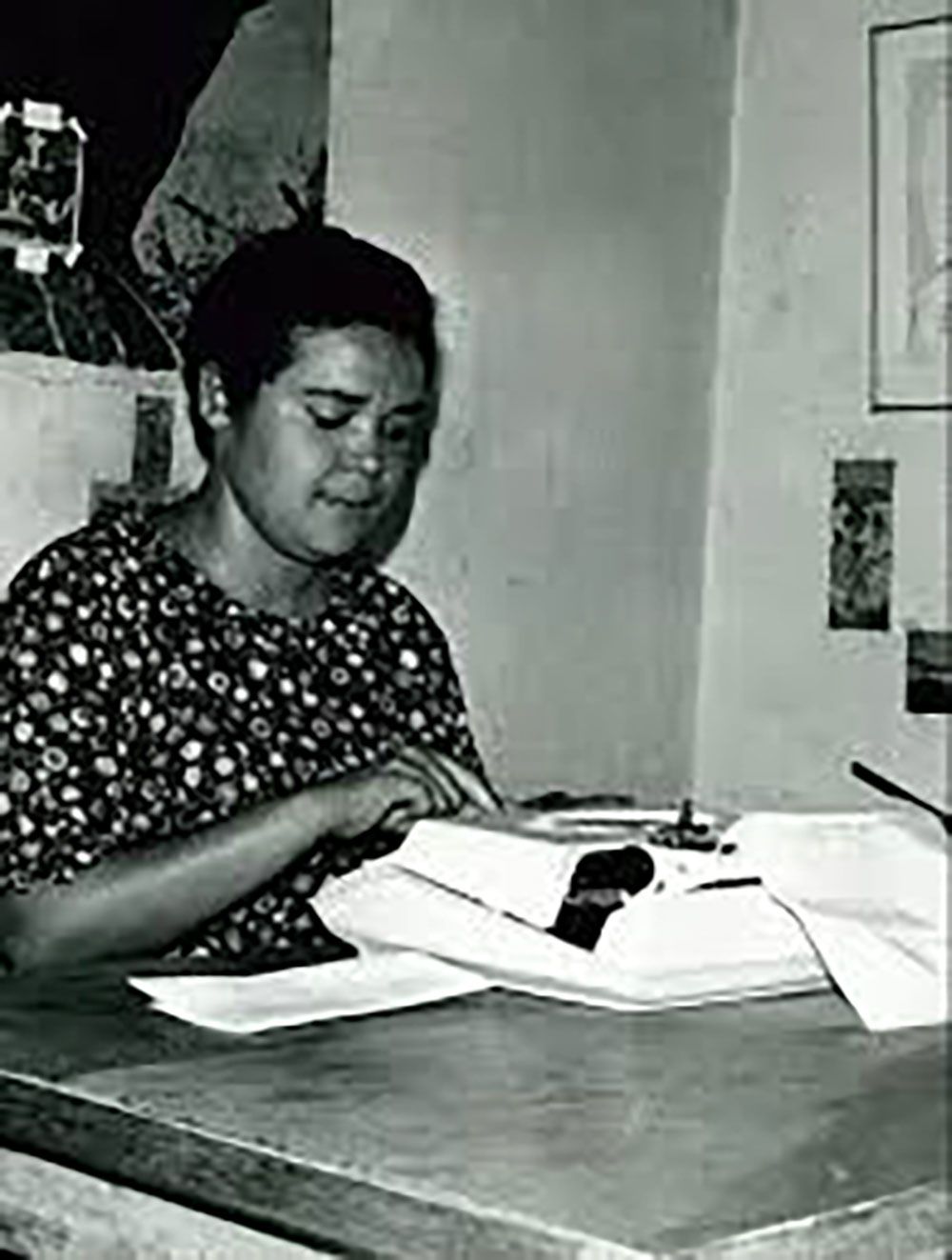
Fortunate Jwara: Bessie Head comes to mind when, in her letters to other writers, she alludes to the creative process as a soul struggle (Head, 27), underscoring the extent to which writing demands not only the articulation of emotional depth, but also the recognition of craft as a practice bound up with technical, intellectual, philosophical labour. Yvonne Vera also comes to mind when she reflects on craft practices (as an experimentation), describing them as “weaving, plaiting and basketry” (qtd. in Hemmings, 35) and that craft is “the creative energy which informs many material practices” (qtd. in Hemmings, 35). She suggests that, at times, the ethical or moral dimensions of writing should appear almost incidental: “You are not particularly an activist, as a writer, you have an aesthetic that is primary” (qtd. in Hemmings, 35). What is your perspective on this stance, particularly within the context of the South African literary landscape and publishers’ tendencies to shape or determine tastes?
Stacy Hardy: I’m very sympathetic to Yvonne Vera’s insistence that a writer’s primary commitment is to aesthetics, not because aesthetics are apolitical, but because aesthetics are where politics get digested, broken down, re-made as blood and heat. So yes, weaving, plaiting, basketing, but for me the work happens as much in the stitching as the unstitching. Walter Benjamin writes beautifully on this in the opening pages of his essay “The Image of Proust” from Illuminations:
For here the day unravels what the night has woven. When we awake each morning, we hold in our hands, usually weakly and loosely, but a few fringes of the tapestry of lived life, as loomed for us by forgetting. However, with our purposeful activity and, even more, our purposive remembering each day unravels the web and the ornaments of forgetting (Benjamin, 202).
I am drawn to Benjamin’s metaphors of weaving, because they acknowledge both patience and violence. To weave is also to tighten, to pull, to constrain. Craft is not ornamental; it’s a form of pressure. I don’t believe in the opposition between soul struggle and technical labour. Writing is always both. The body struggles; the sentence struggles. One cannot be separated from the other.
In South Africa, women writers in particular are so often asked to perform legibility: to explain, to represent, to instruct, to become a public service announcement with a tender face. Institutions and markets can collude in that demand, nudging writing toward redemption arcs, testimonial clarity, the neatly “inspiring” wound. For me, ethics emerge through form, not message: if a text unsettles the reader’s habits of looking, if it disrupts narrative comfort, if it refuses easy identification… that refusal is already an ethical act.
But I want to push this further, toward your provocation about Bessie Head. Bessie Head is still routinely filed under realism and feminism (as if those categories are cages that can hold her). What if we read her, instead, as a science fiction writer, not in the narrow sense of rockets and chrome, but in the deeper sense.
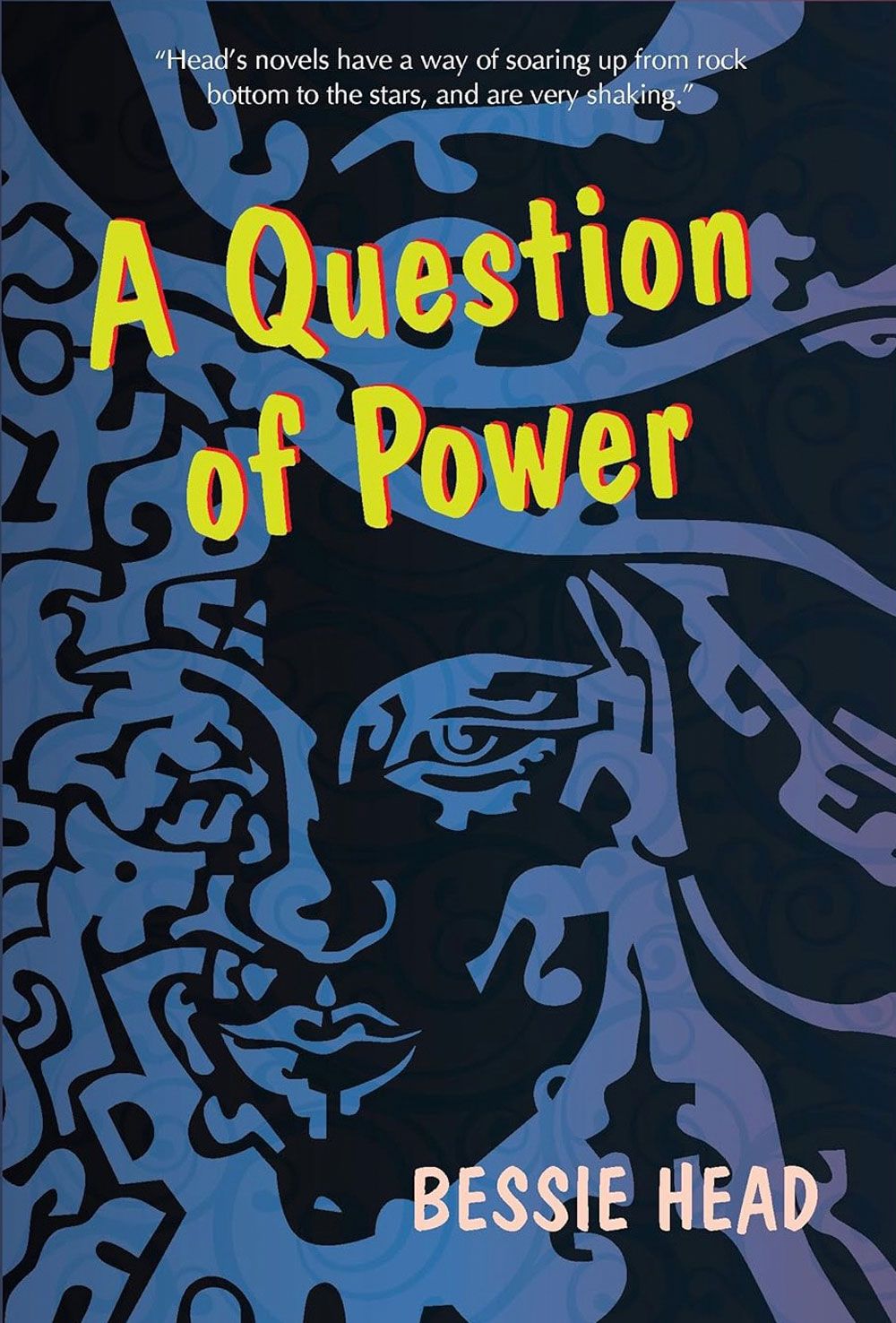
A Question of Power is already full of apparatuses, strange devices that run on shame, jealousy, sexual control, colonial residue. What if we read Head’s figures as semi-living machines, almost as organological prototypes: Miss Sewing-Machine, Miss Wriggly-Bottom, Madame Loose-Bottom, Madame Squelch Squelch… entities whose eroticism is also circuitry, whose bodies behave like interfaces, feedback loops, overclocked systems, sabotage.
Read this way, Head isn’t “merely” representing patriarchy or psychosis realistically. She is building a speculative architecture in which power becomes technology, a set of hostile programs installed in the mind, running through the body, producing hallucinated “users” and “operators,” rewriting the self as if the self were hackable. That is science fiction: a model of consciousness as an engineered environment; a dystopian interior where ideology appears as machinery, and desire is compelled to work like a motor.
And once you see that, the question of aesthetics sharpens. Head’s ethics are not delivered as a moral. They are embedded in the engineering of the text, the way the novel forces you to experience the malfunction, the way it refuses the clean consolations of realist uplift. The novel becomes a kind of haunted technics itself: it doesn’t “tell” you about power; it makes power operational on the page, makes it rhythmic, repetitive, punishing, then shows how the body and psyche attempt to survive inside that system.
So yes: I stand with Vera on aesthetics. But I also want to say: in a context that demands legibility, Head’s speculative machinery is a form of refusal. A refusal to translate suffering into a neat lesson. A refusal to render the female psyche as a case study for the reader’s comfort. A refusal, crucially, to let realism be the only “serious” mode African women are allowed.
Fortunate Jwara: As a follow-up provocation, I am reminded of Camille Roy’s essay “Experimentalism” (2004), in which she observes that “experimental work can require a context of aesthetic ideas which many people who might otherwise be interested in it don’t have. In this context, intimacy, autobiography, and direct address don’t function just as content but are strategies for pursuing a reluctant audience” (74). How do you respond to Roy’s assertion, particularly as someone who has worked with publishers in different parts of the world?
Stacy Hardy: Camille Roy’s observation resonates deeply with me. Intimacy, autobiography, direct address, etc., are not just content choices; they are strategies of seduction and ambush.
Experimental writing often fails not because it is difficult, but because readers have not been invited into the right relation with it. Intimacy can function as a threshold: it draws the reader close, disarms them, and then destabilises them. I don’t think this is a concession. I think it’s flirtation, seduction, desire, (fore)play.
Fortunate Jwara: In your short story collection, Because the Night (2015), there seems to be a unifying motif that runs through the narratives: eroticism and the intricate complexities of pursuing pleasure. In “The Pornographic Imagination” (1969), Susan Sontag argues that pornography mirrors and/or exposes hegemonic ideas, societal power dynamics and the norms that shape and influence our reading practises and our interpretation of literary fiction. Can you reflect on how you navigate the boundary between the pornographic imagination and erotic aesthetics in your writing?
Stacy Hardy: Eroticism in my work is never about arousal alone, although when it happens fantastic. Writing should be horny, hungry, unruly, rude! But it is also about attention. About how bodies are seen, fragmented, consumed. Susan Sontag’s “pornographic imagination” is useful here because it exposes how power operates through reduction, how bodies become surfaces, organs, commodities. In an age of Grok and Epstein, this is urgent. My interest lies in resisting that reduction. In insisting on the body as strange, excessive, unruly.
Fortunate Jwara: Stories such as “Breasting” (2015) can be read as a deliberate critique of a particular gaze. The breast, as an organ, takes on multiple forms, is represented in multiple registers: it is erotic in its aesthetic appreciation, erogenous in its sensation, yet also rendered as a prize or associated with a kind of stupefied objectification. “A Breast is not a Leg” reads as a pointed challenge to the pornographic imagination of “everything reduced to tits” (Hardy, 12). In “Artichoked” (2015), sexual moments appear as sudden, ephemeral flashes, intricately woven into the narrative structure. In “Arse About Face” (2015), the reader is drawn into a voyeuristic position, akin to walking in on a naked body, yet the gaze is not rendered as salacious. Rather, your writing invites a sensuous appreciation of the body’s various organs, challenging conventional modes of looking and engaging with corporeality. “Flatliner” (2015) integrates the erotic into the narrative, presenting it as an ordinary and nuanced experience between characters navigating internal conflicts. How do you manage to draw the sensual and the sexual from the depths of the subconscious and render them so vividly in your writing?
Stacy Hardy: Maybe I write good sex because I’m not getting any.
I say that half-jokingly, but it’s also a way of refusing the assumption that erotic writing comes from abundance, satisfaction, plenitude. For me, eroticism comes from lack, pressure, deviation, from what Deleuze might call desire as production, not as fulfilment. Desire doesn’t point toward an object that will complete us; it moves, leaks, attaches, detaches. It doesn’t want the breast so much as it wants what the breast does, how it interrupts sense, how it overloads the body with meaning and sensation at once. I don’t write sex scenes so much as I write erotic events… moments when the body slips its assigned function. A breast is not a leg, yes, but more importantly: a breast is not one thing. It’s an organ, a surface, a signal, a threat, a comfort, a weapon, a joke. In “Breasting,” the breast becomes a site where multiple regimes of looking collide. I’m not interested in stripping it down to its pornographic efficiency; I’m interested in letting it proliferate, misbehave, exceed its capture. Pornography reduces the body to readable parts; I want to return those parts to their strangeness. A breast is not a leg; a cunt is not a metaphor; an arse is not a punchline. But of course it can be!
Bataille reminds us that eroticism is not about sex as such; it’s about the shattering of boundaries, the moment when the self risks falling apart.
That’s why erotic moments in my work are often sudden, fleeting, almost incidental. In “Artichoked,” sex appears and disappears like a flare, it doesn’t announce itself because desire rarely does. It arrives as interruption, as excess, as something that briefly undoes the narrative’s composure.
I’m also very conscious of the gaze. In “Arse About Face,” the reader is positioned as voyeur, but without the reward voyeurism usually promises. You’re made aware of your looking. You’re held there, uncomfortably, in a mode of attention that’s sensuous but not consumptive. I want the reader to feel the ethics of that position in their own body: the hesitation, the heat, the question of what it means to look at another body without mastering it.
And then there’s “Flatliner,” where eroticism is stripped of spectacle altogether. Sex happens alongside doubt, fatigue, emotional misalignment. It’s not transcendent; it’s ordinary. Which, to me, is radical. There’s something deeply political in refusing to make sex either redemptive or catastrophic. Sometimes it’s just another way bodies try, imperfectly, to communicate.
So how do I draw the sensual from the subconscious? I don’t excavate it like a buried treasure. I let it surface where language starts to fray. I listen for where the sentence wants to speed up, or break, or repeat itself. Desire leaves marks in syntax before it ever shows up in content. If the prose breathes differently, if it hesitates or rushes or stutters, the erotic is already there. Maybe that’s the real answer: I don’t write sex as an act. I write it as a force… one that pulls bodies, sentences, and readers slightly out of alignment with themselves. That misalignment is where desire lives.
Or maybe I just write good sex because I’m not getting any.
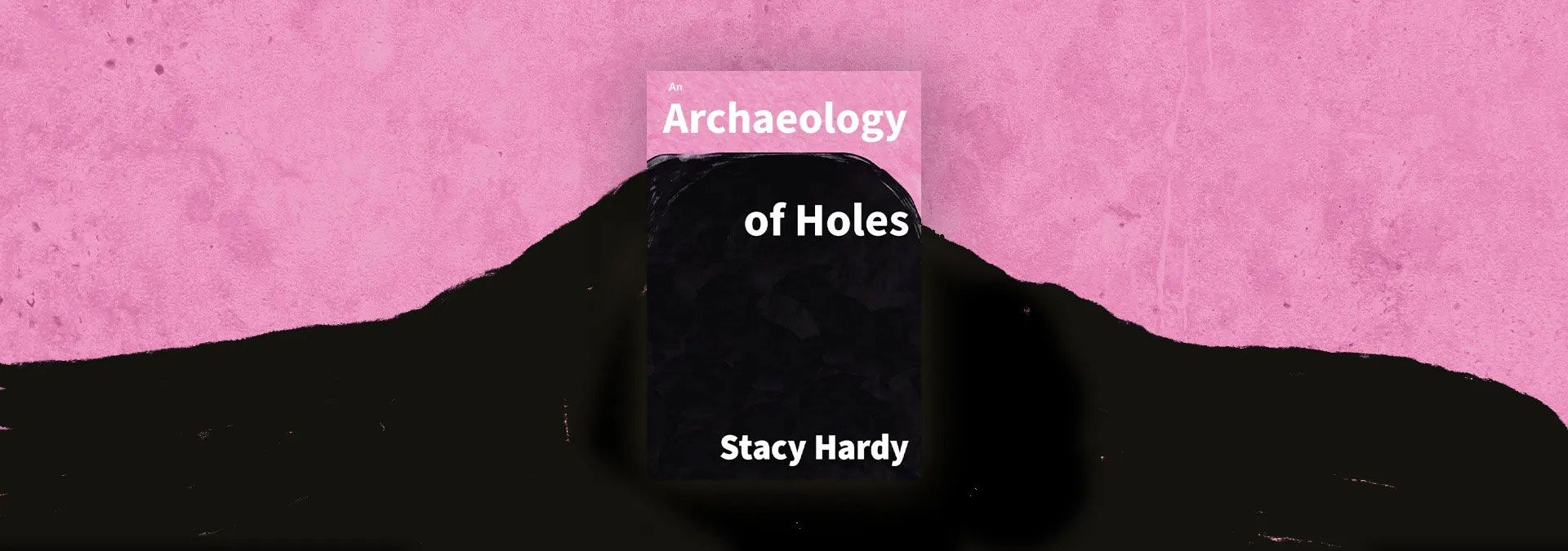
Fortunate Jwara: In your more recent collection, Archaeology of Holes (2023), stories such as “The Pattern of Trees” (2023), “The Cow: a butcher fantasy” (2023), “Taste of your Tongue” (2023) and “An Archaeology of Holes” (2023), demonstrate a marked experimentation with form. Especially in “Taste of your Tongue” (2023), which initially reads like a narrative about lice, moments of eroticism are woven into the text. Why is it important in your writing that ‘sex scenes’ or eroticism remains plotless – eschewing any conventional build-up or anticipation typically signalled by narrative cues such as “oh, it is coming”?
Stacy Hardy: I think I maybe refuse the conventional architecture of the sex scene—the build-up, the climax, the resolution—not just because that structure mirrors capitalist and pornographic logics of consumption, but also because I’ve never had sex like that. For me sex is never smooth, it is often sudden, awkward, unheroic, unsignalled, violent, confusing, filled with doubt and messiness…. body fluids, squelchy bits, flaccid dicks, saggy and slippery things. It intrudes. It interrupts. It does not always mean anything. By rendering erotic moments as plotless, I try to return them to that ordinariness, that strangeness. I guess this refusal could also be read as ethical. It resists the reader’s expectation of gratification. Or maybe I’m just a tease… leaving them hanging, hungry, horny…
Fortunate Jwara: In your writing, how do you navigate what I term the “ambivalence of secure pleasure” characteristic of our times? I am reflecting on the work of Pumla Dineo Gqola and Desiree Lewis concerning body politics and sexual representation. Considering the persistent misogyny in our country—where stories of violence against women, including killing and rape, occur all too frequently—how do you understand the role of portraying eroticism within this context?
Stacy Hardy: We live in a culture saturated by violence against women, where pleasure is constantly policed, punished, or weaponised. Writing eroticism in this context is risky, but necessary. I do not see erotic writing as naïve or escapist. On the contrary, it is a way of insisting that women’s pleasure exists despite everything. That it is not reducible to victimhood, nor immune to harm. Eroticism can hold ambivalence. It can acknowledge fear without surrendering desire. That tension matters to me. As Egyptian poet Joyce Mansour says it:
I want to sleep with you side by side
Our hair intertwined
Our sexes joined
With your mouth for a pillow.
I want to sleep with you back to back
With no breath to part us
No words to distract us
No eyes to lie to us
With no clothes on.
To sleep with
you breast to breast
Tense and sweating
Shining with a thousand quivers
Consumed by ecstatic mad inertia
Stretched out on your shadow
Hammered by your tongue
To die in a rabbit’s rotting teeth
Happy.
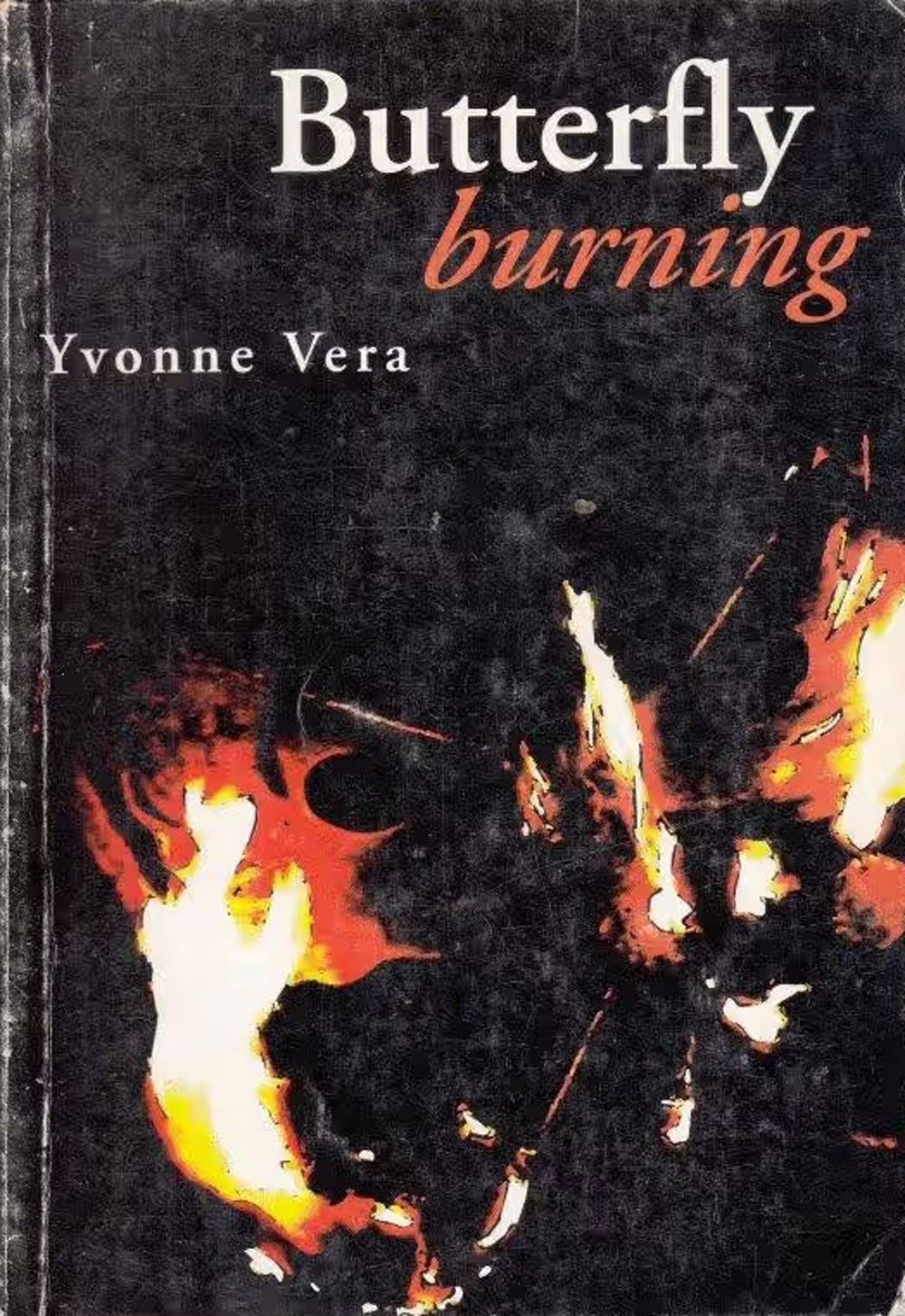
Fortunate Jwara: I am currently working on a PhD thesis examining experimentation and erotic representations in Bessie Head’s A Question of Power, Yvonne Vera’s Butterfly Burning and your collection, Because the Night. As you can see, these female writers are connected yet also divided by their distinct contexts, historical moments and positionalities. As Stacy Hardy, what kind of conversations would you imagine having with Bessie Head about A Question of Power and with Yvonne Vera regarding Butterfly Burning?
Stacy Hardy: With Bessie Head, I imagine a conversation about madness not as pathology but as a method, a way being in the world. A Question of Power treats consciousness as a contested system rather than a stable interior. Power, sexuality, envy, and colonial residue appear as invasive forces, installing themselves in the psyche like hostile programs. Elizabeth’s hallucinations are not metaphors; they behave like technologies, feedback loops that discipline, eroticise, and punish.
In this sense, Head is not representing madness but designing an environment in which the self becomes porous, overcrowded, unstable. The novel stages survival under conditions where clarity is impossible. Madness becomes epistemological because it reveals what ordinary rationality cannot: that power does not only operate socially, but inside the body, reformatting sensation and thought. What Head offers is not cure or transcendence, but a way of enduring psychic saturation without surrendering entirely to it.
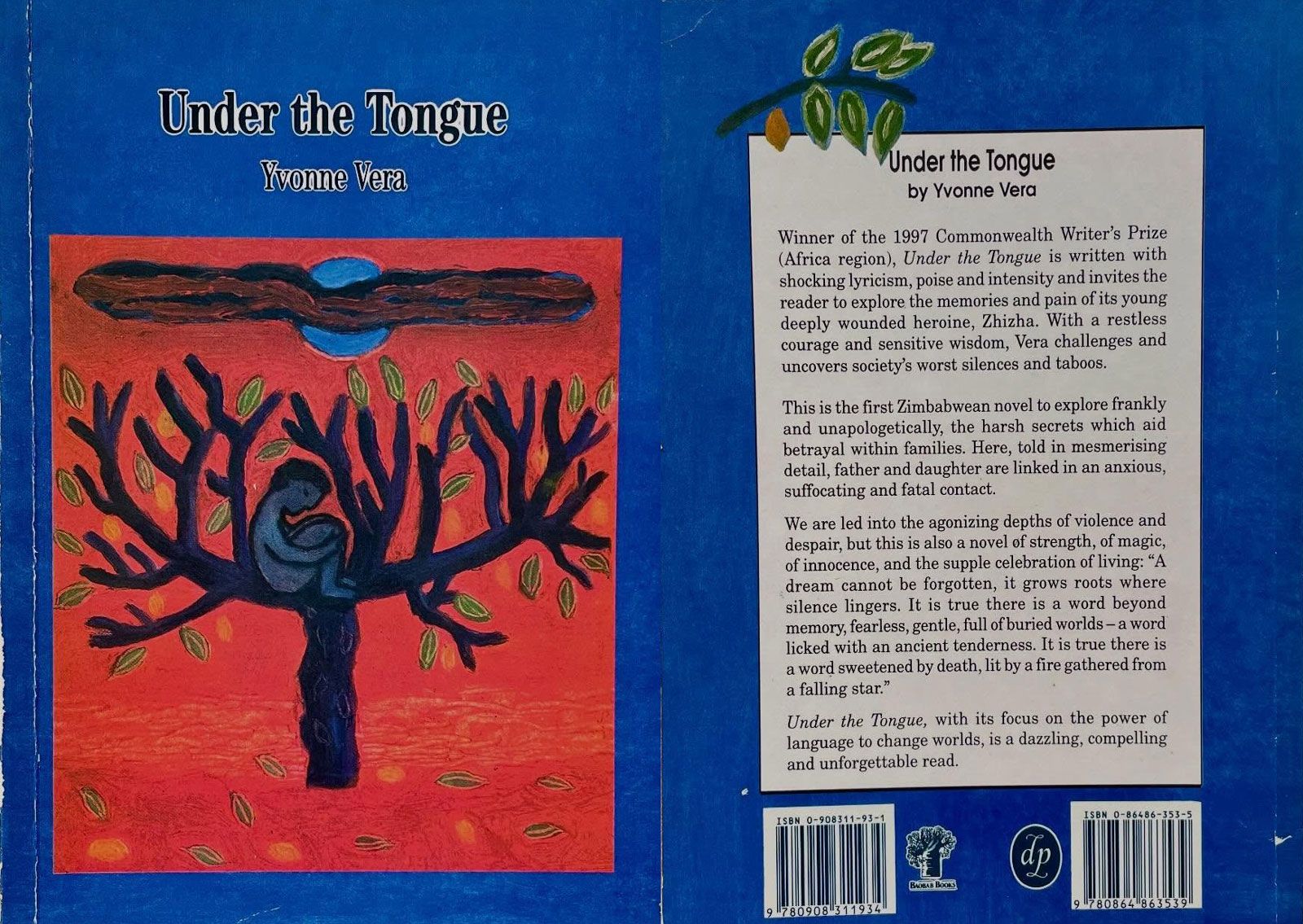
With Yvonne Vera, the conversation shifts toward silence, rhythm, and restraint. Where Head’s writing proliferates, Vera’s withholds. She understands that violence does not need to be displayed to be felt, and that to render it too explicitly risks reproducing its force. Her sentences burn slowly. Meaning accumulates through tempo, through what is delayed or refused. Silence, in her work, is not absence but ethical calibration.
Vera resists the demand that women’s suffering be made legible, spectacular, or consumable. She writes against pornographic clarity, allowing violence to register indirectly, in breath, in gesture, in the pressure of the unsaid. Her restraint is not evasive; it is precise.
What unites Head and Vera is a shared understanding that form is never neutral. Each develops a distinct survival strategy in language: one by exposing psychic invasion, the other by tightening the terms of representation. Neither offers comfort or redemption. Instead, both insist that how we write, its density, its silences, its refusals, is inseparable from how we live inside damaged systems.
Fortunate Jwara: Lastly, how do you reflect on the experience of reading a novel in comparison to a collection of short stories? What are the different kinds of engagements or imaginative demands each form places on the reader?
Stacy Hardy: A novel asks the reader for endurance, for a willingness to stay, to submit to duration, to let time press on the body of the reading. It is not only immersion in story but immersion in continuance. You don’t cross a novel so much as you live inside it. You move with it through fatigue, repetition, waiting. Something accumulates not because events accelerate, but because they don’t. Time thickens. Meaning seeps rather than strikes.
A short story collection, by contrast, asks for alertness. Each story is a new threshold, a new contract. You enter, you recalibrate, you adjust your breathing. Attention sharpens because there are no guarantees of continuity. You cannot rely on momentum; you have to arrive fresh each time. The work is done in the gaps, between stories, between tones, between worlds that may or may not speak to one another.
Stories can argue with one another. They can cancel each other out, refuse synthesis, leave questions hanging. Novels unfold through waiting, repetition, exhaustion, brief intensities, long stretches where “nothing happens” except time itself doing its quiet work. I’m interested in writing that doesn’t rush to justify that duration, that doesn’t try to convert it into efficiency or meaning too quickly.
Whether in the long, sustained pressure of a novel or the broken, attentive rhythms of a collection, I’m drawn to forms that don’t treat time as an obstacle to be managed, but as the substance of experience itself, something you have to inhabit, sentence by sentence, body by body, until you emerge changed, or simply more aware of having been there at all.
Bataille, Georges. Erotism: Death and Sensuality. Translated by Mary Dalwood, City Lights Books, 1986.
Benjamin, Walter. Illuminations. Edited by Hannah Arendt, translated by Harry Zohn, Schocken Books, 1968.
Deleuze, Gilles, and Félix Guattari. Anti-Oedipus: Capitalism and Schizophrenia. Translated by Robert Hurley, Mark Seem, and Helen R. Lane, Viking Press, 1977.
Gqola, Pumla Dineo. “Yindaba Kaban’ u’ba Ndilahl’ Umlenze? Sexuality and Body Image.” Agenda, vol. 19, no. 63, 2005, pp. 3–9.
Hardy, Stacy. An Archaeology of Holes. Bridge Books, 2023.
Hardy, Stacy. Because the Night. Pocko, 2015.
Head, Bessie. A Gesture of Belonging: Letters from Bessie Head, 1965–1979. Edited by Randolph Vigne, Longman, 1991.
Head, Bessie. A Question of Power. Penguin Random House South Africa, 2011.
Hemmings, Jessica. “Maximum Space Around the Typewriter: Yvonne Vera and the Craft of Writing. Wasafiri, vol. 36, no. 3, 2021, pp. 32–40.
Lamb, Meghan. “Interview: Stacy Hardy.” Bridge, 2024, bridge-chicago Accessed 13 June 2025.
Levin, Michael. “Self Improvising Memories: A Few Thoughts around a Recent Paper.” Thoughtforms, 2024, thoughtforms. Accessed 18 Jan. 2026.
Lewis, Desiree. “Against the Grain: Black Women and Sexuality.” Agenda, vol. 19, no. 63, 2005, pp. 11–24.
Mansour, Joyce. “I Want to Sleep With You Elbow to Elbow.” Translated by Emilie Moorhouse, Poetry, June 2023, Poetry Foundation.
Motsapi, Seitlhamo. earthstepper/the ocean is very shallow. Deep South, 1995.
Roy, Camille. “Experimentalism.” Biting the Error: Writers Explore Narrative, edited by Mary Burger, Robert Glück, Camille Roy, and Gail Scott, Coach House Books, 2004, pp. 73–78.
Sontag, Susan. “The Pornographic Imagination.” Styles of Radical Will, Farrar, Straus and Giroux, 1969, pp. 35–69.
Vera, Yvonne. Butterfly Burning. Farrar, Straus and Giroux, 1998.