DOMINIC DAULA
Kassandra by Duo Nystrøm / Venter: Artistry inspired by Janus
Formed in 2015, Duo Nystrøm / Venter consists of the South African-born singer Juliana Venter, and Norwegian saxophonist Rolf-Erik Nystrøm. Both are thinkers. This is made apparent by the wide-ranging performing interests they have developed, and how they have integrated these into the multidisciplinary manner in which their work is conceived and expressed. The politics of South Africa, specifically the experience of the last years of apartheid, has coloured Venter’s artistry since the 1990s. It is not clear, however, if this has remained a static corner of interest. Nystrøm’s ties to South African artistry is equally broad: besides Venter, he has collaborated with author JM Coetzee, as well as visual artist William Kentridge.
Kassandra explores duality in multiple permutations and layers. The simplest is the minimum number of musicians which perform in this album, which is two. Passages in the majority of tracks comprise of two distinct parts. And when supplemented by other instrumental forces, the result is the formation of two ensembles: the duo itself (as the first ensemble) and the guest musicians in tracks 4, 6, 7, and 8 (as the second ensemble).
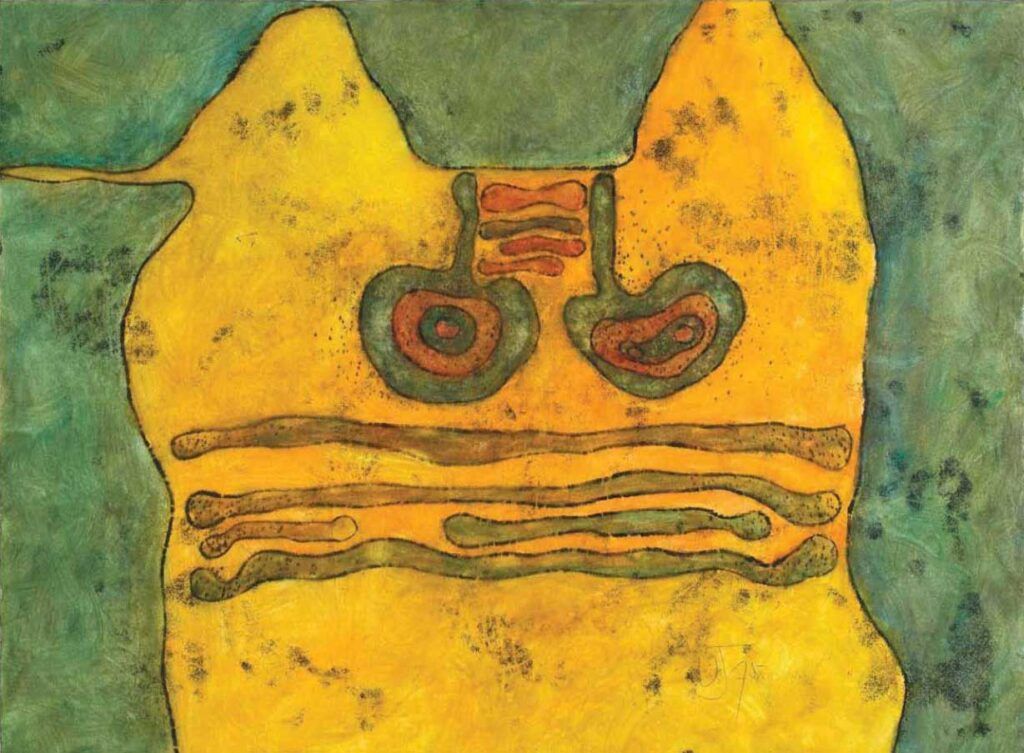
Extra-musical concepts are superimposed in the creation of musical material, such as the dada poetry of Wopko Jensma in Gromringervariasies (track 1), and the framing of Kassandra (track 4) as having a voice that speaks for the marginalised, demonstrating a general critique of the patriarchy. In addition, existing compositions have undergone further artistic re-imaginings by means of arrangements or the process of re-composing, as Venter and Nystrøm do in Consert de Différents Oyseaux (track 3).
Duality is permuted to its limits, and provides some cohesion through the album, especially when this seems to be lacking across various tracks. There appears to be a deliberate janus-like binary of sound worlds in the album: face 1 is largely shocking, aleatoric, and chaotic at times; whereas face 2 is contemplative, brooding, and occasionally dark. As an intellectual concept, this sounds very admirable; but in practice it can create a feeling of vertigo, and a potential scepticism regarding these extra-musical concepts’ tangible application to the performances without the aid of a programme note. Kassandra (track 4) is an example of one that is laden with several topics so as to bring about what the artists deem a multi-layered composition.
In reviewing the tracks themselves, I wish to categorise them by the faces which were referred to in the previous paragraph. The first track which belongs to face 1 is Gromringervariasies (track 1). This performance is fascinating, and seems almost ritualistic in its fragmented speech patterns, and Venter’s whispers which are contrasted with declamations. Both artists make use of considerable resources from their respective instruments: Venter is able to produce percussive sounds with her voice, and her musical dialogue with the saxophonist results in sections where there is a unity of timbre, which is impressive. And Nystrøm creates the impression of a flute or any kind of edge-blown aerophone from the resources of his saxophone, in addition to percussive sounds. As the work develops, the duo’s musical dialogue becomes increasingly surreal, leading to a climax which should be recognised through a shrill, screaming motif. The imagery suggested by the liner notes adds to this, especially when reference is made to the saxophone being played while submerged in water. Here, dada is applied to very great effect.
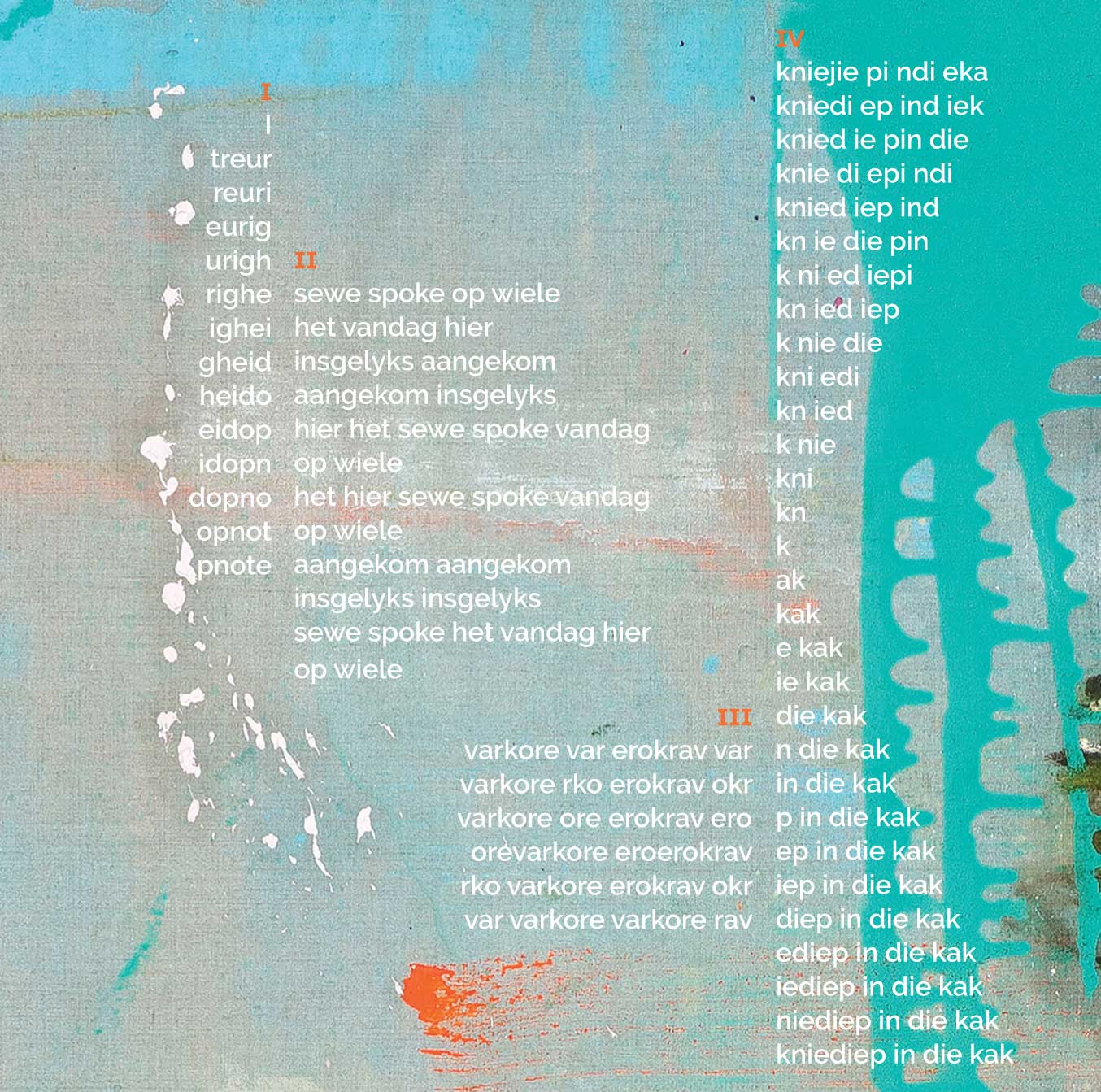
In general, the liner notes related to Gromringervariasies are not strong: there is much discussion regarding Jensma’s biography, but it is not applied meaningfully to the poetry itself. Details about Venter’s own performances in the 1980s are interpolated into Jensma’s biographical sketch. This seems inappropriate, unless the disjointed narrative is deliberate.
Next is The Click Song (track 6), which contains some guest musicians. The instruments weave around the voice in the introduction, and the singer adopts an overtly ritualistic character to her singing, with obsessive repetitions of the ‘q’ click so as to create more percussive sounds, as well as spoken forms of exhalation while during her singing of the well-known text which was made popular by Miriam Makeba. The ritualistic element may call to mind some of Abel Selaocoe’s artistic approach, both from a musical and performance point of view. However, there are a number of problems with Venter and company’s interpretation of the present work.
First is the text. While some misreadings may be attributed to the practical difficulties of pronouncing words in a different language, and so can be expected from even the most dedicated of artists, there are a couple which have given me pause. Makeba’s Qongqothwane is instead pronounced as Qoqochwane. The latter word, which is a corruption, is more difficult to pronounce, given that it contains two ‘clicks’. And Gqithapha is subjected to various corrupted pronunciations which are infinitely more difficult.
What is the effect of such a lack of consistency? It points to a fastidiousness that all artists should strive towards, and in this case, has not been done with success. While some might argue that the most important aspect is how the music makes one feel, performers should consider faithfulness to the text as deeply as possible. On this occasion more could have been done. There is the potential for these issues to project a sense of cultural vandalism, in which approximations of a text can amount to nonsense words, in addition to nonsense clicks. The operatic tone towards the end of the work seems rather kitsch, and the ensuing chromatic movement in the double bass is an awkward attempt at emphasising the musical climax of the work.
Concert de Différents Oyseaux is the third track which belongs to face 1, and so there will be musical gestures which are similar. Both the singer and saxophonist begin the work in a declamatory manner. The saxophone’s upper register captures the avian timbre reliably and, as in the first track, this sonic character is matched by the singer. The opening material is extended, suggesting a continuous call of birds in the dawn chorus. The work develops into the fragmented utterances which are typical of birdsong. And while composers tend to prioritise the exotic, Venter includes even the commonplace in the menagerie through her imitation of the cooing of pigeons. When she performs the text of the song proper, Venter and Nystrøm create a two-part texture, with the saxophone providing harmonic support. There is also an opportunity for solo playing from the saxophone: this section, which is soft, contains a restatement of the harmonic material, and there are additional reprises with rhapsodic figuration. This is done with great aplomb and ease. Eventually the music also contains the aleatoric chaos of sound which is heard earlier. In essence, this track is a portmanteau of faces 1 and 2 of the Janus-like sound world.
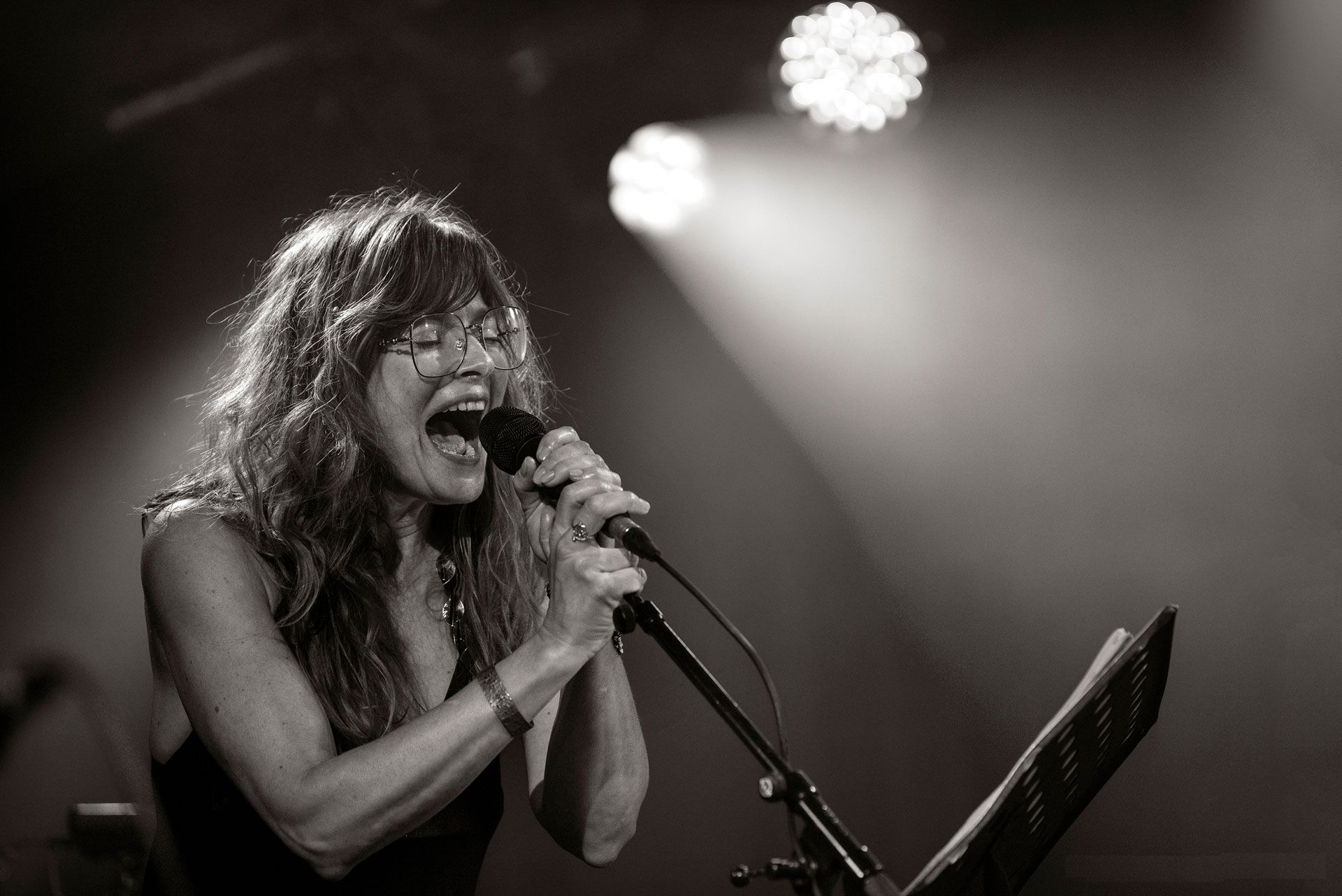
Kassandra is another sonic portmanteau. It begins and ends softly, with the contemplative characterisation that is typical of face 2, and makes use of the screaming motif, as in track 1, which belongs squarely to face 1. Notable about this track is the eastern musical colouring made apparent by the use of gongs and an uncredited plucked string instrument. The vocal part also depicts an eastern sound world, though there is no detailed explanation of the text which is sung word-for-word, and the reasons for some of the expressive melodic contours within the vocal part. Following the scream motif, the denouement is represented by plucked strings and humming. Venter and company have performed an effective episode in the stream-of-consciousness style.
It may well be that the screaming represents the frustrations of the prophetess cursed by Apollo to speak true prophecies which are never believed.
The four remaining tracks belong to face 2, which is characterised by a comparatively still, dark and contemplative mood. Two have an association with Billie Holiday. The first of these is Without your love (track 2). In it, the performers create a two-part texture, with the saxophone serving as a decorative counterpart to the vocal line. Its simplicity, following the chaos and surprising effects in track 1, is remarkable. While there is a wistfulness in Holliday’s own recording, the present rendition contains a darker, more introspective quality.
Gloomy Sunday (track 5) follows similar compositional procedures, and is also associated with Billie Holiday, though the music is of Hungarian origin. An Johanna (track 7) is notably sparse in its instrumental colour. The principal material is in the vocal part, and the saxophone is in dialogue with it as well as the strings. The instrumental figures are well established at this stage of the album, having been introduced earlier. The simpler instrumentation in this category of works has made for a generally slimmer commentary, though this should not suggest that the quality of music making is poor. Rather this reflects the musicians’ consistency of style across the sound worlds.
The last track, Hymn of the Cherubim contains an eerie, cinematic quality. This is likely on account of electronics forming part of the instrumentation. Venter’s vocalisations against the electronics and strings creates a smooth texture, in which the gongs blend particularly well at the closing of the work. The effect is profound, particularly given the challenging nature of the entire album. Kassandra is an unusual, striking disc. It demands one to listen differently, to favour sounds rather than forms, and to embrace capriciousness rather than referential elements. For this reason, I suspect that it might appeal a lot more to non-musicians. The album has a stream-of-consciousness that is more evasive than Schoenberg in his Three Piano Pieces, opus 11 – particularly the second and third of those pieces. Those more familiar with the literary developments of the previous century—culminating in the fairly controversial, and equally fêted, Finnegans Wake by James Joyce—might find the vocabulary of Kassandra, albeit expressed in sound, somewhat less intimidating.
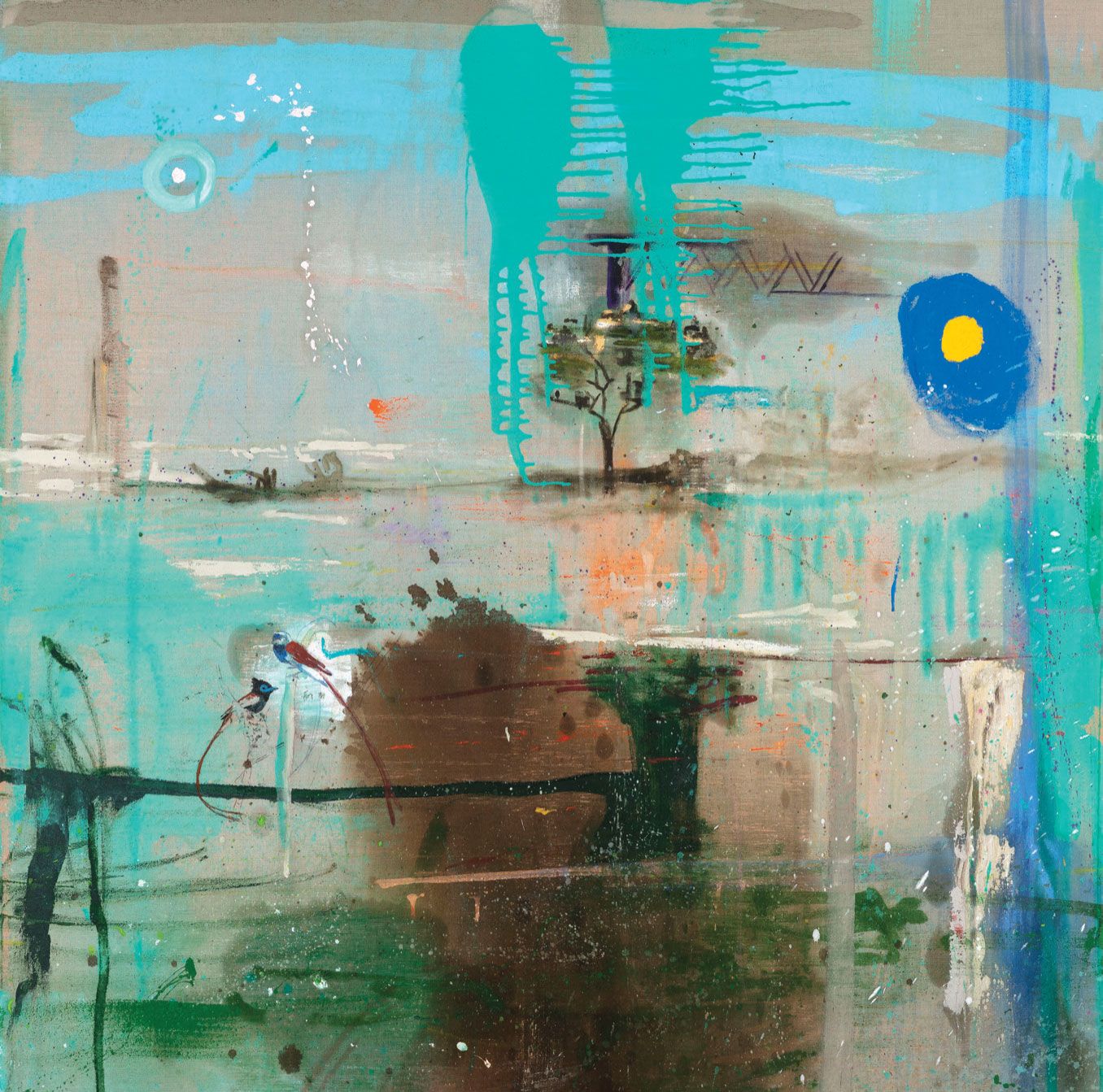
Paintings by Wayne Barker. CD booklet and cover design by Alexandra Ross. Images supplied by Juliana Venter.