DIMAKATSO SEDITE
Morafe
Khumisho Moguerane is an enigmatic and eclectic historian and writer with tacit Black Agency that has no essentialist and post-colonial stance. This allowed her to explore lived experiences of the Molemas through their own colonial lens. The result is a depiction of their daily lives in startlingly intimate ways. However, this immersion may have drawn her so close that she has been unable to notice the invisible after effects of coloniality that the archives have on today’s reader.
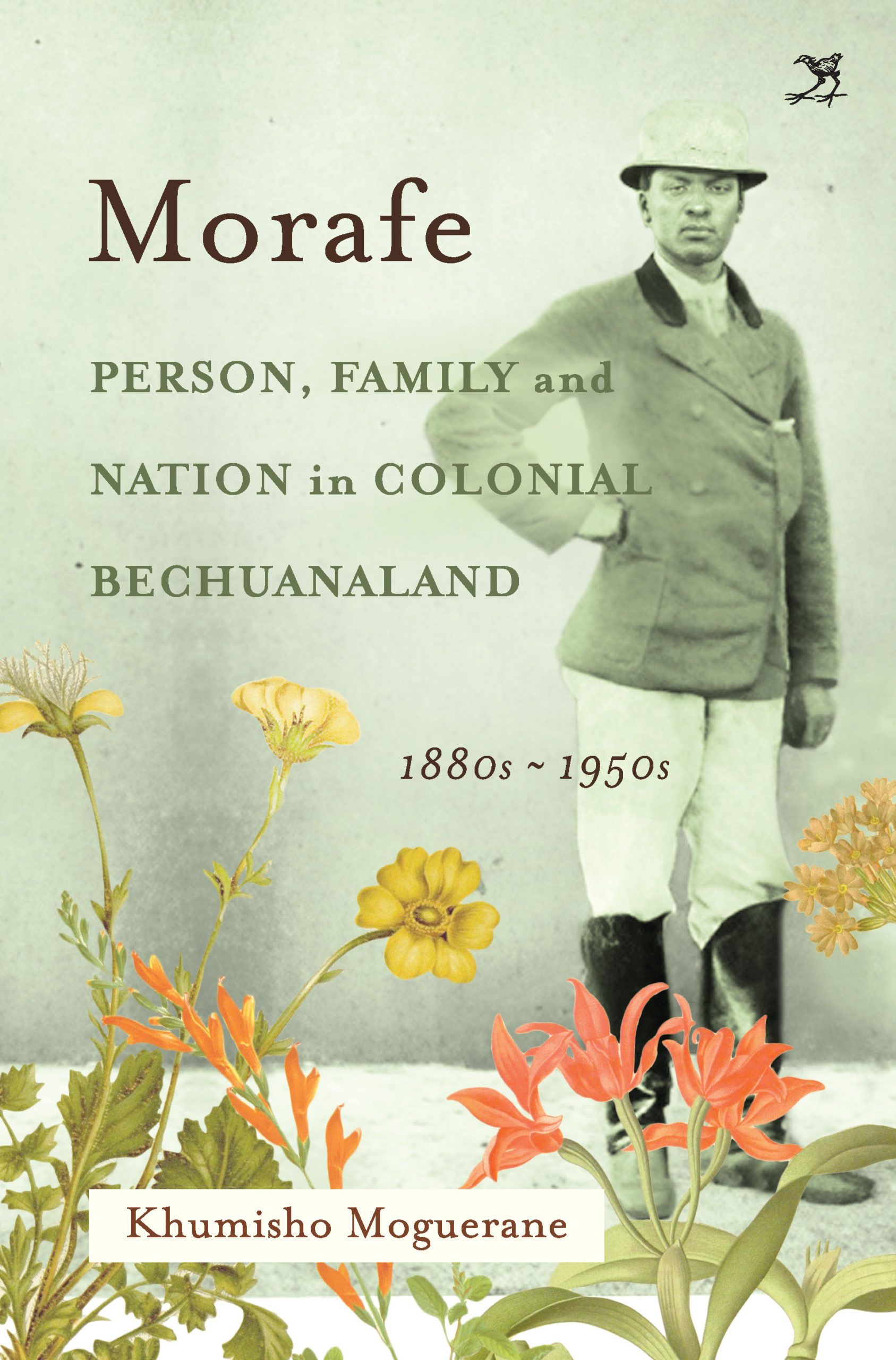
In summary, her book Morafe: Person, Family and Nation in Colonial Bechuanaland (1880s –1950s) re-imagines a history of three generations of the Molemas, a prominent Barolong booRatshidi family in Bechuanaland cross-border territory from the 1880s to the 1950s. The book offers the Molema family’s consciousness as a wide lens through which we explore morafe (nationhood) of Bechuana. We witness their lives in their most vulnerable moments, as their sociopolitical-and-cultural context shifts. Central to the book is Moguerane’s persuasive argument that our understanding of Bechuana’s morafe (nationhood), was shaped by intimate daily practices (tiro) of the Molemas, starting with Isaac Molema, brother of Montshiwa, chief of Barolong booRatshidi. Such practices centred around tiro, a complex moral, spiritual and social concept of daily practices which Bechuana needed to do to be regarded as batho (people), and as having botho (personhood),which would qualify them as members ofmorafe.
Isaac converted to Christianity and later founded the town of Mafikeng. This led to new practices (tiro) such as access to education and literacy. Successful talks between Montshioa and the British Land Commission resulted in Montshioa dividing his land into 41 farms to protect them from seizure by the Boers and Cecil John Rhodes. King Montshioa allocated the farms to his sons and other members of BooRatshidi royalty (including the Molemas), an unusual practice(tiro) among Bechuana, for land was regarded as communal.
This conversion of sacred land into a commodity, led to a cascade of privileges for the Molemas, starting with Silas, who, through the leasing of his farms to white English and Boer settlers, became a wealthy man. This privilege continued down to his son, Modiri, who became a medical doctor, and his nephew, Sebopioa, who became a lawyer. All this happened in diverse, multicultural Bechuanaland cross-border territory, which included both British Bechuanaland (now South Africa) and the Bechuanaland Protectorate (now Botswana). Throughout the many changing historical eras, from British annexation in the 1880s, to the Union of South Africa in 1910, the Molemas (including close associates such as Sol Plaatje), had been trying hard to shape and reshape morafe, a central thesis of this book. Moguerane explores two parallel thoughts: the practicalities of colonial lives versus the mythical concept of morafe.
When examining the book’s structure, its chapters—and the sections within them—are not arranged according to a chronology of events or a narrative arc. At first glance the three chapters’ titles give one the impression that the book is structured thematically, but its contents overlap and are repetitive. With no logical sequencing, the chapters are not mutually exclusive, and do not form cohesive distinct units. Moguerane repeatedly disrupts the narrative and appears to challenge the reader to work out for themselves how these disjointed events are related; and how each might be telling a different truth about the same phenomenon, creating a paradigm shift. It is as if she has pieced together newspapers clips, diaries and letters as found objects, and has invited the reader to weave her own story from this collage. One senses some post-structural leanings, because her text shifts each time one tries to make meaning.
The old orthography in the book (for words such as such as Bechuana, Bancho, Sekhoa, coelopele[1]As described by Moguerane, “The future lay in ‘progress’ in the countryside. The word was ‘coelopele’, to move forward, to advance, but in fact, Plaatje understood ‘progress’ as a return to the virtuous disposition of the morafe’s ancestry on the land.” Footnote 34 ), though outdated, places words in the era to which they belong, and this gives a sense of place and its people.
With this textual fragmentation in mind, the main points of the chapters are as follows:
Chapter 1 (Fathers/Moreness) starts with a persuasive and profoundly philosophical discussion of Bechuana’s concept of morafe but gets syncretical as it incorporates a Eurocentric theoretical framework, as if it is working toward Hegelian synthesis that results from incorporating two oppositional viewpoints. Once again, one’s thread of thought is interrupted.
Still in chapter 1, Isaac Molema gets converted to Christianity and establishes the town of Mafikeng, which becomes a bastion of Methodism after Molema invited the Wesleyan missionaries himself. This sets the foundation for black elitism. Silas, Isaac’s son, becomes a very wealthy landowner and entrepreneur from doing business mainly with white settlers. Sol Plaatje, a close family friend, promotes the replacement of circumcision with literacy as a rite of passage into manhood. He encourages youth to read Koranta ea Becoana, as a new form of initiation. Sekhoa (western) practices have become a new path towards progress (coelopele).
In Chapter 2 (Family/Placement) The Natives Land Act of 1913 has been passed in the Union, Korantaea Becoana having closed down in1910 when 2 colonies joined the Union of SA. Around this period, Plaatje launches Tsala ea Becoana and Tsala ea Batho newspapers through which they could to protest colonial oppression and promote literacy. Young people are disillusioned and have nothing to do, as their old practices of tiro (work) have been replaced by Sekhoa.
Colourism emerges, and very light-skinned people like Plaatje are now labelled Bashoeunyana (Little Whites) by regent Lekoko.
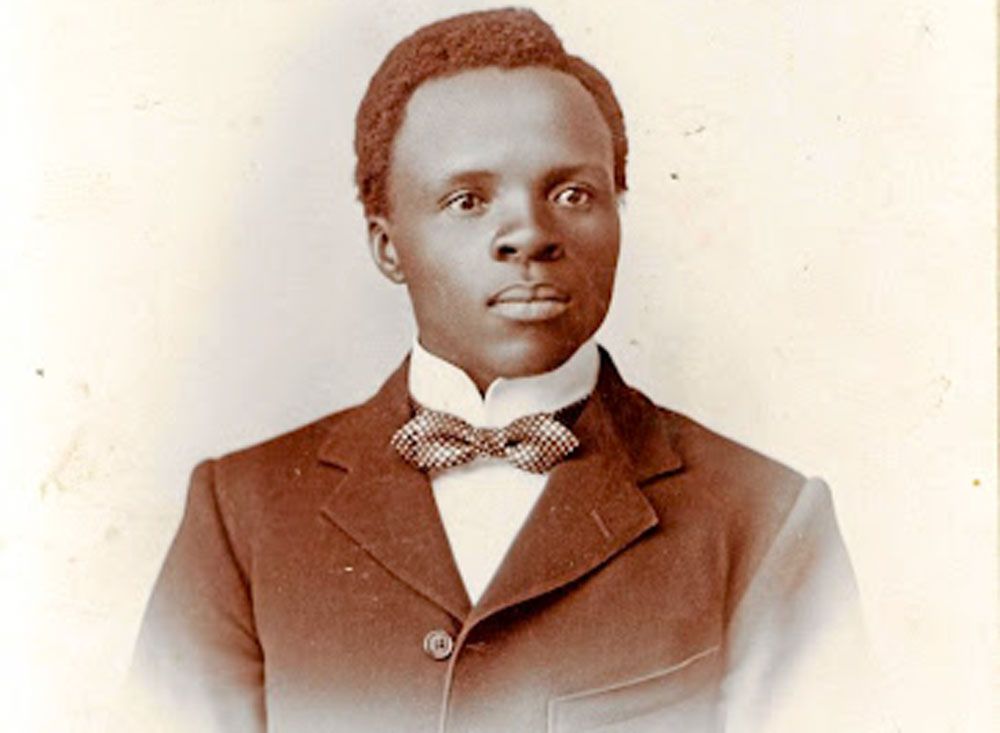
The overcrowded reserves for ‘Natives/Blacks’ only, are now ‘blackened’. The chiefs’ authority in traditional courts is now reduced to minor civil cases. Most people of morafe no longer recognise the authority of tribal chiefs and uphold British law. Plaatje starts to call himself a South African.
In Chapter 3 (Sons/Homecoming) segregationist policies are now firmly in place in the Union of South Africa by the 1920s. The chiefs and headmen have been reduced to servants of government and have lost almost all authority, especially in the Union of South Africa. Kebalepile Montshioa, the young chief of the BooRatshidi cooperates with government to return 41 Barolong Farms (allocated to chiefly leaders) back to the morafe (which Modiri and Sebopioa objected to). This effectively gives the land to the Union government. Silas is facing financial difficulties. Sebopioa withdraws from being National Secretary a lekgotla council after Lekoko’s death, loses his job as a tax collector after stealing money, and generally withdraws from public life. Modiri becomes the treasurer-general of the South African Native National Congress in the late 1940s.
Following this summary, a plot emerges: the beginning (Chapter1), tension and turning point (Chapter 2) as well as resolution (Chapter 3). However, in the book itself, the volume of details is massive, with no clear sequence.
The book’s strengths:
a) It breaks the assumption that historical figures were one-dimensional heroes, what historian Thomas Carlyle has referred to as ‘Great Men’. On the contrary, the Molemas show flaws and qualities that humanise them. Silas: impulsive, financially reckless, entrepreneurial and family-oriented. Modiri: introspective, driven and dissident. Sebopioa: loyal, quiet, with tendencies of breaking the law. All complex characters with fears, aspirations and frustrations.
b) It provides evidence that Bechuana people were not passive victims of annexation and white supremacy but fought hard to protect morafe’s interests.
c) It contributes to our understanding of daily practices (tiro) that Bechuana engage in, which help shape morafe.
The book’s shortcomings:
a) Inadequate editing which led to the order of information not flowing logically and the resultant wide scope of the book.
b) The words ‘Moreness’, ‘Placement’, and ‘Homecoming’, as concepts and parts of the chapters’ double bar titles, are obscure. Although these concepts are precise enough to be differentiated from existing theoretical concepts, the author’s attempt to apply them to everyday practices of morafe (and test their transferability) is confusing.
c) The book’s argument that the Molemas played a role in shaping our understanding of morafe, both in the north and south of Molopo, is not supported by evidence. What evidence shows is that the Molema clan is only part of the many Bechuana who contributed to morafe, such as: ‘the 3 Kings’, namely Khama III of Bangwato, Bathoen I of Bangwaketse, and Sebele I of Bakgatla, who, in 1895, were instrumental in ensuring Bechuanaland territory remained autonomous after British annexation; paramount chiefs Montshioa and Kebalepile, whose separate decisions on the fate of Barolong Farms, had a lasting impact on morafe; the other black elite, particularly from the South African Native National Congress, who variously supported morafe newspapers, and whose ideologies had an influence on Modiri; and ordinary Bechuana and migrants who integrated into morafe, whose acts of rebellion have been mentioned several times in the book, albeit briefly.
Khumisho Moguerane’s Morafe is not intended for light reading but is more suitable for academics, university-level students, and researchers. It is a valuable repository for Molema heritage, with a comprehensive reference list for further reading. The book won the 2025 Sunday Times Non-Fiction Prize. The author held an ORISHA scholarship at Oxford, an Oppenheimer scholarship, and was a Beit scholar.
Author: Khumisho Moguerane | Title: Morafe: Person, Family and Nation in Colonial Bechuanaland (1880s –1950s) | Pages: 407 | Publisher: Jacana Media (2024) | ISBN: 978-1-4314-3277-6
| 1. | ↑ | As described by Moguerane, “The future lay in ‘progress’ in the countryside. The word was ‘coelopele’, to move forward, to advance, but in fact, Plaatje understood ‘progress’ as a return to the virtuous disposition of the morafe’s ancestry on the land.” Footnote 34 |